Wednesday, May 22, 2024

Food porn at its finest

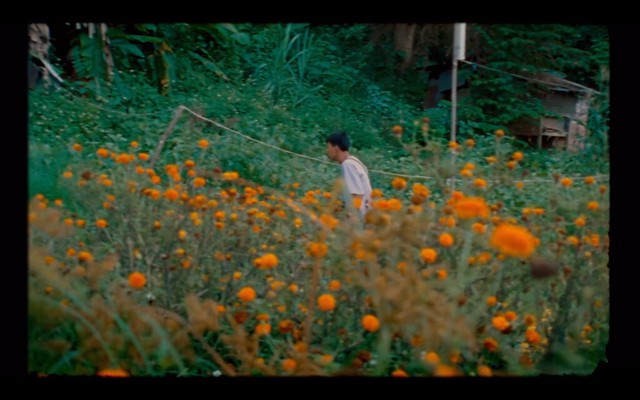
La passion de Dodi Bouffant/Taste of Things (2023) - Tran Screen Shot 2024-05-22 at 9.31.08 AM Screen Shot 2024-05-22 at 8.53.42 AM Screen Shot 2024-05-22 at 9.17.30 AM Screen Shot 2024-05-22 at 9.27.18 AM Screen Shot 2024-05-22 at 9.27.30 AM Screen Shot 2024-05-22 at 9.27.40 AM Screen Shot 2024-05-22 at 9.53.12 AM Screen Shot 2024-05-22 at 10.06.19 AM Sumptuous filmmaking for food lovers. Tran Anh Hung pleases the senses with always moving camera, capturing delectable food preparations with very handsome couple Juliette Binoche and Benoit Magimel, who were in relationship in real life. They obviously have a good chemistry together. The terminal illness plot aside, Taste of Things is about passion and passion for food that transcends love. Tran seems to be settling in for more soft-edged, traditional, French costume dramas, akin to Scent of Green Papaya, his Vietnam set debut. I'm not complaining, since he seldomly makes films and I welcome all his gorgeous offerings. But still, I'd love to see a spark in his filmmaking again, once displayed in Cyclo (1995) and I Come with the Rain (2009) and even in his Haruki Murakami adaptation of Norwegian Wood (2010).

Tuesday, May 21, 2024

The 4 most important things in life

In Our Day (2023) - Hong Screen Shot 2024-05-21 at 4.23.49 PM Screen Shot 2024-05-21 at 4.24.19 PM Screen Shot 2024-05-21 at 4.25.14 PM Screen Shot 2024-05-21 at 4.23.03 PM Sleeping
Cats
Alcohol
Cigarettes
+ Ramyun with chili paste

Embracing Mystery

Inside Yellow Cocoon Shell (2023) - Pham Screen Shot 2024-05-21 at 8.31.14 AM Screen Shot 2024-05-21 at 8.36.46 AM Screen Shot 2024-05-21 at 8.40.01 AM Screen Shot 2024-05-21 at 9.24.46 AM Screen Shot 2024-05-21 at 9.30.07 AM Screen Shot 2024-05-21 at 10.12.55 AM Screen Shot 2024-05-21 at 10.20.50 AM Screen Shot 2024-05-21 at 10.21.59 AM Screen Shot 2024-05-21 at 10.39.44 AM Screen Shot 2024-05-21 at 10.22.13 AM Vietnamese director Pham Thien An's assured debut feature, Inside Yellow Cocoon Shell, will make a great 'existential road trip movie' double feature with Bi Gan's debut Kaili Blues. A languid style with no cuts and slow zoom-in, this unhurried film starts with a group of young men discussing faith and afterlife in a busy Saigon outdoor restaurant. There is a fatal motorcycle accident off the frame and the camera slowly tracks to the busy intersection to reveal the sight of the accident. We later learn that it was Hanh, a sister-in-law of our reluctant protagonist Thien (Le Phong Vu), who died in the accident, and left him her 5-year-old son, Dao to take care of. Thien leaves with Dao to their hometown in the lush countryside for the very catholic funeral and following wake.

In the home village where he left long ago for Saigon, he encounters many people and engage in long conversations, including an old man who was in the army fighting viet congs and his old flame who is now a nun. The present melds with past and reality blurs with dreams, Inside Yellow Cocoon Shell presents the waking dream that is fleeting human life. The last third of this languid 3-hour film is Thien looking for his brother in the neighboring village. His motor bike breaks down and Thien has to take shelter in a snack stop. There he engages with an old woman who asks him why he had forsaken his soul and proceeds to tell him her near death experience. Is Thien really looking for his brother? Or is he in a spiritual journey to find himself? With the backdrop of colorful Vietnam and its western and eastern influences and its tumultuous history, young director Pham paints a very arresting picture of one man's journey to find himself and leaves room for us to contemplate and embrace life's mysteries.

Monday, May 20, 2024

Ching Ching from the Past

Chime (2024) - Kurosawa Screen Shot 2024-05-20 at 3.25.48 PM Screen Shot 2024-05-20 at 3.53.09 PM Screen Shot 2024-05-20 at 3.38.56 PM Screen Shot 2024-05-20 at 3.42.14 PM Screen Shot 2024-05-20 at 3.52.11 PM Screen Shot 2024-05-20 at 3.56.23 PM Chime feels like an out of context rehash of Kiyoshi Kurosawa in his heydays in 2000s when Japan was suffering crippling recession. I might be the minority on this, but he hadn’t made a good movie since Journey to the Shore almost ten years ago.

Robber of the Soul

La Chimera (2023) - Rohrwacher Screen Shot 2024-05-20 at 8.42.41 AM Screen Shot 2024-05-20 at 8.49.23 AM Screen Shot 2024-05-20 at 8.49.55 AM Screen Shot 2024-05-20 at 8.50.23 AM Screen Shot 2024-05-20 at 9.34.39 AM Screen Shot 2024-05-20 at 9.35.19 AM Screen Shot 2024-05-20 at 9.57.01 AM Screen Shot 2024-05-20 at 10.00.00 AM Josh O'Connor plays Arthur who has talent for locating ancient graves to loot in rural Italy. This tall English man with unknown past has roots in this part of the world with connections with its common country peasants. He is also in greiving process of his love, Benjamina, who was one of the many daughters of an aging local matriach, Flora (Isabella Rossellini), who reside in a decrepit mansion with her singing pupil Italia (Carole Duarte).

Rohrwacher belongs to ta generation of new filmmakers who embraces the traditional film technology and even older storytelling techniques which is abundantly displayed in La Chimera - Soft edges, speeding up for comic effects, fable like script, etc. But what makes Rohrwacher films unique is her modern sensibility, thanks to her transnational background. It is in her casting of O'Connor, Rosellini and Brazilian actress Duarte for thr roles and music choices as well. She is much different filmmaker than, say, Pietro Marcello.

As usual, Alice Rohrwacher's fable like story is filled to the brim with the colorful rural characters as they scheme, sing and dance around. Arthur finds some sort of redemption after Italia's objection that what he is doing is robbing the souls of the dead people that he is digging the trinkets out of earth where they are not meant for the eyes of the living. La Chimera is a charming film full of hearts and human warmth.

Sunday, May 5, 2024

Bardo

Samsara (2023) - Patiño Screen Shot 2024-05-05 at 8.52.41 AM Screen Shot 2024-05-05 at 9.02.12 AM Screen Shot 2024-05-05 at 9.46.08 AM Screen Shot 2024-05-05 at 9.49.21 AM Screen Shot 2024-05-05 at 9.58.49 AM Screen Shot 2024-05-05 at 10.01.03 AM Screen Shot 2024-05-05 at 10.31.17 AM Screen Shot 2024-05-05 at 10.31.49 AM Screen Shot 2024-05-05 at 10.32.36 AM Screen Shot 2024-05-05 at 12.16.35 PM In his new film Samsara, filmmaker/visual artist Lois Patiño channels the Tibetan Book of the Dead via Apichatpong Weerasethakul. In his natural, documentary style narrative which is a departure from his previous, silent, non narrative, visually stunning work, he invites us to meditate. There are two parts, er, three parts to the film: first part takes place in Laos, the second part, we are supposed to close our eyes for 15 minutes, then third part in Zanzibar. His gamble pays off. I'd love to experience this film on a big screen with other people and perhaps fall asleep and not feel ashamed to do so. It's that kind of film.

In the first part, a young man is reading the Tibetan Book of the Dead to a dying old woman in a small fishing village in Laos. She knows that her time is almost up and ready to travel to Bardo, the intermediate stage where your soul will move on eventually. Reincarnation is mentioned. The young man is to take bunch of monks from the local monestery to a famous waterfall on his boat. This affords Patiño to do some really gorgeous long transitional shots with images overlapping each other.

The old woman passes and we are prompted to close our eyes and travel with the old woman. For the next 15 minutes, we are supposed to close our eyes and feel the light flashing in our closed eyelids with the sounds of what she is hearing from her life. Then silence.

We are now introduced to a little girl in Zanzibar, to a small fishing community where local women gather seaweeds to make soaps out of it. A new white goat is born and the little girl goes everywhere with the goat on a leash. The old woman tells the little girl that the goat might be an incarnation of a big tree in the forest, or an elephant (which we saw in Laos part), or an old woman. The little girl loses her goat.

Gentle and deeply contemplative, Samsara is a truly unique experience. Go see it in theaters if you can.

Saturday, May 4, 2024

Tonal Exercise

Evil Does Not Exist (2023) - Hamaguchi Screen Shot 2024-05-03 at 1.09.46 PM Screen Shot 2024-05-03 at 2.17.49 PM Screen Shot 2024-05-03 at 4.03.06 PM Screen Shot 2024-05-03 at 4.06.47 PM Screen Shot 2024-05-03 at 4.08.56 PM Screen Shot 2024-05-03 at 4.10.28 PM Concieved as a accompanying video for composer Eiko Ishibashi (Drive My Car), Ryusuke Hamaguchi's Evil Does Not Exists plays out like a tonal exercise, unsure of where it will ultimately lead to, like a good looking sourdough bread just came out of the oven, yet there's something wrong with it - underproved - a little dodgy.

It starts out unhurriedly with a long dolly tracking shot of the wood, looking up, with Ishibashi's swelling, mood setting score. Then it introduces Takumi (Hiroshi Omika), a tan faced, stoic widower in rural Japan. He is a local handyman in a close-knit community facing a development company from Tokyo trying to set up a 'glamping' site which would contaminate the water source- famous for its purity- that the whole village is dependent on.

The two city slicker representatives from the company, Takahashi (Ryuji Kosaka) and Mayuzumi (Ayaka Shibutani) get grilled by townsfolks (including Takumi) at the townhall presentations of the company's flawed plans. They realize that these people are no pushover country bumpkins. Through the long, soul searching conversations on the long drive back to Tokyo and back to the village, they realize they are on the wrong side.

Takumi is a forgetful fella. He constantly forgets to pick up his young daughter from a daycare and finds her in the woods walking home alone. It's a hunting season in winter. He tells her about the dead deer carcass in the woods they stumbled on. Deer don't attack people, they stay away from the presence of human activities, but a shot deer may attack you if you approach.

The city pair returns, thinking about quitting their jobs and learn the way of rural living from Takumi. It all seems idylic and unfussed, very different from cut-throat capitalist Tokyo environs where they are killing their souls and aspirations to make a living.

Hamaguchi is a very skilled director. His approach to filmmaking is unhurried, and dialogue and acting, natural. His films stand out among other contemporary Japanese films for that reason. He also has a way to bring out humanism of his characters who at first may not be too likable. He deals with many nuanced issues with Evil Does Not Exist - environmental destructions, city vs rural living and human nature.

But with its surprise ending, I question Hamaguchi's motive as unserious about all the issues he raised with the film. It feels like a mood experimentation with Ishibashi's score; setting things up to change the mood of the film this way or that way. Mysterious its end maybe, but I am left with feeling manipulated in a hollow exercise feeling like a bait, not unlike a little girl lost in the woods.