Showing posts with label 70s. Show all posts

Friday, January 23, 2026

Use Your Illusion

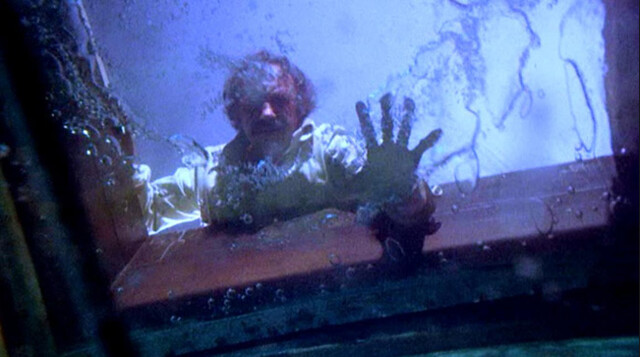
The Last Movie (1971) - Hopper Screenshot 2026-01-16 at 2.10.39 PM Screenshot 2026-01-16 at 1.48.53 PM Screenshot 2026-01-16 at 1.54.18 PM Screenshot 2026-01-16 at 2.09.12 PM Screenshot 2026-01-16 at 2.15.29 PM Screenshot 2026-01-16 at 1.52.58 PM Screenshot 2026-01-16 at 1.40.47 PM Screen Shot 2026-01-23 at 4.54.26 AM Screen Shot 2026-01-23 at 4.59.44 AM Screen Shot 2026-01-23 at 4.57.44 AM Screen Shot 2026-01-23 at 4.56.15 AM Screen Shot 2026-01-23 at 5.00.38 AM After the success of Easy Rider (1969), a movie which defined the counterculture/hippie generation, the Universal Pictures gave Dennis Hopper a carte blanche to make a new movie, fully expecting another hit with the youth audience. But what they got was jumbled, incomprehensible mess, a movie only a heavily drugged, highly egotistical Hollywood actor could dream of. The Last Movie has all the hallmarks of an ambitious and masculin epic possible-only-in-the-70s' feel to it - the exotic locations (shot in the high mountains of Peru), large sprawling cast including thousands of local extras, grand theme (film aping real life aping film) and recalls more successful, better articulated films of its day- Aguirre: the Wrath of God, El Topo, Heaven's Gate, The Days of the Locusts, etc.

The film 'loosely' tells the story of a Hollywood Stuntman Kansas (Hopper) doing stunt work on the set of a Hollywood western production, directed by Sam Fuller, up in the Andes. After the production ends and everyone goes back home, Kansas remains and shacks up with a local girl, Maria (Stella Garcia) and dreaming of having a good life - a house on the hills, with a swimming pool perhaps. His real motivations to stay is never clear.

In the meantime, there is a cult-like local group, unhealthily influenced by the presence of a Hollywood production, starts reenacting a movie production of their own, with cameras, lights and boom made out of sticks and firecrackers, and using real violence because they don't understand that the filmmaking process is fakery. The local priest (Thomas Milian) is not too pleased about it. It's a devil's doing, he says.

Kansas with his friend Neville (Don Gordon) try to suck up to Anderson, a rich, sleazy business owner and his bored lusty wife, for their expedition to find gold, and gets tangled up in sexual escapades, much to the distress of Maria.

As Kansas gets swepted up in the locals' 'movie production', he really gets hurt and is bedridden. But is it his drug filled imagination or is it real? With the non-linear narrative and no definite ending, it is up to the audience to decide.

Studded with appearance by Hopper's friends - Peter Fonda, Fuller, Kris Kristopherson, Toni Basil and the like, and heady with the metaphors for filmmaking, the US cultural colonialism and jump cuts and "scene missing" title cards, The Last Movie is full of grand ideas and stunning scenery (shot by László Kovács) but doesn't come together coherently. Panned by the critics, and its failure at the box office pushed out Hopper to an exile from Hollywood for a dacade after this film.

Wednesday, September 24, 2025

Master of None

The Mastermind (2025) - Reichardt The Mastermind Kelly Reichardt, who has built a reputation as a singular voice in American Indie cinema, garnered devout followers and admirers with her minimalist films over the years. But she stumbles here with the art heist period piece, The Mastermind. One can say that Reichardt's films are always small and narratively open and unresolved - that the beauty of her films is not in satisfying storytelling, but the loneliness she depicts within her often outsider protagonists. And that assessment rings true. But James, our protagonist in The Mastermind, played by Josh O'Connor, is a thoroughly downbeat, unpleasant character to identify with.

It starts with James Mooney (O'Connor) scoping a museum for a score, with his family in tow - his wife Terri (Alana Haim) and two doting young sons, Carl and Tommy (adorably played by real-life siblings Sterling and Jasper Thompson) in a small town, Massachusetts. The year is 1970 and the shadow of the Vietnam War is on TV and the streets every day. It is revealed that James is an art school dropout ne'er-do-gooder in the eyes of his father (Bill Camp), a local judge, who has strong opinions about law and order. James lies about the imminent commission job, so he can borrow money from his sympathetic mother (Hope Davis) behind his father's back.

The art heist, which happens pretty briskly in the first one third of the film, doesn't go well: his last minute assembled crew screws up and ends up on the front page of a local newspaper and on TV. Hiding the fact that he was the mastermind behind the bungled heist from his family and the paintings he stole ending up in the hands of threatening local criminals, James has no choice but to go on the run. And the film becomes a road movie.

James's first stop is a farmstead of old college buddies Fred (John Magaro) and Maude (Gaby Hoffmann). It is revealed that the paintings James stole belong to one of the professors in their art college days. That the burglary was partly out of old-time resentment (over success?) that James chose those particular abstract paintings to steal. Fred is amused that his one-time classmate made a front page of the news and on the run. Maude, a clear eyed realist who doesn't want more trouble in their stable yet poverty stricken life, sternly tells James to leave.

James now takes off to Cleveland, to mooch off of another old friend. But he finds out that they are not home. With money running out and nowhere else to go, he calls Terri, who promptly hangs up on him. With anti-war protests on the street, and cops swarming to control them, James needs to figure his way out.

Reichardt sketches out James's character in subtle ways, giving us only the slight glimpse of a man whose resentments against the success of others and authority figures run deep. Like her Oregon Trail film First Cow, which showed how capitalism was ingrained in the prospecting days of American history, The Mastermind deals with an apathetic character getting swept up in the anti-war movement in the 60s and 70s. But even in her depiction of a prospecting, proto-capitalist in the west in First Cow, there was a small warmth and humanity in the friendship forged between Cookie and King Hu. Instead, James is a person who would steal an old lady's purse during anti-war protests to get by.

I don't fault Reichardt for trying something different. But if her previous genre exercise was any indication - the eco-thriller Night Moves, the only film in her spotless filmography that I didn't care for, she has a real problem handling depicting on-screen violence. I understand her philosophy of refusing to show it and I respect it. But depictions of violence in genre films are wholly necessary, and avoiding it in unambiguous ways comes across as super awkward and unnatural.

I understand why hotshot actors like Josh O'Connor want to work with Reichardt. Her unique small films and her gentle way of depicting loneliness and isolation are truly remarkable. But when the scale of her project gets bigger and more complicated - like her take on a genre film, this time a heist movie in a period setting, the result is less emotionally engaging. The Thompson brothers give the film its laughs and humanity needed. Haim looks the part as a 70s wife/mom, but is wasted in her one note character.

Monday, September 3, 2018

Birds of Prey

Figures in a Landscape (1970) - Losey
Screen Shot 2018-09-03 at 8.44.14 AM
Screen Shot 2018-09-03 at 8.53.18 AM
Screen Shot 2018-09-03 at 8.55.38 AM
Screen Shot 2018-09-03 at 8.58.04 AM
Screen Shot 2018-09-03 at 9.06.45 AM
Screen Shot 2018-09-03 at 9.08.24 AM
Screen Shot 2018-09-03 at 9.09.36 AM
Screen Shot 2018-09-03 at 9.14.18 AM
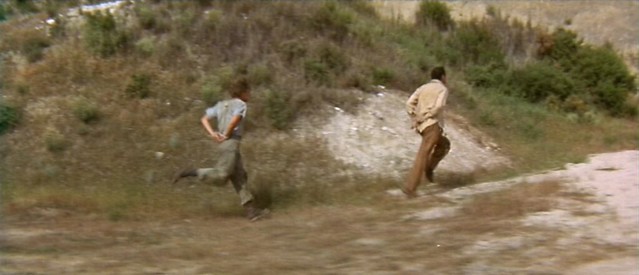
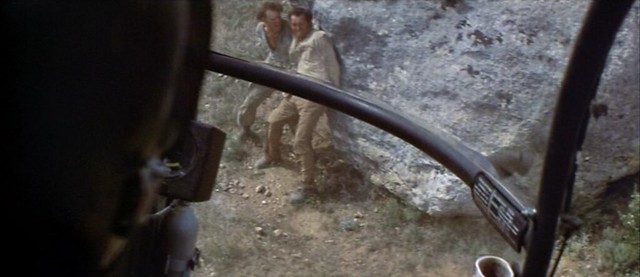
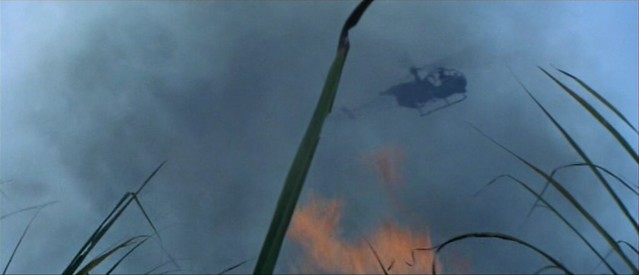
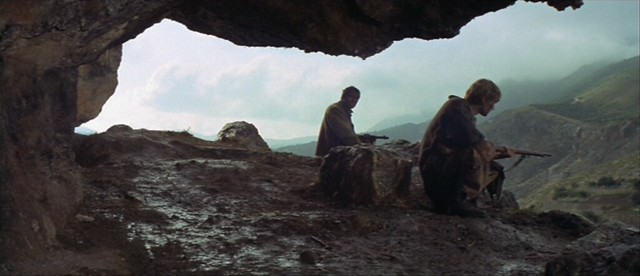
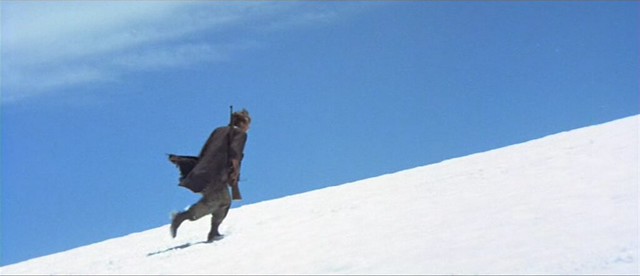
Two English men are first seen running, with their hands tied behind their backs, from the relentless pursuit by a hellicopter. There is no explanation as to why or how or what. Figures in a Landscape is one of those 70s wtf movies steeped in metaphor that are gripping and hypnotizing nonetheless.

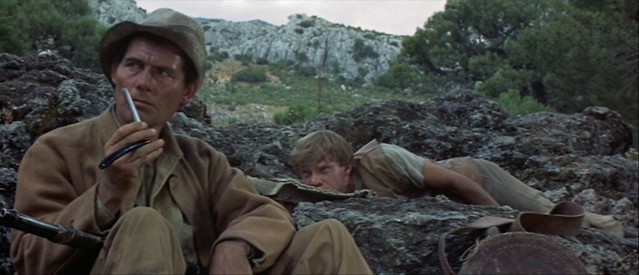
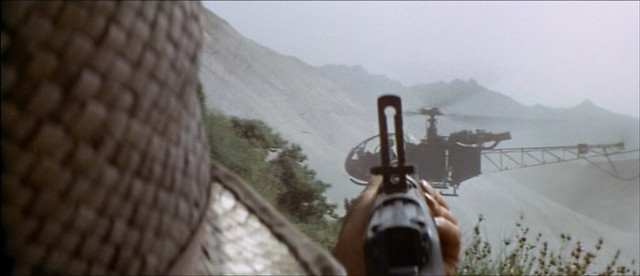
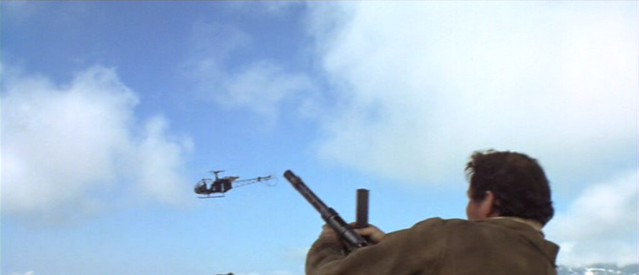
Robert Shaw (who also wrote the screenplay) along with young Malcolm McDowell, does amazing amount of cadio in an unnamed, rugged countryside (by looking at olive trees and snowy mountains at the end, my guess is Italy). After raiding a village at night, killing some villagers to steal some food, clothes and a rifle, the fugitives still find themselves the prey to the bird above. Things get more tense after Mac (Shaw) methodically shoots down one of the pilots off the copter. Now there is an army with automatic weapons pursuing their tracks along with the copter. With their visors firmly stuck in their faces, all the pursuers are silent and nameless.

Mac has no scruples about killing people but the young man is morally conflicted. Mac angrily accuses him as a hypocrite. Grinding his teeth and snarling, Mac is a great precursor to Quinn in Jaws. He even showcases his loony sense of humor when things go dire - as they are cornered in what it looks like a sugarcane field with the copter firebombing from above and angry farmers trying to put out the fire by releasing water from the irrigation dam, the duo has to resort to crawling in the muddy field surrounded by inferno. What does Mac do? He catches a little snake, waving around like a lunatic, happy as a clam.

The hellicopter serves as a dominating force - an oppressive government or a dictator, a bird of prey, toying with you from above with its absolute power until it comes in for the kill. As they approach an arbitrary border to freedom in the snowy mountain, Mac's obsession - bringing down that symbol of oppression - a copter/a shark from above, takes over, even if it means costing your life. Visceral and oddly captivating, Figures in a Landscape is a very interesting film.

Sunday, May 20, 2018

End of an Era

Night Moves (1975) - Penn
Screen Shot 2018-05-20 at 12.27.05 PM
We've seen this before, or at least, reiteration of the same scenario time and time again: a washed up P.I. taking the job of missing daughter case from a seemingly wealthy woman in LA, and along the way, he gets embroiled in a bigger conspiracy with lots of ins and outs. It's your typical LA noir. But it's the 70s and cynicism and rudderlessness is rampant. And it's that palpable melancholy that presides over Night Moves that makes it memorable.

Harry Moresby(Gene Hackman), a two bit P.I. and a former football star, takes on the case from Arlene, a past-her-prime actress looking for her 'free spirited' teenage daughter Delly (short for Delilah "my husband was fond of biblical epics back in the day" Melanie Griffith). With a little clues given about Delly's crowd - movie stuntmen and mechanics, the case takes Harry to film sets in New Mexico then to the Florida Keys where he finds her, living under Arlene's second husband Tom and his alluring companion Paula (Jennifer Warren). The couple operates small charter plane/boat business, living in relative obscurity. Harry also has to deal with his marriage falling apart. He is trying to solve other people's lives but can't deal with his own.

There are some great scenes with Hackman and Susan Clark (Ellen Moresby) and also Warren. It's the 70s. Harry can't beat his way out of his troubles like Sam Spade used to. Dialog is terrific in that muddied up 70s way (Kennedy assassination was mentioned after seeing a dead body) instead of snappy one-liners. Sex and drugs of the counterculture is summed up in Melanie Griffith's 16 year old nude body. With all the macho posturing of rugged stuntmen and sport heros, Night Moves perfectly signals the end of an era, the way Inherent Vice or Fear and Loathing in Las Vegas was supposed to capture, all back in 1975 only to be revived by Reagan era action movies without any scruples. Night Moves would make a terrific double feature with The Conversation.

Saturday, August 20, 2011

Mod

Quadrophenia (1979) - Roddam
Photobucket
Jimmy (Phil Daniels) is a mod. He and his mod friends always don green long army coat, suits and ride crazy modified scooters, listening to the Who and the Kinks and such. They are always up to no good, roaming around and always on the lookout for scoring blues (amphetamines). Working as a mail room boy in some advertising agency and living under a stern working class father, Jimmy is all teen angst.

The rockers with their leather jackets and motorbikes listening to rock 'n' roll are Jimmy & the gang's enemies and they are always on each other's throats. The tensions btwn the gangs finally erupt when they converge in large numbers in Brighton during the Bank Holiday. The huge fight breaks out in the streets of the seaside town and it culminates into to a full blown riot. Amidst all the chaos, Jimmy sneaks into a quiet alley to make out with the girl, Steph (Leslie Ash) that he always had crush on. It's undoubtedly the best day of his life. Soon after he is arrested and detained.

Back home, Jimmy's life is in shambles- he gets kicked out of the house, loses his job, Steph is now with his best friend and his scooter gets destroyed in an accident. He goes back to Brighton to relive the excitement only to be more disillusioned.

The film features young Ray Winston as Jimmy's childhood friend now a rocker and Sting as the sharply dressed mod leader who makes fool of the British court system. Daniels is a typical 70's British youngster- gaunt face, gangly figure, crooked smile, mischievous eyes. I couldn't remember where I saw him before. It turns out he was Bela in The Bride, another movie featuring Sting!

I've never been a fan of the Who and Tommy never did much for me. But Quadrophenia is great. It's full of youthful energy and disillusionment only Brits could produce. I was fully appreciative of the Brit culture scene in the 70s.

Friday, May 6, 2011

Antz

Phase IV (1974) - Bass
Photobucket
Photobucket
Photobucket
Photobucket
Photobucket
Photobucket
The planets' unusual alignment in the solar system causes ants in New Mexico desert to gather collective intelligence and advance their territories, killing off all the other animals around them. From a shiny, teched-out bio-dome, Dr. Hubbs (Nigel Davenport, sort of workingman's James Mason) and his reluctant, number inclined assistant James (Michael Murphy) are trying to gather information on these super ants. Hubbs is a determined man and he will stop at nothing, even if it means sacrificing other humans around him. And soon they find that they are no match for these pesky creatures.


After being (accidentally) orphaned, a young, horse-riding, luminous country girl (Lynne Frederick) from the nearby ranch, also becomes marooned inside the dome and under attack.


Phase IV is a fascinating film. It's like Jaws but instead of one shark, you got thousands of ants trying to outsmart you. With effective extreme closeups and unexpectedly gorgeous visuals and the 70s pseudo science wtf-ness, it is a thoroughly enjoyable film.