Showing posts with label Anders Danielsen Lie. Show all posts

Friday, November 7, 2025

House and Everyone In It

Sentimental Value (2025) - Trier Sentimental Value Joachim Trier's new film, Sentimental Value starts with a house in Oslo: a handsome house with red paints around the edges. A female narrator speaks of a grade school assignment - if you choose to be an inanimate object, and you choose to be a house, do you feel whole when it's crowded with people, or when it's empty? Do you feel pain when someone slams the door or breaks the glass on the floor?

Nora (Renate Reinsve) is a stage actor who suffers from a stage fright. In a hectic scene in the beginning, she has a last minute panic attack just before the curtain raises- claws at her tight costume, complaining she can't breathe. It takes her whole theater production team to calm her down, to finally get on stage. It shows that she suffers greatly from a childhood trauma, stemming from her famous filmmaker father Gustav (Stellan Skarsgård) constantly fighting with her mother, then abandoning her and her sister. The morning after her affair with her co-worker (Anders Danielsen Lie), she tells him that she is 80 percent crazy. While Agnes is married and has an adorable son, Nora is single and lonely.

At their mother's funeral, the sisters encounter Gustav again after a long while. Gustav, who hadn't made a film in 15 years, has a new script that he has written for Nora and begs her to star in it. It will take place in the house the girls grew up in. It's slightly based on the life of his mother, who was a resistance fighter during Nazi Occupation and was tortured in prison, who later killed herself- but also about Nora and a lot of other things. Nora flat out refuses and doesn't want to do anything to do with him.

By chance, Gustav finds a Hollywood Starlette, Rachel Kemp, being enamoured by one of his old films at his retrospective in France, decides to work with him for the part that he wrote for Nora. It being a Trier film, the scenes where they bond- an old artist and the Hollywood movie star with her entourage in tow, come across as not cliché, but sweet and endearing. But as the rehearsal goes along, both Gustav and Rachel slowly realize that she is not the right fit.

As usual, it being a Joachim Trier film, Sentimental Value is not about one thing, but about a lot of things, so not just the house or any inanimate objects that we have feelings towards - parents, siblings, history, art, trauma, loneliness and most importantly, love. Something that AI can never reproduce or emulate, at least not yet. It is yet again, a beautifully written (co- written by Trier's long time writing partner Eskil Vogt), nuanced film that you come to expect from one of the most literary filmmakers of our time. And also, it's beautifully acted as well. Reinsve is phenomenal as Nora, a damaged stage actor. Skarsgard has never been better, as Nora's semi-estranged dad, and Inga Ibsdotter Lilleaas as Agnes, the younger sister of Nora, is also great. Add Elle Fanning as a good natured Hollywood starlette and Danielsen Lie in a small role.

The strongest moments of the film (and there are many), are when the sisters go through things in the old house and reminisce about their tumultuous childhood, they talk about how much they meant to each other and when Gustav plays with Agnes's young son. It's both tender and searingly beautiful.

Sentimental Value is all about finding love and understanding from someone you felt only resentment for most of your life, in the most unexpected way. It's so beautifully written and acted and even surpasses Trier's The Worst Person in the World. It's certainly my favorite film of the year.


Friday, December 24, 2021

Womansplaining

Verdens verste menneske/The Worst Person in the World (2021) - Trier 01-Verdens-Verste-Menneske-©-Oslo-Pictures-900x600-1 People. You love them, you hate them. You want to be around them sometimes, you want to be as far away as you can from them, other times. Some of us, by some miracle, end up with someone we love, to spend the rest of our lives together... or so we'd like to believe. As we grow older, we realize more and more that the human existence is frail and fleeting. And because the world we live in is increasingly getting crazier, for those of us who've found someone special, count ourselves lucky, and hope to have that special someone will be by our side in our last moments.

Joachim Trier and his writing partner Eskil Vogt, as they always do, bring maturity and erstwhile wisdom to their new film, The Worst Person in the World. And they tell a story decidedly from a young woman's point of view in an ironically titled film. And Trier again, embraces the title as one of the most literary directors working today - the film is in chapters with prologue and epilogue, like his debut film Reprise, of what's now known as the Oslo Trilogy (along with Oslo, August 31st). Similarity is there - an arc of young people on the verge of adulthood: careers, ambitions, disappointments, regrets... but from a female perspective.

It starts with a young woman named Julie (Renate Reinsve), impulsively trying various majors in college - Medical school, psychiatry, and then photography. Her indecisive nature limits her working at a bookstore as she nears 30. She meets Aksel (Trier regular, Anders Danielson Lie) at a party. He is a cartoonist, whose creation, Bob Cat, a foul mouthed, very non-PC cartoon feline has gotten some notoriety and he is making a comfortable living off of it. Also he is much older. Their attraction is palpable. They talk about pros and cons about getting involved with someone with their age differences - it's not going to end well. But Julie moves in with him and they become a couple. Julie has to deal with the usual challenges that any woman her age - the talk of having kids before it's too late, career goals (if there are any), aging parents, other's perception of her, her own prejudices, getting mansplained and psychoanalyzed about her life, etc.

Julie meets a total stranger Eivind (Herbert Nordrum) at a party she just crashed. As consenting adults, they talk about the moral ethics of cheating. They reveal a lot of themselves over that one magical night but part their ways. What Julie craves is to get a handle on her life by herself, because she feels like a spectator when she is with more 'successful' Aksel.

As usual per Trier films, there are a couple of cinematic showstoppers in The Worst Person in the world. Their simplicity and practical effects are real fun to watch.

Layered and richly textured in presenting and contrasting the object oriented Gen-Xers and the Millennials who grew up plugged into the internet and social network - tangible vs. intangible, nostalgia vs. impending doom, the film speaks volumes about modern life and its seeming purposelessness. When it's all said and done, what remains is our relationship with each other and the love we have for one another. It is not my swanky vinyl collection or books on my bookshelf or how many times I watched Dog Day Afternoon, or a clever article I once wrote online that I will be remembered for.

What I admire about Trier and Vogt's characters over the years is not only their modern sensibility, but also their indomitable youthful spunk, no matter what situation they find themselves in. It would be a mistake to define them by their cultured, ultra urban sophistication and therefore consider them hollow. There is a sense of defiance in these characters and Julie, played by Reinsve, who gives the tour-de-force performance, trying to navigate this crazy, complex and uncertain world on her own terms - even if her life decisions were bad. She doesn't resign herself into the corner of the world and retreat. She is a thoroughly modern woman and doesn't need to dress up like Annie Hall. Clothes she wears or music she listens doesn't define her. It's her defiance that defines her. And I love her for that.

Friday, September 24, 2021

A Meta-Contemplation on an Artist's Creative Process

Bergman Island (2021) - Hansen-Løve Bergman Island For the last decade, Mia Hansen-Løve, with a string of beautifully written and acted, melancholic films about life and passing of time, has emerged as one of the most highly-regarded directors working today.

Her delicate and subtle films, be it a coming of age tale in Goodbye First Love, about pursuing one's dreams and succumbing in Eden, or about taking life's curve balls in stride in Things to Come, there has always been plenty of evidences of a great writer/director cementing her own unique voice in film world, which is a still very much male-dominanted industry.

It is interesting then, that we see Hansen-Løve digging deeply into the subject that concerns a woman's artistic struggles in finding her own voice while being a longtime partner of someone who's more established and better known, taking a not so guised reference from her real life, for she was a long time partner of director and mentor, Olivier Assayas.

Even though Bergman Island is her first English language film with an international cast -- Vicky Krieps, Tim Roth, Mia Wasikowska and Anders Danielsen Lie -- the theme doesn't quite give enough distance from her real life. Sure, an older man who has a big influence on how a young woman develops and finds her own self has always been there in her films, most recently in Maya.

But her self-reflexiveness was not as out in the open as in Bergman Island. I'm not faulting this move and don't want to call it regressive, but a female director finding her own voice and out of her male partner's shadow in a place called Bergman Island seems quite an unusual choice for already established and well-regarded director. Perhaps that was her intention, though, to differentiate herself and reiterate that her working method is different, that her creative process is not like that of Assayas nor Bergman.

Bergman Island concerns a film director couple Tony (Roth) and Chris (Krieps) coming to Faros Island, where the famed Swedish director Ingmar Bergman made a bulk of his films and had a house there, to work on their new projects. Many writers, filmmakers and architects have been flocking around there to get inspirations from where the maestro lived and worked.

Tony is a world-renowned filmmaker and is always surrounded by adoring fans. It's no different, even on the remote island. He gets invited to the soirées thrown by the Bergman Society, film screenings, and frequently ta;ls on the phone with his producers about his latest project. While Tony works on his new script with ease in the main house, Chris sets up shop in the mill across the yard from him to work on her own script.

She's a little taken aback by the fact that Bergman was not a nice man to be around and had 11 children from nine wives. She also doesn't like the idea that him being a bad father was somehow a prerequisite for him to be a prolific genius. "You think he was changing diapers while being a genius?," a Bergman fan quips. It also bothers her that the beauty of the island -- the sun-kissed coastline, deep blue sea, idealic pastures -- produced a dark, disturbing and pessimistic view of life in many of his films.

After frolicking around the island, she concocts a script about a young woman named Amy, coming to the island for her friend's wedding and confronts her first love, Joseph, again. They have only three days together on the island.

Chris starts telling the story in the hopes of getting some guidance from Tony. Tony attentively listens. And now we are thrown into a unrequited love story of two lovers (Wasikowska and Lie) who were too young to realize what they had and now it's too late to reconnect, in film-within-a-film. Amy, a filmmaker from New York, can't forget Joseph, her first love, even though they both grew up and have moved on with their lives.

The story is slight and without an end. But their love and attraction are palpable. For a long period of time, we only see the couple's story unfolding, as they rekindle their love, then realize they can't be together. From time to time, that story is interrupted by Chris checking on Tony, to see if he is paying attention to her story/film.

There are many funny bits referring to Bergman: like Scenes from a Marriage causing millions of divorces, a Bergman Safari tour, a deadpan projectionist at the Bergman's private theater calling out that he doesn't have a print of Saraband, so Tony and Chris was subjected to watching Cries and Whispers.

The film's meta-ness, the story of Amy and Joseph slowly melding into Chris's own life, suggests that the film Bergman Island is itself is a way of showcasing a filmmaker (Hansen-Løve)'s creative process. And it can come across a little too precious at times. The film is certainly not the usual Hansen-Løve's ultra-wise life observations.

All the ingredients to make a great Hansen-Løve film are here: great assemblage of talented, intriguing actors, great location, self-reflexive storytelling, young love. But it doesn't quite gel together.

We all process our surroundings differently and express ourselves in unique ways. Contrasting oneself to others might be one way. Perhaps Bergman Island is Hansen-Løve's most personal film to date, showing her incongruities and subtle ways towards filmmaking.

Wednesday, March 6, 2019

Melancholic Inspiration

Ce sentiment d'lété/That Summer Feeling (2015) - Hers
Cesentimentdelete
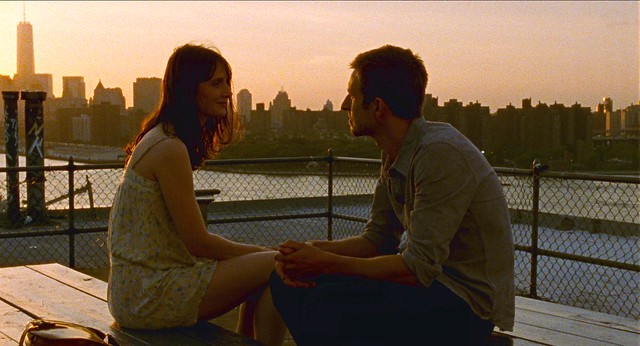
The film starts in Berlin with Sacha (Stéphanie Daub-Laurent, Hers' regular) sleeping in bed with Lawrence (Anders Danielson Lie), getting up and going to a printing studio where she vigorously works with her screen print. It's a beautiful Summer day. On her way back in the park, she falls to the ground. She is pronounced dead in the hospital and her parents and Zoë (Judith Chemla), her sister who flew in, are in shock, as well as Lawrence. Sacha's death affects her immediate surroundings greatly. The film unhurriedly and beautifully show how they slowly recover from their grief but will carry their sadness with them forever.

Hers here expands his horizon, first Berlin, then Paris, Southern France and ends in New York. Zoë with her young son has moved back to her parents in the south. The separation from David (Thibault Vinçon), her husband was a mutual decision but with death of Sacha and everything, she is in limbo, trying to figure out her next move. Lawrence visits them and there is slight attraction between them. Zoë reminds him of Sacha.

Couple of years later Lawrence is back in New York. He had a past there. Working as a translator for a book company while writing his novel, he is surrounded by group of people including June (Lana Cooper), his sister and Thomas (Josh Safdie), his wise cracking, goofy friend. Then there is Ida (Dounia Sichov) in the group he hangs out with. Their mutual attraction is palpable. Liked all the sequences but NY part I loved it. He paints NY distinctly romantic. Williamsburg in the Summer has never been portrayed this cool in grungy eclectic ways.

Zoë visits Lawrence on the way to Kentucky. She has a long lost flame there who recently resurfaced in her life. They have a good time hanging out. Their gazes are tender and caring, sharing the same grief together. Zoë sees Lawrence having a good time with Ida, how they look at each other. There are no words exchanged but you feel the sadness and also relief in Zoë's gaze.

We grieve for the loss of loved ones. It is part of human life. It's always a matter of when. Preferably later in life, but it's not always that way. For Hers, the subject seems to be a constant source of melancholic inspiration for all of his small, delicate films concerning a group of mostly young twenty, thirty something people. I like Hers' contrast - these sensitive, intelligent Parisians in their prime with their hopes and dreams connecting with one another despite, or perhaps because of losing someone close. It's always Summer. The time of rejuvenation. Their sadness has not tainted their youthful exuberance but enhanced it by putting another layer on their characters, wizened them up, if you will. Ce sentiment d'lété is perhaps the best Hers film that epitomizes this youthful melancholy.

Sunday, January 21, 2018

Self Discovery at Sea

Fidelio, l'odyssée d'Alice (2014) - Borleteau
Screen Shot 2018-01-21 at 11.41.06 AM
Screen Shot 2018-01-21 at 11.52.23 AM
Screen Shot 2018-01-21 at 11.48.31 AM
Screen Shot 2018-01-21 at 11.45.44 AM
Screen Shot 2018-01-21 at 11.47.03 AM
Screen Shot 2018-01-21 at 11.51.06 AM
Screen Shot 2018-01-21 at 11.47.42 AM
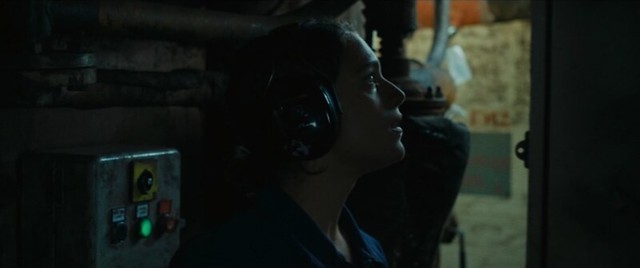
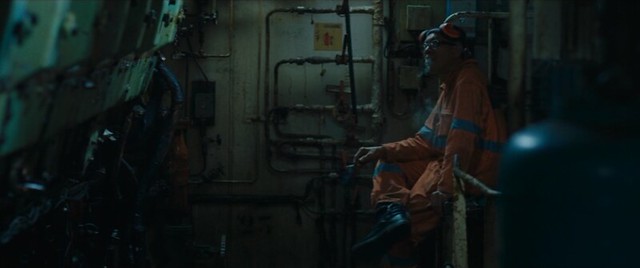
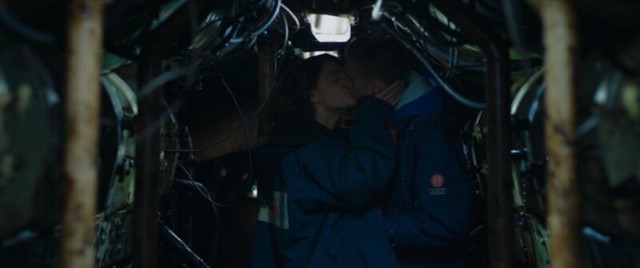
Alice (Ariane Labed) is called in from her vacation with her Norwegian boyfriend Felix(Anders Danielson Lie) to replace an engineer who died at sea on Fidelio, a merchant ship. It turns out the captain of the ship is an old classmate at the Naval academy and a former lover Gaël (Melvil Poupaud). The ship consists of half seasoned seamen of French nationals and half devout Christian Filipinos. Alice, only woman on the ship, turns out to be a very capable engineer and has no problem getting along with everyone. Things get complicated when Alice succumbs to desire to hook up with Gaël. She also starts reading the diary the dead man left behind.

Fidelio touches upon the life at sea theme - loneliness, alienation, freedom, etc. The ship in the sea also provides plenty of cinematic moments. Seeing Labed in coveralls with oil smudged face is also a plus. You might think my summary of Fidelio above sounds like melodrama on the high seas, but the film is really not. Without getting too deep into character's backstory, it paints the picture of a woman who is finding out what she wants in life head-on. I loved the physicality of the film both in characters and its surroundings. Alice is very much in love with Felix. He is the anchor that grounds her life. They have intense physical relationship. But would he be there for her every time she docks after each long journey?

Lucie Borleteau balances well btwn bigger themes in seafaring life and nitty gritty details of life on and outside the ship. Alice is not above anyone Hemingway style when she is spending time with her parents and family. She also contends well with centerfold photos that adorns the decks and corridors of the engine room of Fidelio. From a shot of a sea snake caught in the bucket to Filipino crew doing karaoke while Alice looks on behind the round nautical window, Fidelio's full of graceful moments. Loved it.

Saturday, March 24, 2012

ND/NF 2012: Oslo, August 31st

There are NF/ND 2012 Preview write ups I did with the esteemed Peter Gutierrez over at twitch. Click here to view.

Oslo, August 31st (2011) - Trier
Photobucket
It's not fair to compare Oslo, August 31st to Joachim Trier's smashing debut Reprise, but with the same lead Anders Danielsen Lie, playing pretty much the same character (an older, substance abuser in rehab rather than a mental hospital patient) and just as talky script (by Trier and his writing partner Eskil Vogt), I can't help doing so. Reprise was already walking the fine line between being an overly precious 1st world privileged twenty something male problem movie and being an emotionally truthful drama showing the limitless possibility of life. Glad the latter was the case (but almost undone by its flashy style). Oslo is a melancholic downer from the get-go.

In many ways Oslo is an improvement. Trier restrains himself in style and concentrates all his energy on creating a character study. Lie is fantastic as a 34 year old man who made some bad choices and ended up wasting the best years of his youth in a rehab. Anchored by 15 minute conversation between Anders (Lie) and his old friend in the beginning of the film, Oslo is as truthful and direct as it gets. Anders doesn't want to hear the usual lecture from his best friend and he doesn't want pity either. He made mistakes and it's done irreparable damage to his social life, job prospects, his whole future. Realizing it is his darkest hour, he wants his former friend from the wild days who now has a wife and kids, home and living mundane life, to understand that he is in dire situation.

The film starts with a compiled video clips of Oslo and its inhabitants in various seasons (including the demolition of a landmark building shot from just outside of its interior) and earnest voice-overs of people reminiscing about their experience in the city. There is something to be said about the nostalgic value at the end of Summer- the setting sun, green grass, an empty pool, all reflecting Anders' loneliness as he treks his day-trip out to his once stomping ground from the rehab. It's the first/last day of his life. He observes other people leading their lives with their ordinary concerns and wishes. As the new dawn breaks, with a little bit of fun with old and new friends, Anders manages a smile. Trier and Vogt are gifted writers, never making life's problems black and white and making sophistication easy and likable.

But I couldn't get over Oslo's specificity of its subject and its foregone conclusion. Reprise had its mature universality that appealed to both a cynic and optimist in me. Oslo, is decidedly a downer. It's still far better than Louis Malle's impenetrable Fire Within, the film that has the same source, Le Feu Follet by Pierre Drieu La Rochelle (I fell asleep during Malle's film years ago), thanks to Lie's affecting performance.

I understand this was an in-between project before his American debut, Louder than Bombs, but I really hope Trier doesn't get stuck with the afflicted, sullen, privileged (middle class, whatever you call it) male schtick. I want to see him and Vogt grow, tackling other territories as well.

Oslo, August 31st plays as part of ND/NF 2012 on March 28th and March 29th. For tickets and more info, please visit ND/NF website.