Showing posts with label Berlin school. Show all posts

Friday, February 9, 2024

Greed

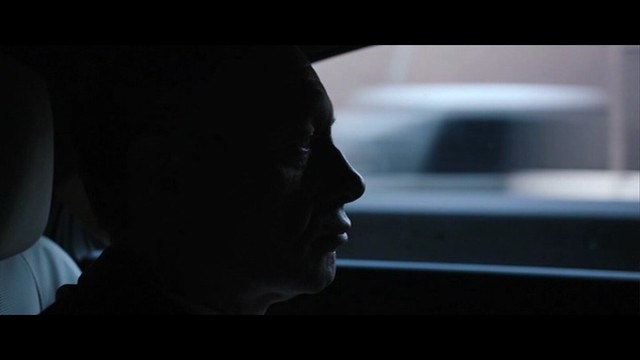
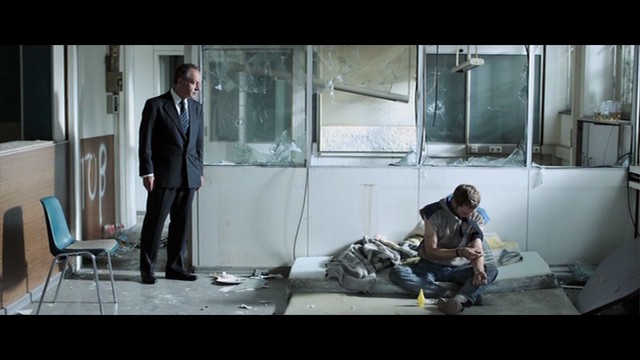
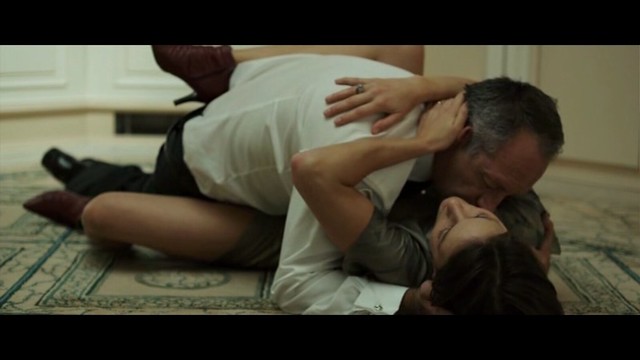
Unter dir die Stadt/The City Below (2011) - Hochhäusler Screen Shot 2024-02-08 at 9.00.45 PM Screen Shot 2024-02-08 at 9.02.55 PM Screen Shot 2024-02-08 at 9.23.34 PM Screen Shot 2024-02-08 at 9.37.01 PM Screen Shot 2024-02-08 at 9.46.04 PM Screen Shot 2024-02-08 at 9.52.14 PM Screen Shot 2024-02-08 at 10.02.48 PM Screen Shot 2024-02-08 at 10.07.35 PM Screen Shot 2024-02-08 at 10.18.11 PM Screen Shot 2024-02-08 at 11.23.45 PM Non-descript glass and steel skyscrapers of Frankfurt are as much characters as the cold and calculating people who inhabit in Christoph Hochhäusler's take on Global Financial Crisis of 2007-2008. A young couple Oliver (Mark Waschke) and Svenja (Nicolette Krebitz) just moved to Frankfurt because Oliver got a job at a big bank which is headed by the 'banker of the year' recipient Roland (Robert Hunger-Bühler). Oliver is one of the many ambitious young men who are jockeying up the corporate ladder in a cutthroat environment. They pose for a group picture while saying "GREED". The bank is in the process of acquiring a rival in a ruthless takeover under Roland's instructions while hushing up the kidnapping and gruesome death of an employee in their Indonesian branch, as the Asian Economic Crisis deepens. Svenja wonders through the urban jungle made of glass, lying about her work experiences on her CV as a photo editor while half-heartedly applying for jobs. She casually walks on by at her husband's high-tech, antiseptic new workplace, and catches Roland's attention. Against all his instinct and judgment, he becomes obsessed with the young woman. She as well, perhaps knowing who he is, goes along with his advances and ends up in a hotel room with him. Then they think better of themselves and go their separate ways.

An opportunity comes up to get rid of Oliver from the picture, dressed up as a promotion. It's the position of as the new head of their Indonesian branch, replacing the recently deceased. Even though he is not the most qualified, Roland pushes for Oliver, in pursuit of Svenja. Soon as Oliver leaves, their affair begins.

It is interesting to see their inexplicable attractions to each other, gliding over everything: the impact of the takeover resulting in the loss of hundreds of jobs, and their affair taking a toll on Roland's and company's reputation, possible death of the husband. The word love is never uttered by anyone. The affair is not even overly sexual. It's the greed that takes over in a highly capitalized environment where everyone unknowingly plays power games over each other. It's the greed that breeds like a disease. It's as if Roland and Svenja are there but not there doing what they are doing. The disease has taken them over and they are just going through the motions. The ominous ending, as mass of people running down the street, seen by the morally bankrupt, cheating couple, is chilling. The end of the capitalism has begun.

Monday, October 12, 2020

Like Berlin, Old Folklore Gets a Makeover in Christian Petzold's Beguiling Undine

Undine (2020) - Petzold Undine Undine is a water nymph or spirit that appears in many folk tales and literature in Europe. One of its various versions is Little Mermaid, widely popularized by Hans Christian Anderson. It is said that she takes a human form only if she falls in love with a human. But when that human is unfaithful, he is fated to die. 
 
Christian Petzold, not a stranger to making films with strong female characters and using genre conventions to reflect the contemporary German issues, takes a stab at a fairytale romance involving the history of the city of Berlin in Undine. It starts with a breakup scene of a couple in progress at the terrace of a cafe. Undine (Paula Beer, seen in Frantz and Petzold's Transit), a historian at the city museum, is understandably upset when her smug boyfriend Johannes (Jacob Matschenz) announces that he is seeing someone else. She is on a break from her job across the street and she warns him that she will kill him if he doesn't say he loves her when she gets back. The threat is overly dramatic. She gives a talk to the museum visitors about the transformation of the city of Berlin over the years - West and East, what was lost and what was promised, laying out the theme of constantly changing and renewing state of affairs. When she gets back to the cafe, Johannes is gone. By chance, smitten Christoph (Franz Rogowski, who played opposite Beer in Transit) who was present at the museum tour, is there to ask her out for a coffee at that moment. All of sudden, the fish tank shatters, knocking them both off of their feet. Their rather wet first encounter rapidly develops into a sweeping romance where the two become inseparable. 

Water is the constant motif here that stands for change. Christoph happens to be an industrial diver and spends much of his time under murky water of the river Spree. His job is taking care of the leaky turbine and other maintenance issues under water. Once he encounters a big catfish, nicknamed Gunther by his colleagues in one of his dives. Is Gunther a fish or some sort of water spirit? 

Gunther the catfish makes another appearance when Christoph takes Undine diving on a date. He was there to show her a remnants of an old bridge under water that bears her name. In an unusually beautiful scene for Petzold’s standard, since he is not known for his visual excess- we see Undine without her scuba gear, swimming with Gunther, slowly passing over Christoph. On land, Christoph tries to revive unconscious Undine, singing "Staying Alive" by BeeGees under his breath. Later he explains to her, it's the rhythm of that song that is perfect for CPR. Their love affair is sweet and intimate. Undine plays out like a whimsical romantic comedy at this point. And chemistry between Beer and Rogowski is quite remarkable. They both are unbelievably good in their roles as ill-fated couple. 

There is another history lesson as Undine practices her presentation on Humboldt Forum, a museum that is a replica of Stadtschloss (Berlin Palace), at her small but practical apartment overlooking the said building. If you've been to Berlin, you had noticed that everything is rebuilt after WW2. Stadtschloss was rebuilt in the 21st century. Undine's presentation tells that modern architecture teaches that form follows function. But it's not the case with the museum in the form of the eighteen-century ruler's palace. That Germany's pragmatism doesn't quite coincide with people's wishes concerning reviving the soul of the city. 

The Story of Undine gets a 21st century makeover too. She was upset when she was betrayed, but she gets a second chance at happiness being truly loved. Petzold, a master storyteller, reinvents the mythical water creature story paralleling the history of the city of Berlin while acknowledging the past just underneath the surface. 

Its whimsy and romance works thanks largely to Beer and Rogowski's excellent performances. It's so good!

Sunday, April 12, 2015

The State We Are In: Christoph Hochhäusler Interview

photo 10441d7c-10b6-4c09-8ab3-349864b8fd25_zpsyksklmet.jpg
One of the leading figures in Berlin School (Berliner Schule) movement, Christoph Hochhäusler (I am Guilty, The City Below) is known for creating psychologically complex characters in an imposing environment. His new film, The Lies of the Victors, a taut conspiracy thriller in post-Snowden era, then, can be seen as the director charting a new cinematic territory.

He is in town for KINO! festival and I was lucky enough to snag an interview. I have to mention that the interview took place in Silversalt PR office in Soho to give the context in part of our conversation.

The Lies of the Victors plays part of KINO! 2015 which runs 4/9 - 4/16. For more info, please visit the festival's website.
 
After directing THE CITY BELOW and ONE MINUTE OF DARKNESS  for DREILEBEN TRILOGY, you decided to make a political thriller, THE LIES OF THE VICTORS. What made you to do this film?

I have a relatively complicated back story about that. But I can tell you. You can choose to use it if you want to. Long before the two films you mentioned, I wrote a thriller centered around a journalist. But I never really found the right approach. The level of realism and obstruction was shifting due to what was happening at that time. Eventually I never used the script for anything. But I showed it to my co-writer, Ulrich Peltzer (co-writer of The City Below), who is at the moment doing a writer's residency at Cornell by the way. We decided to keep only the name of the main character. (laughs)

Fabian Groys?

Yeah and his profession - journalist, everything else changed. But I always liked the idea of journalists as heroes in films. That's a genre that is especially well developed in American cinema. There are not so much in European films dealing with journalists.

You mean ALL THE PRESIDENTS MEN and so on?

I mean also from the 30s. His Girl Friday is a favorite of mine and in all Howard Hawks films. The Lies of the Victors is pretty much a hardboiled detective story but a detective with a different agenda you know.

It does play out like a film noir without any gun play or car chase scenes.


And no explosions. (laugh) Yeah, that's what hooked me. And then I was searching for the ways to deal with what you could call modern problems. I mean like media industry and lobbyists and things that are not really personal stories but more about structures and so on. So that's how it got started.

What is your working process like with your co-writer, Ulrich Peltzer?

Usually I approach him with broad suggestions for a story. And then we write it together, meaning we seat in the same room and discuss everything. and usually he types. It's typing reading correcting typing reading correcting... it's a beautiful process.

The film struck me in very similar way as Costa Gavras' Z, probably because of its bleak assessment of what's going on around the world. But unlike THE CITY BELOW or ONE MINUTE OF DARKNESS where antagonists or antagonistic presence were kind of hidden, in THE LIES OF THE VICTORS they are more pronounced. Why is that?

It's probably because out of all my films, The Lies is the most typical 'genre' film I've done. I'm not saying that conspiracy genre is a very hard genre to do. There aren't a lot of rules that need to be established. It's a pretty blurry tradition. So it's not very limiting. But at the same time, there are some expectations in it that I tried to respect them more than in my other films. I'd say from all my films, this is the closest to a genre cinema I've done.

But it's also the nature of the story that antagonism plays a big part- there is no antagonists in The City Below other than the people themselves.

True.

The worlds that resemble our world in both THE CITY BELOW and in THE LIES OF VICTORS are very dystopic in nature. Do you share this bleak assessment of our world in real life?

Yes and no. Of course I'm not trying to be someone else when I make a film but I see life with a lot of optimism actually. (laughs)

Of course there are a lot of things I worry about. But I doubt that our time is worse than others. You know what I mean? Probably it's always the same shit all over. (laughs) But as always, there are possibilities for goodness, beauty and grace, you know. Then I have to agree that it's pretty bleak. If you look at the headlines of last couple of years, it's really a mess.

Then again what era was ever a good era? It's always the past we are fond of for some reason.

Another thing that interested me was that characters in your films often deal with being admittedly guilty or perceived as guilty but it's not clear in Fabian's case. I am wondering, if anything, what Fabian is guilty of?

Well I'm not sure if guilt is such a big theme for me personally, but of course it is in German culture in general. What he is guilty of is the same as we are all guilty of, carelessness. For example how news are being made, you know. Fabian is obliged as a journalist to question everything, that more skepticism is needed. He is an easy prey for those in power.

I mean old school journalism is quite unprepared for the possibilities of surveillance and new technologies. It's amazing what they can do now. They can even change source material without you ever knowing about it. It's really easier to get away than ever. And of course we are so concentrated on the state surveillance but we all know the companies do it. Discussions that have been going on so far post-Snowden, there have been too much focus on the state surveillance. NSA is a state organization, but there is enough proof that NSA contractors, like the one Snowden was working for, are working for other powers including the US industries.

All the telecommunication companies that all complied to the government since the Patriot Act...

They comply to the government but if you want to know what your competitors are doing, there are ways to find it out. The thing is it's being done already. They do it and there is not enough attention getting paid to it.

Following up Berlin School conversation I had with Christian Petzold and last year's MoMA coverage by Ben Umstead, how do you feel about being grouped in this kind of movement?

I don't have any problems with it. I think it's a critic's job to describe what's happening. There is a certain... family of filmmakers so to speak. We are in touch and there are discussions taking place and there is no money attached and there are no rules. I don't want to define who's in and who's out. But it's true that there are unusual amount of solidarity and interest for each other. So why not call it a name, Berlin school or otherwise.

Of course the implication of the label is sometimes harmful. For example, when it comes to financing a film I've heard many times that they say 'we don't want to finance Berlin school films'.

Wow, really?

Because the industry is full of expectations - 'they (the berlin school films) are too slow' or call it  whatever else you can think of when you don't like something. So there is always a problem being labeled like that.

I see.

It's probably the same in journalism. You are labeled as someone who only like this or that.

'You only cover genre films' or something like that.

Yeah exactly. It's limiting.

You mentioned in an essay that Berlin School is not limited to Germany but you see it happening everywhere.

I wouldn't say that Berlin school is everywhere. I think it's the same spirit in filmmaking whether it's Argentina or Korea or Austria or Portugal. It's international interest in certain tropes and modes of state it's on. I'm not saying that we influenced them.

Where do you think this similarities in spirit comes from?

It's the reaction to having too much formulaic. Every wave in film history is trying to regain a certain believability or to refresh things, you know. Every wave tries to regain something that is lost - if you look at neo-realism or nouvelle vague or free cinema, it's all about getting over the cliché of what's come before them.

For us, we are gunning beyond formula, beyond what's become as a commodity. There will be a lot of movements after us and there are already, I'm sure, with very different stylistic approaches. But I don't believe in stylistic revolutions. I really don't think it's about style. The style is what follows.

Do you still watch a lot of works of other filmmakers and follow what they are up to?

Of course. but I don't watch as much as I used to. I have two kids now. (laughs)

You used to be a film critic, no?

Yes and no. I co-founded and edit a film magazine called Revolver. We founded it in 1998. It's a magazine that mostly publish interviews. I'm still doing that.

So who do you like?

I mean one of the directors I admire the most is her (pointing at a La cienaga poster on the wall, by Lucretia Martel).

This is La cienaga, her first film and which might be her best film overall. But when it comes to form I'm a big fan of La mujer sin cabeza.

Headless woman. Yes, of course.

She is now making a new film and I'm very excited.

It seems that's where things are happening right now, Latin America.

Yeah, there are many. Lisandro Alonso, and few Mexican directors too.

What's next for you?

Among other things I am preparing a French film set in 1941, a period picture. It was initiated and starring Isabelle Huppert. But the financing is not there yet. As you can imagine, it takes a while. I don't know if it will happen.

Let's hope it does because it sounds awesome.

Thanks. And the other project is some sort of a gangster movie. I have ideas for all kinds of films. I'm also writing a new Dr. Mabuse film. so we will see what happens.

Wednesday, December 19, 2012

I Envision All These Great Small Movies in the Ruins of Hollywood: Christian Petzold Interview

ChristianPetzold
Christian Petzold's fantastic new film Barbara opens in the US on December 21, after garnering critical acclaim; Petzold won the Best Director award at Berlin International Film Festival this year and the film is the German entry for the Best Foreign Language Oscar. It was exciting to talk to one of the key figures in new German cinema at NYFF this past September. 

I have to admit that I wasn't really familiar with new German cinema until recently. My idea of German cinema always has been that of the 60s and 70s by directors like Schlendörff, Fassbinder and Wenders.

That's also my experience. That's the time I was brought up. Back then we never went to see a German film in theaters. When we did, it must've been to see Jaws or something like that. My first 70s German movie experience happened to be Alice in the Cities by Wim Wenders, partly shot in Wuppertal, the town I grew up in and the music by one of my favorite bands, Can. It was my town and my music! But it was a kind of strange reflection of Germany I knew in the seventies. That was the movie that opened my eyes for the first time.

I met Wenders later on and I told him my story. He told me that Germans are always attracted to something that is very close to them yet strange. I think GDR (East Germany) is just that- very close and very strange.

Far away, so close.

Yes, exactly.

This is very interesting because when you think of Wim Wenders's films and the current crop of German films, Berlin School if you will, there is this ongoing theme of transient life: people are always going somewhere or they are forced to move. I mean, in BARBARA, it's the same. She is being punished for trying to go to the West, so she is sent to a small town ...

But there is a difference. The thing you just brought up is very interesting. I'm sorry but now it's on my mind...

No, please go ahead.

In the 70s, everyone was rich in Germany. We thought that we've won 68' and we thought we could change the society...

Right, right.

Films by directors like Wenders- when they are on the road; they are on the road not because of economic reasons or pressure. They are like Novalis or Hölderlin. They are on the road because they are romantics.

There is a connection to the 70s in Berliner Schule (Berlin School) movies but people are not on the road because they are looking for something. They are on the run; they are migrant workers or refugees. They can't stay in one place.

There is also a theme in your movies that is in relation to the 60s and 70s. More of a reaction I should say. With the social upheaval of that time, the traditional family structure had broken down. In your movies there is a yearning for this ideal family life. Usually it's a mother figure in your films that is needed - Barbara somehow ends up as a mother figure to the young girl who ran away from the labor camp. That theme also plays a pivotal role in GESPENSTER (Ghosts).

That is interesting. When we made Die Innere Sicherheit (The State I Am In) in 2000, the metaphor was something to do with the sea. Say, there is a shipwreck, and people are scrounging up to build a raft out of what's left over. Since 2000, all my movies are about this structural collapse (both economic and familial) and people trying to build a lifeboat to survive. So what's happening on the raft? In Barbara, there isn't a father figure anymore. There is no love (at least for now) between the doctors. In Ghosts, the woman is not the girl's mother. All these films, they are trying to rebuild something you can live with, out of the ruins. Obviously we can't rebuild, say, Russia. The capitalist system is in the ruins. Fascists tried to nationalize the whole world and failed, we can't blame our woes saying Greeks are lazy and Muslims are the enemies and so on. We have to find little survival structures and I think that's what my movies are about.

It's amazing how complex your movies are. At a first glance, they are full-on melodramas and don't seem political at all. But more and more I think about it, it is very political and everything's got to do with the German society. And it fascinates me, especially BARBARA.

It's something to do with me being a novelist. But making film is different. Not everything that you see on screen is on my mind when I write a script. I'm not Orson Welles. The film you see is not the realization of what's in my head. I have an open, short story and the group of people I work with, the (acting) ensemble, the team (crew), we discuss it for weeks before the shooting begins - we go on long walks and to libraries together. The whole team and the actors, we go to cinema together ten times. For instance, Jerichow, about this Turkish immigrant worker, who tries hard to be a German, by reaching that German Dream - fantastic cars, a big house and a beautiful wife. But he becomes stranger and stranger still. Very melodramatic. It's not based on a novel that I've written. But it was born out of our collective, as we built upon it. You realize how the political side of it is scurrying around just beneath the surface, that our collective work makes everything not too in the face. But to have that kind of result, it takes a lot of work and time.

That leads me the next topic. Nina Hoss. What an amazing performance!

She is so disappointed that she can't be in New York. I think, in two hours, she needs to be on stage in Hamburg. You know, theater in Germany is very important. In Germany, film is like a dilapidated house and theater is like our Parliament. It's the culture: the distinctions between the two disciplines are very big. I hate that. But she is the most famous actress on stage in Germany right now. She really hates not being here but like Barbara, she can't leave. (laughs)

She is really amazing. From what I've read about you, you make a big distinction between what is written (script) and actual filming process. That your filmmaking is all about communication. So when you are not rolling the camera, you are constantly talking to each other?

Yeah. For our first meeting (for Barbara), we met at this fantastic loft building and everybody was sitting there and I talked for three hours. I was really exhausted. I don't think I talk too much but others have different opinions about that. (laughs) I told them the chronology of the project - how I found the story, what I thought about it, what I've made in the last half years, what music I listened to when I was writing it. Chopin... why I used Chopin's Nocturne because in The Deer Hunter by Cimino, this barkeeper plays Nocturne when Walken and De Niro and others are all lying around there in the bar. They hear Chopin, mind you that they are all working class steel mill workers. Their lives destroyed by the war and for that little moment while listening to Chopin, they realize something. But it's too late. And around the same time (Barbara is set in 1980) in GDR, Barbara's playing the same music. But she is playing it like a weapon to keep those Stasi police away. So I put on a Pollini's Nocturne CD and we listened the whole thing together. These are the things I love so much.

That's really fantastic.

It is not a typical film shoot. I consider it as a collective.

I've  got to ask you about the Rembrandt painting, The Anatomy Lesson of Dr. Nicolaes Tulp. I totally get that it is the reflection of the character André as he shows Barbara the painting. He made a mistake and he is pointing to something else to evade the eyes of authorities. But the whole time I was thinking that you were saying something about the folly of Communism.

Yeah, it is a metaphor for Communism.

So I wasn't wrong about that. How did putting that Rembrandt in the film come about?

I've read a book Rings of Saturn by Sebald. In the novel, he is thinking about this Rembrandt. For him, Rembrandt is criticizing the Age of Reason- Descartes, Kant, "We are now the owner of our fate," "We build our own society." attitude. And we got it for free without violent upheavals like the French Revolution. But we lost something on the way- faith, respect and so on. In this picture by Rembrandt, there is a group of scientists who haven't got any empathy nor sense for the complexity of life, but just looking at the anatomy book with pictures. For them the world has to be like the pictures. That kind of thinking creates violence. Communism is the direct result of Descartes and Kant, so as our current capitalistic society.

That's exactly right.

Right now new German cinema is not really well known in the States. A good friend of mine introduced me to your work and other German directors' films. So that's how I found out about Berlin School. But their films are not really available even though I want people to know and watch these films.

Yeah, there will be a big retrospective of Berlin School next year at MoMA. I just had a lunch with the curator there. It will be in September some time.

That's great. I'll definitely cover that.

Let me give you an example: Kelly Richardt's, Meek's Cutoff is a fantastic movie. I think it's the best Western I've seen in years. We have two cinemas playing that in entire Germany. We have about five cinemas playing a Gus Van Sant movie. Yes, Americans don't know about Berlin School but I think there is a crisis in cinema internationally. There is no relationship anymore that existed in cinema in the 30s, 40s, 50s, and 60s or even in the 70s- Truffaut was in a Spielberg movie and Arthur Penn got to direct Bonnie and Clyde because Truffaut hadn't had the time. They were in connection. They were looking at each other's work. When an American director met a German director, they talked about movies. This relationship was interrupted at some point. And it's not the fault of the directors but this big industrial structure we call the film industry. American companies own all movie theaters in Germany, so they have 800 theaters playing this and 800 theaters playing that. There is no room or time for small films. I read a lot about some great American movies but I can't see them. Margaret was a fantastic movie but you can't see it in Germany. You have to buy DVD online. We have all these resources, we really have to open the channels again and communicate with each other.

Would you ever consider doing an American production if you were asked?

They did ask me two times now. But I don't know anything about America really. I've read Howard Zinn's book...

People's History of the United States?

Yes, and I grew up in this Americanized culture but I'm still a German. I don't really know how to tell the story there other than maybe the Germans in America. But as far as doing an American film, I don't really see it happening.

You are not going Hollywood and doing big movies as Tom Tykwer does?

My goal has never been Hollywood. I'm dreaming of the new Hollywood. I don't live in the 50s. I'm not a retro man. I envision all these great small movies in the ruins of Hollywood.

Barbara Review

Sunday, September 30, 2012

The Anatomy Lesson

Barbara (2012) - Petzold

As a leading figure of Berliner Schule, director Christian Petzold has been portraying 'lost' people in both literal and metaphorical sense: desperate souls cornered into making tough and sometimes wrong decisions brought on by economic hardships in the post-global recession era. In his new film Barbara, even though the setting is East Germany and the year is 1980, that portrayal of characters in (im)mobile state fits well and works superbly here.

It's East Germany and the year is 1980. Barbara (Nina Hoss) is a city doctor who gets banished to the country as a punishment when she applies for her exit visa to go west. In her new environment, she is under constant surveillance by secret police and subjected to inspections and body cavity search routinely. Deeply distrustful about her new neighbors and colleagues, she tries to keep a distance and concentrate on what she is good at- taking care of patients, all the while planning her escape to the west with her wealthy West German lover.

A young, good-natured fellow doctor Andre (Ronald Zehrfeld) slowly wins her trust with his talent and sincerity. It turns out that he shares a similar history. Andre uses Rembrandt's painting The Anatomy Lesson of Dr. Tulp as an analogy for what it's like to be living under communist regime in the 1980s: you want to divert the attention of the spectators (or in this case, of government officials) to obtain a little bit of relief/freedom in a rigid society. And this applies to Barbara's situation as well. There is a mutual attraction growing.

Things get a little more complicated when Stella, a teen runaway from a labor camp with meningitis is admitted to the hospital. She immediately latches on to Barbara. The official policy is to send her back to the camp as soon as she is well. Later Stella confides in Barbara that she is pregnant. Going back to the camp undoubtedly means an end to her unborn child. As the planned escape date approaches, Barbara's personal ethics and morality are being challenged.

Barbara is the fifth collaboration of Hoss and Petzold. As it is revealed at the skype Q & A session after the press screening, the role was written specifically for Hoss. And she is mesmerizing in it. She gives the character a quiet resolve and strength. Deeply moving and humanistic, the film concentrates on the small heroism of one person rather than looking accusingly at a failed ideology.

Barbara screens on Oct. 1, 6pm, Oct. 6, 12:15pm and Oct. 9, 1pm at Film Society of Lincoln Center. For tickets, please go to NYFF 2012 website.