Showing posts with label Brazil. Show all posts

Tuesday, December 23, 2025

Curiosity

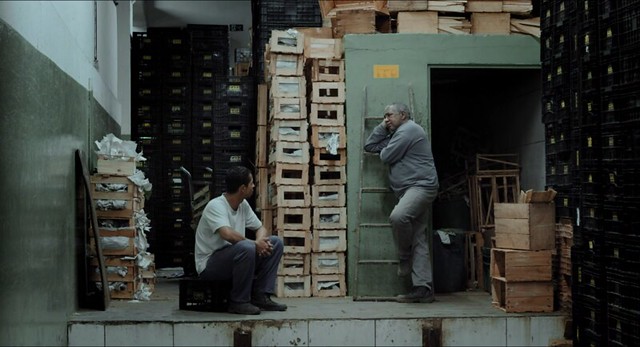
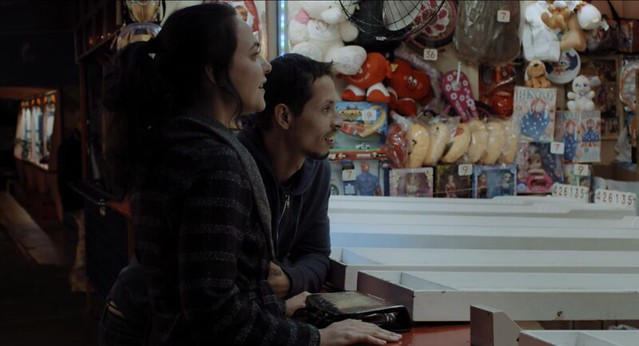
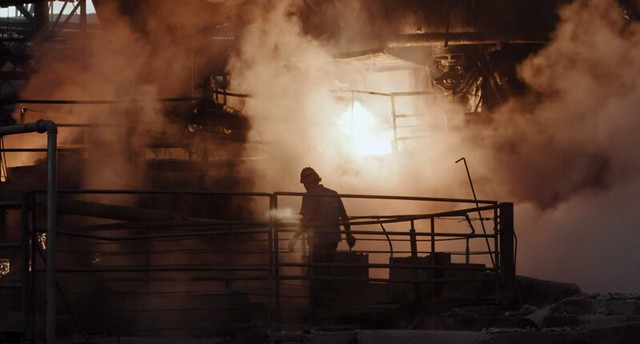
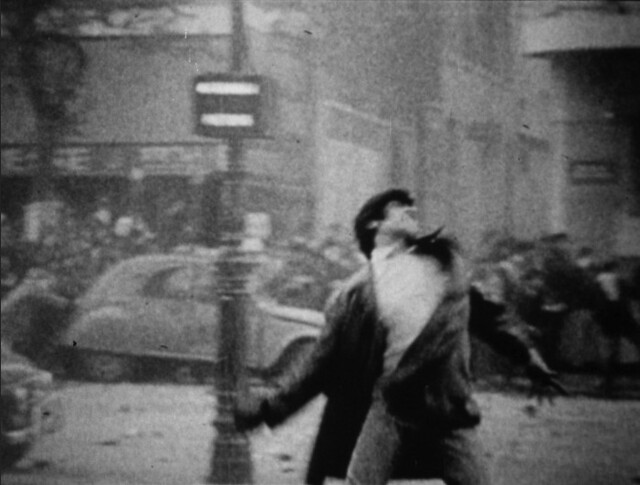
The Secret Agent (2025) - Mendonça Filho O-AGENTE-SECRETO-Kleber-MENDONCA-FILHO-Photos-3-Films-kit To filmmaker Kleber Mendonça Filho, Recifé, the capital city of Brazil's northwest region where he grew up, is what Fenyang in Shanxi Province means to Jia Zhangke. Like Jia, Mendonça Filho, has been chronicling the changing times, in both real and fictional stories of his beloved region. After series of critically acclaimed films in and around Recifé, he comes up with The Secret Agent, a sun-lit neo-noir/political thriller taking place in 1977, which makes a great companion piece to Pictures of Ghosts (2023), his documentary about history and cinema in Recifé.

Mendonça Filho, using the meticulously recreated old Recifé as a backdrop for a story about a man on the run, trying to navigate the place where daily violence and corruption are rampant under the country's military dictatorship.

As Marcelo/Armando (Wagner Maura) arrives in a dusty, desolate gas station on the outskirts of the town, he finds a dead body lying on the ground, partially covered with rocks and cardboard boxes. The proprietor of the station is completely nonplussed by the bullet riddled body. Since all their resources are tied up for the carnival, which is just wrapping in town, cops won't come until Ash Wednesday, he says to Marcelo. But soon the cops arrive, not for the body, but to shake up Marcelo for bribery. From the beginning, the filmmaker lets us know that violence and death are everyday occurrences for the citizens of Recifé with corruption in law enforcement normalized.

Armando under alias, Marcelo, is welcomed by a propriator Donã Sebastiana (Tânia Maria) of a building complex doubling as a refugee hideout. It is slowly revealed that Armando was a university researcher who rubbed a powerful company head and now a high ranking government official, Ghirroti (hailing from Sao Paolo), the wrong way. They met in 1974 and had a blowout, due to Ghirroti's attitude towards what he deems as country hicks (Armando and his research team) and his extreme southern arrogance. Now Ghirroti wants to eliminate Armando and send two assassins (a disgraced ex-military and his stepson) from the south.

Fernando, Armando's adorable young son, has been raised by his grandfather Alexandre (who is based on the real life film projectionist who was featured in Pictures of Ghosts), but longs to live with his fugitive father. Armando is in Recifé not only to retrieve his son back but to find out about his mother's past since she was from the region. With the help of underground resistance network against military dictatorship, he gets assigned a job in an ID issuing government facility in town, which also happens to be in the same building as the police station, lead by corrupt cop, Euclides. Armando needs to juggle and pit the unsuspecting police and assassins against each other while he waits for the new passport to arrive.

Tall and bearded Wagner Maura is effortlessly sexy with his sad eyes in his fugitive ways. And the film's filled with memorable characters and faces. Udo Kier shows up in his last role as a reclusive German Jew partaking in the wild street carnival.

As with all other Mendonça Filho films, the geopolitics of Brazil, the class struggles, regional culture and personal memories all vividly intersect in The Secret Agent. The title gives Armando's story an air of hero's tale full of intrigue and curiosity. It also has a lot to do with the pulpy cinema tradition and telenovelas which the filmmaker was brought up in. There's an urban legend story brought to life in a man's leg discovered in a shark's stomach and police trying to cover it up. There's a sequence of a severed leg moving around and attacking unsuspecting people participating in cruising sessions in the public park at night. Also the significance of the American influence in pop culture is everywhere - Jaws was playing in theaters in 77 in Brazil, so was Omen and Chicago's If You Leave Me Now is on the radio all in the backdrop of seedy and dangerous Recifé in the 70s.

With Bolsonaro and the ultra rightwing factions of the Brazilian political spectrum being in charge not far from the collective memories, The Secret Agent is about rebuking anti-intellectualism by having university researchers both past and present the heroes of the film which is also very pertinent in our own political climate. Slow at revealing the plot and not spoon feeding the audience with all the information and backstory, the film beckons at your curiosity to find out more about the not too distant past of checkered Brazilian history. Definitely one of the year's best.

Friday, November 10, 2023

Wrestling Picture

Neirud (2023) - Faya Neirud Brazilian filmmaker Fernanda Faya's Neirud is an intimate and affecting documentary that tells a larger-than-life story of a woman whom Faya thought she knew. Using wealth of family home videos, photos and historical news reels, Faya sets out to solve her family mystery like a good detective and constructs a beautiful portrait of her family friend, aunt Neirud, who happened to be a trailblazer in a country where things were still very much steeped in traditional ways.

With the Roma heritage on her father's side of the family, the filmmaker’s family has a long history being in the circus business. And her ancestral history is a fascinating one - they fled the persecution during the war in Europe to Brazil, moving place to place to avoid prejudice and racism. Faya's grandmother, Nely, a trailblazer in her own right, became the first in the family to be educated, and became a well-known actress in a traveling theater group. After a stint in Europe, Nely came back to her roots and start managing the circus theater group as an artistic director. That's where she met Neirud.

Aunt Neirud is seen in many home movies shot by Edgard, the filmmaker's father, gleefully holding the baby Faya on many occasions with Grandma Nely in the background. They are joyful family occasions. Donning full afro, Neirud, a towering black woman was a gentle giant. Her life story, told by herself in an inquisitive interview conducted by Faya, which was filmed when Neirud was nearing the end of her life, is as dramatic as any great fiction - after being abandoned by her biological mother in the small village to be cared for in a better to do household (as it was a common practice back in the day), young Neirud, being black, was put to work while attending school, not like other white children. At 8, she was already very tall and strong.She ran away to the city and asked to be hired as a nanny. At 12 when the circus was in town, enamored by the spectacle, she runs away again to join the circus. Strong as she was, she quickly established herself as a pivotal member of the troupe, then a main attraction. The legend has it, Neirud was the only one who can wield two hammers, one on each hand to put the spike in place to pitch the circus tent. The female wrestling, forbidden by law in still a conservative society, was allowed as the circus act. Developed by Nely, the female performers took on their own special characters -a pretty one, a vampire etc. In the ring, Neirud was the kimono wearing, 200 pounds of pure muscle, invincible Gorilla Woman.

Faya, finding wealth of pictures and footage of Grandma Nely, as she was the matriarch of the family and the face of the family business, but none of aunt Neirud from the wrestling days, sets out an investigation into her family history. She tracks down the only living remaining wrestler, Rita, from back in the day. In series of phone interview, Rita reveals that most of the photos were lost in the flood. She sends her a poster featuring "the Gorilla Woman" from that period. It's a towering picture of Neirud staring down. Neirud never wrestled again after Nely's passing, retired from the business, and lived in the house by the beach that she shared with Nely. Rita also informs the clue to Nely and Neirud's relationship. From all the materials she gathered, to her surprise, Faya finds a fantastic love story between the two women whom she dearly loved. It is also revealed that how they fled together on a road trip all over South America and ultimately formed their own circus troupe.

Neirud is not only a great love story, but an acute survey of Brazilian history and progress made in women's place in society. Aunt Neirud, along with Grandma Nely turn out to be a trailblazer in more ways than one. Switching gracefully between intimate home movie and a historical documentary, the film is also a wistful love letter to a person who meant a lot to the filmmaker. Gently bookending with the reenactments of her childhood memories of aunt Neirud driving with big colorful inflatable balls strapped on the roof of her station wagon on the beach, Faya possesses a kin eye for visual lyricism that conveys yearning and sweet sorrow.

Along with this year's Kleber Mendonça Filho's Pictures of Ghosts, Neirud chronicles changing Brazilian society through the bounds of first-person home movie narrative. Neirud works as a playful cinematic investigation with great warmth and heart.

Neirud plays part of DOC NYC. It has a theatrical premiere on 11/11 at Village East by Angelika, NYC.

Sunday, October 8, 2023

Ephemeral

Retratos fantasmas (2023) - Mendonça Filho Pictures of Ghosts Kleber Mendonça Filho, whose films- Neighboring Sounds, Aquarius and Bacurau became arthouse darlings in international festival circuit and in turn, made his hometown of Recife, a city in northeastern Brazil, a center for a surging new Brazilian cinema. Living and working there in his beloved city for the last forty years, it is only natural that his new film, Pictures of Ghosts/Retratos de fantasmas, is a love letter to Recife. But the film is not merely all melancholic look back on the past. With the film, he is using his personal story, through the geography of the neighborhood and the historiography of cinema to illustrate the rapidly changing nation, and it's a charmer.

Mendonça Filho, who has seen his beloved city morphing into skyscrapers and shopping malls, fondly remembers his upbringing. His single mom Jocelice, a local historian, brought him and his siblings in a two-story apartment building, which has been a location for his several films, all the way back when he was making films with other cinephile friends using VHS camera, making action/horror films, to his more recent films. Part one of the film is dedicated to this house and neighboring buildings.

Physical buildings can be torn down and repurposed, but people and animals who inhabit the area linger in one way or another. The filmmaker, a well versed in cinema history and studies, puts an importance on oral history and ephemerals when drawing a complete picture of the place. There is a funny bit on a neighborhood dog, whose day and night barking that drove everyone crazy. The barking so distinctive and recognizable and ended up in many of the filmmaker's films unintentionally. Decades later, he was startled by the barking, only to find out someone was watching one of his films in the living room. Pictures of the Ghosts are filled with stories like that.

There are no shortage of local historical artifacts and news reel footage, including Tony Curtis and Janet Leigh's visit to the city in 1961. Chic boutique and luxury shops dotted the street near the riverside. Part two is dedicated to the cinemas and downtown Recife. Back in the heydays, being an important commercial hub of the northeastern Brazil, the downtown was booming with foreign investments and money pouring in. And it hosted many opulent cinema houses, where Mendonça Filho spent most of his teenage days. Now the money is gone, the downtown Recife is a hull of its glorious past, with faded buildings and most of its gilded cinema palaces either abandoned or turned into a shopping mall. In Pictures, the person in charge of changing the marquee of the cinemas become timekeepers, as the film titles appear in the background of historical photos in the papers, some of their letters obscured by trees, traffic and even marching soldiers during military incursions, presenting unintended Godardian wordplay. We see the lobby cards, movie posters and other movie paraphernalia being sold in an outdoor market outside those closed movie houses.

Mendonça Filho also has a video footage of a projectionist of one of the great cinemas he frequented with, asking earnest questions about his career and the prospect of the cinema house closing its doors. And the shot of one of the projectors kept in a locked room in now a shopping mall for posterity's sake.

The part three is 'Churches and Holy Ghosts'. The filmmaker connects an early Anglican church becoming a cinema house, then turning into Evangelical church. His criticism of the rise of Evangelicals (including the extreme right-wing Bolsonaro regime) in the country, is there, as he bluntly puts it, "Evangelicals bought cinema." The movie ends with whimsical taxi ride, throwing shades on Hollywood's superhero movies. The 80s Michael Mann vibe with night lights reflecting on the car, as it rides the bridge at night with smooth jazz - reminds the audience that the Brazilian director undoubtedly grew up loving the 80s Hollywood cinema.

Pictures of Ghosts is a loving, intimate documentary on ephemeral nature of our lives. Our loved ones grow old and die, buildings get torn down, video footages disintegrate, but there is evidence of those lives lived and experienced all over, if you know where to look. Combining his own experience and his love of cinema, Mendonça Filho serves as our expert guide to his beloved city of Recife. And It is definitely my choice for the documentary of the year.

Sunday, November 27, 2022

Gasolineiras

Mato seco em chamas (2022) - Pimenta, Queirós Screen Shot 2022-11-27 at 8.27.29 AM Screen Shot 2022-11-27 at 8.53.39 AM Screen Shot 2022-11-27 at 8.56.17 AM Screen Shot 2022-11-27 at 9.32.06 AM Screen Shot 2022-11-27 at 9.33.54 AM Screen Shot 2022-11-27 at 9.37.45 AM Screen Shot 2022-11-27 at 9.53.51 AM Screen Shot 2022-11-27 at 9.58.35 AM Screen Shot 2022-11-27 at 9.59.42 AM Screen Shot 2022-11-27 at 10.02.06 AM Lula's 2022 presidential election win ended the tyranny of Jair Bolsonaro in Brazil. Started out during the fateful election of 2018, Dry Ground Burning/Mato seco em chamas is a cinematic act of political defiance of the often neglected region of Central, North East Brazil of Brasilia and its neighboring favela, Sol Nascente and its people. Adirley Quierós, the filmmaker from the region, has been making unique sci-fi fiction/documentary hybrids starring its local inhabitants - White Out, Black In (2014), Once There was Brasilia (2017). In Dry Ground Burning, with his long time cinematographer Joanna Pimenta, they create another blend of unique docufiction, where its subjects playing an extension of themselves while observing the political climate of the region.

Chitara (Joana Darc Furtado) is a local legend after she and her gang of women hijacked the underground oil pipeline and started their own makeshift oil refinery and supply to the locals at much cheaper price. There are popular songs written about her. With her tough stepsister Léa (Léa Alves da Silva) who is fresh out of jail, they guard the refinery armed and ready for any police intrusion. Léa, still under surveillance of the police, is told that the region is now swarmed with cops. As usually the case with Queirós, the film consists of long takes and monologue, laying out the dusty vistas of unpaved roads and motorcycle gangs roaming as well as what it is like growing up and living in poverty and crimes.

The flames of orange and yellow are the dominant color palettes. The flame lit profiles of these strong women against the distant villages at night are beauty to behold. As the election season approaches, we see government propaganda working overtime - social hierarchy must remain, law and order. We see cops in an armor vehicle doing Nazi salutes. There is real drive by footage of people chanting for Bolsonaro in political rallies. One of Chitara's close associate is running for a local office against a moneyed Bolsonaroite. Her party is called PPP (Prison People's Party). With her motorcycle entourage, she is running on the platform of better sewer system, free community college and loosen the law against motorcycle related commerce.

In Léa's prison stories, the film normalizes the notion of queerness as well. She is just like anybody, lust, love and devotion are universal, no matter whom.

We later find out through Chitara's monologue that Léa is in jail again, arrested in some drug charges, and she was looking forward to becoming a movie star because of this film. Pimenta and Queirós fluidly combines fictional elements with reality, highlighting the lives of people in Sol Nascente are often stranger than fiction. But it's the defiance and fierce independence and self-reliance that matter. The film ends with the wrecked armored car on fire, like a carcass of completely hollowed out animal in flames.

Tuesday, May 19, 2020

Political, Cultural Resistance: The Spirit of Third Cinema Lives On in Contemporary Brazilian Cinema:

Political, Cultural Resistance: The Spirit of Third Cinema Continues to Live on in Contemporary Brazilian Cinema: Kleber Mendonça Filho & Juliano Dornelles’ Bacurau and Gabriel Mascaro’s DivineLove/Divino Amor
1164415391
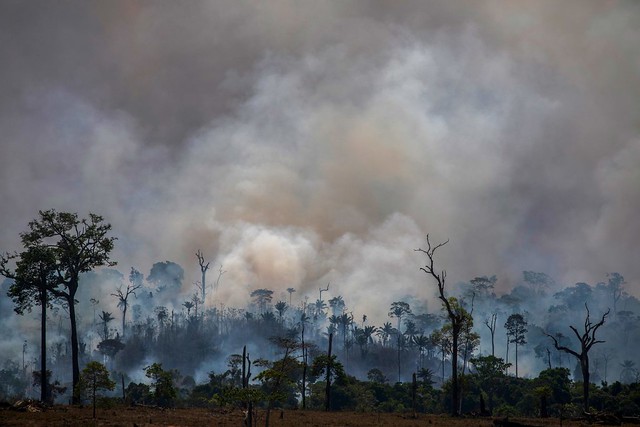
      Let's consider what's been happening in Brazil recently. In early 2018, Luiz Ignacio Lula de Silva, affectionately known as Lula, a much loved labor leader and former two-term Brazilian president, was barred to run for president again because of the trumped up corruption charges and sentenced to 12 years in prison, in all likelihood by opposing conservative Social Liberal Party, led by Jair Bolsonaro, a foul mouthed, all out bigoted racist who ran on his presidential campaign of fearmongering. It was widely expected that Lula was going to win. But with him being jailed, his Worker's Party's nominee Fernando Haddard ended up losing in the runoff. So now Brazil has the socially conservative and known racist Bolsonaro for president. His U.S.-friendly, pro-corporate, pro-logging, anti-regulation agenda with contempt for indigenous population has created perhaps the most serious eco-disaster in the Amazon rainforest in decades. The most devastating forest fire erupted in 2019, as the rest of the world helplessly watched it burn on the sidelines. Its oxygen rich ecosystem and natives’ habitats were irrevocably damaged.

      Brazilian film scene was having its renaissance in the last two decades under the Lula's Worker's Party leadership. The money was flowing into the arts and to the once neglected regions of Brazil. Pernambuco, a northeastern state with its multicultural capital Recifé has emerged as an economical, cultural center, producing many emerging local film directors like Kleber Mendonça Filho, Adirley Queirós and Gabriel Mascaro, taking the limelight away from the rich Southern part of the country - Rio, Bahia and Sao Paolo. Bolsonaro's austerity measures are undoubtedly putting a hard brake on this growing Brazilian film movement which is perhaps the most significant since the days of Cinema Novo, and the full impact is still yet to be seen.

      Third Cinema, the term coined by two Argentines, Fernando Solanas and Octavio Getino in their influential manifesto :Toward a Third Cinema (1969), decries neoliberalism, the capitalist system, and the Hollywood model of cinema as mere entertainment to make money. This is largely to do with the fact that both Marxism and Third Cinema are preoccupied with inequalities resulting from capital accumulation, of which colonialism is the most extreme manifestation. Aesthetically, the movement drew on Soviet montage, surrealism, Italian neorealism, Brechtian epic theater, cinema verité and the French New Wave. Cinema Novo in Brazil, along with other Latin American countries’ revolutionary filmmaking, was a big part of Third Cinema. Championed by Glauber Rocha among others, Cinema Novo saw an inseparable connection between political struggle and cultural production. Cinema Novo flourished under popular Democratic President João Goulart until he was removed by the U.S. backed military coup in 1964. But it continued to produce films until the mid-1970s. It was Rocha’s 1969 manifesto The Aesthetics of Hunger which directly lays out the principles for Cinema Novo.
This economic and political conditioning has led us to philosophical undernourishment and to impotence - sometimes conscious, other times not. The first engenders simply an alarming symptom; it is the essence of our society. Herein lies the tragic originality of Cinema Novo in relation to world cinema. Our originality is our hunger and our greatest misery is that this hunger is felt but not intellectually understood…. We know- since we made those ugly, sad films, those screaming, desperate films in which reason has not always prevailed- that this hunger will not be assuaged by moderate government reforms and that the cloak of technicolor cannot hide, but rather only aggravates, its tumours. Therefore only a culture of hunger can qualitatively surpass its own structures by undermining and destroying them.
      Rocha goes on to defend violence depicted in films of Cinema Novo as a noble cultural manifestation of hunger. It’s at the violence the colonizer suddenly becomes aware of the existence of the colonized. Some of the notable Cinema Novo films are Rocha’s Black God, White Devil/Deus e o Diabo na Terra do Sol (1964), Antonio das Mortes (1969) and Nelson Pereira dos Santos’s How Tasty was My Little Frenchman/Como Era Gostoso o Meu Francês (1971). Rocha’s films drew from Western genre (both Hollywood and spaghetti Westerns), taking places in sertão (backcountry- the vast arid region in the Northeast Brazil), with cangaceiros (bandits) and land owners. Steeped in mysticism and political allegory, these films tell stories about class struggles and redemption. In How Tasty Was My Little Frenchman, Pereira dos Santos uses ethnological documentary aesthetics into a period piece that is a biting political/cultural satire which takes The Aesthetics of Hunger quite literally.

      This paper will be an exploration of Third Cinema and its influence and continuation through two recent Brazilian films Bacurau and Divino Amor by directors Kleber Mendonça Filho & Juliano Dornelles and Gabriel Mascaro. The directors hail from Pernambuco, the formerly neglected northeast region of Brazil and its capital Recifé. Along with fellow Northeasterner Adirley Queirós (from inland Morro Agudo de Goiás, near the country’s capital Brasilia), they have been making politically charged, genre bending films, countering long dominance of more wealthy southern states’ commercialized film industry and ratcheting up their antics after the extreme right wing politician Bolsonaro was sworn in as the country’s president in 2018. I will discuss current Brazilian cinema’s defiance against political tyranny, carrying on if not the aesthetics, but the spirits, of Third Cinema in two chapters. Chapter one will concentrate on anger: Mendonça Filho’s Bacurau. In this violent revenge fantasy, borrowing heavily from genre cinema and tapping into the anger of Third Cinema as expressed by Rocha, the film actively challenges the First World hegemony and recent political climate, critiquing impending ecological peril the country is now facing in the age of globalization. Chapter two will focus on the conservative regime’s cultural crusade against what they see as decades of ‘moral decline’ under the communist-socialist ideological wing of the country. Mascaro’s Divino Amor, a dystopian tale set in the near future is a barely disguised critique on Bolsonaro’s agenda against minorities and the poor in one of the most culturally, ethnically diverse countries in the world.

Chapter 1: Anger
Bacurau
      Filmmaker Kleber Mendonça Filho’s two previous feature films Neighboring Sounds/O Som ao Redor in 2012 and Aquarius in 2016, both shot in his hometown of Recifé, were rather subtle, yet pointed critique on rapidly gentrifying neighborhoods in a country where people saw growing middle class in a relative economic prosperity under the democratic government after decades of military dictatorship. Both films deal with gentrification and underlying tensions between different classes while giving historical contexts of the region - often written in blood with cattle ranchers and bandits. These tensions, not explicitly stated, were shown in spurts; in Neighboring Sounds, which is from the perspective of a young upper-middle class gentrifier, there is a bath scene where the waterfall turns into blood. In Aquarius, a middle class family matriarch who stands alone against a development company to defend her apartment that she spent her whole life in from being demolished. But she can’t hide her ignorance at her long time housekeeper’s living conditions; while walking on the beach with her old friends, she points to the invisible line in the sands, “Over this line is the part of the town where poor folks live,” and her housekeeper replies, “Yes, Clara. That’s where I live.” Both Neighboring Sounds and Aquarius are far from “ugly, sad films, those screaming, desperate films” described in The Aesthetics of Hunger by Rocha. They are well made films with professional crew and actors and high production value. But they certainly have scathing moments of social commentaries. Still, they don’t prepare you for the tremendous anger felt in Bacurau. co-written and co-directed by Mendonça Filho and his long time production designer Juliano Dornelles, Bacurau is a Sci-fi Western that takes place in sertão in the near future. It’s also a revenge film with almost cartoonish violence inflicted upon its mercenary First World (mostly American) invaders. As Rocha and other filmmakers decried centuries old colonialism by the imperialist First World countries (first by Portugal, then by U.S. in the form of military coup) and its repercussions 50 years later, we get to witness a new kind of colonialism taking place in the globalization era in the form of foreign financial conglomerates. According to Amazon Watch, a non-profit watchdog group, the devastating fires is the direct result of deforestation brought on by cattle ranching and soy farming, with beef and soy being the two major exports of Brazil. With deregulation and pro-foreign investment favored by Bolsonaro’s regime, big US agribusiness companies like Archer Daniels Midland (ADM) and Cargill, investment firms and banks- BlackRock, T. Rowe Price, Chase, City Bank, Bank of America are major beneficiaries in these transactions. In the Bolsonaro era Brazil, it is quite clear that the country is experiencing neo-colonialism.

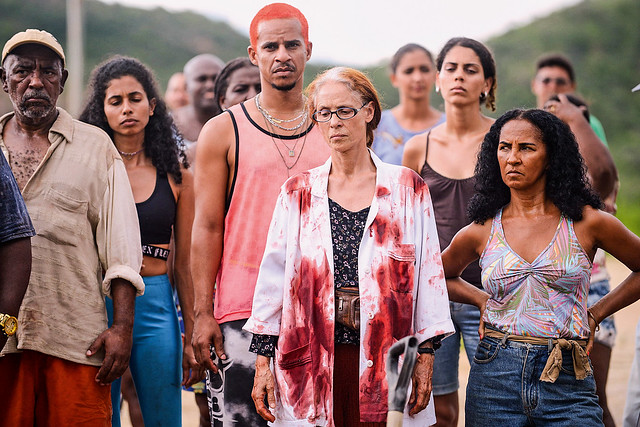
      In Bacurau, Brazil in the near future is in a state of emergency and government troops are everywhere with road blocks and limiting people’s mobility. Bacurau is a dusty town too small even to be on the map in the Northeast region of Brazil. It is inhabited by a fiercely independent, self-sustaining, proud people largely cut off from the outside world. The glimpse of satellite TV and radio tell grim stories of lawlessness in urban areas. Teresa (Barbara Colen) is returning to attend the funeral of the town's matriarch. Evading the law and roadblocks guarded by heavily armed government troops, she is bringing medical supplies and water to the residents of the town. There's a shortage of everything - food, water, medicine, household items, tampons, etc. Everything is brought in from the outside world and distributed among the townsfolk for their needs. Bacurauans seems to be a well organized social collective, living relatively well despite the rest of the world seems to be falling apart. The town, like any other small town, people know one another and there are some frictions among them. But generally they get along. Then we see a sign of trouble brewing. First, a farmer spots a UFO shaped drone in the sky. And two city folks in fancy motorbikes in neon colored spandex show up in town, confusing everyone. Their cockiness and otherworldliness is duly noted by its residents. They turn out to be a sort of a local guide for heavily armed mostly American mercenaries, led by Michael (Udo Kier). They are there to literally wipe Bacurau off the map. Most of these gungho people-hunters are ex-military officers trying to blow off some steam by going to (any) ‘Third World’ countries and killing its inhabitants with the support of the local government. After a few horrible massacres in the outskirts of the city, Bacurauans realize what's happening to them. But what the hunting party doesn't realize is that these Brazilian country hicks are weather worn, experienced and deeply proud people who are not going to go down easily. One by one, the hunters become the hunted. By using Udo Kier, the blonde haired, blue eyed icon of European and American cult cinema (The Story of O, Blood for Dracula), as the leader of the deranged human hunting game expedition and Sonia Braga (Lady on the Bus, Kiss of the Spider Woman) the beloved legendary Brazilian actress (who also stars in Aquarius), as a matriarchal leader of Bacurau, the filmmakers are making an unsubtle point here; it’s us Brazilians versus Europeans and gungho gringos. The violence that Bacurauans inflict on the hunting party way over the top, especially when it’s performed by Lunga, a charismatic leader of the modern day cangaceiros, played by a famous transvestite stage personality and queer activist, Silvero Pereira. It is a bold choice to use Silveira in such a role since Bolsonaro and Pereira have been engaging in verbal jabs in public. As the Bacurauans get rid of foreigners and local traitors, at a glance, without the context of what's happening in Brazil, the film is a silly, tacky man-hunting-man akin to The Most Dangerous Game or Naked Prey. But it isn't. Bacurau highlights the resilience and resolve of Brazilian people against mounting assault of multinational corporations backed by the Government military in a neo-colonial global economy.

Chapter 2: Christianity as a Form of Colonialism
Screen Shot 2020-04-07 at 5.14.57 PM
      Rocha warns in The Aesthetics of Hunger that “what distinguishes yesterday’s colonialism from today’s is merely the more refined forms employed by the contemporary coloniser.” and “Thus, our possible liberation is always a function of a new dependency.” In his first film, Black God, White Devil/Deus e o Diabo na Terra do Sol (1964), he calls for denouncing all political and religious doctrine in favor of individual liberty at one with nature.

      2010 census reveals that sixty five percent of Brazilians consider themselves Catholic (down from ninety percent a few decades ago), followed by twenty two percent Evangelical Protestant with numbers of agnostics growing rapidly. Since the Portuguese colonial times, confluence of religions of African slaves and natives, Brazil has always maintained a diverse array of syncretistic practices under the overarching umbrella of Brazilian Catholicism. But it’s that tropical multiculturalism with diverse race, culture and gender is what Brazil has been always known for. While Catholics are evenly split between the right and the left in their political spectrum, Evangelicals are mostly conservative and over the years have become an increasingly influential presence in Brazilian politics. And Bolsonaro’s religious themed presidential campaign spoke to them. His retrograde message was a reaction to the advances they have seen since the 1960s in discussions about the family, the place of women, youth and sexuality. It was a Christian morality that tries to recover an idealized past that never existed. Bolsonaro brilliantly tied the message of ‘political corruption’ with ‘moral decay’, and the voters, suffering from recent recession in need to be dependent upon something, found solace in Bolsonaro’s conservative message.

      Gabriel Mascaro, filmmaker and visual artist, of such sensual films as August Winds/Ventos de Agosto (2014) and Neon Bull/Boi Neon (2015), have been subverting the stereotypes in gender roles. His films are filled with strong women and men with domestically inclined tendencies. With his new film Divine Love/Divino Amor (2019), Mascaro is charting a new territory, using Sci-fi genre (like Mendonça Filho and also Adirley Queirós with their films) to reflect on the current political climate. It's 2027 Brazil. The country has gone full Christian fundamentalist. Mascaro's version of it is all neon and electronic music. Joana (Dira Paes) and Danilo (Julio Machado) are a middle class couple. She is a notary public, working in a gigantic concrete government building and he is a florist, working in their ground floor apartment complex. They haven't been able to conceive a child even though they try every possible way, method and modern medicine. Something is wrong with Danilo's sperm. They belong to Divine Love, a Christian religious group exclusively for couples. It's a cult like therapy/support group for couples who've had marriage troubles before. They do trust-exercises and even share partners in bed. Joana, using her position of power as a bureaucrat, has been discouraging couples who seek a divorce at her job. Her sometimes aggressive tactics don't sit well with her clients as well as her superiors. She constantly visits a drive-thru, storefront church that seems to be in every other corner, to seek advice from a pastor. The god is silent on her questions and her husband's infertility and her faith is waning. Then a miracle happens. She is pregnant. But who is the father? Mascaro somberly reflects on life under the extreme right-wing, religious zealotry of Bolsonaro regime here. The film inserts in just enough details for us to see that the country has changed: women on the beach are wearing head to toe black garb - very much like burkini, every building, businesses and shops have customer identifying prompter at the door, by their name, marital status and whether they are pregnant or not. There is no mention or show of homosexuality whatsoever anywhere. In true Mascaro fashion, sex scenes are very graphic and honest, but only are limited to married couple or consenting adults and only heterosexual. The film is narrated by Joana's child who might be born out of immaculate conception and just might be the savior people have been waiting for, but left nameless and unregistered, because of he is born into religious fundamentalist country which was once was known as the most culturally, racially diverse country in the world that was Brazil, less than a decade ago.

      Along with other countries in Latin America - Mexico, Argentina, Chile, Peru, Columbia and others, Brazil was battered with financial crises over the years, but the sound financial structure in place with natural resources, their recovery was quicker and better than the rest of the world. Combined with political stability of Lula years, Brazil’s cinematic output has become more diverse, sophisticated and technologically apt, compared with the films of Cinema Novo days. The intellectual hunger that Rocha talked about in his passionate declaration in The Aesthetics of Hunger, has been largely satiated and anger subsided. But every living organism needs to feed itself constantly to survive. The pang of hunger comes back whenever their stomach is empty. The neo-colonialism brought on by globalization with Bolsonaro helping, that hunger is rearing its head again and in it, the anger is again manifesting. As Mendonça Filho and Dornelles tell in an interview conducted in early 2020, Bolsonaro’s regime is already cutting funding to arts, putting a halt on film productions, compared with record number of productions that were happening in 2018. But I have no doubt that they will keep making films, as long as they stay hungry.

Sources Consulted:
1. Braudy, Leo, and Marshall Cohen. Film theory and criticism: introductory readings. New York: Oxford University Press. 2004.

2. Chang, Dustin. “Interview: BACURAU Directors Kleber Mendonça Filho and Juliano Dornelles.” Screen Anarchy. March 13, 2020.
https://screenanarchy.com/2020/03/interview-bacurau-directors-klebermendonca-
filho-and-juliano-dornelles.html

3. Jeantet, Diane, “Far-right Bolsonaro fires latest round in Brazil culture war.”Crux, January 17, 2020.
https://cruxnow.com/church-in-the-americas/2020/01/far-right-bolsonaro-fireslatest-round-in-brazil-culture-war/

4. Lappé, Anna. “Follow the Money to the Amazon.” The Atlantic September 4, 2019
https://www.theatlantic.com/ideas/archive/2019/09/follow-moneyamazon/597319/

5. Rocha, Glauber. “The Aesthetics of Hunger” [1965], in Film Manifestos and Global Cinema Cultures: A Critical Anthology, ed. Scott MacKenzie (Berkeley, CA: University of California Press, 2014), pp. 218-20.

6. Solanas, Fernando and Octavio Getino. “Towards a Third Cinema: Notes and Experiences From the Development of a Cinema of Liberation in the Third World” [1969], in Film Manifestos and Global Cinema Cultures, pp. 230-50.

7. Shaw, Lisa and Stephanie Dennison, eds. Brazilian National Cinema. Routledge. 2007.

8. Stam, Robert. Film theory: An Introduction. Malden, MA: Blackwell. 2000.

9. Stam, Robert. Tropical Multiculturalism: A Comparative History of Race in Brazilian Cinema and Culture. Duke University Press. 1997.

10. Xavier, Paloma. “Vou ali num tal churrasco Bacuralizar’ brinca Silvero Pereira, intérprete de Lunga.” Uai.com. May 9, 2020.
https://www.uai.com.br/app/noticia/mexerico/2020/05/09/noticiasmexerico,258242/vou-ali-num-tal-churrasco-bacuralizar-brinca-silvero-pereirainter.shtml

Tuesday, April 7, 2020

Religious Hypocrisy

Divino Amor (2019) - Mascaro
Screen Shot 2020-04-07 at 5.20.06 PM
Screen Shot 2020-04-07 at 5.18.15 PM
Screen Shot 2020-04-07 at 5.24.22 PM
Screen Shot 2020-04-07 at 5.14.57 PM
Screen Shot 2020-04-07 at 5.15.38 PM
Screen Shot 2020-04-07 at 5.16.16 PM
Screen Shot 2020-04-07 at 5.19.26 PM
Screen Shot 2020-04-07 at 5.16.50 PM

It's 2027 Brazil. The country has gone full Christian fundamentalist. Gabriel Mascaro (August Wind, Neon Bull)'s version of it is all neon and electronic music. Joana (Dira Paes) and Danilo (Julio Machado) are a middle class couple. She is a notary public, working in a gigantic concrete government building and he is a florist, working in their ground floor apartment complex. They haven't been able to conceive a child even though they try every possible way and method (with hi-tech gizmos bought from China via mail). Something is wrong with Danilo's sperm.

They belong to Divino Amor/Divine Love, a Christian religious group exclusively for couples. It's a government mandated therapy/support group for couples who’s been having marriage troubles. It’s all nice and good on the surface but definitely has cultish air. They do trust exercises and also share partners in bed.

Joana, a devout Christian, using her position of power as a bureaucrat, has been discouraging couples who seek a divorce at her job. Her sometimes aggressive tactics don't sit well with her clients as well as her superiors. She also constantly visits a drive-thru church to seek advice from a pastor. These store front churches are everywhere in the future Brazil, lending an easy access to god. But god has been silent on her and her husband's prayers to have a child and therefore her faith is waning. Then a miracle happens. She is pregnant. But who is the father?

Mascaro, along with a fellow filmmaker from the region of Pernambuco, Kleber Mondonça Filho (last year’s smash hit Bacurau), takes on sci-fi genre to satirize the current political climate of Brazil. German director Christian Petzold once told me that his use of genre conventions in his films gives him more freedom in reflecting the current state of things. It also rings true here with the recent crop of Brazilian films, including Adirley Queirós’ Once There Was Brazilia.

But unlike over-the-top carnage of Bacurau, Divine Love is more subtle and downbeat, somberly reflecting on the life under the extreme right-wing, religious zealotry of Bolsonaro regime. Seductively photographed by Diego García (Cemetery of Splendour, Our Time, Neon Bull), the film is perfectly framed and its neon colors beautifully rendered. The film inserts in just enough details for us to see that the country has changed: women on the beach are wearing head to toe black garb - very much like burkini, every building, businesses and shops have customer identifying prompter at the door by their name, marital status and whether they are pregnant or not and there is no mention or show of homosexuality whatsoever anywhere. In true Mascaro fashion, sex scenes are very graphic and honest, but only limited to married couple or consenting adults, all heterosexual.

The film is narrated by Joana's child who might be born out of immaculate conception and just might be the savior people have been waiting for, but left nameless and unregistered, because of he is born into religious fundamentalist country once was known as most culturally, sexually, racially diverse country in the world, Brazil, less than a decade ago.

Divine Love is a quietly biting satire, brilliantly realized by Mascaro, a director who is operating on the highest level of artistry in every aspect. Do not miss this!

Friday, March 13, 2020

BACURAU: Kleber Mendonça Filho and Juliano Dornelles Interview

Filho Dornelles
Flipping the idea of first world hegemony on its head, a Brazilian Western sci-fi genre mashup Bacurau is a campy, violent, funny, angry, energetic and carthartic film that is extremely enjoyable for both genre fans and politically minded. It is also perhaps the best film to watch in the time of world-wide pandemic as we begin to turn our attention to the safety of us but our loved ones and the solidarity with our neighbhors and community. That we are all in this together.

Bacurau is playing in Film at Lincoln Center and IFC Center in New York. Opens today in Los Angeles and national roll out will follow. Please visit Kino Lorber website for details.

I described this film in my review as batshit crazy. It was the most fun I had in movies in years. I was lucky enough to meet the film's co-directors Kleber Mendonça Filho (Neighboring Sounds, Aquarius) and Juliano Dornelles when they were in town for the theatrical release of the film here in New York. Our long interview topics ranges from the fate of the Brazilian film industry, genre conventions, Parasite to James Bond.

Filho and Dornelles are an interesting pair. Filho, more reserved and articulate, Dornelles, younger, animated and full of laughs and energy often finished each other's sentenses. It was the one of the most stimulating interview I've ever conducted. So without further a do:

Let’s go back to 2016 for a moment. The reason I am bringing up 2016 is that that was the year I saw your film Neighboring Sounds. Aquarius was coming out a little later that year. Then I saw Gabriel Mascaro’s Neon Bull.

Kleber Mendonça Filho: You understand that Gabriel is also from where I came from.

Recife. Yes, I had a pleasure of talking to Gabriel when he was here presenting his film.

Divine Love (Mascaro's new film)?

No, for Neon Bull. So I got the basic idea of what was happening back then in Brazil. So you have this great wealth of these new Brazilian films coming out. The Brazilian film industry is booming, especially in formerly neglected regions, such as Pernambuco and other Northern regions. There are filmmakers such as yourself, Gabriel Mascaro, Adirley Queiros, making interesting stuff all over. But things have changed since then. And it was only four years ago. Now Lula (and his Workers’ Party) is not in charge anymore. We had that disastrous fire in the Amazon. And we have this raging racist Bolsonaro in charge…. I guess my question is has there been a big change in Brazilian film industry in those four years?

KMF: Yes.

Juliano Dornelles: Yes and we are about to see the consequences of those changes. For example, last year, we had the best year in Brazilian film history, maybe?

KMF: Yes,

JD: Probably the best three years of our film history, to say the least. But Bacurau has been the project that was in development in many years, even before all that. My wife is a costume designer. And she was invited to work in 5 feature films last year. Now three of them are canceled and two of them delayed. So she spent one whole year without working on a film. This is a sign that things are slowing down.

KMF: It is very interesting to understand that in 2016, there was a soft coup d'etat in Brazil. There was a powergrab. The power was taken away from the usual democratic means, using a fake excuse that doesn’t have the legs, by any measure, to stand on. The power was taken from the politicians who were more progressive side of politics, from the Workers’ Party. Basically because of the opposition was so angry and frustrated that they have been losing every democratic election. So when that happened, and I am talking specifically about the culture, the first thing they did, when they grabbed the power, was to, extinguish the Ministry of Culture. It was basically saying, ‘We hate you artists. Because "you are all drug addicts--"

JD: “Drug addicts, homosexuals--”

KMF: "...and pedophiles. You think you are smarter than us?” That was the first thing they did.

JD: They did it with GLEE.

KMF: yeah, they did it with pleasure. And then, after that, two month later, they decided to bring it back. And their new measures start to sabotage the artistic community. Which basically meant they effectively extinguished the national film agency, they were making it increasingly impossible for us to make films. I mean it’s always been difficult- even democratic times, just like any government agency, things are comically bureaucratic. And it is bureaucratic because in a society where corruption is endemic, you need a lot of papers to make sure everything is supposedly done right. And now today the agency still exists, but it’s…nothing really works. It’s very slow. then suddenly you are surprised that something did work, then there are 500 projects which are backlogged.

JD: Slow, disorganized and random. Sometimes something happens but it doesn’t mean nothing because many other projects are in the same situations…. so we are completely in the dark.

KMF: And of course there are recommendations that any new project will need to be ideologically aligned with the government. I mean, this is absolutely unconstitutional. We have a constitution which says this kind of things can’t be happening that it is illegal. So if you are some angelic filmmaker and I don’t know if there is one that exists, then you will have a much better chance to get something made.

JD: There was a situation when they took over the cinemateque (Cinemateca Brazilera) and of course they fired a lot of people who were conservation specialists, those technicians who does archiving and preservation of films and they are not working there anymore and replaced by these guys we don’t know who they are. They are telling us to organize, for example, a military film festival.

My God, that’s crazy.

JD: So that’s the reality in Brazil right now.

KMF: They are telling us that some film technologies are obsolete, so not to worry…

JD: So what’s happening right now is that people like us, directors are talking to each other and take films out of the cinemateca and hold them ourselves in our houses!

KMF: Because we are not exactly sure what is happening at cinemateca. We can’t take our chances with our films.

JD: This reminds me the scene in Tim Burton’s Batman where Joker paints smiley faces all over these paintings in the museum. Like a…

KMF: He saying that it’s more like Francis Bacon.(laughs)

You said that this project was long time coming, even before Bolsonaro took over. I noticed that it’s a lot angrier than Neighboring Sounds or Aquarius. (to JD) Is that your contribution?

JD: Uh, no it’s because we both were much more angry. Of course the film is a homage to genre cinema of the seventies from the US, Italy and Australia. But this comes from both of us. We’ve been thinking about this kind of thing for a long time. But this anger you saw in the film, it’s just a state of mind that we were at the time when we finished our final draft. Yes, it was when illegitimate government was already in. Michel Temer took over from Dilma (Rousseff of the Workers’ Party) and we were observing this growing fascism.

KMF: Yes. Three films are quite different in tone: Neighboring Sounds is more diffused and ethereal, because it was more stable time. Stable but not perfect.

Right.

KMF: Tense, like all other societies. You can make Neighboring Sounds in Sweden, you know what I mean. Then in Aquarius, I raised the tone. I wrote things in Aquarius that I wouldn’t have written in Neighboring Sounds, even to my dismay.

JD: Really?

KMF: Because it was happening. People were screaming at each other and pointing fingers. Sometimes I watch films and think, how could you not pay attention to what was happening. In my films I’ve been quite conscious of expressing the energy of the moment. I think it’s very important.

It seems, as you mentioned, to be global sentiment. I know you just hung out with Bong Joonho in London the other day. It seem that there is kind of class consciousness in global level.

KMF: I think the way things turned out the last 20 years, I mean Les Miserables also is one. Parasite of course.

Joker?

KMF: I don’t know what Joker is trying to tell me though. I was very into the film but the end, I don’t know what it’s trying to tell me, to be honest. Parasite, Les Miserable I understand.

JD: Bacurau? (laughs)

Yes. Yes.

KMF: Yes. It sends the clear message. I mean if you are cutting a character’s head off, it is quite obvious what the movie is telling us. But it’s nothing new. It comes from the past.

Yes.

KMF: It happens in Brazilian streets every time when there is violence, today. We are not only talking about the 70s or French Revolution. We are talking about dramatic expressions of political anger.

I’ve been talking to some directors over the years about using genre cinema as means of free expression. Does it apply to you in this case?

JD: Of course. It’s funny because there are many people I love and I work with in my career in Recife, trying to make films without any catharses. I just couldn’t understand what would be the point of making something if it doesn’t have that kind of release?

KMF: But genre for me is a piece of clothing that I find a little outrageous to wear it and I’m just waiting for the right time. (laughs) I mean I made Neighboring Sounds which I love but I couldn’t land a spaceship in the middle of the street in that film. It would not have been the right film for that. It would’ve fucked the whole thing up because it was about the street I was living in and about tensions and relationships among those people. Aquarius was about this wonderful, sometimes overbearing 65 year old woman and she lives in this place. So no room for a slasher or… at least in my mind anyway…or ghosts…. well there are ghosts in it.

Right.

KMF: In Bacurau, all right, now we have room for Western, we can have some Splatter, we can have some Thriller, some special effects…it was very liberating.

JD: Most importantly. We wanted to have it. We wanted to make a film like that! It was a perfect timing.

KMF: …and now I can use that special piece of clothing that will feel just right to wear it.

Speaking of a powerful woman, played here again, by the great Sonia Braga. Is there any Brazilian myth or folk tale about a Matriarchal society that you based Bacurau on?

JD: No. I don’t know where it comes from. We talk a lot about matriarchy now in the past 5 years or so. Kleber has his wonderful mother and I have mine. But we always have these women in our lives whom we love very much and respect. And we think they have a great influence on our lives and work. We can imagine that there are different ways of life with different codes and conducts that are different from us.

KMF: I don’t think it’s that far-fetched or utopian. I think it’s completely possible.

JD: Exactly. The beautiful thing is that if you look closer to many places in Brazil, you will find these small isolated, organically formed communities- in favelas and such, self-sustaining places. And because they don’t have much, there is a sense of solidarity. But they are completely aware of what’s going on in the world at the same time.

Like Cuba.

JD: Exactly. We have been to Cuba with Bacurau and what I've heard from those people was completely mindblowing because they are so lucid…lucid? They understand everything that’s happening in the world. They are not as isolated as other people make them out to be. They are very aware. We needed the first (flicks his fingers) spark. We were tired of seeing the country people being portrayed on TV, in the news and documentaries as simpletons. So that was the first spark to make Bacurau - let’s make a film about real, complex and beautiful and strange and sometimes bad people, you know? They are not distinguishable even. They are always portrayed as simple people. Or funny, exotic, cute… this is simply wrong…I don’t know I lost my train of thought.

KMF: There are hundreds and thousands of women in all over the world and Brazil raise their kids alone because their fathers are absent. It happens in all social classes, but if you look at communities, in poor communities in favelas, it happens a lot and it’s heartbreaking.

JD: It is important to mention that Brazil is a very patriarchal Country and it’s been always like that. But there was a story on this one village maybe a little bigger than the place we shot our film. We went for a research to find a such a place and we found this little place with the town square, very dignified and well taken care of. And in the middle of it, there was a statue. So we went closer to see whose statue it was. And it was not a statue of a politician or landowner. It was a woman and she was a teacher. So the character actually existed already.

KMF: It was very moving.

Got you.

JD: You know what I mean? So it’s a reality. Maybe not predominant but still a reality.

KMF: I think it’s more touching to make a dystopian film where women are strong but men are not despicable. Men are part of the equation but women are very strong. Then we have horrible men, then we have good men, then we have trans people, then we have unstable women…for me that’s the best version of the world.

Tell me about Silvero Pereira, who plays Lungo who is very charismatic. I know he is quite a famous figure in LGBTQ community. How did you bring him into this project?

KMF: It was a suggestion of Marcelo Caito.

JD: Marcelo Caito is a very talented director and producer. He is a militant from the LGBT community. Even before Bacurau, he was a very important person in LGBT community. He had this play about drag queens.

KMF: About violence against drag queens. Very tough play.

JD; You saw the play. You tell us about it. Because I haven’t seen the play yet.

KMF: It was beautiful. We were editing the film and he invited us to see the play. It was also like 4 minute walk from where I was editing. So I just walked there to see it.

JD: I wasn’t there that day so I couldn’t go.

KMF: So I was looking at him on the monitor in the editing room then I see him as a drag queen, it was such an amazing experience. But the play is very hostile. It’s very political and it demands respect. Of course I knew who he was, but seeing him in the play, everything was clearer. I could understand Lunga even more. The energy that he put into the film was very genuine.

JD: We went to this dinner to meet him, just to talk to him, not like business like. Just to flirt. Like a blind date. (laughs) We were at the table and you see the way he walks and the way he looks at you – you know that powerful look that make you uncomfortable. But he doesn’t hide his feminine side. But he is also badass. So he was exactly how we wrote the character of Lunga. So we didn’t have to think or adjust too much. I remember we went outside the restaurant and Kleber, you said to Silvero, “ I think you have a face of someone who can kill somebody.” (laughs) Just like Charles Bronson or Clint Eastwood or Sean Connery. It’s perfect!

KMF: For me the that’s the difference between Sean Connery and Roger Moore. Because Sean Connery looks like he can kill somebody. (laughs) I enjoy Roger Moore as Bond. But he doesn’t have that kind of face.

Did you have Sonia Braga in mind when you wrote the part of Domingas?

KMF: Secretly without telling her, not even telling Julian about it. Because when you write with an actor/actress in mind, it’s just like you are editing a film with the piece of music you really like but you don’t have rights cleared and you don’t have money to pay for the rights and you grow attached to the music… But yeah I had some dream of me that she be interested in it. But at the same time it was a bit dangerous and she said that herself the other day. That it is dangerous to think about this film because how am I gonna merge or arrange all these incredible faces because it’s a very regional film, there are locals, Americans, non-professionals, professionals…is it gonna work, I mean…. Because Sonia has such an amazing face but of course she was incredibly intelligent and made all the decisions on costumes and make up and her willingness to play, it is not fair to say without make up because there is make up, but not the kind of-

JD: Not the ‘diva’ make up.

KMF: Yes. the normal person make up. (laughs)

JD: I just think Sonia is a very smart intelligent woman because it demonstrates that she is into making interesting films. She just came off playing the character of a hero: the film was about her and the camera was pointing toward her 100 percent of the time. It’s amazing that she came with us since the beginning and stayed with us on location, even when she wasn’t needed on set, she was there to just live in the environment and to know the people. She is very disciplined.

KMF: And she is still in touch with everybody including extras and locals.

Wow. That’s amazing. So what’s going to happen? What’s going to happen to the Brazilian cinema that I love?

KMF: What was happening was we were getting a lot of diversity. And I hope young people will make films any way they can. Which is the way I started making films when I first started. Then I’d show films to our friends.

JD: We didn’t start making film in school. We didn’t study cinema.

KMF: We just bought cameras and we started making films. I spent 15 years in that mold which was a bit too much.

JD: Yeah I agree.

KMF: Then I was beginning to get fed up with….Then we got some funding and that’s when I started doing things a little more professionally, people getting paid and all. That you know this is work.

JD: One important thing is that Brazil in that 15 years were very different. We achieved a lot in Lula years – the kind of decentralization of funding for cinema because it was very concentrated in the South East.

KMF: Neighboring Sound was the direct result of this.

Right.

JD: for a guy like him, in the 90s, there was no money. Back then it was only 35mm films that was considered legit. He was making films on VHS or BetaCam.

KMF: But because of hierarchy, any terrible films shot on 35mm would get a lot of play, because that was ‘cinema’. I did have some good stuff on video but that would never see the light of day.

JD: My generation is a little different. We started with the digital cameras. So we could edit our films in our PCs. It changed a lot. So more people were doing it in the beginning of 2000s.

KMF: And then the funding became more decentralized. 

JD: And we started to organize as a group, supporting each other and such.

KMF: In Pernambuco there are lot of cultural organizations now and they are still very much in place. And our film got selected by Cannes got us a lot of exposure. And we had a chance to talk with the governor for an hour. This was a major event.

What I want to say to the younger filmmakers is that I hope the situation now is inspirational to go and do something. We have a lot of technology available to do things cheaply.

It’s always the case with the countries with economic hardship or austerity measures, be it Portugal, Greece where great film movement flourish, no? More challenge and scarce the better?

KMF: Exactly.

JD: But this is very important. There are 300,000 film industry professionals. What are they gonna do? Netflix can’t absorb all of them.

KMF; The government is intentionally making them unemployed. It’s a terrible situation. The film industry is not a hobby.

JD: We are bigger than pharmaceutical industry in Brazil. It’s not small at all. We have a pharmacy in every corner. Just to give you an example. What are we gonna do?

KMF: We are working on that. (laughs)

It’s been a pleasure talking with you guys.

JD: Pleasure was all ours.

Friday, October 4, 2019

Justified Mayhem

Bacurau (2019) - Filho, Dornelles
Bacurau
Let's consider what's been happening in Brazil before we talk about bat shit crazy movie that is Bacurau (from the makers of Neighboring Sounds and Aquarius - Director Kleber Mendonça Filho and co-director/production designer Juliano Dornelles). In early 2018, Luiz Ignacio Lula de Silva, commonly known as Lula, a much loved labor leader and former two-term Brazilian president, was barred to run for president again because of trumped up corruption charges and sentenced to 12 years in prison in all likelihood by opposing conservative Social Liberal Party, led by foul mouthed, all out bigoted racist who ran on his presidential campaign of fear and hate (sounds familiar?). It was widely expected that Lula was going to win. But him being jailed, his Worker's party's nominee Fernando Haddard ended up losing to Bolsonaro in the runoff. So now Brazil has the social conservative and known racist Bolsonaro for president. His pro-corporate, pro-logging, anti-regulation agenda is creating perhaps the most serious eco-disaster in the Amazon Rainforest right now, as the rest of the world helplessly watch it burn in the sidelines.

Brazilian film scene was having its renaissance in the last decade under the Lula's Worker's Party leadership. The money was flowing in to arts and to the once neglected regions of Brazil. Pernambuco, a north east state with its multi-culti capital Recife became an economical, cultural hub, producing many emerging film directors like Filho, Adirley Queirós and Gabriel Mascaro. Bolsonaro's austerity measures will undoubtedly, put a damp on this growing Brazilian film movement perhaps the most significant since the days of Cinema Novo.

So Bacurau is an angry film and deservedly so. It takes place in the near future. A dusty small town called Bacurau in the north east region of Brazil, is inhabited by a fiercely independent, self sustaining, proud people largely cut off from the outside world. The glimpse of satellite TV and radio tell grim stories of lawless in urban areas. Teresa (Barbara Colen) is returning to attend the funeral of the town's matriach. Evading the law and roadblocks guarded by heavily armed government troops, she is bringing medical supplies to the residents of Bacurau. There's shortage of everything - food, water, medicine, household items, tampons, etc. Everything is brought in from outside world and distributed among the townsfolk for their needs. Bacurauans seems to be a well organized social collective, living relatively well despite the rest of the world seems falling apart. The town, like any other small towns, people know one another and there are some frictions among them. But generally they get along.

Then we see a sign of trouble brewing. First, a farmer spots a UFO shaped drone in the sky. And two city folks in fancy motorbikes in neon colored spandex show up in town, confusing everyone. Their cockiness and otherworldliness is noted. They turn out to be a sort of a local guide for a heavily armed mostly American mercenaries, led by Michael (Udo Kier). They are there to literally wipe Bacurau off the map. Most of these gungho people-hunters are ex-military officers trying to blow off some steam by going to third-world countries and killing its inhabitants. They are armed with various antique weaponry of their choice and follow rules only they seem to understand. It's a game to them and has no interest even in where they are.

After few horrible massacres outskirts of the city, Bacurauans realize what's happening to them. But what the hunting party doesn't realize is that these Brazilian country hicks are weather worn, experienced and deeply proud people who are not going to go down easily. One by one, the hunters become the hunted.

It's kind of a departure for Filho since his previous films are, for better or worse, a lot more subtle in presenting the gentrification and monied people in fastly developing urban areas. Perhaps it's Dornelles' contribution to make Bacurau a little more obvious and bloody. Its cartoonish violence that Bacurauan inflicts on the hunting party is so over the top, you can't help but chuckling along. The acting also is very over the top. Udo Kier delivers some hilarious lines which only he could deliver. Great Sonia Braga (last seen in Filho's fantastic Aquarius) who plays the jealous sister of the dead matriach/the local doctor in the movie, grounds the film with her presence and charisma.

As the Bacurauans get rid of foreigners and local traitors, at a glance, without the context of what's happening in Brazil, the film is a silly, tacky man-hunting-man akin to The Most Dangerous Game or Naked Prey. But it isn't. Bacurau highlights the resilience and resolve of Brazilian people against mounting assault of multi-national corporations backed by Government military to devastate their beautiful, once burgeoning country. One of the year's best.

Thursday, November 15, 2018

James Joyce in Brazil

Araby (2017) - Dumans, Ochoa
Screen Shot 2018-11-15 at 10.55.59 PM
Screen Shot 2018-11-15 at 10.57.42 PM
Screen Shot 2018-11-15 at 10.58.30 PM
Screen Shot 2018-11-15 at 10.59.56 PM
Screen Shot 2018-11-15 at 11.01.22 PM
Andre, a sullen teen, lives in a small mining factory town in Brazil with his sick little brother. His aunt who works at the factory as a nurse looks after them since their parents aren't around. There isn't much to do around. We are presented with their small sad lives. We see Andre's aunt giving a quiet laborer, Christiano (Aristides de Sousa), a ride to work. One day Christiano's hurt at the job and falls into a coma. At his aunt's request, Andre goes to where Christiano has been living to fetch some of his belongings. There he finds Christiano's journal. He starts reading it. The title appears and the real story begins...

Sharing the title of James Joyce's short, the film beautifully presents an everyman's story as he travels around Brazil, job to job, trying to eke out the living. A folksy soundtrack enforces the film's rather old fashioned approach. Yeah I get that everyone you see around has a story to tell. They all have hopes and dreams and good times and bad times. It follows the tradition of Olmi's social realism lyrically presented. Christiano's small existential angst is appropriately heartbreaking at the end.

Wednesday, January 31, 2018

Light It Up

In The Intense Now (2017) - Salles
Screen Shot 2018-01-31 at 6.24.45 AM
Brazilian documentary filmmaker João Moreira Salles looks back at the year 1968 where everything seemed possible. He concentrates on four different events and places - Cultural Revolution in China, the student uprising/general strike across France, Soviet Invasion of Prague and March of the One Hundred Thousands against military regime in Brazil, all in that fateful year. Culling from images of homemade movies, newsreels and documentaries, Salles examines what it's like to take it to the street for something you believe in in that fateful year.

It starts out with the tourist footage in China in 1966. Salles' mother was there, taking in a foreign land where everything was opposite of what she was accustomed to. As many picturesque scenes play out - farmers, children, on-lookers, other tourists in the sunny, happy settings, Mao Zedong's China in the beginning of Cultural Revolution seemed like an idealist utopia (except for incessant insistence on singing of songs praising the Chairman) that gloomy French students only dreamed of in the streets of cities across France in 1968. In his mom's words, the trip to China gave her "ineffable emotion that follows the shock of the unlooked-for encounter." This seeming spontaneity, unfettered enthusiasm are the themes Salles visits again and again when he talks of taking it to the streets.

The May 68 first started as demonstrating students occupying college administration buildings. I do not want to generalize this nation-wide civil unrest or make light of it, but the gist of it was this: their opposition of American Imperialism in Indo-China and traditional social hierarchy with their Marxist, Maoist ideology struck a core with the factory workers, resulting in a largest general strike in France's history. School administrations and police's violent reaction just inflamed the situation even further. Armed with wealth of footage around that time, Salles examines the short-lived unity forged between students and striking workers against the status quo of de Gaulle regime and how quickly it dissipated.

He spends quite a substantial time on Daniel Cohn Bendit, who was one of the key figures in the student movement. Through several interviews and Salles' voice-overs, we get the impression that the decentralized student movement of 68 didn't actually have an end goal. And his road trip to Berlin accompanied by a photographer and funded by a magazine was seen as a sell-out. Even one of the famous slogans on the wall, 'Sous les pavés, la plage'/'under the bricks, a beach' can be read as extremely bourgeois.

But does it matter though when you talk about the spirit of 68? You believed in something so strong you had to take it to the street. These protests weren't without casualty though. Gilles Tautin, an 18 year old High School student died near car factory. The self-immolation of Jan Palach to protest Soviet occupation in Prague put the nation in moaning. Then there was Edson Luís who as shot to death by the police in Brazil.

The footage that stands out is a young woman factory worker interviewed by the news crew outside a car factory. She is crying and refuses to go back. She protests that nothing has changed, that everything is going back to status quo. The factory management made some concessions but the thought of revolution showed a glimpse of a more just world.

As the history that unfolded after that period, we know that Mao might have succeeded in building a cult for himself and solidified his political power with Cultural Revolution, but it also did irreparable damage and brought misery and death to millions of people. de Gaulle regime's grip got stronger and Communist and Socialist party lost support.

The smell of teargas and horse manure in the air, a street protest can be an exhilarating experience. A full-on revolution might not be possible in our heavily capitalist conditioned society, and we put too much emphasis on ends over means, failure over efforts. Neither Salles glorifies the May 68 nor dismisses it as naive. He doesn't spoon-feed the audience. What Salles is showing with his documentary is that a shock to the system, albeit minuscule in the grand scheme of things (May 68' movement didn't even last 6 months), is a necessity to keep the world in check. The legacy of 68 is that it made people 'woke'. Its impact still felt from Occupy Movement to more recent the Black Lives Matter and #metoo movements. Anyone who took to the street for one cause or another can deeply relate to In the Intense Now. With the disparity between haves and have-nots is greater than ever, the spirit of 68 is more relevant than ever before.

Wednesday, November 2, 2016

Boy in Red

Don't Call Me Son/Mãe Só Há Uma (2016) - Muylaert
 photo fd85d2db-5062-4de6-bf82-dc13c1751018_zpsjqoa9ndp.jpg
What's concerns more to a teenager -- a family or personal identity? Anna Muylaert (Second Mother)'s new Brazilian drama, Don't Call Me Son, examines this conundrum and finds a good balance in an astonishingly swift 82 minute film.

Pierre (Naomi Nero), an eyeliner wearing 17year-old High Schooler is first seen flirting and making out with both sexes in a night club. His trousers are on the floor, revealing he is wearing a g-string and garter belts. He paints his nails and plays guitar in a rock band. He tries on lipsticks and dresses secretly in his tiny room.

Pierre lives with his busy single mom, Aracy (Daniela Nefussi) and his younger sister, Jaqeline (Lais Dias). But one day, their normal lives get turned upside down when Aracy gets arrested for child abduction. It turns out Pierre was stolen from his crib 17 years ago and his biological parents were searching for him ever since. Through well-meaninged, but ineffectual social workers, his well-to-do real parents are anxious to reacquaint with him and make up for lost times. It turns out Pierre, now Felipe, has a brother Joca (Daniel Bothelho), a well-adjusted, normal kid who seems a little lonely.

At first, the interactions between the real parents, Gloria (again played by Nefussi) and hot-tempered Matheus (Matheus Nachtergaele) and Pierre/Felipe are polite and awkward. But after the teen moves in to their opulent house, they realize that their long lost son is not what they imagined him to be. Gloria's constant mommying and pampering and Matheus' frustrations with the effeminate nature of Pierre/Felipe soon boil over.

There is a hilarious scene at the mall concerning Pierre/Felipe trying out clothes while Gloria, Matheus and Joca look on. The parents pick out clothes for him to try on - polo shirts and slacks, the usual stuff teens would wear. He comes out of the dressing room in a black and white, skin-tight frilly dress. They think it's a joke or perhaps a rebellious teen angst statement-- haha funny, now change back to your polo shirt. But Pierre insists the dress is what he wants and they will buy it for him.

The film's original Portuguese title is Mãe Só Há Uma- There Is Only One Mother. But even though Daniela Nefussi plays both mothers, the film’s focus is exclusively on Pierre. Nero, with his good looks and natural performance, is magnetic as a teenager who is finding himself as an individual.

Don't Call Me Son doesn't dwell on nature vs nurture or rely on cheap sentimentality. The film doesn't even try to make any big statement on gender equality or social justice. It focuses on a young man who is very comfortable with his identity even though his life has become chaotic. But he's not a helpless victim who's unsure about his place in the world. And he also has a great, caring heart.

Beautifully acted and superbly written, Don't Call Me Son is a little gem of a film that needs to be seen widely.

Don't Call Me Son, has a two week exclusive engagement at Film Forum in NYC, starting 11/1.

Thursday, April 14, 2016

Ebbs and Flows: Gabriel Mascaro Interview

Gabriel_Mascaro
I had a chance to get a phone interview with Mascaro to discuss his first retrospective anywhere and his new film, Neon Bull.

Brazilian visual artist and filmmaker Gabriel Mascaro’s new narrative feature, Neon Bull, is garnering much critical acclaim. On the occasion of the theatrical release of the film in New York, Film Society of Lincoln Center revisits the works of one of international cinema’s most exciting new auteurs in Gabriel Mascaro: Ebbs and Flows, a five-film retrospective, starting 4/15.

Living and working in Recifé, the cultural capital of Pernambuco, a once neglected northeast region of Brazil, Mascaro established himself as an artist delving into photography, installations, documentaries and digital animation, commenting on ever so changing political, cultural, geographic landscapes. His astute observation on the lives of margins of society using non-actors in their working environs bore layered, fascinating, impossible to categorize films.

Neon Bull is the culmination of all of Mascaro’s preoccupations and his practices as an artist. It stars hunky Brazilian TV star Juliano Cazarré as a Vaqueiro (cowboy) who dreams of being a fashion designer. Gorgeously lensed by Diego Garcia (Cemetery of Splendour) and naturally acted by non professional and professional actors alike, the film observes human body at its most natural state – at work place and subverts it in the social, cultural, political context. It’s a multi-layered, sensual, deeply complex film.

Q: Congratulations on your retrospective, Gabriel Mascaro: Ebbs and Flows at the Film Society at the Lincoln Center here in New York.

A: Thank you very much. It’s the first time that my work has been shown all together. It’s a very interesting moment for me to see them all in one setting like that. I like the title Ebbs and Flows. For me it was a short (A Onda Trás o Vento Leva) that didn’t really work. It’s a happy choice of a title because I can reflect on my own work.

Q: Your discipline as a visual artist is not limited to a feature filmmaking. You’ve done shorts, documentaries, computer animation and installation work. Now you’ve done two feature length films back to back, what is it about a feature length narrative that are different than your other work? What is it that you are exploring in a narrative feature?

A: It’s a difficult question. I don’t really know exactly. But for me it’s a natural evolution. I came to make narrative features after getting into discussions about negotiating images in making documentaries. For me, documentaries are like auto-fictions…I don’t know how to translate this, but it’s the real people telling fictional stories about themselves, like a self-made fiction. In a way I wanted to deepen that experience.

Working with experienced actors in Neon Bull was a very different experience. It was a challenge because I’ve never really worked with experienced actors before. There was a change in my approach. But interestingly, one of my favorite moments was when Cacá (Aline Santana, an 8-year old who’s never acted before) became quiet in the film. The silent moments were the time when she was actually discovering herself and building her character. It was a magical moment in directing because she’s not an experienced actress. I told Aline to only speak when it’s necessary and assured her that there is no hurry, that filming can wait. That she should speak only if she believed in what she was saying, that she should take a deep breath and speak when only necessary. So it’s a film where characters only speak when they want to, when they have a desire to speak.

Q: On that note, I was wondering about your writing process. Did you have a tightly written script for both August Winds and Neon Bull? Or is your filmmaking more of an organic process where improvisation is necessary?

A: It’s an interesting question. I do work with a structured screenplay- the traditional one with dialog. But what’s different is the process of preparation with the actors.

In case of Neon Bull, the actors all read the script and they spent two months of preparation where they didn’t use the script anymore. They were working more on the dynamic of interactions. They did exercises with the dialog from the script but they weren’t rehearsing the dialog.

Before shooting the scenes in Neon Bull, I’d read out loud the dialog to the actors. And they would try to recover the structure of the script but they would still use the dynamic that they had developed during those two month of preparation. It brought them to a special place because these mixture of two approaches.

Q: That’s very interesting. How did Juliano Cazarré (who plays the main character, Iremar) take the script when he first read it?

I think Juliano was very intrigued and happy because the script gave him the opportunity to change the image that people have of him and the role they usually associate with him - strong, tough, macho type. And with this character, he shows his sweet and sensitive side.

He was worried about the sex scene, because he realized that it was a very strong scene. But he was very nervous and insecure about doing it. It was a challenge. But they figured it out.

The process for preparing the roles was that of a…gradual deduction: shedding the typical element of their supposed characters. They were entering it and giving themselves slowly to the process.

Q: There are a lot of interesting contradictions in Neon Bull. Iremar is a big handsome cowboy but he wants to be a fashion designer and two girls - Galega and Geise are a tough truck driver and an armed security guard. Was this sexual politics something you were interested in exploring?

I think the film is about the process of transformation, transforming bodies. Economically the transformation is very accelerated in Brazil. To project these bodies to the landscape without the typical gender roles and to contextualize them in the cowboy universe was something I was interested in.

It’s not just about inverting gender roles, its about bodies that are working in different scale - the opposites of pleasure and violence, sensibility and anger, it’s all about all these things together. It’s not about masculine woman and feminine man but we are talking about more abstract categories.

Q: What’s also interesting is that Housemaids, August Winds and Neon Bull all feature working people doing manual labor. Can you elaborate on that aspect of your films?

A: It’s a great question. No one asked me that before. I do research on bodies that are contextualized in the world of work. So in some ways, my work is a gesture in trying to explore the common subject. I guess the larger meaning in my work is to try to find extraordinary experiences in ordinary work.

Their occupation, their work that I show in these films often shows impersonalized faces and movements in repetition. So these films are subversion of the work itself. For example in August Winds, they have sex in the coconut cart during their break where they work and in Neon Bull, he makes fashion out of fallen tails of the bulls. So in a way it’s imagining the work in a more personal way. I am trying to elaborate the intervals of this kind of work with an eruption of the body in a more abstract sense as well- a warm and affectionate form of a body in impersonal places.

Q: Can you tell me about Pernambuco, the northeast region of Brazil in context to your films?

A: The region is often associated with poverty and hunger and people wanting to escape. I spent my whole life there and never left nor I wanted to. So I tried to build my work there. With the characters in my films, I try to discuss how to redefine this place. They are there in the northeast and they don’t want to leave.

The way these characters are written, they are not the ones you feel sorry for. They might have simple lives but they are strong people and they are not naive. Though in some ways, Neon Bull deals with the economic transformation that is happening in the region and it shows a lot of challenges that people are facing there, but I think a lot of it is universal - like gentrification, industrialization, large scale construction everywhere.

Q: What is your assessment of the recent surge in Brazilian cinema? I’ve seen some really interesting films produced in recent years. Adirley Queirós’ White Out, Black In and Kleber Mendonça Filho’s Neighboring Sounds, just give you couple of examples…

A: We are speaking of very special moment in Brazilian cinema. Many filmmakers who are working are more interested in developing a new language of film. They don’t have the pressure of the market so much. They are modest budget films but they all have one thing in common - they are all supported by the government funds. So they are able to elaborate their language of film without making any concessions.

The filmmakers you mentioned, Adirley Queirós and Kleber Mendonça Filho are doing very interesting films. Filho also has a new film out called Aquarius, and it will be a special and important film for Brazilian filmmaking.


**Special thanks to Austin Kennedy at FSLC for arranging the interview and Micheal Gibbons for translation