Showing posts with label Israel. Show all posts

Saturday, September 26, 2026

AI Assisted Genocide

Naza (2026) - Abraham, Szor NYFF64_NAZA Yuval Abraham and Rachel Szor, two of the four directors credited for 2024's Oscar winning documentary No Other Land, about Israel settler’s government sponsored landgrabbing and daily violence in the West Bank in the Occupied Territories, come with a new documentary Naza, about systematic destruction and genocide happening in Gaza. I say genocide here, because one of the subjects in the film matter-of-factly admits it is.

Naza is a shorthand for Nazek Agavi, ‘Collateral Damage’ in Hebrew. Just like No Other Land, there is a controversy brewing, as the film does its festival runs - first Venice Film Festival where it won Special Jury Prize, and now here at New York. Netanyahu's government is threatening to revoke Abraham and Szor's Israeli citizenship and publicly marking them as traitors and enemies of the state even before the film’s general release. All I can say is, see it for yourself when it comes out. The Guardian, a British publication produced it (with Jonathan Glazer serving as executive producer). The filmmakers are self-distributing it with the help of MK2, a French company.

Naza consists of 24 interviews conducted by Abraham as an interviewer and Szor at the camera. The interviewees, all former and active Israeli military personnel, mostly intelligence officers who were engaged in the destruction of Gaza, in retaliation of the October 7th surprise Hamas attack that resulted in the death of 1,200 Israeli partygoers in a music festival in northern Gaza in 2023.

The interviews are conducted at night on the rooftop of downtown Tel Aviv, with interviewees backlit against blinking lights of shiny skyscrapers and their faces hidden in shadows and some of their voices altered, for protecting their identities from retaliation.

The filmmakers give a little bit of a background about Gazan history of building communication lines by the Israeli government. In fact, all communications in Gaza- if you have a cell phone, you will be intercepted and eavesdropped; that Israel has a total and complete control over the airwaves. But then, this prelude poses an uncomfortable question - how did Hamas manage such a large scale surprise attack? One of the interviewees admits that Hamas really outsmarted everyone, somehow.

The interviews make it quite clear that they knew collateral damage was unavoidable while leveling Gaza, which killed approximately 73,000 Palestinians so far and ongoing, majority of them women and children. More shockingly, it turns out Gaza happens to be the first genocide assisted by AI. AI interprets that the acceptable ratio for collateral damage is 20 to 1, meaning it is OK to order an airstrike or drone bombing wherever suspects are at, regardless if they are in a crowded place or alone.

It is mind boggling as these interviewees speak so matter-of-factly of these AI assisted decisions. They even mention a Hollywood movie such as Eye in the Sky, about a morally conflicted drone operator in Kenya, as if it was their ethics training video. Many of these whistle blower interviews are truly revealing and disturbing, as Abraham pushes them to answer his questions - Did you make those decisions in retaliation against what happened on October 7? Was it pure hatred that they were all enemies and deserved to be killed? Many answers coolly with a hint of irony - we are there to achieve military objectives. The order comes from the top and we follow it. It's like videogames. We do our job. They knew there were women and children.

Because Israelis have complete control, they could monitor everything that has been happening in Gaza. Some walked away after seeing dogs eating piles of corpses on the streets, some are still serving. All these interviews are intercut from time to time to show daily lives of inhabitants of Tel Aviv observed from the rooftop at night - doing chores in their apartments, walking on the promenade along the water, eating and doing ordinary activities, while talking candidly about despicable nature of what has been unfolding in the ‘war on Gaza’.

Abrams and Szor are journalists and activists. They did not go to film school and do not possess narrative storytelling skills. In No Other Land, narrative came naturally; we witnessed a friendship between Abraham and Basel Adra, one of the co-directors and the subject, a Palestinian activist, forming as they spent time together as the world around them fell apart.

In Naza, you don’t need such narrative. This atrocity doesn’t need to be narrativized. It’s a visual record of the war crimes being committed aided by AI technology. The chilling last minute footage of a collapsed building with the entire family’s feet sticking out of the concrete wall is a good reminder that once we delegate our moral obligation to AI, we’ve already lost whatever we are fighting for.

Wednesday, October 2, 2024

Living Under Occupation

No Other Land (2024) - Adra, Ballal, Abraham, Szor No Other Land_Still_courtesy Antipode films As I write this non-review-review of a documentary on the West Bank in the Occupied Territories, Israel is engaging in military conflicts with Palestine, Lebanon, Iran, Syria and Yemen. Iran just launched retaliatory bombing of the airbase in Israel.

Going through what's been happening for the past year is going to be futile because it will need detailed context with how we got here; on the verge of World War III, it would take way too long. As I cover New York Film Festival, which this film is part of, there's a boycott happening against the event because many of the sponsors have been deemed to be pro-Israel donors.

I say this is not a movie review because I'm about to lay down what happens in this very personal documentary and explain what it means at this time and place in the world, not as much about how the film was made and put together. This article is from the perspective of a person living in New York, married to a woman of Jewish descent: this is how I see it from my perspective and no one else's. So please keep that in mind as you read along.

No Other Land, a documentary by a group of Palestinian and Israeli activists, shows what it's like to be living under an apartheid state, in the Occupied Territories of the West Bank. Five years in the making, it documents the ongoing destruction in Masafer Yatta, an area consisting of a small group of Palestinian villages in the South of the West Bank. It focuses on Basel Adra, a young activist (serving as one of the directors of the film) who grew up in the village and has been documenting Israeli incursions since he was a child.

He meets Israeli journalist Yuval (Yuval Abraham who is also credited as a director) in 2019, covering land siege and demolition of the Palestinian inhabitants’ brick and mortar homes on the dry hills by Israeli military, which cites the Israeli Supreme Court ruling that Israel has the right to the land in the Occupied Territories as a justification, to build a military training ground. Confrontations ensue.

But it's been like this forever. Basel's dad has been arrested many times in the past. The homes get destroyed, then rebuilt (with great difficulty I might add), destroyed and rebuilt.

They live in constant fear of being evicted or being arrested. The military cuts their water lines, confiscates their generators, and pours cement into the wells; all these actions are documented by Basel and others. Basel, along with his father, are known to the Israeli military officers as troublemakers. They are constant targets for harassment and threats.

Yuval is rightfully enraged by all of the things he sees, done by the Israeli military, by his name. He is an Israeli. At the end of the day, he gets to go home by breezing through checkpoints, using the Israeli citizen only lanes. He gets to shower and sleep in a cushy bed.

On the other hand Basel, about the same age as him, with a law degree, can't get a job, other than jobs doing manual labor. He needs to tend the gas station when his father gets arrested for protesting, since that's the sole source for the family income.

Yet, it's Basel who comforts Yuval, who tells him to calm down. "You are too enthusiastic. You want to see the change overnight, it won't come tomorrow." After years of living under occupation, people in the Occupied Territories become realists.

The network of resistance is done via phone; neighbors communicate that there's a raid or bulldozers coming to this town or that house, as the military seemingly selects their targets at random. They mobilize to stage a demonstration.

A neighbor gets shot while being evicted from their house. He is paralyzed from the shoulders down. They can’t afford to stay in the hospital. Their home destroyed, they move into the cave (the region is known for its natural caves).

With a small camera, Basel records everything. He uploads it to the web and hopes to get the words out of the struggle. That's all he does, constantly looking at the phone. Hey, two thousand people liked my post.

Their activism sometimes bore fruit and gave a moment of reprieve, like that time Tony Blair toured the region and saw their situation first-hand. And the Israelis backed down their expansion temporarily. Basel's father has a picture with him to prove it.

When they are chilling at night, sharing hookah, the conversation leads to other things between two men. "Do you see yourself having a family?" Yuval asks. Basel hesitates to answer. He is too tired. The years of struggle weighs him down. He is married to his phone, always looking at the likes and responses to his posts about the daily lives of his struggle and the news. He is tired. There's nothing else he can do.

Dominating the Middle East news cycle for a year has been the ongoing indiscriminate bombing of civilians in Gaza since October 7th of 2023 by Israel, in retaliation of the surprise attack from the Hamas militants in Gaza Strip. This emboldened the zionist Israeli settler movement in the West Bank.

Accompanied by Israeli soldiers, the settlers start violently attacking the homes in Masafer Yatta. Basel records his cousin getting shot by a settler. His father gets arrested. The movie ends in early 2024. Basel and thousands of other stories like his still go on. People's suffering is staggering; so is their resilience.

Basel Adra, Hamdan Ballal, Yuval Abraham, Rachel Szor capture what it's like living under the occupation, that is so immediate and telling. The systematic injustice and oppression are well documented in No Other Land. Everything we take for granted, such as a roof over our heads, running water, and electricity, is in constant threat. The scarcity of economic opportunities, healthcare plus the restrictions of movement, makes the everyday life of people in the West Bank extremely challenging.

Social media serves a very different purpose in the Occupied Territories. Palestinians really count on getting the footage out to the world to show what’s really going on. I had no idea how much they depend on the pressure tactics by us on politicians to improve their lives.

It seems no distributor is picking up this film because of its 'sensitive' nature and fear of offending the Israeli government and its powerful lobby groups, even though No Other Land won the awards at this year’s Berlinale. But injustice is injustice. These people in the film are not actors. The oppression is real. The racist vitriol is real. And I feel it is our (people who've seen the film) duty, to advocate for their plight.

Friday, June 17, 2022

Censorship

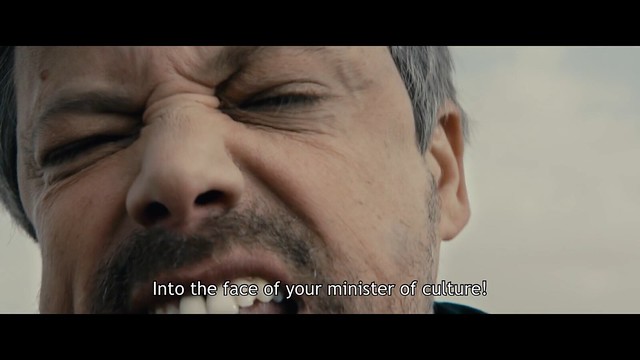
Ahed's Knee (2021) - Lapid Screen Shot 2022-06-17 at 10.08.09 AM Screen Shot 2022-06-17 at 10.07.05 AM Screen Shot 2022-06-17 at 10.04.25 AM Screen Shot 2022-06-17 at 10.01.06 AM Screen Shot 2022-06-17 at 9.37.21 AM Screen Shot 2022-06-17 at 9.45.15 AM Israeli filmmaker Nadav Lapid's previous film, Synonyms examined national identity abroad in the background of the country's overly nationalistic and militaristic tendencies in the eyes of a young man. It was a stinging rebuke of über militarism that he grew up with and rejected. Lapid told me that in order to get a funding from the Ministry of Culture, he had to pitch it like it's a patriotic film about PTSD. And just like Synonyms, Ahed's Knee is a blunt film that doesn't shy away from criticizing the ministry's propagandistic tendencies, but it goes further and makes it the subject and confronts it head on. The title refers to the 2017 incident which went viral on the web where Ahed Tamimi, a young Palestinian girl who is shown slapping Israeli soldiers during a demonstration against the expansion of Israeli settlement in her hometown of Nabi Salih in the West Bank. A high ranking Israeli government official had said that the soldiers should've shot her knee cap off to shut her up.

Ahed's Knee concerns an aging filmmaker Y (Avshalom Pollak) casting for a project about Tamimi in Tel Aviv. He flies to a small desert town to show his previous film, arranged by a deputy director of the local library, Yahalom (Nur Fibak). She is young, well educated, ambitious liberal who seems to understand controversial artists like Y. But she is still an employee of the ministry which censors anything that is slightly critical of its government. There is a questionaire that Y has to fill out to get paid, Yahalom informs Y.

Lapid, again, draws it from his own experience. Ahed's Knee is just as autobiographical as Synonyms. Unsmiling, cynical Y who wants to expose the "ugliest, racist government" and its apatheid state is obviously drawn from himself. Y is also is a master storyteller. He breathlessly tells his experience as a young soldier stationed in Lebanon during the Israeli Occupation in the 80s to Yahalom in the desert against the setting sun, exposing lies their superiors tell to motivate young impressionable soldiers. With flashy visuals and constantly moving handheld cameras, Ahed's Knee has the same manic energy as Synonyms.

It culminates to Y making Yahalom admitting that there is strong censorship within the art community in Israel, and deep down she knows it is wrong. Ahed's Knee directly confronts the well-intentioned liberals and criticises for their sheepishness and passivity. It's an angry film and shows its director's resourcefulness in saying what he has to say in the strongest terms (in the guise of making a fiction) while getting away from the grips of the censors while making a film within the country.

Unflinching and direct in its message with kinetic visuals and breathless pacing, Ahed's Knee is another strong film from a talented filmmaker with strong point of view.

Tuesday, August 10, 2021

Inability to Change Minds

The Viewing Booth (2020) - Alexandrowicz Screen Shot 2021-08-10 at 8.25.09 AM 
Israeli filmmaker Ra'anan Alexandrowicz's documentary Viewing Booth tells the harsh reality and ultimate failure of so-called activist filmmaking in the belief that images can change minds of those who matter the most. And it's sobering realization.

Alexandrowicz invited 7 American University students for his 'viewing booth' sessions: a studio room with monitors showing 40 published online video clips of the Occupied Territories in Palestine - a half of them from B'Tzelem - a Human Rights organization based in Israel and the other half from pro/conservative Isreali groups (such as videos put out by IDF). The subjects are asked to freely play any clips they choose to watch- they can pause at any moment and rewatch them and provide live commentaries while watching them. He films these sessions and the subjects' reactions and their comments. Enter Maia Levy, a pro-Israeli student from American Jewish household. The film turns out Alexandrowicz focusing on her because it's people like her that the filmmaker wants to reach with his films, not anti-occupation crowd or activist types (not preaching to the choir, so to speak). It's her predisposition of seeing the images - the real footages shot by Palestinian citizens in the Occupied Territories which can be seen by anyone online, that interests him.

Maia is an inquisitive young woman who thinks of herself as objective observer of the conflict, a Jew living in America. But watching those short clips of unedited footage of everyday horrors in the Occupied Territories - an announced nightly raid of masked, heavily armed Israeli soldiers going into Palestinian household, waking up sleeping children and photographing them and its aftermath - children breaking down in fear, or a settler harassing Palestine women and children in cages, calling them unspeakable names, or Israeli teens throwing rocks at a Palestinian woman videotaping them and soldiers just standing by in the background, not responding to the cries for help, etc, although she sympathizes with the oppressed, she is quick to find many faults in what she is presented with: without proper contexts, these clips are manipulative or worse yet, staged to make Israel look bad. Because of her upbringing or background of whatever, she is predisposed to question what she sees and distrust whatever is deemed by anti-Israel.

It is also telling that Maia says that she is influenced by TV shows like Netflix's Fauda and reality shows that everything is already fabricated and you can't always trust these 'real' footage's authenticity. Is she telling the truth or is it a justification for her predisposed condition? but in equal footing, she also doesn't like what IDF puts out - Palestinian kids coming up to Israeli soldiers and hugging them and the soldiers giving them food. She thinks that's corny and detrimental to portraying Israel as being good.

The filmmaker asks her again to come in after 6 months of their first session. Because obviously she is the emblem of the target audience and why he is in the profession in the first place - to change their belief system with his films. She is educated, smart, curious enough to seek out those clips by B'Tzelem even though many of them will be uncomfortable and depressing to watch. It's very much like some of my so-called liberal minded friends watching Fox News to see 'what the other side is like, so I will know how to defend myself'.

Alexandrowicz thinks these things aloud to understand clearly where the divide lies - particularly for me as an outside observer, seeing these clips immediately makes me think, "wow, this is their everyday reality," rather than "this looks staged." Obviously, those activists films, documentaries like 5 Broken Cameras by Guy Davidi & Emad Burnat isn't going to change my mind because I'm already with the anti-occupation crowd. But The Viewing Booth concludes with the sobering realization that there is a limit to what images, let alone films, can change someone's engrained belief system, even if it's not fictional film but filmed reality. The intermediary of the mere 'lens' between Maia and the reality already puts a divide that she will not cross. The Viewing Booth is a sobering film that bruises the ego of any self-congratulatory, circle jerky liberal documentarians who genuinely think they can change the world. Sorry, you can't reach the ones who matter the most.

Friday, October 25, 2019

Interview: Nadav Lapid on Synonyms

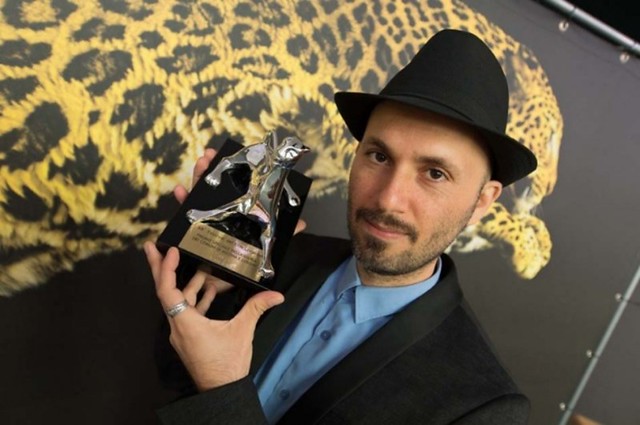
Nadav Lapid
Synonyms, Nadav Lapid's semi-autobiographical film about a young Israeli man struggling with his country's identity, won him many accolades this year, including the Golden Bear at the Berlinale. The film is greatly aided by its fearless star Tom Mercier. I had a chance to sit down with Lapid when he was in town for the New York Film Festival.

It opens this weekend in selected cities in the US. Please click here for my review of the film.

I know that your films are somewhat autobiographical. How close was the experience for you with SYNONYMS, as your main character Yael was going through in Paris?

It was pretty close. I mean, myself, I’ve done military service and a year later, I felt…in a very sudden way had a courage to leave, to runaway and never come back. It was the same determination, the same passion. And I landed in Paris and few days later…it’s very few words in French but…with not concrete plans for the future except for this…existential crisis, to die as an Israeli and reborn as a French.

I was mumbling words in adjectives and synonyms in French walking on the sidewalk you know.

Did you have a little French-Hebrew dictionary like in the movie?

Yeah yeah yeah totally! I still have it in somewhere in my pocket. (Laughs.)

Most of the scenes that takes place afterwards, I feel it’s like the real life and a movie, like me and Tom. I guess Tom is a little bit better version of myself. So I guess the movie is a better version of a real life in a sense.

You know that there is a moment in your life that looks like a genesis of a wonderful scene and then you go somewhere else or fall asleep…I don’t know. But in a movie, you can go back to these moments and, sometimes it’s opposite and sometimes it’s too evident (to the real life), so you can blur it a bit. So I think that’s the main difference.

Tom Macier is really phenomenal in this film. I hear there is a funny story behind his casting. Can you tell me about it?

I can tell you about the casting but you can decide it’s a funny story or not.

OK.

I mean, we found him in an ordinary casting but, only ordinary thing about it was the guy was like a youth judo champion. He was supposed to bring in the gold medal but the pressure and people’s expectations were too much, he abandoned judo to become a dancer. You can tell in his performance that fragility and tenderness and also violence.

Yeah.


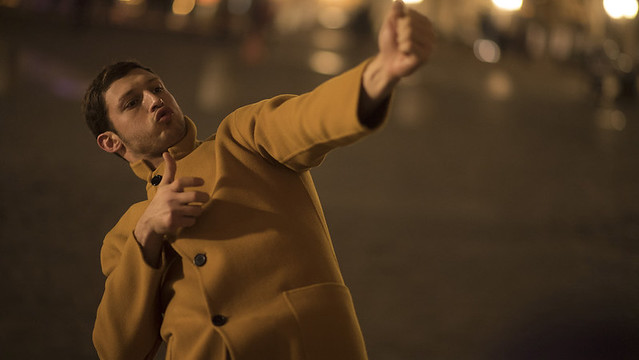
Having him on set is like a casting a super hero, because he is capable of doing anything, I mean, physically and intellectually he can do everything. He can walk on his hands on Saint Germaine Boulevard while talking synonyms to the word 'clock'. I mean, it’s almost dangerous to have a person like this on set because whatever you are asking on set will be done.

But I realized and accept the fact that that’s how he functions. He does these things in a very calm and concentrated way. He is very serious.

And our casting director asked him to charm us because that was what was required of the character. I thought to myself, ‘oh man what’s the poor guy going to do?’ He was hesitating for a second. Then he went and found this life size cut out of a woman from behind the curtain. He started to hum and sing to her…some Edith Piaf song. He was this charged with this funny charming erotic cabaret thing.

They were rolling on the floor. It was pretty unbelievable. It was intense! He had so much imagination and inventive power. So we said. Wow that was great. And the moment we said that, he walks away and was being his serious self again. So that’s Tom. He can go from calm to racing from zero to three hundred in a second. He does that in the movie.

Oh definitely!

He can be polite and everything but he can also explode in a second.

I sat through the credit and it was backed by Israeli Ministry of Culture and Sport. But the movie itself doesn’t portray a flattering picture of Israeli military…

To say the least…

To say the least. How did it come about? How did you get a funding from them for this film?

First of all, I got the funding in 2017. I’m not so sure I would’ve gotten it today. It was slightly different. But even then, before there was kind of pitch you had to do. So before that, someone who knows me quite well, who was a director of one of those ancient film funds, called me and told me that when you do a pitch, try to make it sound a bit more patriotic. (Smiles devilishly.)

I mean, this is something that never happened to me before. But he told me, “Maybe present the movie as a story of a guy who had a post-traumatic stress disorder as a soldier with this PTSD symptoms, went to France but in the end finds out that there is no place like home, or something like that." It's true, you CAN talk about the movie like this!

There have been political movies made in Israel. And lately some of them are harshly criticized. For instance, a movie about a soldier at a checkpoint. But for the Ministry of Culture and other organizations around them, it is easier for them to deny those films’ argument and accuse them of falsehood.

But I think Synonyms goes much beyond. It talks about Israeli collective soul, Israel’s DNA, the essence of the Israeli state. This goes much beyond it becomes almost abstract. It’s not a left wing movie. At the same time, I think the movie is much more ambivalent. At the end, Yoav is as harsh to his French friends as he is to Israel.

I always feel that…when people ask me if the film is anti-Israel, I say that the main character who is desired, sensual, sexy, loved by the camera is an Israeli. An Israeli can’t be totally anti-Israel. All the contradictions exist in Yoav.

Before the premiere of the movie, one of the high officers of the Ministry of Culture who came, told me “I can’t wait to see if that movie is pro or anti Iarael.” I told him OK, the moment you find out, please tell me because I don’t know. In a way I was sincere. They don’t know how to deal with it.

I also saw Maren Ade as a executive producer and SBS Production on the credit too. How did that happen? Did you know these people previously?

No, no. But Komplizen Film and Maren Ade, they really loved my previous films and wrote to me often. I felt we had the same views in life. For Said Ben Said (SBS), I didn’t know him before. But I am pretty close to one of the most important figures in French cinema, Olivier Père. And Said was there too when I pitch the project.

But the film was not the easiest one to produce because many people didn’t like the script at all. My previous films were well received in France and they were excited about me coming to France to shoot it. But soon they read the script, they were disappointed.

I mean a lot of people loved it but I think it happens quite often with my script. The script itself is about 1/3 of the movie so when they read it they often feel it’s incomplete. It has beginning, middle and end but they feel it is incomplete.

Just like your previous film, KINDERGARTEN TEACHER.

Yeah, exactly. Exactly.

Shai Goldman, who HAS shot all your films, does an amazing job in this film. It’s so kinetic in the beginning, How did you accomplish all the POV shots of Yoav walking in the sidewalk?

I held the camera when we were shooting on the street. We shot it on a smaller camera, usually with only me and my actors. Sometimes Shai was there as well. I think it really injected an extremely important thing to the movie. This vibration into a normal life. Whenever he is not doing something he is walking. The way he walks, it tells us about his state of mind.

It was fantastic. The film is so energetic.

The flashback sequences when Yoav is in the military. He wins the silver medal. Did it really happen to you?

(Uncomfortable laugh) Yeah…. My mother started clapping and that put me to shame.

We talked about this before but it’s not only the film makes fun of Israel’s uber military culture but there is this perverted French photographer. Is this how you view the French: perverted and uncaring to the foreigners who are coming and living in French society?

Well, you know for Yoav’s character, earthly paradise is obviously France. So however grossly caricatured they are, the better.

That’s why Yoav wakes up naked in front of the Frenchest French couple. It’s in the place he chooses to go -- the most archetypal places in Paris: Notre Dame and the bridge over Seine. There is always this distant curiosity the French people have for other nations and of course they are all somehow inferior.

I find that interesting about Yoav’s friend, who is super macho and yelling at the people in the subway and they don’t really give a shit. It goes perfectly well with what you are saying.

Yeah, exactly.

Sunday, September 29, 2019

Identity Crisis

Synonyms (2019) - Lapid
synonyms
Yoav (Tom Mercier), a young Israeli man, is first seen with spitting out words and their synonyms, like a broken automated dictionary, in French which is obviously not his native tongue. He arrives in a posh part of Paris, gets all of his meager belongings stolen in a flash, including clothes and a sleeping bag that he just laid out on the floor, in a large empty apartment. And there is no hot water. He passes out from exhaustion and hypothermia. His young neighbors, Emile (Quentin Dolmaire of Anaud Desplechin's My Golden Days) and Caroline (Louise Chevillote), find him and revive him. They are almost parody of what 'a Parisian couple' is like - Emile is a writer who is forever working on a book titled, "Night of Inertia" and sexually ambiguous, coquettish Caroline plays oboe in an orchestra in her spare time. Emile, fascinated by this hunky, naked young foreigner, gives him clothes, a cellphone and wads of cash.

Soon Yoav moves into a squalid apartment across the river, still keeping contact with the young couple. He is an angry young man who is running away from home and refuses to speak Hebrew. He describes Israel as Ignorant, mean-spirited and crude. He is fit and has strict daily regimen for survival. He is listless, directionless and tactless. He gets a job as a security detail at the Israeli consulate. There he befriends with a typical macho soldier type, Yaron (Uria Hayik), who describe France as a hornet's nest for terrorists. Yaron forcefully asserts his Jewishness everywhere he goes by shouting "I am Jewish!" and humming Israeli national anthem loudly in a crowded subway to Parisians who could care less.

With his good physique and boyish good looks, Yoav gets involved in the art project by some pervert French photographer who tells him to penetrate himself while naked spread eagle on the floor, yelling in faux ecstasy in Hebrew. He feeds stories from his military service to impressionable Emile, telling him that he can have all of his stories as if he can truly hand over his former life to someone. He gets involved with Caroline even though whose high culture antics doesn't sit well with him. The flashback from his military service plays out, accented with absurd moments like dancing soldiers serenading a pop song during a military honor awarding ceremony.

Synonyms can be a difficult film: it can be seen as rudderless and abrasive. Sense of irony dominates the film as Yoav struggles with his identity. It's packed with dueling exaggerated visions of perverted and uncaring Europe (France in particular) and the uber military culture the director Nadav Lapid grew up with. The film concludes, as Yoav trying to open the door by slamming his body against it, you can't escape where you came from and the gap between the world you are trying to assimilate remains shut closed. But the film works, thanks largely to Tom mercier's physical as well as verbal, at times verging on slapstick level on both counts. The film is often hilarious and at times poignant and filled with manic energy. Shai Goldman's handheld camera work is aces also.

Thursday, June 9, 2016

Atmospheric Netherworld in Tikkun

Tikkun (2015) - Sivan
 photo 44abb4fb-4ab3-4030-8241-7e529b9999cb_zpsuroyjofm.jpg
Shot beautifully in black and white, Israeli artist and filmmaker Avishai Sivan's Tikkun tells a story about a young orthodox Jewish man, embodied astonishingly here by first time actor Aharon Traitel, slowly losing his faith after a near-death experience. With impressionistic visuals, Sivan paints nighttime Jerusalem as a Lynch-ian netherworld, shrouded in fog, where past and present exist side by side. The result is a hallucinatory tale of urban alienation, invoking the films of Antonioni.

Haim-Aaron (Traitel) is a devout Yeshiva student, seen praying and fasting in the begining. He is not a talkative type and keeps things to himself. His father (Kalifa Natour) is a hard working kosher butcher. Bad plumbing in their cramped apartment causes Haim-Aaron to fall and suffer cardiac arrest while taking a shower and touching himself. EMTs arrive but are unable to resuscitate him, pronouncing him dead after 40 minutes. Haim-Aaron's father, unable to let his first son go, continues on the CPR, and to everyone's surprise, revives him.

This near-death experience is a both a blessing and a curse for father and son. Father struggles with the guilt of undoing god's will by reviving his son. He falls into deep self-doubt and is shunned by many of his ultra orthodox community members.

For Haim-Aaron, being undead affords him a freedom to venture out of his community and confront his hidden earthly desires for the first time in his life.

Unable to sleep, Haim-Aaron wanders the streets at night, hitching rides to anywhere these nocturnal strangers will take him. For him, outside his immediate surroundings is a completely different world: Jerusalem, a cosmopolitan city with just under a million inhabitants, is a wondrous and scary place for him. He meets many strange people and even gets to have a sexual encounter with a street worker. These activities put a strain on his studies, family and community.

Tikkun is, in many ways, an unsettling film. The uneasy tone is accentuated by Haim-Aaron's father's recurring horrific nightmares: evil crocodiles in the toilet, putting a knife to the back of his son and dumping the body in a monster-infested ravine.

Like Sivan’s previous feature The Wanderer, the urban alienation and repressed sexuality figure prominently into Tikkun. The film unveils the ultra-orthodox Jewish community, which is seldom portrayed in film, and perhaps somewhat unflatteringly here: with rigid traditions and rules, the community seems to be permanently stuck in the past.

In the hands of Sivan and his cinematographer Shai Goldman (The Band's Visit, The Kindergarten Teacher), Jerusalem has a look and feel of the lonely, unnamed industrial town in Eraserhead. With sparse dialog and strong visuals, Tikkun is intense, moody filmmaking and signals Sivan as one to watch for in the world of arthouse cinema.

Tikkun screened earlier this year at New Directors New Films series. It opens in New York on Friday, June 10, via Kino Lorber.

Interview: Avishai Sivan Talks Tikkun

Avishai Sivan Set in an ultra-Orthodox Jewish community in Jerusalem, Tikkun gives a unique glimpse into a highly reclusive world where tradition and religion dominate private lives. With its haunting imagery and thought provoking subject matter, Tikkun left me a lasting impression long after I left the theater. I had a chance to talk briefly with its fiercely cerebral director Avishai Sivan when he was in town for the New Directors/New Films series in March.

There seems to be a theme going on here, with your first feature WANDERER and TIKKUN, both featuring the ultra-Orthodox Jewish community in Jerusalem. Is this because of your background? What’s your fascination with the community?

It’s not my background. But I am interested in those communities, I think, in an almost romantic and stupid way, because they have this strict way of living. They dedicate their whole lives to a simple way of belief. I think you can find this belief not only in Judaism but it can be found everywhere - seeking and exploring. As a filmmaker and an artist, I try to reach that sublime of next masterpiece in films or fine art. Sometimes I have this inner battle, like the theme of this film Tikkun - the battle between mind and body…

What does TIKKUN mean in Hebrew?

It means to rectify, to fix something that went wrong but in Judaism, it has a deeper meaning: when a person dies and something went wrong in his life, his soul needs to go back to his life to fix it. Tikkun is the act of doing so, crossing over to the other life as a true believer of Jewish faith.

It’s interesting. I live in the part of Brooklyn which is a predominantly Orthodox Jewish neighborhood. Even though we are living right next to each other, I feel they are living in a very different world. What was the reaction of the community when it came out in Israel?

Had several screenings in Jerusalem Film Festival last year. It won almost all the awards there (Best Film, Best Actor, Best Cinematography, Best Screenplay) and also small festival in Tel Aviv called Utopia, but that’s about it. It will be out in September in Israel. Those film festivals attendees are film geeks, so I don’t think they (the Ultra Orthodox Community) had a chance to see the film yet. I am assuming they will see it in the future when its widely distributed. And am also assuming their reaction will be not good. (Laughs.) But I’m not doing films to please anybody.

How did you find Aharon Traitel, who portrays Haim-Aaron?

He’s not an actor.

Right. How did you get to cast him?

It took almost two years to find him for that role. It’s not like you can call an agent or find someone who wants to act. Usually the people who come out of religion are very vulnerable and don’t really want to expose themselves. They are also wracked with guilt - usually they left their family and the family is understandably angry with them.

I advertised Haim-Aaron’s role in this on-line community of people who left the religion. I think he was the only one who answered the ad and luckily he was the only one that fit the role.

The film is shot beautifully. I understand your background is in painting and video art. What made you to decide to shoot film on black and white? THE WANDERER was in color.

When I was writing it, I knew instantly that it would be in black and white. From that point on, I tried to reach the vision in black and white. The story is about life and death - the big battle/contrast. I tried to investigate that grey area in-between. Color wouldn’t have worked in that sense. B&W matched perfectly with the big theme of the film.

Haim-Aaron’s journey - his faith is shaken after the near-death experience. It struck me as the story of Golem - the undead. Does he think he is a dead person? Is that why he has a freedom to explore the outside world? Or is he looking for regaining his faith?

I don’t think he is looking for regaining his faith again. I think he wants to deepen his faith after he was re-born. All of sudden he can see much better than before. His physical experience is getting much more vivid. And he is feeling like God is testing him. He is a bit confused and trying to find his way. He is still sticking with his community. He is not shedding his clothes or anything. He is trying to find his true path within himself- how he is supposed to act as a believer, even in these radical, extreme places that I put him in as a screenwriter.

One of the most interesting aspects of both your films is the father-son relationship: how they see things differently. It was his father who revives him but also feels guilty that he did something against God’s will. Is this relationship an important theme for you?

Yes. It’s a not so sophisticated, not subtle way of seeing my relationship with my father. Because my father is a very enigmatic character. He speaks very little but he is...a very good person. He can break your heart with how good he can be. He is that kind of person. At the same time he is not very communicative. So his goodness can be seen as problematic.

You mean for you.

Yeah. This element is strongly reflected in Tikkun: he is trying to give his son love but in doing so, he is causing more and more problems. At the end, the accident happens by one of the cows he releases. He is inadvertently causing all the negative things that happens in the film.

That’s very interesting.

Your art and the elements of your films are sexual in nature. Can you tell me a little about that?

It’s human nature. What more can I say? It doesn’t matter what kind of background or environment you are living in, it’s still all there. I just reflect what’s already there.

I also saw some of your drawings of Jean-Luc Godard pleasuring himself on your website. I don’t know what to make of them since I am a big Godard fan.

I have more drawings of Godard. I’d love to compile them as a book and present to him!

Tuesday, December 2, 2014

A Sharply Observed Military Comedy

Zero Motivation (2014) - Lavie
 photo zero-motivation-review_zps324d0a0a.jpg
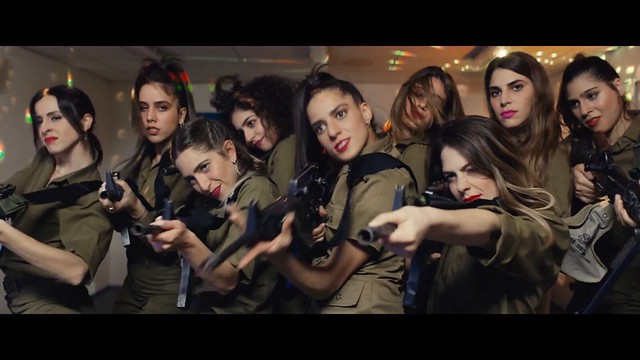
Stationed in the middle of dusty nowhere, the girls of the administration hub in an Israeli military post spend their time making coffees for the senior officers and doing boring office duties day in and day out. It's far from what we expect in the army life. No one wants to be there and longs for their discharge dates. Daffi (Nelly Tagar), a little waif not meant for military service nor any kind of simple office work, dreams of being transferred to glamorous Tel Aviv when not crying her eyes out. Her best buddy, sassy mouthed Zohar (Dana Ivgy), gets by being indifferent to the task given by senior officers and playing minesweeper on her computer all day. Rama (Shani Klein), a strict administrative officer who wants to advance in the echelons of military ladder, gets her leadership often undermined by the duo. In Talya Lavie's army comedy Zero Motivation, there is little blood, guts or glory. The Israeli women's two year mandatory military service is portrayed as anything but gung-ho patriotism. It's more like witeouts, paper shredders and staple guns: a purgatory of Kafkaesque proportion- menial tasks and mountains of paperwork.

Lavie quickly establishes the background with the opening sequence where Daffi and Zohar hitching a bus back to their post after a shabbat. As usual Zohar saves the seat for her best friend in a crowded bus. There they meet a young new soldier whom Daffi instantly takes as her replacement. Her prayer is finally answered. Soon she would be transferred! In their barracks, Daffi shows the new girl around and explains her duties, saying without any irony that she is a paper shredding NCO: the most prized items in the office are a couple of staple guns hidden inside file cabinet and so on. It is quite clear that Daffi and Zohar are not in the clique of relatively content pencil pushers who gossip incessantly and sing pop tunes together annoyingly. It turns out the new girl was not the replacement. She was not even a soldier.

After the suicide of a lovelorn 'civilian' in the barracks and finding out Zohar never sent her pleading transfer request letters to the top brass, "in order to save you the embarrassment", Daffi decides to sign up for the officer's training (with Rama's enthusiastic approval) in the hopes of getting transferred to Tel Aviv. In the meantime, Zohar desperately tries to lose her overripe virginity and scores a date with a visiting paratrooper. A sultry Russian transplant and a fellow miscreant Irena (Tamara Klingon) is haunted by the ghost of the dead girl and becomes catatonic and attaches herself to Zohar, following her to the date, promising that she won't be a bother. She snaps back to her sardonic, M-16 wielding self when Zohar gets almost date-raped by the paratrooper and places fitting judgment on him. But there are much more surprises to come.

Lavie skillfully steers away when things get darker, countering with instant funny comeuppances. With unexpected twists and turns, she keeps the mood of the film consistently light. Smart and often hilarious, the film observes the evil of inanity and boredom of the military service as well as office politics and disaffected generation unaware of their own sense of irony. Zero Motivation is a great mixture of Girls, M*A*S*H* and Office Space.

Winner of this year's Tribeca Film Festival for Best Narrative Feature, Zero Motivation opens at Film Forum, New York on December 3 and Nuart, LA on January 16.