Showing posts with label Italy. Show all posts

Monday, October 16, 2023

Craftsmanship

Ferrari (2023) - Mann Ferrari Rubber, metal and mayhem ensue in Michael Mann's biopic Ferrari. Gone is his digital experimentation (Miami Vice, Public Enemies and Black Hat), but the testosterone level remains high and stoic manliness remains. Plus, it has Penelope Cruz chewing up every scene she is in as Laura Ferrari.

After almost comical monochrome footage of old car racing with Adam Driver's face grafted on them with old timey music and everything, the film settles on 1957 and silver haired Enzo Ferrari (Driver) is seen gently sneaking out of the idyllic villa he shares with his mistress Lina (Shailene Woodley) and their young son. Unbeknownst his fiery wife Laura (Cruz), who shares the ownership of the company, Enzo has been living a double life.

In Moderna, a quaint small town that hosts powerhouse custom sports car companies like Ferrari and its rival Maserati, where the local priest preaches in car metaphors, the times are changing. These local prides are having financial difficulties. For Enzo, it's all about craftsmanship and racing. But the company's finance in red, unless he and Laura goes on partnering with bigger companies, like Ford or Fiat, and mass produce, the company will go out of business.

Having lost his son to illness, the Ferraris' marriage has gone cold. Mann, based on the late Troy Kennedy Martin's script, presents both funny and revealing moments with Enzo and Laura visiting the grave of their son separately, back-to-back, to mourn the dead alone. Enzo talks to his dead son. Laura smiles in silence. But being a former racecar driver himself, Enzo's focus is always on racing and forming a winning team in the future races. After losing one of his drivers in a terrifying accident during a test run, he gives a chance to a young gun, Portago (Gabriel Leone). Enzo, addressed as commendatore by the locals, is seen as cold, uncaring man who only cares about winning.

Back then, racecar drivers are as popular as movie stars, every boy wants to be them and every girl wants to date them. Portago and many of Ferrari drivers are followed everywhere by adoring fans and paparazzi and subject of gossipy magazines. It's the danger where a millisecond decision-making can mean life or gruesome death that enthralls the spectators. It may also have to do with custom made, curvy, phallic shaped, sleek red cars they drive. Enzo instructs everyone to write a letter to the loved ones and leave them in their hotel room before every race, as it is customary to the profession.

Adam Driver, whose physiognomy could go either appropriate or not depending on the project, is convincing as a man in his late 50s, if he doesn't remind you too much of his old man skit from SNL. Driver portrays Ferrari's swagger and arrogance naturally and amiably. But it's Penelope Cruz who steals the show whenever she's on screen. Her Laura is a gun wielding firebrand who doesn't back down from anyone and anything. There is a great scene where Laura agrees to hand over her part of the ownership of the company, in order for Enzo to negotiate the possible partnership with bigger companies. Under one condition, she says. She wants her handgun back, which she'd fired on him before for his infidelity. After a brief tense moment, they smile at each other and proceed to tear each other's clothes off. It's that Laura he married long ago and Cruz embodies her with gusto. Shailene Woodley plays Lina with earnest. She is the proto-feminist type who doesn't want to stay behind the doors as a mistress forever. It's her soft feature that contrasts Cruz's angles. Patrick Dempsey shows up as Piero, a seasoned silver fox of the Ferrari team, who ends up winning the race.

The horrifying accident scene in the beginning presages what's to come as the Ferrari team prepares for the grueling, more than a thousand miles open road race, Mille Miglia, that encompasses Rome, Bologna, Florence, Parma and others. The route goes through densely populated cities, snaking roads up in the mountains and small rural towns alike with thousands of spectators on the side of the road. Stakes are very high, so is the danger. Mann, with his team of drivers, along with stunt coordinators, provides spectacular experience and unapologetically graphic mayhem.

Compared with his foray into digital technology over the years, Ferrari feels much more sumptuous. With production design and period costumes - men in dark suits and glasses, it resembles Godfather - especially with the opera and church scenes. But it's the racing scenes that are pure Mann - with tight close-ups and shaky camera; the speed and tension presented on screen are palpable. It's all about craftsmanship, on both counts - the filmmaker and the subject he portrays.

Wednesday, April 26, 2023

Of Mountains and Men

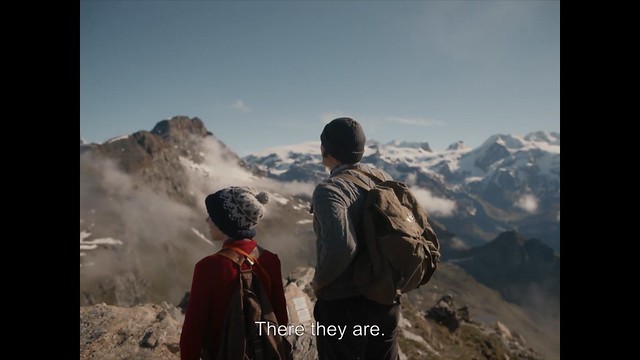
Le otto montagne (2022) - van Gronigen, Vandermeersch Screen Shot 2023-04-21 at 12.16.23 PM Screen Shot 2023-04-21 at 12.15.11 PM Screen Shot 2023-04-21 at 12.24.09 PM Screen Shot 2023-04-21 at 1.24.59 PM Screen Shot 2023-04-21 at 3.34.47 PM Screen Shot 2023-04-21 at 3.35.16 PM Based on Paolo Gognetti's book of the same title, Belgian filmmakers duo Felix van Gronigen and Charlotte Vandermeersch (The Broken Circle Breakdown)'s The Eight Mountains is an affecting epic tale of male friendship that is quite rare to see in films these days.
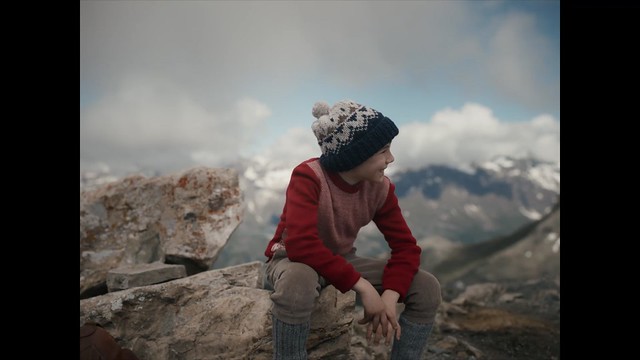
Shot in fitting full frame by Titane and Raw DP Ruben Impens, highlighting the majestic alpine peaks of Northern Italy, van Gronigen and Vandermeersch go on unhurriedly, telling the life-long friendship of Pietro (Luca Marinelli, Martin Eden, The Old Guard) and Bruno (Alessandro Borghi).

Narrated by an older Pietro, who would eventually become a writer, the film starts with him as an 11-year-old city boy from Turin spending his summer vacation with his parents up in the rural mountain regions. He befriends Bruno, who describes himself as the only child left in the region, because everyone has left to look for work in the city, including his father, as farming is a dying profession. Pietro's father, an engineer from the city, who secretly dreams about living the care-free life in nature, brings his family back to the mountains year after year. And the two boys' friendship grows.

The scenes where two boys forge their friendship -- swimming in the pristine alpine lake, playing in the field and hiking in the stunning mountain vistas -- are really something to behold. And these are innocent times, when children are less aware of their position in society and class differences.

Because of their budding friendship, Pietro's parents ask Bruno's guardians (uncle and his wife, who are cheesemakers) to take Bruno with them to Turin to get educated. In young Pietro's mind, it doesn't make sense: why do they want to take Bruno into the city life they always complain about? And why would Bruno even want to leave these heavenly, carefree surroundings? The move doesn't happen when Bruno's father, a brick layer who's rarely around, refuses the offer. And they stop going back to the mountain for vacation, partly because Pietro is now a teen and going through a rebellious stage, and resents his father, who is a salaryman, married to his work.

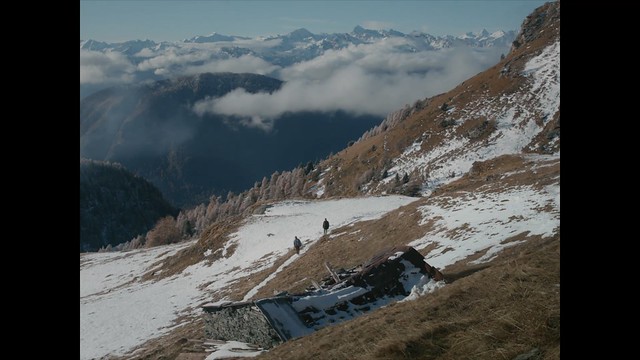
After the death of Pietro's father, their friendship re-emerges, now they are both bearded 30-something men and supposedly all grown up. Pietro finds Bruno waiting in the mountain village and takes him straight to an abandoned ruin of a cabin that they once stayed as children, while they were hiking with Pietro's father. Pietro learns that his father and Bruno kept in touch all those years. It turns out that his father had been helping Bruno, and sharing their love of the mountains, hiking together. That it was his wish for them to rebuild the cabin. And it dawns on Pietro that Bruno became a surrogate son to his father.

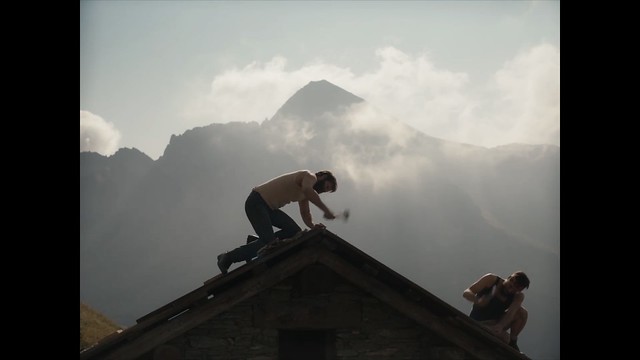
He finds his father's journal on the top of 'Grana,' one of the mountain peaks they frequented, detailing his thoughts and wishes, and how he wanted to live more freely. Pietro, who has not found the path in life and struggling, accepts the challenge, and the two men work on building the cabin together that summer. It will be their summer house. It is one of Pietro's girlfriends, who hooks up with Bruno upon visiting there and eventually starts a family with him in the mountains. Pietro laments how Bruno has found his path in life and he himself has not. But now Bruno has to contend with a struggling cheese-making business & a family to care for. The mountain life is not as carefree as when they were children.

In the meantime, Pietro, searching for the meaning of life, finds it in writing and the Himalayan mountains in Nepal. But their friendship continues, as he comes back, time and time again to spend his summer days in the cabin. It is Bruno who calls Pietro for help when life gets to be too much. Pietro comes back to the cabin from Nepal without hesitation. They argue about how to live life and say hurtful things to each other. And Bruno decides to spend the winter in the cabin alone.

The strength of The Eight Mountains is its complex depiction of a male friendship. It speaks volumes in their knowing glances and silences as they spend time together up in the mountains. Our circumstances change but the mountains don't. It illustrates men's ultimate desire and to retreat from the human world and finding it futile.

As they grow older, Pietro and Bruno understand this connundrum, and take refuge in each other's company. This all sounds corny as hell in words, but van Gronigen and Vandermeersch's earnest approach works beautifully, with awe-inspiring views of nature and superb, stoic acting by the two leads. Swedish singer Daniel Norgren's soulful, melancholic soundtrack does here what Leonard Cohen did for McCabe & Mrs. Miller. The film is one of the year's best.

The Eight Mountains opens Friday, April 28 in New York at Film at Lincoln Center and Angelika Film Center, with a national rollout to follow. Visit the official site for more information.

Sunday, January 23, 2022

Faces

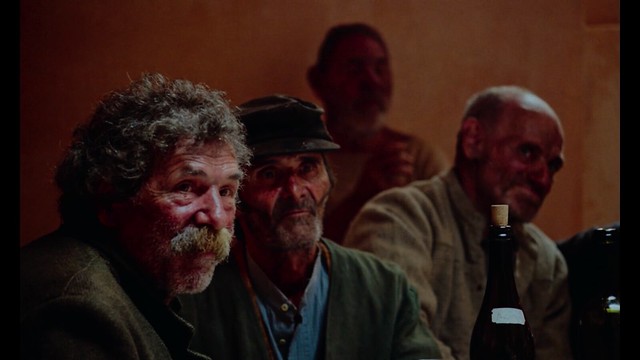
The Tale of King Crab (2021) - de Righi, Zoppis Screen Shot 2022-01-21 at 4.45.02 PM Screen Shot 2022-01-23 at 10.46.45 AM Screen Shot 2022-01-23 at 10.47.01 AM Screen Shot 2022-01-23 at 10.51.31 AM Screen Shot 2022-01-21 at 3.29.45 PM Screen Shot 2022-01-21 at 1.21.13 PM Screen Shot 2022-01-21 at 3.27.54 PM Screen Shot 2022-01-21 at 1.22.46 PM Screen Shot 2022-01-21 at 1.41.06 PM Screen Shot 2022-01-21 at 3.25.07 PM Screen Shot 2022-01-21 at 4.44.46 PM I am a fan of people's faces in films. Uglier, craggier the better. They tell thousands of untold stories on their own. No explanations necessary. And they leave lasting impressions long after I forget the plot of the films they peek their heads in. I remember an ageless street urchin's face, smoking silently in Sharunas Bartas's Three Days. I remember Harry Dean Stanton's weathered face in Slam Dance. Denis Lavant's too with that ugly smile. More recently, I remember the face of Amador Arias in Fire Will Come.
Same here in The Tale of King Crab, by documentary filmmakers Alessio Rigo de Righi and Mateo Zoppis, trying their hands on fiction - a hybrid of documentary elements with fictional retelling of a folklore or two. The film starts in present-day with the old and craggy residents of a small town in Italy, all played by locals, telling each other a folklore that's handed down from generations to generations. Their faces are so distinctive inside a dim hut, they resemble van Gogh's Potato Eaters.
They tell the stories about Luciano (Gabriele Silli), a local drunkard with bad temper who abandoned his aristocratic lineage and making enemies with peasants and landowners alike. The story goes and we get to see them reenacted as Luciano falls in love with a sheepherder's daughter (all grown up Maria Alexandra Lungu, who played the memorable child lead in Alice Rohrwacher's The Wonders). But a local aristocrat landowner has hots for her and as he stops allowing locals to use his property to be used as a footpath becomes a crying rally for hot blooded Luciano. And their confrontation ends in tragedy.

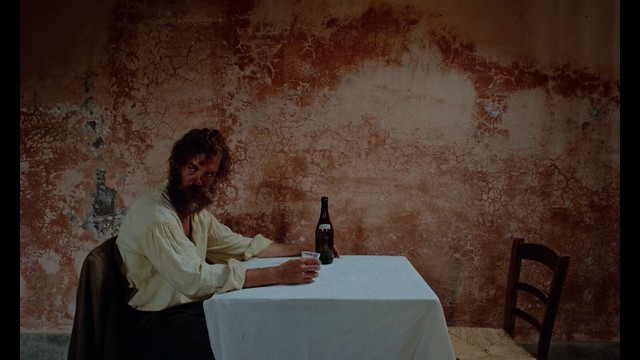
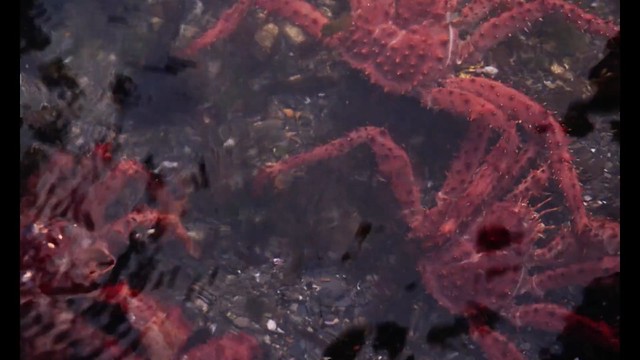
Silli too, has that face: A scar runs down on his forehead, his unkempt beard and wild hair hides his past secrets but its his penetrating steel blue gaze stops you in your tracks. After burning down the village gate in a fit of rage, Luciano is banished to the end of the world (in this case, South America). But he resurfaces again as he takes an identity of a dying priest he met in an Argentinian wilderness and inherit a giant red land crab who works as a compass to find a hidden Spanish treasure atop of mountain lagoon.

We don't get to know, if the later half of the story is a folklore or something the filmmakers came up with, because the narration of the local folks stops in the middle. After all, any stories handed down in oral tradition have thousands of additions and modifications. The temporality is out the window: the first story might have taken place in medeval times, as the second one takes place decades later. Who knows? But the transition between the two stories is so smooth and you don't even get to notice it or care, because you already have bought into Luciano's crazy adventure narrative and intrigue. The views are stunning as Luciano, the crab and other treasure hunters slowly venture up to the rugged, unforgiving Andes mountains as the film becomes an odd adventure/western.

Simone D'Arcangelo, cinematographer and DIT on various projects (Il Solengo and Woody Allen films), captures stunning landscapes and colors, resulting in dated, Herzogian beauty on grainy 16mm film. The Tale of the King Crab is that rare breed of films which inhabits both past and present; harkening back to the ambitious days of cinema of the 60s and 70s, possessing that spirit of capaturing a fever dream that was/is cinema and all knowing modern sensibility to experiment and be playful at the same time.

The Tale of King Crab is an adventure in more ways than one. Silli's recurring craggy face with his smooth, clear voice guides us through the most unlikely places both the narrative and form, making a delicious concoction, worthy of its spectacular crustacean subject.

The Tale of King Crab opens in theaters 4/15 in New York and 4/29 in Los Angeles and national rollouts to follow. Please visit Oscilloscope website.

Thursday, July 22, 2021

First Look 2020/21 at MoMI

After taking a Covid hiatus last year, MoMI (Museum of Moving Image)'s annual new film showcase First Look is back! Celebrating tenth year, First Look takes a peak at innovative new international cinema.

Opening Night is the NY premiere of Claire Simon’s The Grocer’s Son, the Mayor, the Village, and the World… and Closing Night is the NY premiere of Dash Shaw’s Cryptozoo.

First Look 20/21 presents 22 features and more than two dozen mid-length and short works from around the world, plus its signature “Working on It” sessions, which focus on the creative process. The festival runs from July 22nd through August 1st.

A special kick-off event for First Look 20/21 takes place at Green-Wood Cemetery in Brooklyn on July 19, with a screening of October Country featuring the world premiere of a live score by Michael Palmieri and Donal Mosher, co-presented with Rooftop Films.

The program comprises both documentary and narrative works, and live performances, with work hailing from countries including Belgium, Canada, Colombia, France, Georgia, Germany, India, Israel, Iran, Italy, Madagascar, Niger, Poland, Slovenia, South Africa, Sweden, Turkey, United Kingdom and the United States. More than half of the films are directed by women.

Please click on MoMI website for tickets and more info.

Below are what I was able to sample:

The Grocer's Son, the Mayor, the Village and the World... - Claire Simon *Opening Night Film grocers-son Filmmaker Jean-Marie Barbe has a vision for his hometown, Lussas, a rural farming community in Ardeché region of southern France. He wants to build a publicly funded independent film complex and a website dedicated exclusively to documentary filmmaking. It will be called Documentary Village of Lussas. It will be the source of attraction for jobs for the younger generation and local economy. Claire Simon of a direct cinema tradition, documents the trials and tribulations of people in Lussas - including Barbe, his team, the mayor, and local farmers taking a huge leap of faith.

Simon draws the parallels between farming - as a local farmer describes it as a huge gamble every year, where everything has to go right, that those produces people take for granted are nothing but a miracle, and Barbe's endeavor which might or might not bear any fruit. That everyone passionate in what they are doing is looking at things for the long term - for future generations. The Grocer's Son, the Mayor, the Village and the World... is an intimate and absorbing documentary with a lot of heart.


Ridge - John Skoog Ridge Taking place in Swedish farmland, Ridge examines loneliness and isolation of some immigrant farmhands and rural youth, not through dialog but controlled, wide screen visuals. The story goes that a couple of strayed cows became wild after spending some time in the ridge before they were found and brought back. The film's formalist approach - camera always slowly tracking and dollying in, gives you the ominous feeling that every move is watched, either from above or eye level and its subjects looking back suggests mutual consent.

Mingling our unprecedented technology era where everyone is isolated in his own sphere of smartphones, Ridge seems to suggest to take a trip to ever shrinking nature and enjoy the wilderness while we can.


Transnistra - Anna Eborn Transnistra Between Moldova and Ukraine, a long strip along the Dniester river, sits unrecognized breakaway state of Transnistria, where people seem to be carrying on the Soviet tradition and lifestyle. Anna Eborn, a Swedish born filmmaker follows a group of 16 year olds, consists of 5 horny boys and one girl, Tanya, from the hot days of summer to blistering winter in the rural setting as they swim in the lake, hang out in brick and mortar abandoned army barracks and tend to farm animals.

The 16mm shot documentary is intimate portrayal of friendship and love among the restless youth. Their fits of jealousy, envy, hate, euphoria as well as their hopes and dreams are all captured in sun-kissed imagery. It's a small pond story that is completely relatable and universal. Their fugu state of teen years where nothing is stable reflecting its status of their country is an apt one.


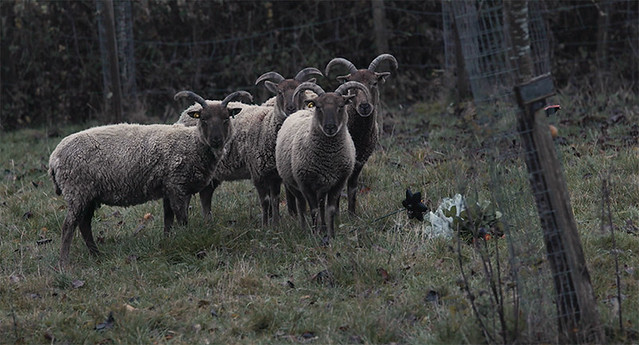
Some Kind of Intimacy - Toby Bull Intimacy As we grow older, it is inevitable to experience the death of our loved ones more and more. There might be differences in how we grieve, but the pain, and the heartache remain the same. And it is sometimes difficult to talk about how you feel. Toby Bull achieves some kind of intimacy or the fraternity of orphanhood in less than 6 minutes with his wonderful short film Some Kind of Intimacy. Through a simple phone conversation, while observing a flock of sheep trampling his parents grave in the rain, we get to contemplate our fleeting existence within the context of nature. Humor helps to dull the pain, so does shared collective melancholy.


Il mio corpo - Michele Pannetta Il Mio Corpo Sun drenched Sicily is both home for Oscar and Stanley - Oscar and his brother Roberto collects scrap metals on the side of the road under the watchful eye of their sometimes abusive father. Stanley, an African refugee, after getting a 2-year visa, stayed in Sicily and trying to eke out a living doing menial work for a local priest while helping his fellow refugee friend get his visa.

We see their daily routine simultaneously, slowly revealing what their lives are like. Il mio corpo is not unlike Gianfranco Rossi's Fire at Sea, another documentary that deals with the state of refugee crisis in the southern European country close to the African continent. But the film is much more subtle and poetic. We feel for these youngsters as they struggle in their own way, licking the bottom of the barrel in the late stages of global capitalism. Their brief, wordless encounters at the end gives hope that there's unspoken fraternity and cooperation in humanity in an ugly world.


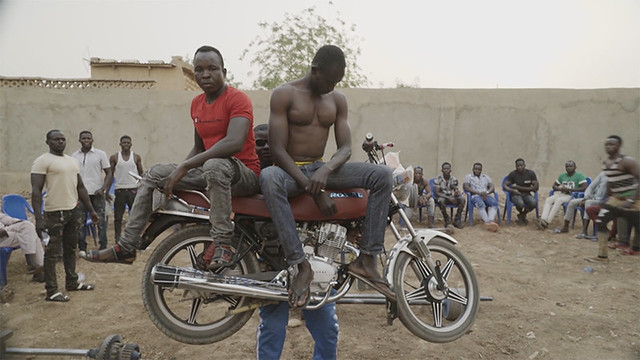
Zinder - Aicha Macky Zinder Zinder is a city in Niger. It's known for violent youth gangs and delinquents. Director Aicha Macky is from there. And she gets an unprecedented access to the inhabitants of Kara Kara, the city's most dangerous slum. She interviews former members of palais, the youth gangs, and examine how poverty and unemployment perpetuate the unending macho culture. It starts with a jarring swastika adorned flag with 'Hitler' written on it: it's the flag of the bodybuilder's club calling themselves Hitler. They think Hitler is the name of an invincible warrior in America. Siniya Boy, the leader of the club, a former palais, is trying to build a security firm filled with fellow former gang members and friends who are currently in jail. Second chance in Kara Kara is hard to come by and the people of the slum are trying to help each other.

There is Bawo, a former gang member who is a pedicab driver. He confesses he had done some very bad things when he was young. NGO changed his outlook on things and now he is trying to help people in the city's red light district. Then there is Ramesses, a gas smuggler who overcame the stigma of being a hermaphrodite, trying to survive in Kara Kara just like everyone else.

Macky captures all these incredible stories in a seldom seen part of the world. It shows the survival and resilience of the human spirit. One of the most eye opening documentary I've seen in a while.

Sunday, May 2, 2021

Saint Rocco

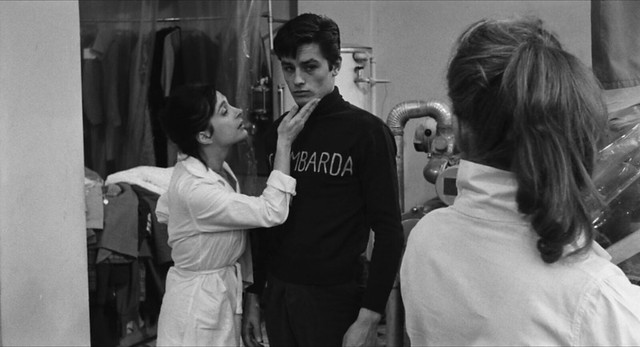
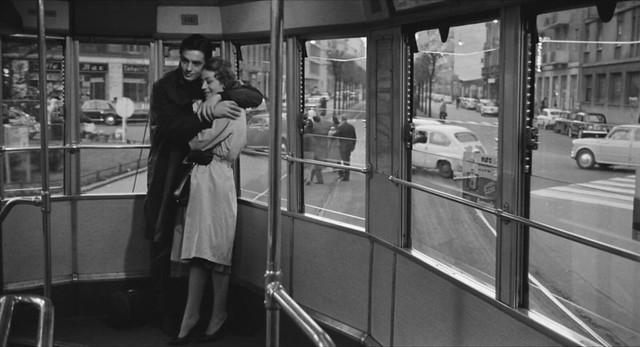
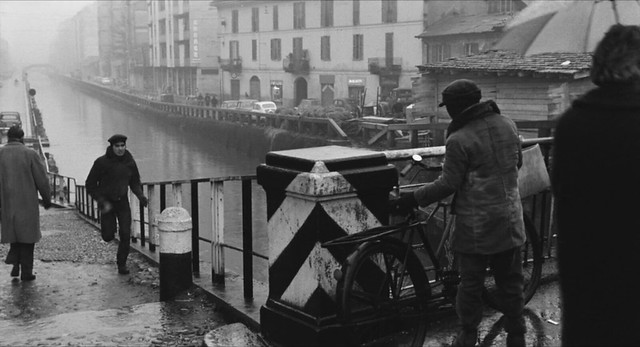
Rocco e i suoi fratelli/Rocco and His Brothers (1960) - Visconti Screen Shot 2021-05-01 at 11.08.56 PM Screen Shot 2021-05-01 at 11.10.57 PM Screen Shot 2021-05-01 at 11.12.14 PM Screen Shot 2021-05-01 at 11.19.56 PM Screen Shot 2021-05-01 at 11.20.57 PM Screen Shot 2021-05-01 at 11.01.38 PM Screen Shot 2021-05-01 at 11.07.10 PM Screen Shot 2021-05-01 at 11.15.41 PM Epic melodrama about changing times and a family's disintegration told in Dostoevskian flair. It tells the 5 Parondi brothers, an impoverished farmers from the southern Italy moving to the bustling industrious city of Milan with their beloved, devoted matriarch of the family (Katrina Paxinou). Shot in crisp monochrome and on location, Rocco has the look and feel of Italian neorealist cinema. Vincente the oldest, has settled in and married a girl (Claudia Cardinale in one of her first roles) his mother doesn't really approve (her family mostly) and doesn't really want to deal with family matters, Simone (Renato Salvatori), is a brute who gets into boxing but falls victim to the lure of the city - drinking, whoring and gambling among other things, Rocco (Alain Delon) is a quiet spiritual one who'd do anything for the family, even if it means sacrificing his own happiness, Ciro (Max Catier) is the unsung narrator, realist of the film, assessing each of his elder brothers' flaws and tries to teach the youngest Luca that times-are-a-changing.

The bulk of the 3 hour runtime concerns Simone and Rocco's relationship with a local floozy Nadia (alluring Annie Girardot). After unsuccessful attempt with Vincent, she lures Simone in, then dumps him. She runs into Rocco who is finishing up his military service in Turin. His innocence and pious ways impresses her to changes her life around and they become a passionate lovers. Simone's boxing career is not going well due to his vices, and Rocco happens to be excelling at the sport. After Simone finds out about Rocco and Nadia, he tracks them down with his gang and beats up Rocco and rapes Nadia in front of him. In order not to disrupt the family, Rocco urges Nadia to go back to Simone and Nadia reluctantly agrees. And the tragedy ensues.

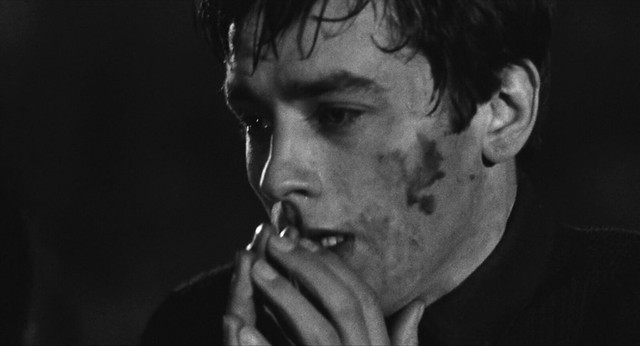
It's all Alan Delon show though. His youthful beauty and unending saintliness is the point of the movie. As he shivers in the muddy riverbank, tears rolling down his face, you get to feel his soul being crushed over and over. His unconsolable wailing when he finds out that Simone killed Nadia, is one of the most harrowing scenes in any film. Then the life goes on, he needs to tour as a boxer to earn money for the family, beating strangers to a pulp even though he doesn't like that side of himself, dreaming of going back to the south one day.

Beautiful and novelistic, Rocco and His Brothers is one of the greatest Italian neorealist films I've ever seen.

Thursday, January 14, 2021

We Won't Die Together Hand-in-Hand

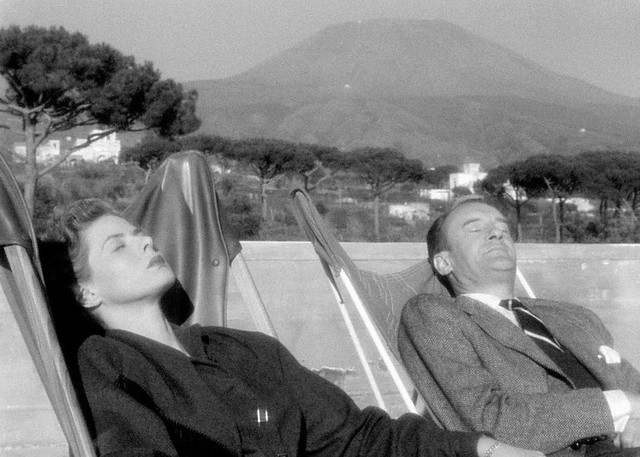
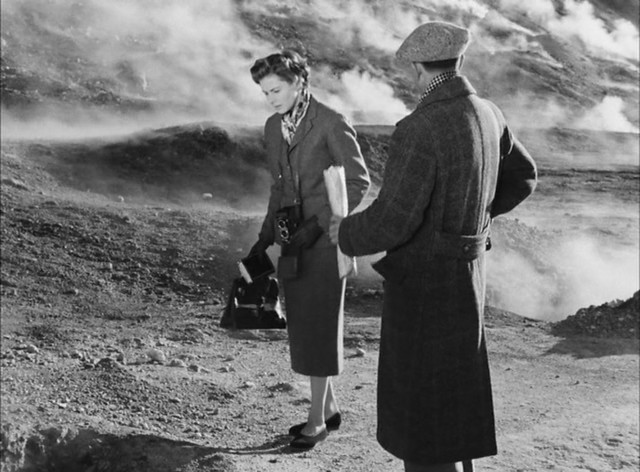
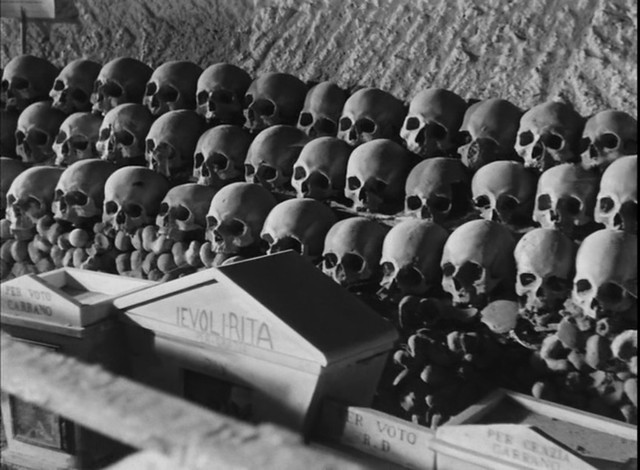
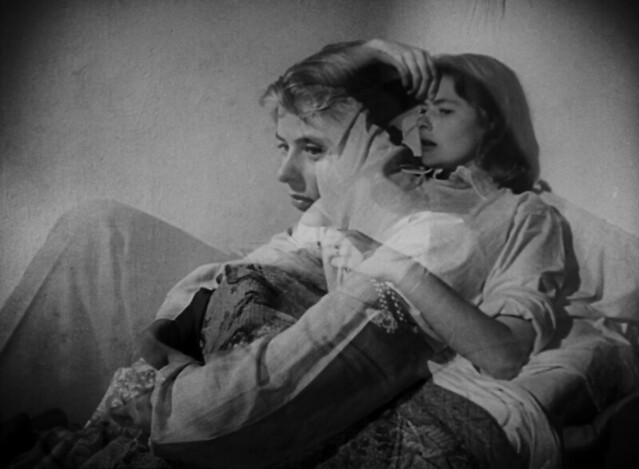
Viaggio in Italia (1955) - Rossellini Journey to Italy Screen Shot 2021-01-14 at 3.11.50 AM Screen Shot 2021-01-14 at 3.20.23 AM Screen Shot 2021-01-14 at 3.38.58 AM Screen Shot 2021-01-14 at 3.55.05 AM Screen Shot 2021-01-14 at 3.55.41 AM The childless Joyces - Alex (George Sanders) and Katherine (Ingrid Bergman) are English couple travelling to Naples to settle some inheritance matter (Katherine's uncle Homer left them a villa). It is pretty obvious as the film progresses, their marriage is on the rocks: After 8 years of marriage, they don't know each other very well and find themselves uncomfortable when left alone only with each other. She hates his snobbery and self-absorption; he hates her jealousy and resentment. Reconciliation doesn't seem possible. 

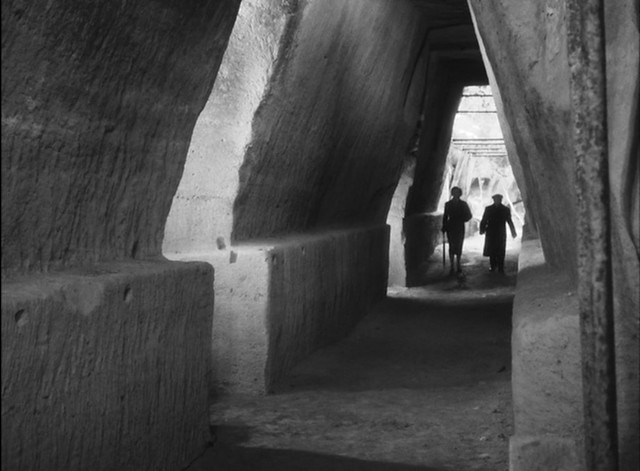
While the estate matter is being settled, Alex leaves for Capri to unsuccessfully pursue an affair and Katherine remains in Naples visiting museums and archeological digs and thinking about that sickly young poet who stood outside her window in the rain. 

 Just like in Stromboli, the rugged, imposing background- active Mt. Vesuvius, which erupted only a few years before, reveals the chasm between the couple. 

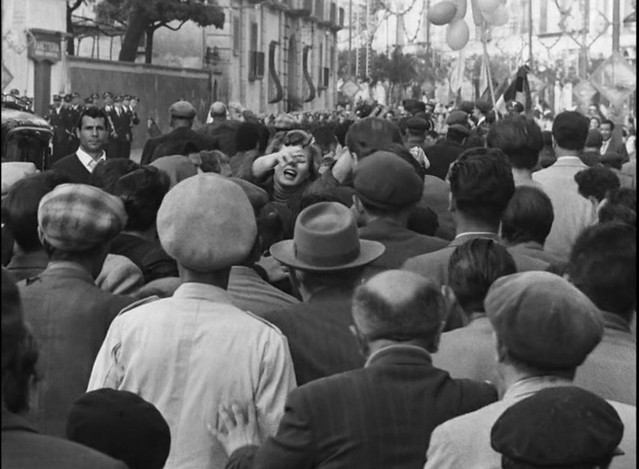
There are a lot of driving shots. Rossellini emphasizes the couple's isolation and strict observers status as life happens outside the windshield of their car - Naples with its crowded streets, religious processions, livestock, a river of humanity on the other side of glass. 

While narratively weak and with the unconvincing ending, Viaggio in Italia is, as Deleuze points out in Cinema II, the prototype for what's to come - Antonioni's Urban ennui and isolation in L'Avventura and La Notte.

Saturday, March 9, 2019

Volcanic Desire to Live

Stromboli (1950) - Rossellini
Screen Shot 2019-03-09 at 10.50.29 AM
Screen Shot 2019-03-09 at 1.15.23 PM
Screen Shot 2019-03-09 at 1.16.09 PM
Screen_Shot_2019-03-09_at_12.41.00_AM
Screen Shot 2019-03-09 at 12.16.20 AM
Screen Shot 2019-03-09 at 12.13.47 AM
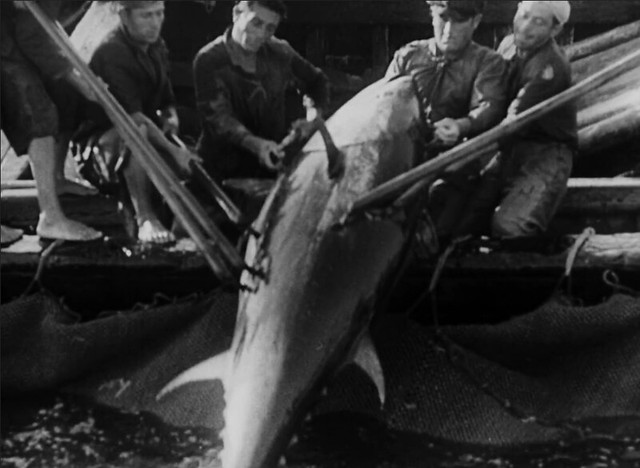
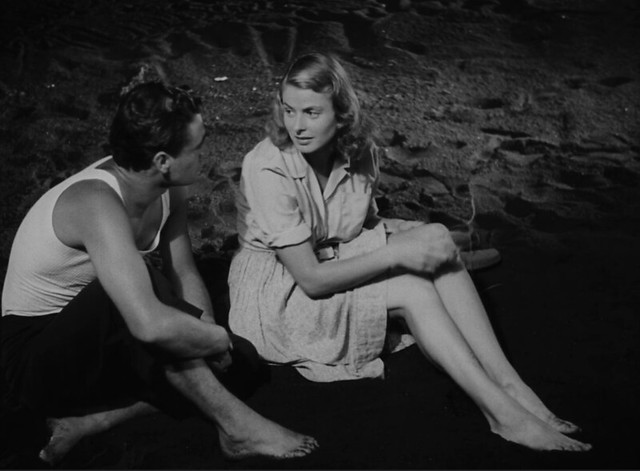
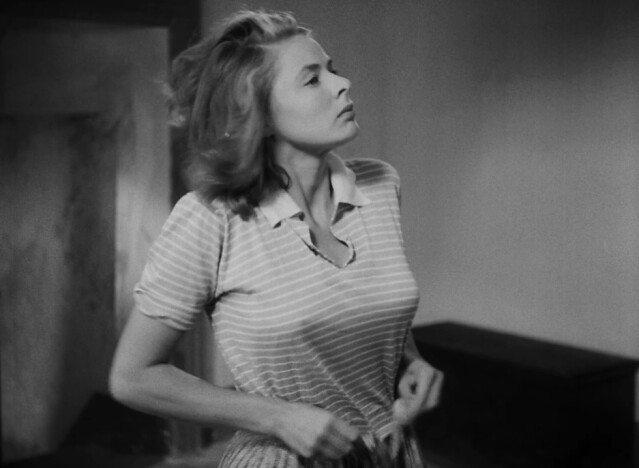
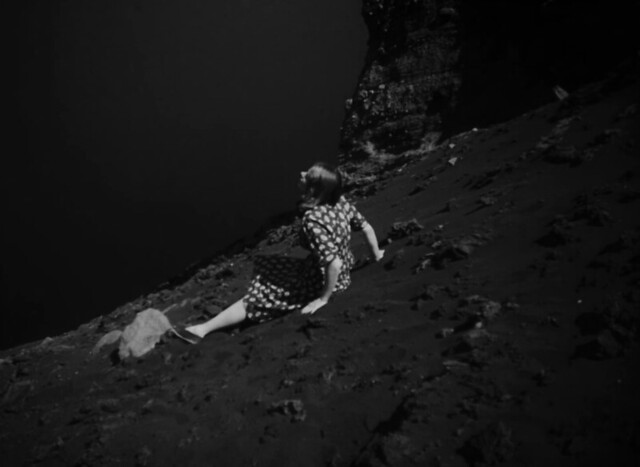
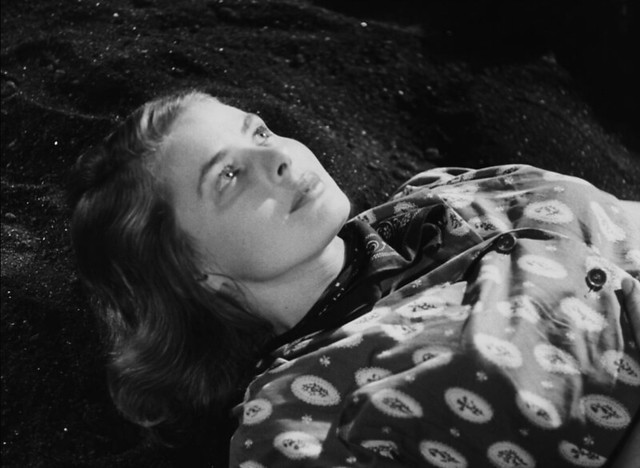
Karin (Ingrid Bergman), a war refugee of Lithuanian descent in an internment camp in Italy flirts with a young Italian soldier to get out of the camp. They get married and move to the soldier's hometown Stromboli, an isolated volcanic island where its very religious, very conservative unwelcoming inhabitants greet her. Worldly and ambitious Karin finds the first day that there is absolutely nothing in Stromboli that she likes. Its barren landscape and rudimentary stone houses and old men hanging around her home profoundly depress her. Her young husband turns out to be nothing but a brute too, slapping her around and locking her in the house. She plans to escape, even if it means seducing half the village and climb across the volcanic mountain to get to the other side of the island.

It's interesting to see Rossellini's neorealist approach with non-actors and almost documentary-like sequences clash with sheer star power of Bergman is an interesting mix. But I don't mind. Bergman is magnetic.

Thursday, November 22, 2018

Healing Nature

I tempi felici verranno presto/Happy Times Will Come Soon (2016) - Comodin
Screen Shot 2018-11-22 at 11.17.22 AM
Screen Shot 2018-11-22 at 10.57.03 AM
Screen Shot 2018-11-22 at 11.04.29 AM
Screen Shot 2018-11-22 at 11.17.53 AM
Screen Shot 2018-11-22 at 10.59.16 AM
Screen Shot 2018-11-22 at 11.00.12 AM
Screen Shot 2018-11-22 at 11.00.59 AM
Screen Shot 2018-11-22 at 11.02.50 AM
Screen Shot 2018-11-22 at 11.03.33 AM
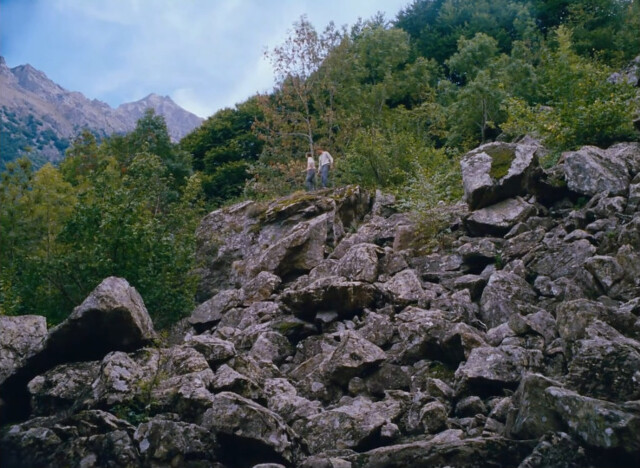
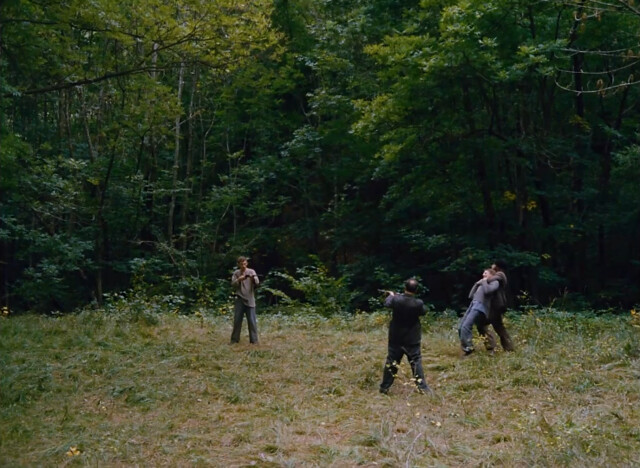
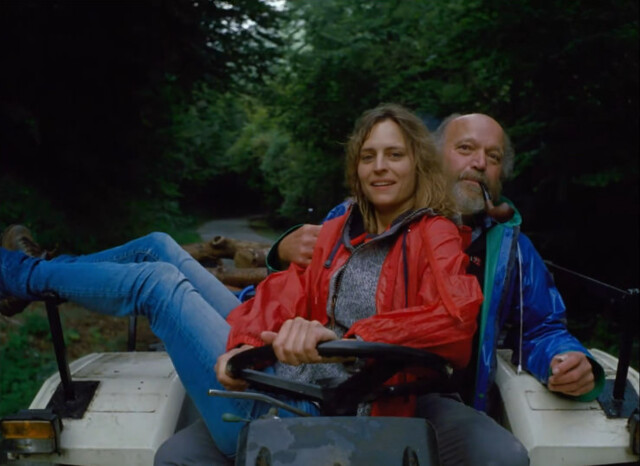
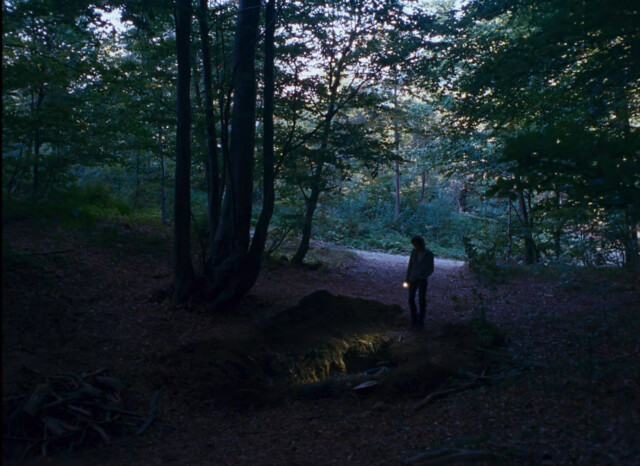
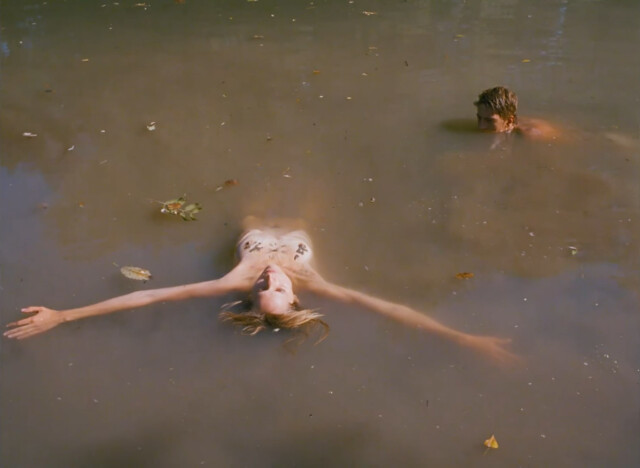
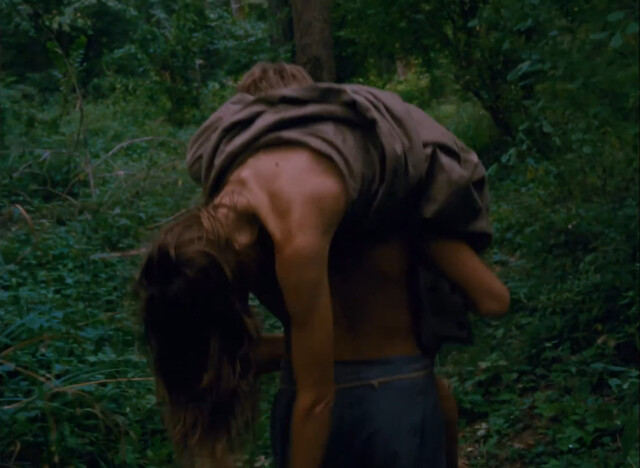
I loved the fable like quality of I tempi felici verranno by an Italian documentary filmmaker Alessandro Comodin. It's his debut narrative feature. Loosely connected stories in the lush green forest unfold playfully and organically with its mostly handheld camera work. We see two scrappy young men on the run- they might be army deserters or thieves. With the distant gunshots and barking of the dogs, they run deep into the forest. With their clothes and a musket they later find, you can guess that this is in the past, or is it? They take shelter in the cave and trap rabbits to survive. But not that long, their demise comes unexpectedly.

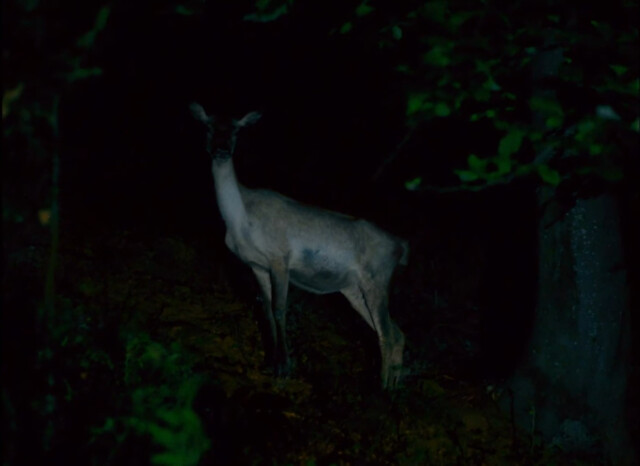
Then we are introduced to a small town folks being interviewed about a legend of a wolf lady. The old tale goes that there was a sickly woman from Paris who ventured into the forest for its healing power. A vicious wolf also lived in the forest, but instead of attacking and eating her, he became her protector.

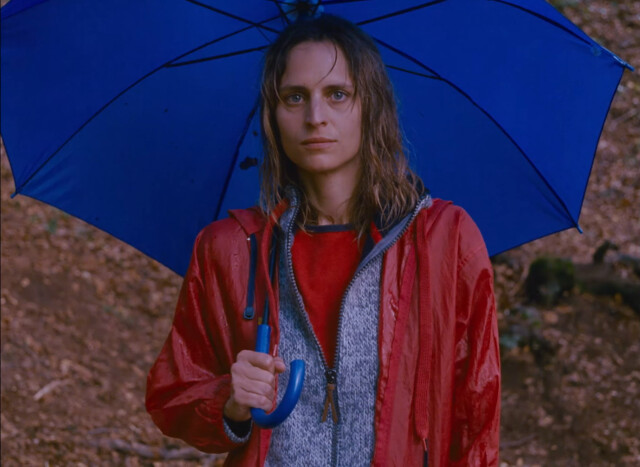
Then it's Ariane (Sabrina Seyvecou), a local farmer's daughter who has a tendency to roam around the forest and digging up holes in the ground. Is she setting a trap or is she trying to find an entrance to a cave? One of the young man who appeared in the first segment finds her and they fall in love.

I tempi felici verranno presto is a beguiling mixture of folktales, documentary elements and deeply spiritual film full of wonders and rapturous beauty. It's an animistic, kindred spirit love story beautifully told. It reminds me of Weerasethakul's Tropical Malady in many ways. But it's not tethered to its region's history nor politics and concerns more about rustic nature. Just lovely.