Showing posts with label Ramon Zürcher. Show all posts

Thursday, June 26, 2025

Trappings

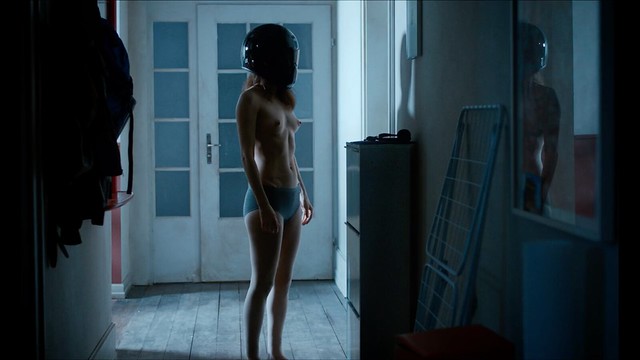
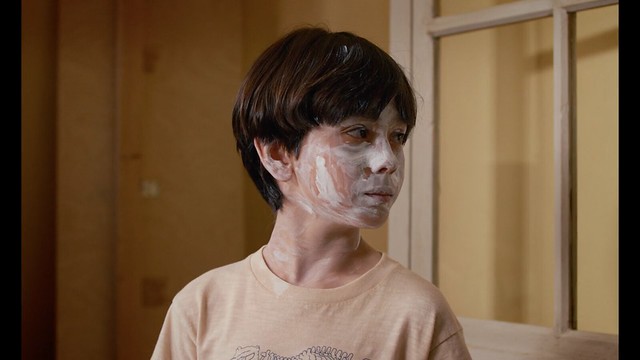
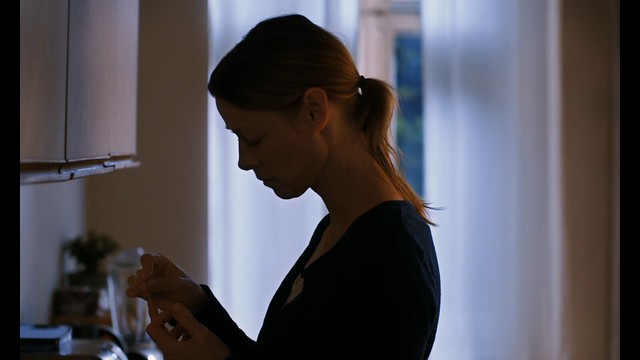
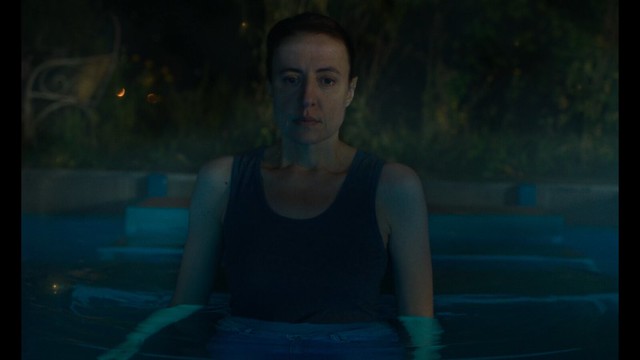
Der Spatz im Kamin/The Sparrow in the Chimney (2024) - Zürcher Screen Shot 2025-06-23 at 4.29.09 AM Screen Shot 2025-06-23 at 4.57.31 AM Screen Shot 2025-06-23 at 6.27.32 AM Screen Shot 2025-06-23 at 6.25.16 AM Screen Shot 2025-06-23 at 6.29.15 AM Screen Shot 2025-06-23 at 6.30.35 AM Screen Shot 2025-06-23 at 5.44.18 AM Screen Shot 2025-06-23 at 6.26.49 AM Screen Shot 2025-06-23 at 5.54.39 AM The Zürcher Brothers' 'animal trilogy' concludes with The Sparrow in the Chimney, another chamber piece that takes place in a summer Swiss lakeside house bathed in golden sunlight, where a simmering tension builds in a confined space as the family plans for a birthday celebration. Ramon, wearing director and writer's hat (and Silvan taking producer's role), concocts a wordy, ensemble piece around the always great Maren Eggert (a great German actress and the lead in many of Angela Schanellec’s films) as Karen, an unloved and unappreciated mother of three trying to plan a birthday party for her unfaithful husband, Markus.

The film starts with typical Zürcher fashion with static portraiture of two daughters: Johanna (Lea Zöe Voss) in her school, and Christina (Paula Schindler), the one who got away, on a plane coming home to attend her dad's birthday party. We see them behind the glass window from outside. This inside/outside theme is repeated throughout, with a sparrow flying out of the fireplace inside the house, leaving the trail of ash and leaving through the window early in the film, while the lake and its surroundings are taken over by the giant black commorants, ominously circling the sky- which beckon's the question: is outside any better?

Leon, the youngest of Karen's children, is seen prepping dinner for the whole extended family as they arrive, while Karen sleeps. Jule, Karen's sister and her husband and their baby daughter arrive. It is slowly revealed that the house Karen's family lives in belongs to Karen and Jule's deceased mother - the house the sisters grew up in, and the mother's shadow still looms large. It is also revealed that Karen's decision to move into the house after mother's death was not a favorable one for everyone else in the family.

Things are definitely not ok in Karen's household: the kids resent her. Leon is bullied in school and gets beat up a lot. Johanna, always an attention seeker, is testing her budding sexuality on any male figure around her. Christina has her reasons to be withdrawn. Markus is having an affair with Liv (Luise Heyer), a mentally unstable woman who took up residence in a cabin across from the house (used by the deceased mother and her lesbian lover) and has been watching over the family's dog.

The Sparrow in the Chimney is a densely scripted film where many things are said, yet nothing is said directly - the family dynamics here are not straightforward affairs and their feelings and thoughts are not communicated. Their cruelty to animals shows their frustrations with one another. We get the glimpse of their lives and past histories, but there's no big eureka moment until the end.

As with their last two films, Strange Little Cat and The Girl with the Spider, The Sparrow presents Zürcher's unique visual style - a blocking to create a claustrophobic atmosphere where everyone's cramped in the kitchen corridors, squeaking by each other and going in and out of static frames, and in and out of windows. The difference of The Sparrow here is that Zürcher's scope of visual filmmaking has grown and much more expansive. Karen's elaborate nightmare/hallucination sequence is something to watch, as it provides the inner workings of her fears, desires and secret wishes being manifested.

The Sparrow in the Chimney examines the familial trappings and yearning for freedom which might not be as ideal as it appears to be. Beautifully realized with sensuous visual details of inanimate objects to animals alike, the film cements the unique storytelling talents of the Zürchers.

Wednesday, April 6, 2022

Chamber Piece with Thousands Stories

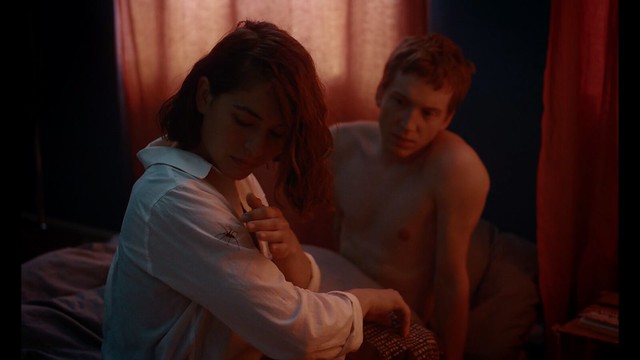
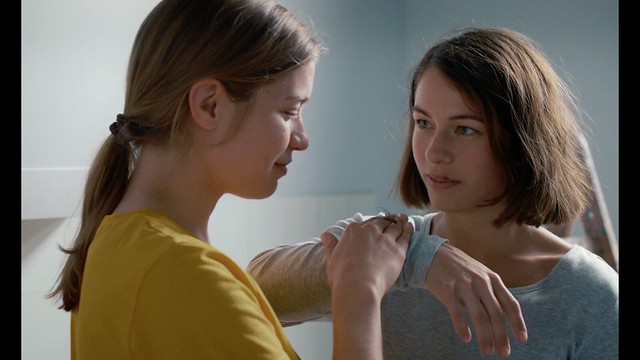
The Girl and the Spider (2021) - Zürcher Screen Shot 2022-04-02 at 10.00.52 AM Screen Shot 2022-04-02 at 10.05.43 AM Screen Shot 2022-04-03 at 12.37.41 PM Screen Shot 2022-04-03 at 12.42.15 PM Screen Shot 2022-04-03 at 12.33.45 PM Screen Shot 2022-04-03 at 12.23.05 PM Twin siblings Ramon and Silvan Zürcher's second film, after enigmatic The Strange Little Cat (2013), is yet another chamber piece as a microcosm of people's inner yearning and desire to connect in the modern society. And The Girl and Spider is just as ambiguous and non-conclusive as the former, if not more so.

The plot is pretty simple - one of the two roommates (who seem more than roommates), Lisa (Liliane Amuat), is moving out and getting her own flat. Mara (Henriette Confurius) with striking dark blue eyes, with herpes on her upper lip prominently displayed, is the one who is left behind. Like their debut feature, Zürchers concentrate on the indoor flat settings with a camera firmly fixed on the confines of the flats with several characters crammed in, squeezing by one another, making the places claustrophobic and devoid of any room for privacy. There's Lisa's mother, their friends, flirty neighbors, a handyman and his son, a cat, a dog, rowdy kids and of course, a hefty spider from the title who usually sits on the corner of the ceiling and makes unannounced appearances from time to time. Also like their previous film, The Girl is a very wordy film. Everyone has a story to tell, whether it falls on deaf ears is not as important. No communication is direct, no one would blurt out that they want to sleep with each other, or being extremely judgmental or cruel. Our society is too polite for that. It's in the slight touches on the shoulders and glances.

The human relationships are fickle; there are a lot of missed opportunities, one night stands, jealousy, yearning and desire that are not fulfilled - all these are happening around Mara, our static figure on the sidelines. She's not immune to be the object of desire, as she gets attention from both sexes. Is she taking a break from the sinewy human connections because of the STD? Or is she somewhat autistic the way talented people are (she sketches gorgeous portraits of people around her). She is also capable of cruelty. Does the spider which gets passed on from Mara to others and back, signify a disease or desire or both?

Only solvable mystery is the case of missing cat. It was the neighbor upstairs- a lonely old lady who took the cat in to her apartment. Does she need our scorn or empathy? Therefore, however complicated we see ourselves to be, do we need to be scorned for our jealousy, desire and cruelty or do we need empathy? Everyone, in Zürcher's films, imagined or otherwise, like the shop girl at the window, the chambermaid who left the piano in their apartment and went on to work at a cruise ship, even inanimate objects - plant, drawings, styroform cups, feathers, paint, have a story to tell and needs to be heard and deserve our empathy.

Stylistically original, but The Girl and the Spider reminds me of the ending of Kieslowski's Red by way of Schanelec in its enigmatic storytelling and it's wonderful. I can't wait for Zürcher's The Sparrow and the chimney as they conclude the trilogy.

Sunday, March 27, 2022

Domestic Terror

The Strange Little Cat - Zürcher Screen Shot 2022-03-27 at 9.10.25 AM Screen Shot 2022-03-27 at 9.11.44 AM Screen Shot 2022-03-27 at 9.12.33 AM Screen Shot 2022-03-27 at 9.13.12 AM Screen Shot 2022-03-27 at 9.14.02 AM Screen Shot 2022-03-27 at 9.16.16 AM An unusual chamber piece that holds more mystery and tension in its 70 minute runtime than an average thriller, Ramon Zürcher's The Strange Little Cat calls on a normal German middle-class family life into question: Are they OK?

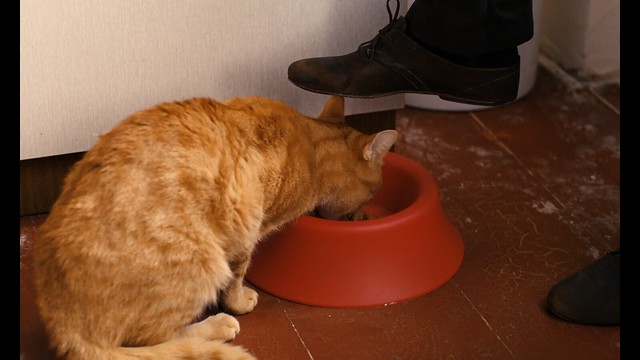
The film is composed entirely of medium static shots in the family's small apartment, never to reveal the goings-ons of off frame. Everyone says things in a matter-of-fact fashion and their interactions with others are limited to us watching them staring vacantly to the other person off camera. Mom, played by Jenny Schily who always looks like she is suffering from migraines, tries to hold it together for one day, hosting a dinner party for her extended family. Her two grown children, Simon and Karin, are visiting from elsewhere. Her younger daughter Clara screams on top of her lungs whenever the blender is on and always wrecking havoc with the growling family dog and the orange tabby cat, which won't stop jumping on the dining table. The washer is broken and in need of service, there's moth flying around the kitchen and there's a rat scurrying around in the courtyard below.

Everyone has a strange encounter stories to tell but no one really pays any attention to them. Are they not significant enough or are they the signs of distress? How about the shots of objects - a glass of milk on the kitchen counter with floating hair on top, a yellow ball the dog plays with, a dancing bottle on the stove - what do they signify?

Anything that is said and heard in The Strange Little Cat accumulates into an uneasy feeling. Everyone's saying something to the others but nothing really sticks. This is more of the case to mom than others. She tells a weird story about going to the movies and a stranger next to her put his foot on her foot but she missed the opportunity to withdraw or let him know. Was she getting hit on, or was she making things out of proportion? She tells Karin about a crowded place she goes for lunch during the dog walk, just to have lunch next to some strangers.

People's cruelty to one another seems more accepted - Karin's attitude toward the neighbor's kid who kicked a hacky sack into the kitchen window, or mom's lingering foot above the cat's head, Simon's story about a drunk woman at the party who later got arrested, or mom's contemplation of pricking her finger with a sewing needle, and so on.

There's a lot to unpack in The Strange Little Cat. It's the everyday domesticity that plays out like a horror film.