Showing posts with label Rendez-vous with French Cinema 2017. Show all posts

Tuesday, March 14, 2017

Frantz is Ozon's Best Film to Date

Frantz (2016) - Ozon
frantz_03
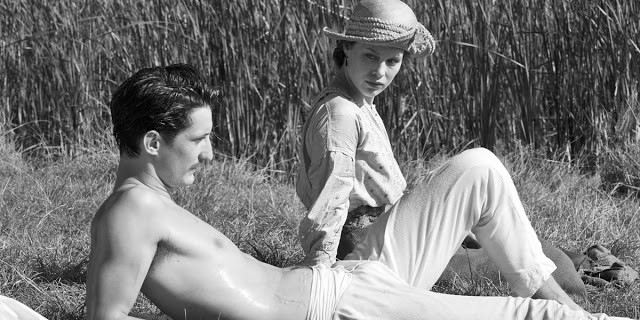
The year is 1918. The Great War has just ended and Germany and France were licking their wounds, hopped up on their respective national fervor. Anna (Paula Beer), a young German woman who lost her 23-year old fiancé, Frantz in the trenches, is living in a mountainous rural German town with his parents, the Hoffmeisters, out of love and duty. One day she notices a frail looking stranger putting roses on Frantz's grave.

Soon the stranger knocks on the doorstep. His name is Rivoire (Pierre Niney), a French soldier who claims to be a friend of Frantz from their school days in Paris. At first apprehensive with anti-France sentiments around the country - 'any Frenchman could have killed my son', but the Hoffmeisters soon open their arms to the charming, tall and melancholic man. Young Anna too, ignoring other suitors, gets smitten by the long eye-lashed, sexy mustachioed Frenchman.

Rivoire confesses to Anna that it was he, who killed her Frantz and learned about Anna and the Hoffmeisters through a letter in the dead man's pocket- that he lied to them. His intention of coming to Germany was to ask for forgiveness. Heartbroken, Anna takes ill right after Rivoire leaves and doesn't have the hearts to tell the Hoffmeisters the truth.

Ok. The synopsis for the first half of the film sounds very much like an old overblown melodrama. Based on an old French play The Man I killed by Maurice Rostand which was adapted by Ernst Lubitch in 1932 as Broken Lullaby. But Ozon, the master of a twisty narrative, packs much more interesting development in store in the second half- part detective story, part romance and part reflecting the current climate of the rise of nationalism where the relationship between two old neighbors - France and Germany and Europe as a whole is being tested.

Frantz is as usual for Ozon, a seductive concoction. Disguised as period costumes and sumptuous monochrome cinematography that bursts in to color in pivotal moments, but the film holds some sinister undertones of lost innocence and pain/joy of growing up.

Beer, a young German actress is marvelous here to carry the whole movie on her shoulder. It's perfectly natural to see the film from a female perspective in Ozon's films, and obviously he flirts with sexual attraction and sensuality (albeit very subtly). But Anna being a German lost in unforgiving world of its enemy gives another layer to this delicious concoction.

As a provincial country girl discovering the world in Paris, a bustling, decadent culture capital of the world, heartbroken but wiser and more world weary, Anna is a thoroughly a modern woman. As the last shot suggests that now she is accustomed to the city living, comfortable in her cosmopolitan surroundings. We feel for Anna. But we all know that wouldn’t last long, as we are aware of the world history of what comes next to France and Germany and she doesn’t.

Beautifully nuanced and poignant and still encompassing all the Ozon film characteristics – secrets, sexuality, twisty genre conventions and its searing political undertones, Frantz is Ozon’s most accomplished film to date.

Frantz is scheduled to open in New York on Wed, 3/15 at Film Forum and Lincoln Plaza Cinema, followed by a national roll out.

Monday, March 13, 2017

François Ozon Interview: Secrets and Lies and the Rise of Nationalism

ozon
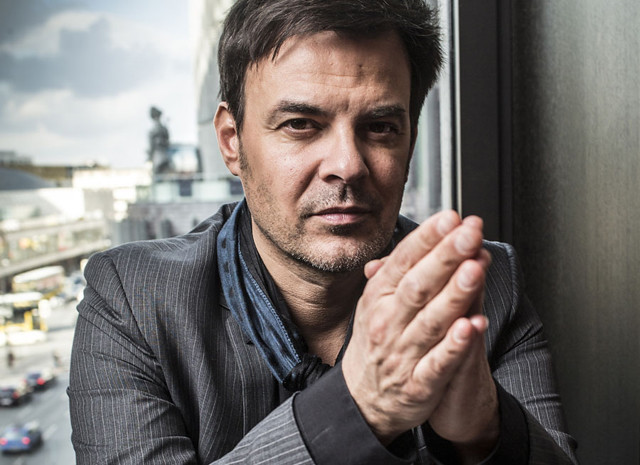
One of the France's most prolific writer-filmmakers, François Ozon (Sitcom, Swimming Pool, 8 Women) has been delighting movie-goers while exploring and subverting many genres for almost three decades with 30 features and shorts. His new film Frantz, a sumptuously shot period piece, just might turn out to be his best film. I had a chance to sit down with him during Rendez-Vous with French Cinema Series here in New York.

There is a lot of talks on Frantz being the remake of Broken Lullaby, an old film by Ernst Lubitch. Was that the starting point for your film when you first conceived the idea for the film?

No, the starting point was the play. Broken Lullaby was a play that was written just after the WWI. I discovered the play first because a friend of mine told me about it. The play was very successful in France at that time but forgotten today. And it’s author Maurice Rostand wrote Cirano de Berzerac which was a huge success. Rostand is also totally forgotten.

For a long time I wanted to make a film about secrets and lies and a friend told me that there is a good play so I went to see the play and I really loved it. I thought it was very touching you know. This French soldier goes to Germany and put some flowers on the grave of a German soldier. And so I decided to make and adaptation then I realized that another director already did it before me and it was Lubitch, so I was destroyed you know, totally depressed. How can I make a film after Lubitch? (Laughs)

Finding Broken Lullaby was a challenge. It was quite unknown, forgotten Lubitch: it was a drama and it wasn’t successful at all. After seeing that, I realized that like the play it was based on, the film was from the point of view of a French soldier. My idea was to tell the point of view of the loser of the war- from the Germans point of view: especially the point of view of Anna. From the moment they start, you know what the main character has done. So I changed totally from the play and Lubitch. I turned that around to concentrate on the German girl, there is suspense of unknown - no one knows why this French guy is in Germany.

The challenge of writing the script was how to create suspense until the twist in the middle and how it will turn out the next half of the film. So it was quite a challenge to write it. It was good to know what Lubitch did with the same material and because he made the film in the 30s, he didn’t know the coming of WWII. So his film was more optimistic than mine. After the WWI, everyone was a pacifist and nobody thought nothing like that would happen again. What’s the expression? ‘Never Again!’ Lubitch’s film was about the true reconciliation between France and germany. But I knew, for me it was impossible to have the film like that with an optimistic ending. Well, my film has a happy ending too, but quite different.

The film was shot in black and white. I don’t recall any of your films shot like that.

No. It’s the first time.

It was still shot on film, no? So how did it come about?

The film was supposed to be shot in color. But two weeks before the shoot I decided to put everything in black and white. My producers were very nervous. (laughs) But I had a feeling it would be stronger for the story that it would involve audience into the film more and to believe in this small city. Because of all the memories of this period is in black and white: there are a lot of documents in the archives- films shot in black and white. I had a feeling that it would be more realistic.

My natural tendency is shooting in color of course. I love technicolor and all that. It was impossible to give up color totally. So I decided to put some moments in color when things get emotional.

Like that music scene?

Yes.

A lot of shots in Germany resemble the German Romanticism era paintings.

You know it’s very strange when you shoot in black and white. Because I shot everything in color on film. It’s during color correction that you make the footage black and white. So when I was looking through the viewfinder, I saw everything in colors. But after the take, I’d go and take a look at the monitor to see my shot in black and white and I had a totally different vision - it looked like some 30s Max Ophüles movies. It was not my goal! But seeing the black and white imagery wakes the cinephilia in you. Despite what I wanted to make, black and white adds something that you didn’t anticipate. It was quite strange.

Paula Beer, a young German actress who plays Anna, is wonderful in this. How did you cast her in the role?

I didn’t know her. I’m not familiar with young German actresses that well these days. So we did a big casting. I had this version of young German actress in mind who was very popular in France in the 70s, Romy Schneider.

Oh, of course.

She was the favorite actress of the French at the time. And when I met Paula, she was just 20 years old. She’s quite different than Schneider obviously. But very mature and beautiful and clever and able to speak in French so it was a miracle. I was very happy to find her because the whole film is on her shoulder. It was important to have someone strong to play Anna and she was perfect.

I don’t think I saw any of your films where characters speaking in German. Was it the first time also?

Yes, it was the first time also. I can speak German. I travelled a lot in Germany when I was young. I did the Fassbinder adaptation of Water Drops on Burning Rocks, but the play was in German, which I translated it to French. It was very stylized because these French actors are playing Germans. There were very short lines spoken in German but that was about it.

Was it difficult for you to direct in German?

Not so much. I was very lucky because actors were very good you know. The actors who play the parents, they both are from theater background and involved in German film industry for a long time. I think they were very happy to be in a French movie, because German film industry is (comparably) smaller. But they do a lot of television and a lot of theater. But they really loved the story. Usually Germans in French movies are not well portrayed - they are usually the bad guys, you know. This time they are the nice guys of the story. So they were very involved and happy.

Actually it was easier for me to direct them in German than English. Accent in English language is quite difficult for French people. We don’t really know where to put the accent in an English word. German and French are (rhythm-wise) closer that way. Usually French don’t like German language. They think it’s aggressive. But to me when girls speak German, it’s very sexy and very charming.

As you told me that there is a revelation in the middle, but what’s more interesting about the film is what happens after. It becomes kind of a detective story about this naive young country girl going to this big unknown city and everything. And she finds that her presence is not welcome and as uncomfortable as Rivoire has been when he was in Germany and how he was treated there. Also noticed that when Anna first arrives in Paris and she finds out that her young husband was staying in this kind of a sleazy area full of prostitutes and vice. I found that interesting.

Yes. I think Frantz is about disillusionment and facing the truth: do you want to face the truth or stay and live in lies forever? It’s the big conflict for Anna. Does she want to know who Frantz was exactly? Maybe Frantz wasn’t as ‘prince charming’ as she thought. So the idea was to make Anna face the reality. So she suffers a lot. But at the end she finds peace within herself. She finds that Adrien wasn’t for her and she might find another man in France. We just don’t know. But for me, she learns a lot. This film is really about an emancipation of a woman.

Because Adrien was played by Pierre Niney, who played Yves Saint Laurant among other things and is a very handsome with very effeminate features, and since I didn’t know much about the play or Lubitch film the premise was based on, and since because it is your film, I thought, ‘oh maybe Adrien’s presence is a stand-in for repressed homosexuality, especially with the setting and time and everything. Am I stretching it too far?

No not at all. I play with that of course. I knew that my audience would expect me to put a red herring in my film, so I play with that. Actually, we have revelation in the middle, maybe it wasn’t what you as an audience had in mind, but at the end, maybe it was. Because we see this guy is totally lost. With his identity, his sexuality, he doesn’t know what he wants.

Right.

He prefers to stay with his mother, with the girl he’s known from his childhood. So life is ambiguity, you know.

But I think it comes from today’s perspective. In the original play and even in Lubitch’s films, that subtext at that time, people didn’t see that. Today we know and think about homosexuality more openly. I don’t think Lubitch was aware when he was making Broken Lullaby. But in the play, it lies underneath and between the lines because when I was doing the research I found out the writer was gay and he lived with his mother until the death of his mother. That’s why I created that part of Rivoire in the later part of the film.

It makes sense.

Frantz also reflects what’s going on in the world -especially Europe and here in the States. I mean there has always been tension and friendship between the two countries. But the rise of nationalism is really visible in France and Germany.

I didn’t know my film would become political. It wasn’t my goal. But I realize it echoes what you just talked about. I didn’t know that Brexit would happen in Europe, I didn’t know Trump would be elected. I didn’t have all that in mind. But I felt something. We had a lot of attacks in France. You could feel all the tensions. Some politicians are asking drawing up new borders based on old boarders, the fear of foreigners, all that’s happening now. It was interesting making this film with all these in mind. We know that history repeats itself. To understand it, we need to ask ourselves what happened before.

I realized showing the film to many different audiences, that people were very touched, both old and young. And they were quite concerned about what’s been going on. I was quite surprised because it was quite difficult to finance the film - my producer, especially shooting in black and white, the fact it was taking place right after WWI, it wasn’t quite easy. But I had the feeling that it could touch people. The history would prove me right. But I’m afraid my film will change anything.

I mean, let’s hope so. (laugh)

It’s a great film. This is the prime time for artists to rise up. no?

Yes absolutely.

And reflect the society we are living in and do something about it.

Yes.

So I think it’s a good time for you to make more films to touch people. I’m a big fan and thank you very much for talking to me today.

Thank you.

Tuesday, February 28, 2017

Sneak Preview: Rendez-Vous with French Cinema 2017

In its 22nd edition, Rendez-Vous with French Cinema at FSLC remains to be one of the main attractions for cinephiles in a crowded New York Spring film event season.

This year's lineup features 23 films from established filmmakers and newcomers alike, including - François Ozon, Bertrand Bonello, Bruno Dumont, Rebecca Zlotowski, Jérome Salle, Chrstophe Honoré, and the list goes on.

In conjunction with Rendez-Vous with French Cinema, FIAF presents Agnès Varda: Life as Art, taking place February 28–March 21.

A special exhibition imported from the esteemed photography festival Les Rencontres d’Arles will be on view in the Walter Reade Theater’s Furman Gallery throughout the festival, displaying newly discovered color photos from behind the scenes of Fellini’s black-and-white masterpiece 8 1/2, shot by the late Paul Ronald and accompanied by recollections from the film’s co-star Anouk Aimée.

And, for the first time, a Film Comment magazine presentation within Rendez-Vous with French Cinema: Julia Ducournau’s cannibal thriller Raw which titillated audiences at Toronto and Cannes.

The series runs March 1 - 12. Visit FSLC website for tickets and more info. And here are my samplings this year:

FRANTZ
 photo frantz_03_zpsa9aqmctd.jpg
Frantz is as usual for Ozon, a seductive concoction. Disguised as period costumes and sumptuous monochrome cinematography that bursts in to color in pivotal moments, but the film hold some sinister undertones of lost innocence and pain/joy of growing up.

Paula Beer, a young German actress is marvelous here to carry the whole movie on her shoulder. It's perfectly normal to see the film from a female perspective in Ozon's films, and obviously he flirts with sexual attraction and sensuality (albeit very subtly). But Anna being a German lost in unforgiving world of its enemy gives another layer.

Ozon, the master of a twisty narrative, packs much more interesting development in store in the second half- part detective story, part romance and part reflecting the current climate of the rise of nationalism where the relationship between two old neighbors - France and Germany and Europe as a whole is being tested. One of his very best films in years.


STRUGGLE FOR LIFE
 photo 69edb538-70e1-44e8-9cbc-464067f5f9a7_zps3zqtmvhx.jpg
Because of subway delays Chataigne (French comedian Vincent Macaigne), a thirty-something portly intern of Ministry of Standards, is assigned to French colonial Guiana to report on the progress of an absurd public works project titled Gui-snow, the first ski resort which will be built in the jungle of the tropical country. With a resilient tax agent mistaking him for tax evader and nothing really to live for, Chataigne head for Guiana with a second grade computer and a thick red French standard guide book. In Guiana, because he doesn't have a license, he is assigned a driver named Tarzan (Vimala Pons), another intern from the Ministry of Versailles, seeing over the completion of French style garden. With humidity, mud, millions of manacing insects, allegators, monkeys and other jungle elements hostile to humans, the duo soon gets lost in the jungle. They have to survive by their wits.

It's another madcap comedy by Antonin Peretjatko and starring Pons, a circus trained actress who worked with Peretjatko and Macaigne in The Daughter of 14th of July. Taking a jab at absurd notion of taming the jungle and the first world arrogance, Struggle for Life thrives on slapstick comedy and racy humor a la Woody Allen's Bananas and largely rides on the charm of Pons who dons hot pants with cigarette forever dangling from her pouty mouth. Macaigne is a very lucky man to be paired up with Pons and spend entire film with her in the jungle alone. Oh, Mathieu Amalric shows up as a swinging bureaucrat in charge of Project Gui-snow in Guiana.

DAYDREAMS
 photo 8aa4e07b-9cdf-4e5b-b3ef-4f095a3615d7_zpsgruf5hux.jpg
One year artist residency in an ancient villa in sunny Medici is the setting for a delicious daydream that involves a budding writer Camille (Clotilde Hesme) and a photographer Axéle (Jenna Thiam).

There are illicit affairs, artistic jealousy, moving statues and ghosts. Camile's older and more successful writer husband (Tchkéy Karyo) tags along for the trip with their young daughter. But soon she finds his presence overbearing. Axéle's affair with a married man doesn't lead her anywhere and she soon has an artistic identity crisis.

Daydreams has self-reflexiveness of Philippe Garrel (director Caroline Deruas' older, more established husband) and Ozon's playfulness. It's a very accomplished debut of a talented writer/filmmaker. Daydreams also allots ample screen time for Hesme's big green eyes in series of close ups. Great.

HEAL THE LIVING
 photo 3be38fdc-f345-4c8a-9960-c8fe91d4ae56_zps0ssy2oid.jpg
A young blonde boy, Simon, wakes. He kisses his girlfriend who's still in bed, sneaks out of the window to join his buddies to go surfing. It's winter. The whole beginning sequence of Katell Quillévéré's Heal the Living has a fluidity and detached youthful spirituality of Gus Van Sant movie.

It's an organ transplant weepee - 'An accident cuts a young man's life short and gives another a second chance in life' story. We've seen this before, many times. What elevates this lifetime movie of the week premise is its ensemble cast which includes Emmanuelle Seigner, Kool Shen, Tahar Rahim and Alice de Lencquesaing.

Through Simon, we see the glimpse of other's lives - both professional or private in equal measure. It's the space between the brain and the heart- which makes us human that Quillévéré explores. It would've definitely turned out corny in less assured hands. It's remarkable that Quillévéré, with just 2 other films under her belt achieves something so graceful and thoughtful.

SOPHIE'S MISFORTUNES
 photo 4379725_berlin-gaumont-brings-kiddie-lits-sophie_117a9a7e_m-1_zpslh4ps6ho.jpg
Sophie (Caroline Grant), a mischievous young girl leads a normal bourgeois life in a chateau with a beautiful but sickly mom (Golshifteh Farahani). Sophie's antics could be sometimes too much for her mom and friends who could tolerate her as girl with the too much imagination and energy. But her journey to the new world (America) ends in tragedy and leaves her orphaned. She now comes back to the country under the care of strict, unloving stepmother Mme. Fichini. She rejoins with her best pals and their kind hearted mother Mme. de Fleurville (Anaïs Demoustier).

After sexually charged interpretation of Greek mythology, Metamophorses in 2014, Honoré returns with unabashedly unadulterated kid's movie, Sophie's Misfortune, based on a beloved 19th century children's story by Countess of Segur. He gets mindbogglingly true to life performances by youngsters. It reminded me of Jacques Doillon's Ponet. Great use of seamless animation too to portray kid's imagination running amok. I didn't expect this from Honoré and it's a nice surprise.