Showing posts with label Romania. Show all posts

Monday, October 5, 2026

Culture Clash

Fjord (2026) - Mungiu fjord-cannes-review-featured In Christian Mungiu's films, Romania is a country full of contradictions where the past and the present precariously co-exist side by side. It's that friction of old and new, tradition and modern world, belief and secular he pits against each other that works so perfectly as tension filled dramas - 4 Months, 3 Weeks and 2 Days, Beyond the Hills, Graduation. He does it again with Fjord, his first film not set in Romania, with two international stars - Sebastian Stan (Captain America: Winter Soldier, Apprentice) and Renate Reinsve (Sentimental Value, Backrooms) playing a cross-national Romanian Evangelical Christian couple, who just moved from Romania to Norway with their 5 kids.

Mihai Gheorghiu (Stan)'s large Romanian family moves into a small close-knit Norwegian town after he gets recruited as an IT support for the town's school. His parents have passed on, Lisbet (Reinsve)'s parents are close by as a support system, their church congregations is in town, and they want their children to have a better future, so their move was a logical choice, even if it means Mihai takes a job that he is totally overqualified for (he was a structural engineer in Romania). Lisbet, who works in the medical field, gets a job at a town's nursing facility. They move into a house neighboring the school principal and his retired lawyer wife, who have a teenage daughter, Noora, about the same age as Elia and Emmanuel, Mihai and Lisbet (Reinsve)'s two older children. They all attend the same school.

Generally welcoming and friendly, the townsfolk, for their liberal Northern European secular sensibility, Gheorghius are a little old fashioned and strict when it comes to their children - no cell phones, video games or social media allowed. They observe daily prayers and bible studies. It is fine what they do at home, stay at home, but they draw the line when Gheorghiu children start singing 'Amazing Grace' at school unprompted. The kids are reprimanded and Gheorghius is told that there's a strict separation of church and state, that a student can't influence another with their religious beliefs.

Things get bumpy when the school's PE teacher notices bruises on Elia's body. Upon examination and questioning Elia and Emmanuel, the school administrator become concerned that it might be child abuse at home and they notify child protective services right away. Elia and Emmanuel, the corporal punishment at home is a normal thing in their household. 'Slap in the butt' happens when they misbehave. But it is a big deal in Norway and they take allegations very seriously. The child protective services promptly take away all of Gheorghiu children, including the baby, whom Lisbet is still nursing.

Blindsided by the unfolding event and distressed, the Gheorghius solicit the help from their congregation in town and it becomes a huge international news. The media is framing it as child abuse versus oppression of religious freedom. Mild mannered Mihai becomes a posterboy for religious conservatism movement as the couple and the townsfolk get embroiled in the big custody battle court case.

Along with the title, snowy capped mountains surrounding the town and occasional avalanches stand as metaphor for the culture clash unfolding, Fjord is another tension filled, knotted social drama from Mungiu.

As usual, Mungiu presents characters navigating through our overly complicated current world, where any system is less than perfect and moral grey areas aplenty. He doesn't judge whether one system is worse than the other, he just expertly illuminates the differences, giving the sinewy human relations as much nuance as possible.

Friday, December 15, 2023

Go with the Flow

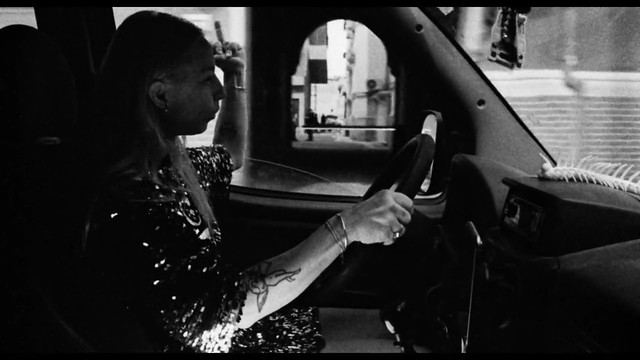
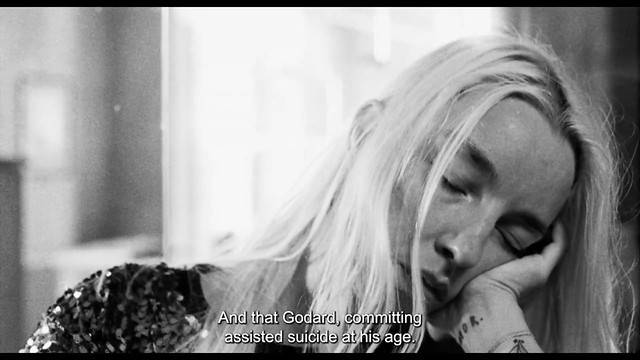
Do Not Expect Too Much from the End of the World (2023) - Jude Screen Shot 2023-12-14 at 8.54.14 AM Screen Shot 2023-12-15 at 10.56.40 AM Screen Shot 2023-12-15 at 10.46.01 AM Screen Shot 2023-12-14 at 8.35.58 AM Screen Shot 2023-12-14 at 8.44.45 AM Screen Shot 2023-12-14 at 8.44.58 AM Screen Shot 2023-12-15 at 8.49.07 AM Screen Shot 2023-12-15 at 11.27.55 AM As with his previous film, Bad luck Banging, Radu Jude's new film Do Not Expect Too Much from the End of the World is unsparing, uproarious satire that implicates everyone in this needlessly complex society we live in. And it's loads of fun. It's a frenetic, 'moving' picture as we take the passenger seat in a van driven by Angela, a hard-working production assistant of a PR firm, Forbidden Planet, hired by Austrian furniture company. Angela's Tik Tok filtered alter-ego is known as Bobita, a bold headed, thick unibrow and bearded dudebro who spews the vilest, sexist, racist rant with six thousand followers. She spends most of her time in her car driving because her job requires driving and interviewing potential workplace accident victims, one after another, who could be featured in the company's safety promotional video. And every chance she gets, she becomes Bobita anywhere.

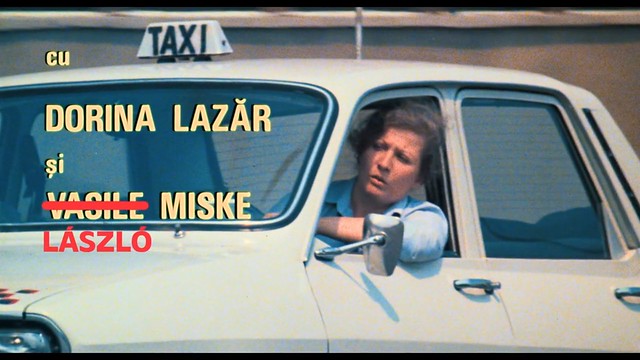
Angela's hectic daily routine is intercut with an early 80s Romanian melodrama called Angela Moves On, about a wholesome female taxi driver and her life, as she drives from place to place in Bucharest. The film juxtaposes the changes in the streets and neighborhoods from Ceaușescu era. Many anecdotes, and musings of all the characters concern the reality today's Romania and of the world.

Jude's playfulness is infectious. The actress who plays Angela the cab driver makes an appearance as the character in the film. She plays a mother of a man on a wheelchair who was chosen to be in the promotional video. The man plays himself who was a victim of the workplace accident that is obviously the fault of the company for its negligence.

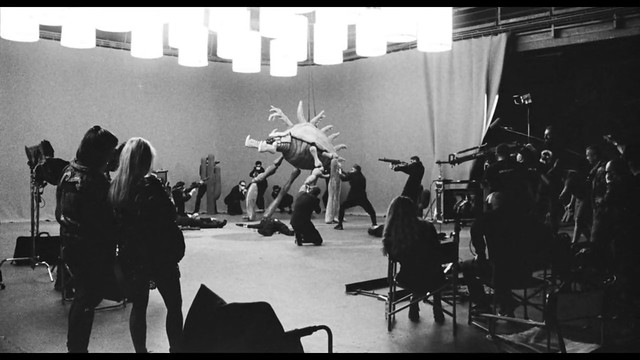
German Actress Nina Hoss plays the Austrian boss Doris Goethe (yes that Goethe), whose furniture company is leveling Romanian forests, Uwe Boll, the German b-movie director also makes an appearance as himself, directing a monster CGI movie in the green screen backdrop.

However hilarious, the film is not all laughs. In the middle of its 2 hrs. 30 min. running time, he devotes a good 4 minutes to feature a silent segment composed of hundreds of crosses that are strewn about along the highway which Angela describes as the 250-kilometer highway with 600 crosses, while giving Doris Goethe a ride to the hotel. Puzzled Doris asks what it means. It's a one-way road that has a very narrow emergency lane, but no one follows that. They use it as if it's two-way roads. "That's very stupid." Doris responds. "We are!" Angela responds. Nothing works the way it's supposed to. Corruption is everywhere. In the EU, Romania is the poorest country, she says. Maybe except for Albania. They are primitives, Angela utters.

Biting and thought provoking, Do Not Expect Too Much is a perfect survey of the state of our lives right now. Jude, along with Assayas and Bonello, is a master chronicler of ever changing, ever so complicated world we can't make sense of anymore. It's fun, it's tragic. All we can do is go along with the flow, like Taoists saying.

Monday, August 14, 2023

Synecdoche, Bucharest

Bad Luck Banging or Loony Porn (2021) - Jude Screen Shot 2023-08-13 at 10.56.35 AM Screen Shot 2023-08-13 at 11.00.11 AM Screen Shot 2023-08-13 at 11.24.05 AM Screen Shot 2023-08-13 at 11.00.40 AM Screen Shot 2023-08-13 at 11.33.25 AM Screen Shot 2023-08-13 at 12.08.55 PM Radu Jude's satire of modern Romania, Bad Luck Banging or Loony Porn is both uproariously funny and biting in its criticism of the former Soviet Block country's checkered history. It starts with an explicit sex scene with a school history teacher, Emi (Patia Pascaríu) and her husband engaging in what appears to be a homemade sextape. Then somehow the whole thing ends up online for everyone to see.

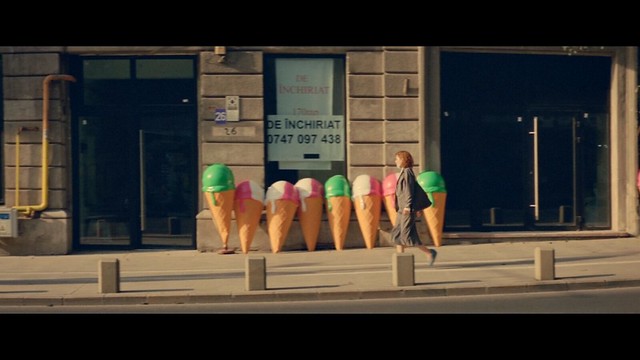
After that, the whole movie is Emi walking around ugly, capitalist modern city of Bucharest, all stressed out for the consequences she has to face. Everything is hilarious, from Pascaíu's performance to Jude's aimless camera, often sidetracked by inanimate objects he pans to - a broken mannequin, a flower growing from the concrete floor, the McDonald sign, the political party posters, etc.

The middle part, titled as 'Collages', playfully goes through all the hypocracies in Romanian political history, vacuous modern culture and sexist stereotypes.

As Emi sits at the table in an impromptu PTA meeting outdoors (because of Covid), she tries to defend her actions as a private matter that somehow got out of hands and into kids' phones. As the meeting continues, the old conspiratorial, ignorant and racist tendencies from the parents reappear to the surface.

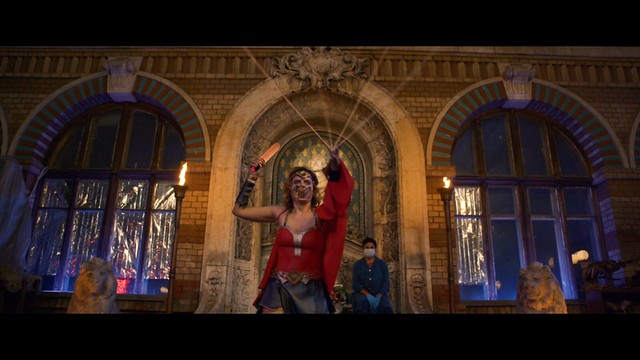
I mean, considering what's going on in Florida, what's happening in Bad Luck Banging is very much universal and on point. Jude's Ci(shit)ty Symphony movie of consumerist Bucharest and in-your-face satire exposing the society’s hypocrisy is, along with Triangle of Sadness and Barbie, one of the best comedies I’ve seen in years. Best Wonder Woman movie too where WW assaults everyone in the room with a dildo!

Thursday, September 24, 2020

A Prophetic Vision of Europe in Philosophical Terms

Malmkrog (2019) - Puiu Malmkrog Cristi Puiu, a director closely associated with the Romanian New Wave, of realist films like The Death of Mr. Lazarescu and Aurora, take a very different approach with Malmkrog, a three hour twenty minute verbose chamber piece and a formalist cinematic daring-do that will certainly try patience of its viewers. Based on Russian philosopher's Vladimir Solovyov's texts in turn of the twentieth century, prior to WWI, Malmkrog's five main characters extensively engage in serious religious and political discussions in six chapters, named after the characters and István, the head of the servants in the wintry manor the film takes place in. 

There are three heady discussions they are engaging in: war and peace, grand vision of unified Europe and the existence of good and evil. It takes a dramatic turn and there is a big tonal shift after the second discussion. The last one-third of the film could be interpreted as a dream or imagined but Puiu decidedly leave it opaque. Malmkrog starts out in a large, opulent manor in the middle of a wintry forest. The structure is in pastel pink, giving it a whimsical fairytale look at its first impression. 

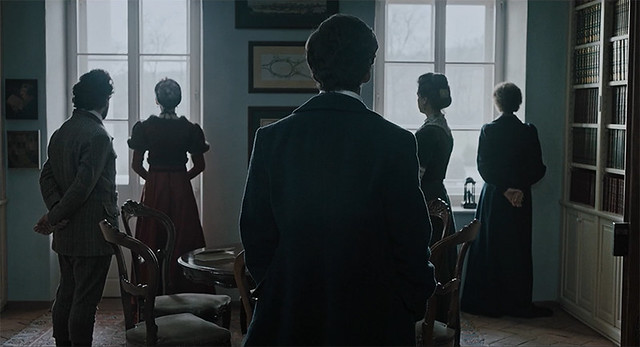
Inside, within very long takes in meticulous blocking, the actors crisscross the screen as they speak on and off screen. Camera pans slowly here and there, but otherwise it's stationary. Ingrida (Diana Sakalauskaité), a wife of a Russian war general starts the film with her indignant support for military might. There is a good war and there is a bad peace, she exclaims. Her view is pitted against the youngest member of this wealthy, aristocratic group, Olga (Marina Palii). Olga is a good Christian and a staunch pacifist. And because of that, she becomes a target of constant belittling, albeit politely, especially by Nicolai (Frédéric Schulz-Richard), a former seminary student and the host of the manor they are gathered at. The group splits in either defending Olga or chiding her. Ingrida receives and reads a letter from her husband announcing victory over Ottoman soldiers on the frontline. In a letter, he justifies slaughtering the enemies in the most grotesque manner because they roast babies in front of their mothers in the villages they raided. She enforces her assertion that the war is necessary. Olga disagrees. With her faith, she could've turned those 'savages' around by praying. Near the end of discussion just before lunch, in an intense interrogation in defense of her position on pacifism, Olga faints. 

Lunch is served. They are back in another deep discourse. Edward (Ugo Broussot), a wealthy merchant and a gambler, espouses the grand vision of unified Europe. He says because Europeans are the most advanced, progressive, therefore they are superior civilization. And Russia can play a big role because of its proximity to Asia in fending off the influence of Asian nations. Then the discussion turns to the existence of good and evil with Nicolai chiding Olga with her interpretation of the bible verses. 

Of course, in accordance with the era and society, all dialogue is conducted in very proper French. Only other language spoken (very briefly) is German, when Nicolai cryptically whispers to Olga travel paths. Did he see what was coming? Is he planning an escape with the young believer? 

As the second discussion draws to a close, a drastic incident happens to break the otherwise tranquil gathering of the high society: a broken childish song that sounds like coming from a gramophone plays in loop all of sudden and all the servants disappear or not answer Nicolai's ringing bell. Panicked, our guests leave the room only to be gunned down from an unseen force. Next scene is a wide shot of the snowy landscape outside and people calling out Ingrida, who seems to be treading the snow away from the manor. Puiu keeps everything ambiguous from beginning to end. 

The next scene is business as usual. All the guests seem to be alive and well and carry on the subject on good and evil. How do we know that god is good? He can preach us to be good. But is he himself good inside? Olga is pushed to defend her positions. She seems composed but not able to speak anything remotely compelling. This dinner scene with five characters speaking back and forth, is a fine example of how you do coverage and make Bohemian Rhapsody's Oscar winning editing to shame. 

 I don't doubt that Malmkrog's script being as thick as Dostoevsky's Brother's Karamazov. It deals with dense, heady philosophical musings from another century. But context is everything. What these characters are discussing has relevance in pre-revolution, WW1 Europe as well as the age we are living in. 

Veering off the Solovyov's texts, Puiu reinforces its prophetic, dystopic view of Europe - decadent, spiritually hollow, hubristic, jingoistic and also on the cusp of violent upheaval. Puiu being Romanian, growing up in a country in the Soviet Bloc, Solovyov's texts are a good fit for him against anti-spiritualism associated with communism along with many other ills Europe and Russia are suffering right now. 

Malmkrog is a slog of a movie. But it’s truly one of a kind. If you are an adventurous spectator like me and stick to it, with a bit of background knowledge beforehand, the film is a very rewarding and satisfying cinematic experience. This will make a great double feature with Lázló Nemes's Sunset, as a frustrating yet richly rewarding cinematic history lesson and a prophetic vision of Europe.

Tuesday, March 19, 2019

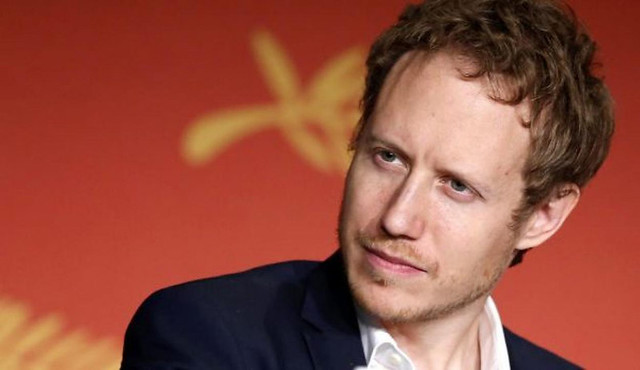
Interview: Laszlo Nemes on His Challenging, Mesmerizing New Film Sunset

Laszlo Nemes
I saw Hungarian director/writer László Nemes' sophomore film Sunset at this year's Film Comment Selects series and was blown away by it. It is just as strong as his phenomenal debut film Son of Saul, a riveting Holocaust drama that brought him awards and international recognition. Layered, complex and technically brilliant, Sunset is a challenging film that will leave an indelible mark on many year end lists as one of the best films of 2019.

I missed the chance to talk to him in New York due to his flu symptoms, but he graciously granted a skype interview at a later date. This is the how the interview went down:
So SUNSET is co-written by Clara Royer and Matthieu Taponier. How was the writing process for this particular film?

Well it was strange because it’s a Hungarian film, the language is Hungarian and we were speaking French and writing it in English. We were under the influence of many languages I would say. But the thing is that Clara speaks Hungarian and Matthieu also spent quite a lot of time in Hungary. So we were bunch of outcasts in a way and eager to cooperate on the second film. Good thing is that we don’t have the exactly the same aptitudes - I am better in scene design, Clara is better at interactions and character’s psychology and Matthieu’s better at structure, so that create this back and forth dynamics that this film required.

It was a quite a lengthy process and we also had to adapt to certain situations, for example, one of the supporting actresses left the first day of the shoot so we had to change, as we were shooting, many aspects of the scenes. Writing script requires constant nourishing and development.

What I hear is that you conceived this film while you were shooting SON OF SAUL, is that right?

Yes. Yes even before that, actually. I wanted to make a film about a young woman at the turn of the century with her personal fate was reflecting the birth of the century and the turmoil of civilization.

Just for the audience who might not be familiar with the history of the Austro-Hungarian Empire at the time, 1913, can you give us a little bit of a background?

Well I can’t really. I’d just like to say that we don’t need a manual for this film. You know people usually think that for historical films, period films they need some sort of manual or explanation but our approach to the film was not political, not societal - the ones that you recreate sort of historical facts or atmosphere. We wanted it to be about this one person going through this turmoil, not really seeing the cause of it or seeing it through from beginning to the end.

I feel that history takes place and you don’t have the control over the situation. That being said, that’s what is in the beginning of the film in the title card that this takes place before WWI in a civilization, in a country, in a kingdom, with many nationalities and many languages. That we are in a world of dual kingdom where multiple ethnic groups coexisted. I guess you can say that was the world full of promises but we knew what happened. WWI and then WWII that brought us the sad end of those promises and the end of civilization, so to speak. So that was all you need to know, really.

That’s what I liked about the film. Just going in there without any kind of specific prior knowledge about the region, but it was invigorating for me watching this and thinking about all the things that are going on around the character of Ìrisz (played by Julie Jakab).

Wanted to ask you about the consistency of the subjective view of the world through one central character. How you film this is very distinctive. Is this always the case when you do a film?

That’s how I did it for Son of Saul and Sunset, but that doesn’t mean I will always do it that way. Just that I am really interested in the limitations of human beings as opposed to giving an impression of a god-like perspective.

Ah, I see.

More and more I have that impression in cinema, through television and the internet. Multiplication of angles, you know, high angle shots that give the audience a voyeur’s position, giving you that safe distances at the same time giving god-like power over the whole situation you are seeing in front of you. It gives you a false sense of power.

I just wanted to go back to the core of human perception. That’s what really interests me because that’s how we really experience the world and there are limitations in our perceptions. We are in the labyrinth of our lives. We don’t always have the key to see the world. I wanted to approach this film with this person who doesn’t have the key to the understanding of the world and how she copes with that. There is this rebellion in that I wanted to make the viewer out of the comfort zone a little bit.

Is the technology advancement like VR experience of any interest to you?

Well I don’t know. I’m not saying that it shouldn’t exist. I’m just saying that our brain is a way of virtual experience and there is much more to explore before we all become slaves of the technology. (we laugh) And I do think we are becoming slaves to technology and to the computers, you know. I’m not sure if you saw the film on 35mm at the Lincoln Center or…

Yes, I did.

OK, so you see what difference in experience can be when you have the chemical, physical, mechanical grounding in the world as opposed to everything being virtual. I think it’s a serious question and I am worried about that.

Is that why you continue to shoot on film?

Yes. I really like the look and feel of film. That’s what I really think how cinema should defend itself rather than trying to be television and beat it at that ground game. It’s not gonna happen. I truly believe that shooting on film and seeing it on the big screen is something you can’t replicate at home. People feel the proximity of film when they see it in theaters.

As you mentioned, Ìrisz doesn’t know what exactly going on. But she is fearless - she just jumps in to whatever is out there. That’s why I was fascinated by the character. I know that she was in SON OF SAUL. Is that how you cast Julie Jakab in SUNSET?

Yes I knew her and I wanted to work with her. The secrets that existed in her own personality, the sorrows that she has in her own life - she had major catastrophes in her own life, that I think she conveyed through this invisible link to the audience. I think that resonates in her character. Ìrisz has a hard time understanding herself and that she remains a mystery and I think Julie also has been a mystery to me. It’s not a performance based acting that I was looking for. It was something more invisible in a way that creates much more…I don’t know, ‘metaphysical link’ to the audience. It may not be satisfying in the usual acting way with the good moment, with the right moment while watching the film. But she, I think, creates an aura that goes beyond the dimension of the film that can resonate after the viewing.

It’s in her eyes. I could see it in her searching glances.

That’s good.

She is great. But one thing that struck me was that how Jakab could tie SON OF SAUL and SUNSET together somehow. That her character in SON OF SAUL could be the daughter of Ìrisz. Was it intentional?

I think it was more unconscious in retrospect. It is interesting to be pointed out as I said at the Q & A, that this girl in this beautiful hat in this beautiful setting has the same face in the most desperate human situation in WWII. Yet how we arrived there is something of a mystery. Anyway it creates another reflection on the part of the viewer when they see both films.

It really worked, for me, at least.

Another great actor Vlad Ivanov known for his Romanian films (FOUR MONTHS, THREE WEEKS AND TWO DAYS, POLICE, ADJECTIVE and SNOWPIERCER) is a big part of SUNSET. How did you cast him? I didn’t know he spoke Hungarian.

It’s interesting. Vlad had to learn his lines.

Really, wow.

He really did. It was a heroic, tremendous effort and I am extremely grateful for that. He is an incredible actor. He has an incredibly disciplined way of acting. I wanted to work with him for a while. In a way, I wrote the part for him. I really thought from the beginning that he was the right person for this role.

He also has a layers that are difficult to decipher and I really wanted to have this imbalance for the viewer not to be able to categorize him or put him on one side or another, same as Irisz can’t be easily categorized. It was a good opportunity for me to put the viewers in that position.

I always take each actor as a person and work with that energy of this one person. What I learned from Bela Tarr is that we need to find the person before you find the actor.

With your two films, your visual style widely regarded as arresting and mesmerizing. But the sound design in Sunset is nothing short of brilliant as well. How important is the sound for you when you make a film?

It’s very important. For me it’s half of the film. I really believe that. I also believe that sound is not just there to replicate what is already present in the image. We can go beyond that into the invisible, psychological realm and also into the spirit of the film through the soundscape. We spent almost 6 month on the sound alone. Tamás (Zányi, the Sound designer for both Son of Saul and Sunset) who is a loyal companion to me and I wanted to create layers of sound around Irisz where the she loses herself in the turmoil and whirlwind of visuals but she would find more layers, new layers to lose herself in, as if she were in the labyrinth. That’s what
Sunset’s soundscape suggests and reinforces. That way we can really have an access to her mind. It contains the very conflictual elements in her being and in her perception of the world.

There is a certain finality in naming the film SUNSET. I know it was about possibly the end of civilization as we knew it. I can totally see the relevance of that in the world we are living right now - with the rise of nationalism, Basket of Kittens and chaotic political climate globally. I am wondering if you consciously decided to make this film now.

I’d say I am very sensitive to the path that our world is on right now. I feel the sense of despair in our civilization for quite some time. I tried to go beyond the political level but there’s this metaphysical vibrations that I can feel in the world. I feel that we are petrified by our own capabilities. I don’t think mankind was able to assess, really look in to, itself. We fail to assess the potential for evil that lies within itself although the recent history, say, past 100 years or so, or take the 20th century was horrendous. Then we can see that there’s not much for optimism. Even with all the development and technological advancement have not created more humanistic society but only self-destruction or increasing desire for self-destruction. It’s always looming and I really feel that. And I guess that semi-consciously wanted to reflect on my films.

So what would be the next step for you? What are you planning?

I think I might film something in English at some point. I am looking forward to expanding myself and find other approaches to the film. It is too early to tell but am writing several things at once. I can’t talk about anything specific but I will do something in English.

Sounds good. Looking forward to it.

Sunset opens 3/22 in New York and Los Angeles.

Thursday, December 8, 2016

Romanian Rhapsody

Bacalaureat/Graduation (2016) - Mungiu
Screen Shot 2016-12-08 at 11.03.48 AM
If nothing else, Romanian New Wave has shown that it excels at acute observations on ordinary people navigating through a chronically depressed, highly bureaucratic country- a society strewn with broken promises of capitalism after the collapse of communism. Christian Mungiu, once again, sharply yet subtly illustrates one such case with Bacalaureat. Romeo (Adrian Titieni), a medical doctor, sees his life unraveling before his eyes - having an affair with one of his patients (a single mom school employee) put a strain on his marriage (been sleeping on the couch for a year and a half), his frail old mother has fainting spells due to brain aneurism, so naturally, he puts all his hope on his pretty daughter Eliza getting a good education. Since Romania is so helpless, he is pushing hard for Eliza to go to England to get educated. In order to get a scholarship to go to overseas, she needs to ace Bacalaureat exam, a series of tests at the end of the High School year. But on the way to school one day, Eliza gets sexually assaulted by an escaped convict in a broad daylight. Visibly shaken and disturbed, she doesn't do well on the test next day. Considering all the circumstances, Romeo decides to ask for help of his police chief friend, not only for arresting the attacker of his daughter, but to 'fix' Eliza's test scores. The cop suggests a man in some higher level position in government, who needs a liver transplant. Can Romeo do anything about moving him up on the list of people in waiting ?

This doing favor in return thing and pulling strings in the system get entangled and awkward really quickly. Magda, the long suffering wife, thinks it goes against everything they taught their daughter but doesn't do anything about it since he has been always the doer/decider. To complicate matters even more, her biker boyfriend in town, Eliza also has second thoughts about going to England.

Romeo puts it grimly about the state of the country: he tells Eliza that he and mom decided to stay because they were hopeful but nothing had changed since then. That they tried but failed to move a mountain. That there is no future for the younger generation. And that she deserves better. He even tries (in vain) to revenge his daughter by following one of the suspects. He cries over the dog he ran over with his car. He tries to do right by the women in his life but life keeps throwing curve balls at him.

Bacalaureat draws Romeo's dilemma as a father, as a man, as a Romanian really well. It's an amazingly scripted film that contains all the nuances of the sticky human existence.

Tuesday, March 25, 2014

System of Down

Quod erat demonstrandum (2014) - Gruzsniczki
 photo 54131bee-6ee0-4a16-8b5e-6a821e52f6b7_zps62290867.jpg
Yet another slice of social realism film from Romania under the Ceausescu regime in the 80s. Gruzsniczki shows the demoralizing effects of its oppressive system in the lives of three of its inhabitants. Sorin (Sorin Neoveanu), a brilliant mathematician is on to something big. His theories alluded to be the basis for all the future technology - internet, voice recognition, cell phones, etc. Fearing his defection to the West, the regime's making his life extra difficult, meaning, no Ph.D. candidacy, no promotions, no publishing opportunities, no visa. His old college friend Elena (Ofelia Popli) is under surveillance after her husband defected to France. With a troubled teenage son and an ailing father, her only hope is joining her husband in Paris. Alexandru (Florin Piersic Jr.) is a seasoned policeman who is getting snubbed when it comes to promotion. He needs to make friends in higher places and get a breakthrough to get ahead. All these life's struggles are captured in beautiful, crisp monochrome image in incredible details. It reminds me of Barbara by Christian Petzold. It's grittier and colder, and understandably so.

Tuesday, February 18, 2014

Mother's Love

Child's Pose (2013) - Netzer
 photo 1c8d8075-fdb9-40bb-adef-f04ec21ff4bb_zpsda70c742.jpg
Winner of Golden Bear at the Berlin Film Festival and Romania's official entry for Best Foreign Language Film for this year's Oscar, Calin Peter Netzer's Child's Pose is a riveting family drama spiked with some sharp social commentary that is inherent in the Romanian New Wave. Veteran Romanian actress Luminita Gheorghiu (4 Months, 3 Weeks, 2 Days, The Death of Mr. Lazarescue) gives a remarkable performance as Neli (Cornelia), a well-connected Romanian upper-class professional whose resolve as a mother of a deadbeat son, Barbu (Bogdan Dumitrache) gets tested.

The film opens with Neli's extravagant birthday dinner with many of important government officials attending. She tells her sister that Barbu is not only not showing up for the party, but told her to 'go suck a cock,' and that he wishes that the old generation would die off soon. Her sister tells her that he is too spoiled and she shouldn't pester him all the time. From the beginning, it is obvious that this mother-son relationship is strained beyond repair. Then a few days later, she gets the news that Barbu has run over and killed a child from a poor neighborhood and is in police custody. From then on, Neli uses every connection and power to get Barbu out of jail.

Neli is not an one dimensional caricature of a high society woman who is completely oblivious about class differences. But nonetheless, she remains a concerned mother to a spoiled son, who, now in his thirties, didn't turn out the way she wanted. Even with all the insults Barbu throws at her, she would stick by him and help him get through the hard times, even if that means begging the parents of the dead child for forgiveness in place of him.

Unlike recent class conscious satires like Lucrecia Martel's Headless Woman, Lou Ye's Mystery and even Bong Joon-ho's populist cinema Mother, Child's Pose is much more subtle and down to earth and much less melodramatic. In a typical Romanian New Wave fashion, Netzer favors unhurried, almost documentary like procedural to advance the story. Neli finds the local police difficult to deal with at first, but easily corruptible. Just as the witness of the crime, played here once again at his sleaziest by Vlad Ivanov (the memorable abortion doctor in 4 Months, 3 Days, 2 Days) can change his statement at the right price. With beautifully nuanced script by long time Netzer collaborator Razvan Radulescu (The Death of Mr. Lazarescu), Child's Pose examines mother's obsessive love in the context of social dynamics in modern day Romania.

Child's Pose has a two week exclusive engagement at Film Forum in NYC starting 2/19. It opens in LA on 2/21 and the national roll out will follow.

Thursday, March 7, 2013

Beyond Exorcism

Beyond the Hills (2012) - Mungiu
beyond the hills photo 034e2ef6-dfec-4693-b222-ba14b7d483af_zps7182a6c5.jpg
Christian Mungiu, the leading figure of Romanian New Wave, strikes again with Beyond the Hills. Just like his Palme d'Or winner 4 Months, 3 Weeks and 2 Days, which elevated a rather unpleasant subject matter (illegal abortion) into a dizzying, tension-filled masterpiece, here he manages to make something greater out of an exorcism-gone-horribly-wrong story based on a true event. Mungiu again proves to be a gifted storyteller and a great tension builder. He is also masterful at presenting nuanced human interactions.

The film takes place in a small remote Romanian monastery in the hills. A young nun named Voichita (Cosmina Stratan) reunites with her childhood friend Alina (Cristina Flutur) from their orphanage days after a long separation. Alina, emotionally stunted of the two, having been living in Germany alone for a long time, is determined to reclaim her long time love. But Voichita's world is now all about God and prayers, living without worldly attachment. Indeed, affectionately calling the head priest and Mother Superior papa and mama, she calls the electricity-less orthodox monastery her true home now.

After throwing an emotional tantrum and trying to throw herself into a well, Alina spends a night at a crowded local hospital. If she can't run away with Voichita, then she will join in. The priest insists on telling her that the monastic life is not fit for a person with human desires and monetary attachment, not noticing the seriousness of the girl's obsessive love for her best friend. Things escalate to a point where the esteemed priest is pressured to perform a sort of exorcism to rid the evil spirit from hysterical Alina, followed by the grisly aftermath. These nuns and the priest are not bad people and have the best of intentions in their hearts. But with the old rules they follow and their conduct for 'curing' the emotionally disturbed, they are still stuck in the Middle Ages. 

In Mungiu's films, Romania is a country full of contradictions where the past and the present precariously co-exist side by side. None are more pronounceable than one scene at the hospital where unsympathetic, overworked staff collide with the priest and nuns. In another scene, two arresting officers make small talk about a boy stabbing his mother to death in the presence of hushed nuns in a paddy wagon on the way to the police station. 

With great performances all around, Beyond the Hills is an emotionally exhausting experience. Even with a running time of 2 1/2 hours, the film succeeds in holding your attention from beginning to end with unrelenting tension. Stratan and Flutur deservedly shared the Best Actress honors for their portrayals, and Mungiu took home Best Screenplay award at last year's Cannes film festival.

Beyond the Hills has a limited release in theaters on March 8 and VOD on March 14. Please visit Sundance Selects website for more info.

Sunday, March 3, 2013

Frumpy Life

4 Months, 3 Weeks and 2 Days (2007) - Mungiu
4 months, 3 weeks, 2 days photo 1cb8c158-187a-4636-93d7-3197a4c58437_zps22c316b4.jpg
4 Months tells a story about Otilia (Anamaria Marinca), a college student, who is trying to help out her roommate Gabita (Laura Vasiliu) getting a sketchy illegal abortion. The messy, frumpy dorm life is presented matter of factly. There are class tensions and general hopelessness of living under communist regime. The acting is superb, so as layered interactions among the film's inhabitants. Christian Mungiu is a gifted storyteller. He also understands nitty-grittiness of everyday lives of his characters. It doesn't really matter whether his film takes place in the 80s under Ceausescu regime or in a monastery in a present day, there is always that unmistakable immediacy and urgency present- with the help of natural, handheld tracking shots and long takes throughout. And thankfully, Mungiu is not quick to judge his characters decisions or faults nor is he interested in being didactic. These judgment calls young people make under difficult circumstances are all relatable one way or another. He is very good at humanizing their faults but also great at not overly emphasizing heroism that only happens in movies. Hey, if Otilia was my girl, she's alright by me.