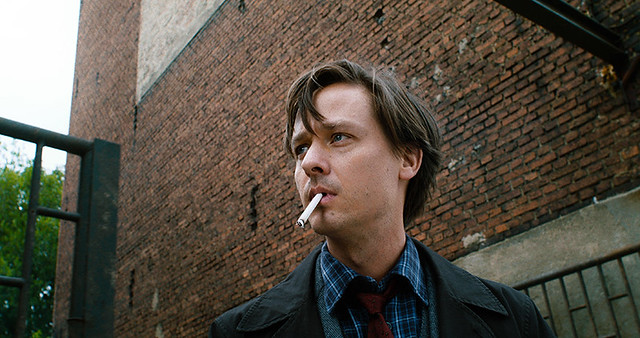
 Veteran German filmmaker/TV director Dominik Graf's Fabian: Going to the Dogs (last year's multiple Lola Award winner), based on Erich Kästner's book Fabian, Die Geschichte eines Moralisten (Fabian, the Story of Moralist), chronicles madness and decadence during the last years of the Weimar era Germany just as Nazism was rising to power through the eyes of a young advertising executive. With multiple voice overs crisscrossing and energetic camera movement and editing, Fabian plays out like a visualized jazz improv session, taking you back to the hubbub of 1930s Berlin.
We observe Jacob Fabian (Tom Schilling), originally a country boy from Dresden, as he precariously balances his hectic life as a cigarette company adman and pulling all-nighters at the anything goes nightclubs with booze and women with his well-to-do friend Labude (Albrecht Schuch), neglecting his writing career.
Everything changes when he meets Cornelia (Saskia Rosendahl), an entertainment lawyer in training and aspiring actress at the backstage of a club one night. It's a love at first sight and Fabian can't believe himself as a thirty-something wise-cracking nihilist falling in love with 'another actress wannabe type'. But Cornelia turns out to be a smart modern woman who will not let anything stop her ambitions.
In the meantime, the repercussions of WWI are starting to drag the country down, the bread line keeps getting longer for veterans, people lose their jobs and there are incendiary rhetoric and marches of the Nazi party on the street. And Jacob, loses his job too and hides the fact to Cornelia and his mom.
Things are getting dire - Cornelia leaves him for a powerful movie producer. Then the PTSD suffering Labude first disappears to an underground whorehouse, only to reemerge to kill himself in his father's grand mansion.
Deeply affected by all the happenings, Fabian retreats to his family home in Dresden where idyllic country tranquility rules the day. Still very much in love with each other, he and Cornelia promise to see each other again in Berlin. But the fate would have it the other way.
With dizzying camerawork, breakneck editing and flashbacks sprinkled throughout, Fabian: Going to the Dogs starts with a rhythm of a jazz jam session and finds its narrative rhythm as the main character gets a hold of his own narrative. It's a beautiful directing in Graf's part, orchestrating the chaotic and colorful backdrop serving a long drawn out, sweet love story. Youthful Schilling is perfect as a wise-ass misanthrope, an wily observer of life who gets swept up and falls victim to the tumultuous time in history.
The film shouldn't be regarded as one of those German prestige pictures, depicting the past with period costumes and sets, because it's not a mere nostalgia picture. It's a stark reminder of reemergence of fascism and ultra-right wing nationalism across Europe. Kästner's pacifist stance in the 30s and moralist point of view might come across as naive but should serve as warning to anyone now to be more alert and not fall victim to the collective nationalist fervor.
Fabian: Going to the Dogs opens in theaters on 2/11 in New York and 3/4 in Los Angeles.


