Showing posts with label Wim Wenders. Show all posts

Monday, February 5, 2024

Small Things

Perfect Days (2023) - Wenders Screen Shot 2023-12-10 at 8.25.56 AM Screen Shot 2023-12-10 at 8.35.39 AM Screen Shot 2023-12-10 at 8.40.51 AM Screen Shot 2023-12-10 at 8.42.28 AM Screen Shot 2023-12-10 at 9.04.54 AM Screen Shot 2023-12-10 at 9.25.52 AM Screen Shot 2023-12-10 at 8.44.47 AM It's been a long while that Wim Wenders made a good film. So this Japan shot with all Japanese cast Perfect Days is sort of a comeback for the filmmaker. And the beauty is in its simplicity.

Koji Yakusho plays Hirayama, a city worker who cleans the public toilets. His simple daily routine is repeated day after day, starting in his modest small apartment in Tokyo- he gets up at the sound of a neighbor sweeping the streets in early dawn, puts away his beddings, brushes his teeth, puts on his onesie blue uniform, picks up the items that are laid out on side table on the way out, picks up a canned coffee from a bending machine next to his house, off in his blue van full of cleaning supplies to the various public toilets in the city, eats his lunch in the park, takes some pictures with his old style 35mm film camera, works some more, goes home, change, goes to the public bath house to bathe, then to a eatery in a market for dinner, reads in bed a little bit, then goes to bed. Repeat.

He is a man of few words. There are some who knows him and regularly greets him. He finds life's pleasures in small things - the sunlight shining through the tree branches, listening to classic rock on cassette tape in his van, finding and reading books from a dollar rack at a local bookstore. He doesn't bother anybody and doesn't let others get to him too much. There are others - his young colleague and his girlfriend, his young niece who runs away from home to stay in his tiny apartment, an ex-husband of a bar hostess at the bar that he frequents on his day off. He interacts with them, not in many words, but with warmth and smiles. Yakusho, nearing his 70s, showing his age and experience in his bad-liver eyes, doesn't have to explain much. He's seen things and experienced things. And that's enough.

There's a certainly a backstory on Hirayama that is left unexplored, rather wisely by Wenders and co-writer Takuma Takasaki. Cleaning toilet is the lowest job one can think of. But it's just a job. If it's a self punishment, we do not get to know. But I think he is past all that. He's just an old man, living his quiet life all by himself happily. It's the repetition of his daily routine, and being happy to know that there is another day that he can see the sunrise, swaying leaves, listen to Lou Reed and Patti Smith and drink a canned coffee.

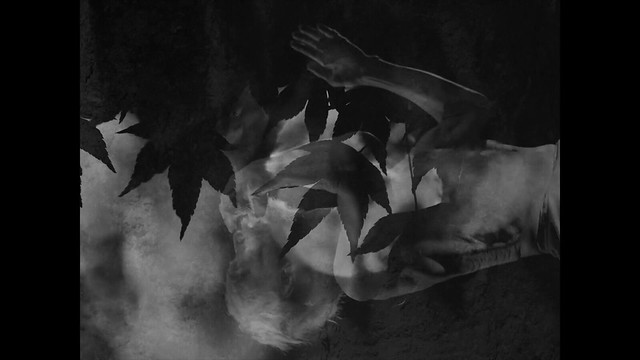
Shot on full frame and with simple but elegant layered black and white images and interior lighting that reminds you of Robbie Müller days, Perfect Days is a beautifully framed film.

There's a very zen-like quality in Perfect Days. Is that Wenders converting the Buddhism late in life? There's a scene where two grown men, one dying of cancer, playing shadow tag, like little children. Perfect Days is a guiless movie that makes you think about enjoying simple things in life. Forget about the complicated life you are leading in a complicated world for a second. Play childish games once in a while and enjoy the moment.

The film opens on 2/7 at Angelika Film Center and Lincoln Square.

Monday, May 20, 2019

Art of Seeing

Im Lauf der Zeit/Kings of the Road (1976) - Wenders
Screen Shot 2019-05-18 at 10.26.57 AM
Screen Shot 2019-05-18 at 10.25.36 AM
Screen Shot 2019-05-18 at 10.23.04 AM
Screen Shot 2019-05-18 at 9.04.12 AM
Screen Shot 2019-05-18 at 10.24.17 AM
Screen Shot 2019-05-18 at 9.22.04 AM
Screen Shot 2019-05-18 at 9.29.34 AM
Screen Shot 2019-05-18 at 9.40.05 AM
Screen Shot 2019-05-18 at 9.51.34 AM
Screen Shot 2019-05-18 at 10.16.20 AM
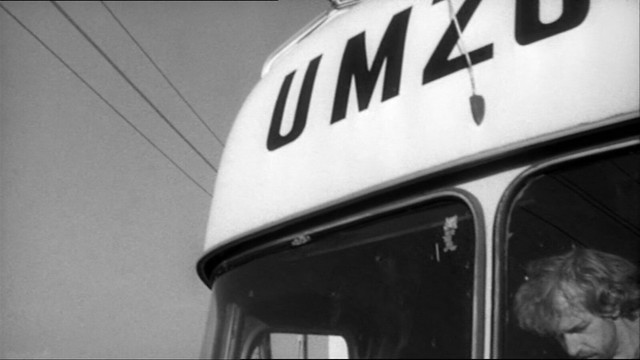
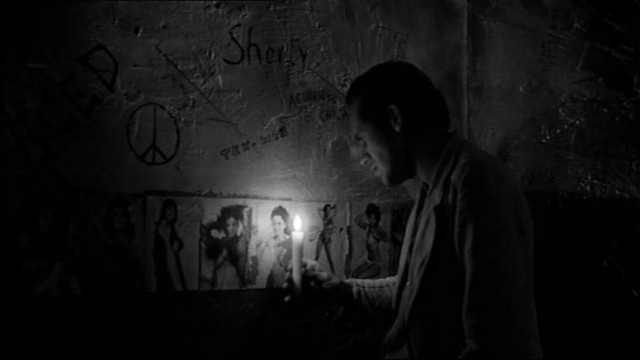
A man drives his volkswagon bug into a lake while another man, preparing his morning shave in his van, looks on. The man in the volkswagon emergies from the water with a dripping suitcase, strikes up the conversation with the man with a van who happens to be a traveling film reel deliveryman/projectionist. They take off together in the van. So starts Wenders' ultimate road movie KIngs of the Road.

Clocking at 2 hours 48 minutes, this leisurely paced, sort of midlife crises movie encompasses a lot of Wenders' preoccupation in his long illustrious filmography - desire to love, Germany's war past, rootlessness, American rock'n'roll, aversion to sex and violence in films, etc.

It would be a hard sell in this day and age to pitch the idea of where two complete strangers going on a long journey together without revealing their backgrounds or their innermost thoughts. But that's exactly what this film is - short on backstories, mutual unspoken understanding of heterosexual male anxiety in the material world Germany in the mid 70s.

It is revealed in the middle that Robert the Kamikaze (because he rammed his car directly into water, played by Hanns Zischler) who has left his wife and is afraid to call her, has also some unfinished business with his type-setter father, whom he visits. Then there is Bruno Winter (Rüdiger Vogler) the traveling projectionist and recurring character in many of Wenders' films. However rootless, traveling from small town to small town, floating through life, Winter has no worries in the world. He is also a walking contradiction - He wants to connect and love but he also wants to be left alone. He visits where he grew up, a dilapidated house on the river Rhine, and while kamikaze sleeps, he cries on the edge of the river.

Kings of the Road is a snapshot of Germany's post-war generation from a male perspective. They are silent, emasculated types who has trouble expressing their feelings. There is no conviction in Robert exclaiming "Yanks have colonized our subconscious!" while listening to rock'n'roll, either. It's that mutual silence and understanding that bond them together.

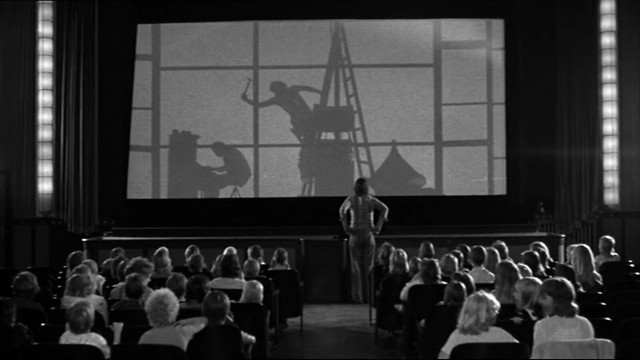
Oddly, for a film about projectionist, Kings isn't about cinema. It's more to do with changing times. Typesetter, projectionist, these dying professions are regarded fondly with much melancholy. It ends with Winter visiting a shuttered theater. The owner laments that her late father would not allow to show 'whatever passes as film nowadays'. 'Film used to mean art of seeing.' A lot of pregnant silences in Kings of the Road. Things left unspoken. Art of seeing it is. We see a lot of mundane stuff - casual male nudity, shitting, jerking off, vomiting, making coffee, driving, sleeping, etc. And it's us who needs to find meaning in everyday life.

Wednesday, May 30, 2018

A Love Letter to American Cinema

The American Friend (1977) - Wenders
Screen Shot 2018-05-30 at 9.55.16 PM
Screen Shot 2018-05-30 at 9.41.44 PM
Screen Shot 2018-05-30 at 9.58.23 PM
Screen Shot 2018-05-30 at 9.55.50 PM
Screen Shot 2018-05-30 at 9.48.37 PM
Screen Shot 2018-05-30 at 9.56.52 PM
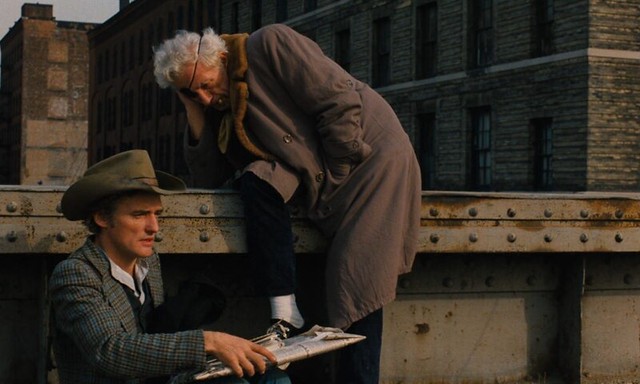
Unlike a lil sociopath playing elaborate games in Patricia Highsmith's novels, in Wenders's hands, Ripley is a quiet enabler, trying to stir shit up from a distance because someone stiffed him. But he is no less psychologically complex here. With all his American director heroes making a cameo - Nicolas Ray and Sam Fuller, admired for their hard hitting noirs and under-appreciation stateside, I'm sure, The American Friend is Wenders's thinly veiled love letter to American cinema.

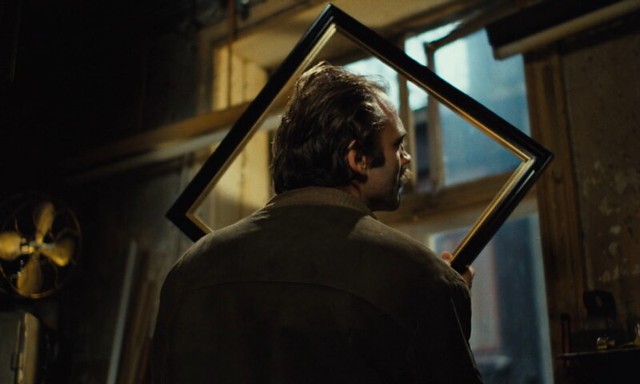
Jonathan Zimmermann (Bruno Ganz) is a soft spoken, picture framer/art restorer leading quiet life in Hamburg with his wife and son. He has a rare blood disease that he regularly visits his doctor for. He invites the ire of Ripley (Dennis Hopper), a cowboy hat wearing American con-man, when he disses him (wouldn't shake his hand) at an art auction where Ripley is selling one of the counterfeit paintings (painted by Nick Ray in Manhattan studio). In revenge, Ripley and a French gangster Minot (Gérard Blain) starts a rumor that Zimmermann's health is serious and don't have long to live.

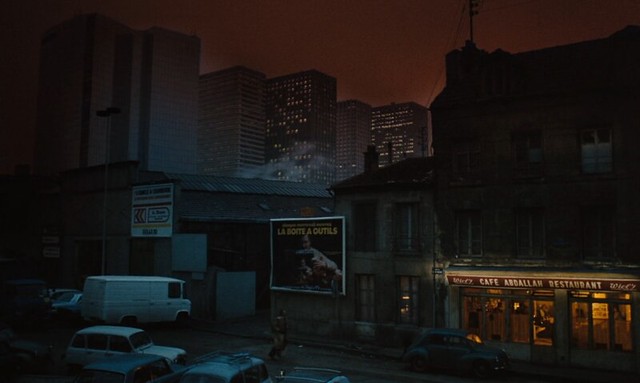
Freaked out by his health concerns, he reluctantly accepts Minot's proposal - killing a couple of no good gangsters from New York for large sum of money for his soon to be widowed wife and fatherless son. The following Paris underground subway assassination sequence is thrilling to watch.

The killing takes a toll on mild mannered Zimmermann, physically and emotionally and when he's forced to do it again, this time in a moving train in Munich, Ripley, who's been mumbling, questioning himself who he really is, decides to help Zimmermann to be his friends.

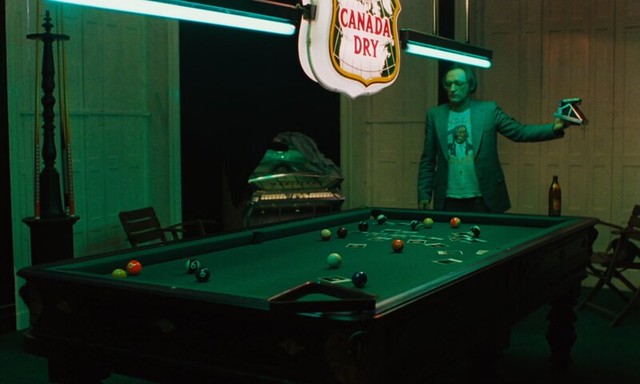
The plot line makes little sense but it's Robbie Müller's cinematography that really shines here. It's all about mood and atmosphere - Zimmermann's childlike red and white stripe scarf pops, red Voxwagon Beatle glows, dingy green flourecent lights adds character indoors, and soft crushed blacks and oranges are all gorgeous. With Fuller and Ray playing dangerous seedy characters, you can easily guess the romantic notion of gangsterism and its thrill equal American movies in the mind of impressionable German director. Ripley in a cowboy hat is the instigator who plants the seeds in an unsuspecting German man, but he himself can't avoid jumping in the action because it's so fun in the end.

I do not have a reference point here since I have not seen Wenders's 70s movies before they were restored. But along with Wrong Move, The American Friend is one of the most beautiful color film I've seen. It's like William Eggleston photographs reversal, saturatated Kodachrome photos. Bright, warm and gentle. I don't know if those were enhanced since it was shown in theaters in film print. But it's up there with A Woman is a Woman in terms of beauty.

Monday, January 23, 2012

Dance Dance Dance

Pina (2011) - Wenders
Photobucket
Riveting and deeply moving. Wenders weaves many of the late choreographer Pina Bausch's pieces interpreted by many dancers of her troupe. There is visual, rhythmic cohesion throughout. Coincidentally it's by another middle of the road German director who uses 3D technology aptly and gracefully in this case. Physicality of the pieces shines in 3D. I'm glad I got to see this in the theater. Please go see it before it ends its theatrical run.

Monday, May 9, 2011

Cultivating Loneliness

Wrong Move (1975) - Wenders
Photobucket
Photobucket
Photobucket
Photobucket
A young, volatile wannabe writer Wilhelm (Rüdiger Vogler), first seen breaking the windows of his bedroom with his fists, leaves home at his mother's urging. On the way to Bonn, he encounters allegorical assortment of people who accentuate his (non) character. They are: old man who was a marathon runner in 1936 Berlin Olympics, his young mute companion- Mignon (13 year old Nastassja Kinski being very Loiita), an actress Therese (Hanna Schygulla) and a fat Austrian poet who tags along.


This early Wenders and Peter Handke collaboration is beautifully framed by Robbie Müller and is filled with these people pairing among themselves, talking philosophically while being on the road together. Wenders succeeds at creating a melancholic character, a young man without qualities, who can't commit to his object of desire and writing at the same time, who struggles with Germany's ugly past, who wants to experience life but doesn't quite know how. With the film's elliptical end, Wilhelm isn't even sure if he made the right decisions about everything thus far. He remains to be an observer of the world, detached, basking in his loneliness. Vogler has quiet intelligence to his approach and Wenders sets the tone right for his protagonist. I liked this gentle, contemplative film.