Showing posts with label Argentina. Show all posts

Monday, October 5, 2026

Double Take

Double Freedom/La Libertad Doble (2026) - Alonso Double Freedom To understand Double Freedom, a little bit of context is necessary: it was 25 years ago that Argentinian filmmaker, Lisandro Alonso, made his debut film, La Libertad/Freedom, at age 26. Since then, Argentina saw the resurgence of the national cinema, termed Nuevo Cine Argentino, along with the revitalizations of other Latin American countries' cinema, producing some of the most exciting, innovative films.

Along with Lucrecia Martel, Mariano Llinás, Matías Piñeiro and others, Alonso put Argentinian cinema on the global cinema map again, garnering much deserved attention and accolades. His reputation as a daring arthouse filmmaker, known for his boundary pushing, minimalistic, observational films, attracted foreign co-productions and yielded in collaboration with Hollywood actor Viggo Mortensen in Jauja in 2015, a Quixotic tale of lost daughter in the Argentine outback, where Mortensen takes on the role of Danish John Wayne in The Searchers. The ambitious triptych Eureka, came 8 years later, about the flight of the indigenous people in both South and North American continents across colonial and current timespan followed.

With his new film, Double Freedom/La Libertad Doble, Alonso is going back to his groundbreaking debut film where it all started, and picks up where he left off. In La Libertad, we meet a young lumberjack Misael (non-actor Misael Saavedra), chopping woods for local ranchers in the Pampas. Taking cues from the observational documentary tradition, the film showed Misael's daily routine, as he cooks, washes, defecates and chops woods, minimally interacting with others (who are also playing themselves). The lumberjack's daily routine and his solitary living made the audience question the nature of labor in the 21st century. Alonso's minimalism here was in itself radical. He wasn't representing the working men as the dignified beasts in the capitalist system. As Misael kills and greedily eats armadillo at the end of the film, we knew Alonso was a different filmmaker, trying to get at something bigger and deeper than just representing 'workers' or 'exploitation' and such.

So 25 years have passed. Misael, now 25 years older, is not a young man anymore. But he leads the same life in the Pampas, chopping woods and sellingl them locally. The process is swift and almost mechanical and our lumberjack takes no time in felling trees and stripping them and delivering them to the local ranchers, who use them as poles for their fences. You see the hard life and life experiences in his face and his actions. Yet, there is a continuity - his blue Mets baseball cap is the same, so is the big pitbull mix he keeps by his side - I have no idea if it's the same dog 25 years later or not.

One of his clients tells him that the local mental asylum is closing down due to lack of funding, that his sister Catalina (Catalina Saavedra) will be released. It's surprising news for Misael, who has been living a solitary life for decades now, in his ramshackle shack in the Pampas, now has a burden of taking care of his invalid sister. Catalina on the other hand, institutionalized for a long time, will taste her freedom in the outside world.

So Double Freedom has several meanings in Alonso's unusual sequel to his debut - the freedom afforded by living in the margins and in nature for Misael. Freedom from institutional confinement for Catalina. It also speaks of Alonso's filmmaking methods- not bound by traditional filmmaking, the film time-jumps, fastforwardings quarter a century, leaving the audience outside of time-space continuum, disoriented and confused - very much like David Lynch's Twin Peaks, the Return.

Using non-actors without much dialogue, Alonso's approach is that of Robert Bresson in the purist sense, stripping down all the artifacts and artificiality of filmmaking. Double Freedom questions what we regard as authentic representation of life and how the concept of freedom is ironically confined to the socio-political and individualized world view, with the true freedom always lies out of reach from us.

Sunday, September 28, 2025

Playfully Choreographed Verbal Farewells

Pin de Fartie (2025) - Moguillansky pin_de_fartie The latest from Argentine film collective, El Pampero Cine (La Flor, Trenque Lauquen), Pin de Fartie interprets Samuel Beckett's one act absurdist, existentialist play Fin de Partie (Endgame), originally written in French and later translated in English. Not only director Alejo Moguillansky and the co-writers play with the letters in the title, they play with the form and structure, telling related stories within a story in an inventive and playful way. It’s a film anagram version of the play.

It starts with an aging blind man, Otto (Santiago Gobernori) and his young servant girl, Cleo (Cleo Moguillansky, daughter of director Alejo), at the picturesque lakeside (shot in Lake Lake Léman, Switzerland). We do not know how they got there or the exact nature of their relationship. They banter endlessly about petty things, while the sound of loud planes flying by interrupts their verbal exchanges from time to time. There is or was a war and the world is in ruins and they are isolated; we gather from their exchanges. They are stuck together whether they like it or not- a bond that they have a love/hate relationship with.

Early on, it is revealed that through sound folly artists at work, many of the sound you hear are created by folly sessions as well as narration by actors in a studio setting, accentuating the meta aspect of the whole production.

There are two actors (Marcos Ferrante and Laura Paredes of Trenque Lauquen) rehearsing the Beckett's play: they have their routine - He takes subways and she a taxi, they fumble their keys to the hotel room and they go over the play. Their rendez-vous is always at night in a non-descript hotel. Is this for a play that would be staged at a later date or is this some kind of arrangement between two lovers? If it's not for a stage production, who are the targeted audiences?

Then there's an aging pianist mother and her son. The son helps his mother to perform Moonlight Sonata and listen. This arrangement also has a feel of eternity - whether forced upon them or not, feel to it without an end date. One day the mother gives the son the Becket's play and they start reading the lines from it back and forth. One day the son realises that their relationship mirrors that of the play they are reading.

These intersecting stories, playfully jumping from one to another and back, all contemplate the existential dread of being trapped and prolonging the inevitable while enjoying each other's company. It's a choreographed verbal dance move of farewells between two people. Playful and joyous, in spite of the play it is based on, which examines dissatisfaction, pain and meaninglessness, Pin de Fartie is yet another little experiment in narrative storytelling that constantly challenges the norm and form of the traditional cinema from El Pampero Cine.

Sunday, September 8, 2024

Floating

El auge del humano 3/The Human Surge (2023) - Williams Screen Shot 2024-09-07 at 9.32.05 AM Screen Shot 2024-09-07 at 8.29.54 AM Screen Shot 2024-09-07 at 9.27.03 AM Screen Shot 2024-09-07 at 9.27.48 AM Screen Shot 2024-09-07 at 9.04.27 AM Screen Shot 2024-09-07 at 8.51.42 AM Screen Shot 2024-09-07 at 8.29.59 AM Screen Shot 2024-09-07 at 9.02.30 AM Screen Shot 2024-09-07 at 9.05.14 AM Screen Shot 2024-09-07 at 9.06.22 AM Screen Shot 2024-09-07 at 9.18.24 AM Screen Shot 2024-09-07 at 9.25.09 AM Seven years have passed since Argentine experimental filmmaker, Eduardo Williams's Human Surge made a splash in the international film scene. The elusive threads of young people's lives in the global south, shot in various media that incorporate video games and internet, challenged and refuted the rigid old notion of cinema and its first world colonialist hegemony without being seen as overtly political or preachy. Globalization, in Williams's presentation, at least for young people, is both fantasy and real, and among them, connection is easily made crossing national boundaries over abundant technology and is no big deal, in their impoverished daily lives.

Williams comes up with The Human Surge 3. Never mind its title. It's been a while, things have been happening in the world. It's appropriate that he jumps to the third one to keep up with the times. (The prolific filmmaker has been constantly making shorts) In Surge 3, using a 360 VR camera, he charts the non-binary young people's lives in Peru, Taiwan and Sri Lanka. As always, their daily lives in exotic surroundings and daily conversations can be a little discombobulating to the viewers at first. But as it plays out and we settle with some recognizable faces over time, we get settled in and notice that their thoughts intermingle. Certain conversations are repeated in different languages: their animosity toward millionaires, polution and environmental destruction. Then they appear in each other's surroundings and communicate with each other, either in English or in their own language without missing a beat. Someone mentions, "I saw you in my dream, eating a mango on a raft in the water," matching with the image in the Peru section.

In Williams's hand, globalization in the internet age opens up limitless possibilities for the young people to connect - they literally float in the air. For the viewers, he presents an immersive visual/aural journey while also reminding the limitations of technology (for now) by leaving in the distortions of wide angle VR camera imagery in the film.

There are some great established filmmakers who take great chances with experimenting with narratives and the medium to further their artistry in telling human experiences within historical and cultural contexts: Lisandro Alonso and Miguel Gomes- Harmony Korine to a lesser extent, come to mind. Eduardo Williams, with his minimalist/maximalist free-flowing aesthetics, with acute observations of the world here and now, with a great deal of sense of humor and compassion & tenderness toward its subjects, emerges as one of the most daring, important filmmakers working today.

Tuesday, November 1, 2022

Woman Who Ran

Trenque Lauquen (2022) - Citarella Trenque-Lauquen-Still-3 Trenque Lauquen is a small city west of Buenos Aires. It means 'Round Lake' according to the locals. The city is the setting for a delicious, sprawling yarn. Laura (Laura Paredes), a biologist candidate from Buenos Aires, who was cataloging rare orchid species in the field in town, suddenly disappears. Part one of its 4 hours 10 minute running time, plays out with two men, Rafael (Rafael Spregelburd) Laura's boyfriend from the city, and Ezequiel (Ezequiel Pierri) known in town as 'Chincho', who was helping Laura in the field and grew affection for her, looking for now the missing woman. The men are asking locals around for her last whereabouts, driving back and forth endlessly in the small town. The film devotes much of its time between them looking for Laura and flashback of what she was up to when not collecting specimens in the field. With her likable personality, Laura made inroads in the local community. Things change when Laura discovers secret and explicit love letters inside old books while doing research in the local library. In the books she finds, the pages are stuck together, concealing the letters in between with clues to find more correspondencies between an Italian aristocrat and a mysterious woman from the area, in various books. It is slowly revealed that this amateur history snooping might have to do with Laura's disappearance. Laura finally confided the activities to smittened Ezequiel, the fact that he hides from Rafael.

Part two concerns Laura getting involved with a couple Veronica and Elisa, played by Véronica Llinás and Elisa Carricajo, who might be involved in the incident at the lake where locals found a possible humanoid creature. And Elisa might be related to the mysterious woman in the letters. Being a frequent guest at a local radio show, Laura left a long audio recording for Julia (Juliana Muras), the daily talkshow host, detailing her experience in Trenque Lauquen and the lake creature mystery and possibly where she is headed.

Trenque Lauquen is a dive into a rabbit hole that goes deeper and deeper as you dig. And the mystery thread gets more and more into a fantastic realm. In the middle of it all, is Paredes, one of the actresses from the acting company Piel de Lava (including Carricajo), featured in Mariano Llinás's epic, la Flor in 2018 and many of Mathias Pineiro films. She plays alluring Laura, who gets sidetracked in her field work by goings on in the small town where everyone knows everyone and rumors abound. Laura Citarella, part of the Argentine production group El pampero which produced La Flor, continues the long winded storytelling tradition with playful, shifting narratives with likeable, relatable characters.

Why did Laura stay on after her countract was up? Did she come to Trenque in the first place, because she didn't want to move in with Rafael in Buenos Aires as they planned? Did she not care for Ezequiel's passive puppy-dog love? Did she find her excitement in those salacious letters between an Italian nobleman and a mysterious local woman? Did she find peace and liberation in the company of lesbian couple who might or might not have captured plant/human hybrid creature and on the run from the authority? Trenque Lauquen plays out like a funnier, warmer and more intimate version of 'disappearance of woman' films a.k.a. L'Avventura, seen from a woman's perspective. Endlessly charming and entertaining, the film is very much like watching a Hong Sangsoo film without all the drinking; the intricacies of character interactions, the intrigue of every day life, the men's folly, the urge to escape the city living and enjoy nature. And most of all, freedom. It is one of my favorite films of the year.

Saturday, May 21, 2022

Queer Space

Terminal Norte (2021) - Martel Screen Shot 2022-05-21 at 8.32.17 AM Screen Shot 2022-05-21 at 7.41.16 AM Screen Shot 2022-05-21 at 8.34.40 AM Screen Shot 2022-05-21 at 8.13.07 AM Lately I've been reading up a lot on 'queer space' - the periperal space where one can create their own utopia and at the same time, giving a middle finger to the heteronomative and highly patriarchal majority. After Zama, Lucrecia Martel, one of the greatest living filmmakers, goes back to Salta, the Nothern Andean region where she hails from, during pandemic induced lockdown, and makes Terminal Norte, a short documentary on copleras/female singers and musicians. Our guide is Julieta Laso, whose gravelly voice makes my spine tingle into the mountainous slopes and introduces many queer, trans artist dabbling in traditional and non-traditional music (Trap and Noise included). In Martel's hands, one loses themselves soon enough, and becomes multitudes of voices across gender, age and time. What a pleasure to witness an artist in her zenith of power creating something so consistent and true to her craft in the time of global crisis, where togetherness, human touch has become the enemy? As Laso sings in her moanful voice with her tiger's stare, I feel that it's only art that can help us through in tough times.

Saturday, February 15, 2020

Eternal Cinema

La Película infinita/The Endless Film (2018) - Listorti
Screen Shot 2020-02-08 at 11.24.45 AM
Screen Shot 2020-02-08 at 11.25.55 AM
Screen Shot 2020-02-08 at 11.23.33 AM
Screen Shot 2020-02-08 at 11.31.36 AM
Screen Shot 2020-02-08 at 11.29.58 AM
Screen Shot 2020-02-08 at 11.27.56 AM
Screen Shot 2020-02-08 at 11.26.36 AM
Screen Shot 2020-02-08 at 11.35.05 AM
Screen Shot 2020-02-08 at 11.33.42 AM
Leandro Listorti, filmmaker and curator of the film museum in Buenos Aires, makes a non-narrative film culled from never completed, abandoned Argentinian films. La película infinita Shows you the power of cinema, purely in visual terms (sometimes accompanied by music, bits of dialog, minor sound effects, some synced with the original footages and others not). The lure of these images are undeniable - the way they demand your full attention suck you in is nothing short of miraculous. We all know that these are unfinished films. We are all aware that it's not going to go anywhere. But it doesn't matter. The pull of the scenes are so strong and mysterious, whether it's a barrel of a gun pointing, a shadowy figures in the background, the chalk marks on the floor.... A scene is a great promise: a start or in the middle of mystery that will never be solved. We want more. La Película infinita will make a great double feature with another essay film, Ne croyez surtout pas que je hurle/Just Don't Think I will Scream.

Tuesday, April 10, 2018

Lucrecia Martel Retrospective at FSLC 4/10 - 4/15

In conjunction with the theatrical release of Martel's new film Zama, Film Society of Lincoln Center is hosting the retrospective of one of the most important, daring filmmaker working today. My first encounter was with her much celebrated third feature, Headless Woman/La mujer sin cabeza. It didn't make much impact on me then. I thought the satire on upperclass Argentinian society was, if not cinematically daring, maybe too little on-the-nose. I had no point of reference since I've never seen her previous two films.

It was a German director, Christoph Höchhausler (I am Guilty, The City Below, considered as one of the key members of what critics termed as the Berlin School), who told me that Martel is the filmmaker he admires most when I interviewed him while he was in town three years ago. He pointed at the poster of La ciénaga on the wall of Silversalt PR office in midtown Manhattan, when asked what his favorite film was. Indeed, watching La ciénaga changed everything. Its visual/aural examination of dark and complex underbelly of Argentine bourgeoisie was an eye opener. As an adventurous cinema lover, La ciénaga offered everything I was looking for in cinema. Then Holy Girl, holy moly! I can stress enough the greatness of Martel who is quite possibly the greatest living filmmaker of our time.

I can't find what I wrote about Headless Woman, but here are the my reviews of her other three films for your reading pleasure. Watch Zama on the big screen if you can. It will change what you think of cinema once and for all.

La ciénaga (2001) - Martel

tumblr_obo160iKlZ1r6kxjco4_1280
Compared to bombastic, unsubtle satires and social commentaries that we are used to, Lucrecia Martel puts some perspectives on how they should be done, masterfully in La Ciénaga (The Swamp). Taking place in the decaying manor in the jungle in one unbearably hot and sticky Summer in Argentina, the film illustrates the murky underbelly of bourgeoisie without delving into surrealism or making caricatures out of characters. Mecha (Graciela Borges) is seen sunbathing while drunk along with the rest of the inebriated grownups of the house by the pool side. After demanding ice cubes for her wine, she slowly rises in her stupor, tries to collect filthy wine glasses, drops them, falls on top of the shards. The rest of the family are not much better. The emasculated, husband keeps dying his hair and staining the sheets, the 15 year old Momi (Sofia Bertoloto) is obsessed with the pretty native housemaid Isabel (Andrea Lopez), the older daughter Vero (Leonora Balcarce) flirts with her ne're-do-well grown up brother José, who's living with a much older family friend, Mercedes in Buenos Aires, visiting after Mecha's fall and doesn't seem to have problem jumping in mother's bed for a cuddle. Young Joaquin lost one of his eyes while horsing around in the jungle with other boys.

Tali (Mecedes Moran), concerned cousin of Mecha shows up with her family (a grumbling husband, 3 girls and one boy who figure largely into the story later on), not only to check on her cousin but also use the pool for kids who are bored out of their minds. The said pool, neglected and not cleaned for years, is filthy, murky grey disease breeding ground. Isabel warns Momi not to go in there- she might catch something terrible. The contempt for native population is totally out in the open from Mecha down to Joaquin, casually calling them savages and accuse Isabel of constantly stealing towels. With TV always in the background, everyone, across the social strata, is drawn in by the news of appearance of Virgin Mary on top of a cement tower.

With amazing array of characters and richly contrasting social stratification not only in a familial but geographical and cultural, La Ciénaga is a complex examination of a society still steeped in colonial legacy and religion.

La niña santa/The Holy Girl (2004) - Martel

71a923c2-9137-4081-a85e-4618f5859055_zpsgwq9padw
f6d54976-796a-4f21-9eec-e9b3789860fa_zpsr4hjtubx
5411cf9a-a200-48d4-8798-d9a3d523e75e_zpsr9fxlewt
e1efc07f-f5b0-4f8a-b447-651c72c46d39_zps4lxtigpu
16eeacdf-9acf-44da-83c4-b13f7c8031f9_zps8hmg0qui
Amalia (María Alche), a sullen teen girl, lives with her divorced mom Helena (Mercedes Morán) in an old hotel with a thermal pool where mom works as a representative. She attends bible study group with her catholic school girl friends and recite prayers under her breath obsessively. Lately, she is obsessed with 'vocation'. A ear-nose-throat doctors convention is taking place in the hotel. Amalia finds herself being an interest of Dr. Jano (Carlos Belloso), a married man with kids, when he rubs against her bottom in the crowd gathered for a theremin player just outside the hotel. On the verge of sexual awakening with the help of a promiscuous, gossipy best friend Jose(fina), the experience leaves her not repulsed but curious.

She soon becomes obsessed with Jano, sneaking into his shared room, smelling his shaving cream, following him and spying on him at the poolside. Whatever this man means to her, her obsession becomes her 'vocation'. Jano's guilty conscience is not helping Amalia's cause. To make matters worse, Helena finds him attractive as well.

Martel proves to be the master of close-ups and shallow focuses. The details of the senses and small moments she captures on screen - touch, smell, whispers make up the film's superbly orchestrated, organic feel. All the connective tissues of the film are all spread out- the fact doctors are ear-nose-throat specialists - whispers and misheard information, smell, singing, but her approach is so subtle and fluid, you can't help but admire her skills. The Holy Girl is about Amalia as much as it isn't. The film's sordid details of the lives of middle class bourgeoisie can be seen as Almodovar-esque melodrama. But as in all Martel's films there is always a it's-barely-there-but-there satire. I can't really think of any director working today who works on Martel's level. The Holy Girl is a true cinematic feat!

Zama (2017) - Martel
zama
Lucrecia Martel suggested in her introduction to her sold-out screening of the much anticipated follow-up to Headless Woman that we audience might want to take in Zama like a whiskey. Indeed, it's a heady, at times bitter, at times sweet hallucinatory trip to the heart of darkness, showing the white man's identity crisis and misguided manifest destiny in the colonial era Latin America.

The film is a historical period piece, based on the much praised Latin American classic literature by Antonio di Benedeto. It's a hugely ambitious undertaking for Martel with just 3 films under her belt. But if anything, Zama confirms Martel one of the greatest directors of our time. Her mastery over the medium both in complex narrative storytelling and technical ingenuity has grown to exceptional height with Zama.

Don Diego de Zama (Mexican actor Daniel Giménez Cacho with an impressive Romanesque nose), a magistrate stuck in some unnamed South American colonial town deep inland in the 18th century, is anxiously awaiting to hear from the Crown (of Spain), his new assignment to the city. Even though he is a man of certain position and been stationed there for a while, he can't ever seem to get ahead or get what he wants - the letter of transfer never materializes, his rival Ventura (Juan Minujín) is much better at kissing asses and the local society lady de Luenga (Lola Dueñas) flirts with him but wouldn't give in.

Zama doesn't fair well with the natives either- seen in the beginning peeping at nude women taking mud bath and getting caught. He also has a nagging native woman he had an invalid child with. And the thought of the existence of this child weighs in his conscience like a brick. His misplaced valor to protect three virginal sisters is always overshadowed by the overhanging threat of a mythical bandit named Vicuña Porto who is notorious for raping and pillaging.

After physically threatening Ventura over de Luenga, Zama is demoted and moved out of his semi-opulent living quarters to a squalor with rotting walls, just outskirts of a city. At the governor's insistence and a promise of recommendation letter to the Crown, he delivers a scathing review of a book written by a well-meaning, trusting young civil servant (the governor can't stand the thought of the young man wrote the book while on the job). But no matter how many favors, how many people he fucks over, Zama realizes that he won't be leaving the backwater town any time soon.

Fallen out of favor and aging, Zama reinvents himself as a guide to the band of soldiers in the late stages of colonization. As they advance inland, they are terrorized by the red body paint natives who populate the land. Fighting with the elements and among themselves (one of the soldiers claims to be the elusive Vicuña- is he really? Does it even matter?), Zama and the men get completely lost in the strange land.

There have been countless other films about the white men's delusion of grandeur- Aguirre, Wrath of God and Apocalypse Now! easily come to mind. With Zama, along with lyrical Jauja few years back, directed by fellow Argentine Lisandro Alonso, Martel captures the existentialist angst in the age of colonialism/ad infinitum in Latin America with astonishing efficiency and grace. Shooting digital for the first time, Martel and her Portuguese DP Rui Poças (Tabu, The Ornithologist, To Die Like a Man), create lush, bright palates that are intoxicating and hallucinatory.

Martel's mastery of the cinema medium as sensory medium first and foremost is nothing short of brilliant. She subjects us to painterly framing and exceptional sound design in every scene. Those of you who followed her trajectory closely through La Cienaga, Holy Girl and Headless Woman and have been admiring her artistry will be richly rewarded here - a carefully measured framing where people's faces are just off the frame, shallow depth of field, soft focus, the full use of background/foreground and the use of dialog fading in and out with internal monologue thrown in, just to name a few.

She also uses the Shepard Tone whenever there is a dramatic moment for Zama. The tone is an illusory aural phenomenon that creates continuously swelling sound which builds tension and suspense. All these are very simple methods and not radical experiments at all, but it's Martel's simple approach that makes everything so fresh and radical. As you watch Zama, you can't help but feeling that you are watching a true cinematic masterpiece.

Finding the Latin American identity, as European settlers and their offspring, has been the continuous source for great literature over 300 years. Throw in the idea of class, masculinity, racism, sense of belonging, you get a very complex picture of what makes up the theme of Zama.

As usual, in Martel's hands, what seems to be an extremely messy affair at first, the sense of cohesiveness emerges from the chaos, then the sense of warm comfort wraps around the whole experience. Even though Zama is a lost character who goes through traumatic experiences, there is sense of catharsis that is reached in the last moments of the film. That he finally found home, that he reached his el dorado, imagined or otherwise. Zama is a utterly brilliant film. See it on the big screen if you can.

Thursday, October 5, 2017

Quiet Catharsis

Zama (2017) - Martel
zama
Lucrecia Martel suggested in her introduction to her sold-out screening of the much anticipated follow-up to Headless Woman that we audience might want to take in Zama like a whiskey. Indeed, it's a heady, at times bitter, at times sweet hallucinatory trip to the heart of darkness, showing the white man's identity crisis and misguided manifest destiny in the colonial era Latin America.

The film is a historical period piece, based on the much praised Latin American classic literature by Antonio di Benedeto. It's a hugely ambitious undertaking for Martel with just 3 films under her belt. But if anything, Zama confirms Martel one of the greatest directors of our time. Her mastery over the medium both in complex narrative storytelling and technical ingenuity has grown to exceptional height with Zama.

Don Diego de Zama (Mexican actor Daniel Giménez Cacho with an impressive Romanesque nose), a magistrate stuck in some unnamed South American colonial town deep inland in the 18th century, is anxiously awaiting to hear from the Crown (of Spain), his new assignment to the city. Even though he is a man of certain position and been stationed there for a while, he can't ever seem to get ahead or get what he wants - the letter of transfer never materializes, his rival Ventura (Juan Minujín) is much better at kissing asses and the local society lady de Luenga (Lola Dueñas) flirts with him but wouldn't give in.

Zama doesn't fair well with the natives either- seen in the beginning peeping at nude women taking mud bath and getting caught. He also has a nagging native woman he had an invalid child with. And the thought of the existence of this child weighs in his conscience like a brick. His misplaced valor to protect three virginal sisters is always overshadowed by the overhanging threat of a mythical bandit named Vicuña Porto who is notorious for raping and pillaging.

After physically threatening Ventura over de Luenga, Zama is demoted and moved out of his semi-opulent living quarters to a squalor with rotting walls, just outskirts of a city. At the governor's insistence and a promise of recommendation letter to the Crown, he delivers a scathing review of a book written by a well-meaning, trusting young civil servant (the governor can't stand the thought of the young man wrote the book while on the job). But no matter how many favors, how many people he fucks over, Zama realizes that he won't be leaving the backwater town any time soon.

Fallen out of favor and aging, Zama reinvents himself as a guide to the band of soldiers in the late stages of colonization. As they advance inland, they are terrorized by the red body paint natives who populate the land. Fighting with the elements and among themselves (one of the soldiers claims to be the elusive Vicuña- is he really? Does it even matter?), Zama and the men get completely lost in the strange land.

There have been countless other films about the white men's delusion of grandeur- Aguirre, Wrath of God and Apocalypse Now! easily come to mind. With Zama, along with lyrical Jauja few years back, directed by fellow Argentine Lisandro Alonso, Martel captures the existentialist angst in the age of colonialism/ad infinitum in Latin America with astonishing efficiency and grace. Shooting digital for the first time, Martel and her Portuguese DP Rui Poças (Tabu, The Ornithologist, To Die Like a Man), create lush, bright palates that are intoxicating and hallucinatory.

Martel's mastery of the cinema medium as sensory medium first and foremost is nothing short of brilliant. She subjects us to painterly framing and exceptional sound design in every scene. Those of you who followed her trajectory closely through La Cienaga, Holy Girl and Headless Woman and have been admiring her artistry will be richly rewarded here - a carefully measured framing where people's faces are just off the frame, shallow depth of field, soft focus, the full use of background/foreground and the use of dialog fading in and out with internal monologue thrown in, just to name a few.

She also uses the Shepard Tone whenever there is a dramatic moment for Zama. The tone is an illusory aural phenomenon that creates continuously swelling sound which builds tension and suspense. All these are very simple methods and not radical experiments at all, but it's Martel's simple approach that makes everything so fresh and radical. As you watch Zama, you can't help but feeling that you are watching a true cinematic masterpiece.

Finding the Latin American identity, as European settlers and their offspring, has been the continuous source for great literature over 300 years. Throw in the idea of class, masculinity, racism, sense of belonging, you get a very complex picture of what makes up the theme of Zama.

As usual, in Martel's hands, what seems to be an extremely messy affair at first, the sense of cohesiveness emerges from the chaos, then the sense of warm comfort wraps around the whole experience. Even though Zama is a lost character who goes through traumatic experiences, there is sense of catharsis that is reached in the last moments of the film. That he finally found home, that he reached his el dorado, imagined or otherwise. Zama is a utterly brilliant film. See it on the big screen if you can.

After two soldout screenings, NYFF decided to add the third screening of Zama on the last day of the festival, 10/15. For tickets and more info, please visit FSLC website.

Thursday, July 13, 2017

Bluebeard

Kékszakállú (2016) - Solnicki
Screen Shot 2017-07-13 at 12.03.06 AM
Screen Shot 2017-07-12 at 11.39.49 PM copy
Screen Shot 2017-07-13 at 12.05.51 AM
Screen Shot 2017-07-12 at 11.40.26 PM
Screen Shot 2017-07-12 at 11.40.47 PM
Screen Shot 2017-07-12 at 11.41.06 PM
Screen Shot 2017-07-12 at 11.41.24 PM
Screen Shot 2017-07-12 at 11.42.00 PM
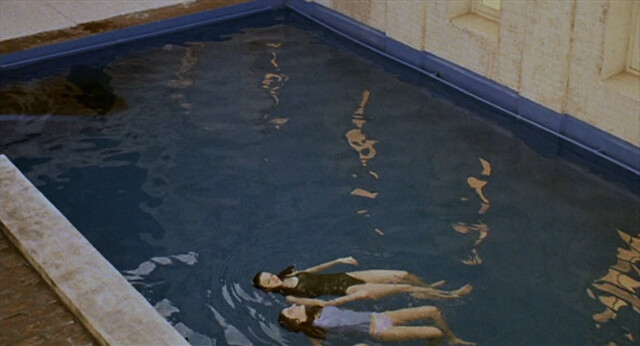
Gáston Solnicki's take on Béla Bartok's Bluebeard's Castle (A kékszakállú herceg vára) is a concise observation of lives of a group of loosely interconnected young, upper-class women in various ages in Argentina. We track girls swimming in a pool in summer months then through fall and winter, as they struggle through growing out of childhood - working at industrial factories to avoid living under their parents and afford their own place, deciding what to major in school, struggling with self image, dealing with young motherhood and men. Instead of the straight up narrative storytelling, Solnicki's chooses to show episodic, small moments of these young women's lives - eating ice cream in bed and being chastised by dad, cooking octopus and being grossed out by it, being casually sexually harassed in a sausage factory (get it?), getting a car wrecked while parking, struggling to fit in the kid's play tent, getting locked out while on the roof, having a moment with a younger man, etc. He moves from one moment to another with such nonchalance and abandon, but there is undeniable cohesiveness to Kékszakállú. His formalist approach- static, picturesque framing, impressive sound design and minimal dialog, conveys much more than what the film doesn't actually tell or show. Great film.

Thursday, May 11, 2017

Holy Cinema, in the Subtlest Possible Way

La niña santa/The Holy Girl (2004) - Martel
71a923c2-9137-4081-a85e-4618f5859055_zpsgwq9padw
f6d54976-796a-4f21-9eec-e9b3789860fa_zpsr4hjtubx
5411cf9a-a200-48d4-8798-d9a3d523e75e_zpsr9fxlewt
e1efc07f-f5b0-4f8a-b447-651c72c46d39_zps4lxtigpu
16eeacdf-9acf-44da-83c4-b13f7c8031f9_zps8hmg0qui
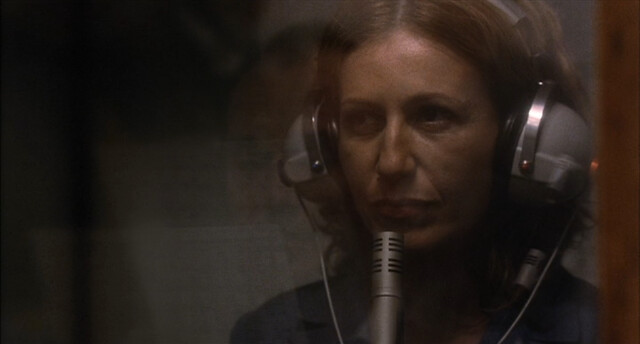
Amalia (María Alche), a sullen teen girl, lives with her divorced mom Helena (Mercedes Morán) in an old hotel with a thermal pool where mom works as a representative. She attends bible study group with her catholic school girl friends and recite prayers under her breath obsessively. Lately, she is obsessed with 'vocation'. A ear-nose-throat doctors convention is taking place in the hotel. Amalia finds herself being an interest of Dr. Jano (Carlos Belloso), a married man with kids, when he rubs against her bottom in the crowd gathered for a theremin player just outside the hotel. On the verge of sexual awakening with the help of a promiscuous, gossipy best friend Jose(fina), the experience leaves her not repulsed but curious.

She soon becomes obsessed with Jano, sneaking into his shared room, smelling his shaving cream, following him and spying on him at the poolside. Whatever this man means to her, her obsession becomes her 'vocation'. Jano's guilty conscience is not helping Amalia's cause. To make matters worse, Helena finds him attractive as well.

Martel proves to be the master of close-ups and shallow focuses. The details of the senses and small moments she captures on screen - touch, smell, whispers make up the film's superbly orchestrated, organic feel. All the connective tissues of the film are all spread out- the fact doctors are ear-nose-throat specialists - whispers and misheard information, smell, singing, but her approach is so subtle and fluid, you can't help but admire her skills. The Holy Girl is about Amalia as much as it isn't. The film's sordid details of the lives of middle class bourgeoisie can be seen as Almodovar-esque melodrama. But as in all Martel's films there is always a it's-barely-there-but-there satire. I can't really think of any director working today who works on Martel's level. The Holy Girl is a true cinematic feat!

Monday, June 20, 2016

Lighthearted Romantic Entanglement

Princess of France (2014) - Piñeiro

Another slice of Shakespearean comedy by Matia Piñeiro. All his regular actors are back to play assortment of characters, romantically entangled among themselves. This time, everything revolves Victor (Julián Larquier Tellarini), who came back to Buenos Aires after spending a year in Mexico. He wants to do a radio project, doing the bard's Love's Labour's Lost with the group of his friends. In the absence of his girlfriend Paula (Agustina Muñoz), Victor flirts with every girl who is going to take part in the project.

Using mutiple takes on same scenes and settings with slightly different outcomes and a copy of Love's Labour's Lost working as a clever communication device, Princess is all about little details. After watching a couple of Hong Sang-soo films last couple of months, I was thinking about his equivalent in the world cinema. And I think I finally found Hong's match in Piñeiros. They are equally distinctive and very regional in their own way, but have a lot in common presenting lighthearted romantic entanglement and its infinite number of possible outcomes.