Showing posts with label Lucrecia Martel. Show all posts

Wednesday, April 29, 2026

Two Competing Narratives

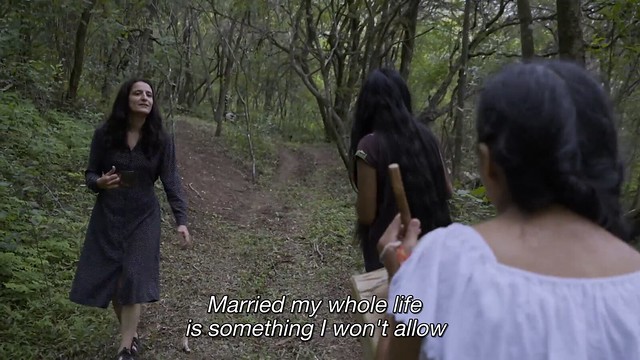
Nuestra Tierra/Our Land (2025) - Martel OUR LAND (NUESTRA TIERRA)_Courtesy of Strand Releasing Known for her visually and aurally, densely layered films, taking on Argentina's society of haves and have nots, esteemed filmmaker Lucrecia Martel's foray into the documentary form culminates to Our Land, a long gestating project that started in 2011, when Martel started reading the materials surrounding the murder of Javier Chocobar, a leader of Chuschagasta indigenous community in Argentina's Tucumán Province.

Combing through old archives, old video footage, testimonies and interviews and oral history, aided by new technology, Martel creates another complex and nuanced continuation of her investigation into the country's colonial history and injustices perpetrated on its indigenous population, mirroring in spirit, her epic masterpiece, Zama which came out 8 years ago.

Our Land starts with the satellite image of earth, then we zoom in to the topography of Argentina's northwest legion, revealing lush forest, then to the young girls playing soccer in the soccerfield, as the drone glides over the landscape. Uncharistically, Martel seems to be incorporating technology into her documentary, in stark contrast with her subjects - the people who worked the land for generations and their adversaries- founding fathers of Argentina; the colonizers who exploit the natives and went on the land theft, ever since the 15th century. The dissonance of her bird's eye view/big-brothers-watching-you method, and the rugged landscape and its inhabitants, is the point of Our Land.

Case in point, Martel leaves the footage of a drone getting hit by a bird in mid-air - as jarring and humorous as it looks, she is not interested in perfect gliding shots of drone footage over nature, like some David Attenborough style nature documentary. She is using the technology to make a point.

In 2009, the defendants, the landowner Dario Luis Amin and his two former police officer friends who went into the territory, armed with guns to intimidate and forcefully evict the Chuschagasta community, their best evidence of their innocence (in their minds) is their own videotaping of the confrontation and murder. The shaky video tape is played over and over again throughout the film.

As the trial finally takes place 9 years after the murder in 2018, the defendants' thin justification was that they were threatened and outnumbered. On paper, Amin, a former government official, is the land owner and according to the government records, indigenous people in that region went extinct in the 1800s.

Martel provides a wealth of interviews and ephemera - photographs, family histories and artifacts, years of court documents from the legal battles the community waged on for decades, long before Chocobar's death. It's also in the faces of the region's inhabitants- distinct from Argentina's general population with mainly their European ancestry. Antonia Hortensia Mamani, the widow of Chocobar, displays hundreds of old fading photographs, many taken by her late husband who was an analog photography enthusiast, and laments the legacy of their history being lost.

It becomes clear as the trial goes on, that what we are witnessing are two competing narratives - One the Argentine state's account and the other, people's account. At one point, the defendants explain in their own words, why they shoved approaching Chocobar, "the Argentine State taught us to do that," effectively making the government the defendant as a whole.

Our Land's story resonates because we see it happening everywhere in the world now - from Gaza, Lebanon and Ukraine to a local level- here in New York, it's deed theft - coaxing longtime black and brown residents out of their homes, by greedy landowners and corporations, aided by NYPD.

The arrogance displayed in Amin's video becomes the defendants' downfall. Technology can be a double edged sword. The recordings are there for everyone to see and judge. But with deepfakes and A.I., the future of truth is unknown. Amin's 22 year sentence was appealed and he served only two years in jail, only to die of Covid. Two other dependants' 15 year sentence was appealed but then upheld later.

As with her narrative films which show satiric lives of the Argentine upper-class and the state's ugly colonial history, Martel shines a light on the daily struggles of her country's indigenous population with Our Land. The film is a meticulously researched and tactfully shot and presented, comfortably fitting in her impressive filmography.

Our Land opens in New York and San Fransisco May 1, followed by Los Angeles May 8. National rollout to follow. The Headless Woman 4K restoration opens at Metrograph in NYC on May 8.

Saturday, May 21, 2022

Queer Space

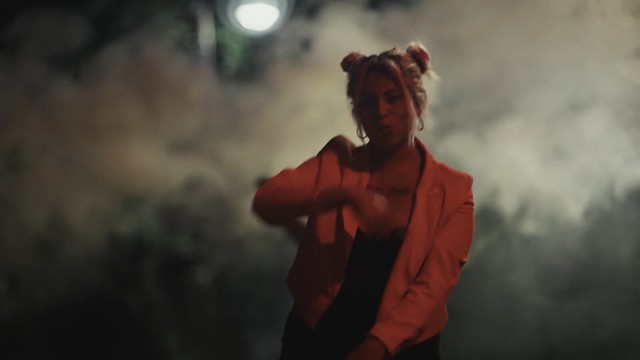
Terminal Norte (2021) - Martel Screen Shot 2022-05-21 at 8.32.17 AM Screen Shot 2022-05-21 at 7.41.16 AM Screen Shot 2022-05-21 at 8.34.40 AM Screen Shot 2022-05-21 at 8.13.07 AM Lately I've been reading up a lot on 'queer space' - the periperal space where one can create their own utopia and at the same time, giving a middle finger to the heteronomative and highly patriarchal majority. After Zama, Lucrecia Martel, one of the greatest living filmmakers, goes back to Salta, the Nothern Andean region where she hails from, during pandemic induced lockdown, and makes Terminal Norte, a short documentary on copleras/female singers and musicians. Our guide is Julieta Laso, whose gravelly voice makes my spine tingle into the mountainous slopes and introduces many queer, trans artist dabbling in traditional and non-traditional music (Trap and Noise included). In Martel's hands, one loses themselves soon enough, and becomes multitudes of voices across gender, age and time. What a pleasure to witness an artist in her zenith of power creating something so consistent and true to her craft in the time of global crisis, where togetherness, human touch has become the enemy? As Laso sings in her moanful voice with her tiger's stare, I feel that it's only art that can help us through in tough times.

Tuesday, April 10, 2018

Lucrecia Martel Retrospective at FSLC 4/10 - 4/15

In conjunction with the theatrical release of Martel's new film Zama, Film Society of Lincoln Center is hosting the retrospective of one of the most important, daring filmmaker working today. My first encounter was with her much celebrated third feature, Headless Woman/La mujer sin cabeza. It didn't make much impact on me then. I thought the satire on upperclass Argentinian society was, if not cinematically daring, maybe too little on-the-nose. I had no point of reference since I've never seen her previous two films.

It was a German director, Christoph Höchhausler (I am Guilty, The City Below, considered as one of the key members of what critics termed as the Berlin School), who told me that Martel is the filmmaker he admires most when I interviewed him while he was in town three years ago. He pointed at the poster of La ciénaga on the wall of Silversalt PR office in midtown Manhattan, when asked what his favorite film was. Indeed, watching La ciénaga changed everything. Its visual/aural examination of dark and complex underbelly of Argentine bourgeoisie was an eye opener. As an adventurous cinema lover, La ciénaga offered everything I was looking for in cinema. Then Holy Girl, holy moly! I can stress enough the greatness of Martel who is quite possibly the greatest living filmmaker of our time.

I can't find what I wrote about Headless Woman, but here are the my reviews of her other three films for your reading pleasure. Watch Zama on the big screen if you can. It will change what you think of cinema once and for all.

La ciénaga (2001) - Martel

tumblr_obo160iKlZ1r6kxjco4_1280
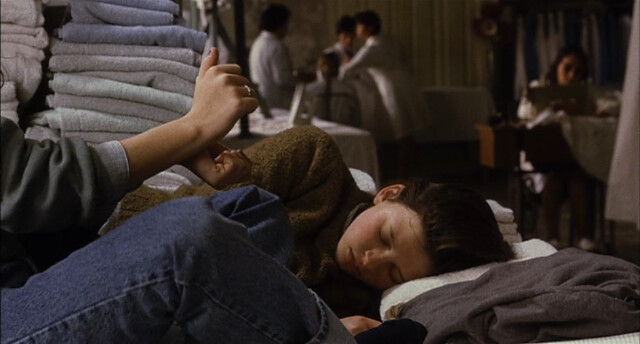
Compared to bombastic, unsubtle satires and social commentaries that we are used to, Lucrecia Martel puts some perspectives on how they should be done, masterfully in La Ciénaga (The Swamp). Taking place in the decaying manor in the jungle in one unbearably hot and sticky Summer in Argentina, the film illustrates the murky underbelly of bourgeoisie without delving into surrealism or making caricatures out of characters. Mecha (Graciela Borges) is seen sunbathing while drunk along with the rest of the inebriated grownups of the house by the pool side. After demanding ice cubes for her wine, she slowly rises in her stupor, tries to collect filthy wine glasses, drops them, falls on top of the shards. The rest of the family are not much better. The emasculated, husband keeps dying his hair and staining the sheets, the 15 year old Momi (Sofia Bertoloto) is obsessed with the pretty native housemaid Isabel (Andrea Lopez), the older daughter Vero (Leonora Balcarce) flirts with her ne're-do-well grown up brother José, who's living with a much older family friend, Mercedes in Buenos Aires, visiting after Mecha's fall and doesn't seem to have problem jumping in mother's bed for a cuddle. Young Joaquin lost one of his eyes while horsing around in the jungle with other boys.

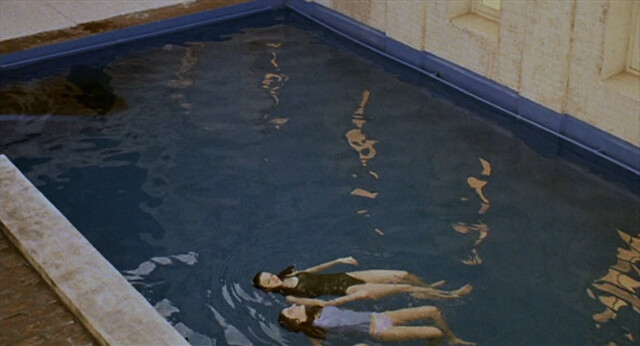
Tali (Mecedes Moran), concerned cousin of Mecha shows up with her family (a grumbling husband, 3 girls and one boy who figure largely into the story later on), not only to check on her cousin but also use the pool for kids who are bored out of their minds. The said pool, neglected and not cleaned for years, is filthy, murky grey disease breeding ground. Isabel warns Momi not to go in there- she might catch something terrible. The contempt for native population is totally out in the open from Mecha down to Joaquin, casually calling them savages and accuse Isabel of constantly stealing towels. With TV always in the background, everyone, across the social strata, is drawn in by the news of appearance of Virgin Mary on top of a cement tower.

With amazing array of characters and richly contrasting social stratification not only in a familial but geographical and cultural, La Ciénaga is a complex examination of a society still steeped in colonial legacy and religion.

La niña santa/The Holy Girl (2004) - Martel
71a923c2-9137-4081-a85e-4618f5859055_zpsgwq9padw
f6d54976-796a-4f21-9eec-e9b3789860fa_zpsr4hjtubx
5411cf9a-a200-48d4-8798-d9a3d523e75e_zpsr9fxlewt
e1efc07f-f5b0-4f8a-b447-651c72c46d39_zps4lxtigpu
16eeacdf-9acf-44da-83c4-b13f7c8031f9_zps8hmg0qui
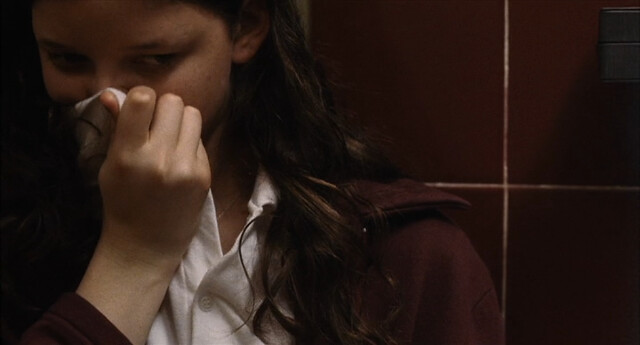
Amalia (María Alche), a sullen teen girl, lives with her divorced mom Helena (Mercedes Morán) in an old hotel with a thermal pool where mom works as a representative. She attends bible study group with her catholic school girl friends and recite prayers under her breath obsessively. Lately, she is obsessed with 'vocation'. A ear-nose-throat doctors convention is taking place in the hotel. Amalia finds herself being an interest of Dr. Jano (Carlos Belloso), a married man with kids, when he rubs against her bottom in the crowd gathered for a theremin player just outside the hotel. On the verge of sexual awakening with the help of a promiscuous, gossipy best friend Jose(fina), the experience leaves her not repulsed but curious.

She soon becomes obsessed with Jano, sneaking into his shared room, smelling his shaving cream, following him and spying on him at the poolside. Whatever this man means to her, her obsession becomes her 'vocation'. Jano's guilty conscience is not helping Amalia's cause. To make matters worse, Helena finds him attractive as well.

Martel proves to be the master of close-ups and shallow focuses. The details of the senses and small moments she captures on screen - touch, smell, whispers make up the film's superbly orchestrated, organic feel. All the connective tissues of the film are all spread out- the fact doctors are ear-nose-throat specialists - whispers and misheard information, smell, singing, but her approach is so subtle and fluid, you can't help but admire her skills. The Holy Girl is about Amalia as much as it isn't. The film's sordid details of the lives of middle class bourgeoisie can be seen as Almodovar-esque melodrama. But as in all Martel's films there is always a it's-barely-there-but-there satire. I can't really think of any director working today who works on Martel's level. The Holy Girl is a true cinematic feat!

Zama (2017) - Martel
zama
Lucrecia Martel suggested in her introduction to her sold-out screening of the much anticipated follow-up to Headless Woman that we audience might want to take in Zama like a whiskey. Indeed, it's a heady, at times bitter, at times sweet hallucinatory trip to the heart of darkness, showing the white man's identity crisis and misguided manifest destiny in the colonial era Latin America.

The film is a historical period piece, based on the much praised Latin American classic literature by Antonio di Benedeto. It's a hugely ambitious undertaking for Martel with just 3 films under her belt. But if anything, Zama confirms Martel one of the greatest directors of our time. Her mastery over the medium both in complex narrative storytelling and technical ingenuity has grown to exceptional height with Zama.

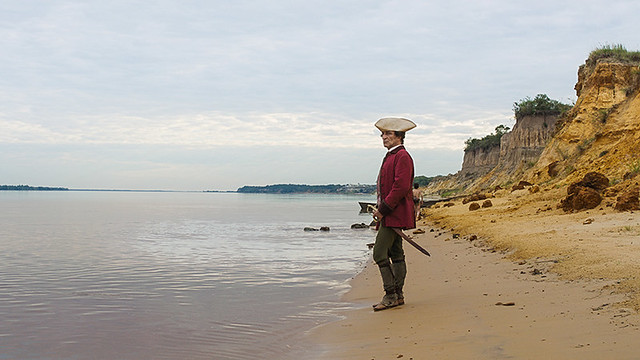
Don Diego de Zama (Mexican actor Daniel Giménez Cacho with an impressive Romanesque nose), a magistrate stuck in some unnamed South American colonial town deep inland in the 18th century, is anxiously awaiting to hear from the Crown (of Spain), his new assignment to the city. Even though he is a man of certain position and been stationed there for a while, he can't ever seem to get ahead or get what he wants - the letter of transfer never materializes, his rival Ventura (Juan Minujín) is much better at kissing asses and the local society lady de Luenga (Lola Dueñas) flirts with him but wouldn't give in.

Zama doesn't fair well with the natives either- seen in the beginning peeping at nude women taking mud bath and getting caught. He also has a nagging native woman he had an invalid child with. And the thought of the existence of this child weighs in his conscience like a brick. His misplaced valor to protect three virginal sisters is always overshadowed by the overhanging threat of a mythical bandit named Vicuña Porto who is notorious for raping and pillaging.

After physically threatening Ventura over de Luenga, Zama is demoted and moved out of his semi-opulent living quarters to a squalor with rotting walls, just outskirts of a city. At the governor's insistence and a promise of recommendation letter to the Crown, he delivers a scathing review of a book written by a well-meaning, trusting young civil servant (the governor can't stand the thought of the young man wrote the book while on the job). But no matter how many favors, how many people he fucks over, Zama realizes that he won't be leaving the backwater town any time soon.

Fallen out of favor and aging, Zama reinvents himself as a guide to the band of soldiers in the late stages of colonization. As they advance inland, they are terrorized by the red body paint natives who populate the land. Fighting with the elements and among themselves (one of the soldiers claims to be the elusive Vicuña- is he really? Does it even matter?), Zama and the men get completely lost in the strange land.

There have been countless other films about the white men's delusion of grandeur- Aguirre, Wrath of God and Apocalypse Now! easily come to mind. With Zama, along with lyrical Jauja few years back, directed by fellow Argentine Lisandro Alonso, Martel captures the existentialist angst in the age of colonialism/ad infinitum in Latin America with astonishing efficiency and grace. Shooting digital for the first time, Martel and her Portuguese DP Rui Poças (Tabu, The Ornithologist, To Die Like a Man), create lush, bright palates that are intoxicating and hallucinatory.

Martel's mastery of the cinema medium as sensory medium first and foremost is nothing short of brilliant. She subjects us to painterly framing and exceptional sound design in every scene. Those of you who followed her trajectory closely through La Cienaga, Holy Girl and Headless Woman and have been admiring her artistry will be richly rewarded here - a carefully measured framing where people's faces are just off the frame, shallow depth of field, soft focus, the full use of background/foreground and the use of dialog fading in and out with internal monologue thrown in, just to name a few.

She also uses the Shepard Tone whenever there is a dramatic moment for Zama. The tone is an illusory aural phenomenon that creates continuously swelling sound which builds tension and suspense. All these are very simple methods and not radical experiments at all, but it's Martel's simple approach that makes everything so fresh and radical. As you watch Zama, you can't help but feeling that you are watching a true cinematic masterpiece.

Finding the Latin American identity, as European settlers and their offspring, has been the continuous source for great literature over 300 years. Throw in the idea of class, masculinity, racism, sense of belonging, you get a very complex picture of what makes up the theme of Zama.

As usual, in Martel's hands, what seems to be an extremely messy affair at first, the sense of cohesiveness emerges from the chaos, then the sense of warm comfort wraps around the whole experience. Even though Zama is a lost character who goes through traumatic experiences, there is sense of catharsis that is reached in the last moments of the film. That he finally found home, that he reached his el dorado, imagined or otherwise. Zama is a utterly brilliant film. See it on the big screen if you can.

Thursday, October 5, 2017

Quiet Catharsis

Zama (2017) - Martel
zama
Lucrecia Martel suggested in her introduction to her sold-out screening of the much anticipated follow-up to Headless Woman that we audience might want to take in Zama like a whiskey. Indeed, it's a heady, at times bitter, at times sweet hallucinatory trip to the heart of darkness, showing the white man's identity crisis and misguided manifest destiny in the colonial era Latin America.

The film is a historical period piece, based on the much praised Latin American classic literature by Antonio di Benedeto. It's a hugely ambitious undertaking for Martel with just 3 films under her belt. But if anything, Zama confirms Martel one of the greatest directors of our time. Her mastery over the medium both in complex narrative storytelling and technical ingenuity has grown to exceptional height with Zama.

Don Diego de Zama (Mexican actor Daniel Giménez Cacho with an impressive Romanesque nose), a magistrate stuck in some unnamed South American colonial town deep inland in the 18th century, is anxiously awaiting to hear from the Crown (of Spain), his new assignment to the city. Even though he is a man of certain position and been stationed there for a while, he can't ever seem to get ahead or get what he wants - the letter of transfer never materializes, his rival Ventura (Juan Minujín) is much better at kissing asses and the local society lady de Luenga (Lola Dueñas) flirts with him but wouldn't give in.

Zama doesn't fair well with the natives either- seen in the beginning peeping at nude women taking mud bath and getting caught. He also has a nagging native woman he had an invalid child with. And the thought of the existence of this child weighs in his conscience like a brick. His misplaced valor to protect three virginal sisters is always overshadowed by the overhanging threat of a mythical bandit named Vicuña Porto who is notorious for raping and pillaging.

After physically threatening Ventura over de Luenga, Zama is demoted and moved out of his semi-opulent living quarters to a squalor with rotting walls, just outskirts of a city. At the governor's insistence and a promise of recommendation letter to the Crown, he delivers a scathing review of a book written by a well-meaning, trusting young civil servant (the governor can't stand the thought of the young man wrote the book while on the job). But no matter how many favors, how many people he fucks over, Zama realizes that he won't be leaving the backwater town any time soon.

Fallen out of favor and aging, Zama reinvents himself as a guide to the band of soldiers in the late stages of colonization. As they advance inland, they are terrorized by the red body paint natives who populate the land. Fighting with the elements and among themselves (one of the soldiers claims to be the elusive Vicuña- is he really? Does it even matter?), Zama and the men get completely lost in the strange land.

There have been countless other films about the white men's delusion of grandeur- Aguirre, Wrath of God and Apocalypse Now! easily come to mind. With Zama, along with lyrical Jauja few years back, directed by fellow Argentine Lisandro Alonso, Martel captures the existentialist angst in the age of colonialism/ad infinitum in Latin America with astonishing efficiency and grace. Shooting digital for the first time, Martel and her Portuguese DP Rui Poças (Tabu, The Ornithologist, To Die Like a Man), create lush, bright palates that are intoxicating and hallucinatory.

Martel's mastery of the cinema medium as sensory medium first and foremost is nothing short of brilliant. She subjects us to painterly framing and exceptional sound design in every scene. Those of you who followed her trajectory closely through La Cienaga, Holy Girl and Headless Woman and have been admiring her artistry will be richly rewarded here - a carefully measured framing where people's faces are just off the frame, shallow depth of field, soft focus, the full use of background/foreground and the use of dialog fading in and out with internal monologue thrown in, just to name a few.

She also uses the Shepard Tone whenever there is a dramatic moment for Zama. The tone is an illusory aural phenomenon that creates continuously swelling sound which builds tension and suspense. All these are very simple methods and not radical experiments at all, but it's Martel's simple approach that makes everything so fresh and radical. As you watch Zama, you can't help but feeling that you are watching a true cinematic masterpiece.

Finding the Latin American identity, as European settlers and their offspring, has been the continuous source for great literature over 300 years. Throw in the idea of class, masculinity, racism, sense of belonging, you get a very complex picture of what makes up the theme of Zama.

As usual, in Martel's hands, what seems to be an extremely messy affair at first, the sense of cohesiveness emerges from the chaos, then the sense of warm comfort wraps around the whole experience. Even though Zama is a lost character who goes through traumatic experiences, there is sense of catharsis that is reached in the last moments of the film. That he finally found home, that he reached his el dorado, imagined or otherwise. Zama is a utterly brilliant film. See it on the big screen if you can.

After two soldout screenings, NYFF decided to add the third screening of Zama on the last day of the festival, 10/15. For tickets and more info, please visit FSLC website.

Thursday, May 11, 2017

Holy Cinema, in the Subtlest Possible Way

La niña santa/The Holy Girl (2004) - Martel
71a923c2-9137-4081-a85e-4618f5859055_zpsgwq9padw
f6d54976-796a-4f21-9eec-e9b3789860fa_zpsr4hjtubx
5411cf9a-a200-48d4-8798-d9a3d523e75e_zpsr9fxlewt
e1efc07f-f5b0-4f8a-b447-651c72c46d39_zps4lxtigpu
16eeacdf-9acf-44da-83c4-b13f7c8031f9_zps8hmg0qui
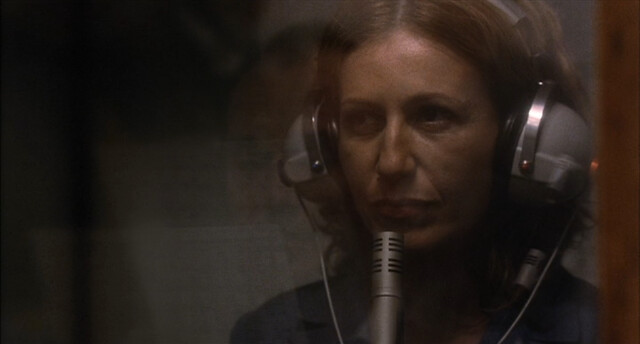
Amalia (María Alche), a sullen teen girl, lives with her divorced mom Helena (Mercedes Morán) in an old hotel with a thermal pool where mom works as a representative. She attends bible study group with her catholic school girl friends and recite prayers under her breath obsessively. Lately, she is obsessed with 'vocation'. A ear-nose-throat doctors convention is taking place in the hotel. Amalia finds herself being an interest of Dr. Jano (Carlos Belloso), a married man with kids, when he rubs against her bottom in the crowd gathered for a theremin player just outside the hotel. On the verge of sexual awakening with the help of a promiscuous, gossipy best friend Jose(fina), the experience leaves her not repulsed but curious.

She soon becomes obsessed with Jano, sneaking into his shared room, smelling his shaving cream, following him and spying on him at the poolside. Whatever this man means to her, her obsession becomes her 'vocation'. Jano's guilty conscience is not helping Amalia's cause. To make matters worse, Helena finds him attractive as well.

Martel proves to be the master of close-ups and shallow focuses. The details of the senses and small moments she captures on screen - touch, smell, whispers make up the film's superbly orchestrated, organic feel. All the connective tissues of the film are all spread out- the fact doctors are ear-nose-throat specialists - whispers and misheard information, smell, singing, but her approach is so subtle and fluid, you can't help but admire her skills. The Holy Girl is about Amalia as much as it isn't. The film's sordid details of the lives of middle class bourgeoisie can be seen as Almodovar-esque melodrama. But as in all Martel's films there is always a it's-barely-there-but-there satire. I can't really think of any director working today who works on Martel's level. The Holy Girl is a true cinematic feat!

Monday, December 19, 2016

My Top 10 Discoveries 2016

This is more like a year end summery of my viewing habits. It pains me that I wasn't more adventurous this year and didn't dig deep enough to see more films, because it is evident that I watched more interesting stuff earlier in the year than later. I'll be more adventurous next year I hope.

Hunter (2015) - Scott Barley
3200254a-3a7b-4526-a62a-92dfbed96449_zpsr6wtr3b4
2016 started with a bang for me. In the KG Artist section at the torrent site, I discovered Scott Barley's work. Dark, mysterious and touching, his portrayal of beautiful loneliness deeply affected me. I've devoured everything the young artist has to offer. I contacted him and to my surprise, he responded and our correspondence resulted in an in-depth interview. There were other short experimental stuff I checked out too, notably:

Crystal World
(2013) - Pia Borg
crystal world2_zpsdetj4ha8

Then I watched
La Cienaga (2001) - Lucrecia Martel
tumblr_obo160iKlZ1r6kxjco4_1280
and I don't have to tell you how great it is. Lucrecia Martel is, borrowing an esteemed fellow filmmaker Christoph Hochhäusler's own words, "she is one of the world's greatest filmmakers working today".
Just like La Cienaga, there were certain well regarded films I've been neglecting to see for a long time, but finally visited and found their greatness:

Long Day Closes
(1992) - Terence Davies
51050a98-2865-4803-8224-2336472e4abc_zpsaxspigbh
The World (2004) - Jia Zhangke
d6469c56-0abb-45e6-8f3f-aa9b8f1206ac_zps8r4jkfzy
and
Last Year at Marienbad (1961) - Alain Resnais
Screen Shot 2016-11-20 at 6.25.28 PM
Great, all great stuff...

Found Garrel's self-reflexive artistry delicate and delicious:
Jealousy (2013) - Philippe Garrel
f1f5811c-b579-4eb4-9fa1-389b0475c28d_zpsm7j0qt7z

Then there was the heady world of Alexander Kluge to plunge into
Die Macht der Gefühle/The Power of Emotion (1983) - Alexander Kluge
0e481f78-2518-471f-b8bb-5b3d4bd4ecd2_zpsdizwfetx
Der Angriff der Gegenwart auf die übrige Zeit/The Assault of the Present on the Rest of Time (1985)
Screen Shot 2016-12-15 at 9.25.44 PM

Also discovered the sensual world of Brazilian director Gabriel Mascaro
Ventos de Agosto/August Winds (2014) - Gabriel Mascaro
Ventosdeagosto_still_001_credito_beto_figueirora_300dpi

Then I dug into exciting world of Giallo and experienced first hand the sensual violence and the batting eyelashes of Edwige Fenech
abffcb2d-6a3d-4ced-98fc-d8ac4b297f1c_zpspo0i7482
and watched her in many giallos, especially in
All the Colors of the Dark (1972) - Sergio Martino
99e2f782-d1b3-4bd4-9748-f0291e01bd91_zpsagjkwsgr
also discovered that trudging through a dozen notable giallos that a good giallo is hard to come by. Other notable ones (But not as good as All the Colors) are - Strip Nude for Your Killer (1975) and Your Vice is a Locked Room and Only I Have the Key (1972)

Sunday, January 31, 2016

Subtle, Masterful Satire

La Ciénaga (2001) - Martel
 photo 2a3b598d-44dd-4619-b86a-9fc5096808fa_zpsx2cutnzm.jpg
Compared to bombastic, unsubtle satires and social commentaries that we are used to, Lucrecia Martel puts some perspectives on how they should be done, masterfully in La Ciénaga (The Swamp). Taking place in the decaying manor in the jungle in one unbearably hot and sticky Summer in Argentina, the film illustrates the murky underbelly of bourgeoisie without delving into surrealism or making caricatures out of characters. Mecha (Graciela Borges) is seen sunbathing while drunk along with the rest of the inebriated grownups of the house by the pool side. After demanding ice cubes for her wine, she slowly rises in her stupor, tries to collect filthy wine glasses, drops them, falls on top of the shards. The rest of the family are not much better. The emasculated, husband keeps dying his hair and staining the sheets, the 15 year old Momi (Sofia Bertoloto) is obsessed with the pretty native housemaid Isabel (Andrea Lopez), the older daughter Vero (Leonora Balcarce) flirts with her ne're-do-well grown up brother José, who's living with a much older family friend, Mercedes in Buenos Aires, visiting after Mecha's fall and doesn't seem to have problem jumping in mother's bed for a cuddle. Young Joaquin lost one of his eyes while horsing around in the jungle with other boys.

Tali (Mecedes Moran), concerned cousin of Mecha shows up with her family (a grumbling husband, 3 girls and one boy who figure largely into the story later on), not only to check on her cousin but also use the pool for kids who are bored out of their minds. The said pool, neglected and not cleaned for years, is filthy, murky grey disease breeding ground. Isabel warns Momi not to go in there- she might catch something terrible. The contempt for native population is totally out in the open from Mecha down to Joaquin, casually calling them savages and accuse Isabel of constantly stealing towels. With TV always in the background, everyone, across the social strata, is drawn in by the news of appearance of Virgin Mary on top of a cement tower.

With amazing array of characters and richly contrasting social stratification not only in a familial but geographical and cultural, La Ciénaga is a complex examination of a society still steeped in colonial legacy and religion.