I've come across many visual artists/filmmakers since I started this blog. Most of them have been for Twitchfilm during film events, such as festivals, promotions for their film releases, etc. An interview usually lasts 15 to 20 minutes. I get 30 minutes if I am lucky. The PR firms usually keep a tight schedule and you have to be very alert and ready to get what you want out of these artists. It's not always easy. There are always huddles- the New York traffic, the timing of the day (early vs later interviews), weather, technology malfunction (cell phones, skype and my 10 year old ipod with a microphone), individual characters of the artists themselves. But I'm not really complaining. I get to meet some of my heroes and discover many interesting artists. Since I've been doing this for a while now, I think I'm getting pretty good at asking the pertinent questions to satisfy my preoccupations. But at the same time, I've always felt 20 minutes is nary enough to scratch the surface: to find out someone's artistic point of views or artistic processes or personalities or crafts or philosophy on their practices, or anything for that matter.
I've come across Scott Barley's work at a film torrent site. The screen caps and description of the film look intriguing. And it was marked as KG Artist (filmmakers who upload their own work on Karagarga torrent site). Watching Barley's
Hunter for me, was a watershed moment. I was immediately drawn to his beautiful, mesmerizing images. The mood and mystery and melancholy he conveyed in that short, majestic film was exactly what I've been looking for in films both as an adventurous spectator and occasional practitioner. I pm'd him immediately and to my surprise, he responded. And that's how our correspondences began.
As much as I love narrative filmmaking, I strongly believe film is a sensory medium first and foremost. And the medium still remains to be the most exciting art form, still founding its ways and holds a lot of possibilities. As I go through Barley's films one by one, they give me a strong sense of assurance in my belief that it is not foolish to think that
film is not only not dead but only just have begun living despite all the naysayers.
Preparing for Barley's interview, I decided to take a different approach: I'd send him questionnaires and he'd take time to reply. There'd be less pressure and it would be more in-depth. Indeed. What you are about to read is quite a long and completely unedited correspondence, between an interviewer who is very much excited about discovering an artist & his practice and the subject who generously pouring his heart out.
Barley is a prolific artist whose background conveys wide range of artistic practices - painting, music, literature, constantly working, outputting his thoughts and visions in many forms. I just finished watching
Closer- his David Bowie tribute film/poem. It's achingly beautiful. Wise and intelligent beyond his years, it has been a truly inspirational experience to communicate with him. For that, I thank him from the bottom of my heart. So without further a do:
For the readers, I can't not mention how I found your work first - at an elite film torrent site. Therefore I can safely assume that your cinephilia runs deep. For many filmmakers I know, there was one defining moment in their lives how viewing of a particular film turned them into being a filmmaker. You mentioned Stan Brakhage, Phil Solomon and Michael Snow at some point in your career. I am wondering if there was such a film that made you pursue your career as a filmmaker. And who are some of your biggest influences on your work?
Scott Barley: Well, there have been quite a few “milestones” in my life that have really defined a strong sense of a creative path for me; not just films. Please bear with me, as I trudge sporadically through them - and the in-betweens.
Cinema actually came quite late to me, when I was 14. On a whim, I went to see
Pan’s Labyrinth in the cinema with my father. I had never seen a foreign film before then, and had no idea going in to the theatre what
Pan’s Labyrinth was about, or even that it was in another language. But the film spoke directly to something nebulous yet very concrete, beyond the surface of my self, in a way that no film I had seen before had done. It transcended language. It was an epiphanic moment for me; this understanding: language was no longer necessary to understand or feel on a fundamental level. It was more fundamental than language. It was simply humanness. I was not a big “film person”, and
Pan’s Labyrinth changed everything. I didn’t know that films could do this to you. It moved me to tears, and while watching the film, I felt like my heart stopped several times. I remember getting so frustrated with friends in school, who dismissed or ridiculed the film, simply because it had subtitles.
Pan’s Labyrinth taught me something which I’ve lived by very strongly to this day, and will continue to do so for the rest of my life: let art and experience wash over you like an ocean. Submit to it. Don’t think too much. Just feel.
I felt very alone in my teenage years, and art - however - or rather, the more - dissonant, stygian, and difficult - became my refuge. I am a romantic, very sensitive and idealistic to this day, and art felt purer than the exterior world, and more in line with my own interior world. I liked simply “feeling”, whereas the exterior world - however insidiously - seemed to portray this notion that feelings were a superfluity.
Before
Pan’s Labyrinth, I wrote a lot. I used to write many poems and stories. I was obsessed with language. For many years from the age of 7, I would go to bed each night, reading the dictionary from page to page, memorising the words and their definitions. I would practice my cursive for hours on end, on the same letter, for no reason other than my own unorthodox recreation. I loved the ability to express myself with exactly the right word, even if others didn’t necessarily understand what I meant; at least I knew that I was being earnest, truthful, and precise. From the age of 7, I read a lot of King and Poe. I loved Poe in particular; his eruditeness and (what the philistines call) ’verbosity’, but also the rigour to it. That has remained the same to this day; my love for Krazsnahorkai, Proust, and Joyce in particular knows no bounds. Naturally, being a lover of Poe, I was drawn to the darkness. I am a nyctophile; both literally and metaphorically. I feel most at ease under the cloak of darkness, adrift within tenebriousness and the undeterminable. I had a rule: I would only ever create, or watch, or read at night; for that was when I was at my most percipient, and when I felt most in-tune with the experiential resonance of the “art world”. The only oil that I burned was Midnight’s.
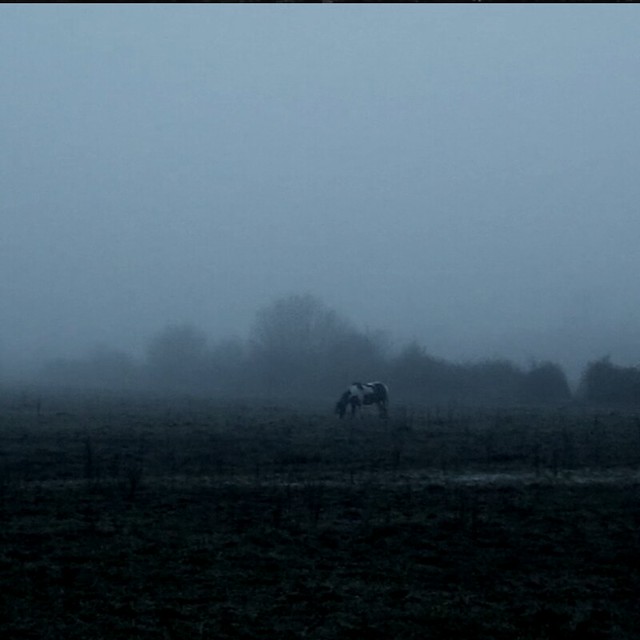 The Ethereal Melancholy of Seeing Horses in the Cold
I was not particularly interested in or understanding of visual arts before
Pan’s Labyrinth. But after that film, I became very passionate about it, as well as mood, experimentation, and allegorical work, but I was not yet making films; not for another 5 years or so. I left writing behind a little, and from 15 on-wards, I was doing a lot of painting instead. I loved Bacon, Auerbach, Kossoff, Kiefer: the masters of emotional darkness and texture. For a little while, I was simply regurgitating the things that I loved in a lesser form. But as time went on, I found that I was able to truly draw from my own feelings, and still inherently capture what drew me to those artists in the first place: the personal, art that scarred, art that acted as a nepenthe or catharsis, and the obfuscation - either through texture, or the literal Latin origin of the word: ‘fuscus’, meaning, the ‘dark’. I believed that genuine art could only be created when you submitted yourself to - and embraced your own - vulnerability, and to be entirely authentic and honest; essentially, you had to pour your soul into it. That has remained the same ever since, and is probably the most important element of my own creative praxis. To paraphrase Cassavetes: you must dare yourself to fail. Why bother, if you’re not going to put yourself on the line?
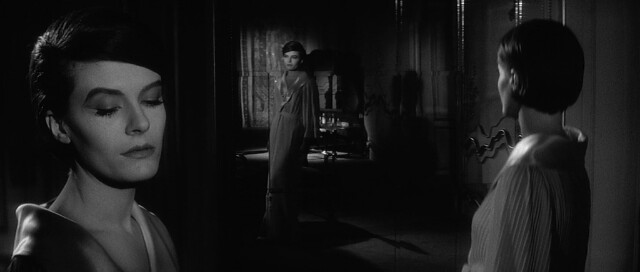
When I was 16, I discovered Bergman. I think
Persona is THE gateway drug for cinema lovers. That film changes you biologically, and by the time the film reel in the film stops, and the light goes out, your DNA is different; you are then far more perceptive to - for a lack of better words - “artistic” or “difficult” cinema. I am drawn to that sort of work: art that changes you from who you were before you experienced it. After Persona, my love for cinema became akin to a snowball gathering speed as it descends from the summit. I would watch up to 40 films of varying lengths in a weekend. I would do nothing else. It’s a miracle that deep-vein thrombosis didn’t set in. Then I discovered Tarr, and perhaps more so than any other of my personal experiences with art, it changed me. Upon experiencing
Werckmeister Harmonies, I felt like I had an out-of-body experience. My body surrendered and I saw my soul, stark, fragile and utterly naked before me - for the first and only time in my life. It moved me to tears. I shook a lot. It completely changed me. Words cannot do any justice.
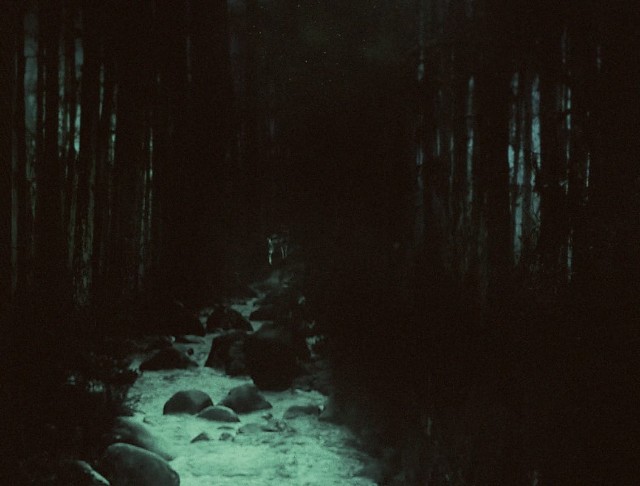
 The Sadness of Trees Part 2
In my first year of university, I became obsessed with avant-garde, particularly lyrical avant-garde, like Phil Solomon, Stan Brakhage, Jean-Claude Rousseau, and Nathaniel Dorsky, and they remain my favourites to this day.
As for elite film torrent sites, like Karagarga - they interest me. I don’t always fully agree with what is shared on there. An artist needs to be paid for their work, just like anybody else, but I feel very passionate about the idea of bringing down the walls of economic elitism and socio-political censorship that prevent a lot of people from accessing vistas of great esoteric cinema, music, and literature. But I still think that sites like Karagarga could do a lot more to ameliorate that problem. I would never share any other artist’s work on Karagarga. I only upload my own work - as that is the only work I have the moral authenticity and legitimacy to share with others online. I do share a lot of my cinephilia with my friends and younger students though, and throughout my degree I organised film screenings such as
La Région Centrale,
La Vallée close,
American Falls,
Meshes of the Afternoon… lots of Antonioni, Brakhage, Bresson, Godard, Yoshida, Epstein, a lot of Eastern European cinema from the 50s 60s and later too (that was my most earnest passion during that time) like Vláčil, Wiszniewski, Jan Jakub Kolski, Bartas, Tarr, Fehér, Stonys etc.
I was fighting for a more artistic environment that sadly, my university did not convey. It was a very philistine and anti-intellectual environment actually - not that I am an intellectual by any means, but I yearned for that sense of being a scholar, not simply a “regurgitatior" of other people’s “old” ideas. I wanted to embrace the new and unique, the daring. Lots of people, including the majority of the tutors, sadly, were afraid of feeling or of mystery - whereas for me, those are two of the most empowering elements of art - along with hope. Thankfully I was able to create a small Bande à part of friends who shared my passions and interests and that stopped me from going under.
As for literary influences in my life, they include Georges Bataille, Nietzsche, Camus, Barthes, Sartre, Hegel, Deleuze, Freud, Deleuze, Sontag, Blake, Beckett, Stanley Donwood, Joyce, László Krasznahorkai, Daphne du Maurier, Baudelaire, Pynchon - off the top of my head. Bataille and Sartre in particular are very present in my what I consider to be my best work (
Nightwalk,
Hunter,
Shadows) but I don’t consciously consider any of these things when making a film. I just “feel” my way through the dark - much like the (visual) content of the films themselves.
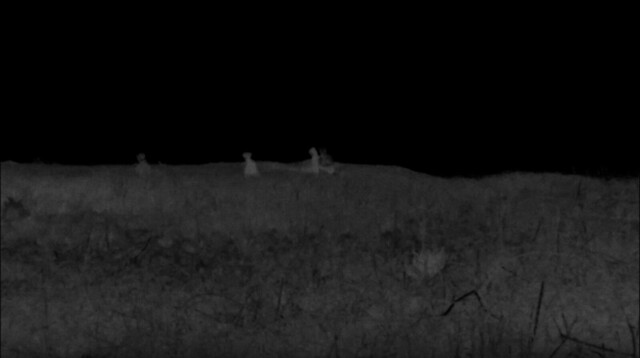 Nightwalk
I realise this may come across as being pretentious, but I have made a list of the filmmakers that I most admire, in the order they came from memory: Jean-Claude Rousseau, Béla Tarr & Ágnes Hranitzky, Phil Solomon, Nathaniel Dorsky, Michelangelo Antonioni, Pedro Costa, Pere Portabella, Yoshishige Yoshida, Barbara Meter, Stan Brakhage, Philippe Grandrieux, Sharunas Bartas, Wojciech Wiszniewski, Peter Hutton, Jack Chambers, Franco Piavoli, Jan Jakub Kolski, Maya Deren, Pier Paolo Pasolini, Éric Rohmer, Artavazd Peleshyan, Ingmar Bergman, Veiko Õunpuu, Konstantin Lopushansky, Dimitri Kirsanoff, Jean-Sébastien Nouveau, Jean-Pierre Melville, Zoltán Huszárik, Jean-Luc Godard, Aleksandr Sokurov, Robert Bresson, Marguerite Duras, Wang Bing, Bruce Baillie, Audrius Stronys, Kaneto Shindô, Jan Němec, Chantal Akerman, Andrzej Żuławski, Paweł Łoziński, Mikhail Kalatozov, Jean Marie Straub & Danièle Huillet, Amy Kravitz, Bill Viola, Guy Sherwin, Robert Beavers, Harun Farocki, Florence Pezon, Ben Rivers, Elem Klimov, Lav Diaz, Djordje Kadijevic, Jean Epstein, Raúl Ruiz, Dušan Hanák, Bert Haanstra, Mário Peixoto, Robert Todd, Tengiz Abuladze, Yorgos Lanthimos, Margot Benacerraf, Roy Andersson, Peter von Bagh, Abel Gance, David Gatten, Darezhan Omirbaev, Aleksandr Kajdanovsky, Walter Hugo Kouri, Pierre Perrault, Joris Ivens, František Vláčil, Michael Haneke, Yves Allégret, László Moholy-Nagy, Philippe Garrel, Allain-Robbe Grillet, Sergei Eisenstein, Larry Gottheim, Frans Zwartjes, Harmony Korine, Sava Trifkovic, Marjorie Keller, Grzegorz Królikiewicz, Andrei Tarkovsky, György Fehér, Mário Peixoto, Christian-Jaque, James Benning, Teinosuke Kinugasa, Nicolas Rey, Sara Driver, Piotr Dumala, Devin Horan, Terrence Malick, Wallace Berman, Jonathan Glazer, John Frankenheimer, Sohrab Shahid-Saless, Leighton Pierce, Maurice Pialat, Vitali Kanevsky, Vittorio De Seta, Vojislav Rakonjac, João César Monteiro, Jospeh Cornell, Jean Vigo, Werner Herzog, Bill Morrison, Jan Schmidt, Jean Daniel Pollet, Raymond Salvatore Harmon, Dore O., F.W. Murnau, Frank Borzage, Jacques Tourneur, Ken Jacobs, Jonas Mekas, Aleksandar Petrović, Sergey Loznitsa, Albert Serra, Charlie Chaplin, Jem Cohen, Saul Levine, David Perlov, Georges Franju, Werner Nekes, Miguel Gomes, Alan Clarke, Mike Leigh, Julian Schnabel, Aleksei German, Juraj Herz, Peter Nestler, José Val Del Omar, Martin Arnold, Djibril Diop Mambéty, Krzysztof Kieślowski, Dušan Makavejev, Jesse Richards, Matthew Allen, Mikel Guillen, Alfred Hitchcock, Stanley Kubrick, David Lynch, François Truffaut & Sylvain George.
Can you tell me the philosophy behind Remodernist Film Movement and how you incorporate it in your practice?
Well the story of how I got involved in Remodernist film is a very strange one. It was in my first year of university and one of the few good lecturers was discussing different film movements, and he somewhat threw shade on the Dogme 95 movement and said that a more recent movement, Remodernist film, was more interesting. Remodernist film seemed to speak to me very profoundly - what the founder, Jesse Richards talked about: the authenticity, the embracement of nuance and human fallibility, the autodidactic. That was very interesting. Anyway, later that same day, I was in a careers advice meeting, and I saw that I had several Facebook notifications come through on my iPad - and they were from a guy called, “Jesse Richards”. I couldn't believe it. It was uncanny, perhaps even fate. He had found my Facebook page of my paintings and early film work the same day I had learnt about him in university. I messaged him, telling him what a crazy thing this all was, and very quickly we became good friends, and we have worked on several projects together since. I consider him to be an idol of mine, a mentor, and yet he is the most down to earth person you could ever meet. A truly great, great man who has his heart and brain wholly in the right place. I am very interested in autodidactism, wabi-wabi, making yourself vulnerable, the anti-elitist element, the purity and liberation of it all really; the idea that the most perfect image cannot exist, but if it did, it would be imperfect anyway. It’s reassuring and a breath of fresh air. I think those things are littered both in front and behind the camera throughout my filmography.
 Evenfall
Certain melancholia and sadness are always present in your work, how much of it is related to your surroundings? How big nature figures in your work?
It’s related to my inner environment. I try desperately hard to speak from the soul, and for it to never be conceited. I try not to make anything if I don’t have something to say. Like I said previously, I am drawn to the darkness, I feel most comfortable in darkness, and so my films convey that, literally and metaphorically. And I believe in an interconnectedness within the universe, and so what I feel inside, I anthropomorphise and project on to the trees, the water, “the hand”, “the horse” etc. …There is an uncanny semblance of man in the spirit of the horse - the simultaneity of elegance and vulgarity… and also pathos - so I am naturally drawn to that creature in my work.
I also think that people who are self-aware can feel too much, and I am one of them, and so I purposely place myself in a vulnerable position when making films, so hopefully the process will act as a catharsis or nepenthe for what I am experiencing. It is a good way to combat negative feelings, in my experience. Whatever makes you afraid or anxious, just go for it!
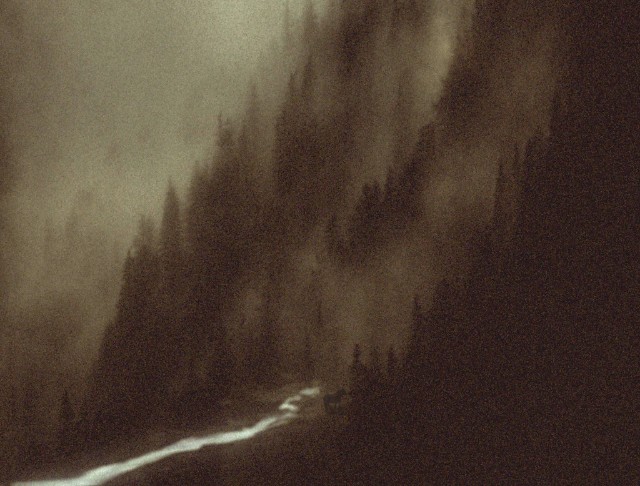
Hunter was a a very important film for me. I was suffering with very debilitating depression and that film perhaps saved my life. It sounds stupid, but it’s true. It gave me something to live for - just making something kept me occupied, and I poured all my feelings of utter aimlessness into something cohesive. The film itself is a mirror and meta-retrospective of my previous films and my own personal filmmaking praxis, as well as a comment on my own existential anxieties as a person and as an artist... It also mirrors life's evolution. From water, to land, to sky.
 Shadows
I remember that I had been editing
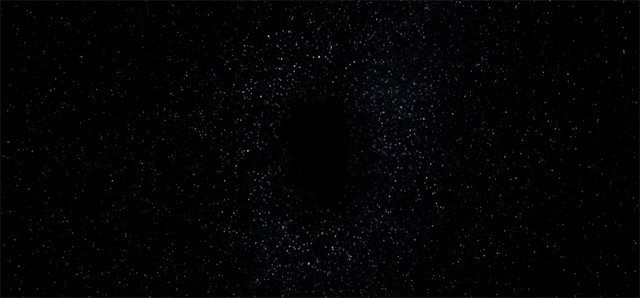
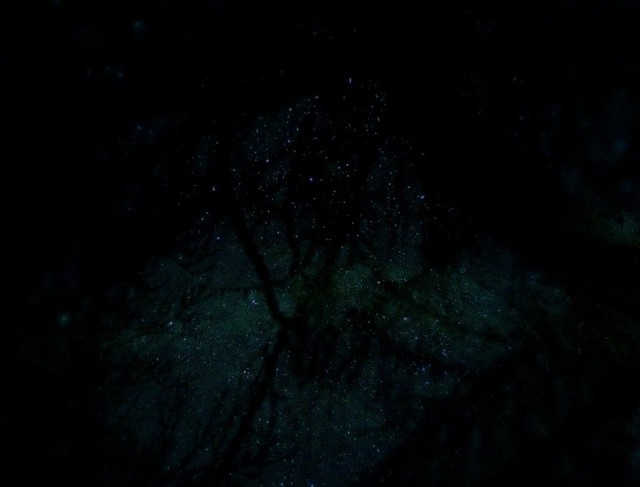
Hunter for a few months - every day, all day (I am a perfectionist when it comes to editing) and I was stuck on the shot of the horse, and I knew that that shot couldn't be the ending. I was frustrated. I didn't know how to end the film. So I went to sit outside in the garden. It was nighttime. I looked up at the stars, which were very clear and bright that night, and then quite suddenly an idea came to me, that gave me a sense of purpose - however tenuous it was: We know that science has proven that we are made of stars. We are literally stardust. And we also know that if we look at the Sun, we are witnessing it in the state it was just over 8 minutes prior to how it is in reality, now - because of how far the light has to travel. And then I thought, is it possible, that we could, on a clear night, look up at the vistas of constellations and see the very star that gave birth to us?; a ghost of our former self? And it gave me a sense of purpose, that perhaps, our only aim in the vastness of time and the universe, is to one day return to the stars that gave birth to us. And it was that thought that made me decide upon the ending of Hunter that you see in the film. I try to turn my melancholy in to something beautiful, but still keep it true. I think that people don't always realise just how vicinal sadness and beauty, or horror and beauty truly are. They are very closely aligned. They can blend into each other.
Polysemy is a big thing for me too with my work, and I encourage it. I think that polysemy is too often regarded as being a weakness rather than a strength in art. Some people seem to think that when a piece of work is interpreted in divergent ways that it says something about the lack of articulation in the artist. I couldn't disagree more. Whilst all my films have very strong personal meanings for me, I embrace multifarious interpretations, and often adopt stream-of-consciousness and intuition in my praxis. To be entirely honest, I have in the past, made an entire film, released it and still not known what it was, or why I did it “that way”. But a few months later, I understand - for me. I love the feeling of being lost when I create, or when I experience art. It permits you to search deeper in to your self. Your feelings know better than your logic. People think too much. We should learn to trust ourselves more. I have a vision – but I am not a dictator, and I don’t wish to assume or force anything. I love that people are able to project their own feelings, searches and life experiences on to my work. One person in particular got into contact with me, to tell me when he watched Hunter, he saw the hand as himself, reaching out for the woman he idolised and loved, whom he felt was always out of reach; she was the beyond: the water, the mountains, the stars. Since then, we have become good friends, and he recently told me that Hunter has inspired him to make a film of his own, to communicate his feelings for/to her. I’ve have been privileged enough to have been contacted by a few people, telling me how my films have changed their life, and even inspired a few of them to pick up a camera and make a film for the first time. You cannot ask for more than that. Hearing from people you have never met, and them sharing these personal feelings with you is ineffable. It makes “whatever-it-is-that-I-am-doing” worthwhile. In a way, I make films out of hope. And hope is a tenuous but underrated thing. It’s one of the most profound and precious of all things.
In my view, the filmmaking process is mine. Once the film is finished it is no longer mine. It is yours; it is anybody’s, and it can be whatever they wish it to be, and whatever suits, pleases, disgusts, angers, or I daresay, helps them. And of course, the creation of a film or any work of art is only the very beginning. It mutates and changes, and lives on in different, brilliantly unique people, within their mind, soul, dreams… under closed eyelids. Simply, it lives… It lives on - isn’t that wonderful?! I would not have it any other way.
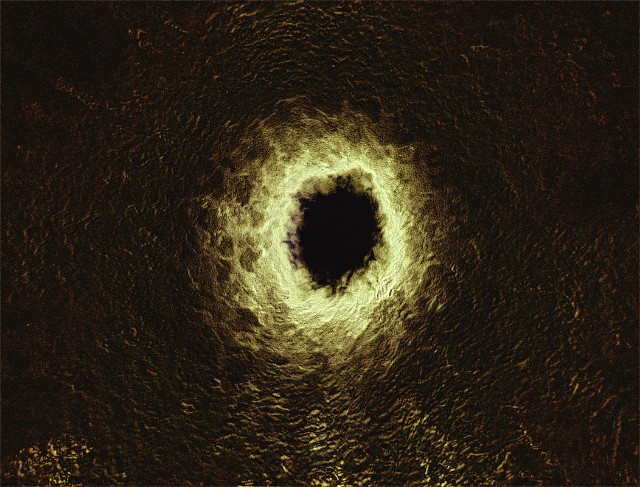
 Polytechnique
Loved the soundtrack on Polytechnique. Can you tell me your collaboration with Easychord on Polytechnique and how important is music in your artistic endeavor?
Music is a huge influence on my work too. The musician, Grouper (Liz Harris) has perhaps influenced my praxis more than anybody else. It’s that obscuration, the textures, the dark, the ethereality, the mood, and the catharsis that comes from unravelling pain and other emotions in one’s life. I could never thank her enough for what she gave me with her music. Also Radiohead, Portishead, Scott Walker, King Crimson, David Bowie, Neil Young, Ligeti, Penderecki, Death Grips - they are all very “cinematic” artists. They create worlds, characters…atmospheres. The rhythms of my films are based around music too. It is why some of my films are silent, and others are not. You have to feel the rhythm. I want to create “visual music” with my films. For me, cinema - in its purest form - is closer aligned to music and architecture in praxis than any other mediums.
For
Polytechnique, I was contacted by Roberto Siguera (Easychord), asking me if I would make a film for some of his new music. It was a pleasant surprise. We had not communicated previously. For a while, we talked about what we were both interested in… I remember James Benning coming up a lot at the time, and before I had the music, I had the impression that Roberto wanted something in a similar vein to my first film,
The Ethereal Melancholy of Seeing Horses in the Cold. But when I heard the music he had produced - this wonderful, low-frequency, pulsating echo chamber that resisted the corporeal and the concrete - I realised I couldn't make a film like “…Horses in the cold” for him. The music immediately made me feel like I was listening to my own body, as if I was a microscopic, lost traveller, traversing internal bodily terrain. I had recently been doing some purely recreational research into phenomenological concepts such as prisoners cinema, as well as concepts like astral planes, fundamental entity, and the primordial body (something which has become a huge part of my work as time has gone on), and I realised that the music had this quality to it of being dimensionless, but very present, abstract yet lucid too, so I worked around that when making the film. It took about four months to make, if I remember correctly. We never ever talked about it as a music video. It was always an “audio-visual collaboration”. We were both having fun, but we were serious about the project at the same time. It’s actually one of my favourite pieces of work that I have been involved in. I recently released a blu-ray of my work via my website for sale, and seeing and hearing
Polytechnique on blu-ray was a revelation for me. I saw these details, light streaks, textures, and abrasions in the film that I forgot I had put in. It’s also me at perhaps my most abstract. It was an honour for both of us that
Polytechnique was hand selected by Kim Kascone (assistant sound director on
Twin Peaks) for his Drone music cinema film festival in The Netherlands. It has that dark, drone-like quality, I think. I would love to do another collaboration with Roberto at some point. We discuss it now and again. I’m sure it will happen. It’s just finding the right time, and music, and idea.
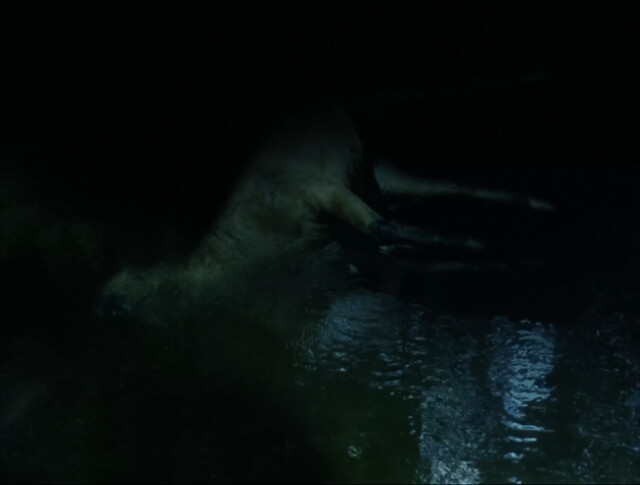 Hunter, Shot entirely on iphone 6 Plus
Hunter is absolutely stunning. Considering it is your more recent work and having seen your (relatively) older work on your vimeo page, I can see the progress/evolution of your style if you will. I feel that there is more stately and formalist approach in Hunter. Even though I take each of your film as its own entity singular piece of work, I'd like to know, as an artist how you yourself perceive the change and your directions with each project.
First of all, thank you. There is certainly a progression there. More rigour (I hope), more attention to detail, but still very much part of the same idea, the minimalism, the nature etc. Perhaps, more than anything, I am just paring back what was there before.
I think I have somewhat distanced myself, and I think Jesse has too - perhaps not consciously - from remodernist film more recently. Remodernist film still exists, but it has changed shape and matured. The remodernist element of my early work was more superficial - more to do with the “look” of the film. I wanted it to “look” autodidactic, amateurish, and nuanced. Hunter is still very much a remodernist film, but it has transpired beyond that into something that can only be found in the cracks, in the dark - if you look for it. The films have become more professional and polished, but the human sensibility, the human searching is still very much present. The abrasion and nuance doesn’t live so much in the actual film’s images anymore, but more so in what the images project in the spectator. The films have become more liminal. They're on the threshold of something. Darkness? The unknown? There’s something mercurial beyond the threshold that I want to make palpable when people watch Hunter and my more recent films… a hidden tension, but a powerful one, perhaps. It’s become much more about the “in-betweenness” for me now. As time has gone on, I understand that “aesthetic” can become a dangerous word, because I’ve realised that great art can only exist when you cannot separate the aesthetic from the form or the substance of the piece. They co-exist, and exist as one. Without the other, the other cannot be. So nowadays, the aesthetics of my films alter from film to film, but that is because they are governed by the substance of the film itself; the idea. They are innate and inseparable; born at the hip, as it were. Some films like Shadows actually change aesthetic, canon, mood, style and form, as the film progresses - because the actuality, context and meaning of the film dictates it so. I am not really in charge - the film is. The film tells me what to do.
How does the new technology figure into your working method? Is it just another way for artists to express themselves or is it necessity in 21st century?
Artists cannot always express everything that they wish, or need to convey in just the one medium. As an example, for me, I write, I paint, I make films, I make music. There are things I can do with film that I cannot do in writing, but at the same time, there are things that I can do in writing that I can’t do in film. That excites me: having a genuine reason to explore a different medium for your expression. That is what is so wonderful about film: it is a bastard. It is a bastardised medium, and so there is more “headroom” as it were to express yourself. I embrace all kinds of tech. I see different types of tech as akin to different mediums. They can be surprisingly independent of each other, depending on how you utilise them. I’ve shot stuff on a 240p camera with a 0.3 megapixel censor, through to an ARRI Alexa. Some of those who have the money to afford expensive kit think that suddenly makes them professional. Nothing could be further from the truth. It’s nothing to do with the kit. It’s all about how you choose to use it. And sadly, those people who think it’s all about the kit usually have no creative personality. They are faceless, forgettable, and very boring. The medium and tech you choose should be governed by what you wish to express. And so, no, I don’t think new technology is a necessity - outright. It all depends on what the artist is wishing to express, and what will enable them to have that suitable form of expression. I am really enjoying trying to push the tech of the iPhone at the moment. Hunter was completely shot on an iPhone 6 Plus, and it felt really liberating, going to an iPhone after lugging a heavy ARRI Alexa around on the previous project.
A project I am working on at the moment also features some of my hand-drawn illustrations composited into actual film imagery, so that’s exciting too. I’m just experimenting, and trying to avoid complacency. I embrace digital, but love film too. It’s all great, but they are definitely two separate mediums, and I think that we are only beginning to truly see what makes them different in a formal sense, or to begin to see artists truly utilising the differences of digital to film to achieve something that was unachievable with film. Take James Benning’s
Nightfall for instance, or Godard’s
Adieu au Language, or Phil Solomon’s
Rehearsals for Retirement. These projects are incredibly exciting - because these artists are fully embracing a medium, rather than having one foot in digital and one foot still in film. They have a courageousness and embracement for the new and unknown that most filmmakers lack.
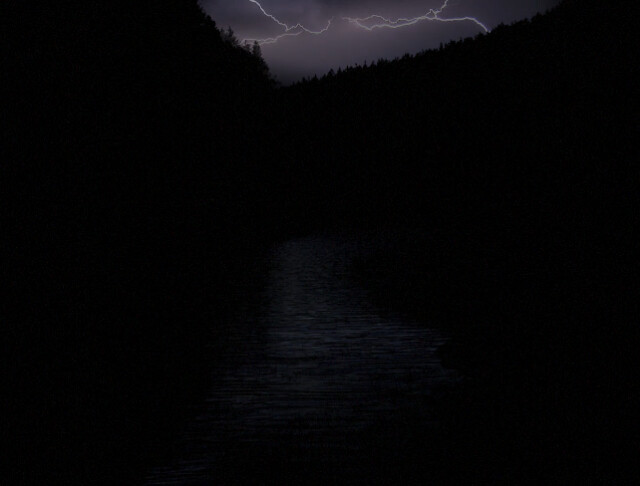
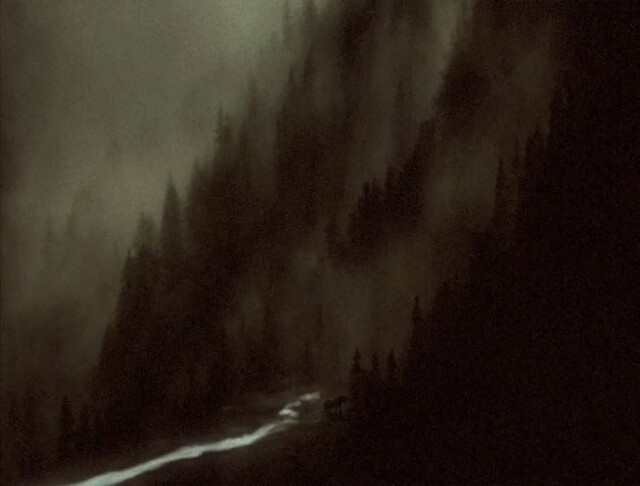
Stills and artwork from Sleep Has Her House:


 Tell me about new projects you are working on.
A few different things. I’m working on what might end up being my first feature,
Sleep Has Her House. It plays out very differently to my other work, in a formal sense. It's a very, very slow moving film. 10 minute takes. No camera movement. Only movement within the frame. An observation of the more profound elements of life that we don’t often pay attention to: The wind carrying the clouds across the sky… the light changing over time… animals moving through a scene… the moon being obscured by the clouds… and of course silence!… even nothing! That’s something I want to explore more: what qualities or elements does “nothing” harbour? I want to focus on that particular kind of nothing in my future work.
It is a film that I hope people will give themselves over too, and let it wash over them like an ocean. I embrace the idea of people falling asleep whilst watching it, and waking up later on - without that being a problem. I want it to have that very strong meditative quality. In a sense, it’s my idea of the apocalypse: how I see the world ending. It wouldn’t be violent or fast - not right at the end. People would already be long gone. The last few animals would dwell in the hills, in the fog. The film follows that idea. The animals sense that the end is coming and retreat deep into the forest. They cry out in the dark, as they fade into the black. That’s how it will end. A quiet, slow death. Not explosions or tears. Just a long quiet trill… like an elegy. Perhaps the quiet cry of the last animal, as they fade into the dark… into the ground. That’s all.
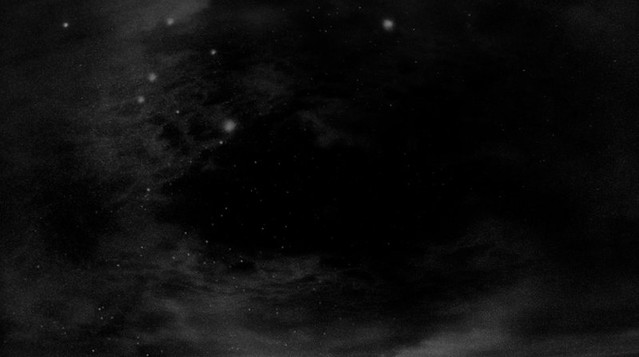 Too Young to Die
I have a very bad attention span, so at any time, I’m working on about half a dozen different films - most that never see the light of day. I like to switch between each project as I work through them, or when I start questioning myself too much - almost like when you stare at or repeat a word for so long that it no longer makes sense somehow. It also helps me improve each piece, as one technique that I use on one film may inspire me to do something that I had not thought of previously on another project that I had hit a creative block on. I’m sure some people will say it’s a terrible creative process, but it seems to work for me. So right now,
Too Young to Die is on hold (what originally was going to be my first feature), and
Sleep Has Her House is something I’m more focused on - but that might change!! I’m working on about four features right now, simultaneously.
I’ve also just finished a poem for an anthology book to celebrate the legacy of the late David Bowie. It will be published in the next couple of months, and all proceeds go to the charity, Cancer Research UK.
 Closer, shot in 4K, in 1:1 aspect ratio
Hunter
is getting a screening at The Museum of Modern Art, Mar del Plata, in Argentina on 12th February, 2016. That is a big deal for me. I started making films just a little over 3 years ago, and to have come to this point where my work is being screened in that sort of environment means more to me than I can eloquently put into words. It was around 2 years ago, that Phil Solomon and I became friends, and I am now screening a film of mine alongside his film,
Rehearsals for Retirement (in my view, the most sublime digital film ever made - and one of the most embracing of the digital medium too) at The Museum of Modern Art. I can't really get my head around that, and I have so much to thank Phil for, not least his comradeship of being part of this screening along with the "little fish" like myself.
Please visit
Scott Barley's website and support his artistic endeavours. Then go on over to
vimeo and check out his work.