Showing posts with label Experimental. Show all posts

Tuesday, July 14, 2026

Proof of Existence

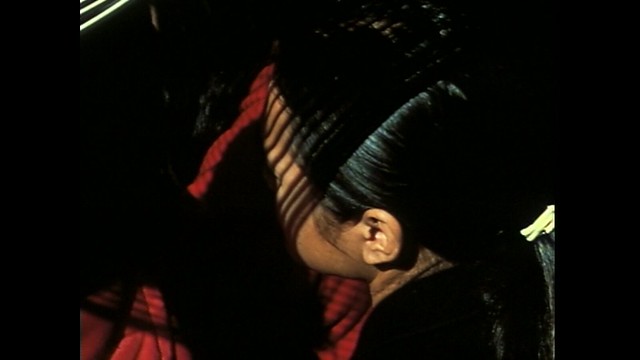
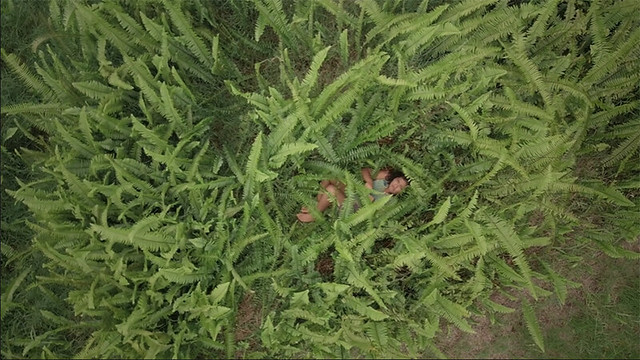
Mother, You Have Not Died Yet. But You Will. And When You Do, You Will Finally be Alive Again (2026) - Beni Mother key still_credit Advik Beni\ With perhaps the longest movie title that I've encountered, South African filmmaker Advik Beni's impressionistic film examines the post-apartheid Indian township of Cato Manor, near Durban, South Africa, still simmering with ethnic tension. It is told through Lishana, an Indian descendent who is caring for her aging, dying mother and her family history.

Lishana describes her grief after the hindi funeral ceremony, as she feels the void of her mother's presence in her everyday life - everything and nothing has changed at the same time. As memories of her mother, Leela, doing mundane things with her - cooking, tending to the garden, having conversations and eating together, persist, it's like the line between the past and the present is blurring.

Everyone deals with grief differently- Lishana delves into her art practice: portrait photography. With her relative's barbershop in town, she takes pictures of her neighbors and citizens of Durban - young, old, black, indian. And her photographs are physical links to the sordid history of colonialism, immigration, and apartheid.

Lishana's family history is an interesting one - Her grandmother was one of thousands of Indians brought in to South Africa to work in the sugarcane plantations, an indentured labor force by the Colonial British Empire. Lishana, who never had been to the homeland of her ancestors, nevertheless kept her Indian traditions and hindu culture within the working class neighborhood of Cato Manor. Her imagined India created a lore in her mind, much grander than the reality.

There has always been violence in KwaZulu-Natal province and the city of Durban both under apartheid and post-apartheid period. The 1949 Durban riot was against Indian settlement, then the unrest in 2021 amid economic hardship during COVID-19 and the imprisonment of former president, Jacob Zuma. Accompanied by archival footage, Lishana recounts the region's checkered history and ongoing tension and violence.

Shot on grainy film stock and shaky handheld camera, Mother... has the looks and feels of old ethnography documentaries of the bygone era. Beni also incorporates a multitude of art/film techniques that include stop motion, drawings, immersive sound design and reenactments. The filmmaker portrays a picture of an immigrant enclave using impressionistic film language, often focusing on life's little details - the color, sounds, ephemeral qualities of everyday life.

Merging past and present, personal and historical, the film has a quality of a lucid dream, where memories and imaginations merge and create new reality personalized for its subject. Mother, You Have Not Died Yet. But You Will. And When You Do, You Will Finally be Alive Again, is a beautiful audio visual experience. Mother, You Have Not Died Yet. But You Will. And When You Do, You Will Finally be Alive Again, enjoyed its world premiere at FID Marseille 2026 where it won the Audience Award. Visit the film's page at the official festival site for more information.

Wednesday, June 12, 2024

Metamorphoses

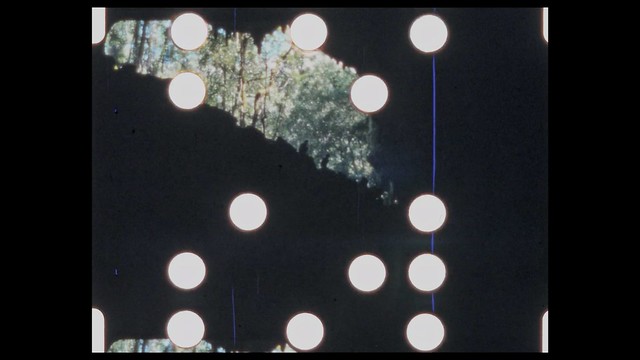
Ovid, New York (2024) - Rowlands Screen Shot 2024-06-11 at 8.43.39 AM Screen Shot 2024-06-11 at 8.44.21 AM Screen Shot 2024-06-11 at 8.44.39 AM Screen Shot 2024-06-11 at 8.45.23 AM Screen Shot 2024-06-11 at 8.33.06 AM Screen Shot 2024-06-11 at 8.29.00 AM Screen Shot 2024-06-11 at 8.39.08 AM Screen Shot 2024-06-11 at 8.41.01 AM New York based, Belgian filmmaker, Vito Rowlands' feature Ovid, New York, had a world premiere at Brooklyn Film Festival over the weekend. It's based on the Metamorphoses, an epic poem by a roman poet Ovid, who wrote about Greek and Roman myths. Shot in various parts of New York state (including the town of Ovid), in different seasons over time, Ovid, New York is an anthology of sorts in 7 chapters, varying in tones and genre. But as they play out, you make out their intricate connections - it's as if the chapters are in conversation with one another, and it's loads of fun. The look of the film, in wide screen format, mostly shot on a now discontinued old, super grainy Agfa film stock, with its bleeding colors, the dirt and blemishes left in, along with lens flare aberrations, does not resemble anything that's shot with super sharp and clean digital technology nowadays.

First, we are introduced to a lonely hunter in wintry landscape in wide presentation. He is hunting deer in the woods. It invokes a Greek mythology of Actaeon, a hunter who was turned into a deer after spying on the goddess Diana bathing (which corresponds with the third chapter which has two talking sculptures (Hippolytus and Diana) in the park. The second involves a beautiful stage actress (Tina Makharadze) rehearsing Medea on stage. There are no infanticides, but it tells the tale of vengeful woman and her cheating husband. The fourth chapter is narrated in Japanese, shot in grainy hand printed monochrome picture. The fifth one features empty cicada shells and a talking praying mantis urging an entomologist to kill her pestering mother. The sixth tells a traveling hoover vacuum salesman who drowns in a bathtub full of green and very much alive caterpillars in a motel room. And the last one is about two bickering sharply dressed ferrymen twins advising a Belgian actor (played by director Rowlands in an inadequate costume and makeup) dressed as death from Ingmar Bergman's Seventh Seal.

Ovid's Metamorphoses is filled with myths and mythic creatures; animals, humans, gods, and demi-gods shapeshifting into one another in often bloody and violent ways. Rowlands’ Ovid, New York takes on these ancient tales and morphs them into reflecting the chaotic and tumultuous world we live in today, but with plenty of wry humor. I didn't expect the film to be this funny going in: especially a chapter with a talking homicidal mantis. The chapter ends in a hilarious blood-soaked dance in the field, evoking the non-sequitur opening dance scene from Bong Joonho's Mother. It's also very playful with its medium: using outdated technology- 8mm, 16mm and 35mm shot on obsolete film stock, the film renders not only its unique look on screen but also reminds the viewers of the tangibility of film and what cinema has evolved into these days- being described in words such as 'contents' and having 'that Netflix look.' The beautiful soundtrack (by Jordan Dykstra) closely resembles the work of great Michael Nyman (The Cook, The Thief, His Wife and Her Lover, Drowning by Numbers, Piano, Ravenous). Rowlands is also very much aware of cinema history, taking references anywhere from Sergio Corbucci's The Great Silence to Peter Greenaway, Ingmar Bergman and as mentioned before, Bong.

The clash of tone, texture, and sound (several different languages are spoken - English, Georgian, Japanese and Flemish) in Ovid, New York finds harmony, rather than chaos, all connected with theme of change. It's truly a unique film and one-of-a-kind viewing experience and I can't wait to see what Rowlands does next.

Wednesday, January 10, 2024

Posthistory

Last Things (2023) - Stratman Screen Shot 2024-01-10 at 8.21.21 AM Screen Shot 2024-01-10 at 8.21.33 AM Screen Shot 2024-01-10 at 8.26.19 AM Screen Shot 2024-01-10 at 8.28.22 AM Screen Shot 2024-01-10 at 8.32.57 AM Screen Shot 2024-01-10 at 8.46.31 AM Screen Shot 2024-01-10 at 8.54.46 AM Deborah Stratman's new film, Last Things, composed mostly of found footage, is a Sci-fi non-fiction about the future imagined from the point of view of a rock. 16mm timelapse images of crystals forming, the living cell structures, 3D satellite footages of a distant planet, the sight of Petra in southern Jordan, Darwin's evolutionary trees, staging of 'star people', accompanied by great sound design and music, the film is an multifaceted, engaging, fascinating contemplation of time in the face of our environmental catastrophe. It's Based on the text of J.-H. Rosny (narrated by Valérie Massadian in English and French). And with the help of structural geologist Dr. Marcia Bjørnerud, the filmmaker lays down the vision of the future where all living things have died out and cyclical nature of how all things start and end and start again.

Dr. Bjørnerud talks about polytemprality. Everywhere you go, you see the remnants of the deep time. Your backyard could have been under shallow sea 400 million years ago, or the river valley that was carved into clay by a giant lake during the late ice age. The way Stratman goes about presenting the smallness of human existence within the deep time with a completely unsentimental eye is, above all things, refreshing. Clocking in short 50 minutes, Last Things is, as usual, an aesthetically, politically, intellectually invigorating work by Stratman. Please go watch on film print at Anthology Film Archives starting 1/12. Stratman will be doing Q&A in person on this Friday and Saturday.

Thursday, April 7, 2022

Love (is) Unclassifiable

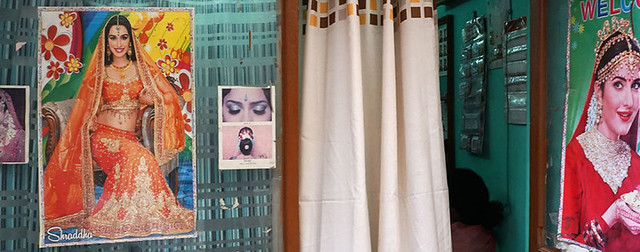
Yeh Freedom Life (2018) - Sen Yeh Freedom Life Priya Sen's film, Yeh Freedom Life, sketches out two queer love stories in bustling Delhi streets. Parveen is a street bendor who has strings of female lovers and currently in love with a married woman who keeps vascillating, going back and forth from her family to Parveen. Sachi works at a local beauty parlor. She fell in love with a woman who works as a security guard, their stories unfold in Ambedkar Nagar, a densely populated neighborhood in Old Delhi, India. It feels very real and intimate. The film starts with a mass 'baby shower' that Indian Gov. initiatives to 'educate' pregnant women and these officials rhetoric are some of the most sexist I've ever heard. They all culminates to 'if you don't follow these common rules, your husband will leave you" variety. The radio show overheard in driving car shot suggests that women are inferior intellectually is also very demeaning to woman. It's as if making the rudimentary case for intelligence equals emotional intelligence. In a later conversations with the subjects and one of the 'aunties' saying queer love that Sachi has for her lover is 'too strong' to be natural, seems to be based on observation soley based more on emotional level, as if it is a bad thing.

Yeh Freedom Life makes an interesting pair as I saw another Indian (actually Sri Lankan) queer documentary last week at Art of the Real, If From Every Tongue It Drips by Sharlene Bamboat. Unlike ordinary subjects in Sen's film, Bamboat's subjects are well-known Tamil feminist activists, as the director records their intimate daily lives together and touches upon the repressed desires. The two films contrasts and accompany each other in terms of its subjects' class differences and human desires and love. Sen's subjects, in discussing their love, are more direct but quite unconcerned with their sexual identities. It's their uncluttered nonnomative view on love, even in highly heteronomative and extremely patriarchal society that is refreshing and hopeful, especially in the context of India decriminalizing homosexuality in 2018.

Friday, January 14, 2022

Cannibal Adderly

Expedition Content (2020) - Karel, Kusmaryati Screen Shot 2022-01-14 at 9.21.17 AM Ernst Karel, a sonic artist and a familiar name to audiences attuned to watching many of FSC-Harvard/Sensory Ethnography Lab alum's projects, together with fellow anthropologist Veronika Kusmaryati, comes up with Expedition Content, a hour long audio clips strung together from 1961 Harvard Peabody Expedition led by Robert Gardner, Anthropologist who pioneered the visual anthropology field, and recorded by Michael Rockefeller, of THE Rockefellers, then a 23 yr old Havard student who disappeared without a trace in West Papua, then The Netherlands New Guinea, during the same expedition.

Watching Expedition Content, or rather listening to it while staring at the black screen is rahter a fascinating experience. I mean, I've been always interested in the use of sound in relation to cinema and always preaching the importance of it. As usual, with any Sensory Ethnography Lab's project, Expedition Content tinkers and plays with the boundaries of the cinema as the visual/aural medium.

But what we see, in this case hear- dialog among white ethnographers and Hubula or Dani people doing their everyday chores, singing and conversing, need to be digested in context. After hearing expedition team's discussing the technical aspect of photography and the sound of the Hubula people, we see a little bit of the background of the project in texts across the screen.

So the context is this: the expediton is sponsored by the Colonial Netherlands Government. The Rockefeller family's business, Standard Oil, had a big stake on West Guinea, Michael's father Nelson, then the New York Governor, later became the Vice President of the United States. Keeping this in mind, perceiving this project becomes a little different. It's not some random collection of soundbites from an exotic world.

Surely, there are some wondrous aural moments like the sound of storm passing by, a woman washing sweet potatoes in the stream and yelling at little Mike (Rockefeller who recorded most of the tracks we hear) not to stay too close to her, swarm of bees morphing into a singing chorus which turns into a group wailing. And because it is mostly sound recordings (there are about 30 seconds of Gardner's film footage of a bat cave exploration inserted with the sound in the middle), there are some candid conversations caught on tape (hotmics so to speak), of boys locker room talks and making fun of jazz music and its coolness by imitating how African Americans talk. These supposedly civilized, well educated people would make an (un)intented, racially, culturally, doubly insensitive joke, Cannbal Adderly (playing on Cannonball Adderly the jazz musician).

At times tender and jarring in others, Expedition Content is a wondrous experience to be had. In order to experience it properly, unless in theaters, which I stupidly missed my chance when it was playing as part of Art of the Real in 2020 and at Anthology Film Archive just past week, I suggest you to wear a set of headphones and experience it alone in the dark and let your mind wonder.

Thursday, March 11, 2021

The House of Ubuntu

The Inheritance (2020) - Asili Inheritance A Philly native artist/filmmaker Ephraim Asili's experimental whatsit The Inheritance draws from his days as a member of West Philadelphia Black radical collective, where a group of like-minded young African American activists, artists lived and shared their thoughts and ideas in a communal setting. The idea was heavily indebted to MOVE, a black liberation group founded by John Africa and his followers who preached importance self-sufficiency and living in harmony within nature.

A loose narrative concerns Julian (Eric Lockley) and Gwen (Nozipho Mclean), childhood friends who move in together when Julian inherits his late grandmother's multi-story house in Philadelphia. The grandma also left myriads of black cultural artifacts: books, magazines, and records - most of them from the black liberation era. They decide to take in roommates - philosophers, educators, artists, and activists and open the place up to the neighborhood as a communal space/library.

The film's staccato, but unhurried episodic structure gives way for Asili to interject with many archival footage: Shirley Chisholm's Presidential campaign, MOVE's standoff with police in 1978 and the police bombing of MOVE compound that took 11 lives in 1985. It also features black liberation luminaries such as Mike Africa Jr and Debbie Africa and renown poets, Sonia Sanchez and Ursula Rucker who appear on screen as guests in Asili's narrative universe.

The Inheritance's freewheeling form owes great deal to Godard, right down to the brightly colored walls, editing and the constant, exaggerated noise of a 16mm camera rolling. Asili doesn't try to hide his influence by putting a giant poster of La Chinoise as a centerpiece on the living room wall. His intention was to make a hip-hop/reggae version of Godard's agitprop classic.

The film is heady with many memorable quotes from black liberation era thinkers and writers, often provided by giant black boards located on the wall and Julian, Gwen and others repeating many of the quotes in dramatic fashion, looking straight at the camera. But in Asili's hands, The Inheritance doesn't feel like a dogmatic film. There are many funny moments as the residents of the 'house of Ubuntu' have to deal with any communal living, following such strict rules as 'no shoes inside the house', 'don't eat someone else's food in the fridge without asking' and so on. Rather, this airy fusion of filmed experiment gives opportunity to its unsuspecting viewers the window to unseen/under seen, unheard/under heard pieces of American history that give them the proper context to understanding the current political climate - the continuing police brutality against black community, the BLM movement and the white supremacists storming of the Capitol building.

In its rather conventional movie ending, Asili closes his narrative part of the movie on a positive note. But we all know that there's more work to be done. The Inheritance is an ode to black resistance and fitting cinematic experiment for the BLM era.

The Inheritance opens virtually on 3/12. Please visit Grasshopper film website for more info.

Wednesday, April 17, 2019

Preview: Art of the Real 2019

As an adventurous spectator of cinema who writes about films and very much interested in where cinema is headed as an art form, I can say enough that Art of the Real, a film series that showcases innovative, daring, non-narrative films, has been a great wealth of resource and a place of discovery over the years.

Since its inception in 2013, Art of the Real at New York's Film Society of Lincoln Center has been celebrating genre-bending, non-narrative filmmaking. In its 6th year, the series presents new such works by filmmakers from around the world, plus retrospective by Japanese experimental filmmaker Toshio Matstumoto's non fiction work and a tribute to the late Lebanese filmamker Jocelyne Saab. If you are a curious about the possibilities of cinema as an art form, and hungry for something new and thought provoking as well as entertaining, Art of the Real series is the place to be.

The series runs 4/18 - 4/28. For tickets and more info, please visit FSLC website.


Closing Time
4638fdcd-1f86-46cc-8677-11626e4f5420
Swiss filmmaker Nicole Vögele's observational film Closing Time focuses on a tiny late night food stall owned by Mr. Kuo and Mrs. Lin, under freeway overpass in Taipei. The film leisurely explores the surroundings of this night neighborhoods - an arcade parlor owned by a young couple, a dollar store next door, a wayward dog waiting for its long lost owner, a late night/early morning market where Mr. Kuo shops. Stragglers converse over a rice porridge with side dishes about the weather - the recent strong typhoon destroyed domestic produce, leaving not too much choices for Mr. Kuo to shop for ingredients, about the changing neighborhoods, about working too much... The couple prepares and cooks 6 nights a week. We barely get to see them in daytime. The sky is always dawn violet, the street is filled with thousands of mopeds, traffic lights and signs of the shops reflected on the puddles, with the sounds of the night. You get used to the rhythm of this working class microcosm. It's quiet and somnambulistic.

On his moped, Mr Kuo takes off on the road in the later part of the film and ends up in a small town down in the south of the country. We don't know what conspired for him to take this path. Was he tired of his daily routine? Did he want to get away? Don't matter. We are afforded to a lush scenery of Taiwan's countryside. Beautifully composed in Super 16mm in a rainy season of Taiwan, Closing Time is a contemplative film shedding a light on a part of the world that rarely gets attention.


Those Who Desire
Elena-Lopez-Riera-853x480
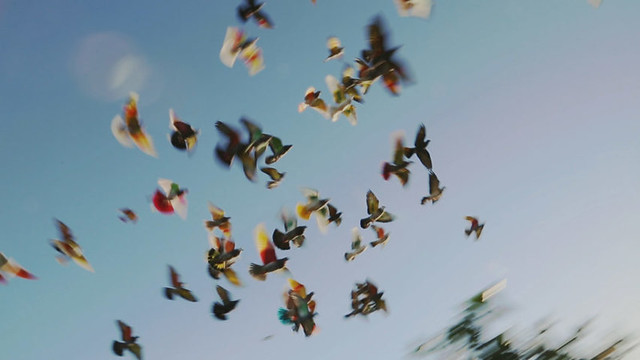
Valencia in southern Spain is a home of the Colombicultura, an exclusively male subculture where brightly colored male pigeons train and compete. Filmmaker Elena López Riera who grew up in the region, documents one of these competitions. The lone female pigeon is released in the air. Soon all male pigeons take to the air, chasing after her. There are amazing amount of rules and all these judges with walkies, watch intently every single move of these horny pigeons. It's not the speed, the narrator say, but lust and ability to conquer. I don't know what that means exactly. We see the swarm of pigeons in the air, on the ground. It's an orgiastic sight. But the competition ends due to bad weather before anything is determined.

Those Who Desire is the grossest projection of macho culture I've ever seen, but it's also fascinating.


Karelia: International with Monument
e07ee764-1d61-43ef-9458-bb97b92917b2
Karelia, the Northwest republic of The Russian Federation, bordering Finland has a rich cultural, political history. It had been occupied by Sweden, Finland and Russia. Spanish filmmaker Andrés Duque tries to link the cultural significance- the origins of Finnish epic where legends and magic with today's Karelia and ends up with documenting Orthodox Christian family, the Pankratevs, living in the remote area surrounded by nature, practicing some of the shamanism rituals handed down from generations. This first part of planned two part film about the region, Duque also digs up the not so flattering history of Stalin era massacres that took place in the same woods where Pankratev children play, and the Putin regime's effort to rewrite the history. Interesting history lesson contrasts with idylic family life in Karelia.


Movement of a Nearby Mountain
0xF12E1760863CFB1C13C8BC8AEB7095A4
Movement of a Nearby Mountain starts with a narration which tells a water fairy who was captured by hunters. In order to free from impending enslavement, the fairy promises the eternal riches pointing to the mountains. Iron. "Gold lasts a breath, silver lasts a lifetime and iron lasts forever". Soon as fairy was let go, it disappears into the water laughing. Its laughter forever lingering in the forest. This narrations repeats at the end of the film. Once in German, the other in Igbo.

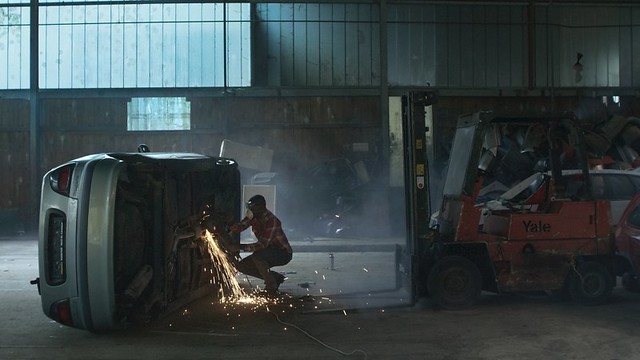
Cliff is a Nigerian man who owns and operates a chopshop in the Austrian Alps. He works there, cooks and eats there, shaves there - seems like his spends his waking life there. He buys cars, refurbishes, sells them whole or parts and also exports them to Nigeria. He deals with Hungarians and other Eastern European customers, sometimes in English, sometimes in German. Sometimes things heat up haggling the prices, but he seems to have his usual customers and well liked. But he is usually alone, spending days working. He sings Christian hymns under his breath.

We see a man of two worlds, bound by metal. The chorus of insects in the Nigerian jungle at night carries over the driving shot in the snowy Austrian Alps on autobahn. Sebastian Brameshuber's contemplation on these contrasts and the intimate portrait of one man against the stunning forest backdrop speaks volumes without saying much.


Swarm Season
Swarm Season
Hawaii's Big Island at a glance, is both a paradise and hellscape: the luscious vegetation along the coast contrasting vast black volcanic field created by overflowing volcanic activity inland that resembles the surface of Mars. Filmmaker Sarah Christman examines the intersection of elemental and superficial, nature and technology, ancient traditions and development, looking inward and space exploration, extinction and survival through the eyes of Manu, a preteen girl and her family who are in beekeeping business.

Manu helps out with her mom's honey producing by tracking wild bees and locating their beehives and relocating them. But she is also an average girl of her age, playing with My Little Pony toys in the sand and daydream while laying in the field. There are biologists collecting queen bees from the hives to study their swarming patterns and their survival.

Manu's dad is a tribal activist protesting the construction of another large telescope on top of the sacred volcanic mountain, Mauna Kea (13,803 ft). Then there is a group of astronaut training for Mars exploration in isolation on the mountain- ideal training ground because of similar climate (lack of oxygen and rough, barren terrain).

Swarm Season features some spectacular scenery of molten lava flowing out to sea, miles of barren black field created by volcanic eruptions, the underwater explosions as well as intimate tender moments with Manu and her family. The film's philosophical musings and seeing the bigger picture don't overshadow its anthropological study of its people and surroundings. It's a great film.


Accession
AOTR_Accession_01-1600x900-c-default
I've seen filming process as germination in one other film recently. It was Anocha Suwichakornpong's superb By the Time It Gets Dark. Where as the idea of film relating to germination was more of metaphorical one in By the Time, Tamer Hassan, Armand Yervant Tufenkian's Accession is more of a literal one. 13 correspondences in letter form about sending seeds are read mostly by someone related to the persons who wrote it, in various places and times in America, over the lovely hand processed 16mm footage. There are no other diegetic sound or effects sound to accompany these images and the narrations.

Accession is a testament of America as an agricultural society. Seed keeping, passed down to generations in families, is a dying tradition, so is the celluloid. Bringing forth new life year after year and the nurturing those who sow is somewhat equated here with the tradition of filming and creative process of so called 'experimental films'. Lovely, melancholic and resonant, Accession is a lovely piece of cinema.


Acid Forest
Screen Shot 2019-03-31 at 7.22.10 AM
Curonian Spit, a scenic peninsula in Lithuania is a Unesco Heritage site. It's also the home of Curonian Spit, a scenic peninsula in Lithuania is a Unesco Heritage site. It's also the home of Acid Forest, a swat of forests full of dead pine trees occupied by thousands of big, black, migrating cormorants who made those trees their homes. It's a tourist attraction. There is an elevated wooden platform to take in the scenery. Many tourists from all over the world climb up the wooden stairs to witness the devastating view. They all have something to say in their native language. Some comments that it looks like a nuclear fallout, or tornado aftermath. The guide explains to gaggle of Japanese tourists that trees died of the birds shitting on them constantly, to their amazement. Some invokes Hitchcock's Birds.

Many of these observations and amateur theories are downright hostile. Many jokes about having a gun and shooting them all down. Many complain that the birds are protected by the EU laws. Filmmaker Rugilė Barzdžiukaitė observes all the human activities from above, from a bird's eye view. Constant fly over shots of the whitened branches of the pine trees reveal thousands of these birds making home in Curonian Spit, oblivious of human crowing with their opinions down below.

A biologist is heard explaining to a TV crew that many of misconception about the birds are untrue, making a point that cormorants have existed since the ages of dinosaurs and it's not only their droppings that kill the forests. But we see the human interference at the end as we control much of our nature's destiny, unfortunately.


Walden
Walden
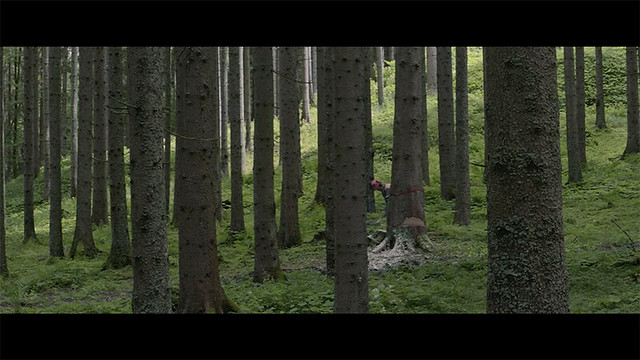
Walden consists of 13 slow 360° controlled panning shot from left to right. Each shot lasts about 10 minutes. It starts from Austrian forest where trees a being cut down with a buzz saw. Then the lumber is transported by trains, trucks, boats all the way to the Amazon, the lumber is finally transported by hands deep into the jungle. The film can be a slog for someone craving for a narrative or character to hold on to, but the key here is giving yourself up to the flow as the panning, moving picture creates its own steady velocity.

Each stage strategically stationed and shot in wide format and 50 fps for maximum coverage and the smooth movement, Swiss filmmaker Daniel Zimmerman's film takes an ironic, paradoxical look at a journey of timber in a global economy we are living in, done in a vigorously formalist approach.

Thursday, January 4, 2018

First Look 2018 at MoMI Ushers in the New Year with Boundary Breaking New Cinematic Work

In its seventh year, MoMI's First Look film series, organized by chief curator David Schwartz and associate curator Eric Hynes, introduces bold, formaly inventive, innovative international films to start the new year. And to all the adventurous cinephiles, this is definitely a good way to start 2018.

This year's selections in First Look go beyond the traditional screen presentsuch as Daniel Cockburn's quasi-film lecture All the Mistakes I've Made (Part 2); a new program of Radio Atlas short works comprised soley of audio recordings and projected subtitles; and even a work being produced during the festival, an update of Wim Wenders's documentary Room 666 in which filmmakers talk about the state of the art form.

First Look to open with U.S. premirere of Blake Williams's 3-D film PROTOTYPE, and will include new boundary-breaking work by James Benning, Ken Jacobsm and an exciting array of emergining artists from around the world January 5-15. Please visit MoMI website for more details.

Here are 7 outstanding films I was able to sample:

The Last Days in Shibati - Hendrick Dusollier
Screen Shot 2017-12-22 at 11.56.50 AM
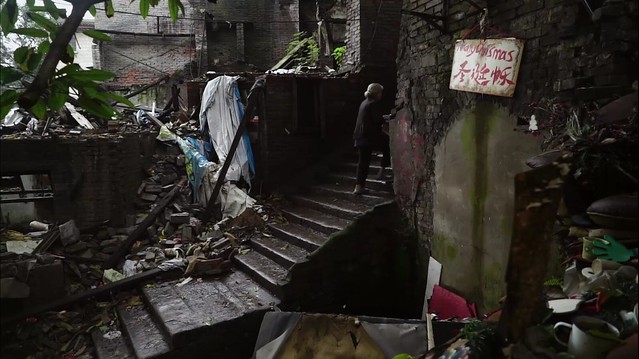
Disappearing urban slums have been documented before - Fountainhas of Lisbon in Pedro Costa's films, Kowloon: The Walled City by a German TV channel in the 80s, and of course, 24 City by great Jia Zhangke among many others. Frenchman Hendrick Dusollier spends a year in the last old district in Chong Qing one of the mega cities situated in the southern China. He films its inhabitants as the neighborhood slowly but surely disappears.

Unlike many other documentaries or dramatizations of a specific place, Dusollier let himself exposed and known to his surroundings. Everyone he meets and treats him as a foreign man with the camera who doesn't understand the language but films everything. His insistence as mostly silent observer wins over some curious inhabitants, namely a barber and his mother whose open, dimly lit shop continues to serve the community under the threat of imminent eviction, Zhou Hong, a neighborhood kid who shows Dussollier around through the labyrinthine dark alleys and Mrs. Xue Lian, an old woman who makes living by picking up bottles and who turns out to have the biggest collections of weird junk in the corner deep in Shibati.

Dussolier comes back to the place and revisit these people, sometimes with an interpreter, sometimes not. He visits them after they were forced to relocate. They understand that he is in Shibati to film what's going to be lost forever. It's this mutual understanding that makes Shibati different from other anthropological documentaries. Dusollier keeps things personal and human.

Marlina the Murderer in Four Acts - Mouly Suriya
Screen Shot 2017-12-23 at 8.17.37 PM
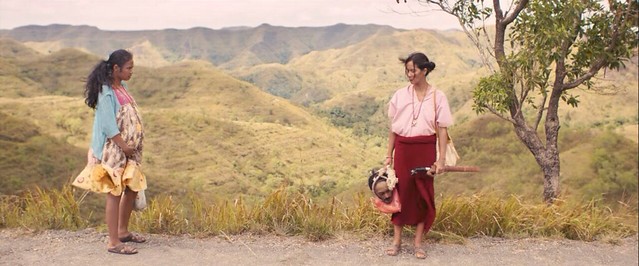
Sprawling, picturesque vistas of an Indonesian Island lensed in widescreen format as a back drop, Mouly Suriya's Marlina the Murderer in Four Acts, is a rape revenge western from a female perspective. Marlina (Marsha Timothy), a widow farmer is visited by Markus (Egi Fedly), who tells her that his gang is on his way to rape her and take all her livestock and reminds her that there is nothing she can do about it. When the rest of the gang get there, she poisons them and decapitates Markus while being raped. With Markus' head, she takes a journey to the police station- first by bus, where she meets Novi, a very pregnant woman and befriends her, then later on a horse. At the police station, she learns that justice won't be forthcoming and has to go back to her house for Novi who was captured hostage by the rest of the gang.

Marlina is quite significant coming from an extremely patriarchal society. Weird mixture of Bring Me the Head of Alfredo Garcia and Thelma and Louise, the film features some beautiful landscapes and local customs - keeping mummies of the loved ones in the house for example and humiliating sexist traditions - cattles for a dowry etc.

Communion - Anna Zamecka
communion
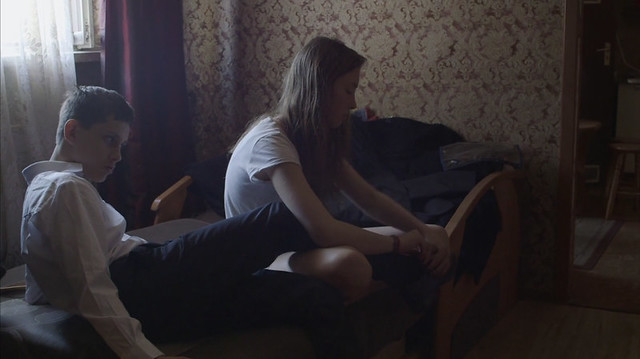
Ola, a 14-year old school girl is the focal point of Anna Zameca's intense documentary on fractured family in Poland. We also get the glimpse of a still deeply religious society. Ola has her hands full taking care of her autistic brother, Nicodem, and drunkard father. The film takes place when Nicodem's communion is approaching. Using the communion as an excuse, Ola tries to reunite her family with their estranged mom, who lives apart and has a baby with another man.

Ola is pretty much a mom to Nicodem, she bathes, clothes, feeds and takes care of his school needs. She is also a strict disciplinarian with her alcoholic dad, calls him to make sure he comes back home from pubs, no TV while baby's sleeping, shuts him off from saying incriminating things to welfare officers. She sweeps, washes, cleans and tends to the wood burning oven, yet she likes to put on a dress and have a good time at school dance.

Zameca captures some astonishing moments of intimacy and authenticity in a tiny, cluttered home. It also puts a spotlight on autism and how many societies are not equipped to deal with it. Nicodem is treated like a normal kid both in school and in the church. He definitely severely affected in his speech, attention, and repeated hand gestures. Yet is that kid who is 'a little strange'. It's also kind of scary to hear moments of clarity when he says things out of the blue. At one point in the bathtub, he repeats "The reality becomes fiction."

It's a family where the child parent roles are reversed in all functionality. She acutely observes that Ola growing up way faster because she has to- yet she is still a child who naively hopes that their family will be together again. Komunia is a heart breaking, beautiful film.

Railway Sleepers - Sompot Chidagosornpongse
Screen Shot 2017-12-24 at 12.08.27 PM
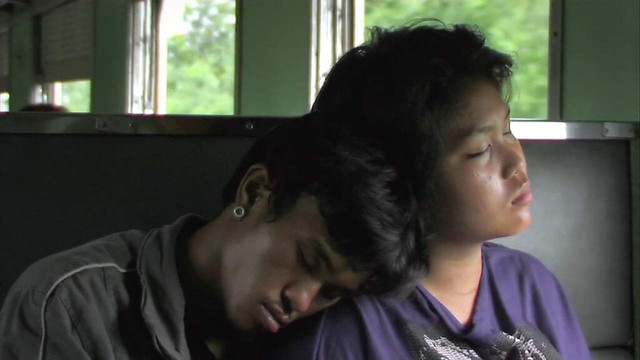
Part love letter to the Thai railway system, part documentary, part experimental, this Apichatpong Weerasethakul produced film moves along from Northern Thailand to South, recording two days and two nights of locomotive travel. First inaugurated by King Rama V in 1890s, Thai railways are revered and regarded as the nation's backbone. We see travelers of all ages and social strata, eating, talking, gazing and sleeping in a confined biosphere, a great microcosm of the world as it were- two recent previous films come to mind as a great example of this - Bong Joonho's dystopian Sci-Fi Snowpiercer and J.P. Sniadecki's artful Iron Ministry. Railway Sleepers feels more personal and intimate. Its slightly moving camera as the train moves along, captures day in the life of ordinary Thais. The film has that lulling hypnotic effect: it's as if the gently undulating train cars with that unmistakable, repetitive sound of a train rolling on the tracks invites you to sleep.

Exiled - Marcelo Novais Teles
Screen Shot 2017-12-26 at 11.37.15 AM
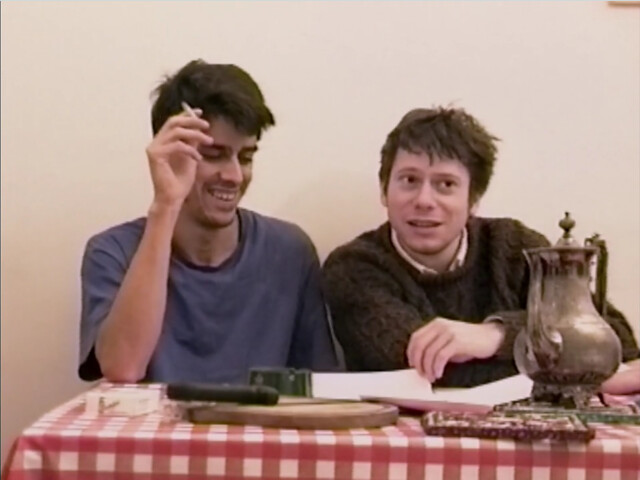
Marcelo Novais Teles, a young Brazilian man, moves to Paris to pursue an acting career in the 80s documents his life in grainy Super-8, Hi-8 and DV. L'Exilé is at once a deeply personal film and a time capsule of a certain generation of French filmmakers/actors. Teles, with his soulful face and charming accent, was able to surround himself with like-minded young, struggling artists. The film is filled with their honest conversations on life, art, love...etc. There are some recognizable faces in French cinema popping up now and then in Teles' home video footage - most notably Mathieu Amalric. This is way before he became famous.

There are a lot of footage of Teles playing with his friends' kids (including Amalric and Balibar's later on). Forever bachelor and struggling with his loneliness being an illegal alien in a foreign country, he shows his anxiety about constantly producing something meaningful in his lifetime.

As we watch an honest depiction of someone's life floating by- hope, ambition, love, regret, even considering the specificity of Teles' circumstances, we realize how universal our 20-30s are. Beautifully edited and intimate, L'Exilé is something that every struggling artist can relate to.

Colo - Teresa Villaverde
Colo
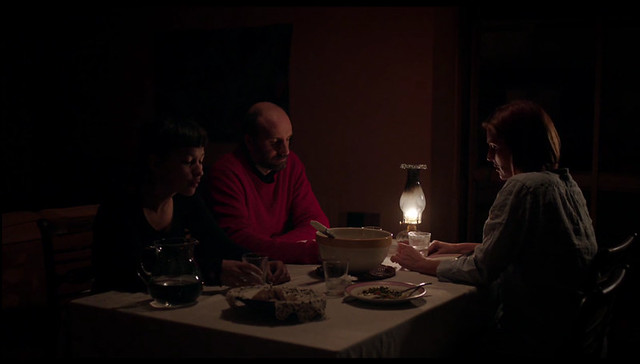
"We are not at war and no one's ill!" shouts Marta (Alice Albergaria Borges), a teen girl in a household disintegrating under the weight of economic hardship in Portugal. She is merely responding to her hard working mom, who announces that Marta and her unemployed father needs to move to grandma's house temporarily because they can't afford the rent or electricity. There is a time in one's lives, like a war or illness in the family which force us to rely on other family members is what mom tells her. Marta's response encapsulates what Colo and its sad characters are about.

Dad (João Pedro Vaz) spends days soliciting job interviews which he never gets responses from. Completely beaten by the circumstances, he is a hull of a human who can't do anything other than sulking. Mom, doing double shift to support her family, is exhausted and irritable all the time. Marta, going through teen years, gets heartbroken by a boy and falls in with a pregnant bad girl classmate Julia (Clara Jost). Everyone in Colo wants a way out of the situation they are in and out of the family.

Teresa Villaverde takes her time to build the characters but at times it seems things are too stretched out, as if we are seeing things in real time. There are several great moments though. No electricity affords some painterly scenes and there are a lot of beautiful connections among characters. Carefully written and sensitively treated, Colo shows the effect of economic devastation on a family.

The Lives of Thérèse - Sébastien Lifshits
Screen Shot 2017-12-31 at 11.27.17 AM
Sébastien Lifshits shifts his gears toward an old pioneer of LGBT movement in a solemn, unsentimental fashion in The Lives of Thérèse, from his usual beautiful young gay subjects in glitzy style. Thérèse Clerc was one of Lifshits' subjects in his documentary The Invisible Ones (2012) where he chronicled LGBT pioneers. As Clerc is dying of an old age, they mutually decided to record her final moments.

Here Lifshits doesn't reinvent the wheel of documentary or anything. But he approaches his remarkable subject directly with an utmost respect and love.

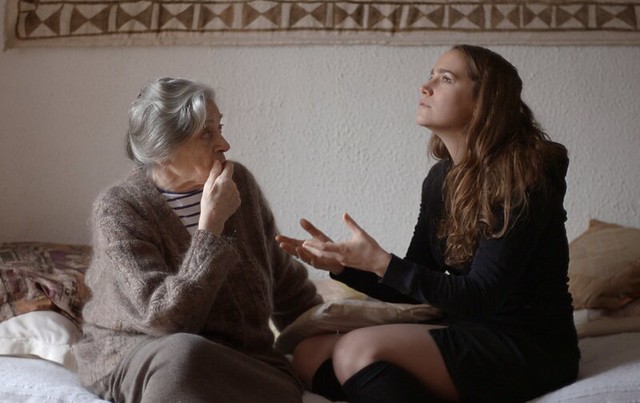
Clerc, as an activist for women's rights movement and fought for LGBT rights, was a subservient wife with 4 kids who had an awakening in 1968 revolution, divorced her husband, and became a lesbian at 40. The film consists of Clerc's daily routine of conversing with doctors at the hospital, with her grown up children and other friends. Her children talk frankly about their upbringing, their mother's sexuality and her approaching inevitable death. Clerc admits her body failing even though her mind is still the same. She talks with a young feminist about her sexuality- back then, homosexuality was a political act, the act of defiance. The young woman disagrees with her, that in her generation, homosexuality is out in the open, that she can be a feminist and a heterosexual.

The Lives of Thérèse is not as serene as Haneke's Amour. Often Lifshits captures Clerc in closeups as she falls asleep from exhaustion but the camera movement and color are all love. The film much more than a feminist manifesto. It's a celebration of an extraordinary woman who lived her life fully and loving tribute by those who loved and admired her.

Saturday, May 6, 2017

Primordial

Womb (2017) - Barley
womb1
womb
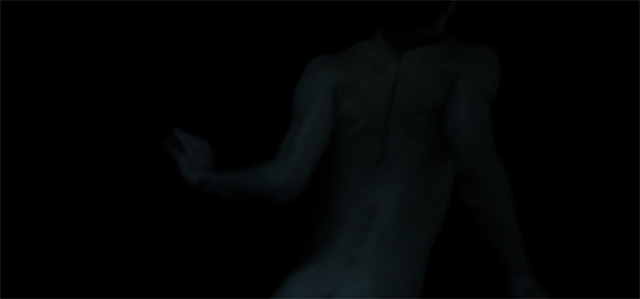
Scott Barley fixes his gaze from his native Welsh outdoors onto a human body in the darkness. Womb can be a little brother to Grandrieux's White Epilepsy, yet still unemcombered by narrative or genre conventions of traditional 'movie-making'.

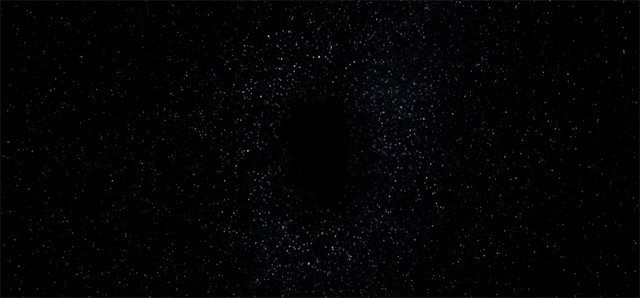
There is a gaping hole in the universe in the shape of a womb. Barley's internalization of the universe is unwavering. With amazing sound design, Womb is another hypnotic concoction and nice addition to the prolific young artist's growing filmography. There is always something more primordial about Barley's work. His images are devoid of symbols or layered contexts but completely bare and visceral. And I like that about his films. Here he is furthering his cinematic adventure and exploring a new territory as an artist. I love it.
Saturday, February 27, 2016

Iron Maiden in HD

Pig Iron (2010) - Benning
 photo 03f4d5f6-67d7-4917-9666-d2bcd32417e5_zps6xcufi3o.png
Watching Pig Iron, a 30 minute static shot of a German smelting factory in crisp HD commissioned by Jeonju Digital Project, makes you wonder about the effects the HD cinema has on experimental filmmaker giants such as James Benning. Benning shot all his films on 16mm film prior to Ruhr (2009), his first foray into HD and first film shot outside US. What HD affords him here is pretty epic. Known for his 'landscape' films where you hold a shot for a long period of time to have audience engaged and familiarize with its surroundings, had a limitation of 10 minutes- a 1,000' of film (maximum capacity in 16mm) runs out at around 10 min. It also gives you better latitude than a 16mm film stock in underexposed areas and a lot sharper than what 16mm lens are capable of. Pig Iron, when seen on a full screen in good resolution, is breathtaking: you can make out every grimy industrial details- gigantic, rusty airducts, sparks, smoldering heat (look at the pipes just above car 103), gaseous clouds rolling in from the sides, combined with Benning's precise framing and timing.

Pig Iron is a great example of taking advantage of HD technology: as far as experimental filmmakers are concerned, they can't afford to create films such as Pig Iron in traditional filmmaking - hire train conductors, smelters, smoke machine, some extras in construction worker's garb and block the shot the way one wants precisely to a tee. Maybe this isn't the point and I am rambling here. But the film is so cinematic since its image quality is so superb. Why am I not making experimental films?

Sunday, February 14, 2016

Christianity is a second-rate religion without Bach

Die Stille vor Bach (2007) - Portabello
 photo f70ff106-17e4-4d78-b0c6-4d919a64207c_zpsrq9f2n4i.png
 photo 0db108cf-8c13-4529-b204-16ec89a3d903_zpshupifupq.png
 photo 3668b7f7-99fc-4005-a409-a7688dbac24e_zpsxsbouycq.png
 photo 8a669646-8e07-441b-9533-c0c42ef46597_zpsr4unjedn.png
 photo 71222085-d55c-44b4-bfbe-e156f53ae2b5_zpstz9n14d9.png
 photo a61cf3fc-1331-443c-b4e0-e92dddc35b03_zpszrekyy66.png
 photo c2b51343-3d79-44c7-98e8-c5a196b4a205_zpsvgjdinau.png
Catalan director Pere Portabella pays tribute to Bach and his glorious music in Die Stille vor Bach, a film that takes many forms. It starts with an empty gallery space as we go through room to room and finally finds a player piano on a automated dolly, playing Goldberg Variations while milling about. We jump to two truck drivers talking about what they do to take the stress of the job off- they play chamber music. Then we jump to a blind piano tuner and his dog, and so on and so on. The film includes reenactments, anecdotes, legends, musical segments in various places, dressage, female nudity, St. Thomas church where Bach was a Cantor and wrote many religious pieces, etc. Camera always floats around like a piece of fluid music and it's a very engaging, elegant filmmaking. The music is really great. One tells the other, quoting "Christianity is a second rate religion without Bach's music". The current cantor of St. Thomas tells the new recruit, a Catalonian musician who looks like a Botticelli painting, that many students are agnostic when they come in, but before they have their first concert at St. Thomas, they all ask to be baptized. Die Stille reminds me of two other unconventional music films I've seen- 32 Short Films about Glenn Gould and Herzog's Gesualdo: Death for Five Voices.