Showing posts with label Catalonia. Show all posts

Sunday, May 21, 2023

Frightening Female Sexuality

Creatura (2023) - Elena Martin Gimeno Creatura A subtle observation on female sexuality by Catalan director/writer/star Elena Martín Gimeno, Creatura examines a childhood sexual repression manifesting in physical form on the body of Mila (played by the director herself).

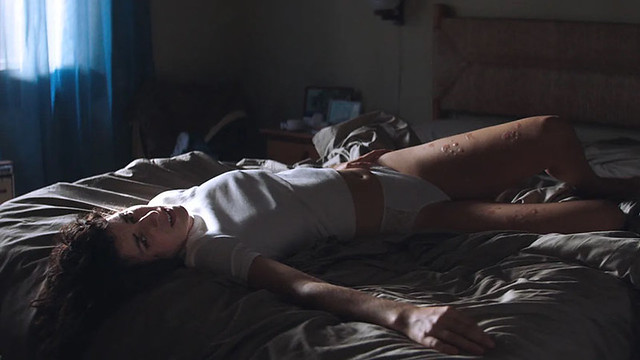
The film starts with Mila and her mild-mannered boyfriend Marcel (Oriol Pla) moving into the house of Mila’s parents, Gerard and Diana, as the old couple moves out. It’s the house by the sea that she grew up in. Mila is always horny, but her demands are met with Marcel’s frustration because he doesn’t know what Mila really wants. Mila in turn, gets hives all over her body because of the stress. She says to him she got the condition from her childhood.

The lengthy flashback in the middle concentrates on Mila as a 15-year-old girl. With her more promiscuous bestie Aina, they discover boys and explore sticky situations, as well as anonymous internet messengers for voyeuristic sexual encounters. But it’s still all normal stuff that teenagers are into.

Mila experiments with a hunky boy that she has hots for, but it doesn’t end well. She finally hooks up with a neighborhood boy whom she has known all her life. But when she asks for permission for a sleepover at his house, her father, usually very calm and loving, angrily rejects the idea. Again, Mila breaks into hives all over her lower body.

Creatura is an interesting film about how the female sexuality frightens men. The word 'uncomfortable' gets repeated twice with both Mila’s father and her boyfriend who can’t handle it whenever she expresses her desires.

In a patriarchal society, the idea that girls are either sluts or virgins, depending on their level of curiosity in sex, is embedded early on, while boys grow up expecting, at least, to get a handjob from a girl who shows even the slightest interest in you.

Martín Gimeno goes even further back to find the origin of Mila’s physical conditions with her as a pre-pubescent child, spending the summer days with her parents on the beach. She develops a strong attachment to her father, as he gives her a piggyback ride and giving her swimming lessons in the ocean.

It’s a man stroking his female companion’s bum on the beach that sears into little Mila’s head. She asks her parents to stroke her bum so she can sleep. At first, the parents are not alarmed about her clingy behavior. But her display of learned behavior frightens her father deeply, as it is not ‘normal’ for a girl to behave in what can be construed as sexual in any way.

Her father gets upset when little Mila barges into their bedroom demanding to see him naked. She breaks out in hives and it’s her mother’s turn to console her and wash her in the sea, because sea water cures it all.

After the adult Mila’s role-playing sexual game gets too uncomfortable for Marcel, he leaves. Then Mila gets to spend time with her parents alone, as they come back to console her. Now a grown woman, Mila asks her dad, who is still uncomfortable around her, if he ever felt physically affectionate toward her. This talk is a revelation to him, as he never thought about it in his life.

Creatura delves into a difficult subject to many men: female sexual desire and its brutal suppression early on. Martîn Gimeno gives a committed, bracing performance and bares it all in a film with a difficult subject matter, taking a nuanced yet frank approach, without sensationalizing its subject.

Creatura is a selection in The Director's Fortnight at this year's Cannes Film Festival.

Wednesday, February 15, 2023

I am Here to Create the Most Fascinating Images Possible: Albert Serra Interview

AC_Website Event Hero 620 x 348  (3) - Albert Serra Headshot Albert Serra is a mad man. His latest, Pacifiction was my favorite of 2022. Its almost stupid bravado took my breath away. It's all in his digitally captured decaying grandeur of the first world; the remnants of colonialist spy game playing out in paradise, was perhaps the most audacious cinema I've experienced in a long while. Serra is a real auteur in every sense of the way. He might come across as arrogant at first, but listening to him at length, talking about his methods, you find that he is an adventurous soul, always looking for the ways to find images that goes beyond earthly concerns, yet deeply humanistic. It was a privilege to talk to him for the second time, even via Zoom.

Pacifiction opens this Friday, 2/17, Film at Lincoln Center in New York.

How are you?

I am good. I am in Dublin now. It’s late.

Are you working on something there?

I am just checking out the possible locations. Just randomly. I haven’t written any script or anything. But I shot here some years ago. (Singularity, for Venice Biennale, 2016) I dunno…I like some places I’ve seen and wanted to come here and see there’s something inspiring. I have some ideas. Sometimes I have this real place in mind. It’s an interesting thing. It helps to make the process more organic.

Was it the same for you with Pacifiction?

Well not the same because as I said, I couldn’t travel because of Covid, but in the end it was almost the same result. I couldn’t go but I was inspired by some books, you know? But some ideas are mine. Possible nuclear tests were mine! I never heard it or read it anywhere. It was totally an invention but became a visionary, because Russia invading Ukraine and all the talk of nuclear war became popular again.

True.

Everyone has forgotten it. Now it’s the center of the topic again. We went there to shoot, and I shoot very fast. With 4 weeks of preparation, we started shooting- preparation meaning, casting there, looking for locations. We do it very fast. But it was 2020.

Covid.

Because of Covid, on the third week, we had to leave.

Wow.

Because everything was locked down. So, we came back. Then I was thinking about the film in more concrete terms. I knew some of the locations and a little bit of casting and from what I saw there. So, before we started to shoot, already I had some cumulated volume in my head. But the film started very artificial, with plot being on the edge of being ridiculous. But I found it organic in a way. This is the balance I try to find: very artificial idea and setup, with the performances, the wilderness of its surroundings. It makes actors believe in everything they do even though its half humorous, half ironic, half visionary, half political, half serious…I don’t know.

Unlike your other films, this one takes place in the present. But it almost has an aura of the Cold War era paranoia and the colonial past. You said it was partly based on what you read. It feels very much like Conrad or Graham Greene.

Graham Greene perhaps. Conrad, I haven’t read it. It’s a strange thing I haven’t read the Heart of Darkness because it’s very important and good and I read a lot. Of course, there’s a link with Apocalypse Now! with this strange character that Marlon Brando plays because you don’t know if he’s good or bad – whether he is the beginning of something very bad or the end of something very good. But I think there’s something that is connected with his mental state. I don’t know if that is something specifically colonial. My film is more on the contemporary side where the savior/villain has no face. Nowadays everything is spread out, like a virus. Everything is based on total opacity of power – who makes decisions? What are the reasons behind these decisions? And which are the interest parties behind these decisions? Before, there were good people and bad people. Coppola’s film was the end of that illusion. Kurtz was the beginning of that ambivalence. Now we are in this era, and everything is flatter. Everything is less interesting, it’s more like the internet, you know. Real life dissipates, everyone has no face, and things are still going wrong and getting worse. And everyone feels it. Inequality and wealth gap keeps getting bigger and bigger. Everyone knows it and feels it. And no one knows how to correct it. This lack of humanistic approach to solve the problem brings something purely technical, they don’t take account to the souls of people therefore they don’t solve anything. Maybe to you the film feels like Conrad but it’s very contemporary. It’s something that is happening now.

How did you like Tahiti?

I don’t care. I try to force myself to think against cliché. For example, I try to think that these people are not victims of history. Because they do nuclear testing there, so they suffer from this and that. That they lead a very simple and quiet life and suddenly colonizers are sending these nuclear scientists and doing tests in paradise, whatever. But why do I want to tell that story? To say something about these injustices? These are things even a child knows. Everybody agrees. Then I force myself to go there and look for the faults of these people. Sure, they may be victims of history. But they might have bad genes and are lazy. Or maybe they receive a little too much aid. You know where I am going with this. But in order to see things the way they truly are, I have to let the images flow, let the images flow without control and without any meaning from my end. The idea that they are some hapless victims, it would be a cliché. But the reality is not so easy, especially nowadays. So, when I am in a place like this, I try to think the opposite, just to make things more complex and not to reduce the complexity of the matters. And I think it works. That everyone sees that things are unbalanced. When everyone thinks and goes the same direction, and I present the opposite, something happens. It’s a more faithful way to paint that place that you are in. I get the real inputs from the place just because I use this technique. I put myself in the position that I don’t have anything to say. I am here to create the most fascinating images possible.

Talk about being there and finding something. The character Shanna fascinated me. I am very interested in how you casted Pahoa Mahagafanau in that role and what her character means in the film?

She’s a non-professional actor, like all the indigenous people on the island. I have an intuition for people who are interesting and quite natural. They look natural and spontaneous, and I like them as human beings, you know. This is the main thing when I choose actors. There should be something in them I like as human beings. Something I respect, in order to start disrespecting them and start creating my own idea against them, but there should be this equilibrium between us. Not as much as collaborating with them but to abandon them to their own devices and this creates a little bit of tension and that generates interesting images in the film. In her case, I like her very much. She is very spiritual. This idea of transgender, from a strictly visual point of view, not moral or political point of view or anything, I think there’s some purity and ambiguity in her that was extremely fascinating and photogenic. The extraordinary thing is that there is no contradiction in her, not one single moment of tension between two human beings in one. One that was before and the one that is now. There is this pure way of being in her and I like that very much. Transgender thing always has to do with makeup and costume and attitude, you know. They don’t decide to be transgender, it's a family decision in their culture. For example, if they have two boys, depending on the places, if the third one is also a boy, they dress them and raise them as a girl. They do this at a very young age, so they don’t realize all the stigmas that we modern society have on transgender people. They don’t distinguish gender like us. There is no vindication. There’s no gender politics.

I have to ask you about the scene where the surfing contest takes place in the water. It’s so stupendous and surreal, I couldn’t stop laughing at its bravado.

Why not?

It’s so fascinating and spectacular–

It’s spectacular because he (De Roller, played by Benoit Magimel) is there. If you search YouTube, I am sure you can find much more spectacular surfing videos with great waves than this one. But you are not a motivated spectator unless you are a professional surfer. It’s because the actor is in there riding the waves. As you said, it is grotesque and makes you laugh. But at the same time, you are still fascinated by it because the actor is still not breaking out of his character. You question yourself what kind of film you are watching. It questions you a lot of different things. And this is my aim. The plot is very plastic with submarines and all that. You know him looking for a submarine with a torch light at night. And at the shady discotheque where things get very paranoid. It’s very ridiculous and dangerous and extremely cynical. It’s a mixture of all kinds of different things and layers and tonality. At the same time, it’s very compact. It’s hypnotic on the edit and the flow. For me this was the main discovery of the film. The possibility of mixing all these impossible things. And it still works.

Is this how your work usually is - you finding out as you go along?

Yeah. But other films were mainly historical, and you have to be a little bit more respectful. You couldn't open it too much for other tonalities. If it was too grotesque, it would’ve destroyed the credibility of historical ambience. You had to be much more careful with those. Too risky. too risky.

Did it take a long time for you to set that wave scene up?

One morning. 3-4 hours.

Wow.

The whole thing? 24 days of shooting. 1 day of reshoot. 25 days total.

That is fast!

Yes, that is fast. when I was 18, 19, I was working as a construction worker. My boss, who was teaching me, told me one good lesson. He said, “You have to work good and fast!” It stuck with me, and I do the same with cinema, 20-30 years later.

Pacifiction kept reminding me of Kubrick’s Dr. Strangelove.

Yes. Here is what I said before. The grotesque element is there. The political element is there. The scary future of the war is there. The humor is there but it’s a fiction and that makes him a total liar. Therefore, it's less hypnotic, less fascinating, less complex and there is less mystery. The mystery comes from how close to the truth it is or how close to the real show or fake show. The kind of images you see in Kubrick films are much clearer. I work with digital images. There is less control and therefore could be more dangerous. It means they can really capture things that are around that are even out of my control. This content can reveal something that is not so nice. I think it is important to keep the door open. But it’s also a commitment. It’s not that easy.

This is not a political question, but I am wondering is this how you see that it will all end? Unbeknownst us, a bomb goes off without warning?

Iam very pessimistic. I can tell you. Capitalism is spinning in a very harmful way. With the internet it’s even worse. All the human relationships among people are already damaged and the internet just accelerated the damages. The financial inequality and wealth gap grows exponentially and there is no way to stop it. And the tensions grow, and the revolution is not possible because power has all the instruments. The people in the colonies and who are still colonized understand this because that’s how they lived all their lives like that.

I don’t know. Maybe I will do a comedy musical next. Where people dance around and sing happy songs.
Thursday, May 24, 2018

Tale of Childhood, Tragedy and Love in the 90s

Summer 1993 (2018) - Carla Simón
summer1993
Catalan director Carla Simón's first feature, Summer 1993, is a touching autobiographical film about the AIDS crisis in the 90s seen through a child's eye.

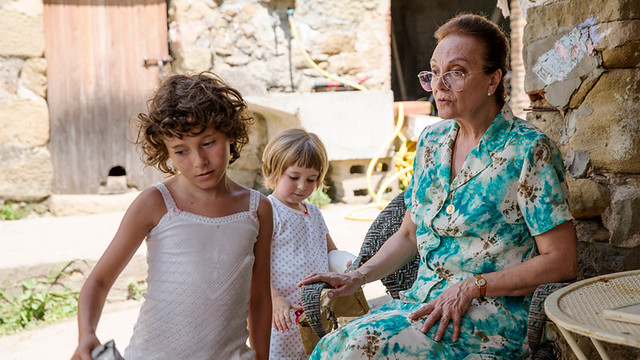
Subtly drawn and quietly devastating, Simón creates a delicate children's film that is not really a children's film, but a memoir of that specific decade in a country that was and is still very religious. It also benefits from stunning lead performance by young Laia Artigas, who plays a 6-year old city girl, Frida, who lost her mother to the epidemic but too young to understand the social stigma it carries.

It starts with Frida leaving her Barcelona home where she lived with her extended family. She is to live with her uncle Esteve and his wife Marga and their 3-year old daughter, Anna, in an idyllic country home. The apartment in the city will be rented out. The sun-drenched countryside is a big change for Frida. But her new family - new mom and dad are loving and understanding, plus she now has a new playmate, Anna.

But she doesn't understand why she is being subject to series of tests in the hospital and other parents freaking out and grabbing their kids around her in the playground when she scrapes her knee and bleeds, and why Marga wears rubber gloves tending her wounds.

Spoiled rotten in her life in the city, sullen Frida is very hard to please. She acts out in ways she doesn't quite understand herself. Good-natured Esteve and Marga do their best, but it seems pretty obvious that the spoiled city girl is a bad influence on Anna. Tired of having a problem child in their household, they argue.

Taught by her grandma, Frida say prayers daily for her mom and leaves things (that she stole from Marga's closet) at an altar of Virgin Mary near the house. Constant visit from her unconditionally loving grandparents and other relatives doesn't help Esteve and Marga's situation, as they spoil the girl to no end and she throws tantrum every time they visit. To make things worse, Frida leaves Anna in the forest and lies to Marga her whereabouts. It is a harmless child’s play, but Anna ends up with a cast on her arms.

After clean bill of health declared by the doctor, Marga lets her guard down a bit, and young Frida soon eases into the country living calling Esteve and Marga mom and dad. But sometimes she falls into fits of melancholy.

The word AIDS or HIV is never uttered in the film. Grown ups in the film obviously have some understanding of what's going on and they speak in hushed tones in front of oblivious Frida. She is a child indelibly marked by tragedy, a product of a specific decade that was marred forever by devastating disease that swept the world.

Handheld, sun-drenched photography provides intimacy and warmth and contrasts our moody heroine and subject matter. It's an incredibly difficult role to play for a child and bright eyed, wild haired Artigas is a revelation. Carefully put together and wonderfully acted, Summer 1993 is a beautiful film not only to reflect on the fearful period of 90s and the generation it affected but also highlights unconditional love of the tight-knit family overcoming tragedy.

SUMMER 1993 opens in New York and Los Angeles on Friday, May 25, with a national rollout to follow. Please visit Oscilloscope Laboratory for mor information.

Dustin Chang is a freelance writer. His musings and opinions on all things cinema and beyond can be found at www.dustinchang.com

Wednesday, October 12, 2016

Death and Irony

The Death of Louis XIV (2016) - Serra
 photo c085995e-e958-42e5-8f4a-e15d28b59158_zpszw5d8s18.jpg
Death is a grisly business. It comes to all of us. Even if you happen to be the King of France who's been reining the kingdom for 72 years. From all the documented evidence indicates Louis XIV died of gangrene on his leg caused by diabetes. The year was 1715, without modern medicine, he died a painful, horrible death surrounded by physicians who were perplexed by his conditions.

Catalan filmmaker Albert Serra has been tackling literary/historical figures in his films -- Don Quixote in Honor of the Knights, The story of Magi in Birdsong, Casanova and Dracula in The Story of My Death; approaching them in minimalist, aggressively formalist fashion. Armed with extensive court medical documents and writings of Duke Saint-Simon and the French New Wave icon Jean-Pierre Léaud as the king, Serra sets out to make a straightforward account of the last days of Louis XIV.

Except for the first few minutes of the film where we see the king on the carriage outside, coming back from a hunting trip, the entire film takes place in the stuffy ornate interior bedroom of the Versailles. Gangrene has set in on the king's left leg and physicians are rubbing it with herbs, hoping it will go away. The old king mumbles and shouts in pain while eating grapes and sweets administered by the same physicians who argue endlessly among themselves what to do about the situation. People try to entertain and laugh at everything his Highness says, priests are called in to give the last lights but then sent back because he feels better, and so on. Even the learned physicians of the Sorbonne have no idea about the king's illness. His leg starts to stink and turns completely black. Everyone's waiting on the inevitable.

There are some funny bits with a snake oil salesman played by great Catalan poet and art critic Vicenç Altaió (whose turn as Casanova in The Story of My Death was hilarious) with his 'cure all' tonic made out of bull's sperm and other animal parts. After the initial success of the king's improving health after taking the tonic, the condition worsens and they order the phony physician's arrest.

Léaud, 72, has been keeping his restless, adventurous New Wave spirit alive by working with many daring contemporary filmmakers (Tsai Ming-liang, Bertrand Bonello, Olivier Assayas just to name a few) over the years. Here, he accepts the physically confounding role and fully collaborating with Serra, whose filmmaking charts new territories in cinema.

Perhaps the most poignant moment of the film is forever bedridden Louis XIV receiving his 5-year old great-grandson (the future Louis XV) and giving him advice. Having seen countless war and suffering of people in his time, he recommends the young kid to relieve his people’s suffering and avoid war as far as possible.

Even though Louis XIV’s health deteriorated quite rapidly in a month, the film feels like an eternity. But Serra never waivers in his aesthetics and keeps a straight face until the end.

The irony of the king's death is heightened by its straightforward presentation and procedural approach. The Death of Louis XIV is a very singular formalist filmmaking in its highest order.

The Death of Louis XIV is acquired by Cinema Guild for Spring 2017 release. please check their website for more details.

Sunday, February 14, 2016

Christianity is a second-rate religion without Bach

Die Stille vor Bach (2007) - Portabello
 photo f70ff106-17e4-4d78-b0c6-4d919a64207c_zpsrq9f2n4i.png
 photo 0db108cf-8c13-4529-b204-16ec89a3d903_zpshupifupq.png
 photo 3668b7f7-99fc-4005-a409-a7688dbac24e_zpsxsbouycq.png
 photo 8a669646-8e07-441b-9533-c0c42ef46597_zpsr4unjedn.png
 photo 71222085-d55c-44b4-bfbe-e156f53ae2b5_zpstz9n14d9.png
 photo a61cf3fc-1331-443c-b4e0-e92dddc35b03_zpszrekyy66.png
 photo c2b51343-3d79-44c7-98e8-c5a196b4a205_zpsvgjdinau.png
Catalan director Pere Portabella pays tribute to Bach and his glorious music in Die Stille vor Bach, a film that takes many forms. It starts with an empty gallery space as we go through room to room and finally finds a player piano on a automated dolly, playing Goldberg Variations while milling about. We jump to two truck drivers talking about what they do to take the stress of the job off- they play chamber music. Then we jump to a blind piano tuner and his dog, and so on and so on. The film includes reenactments, anecdotes, legends, musical segments in various places, dressage, female nudity, St. Thomas church where Bach was a Cantor and wrote many religious pieces, etc. Camera always floats around like a piece of fluid music and it's a very engaging, elegant filmmaking. The music is really great. One tells the other, quoting "Christianity is a second rate religion without Bach's music". The current cantor of St. Thomas tells the new recruit, a Catalonian musician who looks like a Botticelli painting, that many students are agnostic when they come in, but before they have their first concert at St. Thomas, they all ask to be baptized. Die Stille reminds me of two other unconventional music films I've seen- 32 Short Films about Glenn Gould and Herzog's Gesualdo: Death for Five Voices.