Showing posts with label South Africa. Show all posts

Tuesday, July 14, 2026

Proof of Existence

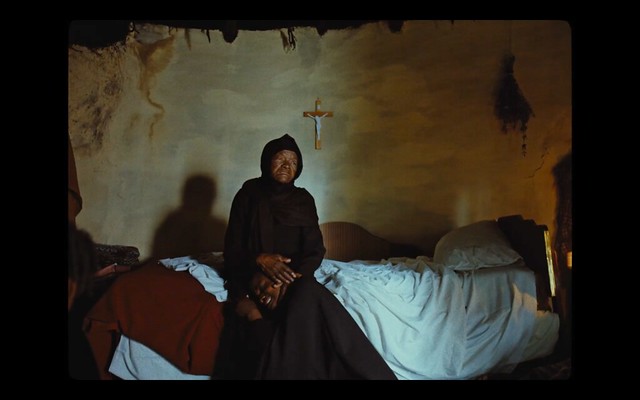
Mother, You Have Not Died Yet. But You Will. And When You Do, You Will Finally be Alive Again (2026) - Beni Mother key still_credit Advik Beni\ With perhaps the longest movie title that I've encountered, South African filmmaker Advik Beni's impressionistic film examines the post-apartheid Indian township of Cato Manor, near Durban, South Africa, still simmering with ethnic tension. It is told through Lishana, an Indian descendent who is caring for her aging, dying mother and her family history.

Lishana describes her grief after the hindi funeral ceremony, as she feels the void of her mother's presence in her everyday life - everything and nothing has changed at the same time. As memories of her mother, Leela, doing mundane things with her - cooking, tending to the garden, having conversations and eating together, persist, it's like the line between the past and the present is blurring.

Everyone deals with grief differently- Lishana delves into her art practice: portrait photography. With her relative's barbershop in town, she takes pictures of her neighbors and citizens of Durban - young, old, black, indian. And her photographs are physical links to the sordid history of colonialism, immigration, and apartheid.

Lishana's family history is an interesting one - Her grandmother was one of thousands of Indians brought in to South Africa to work in the sugarcane plantations, an indentured labor force by the Colonial British Empire. Lishana, who never had been to the homeland of her ancestors, nevertheless kept her Indian traditions and hindu culture within the working class neighborhood of Cato Manor. Her imagined India created a lore in her mind, much grander than the reality.

There has always been violence in KwaZulu-Natal province and the city of Durban both under apartheid and post-apartheid period. The 1949 Durban riot was against Indian settlement, then the unrest in 2021 amid economic hardship during COVID-19 and the imprisonment of former president, Jacob Zuma. Accompanied by archival footage, Lishana recounts the region's checkered history and ongoing tension and violence.

Shot on grainy film stock and shaky handheld camera, Mother... has the looks and feels of old ethnography documentaries of the bygone era. Beni also incorporates a multitude of art/film techniques that include stop motion, drawings, immersive sound design and reenactments. The filmmaker portrays a picture of an immigrant enclave using impressionistic film language, often focusing on life's little details - the color, sounds, ephemeral qualities of everyday life.

Merging past and present, personal and historical, the film has a quality of a lucid dream, where memories and imaginations merge and create new reality personalized for its subject. Mother, You Have Not Died Yet. But You Will. And When You Do, You Will Finally be Alive Again, is a beautiful audio visual experience. Mother, You Have Not Died Yet. But You Will. And When You Do, You Will Finally be Alive Again, enjoyed its world premiere at FID Marseille 2026 where it won the Audience Award. Visit the film's page at the official festival site for more information.

Friday, May 8, 2026

Rhythm of Life

Variations on a Theme (2026) - Delmar, Jacobs Screenshot 2026-05-08 at 11.20.38 AM Screenshot 2026-05-08 at 11.24.35 AM Screenshot 2026-05-08 at 11.31.00 AM Screenshot 2026-05-08 at 11.35.59 AM Screenshot 2026-05-08 at 11.49.07 AM Screenshot 2026-05-08 at 11.54.07 AM Screenshot 2026-05-08 at 11.55.05 AM Screenshot 2026-05-08 at 11.59.31 AM Screenshot 2026-05-08 at 12.11.09 PM Screenshot 2026-05-08 at 12.18.20 PM Screenshot 2026-05-08 at 12.19.42 PM Devon Delmar and Jason Jacobs's Variations on a Theme is a quiet revelation of a film. Shot entirely in the small rural community of Kharkams in Kamiesberge mountains in Western South Africa, it records the daily lives of Hettie, an 80 year old goat herder and her neighbors. With a stationary camera and wide frames, it records sunrises and sunsets and everything in between, as the narration (by Jason Jacobs, a grandson of Hettie) unhurriedly informs us that some town-wide scam is in progress. On the radio and loud speakers from a car, they are asking the residents, many of whom are descendents of WWII veterans, to turn in 'the blue form' to get reparation money the government owes them. According to the narrator, black South African soldiers were only compensated with a pair of army boots and a bicycle when they returned after the war.

All of the residents are swept up in the scam, paying exorbitant fees to file the form - "to spend money to get money". Even stoic Hettie is swept up in it. But daily life goes on. She lets out the goats in the morning, gets water from the town water tank (which serves also as the town teenagers hangout), chat with her neighbors, use the communal outhouse, watch some TV shows and see the sun goes down over the rolling, picaresque hills from her porch. Others play dominoes outside the ramshackle supermarket and children play in the playground.

Delmar and Jacobs build a gentle rhythm through repetition, in Variations on a Theme. It lulls viewers into a warm, comfortable and inviting place, where every day is pretty much the same. Hettie's daily routine goes on, the local dreamer who sleeps outside still dreams of a woman he met in the 70s. The sun goes down every night, providing a spectacular sunset every time. The cramped houses and their colorful walls and live animals, everything in the film is laid back and unchanging. The commotion comes from people still anxiously holding on to a hope for the reparations to kick in, which they believe, will come any day now - Gladwin, the local hairdresser, ordered all new supplies, expecting to get paid from the fund. Domino players talk about taking an overseas trip with the money.

Hettie's birthday is coming and according to the narrator, her large family from the city that she seldom talks to will be coming for her birthday, even though she is pretty much 'detached' now and started to enjoy her isolation and solitude ever since her husband's passing. After the hectic birthday celebration, and her large family staying in her small house for several days, Hettie's daughter suggests that she come and live with them in the city. She is not getting any younger and it is time to leave behind the inconvenience of rural living.

The storm's brewing from the distant, Hettie's milk on her nightstand falls and shatters on the ground. The change is coming. Delmar and Jacobs observe all these in an unhurried fashion, lamenting silently on the inevitability of time passing and changing way of life. Beautiful work.

Wednesday, March 31, 2021

Dancing with the Ghost

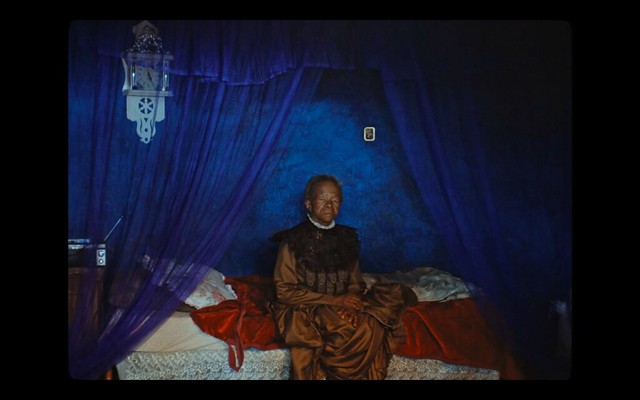
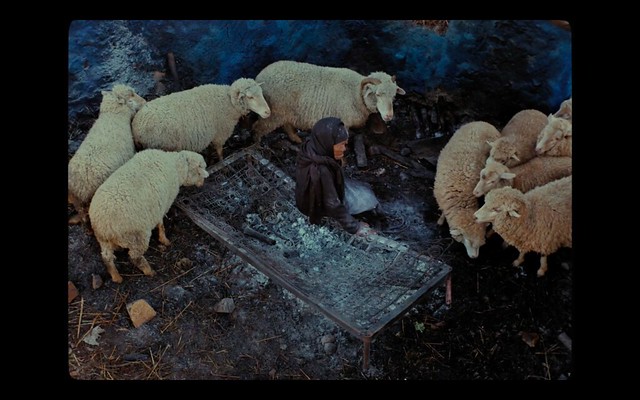
This is Not a Burial, It's a Resurrection (2020) - Mosese Screen Shot 2021-03-16 at 3.16.16 PM Screen Shot 2021-03-16 at 3.52.55 PM Screen Shot 2021-03-16 at 3.48.06 PM Screen Shot 2021-03-16 at 3.57.45 PM Screen Shot 2021-03-16 at 4.03.25 PM Screen Shot 2021-03-16 at 4.14.01 PM Screen Shot 2021-03-17 at 9.12.13 AM Screen Shot 2021-03-17 at 9.19.57 AM Screen Shot 2021-03-17 at 9.22.37 AM Screen Shot 2021-03-17 at 9.40.42 AM Mantoa (Marytwala Mhlongo) lost all her family members over the years and now she is a recipient of her son's dead body. He died in an accident, presumably while working nearby mining field. Since she has no will to live anymore, she starts preparing for her death. She puts on a dress her husband gifted her long ago, lays down in her bed for death to come and take her away.

But the death doesn't come. She tries to hire a local man to dig her grave for him. He refuses – it’s a bad omen for digging a grave for someone who is still living. She will need to do it herself. In the mean time, her village is under the threat of a dam being built nearby. All villagers will need to relocate because of their valley will be flooded. It means their ancestral burial ground will be flooded as well. As Mantoa objects to the dam project, pleading with the villagers about the importance of having their land, she unwillingly becomes a leader of a movement.

Mosotho filmmaker and visual artist Lemohang Jeremiah Mosese's This is Not a Burial, It's a Resurrection is a stunning film that defies easy categorization. Gorgeously shot in full frame by Pierre de Villiers with captivating score by Berlin based electronic composer Miyashita Yu, the film is a highly visual, aural experience that charts new frontier in its cinematic language. Only comparison I can think of is the work of Pedro Costa in its painterly, static framing and its visual poetry.

Steeped in Lesotho's natural beauty and its culture and history, the narrative moves languidly forward as our grief stricken, life beaten heroine picks herself up and fight against the village chief and the catholic priest who are resigned to give up the land, their heritage and dignity in the name of progress. Her refusal to relocate and her passionate speech about protecting their land and ancestral burial ground where all their families and ancestors are buried, the villagers finally come to her aide. They start cleaning up the cemetery and pressure the village leaders to reconsider.

The company which is behind the dam construction, uses scare tactics and violence to oppress the villagers. As their celebration turns into tragedy, the villagers are forced to relocate. It is again Mantoa, who has nothing else to lose, making the last stand.

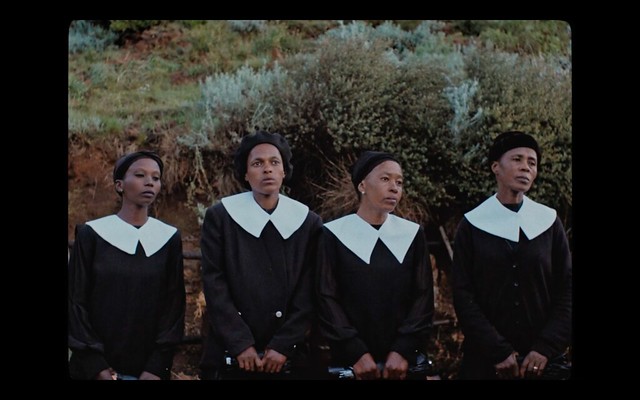
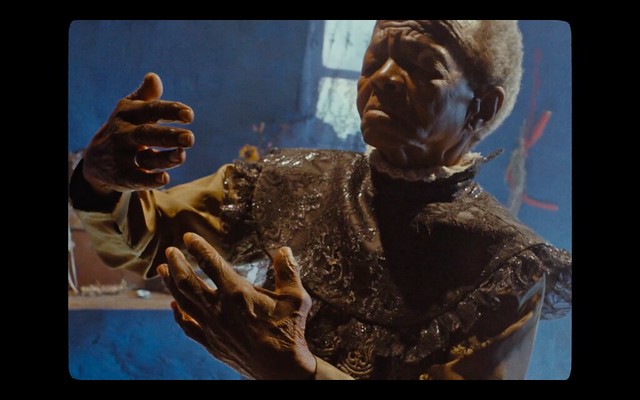
It's Marytwala Mhlongo's weathered old face that speaks thousand words here. Her dignified stand in her forever black mourning dress stands out like a sore thumb in the frame mostly populated by giant Lesotho sky. Nature, however beautiful, doesn't let you forget that human are insignificant in Mosese's expressive framing. There are so many memorable scenes but Mantoa dancing in her best dress dancing with the dead - shot in close handheld camera, and women in black choir singing at Mantoa’s son’s funeral, stand out for me.

This is Not a Burial, It's a Resurrection signals the arrival of a major new voice in international cinema, one who is gifting us a unique cinematic language rooted in his tradition and culture. One of the year’s best.

Sundance winner This is Not a Burial, It's a Resurrection opens April 2, in virtual cinemas nationwide.

Tuesday, May 15, 2018

New York African Film Festival Celebrates Its Magnificent 25th Year! 5/16 - 6/10

With plenty of evidence of the decline of Western Civilization presenting itself on TV news these days, NYAFF (not to be confused with New York Asian Film Fest) , in it's 25th year, with more than 30 films on its slate, criss-crossing 3 of New York's venerable film institutions (FSLC, BAM and Maysle's Cinema), gives filmgoers a chance to experience fresh perspectives on the world.
This year's festival includes new films from emerging filmmakers, shorts programs, revivals, panel discussions and an art exhibition.

Opening Night will spotlight Apolline Traoré’s award-winning film, Borders, which speaks to migration as well as to African women’s struggles, in a timely echo of the #MeToo movement. French director Berni Goldblat’s Wallay will have its New York premiere as the festival’s Centerpiece film.

The festival tips a hat to key figures in the history of African film with the U.S. premieres of Abderrahmane Sissako: Beyond Territories, Valérie Osouf’s intimate portrait of the acclaimed director of Bamako and the Oscar-nominated Timbuktu; a 2017 version of the 1983 classic Selbe: One Among Many, by Safi Faye, the first sub-Saharan woman to direct a theatrically released film, now restored to its original Wolof language; and Mohamed Challouf’s Tahar Cheriaa: Under the Shadow of the Baobab, which documents the career of the founder of the Carthage Film Festival, Africa’s first film festival. The festival will include the 1989 documentary short Parlons Grand-mère by the late Senegalese director Djibril Diop Mambéty.


These are the dates for this year's New York African Film Festival:


FSLC: 5/16 - 5/22, Brooklyn Academy of Music: 5/24 - 5/28 & Maysle's Cinema: 6/7 - 6/10

Make no mistakes, below outstanding, touching, funny, powerful and hopeful films are definitely not made in shithole countries:

Borders - Apolline Traoré *Opening Night Film
AFRICAN_Borders_01
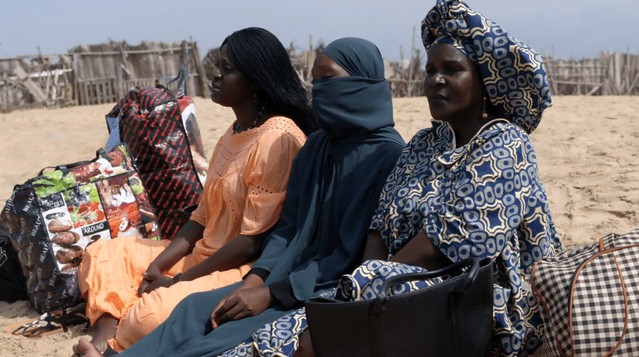
Adjara, a Senegalise woman with her savings in her waste bag, travels to Lagos, Nigeria in the hopes of becoming a trader. Along the way, she meets 3 other female travelers in various situations.

This six day journey from Senegal through Mali, Burkina Fasso, Benin to Nigeria is an arduous one as they face rampant border corruptions among the sub-Saharan countries, violence, rape and fighting with other passengers, shady transportation and breakdowns.

Borders highlights pan-West African sisterhood and imagines the better future for its female citizens.

Wallay - Berni Goldblat *Centerpiece
Screen Shot 2018-05-15 at 8.52.46 AM
I've seen quite a few films over the years about a troubled youth going through right of passage visiting and connecting with his/her ancestral homeland, but none as funny and touching and joyous as Wallay.

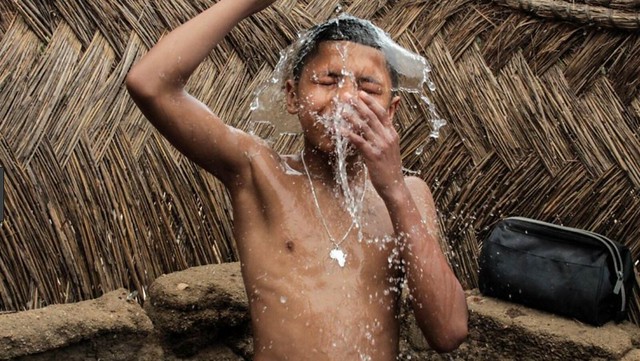
Wallay takes place in small village in Burkina Fasso, where Ady, a troubled 13 year old city kid from Paris is sent to by his father, after stealing money from his home to buy a shiny pair of red sneakers. Decked out in street gear, an iphone and fancy headphones, the spoiled brat faces reality of no electricity and two buckets of water per shower in the African village. Add to this unimaginable hardship, his uncle Amadou, a respected village elder, is a hardass and wants him to work on a fishing boat for 2 euros per day to pay off his debt. Not only that, after finding out Ady is not circumcised, the uncle wants the local doctor to perform circumcision on the boy to make him a real man.

At Amadou's urging, Jean, Ady's grown up distant cousin and a guide, takes the boy to meet his grandma who lives in a remote mountain town. Ady becomes grandma's instant favorite who calls him 'Little Hubby'. With the help of 'chilled out' grandma, Ady slowly learns the importance of family, discipline and respect. He gets to experience a bit of romance too with Yeli, grandma's little helper.

Shot beautifully on film, Wallay benefits from amazing performance by Makan Nathan Diarra as Ady, an insolent city kid with an attitude, slowly turning himself into a man. Goldblat doesn't rely on its spectacular locale or its customs, he doesn't have to. The story of Ady is universal enough. Everything plays out naturally. Hugely captivating and entertaining, Wallay is one of the best films I've seen this year.

Abderrahmane Sissako: Beyond Territories - Valérie Osouf
AbderrhamaneSissakoBeyondTerritories_05 copy
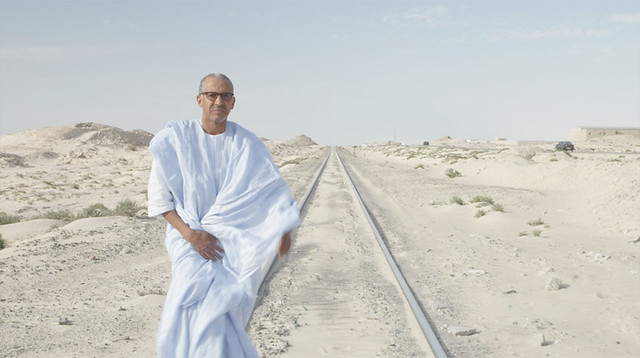
Valérie Osouf's documentary on one of Africa's most revered filmmakers, Abderrahmane Sissako, is not only an intimate portrayal but an essential viewing in understanding the man behind the camera. Widely regarded as a modern day master filmmaker with his simplicity, directness, colors and movement in films like The Life on Earth, Bamako and Timbuktu, highlighting the lives of fellow Malians in the age of global capitalism and ISIS, Sissako elevated modern African cinema to the world stage. Thankfully, with the help of Western admirers - Martin Scorsese and Danny Glover (both are interviewed for the film), he keeps on making gems reflecting the world with Africa at its center.

In an informal open house setting, Sissako invites and talk with everyone - a film enthusiast cop, a philosopher, scholars, actors, dancers while the life is happening all around them - roosters walk across the court yard, children play around, a woman gets water from the well. His background gets revealed - from his Moscow film school days - his mentor Marlen Khutsiev reminisces that he knew Sissako would be a great filmmaker because he noticed his thoughtful gaze when they first met. He gets his intellectual side from his father's family and warrior side from his mother's who are from very different parts of Mali, therefore his deeper understanding of different cultures.

The last segment of the film takes place in China, where he's researching for his new film, a love story about a Chinese man and an African woman, tentatively going to be taking place in China, Ethiopia and possibly Nigeria. He chats with his good friend Danny Glover over skype about his project. The film ends in an optimistic note. The influence of China is already felt globally. But Africa can't be recolonized. Connecting these elements, it's more like Silk Roads connecting different worlds with mutual respect than one side dominating the other.

As we witness the obvious decline of Western civilization every day, I can see Sissako's vision and it's pretty bright.

*My interview with Abderrahmane Sissako last year

Five Fingers for Marseilles - Michael Matthews
Five Fingers of Marseilles
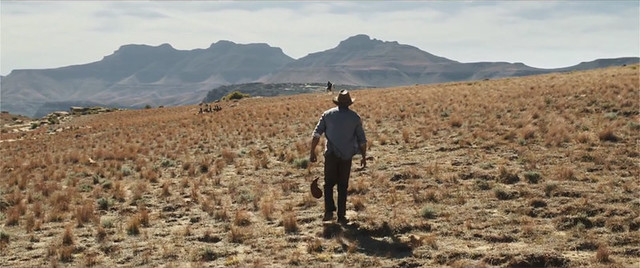
Marseilles is a railroad town in South Africa which still bears the name of its colonial days. Michael Matthews' sumptuously shot Western Five Fingers for Marseilles starts with 5 young friends making an oath to protect their town as freedom fighters, even if it means from each other. Tau, nicknamed Lion of Marseilles, one of the five, flees town after killing corrupt and abusive white police officers, leaving his friends and lovely Lerato behind to fend for themselves.

Now a grown man and a small time outlaw, Tau (Vuyo Dabula) comes back to town. The 'New Marseilles' is a booming town with Pockets, one of the five friends, as a mayor who is keeping uneasy peace by making pact with Lepoko - a ruthless, one eyed super-villain who wants to bring chaos at any cost with his marauding gang known as Nightrunners. No one notices Tau, and start calling him 'Nobody' except for 'Pastor', a storyteller of the five. As the Lepoko's grip on the town becomes tighter, and everyone needs a savoir, Tau, the cowardly, disgraced freedom fighter rise to the occasion?

Just like a typical Western genre film, there will be bloodshed, sacrifices will be made, reckoning, redemption.... With the stunning backdrop of Lesotho Valley, Matthews morphs post-apartheid South Africa into a gripping Western.