Showing posts with label Mali. Show all posts

Tuesday, May 15, 2018

New York African Film Festival Celebrates Its Magnificent 25th Year! 5/16 - 6/10

With plenty of evidence of the decline of Western Civilization presenting itself on TV news these days, NYAFF (not to be confused with New York Asian Film Fest) , in it's 25th year, with more than 30 films on its slate, criss-crossing 3 of New York's venerable film institutions (FSLC, BAM and Maysle's Cinema), gives filmgoers a chance to experience fresh perspectives on the world.
This year's festival includes new films from emerging filmmakers, shorts programs, revivals, panel discussions and an art exhibition.

Opening Night will spotlight Apolline Traoré’s award-winning film, Borders, which speaks to migration as well as to African women’s struggles, in a timely echo of the #MeToo movement. French director Berni Goldblat’s Wallay will have its New York premiere as the festival’s Centerpiece film.

The festival tips a hat to key figures in the history of African film with the U.S. premieres of Abderrahmane Sissako: Beyond Territories, Valérie Osouf’s intimate portrait of the acclaimed director of Bamako and the Oscar-nominated Timbuktu; a 2017 version of the 1983 classic Selbe: One Among Many, by Safi Faye, the first sub-Saharan woman to direct a theatrically released film, now restored to its original Wolof language; and Mohamed Challouf’s Tahar Cheriaa: Under the Shadow of the Baobab, which documents the career of the founder of the Carthage Film Festival, Africa’s first film festival. The festival will include the 1989 documentary short Parlons Grand-mère by the late Senegalese director Djibril Diop Mambéty.


These are the dates for this year's New York African Film Festival:


FSLC: 5/16 - 5/22, Brooklyn Academy of Music: 5/24 - 5/28 & Maysle's Cinema: 6/7 - 6/10

Make no mistakes, below outstanding, touching, funny, powerful and hopeful films are definitely not made in shithole countries:

Borders - Apolline Traoré *Opening Night Film
AFRICAN_Borders_01
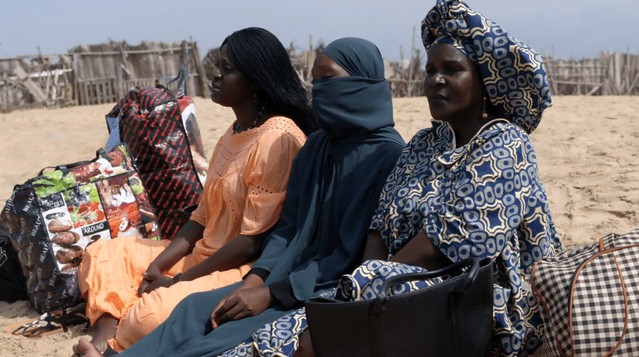
Adjara, a Senegalise woman with her savings in her waste bag, travels to Lagos, Nigeria in the hopes of becoming a trader. Along the way, she meets 3 other female travelers in various situations.

This six day journey from Senegal through Mali, Burkina Fasso, Benin to Nigeria is an arduous one as they face rampant border corruptions among the sub-Saharan countries, violence, rape and fighting with other passengers, shady transportation and breakdowns.

Borders highlights pan-West African sisterhood and imagines the better future for its female citizens.

Wallay - Berni Goldblat *Centerpiece
Screen Shot 2018-05-15 at 8.52.46 AM
I've seen quite a few films over the years about a troubled youth going through right of passage visiting and connecting with his/her ancestral homeland, but none as funny and touching and joyous as Wallay.

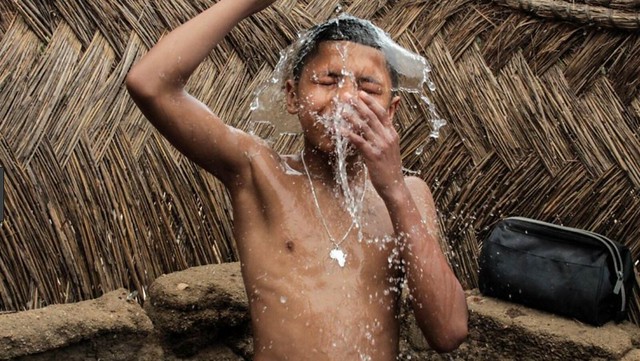
Wallay takes place in small village in Burkina Fasso, where Ady, a troubled 13 year old city kid from Paris is sent to by his father, after stealing money from his home to buy a shiny pair of red sneakers. Decked out in street gear, an iphone and fancy headphones, the spoiled brat faces reality of no electricity and two buckets of water per shower in the African village. Add to this unimaginable hardship, his uncle Amadou, a respected village elder, is a hardass and wants him to work on a fishing boat for 2 euros per day to pay off his debt. Not only that, after finding out Ady is not circumcised, the uncle wants the local doctor to perform circumcision on the boy to make him a real man.

At Amadou's urging, Jean, Ady's grown up distant cousin and a guide, takes the boy to meet his grandma who lives in a remote mountain town. Ady becomes grandma's instant favorite who calls him 'Little Hubby'. With the help of 'chilled out' grandma, Ady slowly learns the importance of family, discipline and respect. He gets to experience a bit of romance too with Yeli, grandma's little helper.

Shot beautifully on film, Wallay benefits from amazing performance by Makan Nathan Diarra as Ady, an insolent city kid with an attitude, slowly turning himself into a man. Goldblat doesn't rely on its spectacular locale or its customs, he doesn't have to. The story of Ady is universal enough. Everything plays out naturally. Hugely captivating and entertaining, Wallay is one of the best films I've seen this year.

Abderrahmane Sissako: Beyond Territories - Valérie Osouf
AbderrhamaneSissakoBeyondTerritories_05 copy
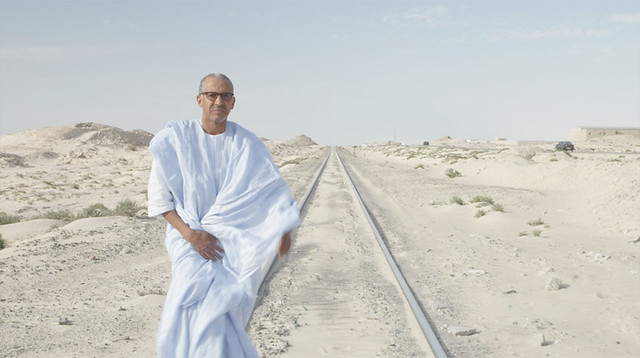
Valérie Osouf's documentary on one of Africa's most revered filmmakers, Abderrahmane Sissako, is not only an intimate portrayal but an essential viewing in understanding the man behind the camera. Widely regarded as a modern day master filmmaker with his simplicity, directness, colors and movement in films like The Life on Earth, Bamako and Timbuktu, highlighting the lives of fellow Malians in the age of global capitalism and ISIS, Sissako elevated modern African cinema to the world stage. Thankfully, with the help of Western admirers - Martin Scorsese and Danny Glover (both are interviewed for the film), he keeps on making gems reflecting the world with Africa at its center.

In an informal open house setting, Sissako invites and talk with everyone - a film enthusiast cop, a philosopher, scholars, actors, dancers while the life is happening all around them - roosters walk across the court yard, children play around, a woman gets water from the well. His background gets revealed - from his Moscow film school days - his mentor Marlen Khutsiev reminisces that he knew Sissako would be a great filmmaker because he noticed his thoughtful gaze when they first met. He gets his intellectual side from his father's family and warrior side from his mother's who are from very different parts of Mali, therefore his deeper understanding of different cultures.

The last segment of the film takes place in China, where he's researching for his new film, a love story about a Chinese man and an African woman, tentatively going to be taking place in China, Ethiopia and possibly Nigeria. He chats with his good friend Danny Glover over skype about his project. The film ends in an optimistic note. The influence of China is already felt globally. But Africa can't be recolonized. Connecting these elements, it's more like Silk Roads connecting different worlds with mutual respect than one side dominating the other.

As we witness the obvious decline of Western civilization every day, I can see Sissako's vision and it's pretty bright.

*My interview with Abderrahmane Sissako last year

Five Fingers for Marseilles - Michael Matthews
Five Fingers of Marseilles
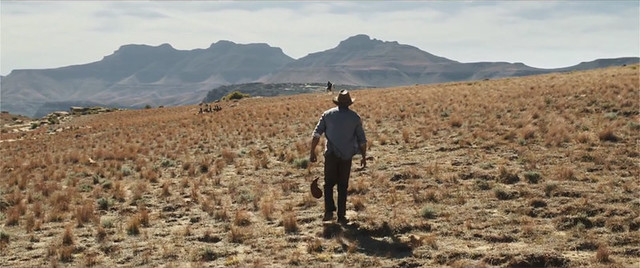
Marseilles is a railroad town in South Africa which still bears the name of its colonial days. Michael Matthews' sumptuously shot Western Five Fingers for Marseilles starts with 5 young friends making an oath to protect their town as freedom fighters, even if it means from each other. Tau, nicknamed Lion of Marseilles, one of the five, flees town after killing corrupt and abusive white police officers, leaving his friends and lovely Lerato behind to fend for themselves.

Now a grown man and a small time outlaw, Tau (Vuyo Dabula) comes back to town. The 'New Marseilles' is a booming town with Pockets, one of the five friends, as a mayor who is keeping uneasy peace by making pact with Lepoko - a ruthless, one eyed super-villain who wants to bring chaos at any cost with his marauding gang known as Nightrunners. No one notices Tau, and start calling him 'Nobody' except for 'Pastor', a storyteller of the five. As the Lepoko's grip on the town becomes tighter, and everyone needs a savoir, Tau, the cowardly, disgraced freedom fighter rise to the occasion?

Just like a typical Western genre film, there will be bloodshed, sacrifices will be made, reckoning, redemption.... With the stunning backdrop of Lesotho Valley, Matthews morphs post-apartheid South Africa into a gripping Western.

Tuesday, September 30, 2014

A Strong Condemnation of Religious Extremism

Timbuktu (2014) - Sissako
 photo 59dc077c-18de-4e76-be8b-989a801919b9_zps979acb1a.jpg
Timbuktu, that faraway place, the end of the world, is an actual city in Northern Mali in Africa, being once the bustling trade town in sub-Saharan Africa and famous for its fabulous architecture, libraries and scholars. Abderramane Sissako (Bamako) tells a tragic tale based on true events, taking place in this famed city.

The film starts with traditional wooden African statues being used as targets in a target practice by the Islamic militants who just rolled into town. When Alain Resnais and Chris Marker made Even Statues Die, I don't think this was the image they had in mind: they were talking about reappropriation of those artifacts being mass produced for Western consumption, losing its intended cultural significance, not being literally blown to pieces. Now times have changed. These so called jihadists, walks around with AK-47s across their chest, warning the townsfolk that they are under strict sharia law from now on - no smoking, no music, women have to cover their hands, faces and feet, no public gatherings, the list goes on. Despite city imam's pleading, they start arresting people and carrying out the punishment - public lashings or executions for playing music, unmarried men and women hanging out together, playing football, women washing their hair in public.... They even start marrying their young soldiers (who don't even speak the language) to local girls without their parents' consent.

In the midst of all this, is a story of Kidane, a nomadic herder with his beautiful wife and daughter, living in the desert. All their friends and neighbor are gone, fearing these rude Arabs from the north. But he and his family have no intention of moving on. They have seen many occupiers come and go, so this also will pass. Besides they don't have anywhere else to go. A tragedy strikes when one of his cows gets killed by a local fisherman and during heated dispute, Kidane accidentally kills the fisherman. He is promptly arrested and condemned to death by sharia law.

Timbuktu's tragedy is accentuated by achingly beautiful surroundings shot in widescreen format by cinematographer Sulfiane El Fani (Blue is the Warmest Color). There is a lyrical sequence of young people playing soccer without the ball in the sun drenched desert. They sprint, pass the invisible ball, score or block and cheer. A sort of an impromptu in-your-face defiance and condemnation, highlighting the ridiculousness of the law. The sequence is both comical and sad.

Sissako paints a complex society where several different languages are spoken. Even though all of the inhabitants of Timbuktu are people of faith, the director makes it clear that they have different cultural backgrounds and customs. Timbuktu is a strong statement against the extreme Islamic militants who seem to take the moral high ground and impose their laws upon people they don't understand. It's even more disgusting when they don't even try to understand. We've seen this kind of hubris time and time again in any types of colonial occupying forces. And we know that it breeds human tragedies everywhere.

As the film builds up to its heartbreaking conclusion, one wonders the true fate befallen on Timbuktu and its inhabitants in 2012 when it was briefly taken over by Islamic rebels - many were killed and maimed. Its famed Ahmed Baba Institute which housed many invaluable manuscripts was set on fire. The film is a beautifully told human tragedy and strong condemnation of religious extremism.

Timbuktu won Prize of the Ecumenical Jury and François Chalais Prize at this year's Cannes Film Fest. The film screens on 10/1 at 6pm and again 10/2 at 4pm. For more information, please visit FSLC website.

Saturday, September 13, 2014

Song of Sorrows

Bamako (2006) - Sissako
 photo fa424eb2-1339-4cc6-a54d-49871340a785_zps68a2b10d.png
 photo 8e1e88f5-4c37-4551-87e7-eb18b016ce35_zps4077c795.png
 photo 5dbbf0e0-d8b8-42f8-8801-808246e9ebcb_zps5468a90c.png
 photo 9fb3e738-5d5f-4a22-8144-b5bff877ff1b_zps6335da63.png
 photo dcdaf07b-bb8b-41e4-b914-a3ad814d22e6_zpsa10ec232.png
 photo 88bc2fc1-9b93-4b8e-9807-94c0b2ce83a7_zps165cf200.png
Bamako is a seething indictment on policies of 'structural adjustment' imposed by IMF and The World Bank on Africa. The setting is an outdoor trial, a courtyard of ordinary Malian households where everyday life happens simultaneously with the proceedings. The witnesses, from all walks of life, testify against how the astringent policies of the western institutions that started 25 years ago brought more poverty, deaths and unpayable debt to many African nations including Mali, instead of development and prosperity. In the meantime, there is a slight narrative with an impoverished, emasculated husband and his beautiful wife who sings at bars for their income. He is learning Hebrew in the hopes of becoming a guard for an Israeli embassy in Mali that doesn't exist. A wedding and funeral happen in the same courtyard, life goes on still. Sissako playfully exerts film within a film called Death in Timbuktu, where cowboys are played by Danny Glover, Elia Suleiman and other film directors from developing countries doing OK corral style gunfights bearing not so subtle outcome - dead are the innocent local bystanders. Music in Bamako, traditional or otherwise, is a big part of expressing people's frustrations rather than dialog. It's a pointy yet poetic film that needs to be seen by anyone who has interests in the state of Africa.

Thursday, April 10, 2014

Travelers and Magicians

Yeelen (1987) - Cissé
 photo 66b6ff4a-e5d7-4814-8e69-aff6df1d5ebf_zps643aebb0.png
 photo 286ade64-d50f-4f6d-9381-cfc7ff83a23b_zps8aabc39e.png
 photo 229bbd4d-6788-4de0-8b4a-84f3c48b17e7_zpsfd78d2d8.png
 photo 405e52f9-ce98-4a1a-bb5c-f8446e026093_zps79e99c65.png
 photo e498b7da-1943-4ce3-a063-dde56c1a0ab7_zpsac2e6b04.png
Talking about an epic of Biblical proportions, Soulemane Cissé tells a Bambara myth steeped in animism and sorcery I couldn't help but compare Yeelen to Scorsese's Last Temptation while watching it. Like many other folk tales from different cultures, Yeelen concerns a great journey, good vs evil and father-son rivalry. Young sorcerer Nianankoro is on the run with his mother from his all-powerful, vengeful father, Soma. Niananko apparently possesses an amulet (a big gemstone) that belongs to Komo. Niananko needs to go to his uncle/Soma's twin Djigui. During the long journey, he gets friendly with a tribal king and helps him to ward off his enemies with his magic powers. The king requests another favor. His youngest wife is barren and he wants Niananko to fix her infertility. After taking some hallucinogenic roots together, then overcome by desire, Niananko and the young wife of the king does a dirty deedly. Seeing how remorseful the young man is, the chief awards him the girl, who is now pregnant and carrying Niananko's child. In the mean time, Soma is trailing along, with his magic post, carried by two servants, on his way to destroy Niananko.

Yeelen features some beautiful imagery of Mali. Even though the acting is heavily theatrical, all the principals involved have genuine presence and are great at conveying their feelings. Cissé uses simple effects to show sorcerers powers: burning bushes, sound effects, playing the action backward, star-filter effects, etc. The film has a very different sense of lyricism and visual poetry I'm not really familiar with, and it's very refreshing. I dig it.