Showing posts with label African Cinema. Show all posts

Tuesday, May 15, 2018

New York African Film Festival Celebrates Its Magnificent 25th Year! 5/16 - 6/10

With plenty of evidence of the decline of Western Civilization presenting itself on TV news these days, NYAFF (not to be confused with New York Asian Film Fest) , in it's 25th year, with more than 30 films on its slate, criss-crossing 3 of New York's venerable film institutions (FSLC, BAM and Maysle's Cinema), gives filmgoers a chance to experience fresh perspectives on the world.
This year's festival includes new films from emerging filmmakers, shorts programs, revivals, panel discussions and an art exhibition.

Opening Night will spotlight Apolline Traoré’s award-winning film, Borders, which speaks to migration as well as to African women’s struggles, in a timely echo of the #MeToo movement. French director Berni Goldblat’s Wallay will have its New York premiere as the festival’s Centerpiece film.

The festival tips a hat to key figures in the history of African film with the U.S. premieres of Abderrahmane Sissako: Beyond Territories, Valérie Osouf’s intimate portrait of the acclaimed director of Bamako and the Oscar-nominated Timbuktu; a 2017 version of the 1983 classic Selbe: One Among Many, by Safi Faye, the first sub-Saharan woman to direct a theatrically released film, now restored to its original Wolof language; and Mohamed Challouf’s Tahar Cheriaa: Under the Shadow of the Baobab, which documents the career of the founder of the Carthage Film Festival, Africa’s first film festival. The festival will include the 1989 documentary short Parlons Grand-mère by the late Senegalese director Djibril Diop Mambéty.


These are the dates for this year's New York African Film Festival:


FSLC: 5/16 - 5/22, Brooklyn Academy of Music: 5/24 - 5/28 & Maysle's Cinema: 6/7 - 6/10

Make no mistakes, below outstanding, touching, funny, powerful and hopeful films are definitely not made in shithole countries:

Borders - Apolline Traoré *Opening Night Film
AFRICAN_Borders_01
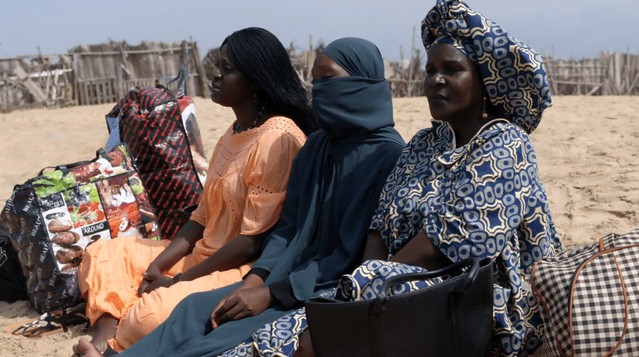
Adjara, a Senegalise woman with her savings in her waste bag, travels to Lagos, Nigeria in the hopes of becoming a trader. Along the way, she meets 3 other female travelers in various situations.

This six day journey from Senegal through Mali, Burkina Fasso, Benin to Nigeria is an arduous one as they face rampant border corruptions among the sub-Saharan countries, violence, rape and fighting with other passengers, shady transportation and breakdowns.

Borders highlights pan-West African sisterhood and imagines the better future for its female citizens.

Wallay - Berni Goldblat *Centerpiece
Screen Shot 2018-05-15 at 8.52.46 AM
I've seen quite a few films over the years about a troubled youth going through right of passage visiting and connecting with his/her ancestral homeland, but none as funny and touching and joyous as Wallay.

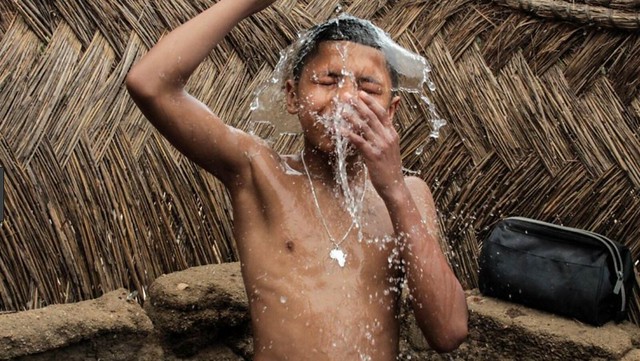
Wallay takes place in small village in Burkina Fasso, where Ady, a troubled 13 year old city kid from Paris is sent to by his father, after stealing money from his home to buy a shiny pair of red sneakers. Decked out in street gear, an iphone and fancy headphones, the spoiled brat faces reality of no electricity and two buckets of water per shower in the African village. Add to this unimaginable hardship, his uncle Amadou, a respected village elder, is a hardass and wants him to work on a fishing boat for 2 euros per day to pay off his debt. Not only that, after finding out Ady is not circumcised, the uncle wants the local doctor to perform circumcision on the boy to make him a real man.

At Amadou's urging, Jean, Ady's grown up distant cousin and a guide, takes the boy to meet his grandma who lives in a remote mountain town. Ady becomes grandma's instant favorite who calls him 'Little Hubby'. With the help of 'chilled out' grandma, Ady slowly learns the importance of family, discipline and respect. He gets to experience a bit of romance too with Yeli, grandma's little helper.

Shot beautifully on film, Wallay benefits from amazing performance by Makan Nathan Diarra as Ady, an insolent city kid with an attitude, slowly turning himself into a man. Goldblat doesn't rely on its spectacular locale or its customs, he doesn't have to. The story of Ady is universal enough. Everything plays out naturally. Hugely captivating and entertaining, Wallay is one of the best films I've seen this year.

Abderrahmane Sissako: Beyond Territories - Valérie Osouf
AbderrhamaneSissakoBeyondTerritories_05 copy
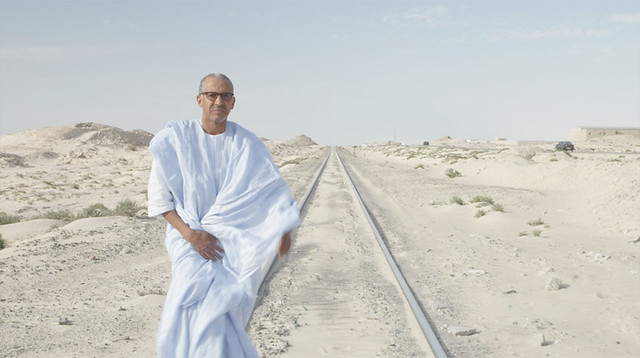
Valérie Osouf's documentary on one of Africa's most revered filmmakers, Abderrahmane Sissako, is not only an intimate portrayal but an essential viewing in understanding the man behind the camera. Widely regarded as a modern day master filmmaker with his simplicity, directness, colors and movement in films like The Life on Earth, Bamako and Timbuktu, highlighting the lives of fellow Malians in the age of global capitalism and ISIS, Sissako elevated modern African cinema to the world stage. Thankfully, with the help of Western admirers - Martin Scorsese and Danny Glover (both are interviewed for the film), he keeps on making gems reflecting the world with Africa at its center.

In an informal open house setting, Sissako invites and talk with everyone - a film enthusiast cop, a philosopher, scholars, actors, dancers while the life is happening all around them - roosters walk across the court yard, children play around, a woman gets water from the well. His background gets revealed - from his Moscow film school days - his mentor Marlen Khutsiev reminisces that he knew Sissako would be a great filmmaker because he noticed his thoughtful gaze when they first met. He gets his intellectual side from his father's family and warrior side from his mother's who are from very different parts of Mali, therefore his deeper understanding of different cultures.

The last segment of the film takes place in China, where he's researching for his new film, a love story about a Chinese man and an African woman, tentatively going to be taking place in China, Ethiopia and possibly Nigeria. He chats with his good friend Danny Glover over skype about his project. The film ends in an optimistic note. The influence of China is already felt globally. But Africa can't be recolonized. Connecting these elements, it's more like Silk Roads connecting different worlds with mutual respect than one side dominating the other.

As we witness the obvious decline of Western civilization every day, I can see Sissako's vision and it's pretty bright.

*My interview with Abderrahmane Sissako last year

Five Fingers for Marseilles - Michael Matthews
Five Fingers of Marseilles
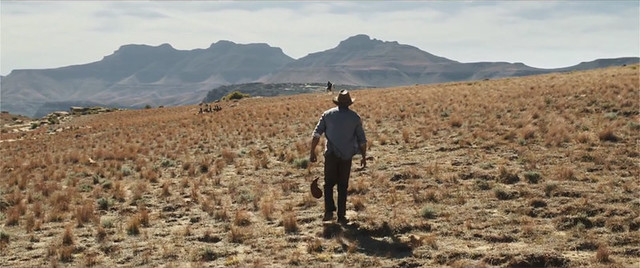
Marseilles is a railroad town in South Africa which still bears the name of its colonial days. Michael Matthews' sumptuously shot Western Five Fingers for Marseilles starts with 5 young friends making an oath to protect their town as freedom fighters, even if it means from each other. Tau, nicknamed Lion of Marseilles, one of the five, flees town after killing corrupt and abusive white police officers, leaving his friends and lovely Lerato behind to fend for themselves.

Now a grown man and a small time outlaw, Tau (Vuyo Dabula) comes back to town. The 'New Marseilles' is a booming town with Pockets, one of the five friends, as a mayor who is keeping uneasy peace by making pact with Lepoko - a ruthless, one eyed super-villain who wants to bring chaos at any cost with his marauding gang known as Nightrunners. No one notices Tau, and start calling him 'Nobody' except for 'Pastor', a storyteller of the five. As the Lepoko's grip on the town becomes tighter, and everyone needs a savoir, Tau, the cowardly, disgraced freedom fighter rise to the occasion?

Just like a typical Western genre film, there will be bloodshed, sacrifices will be made, reckoning, redemption.... With the stunning backdrop of Lesotho Valley, Matthews morphs post-apartheid South Africa into a gripping Western.

Monday, May 4, 2015

NY African Film Festival 2015

Scanning through the list of this year's New York African Film Festival, I am once again astonished by the breadth and scope of African diaspora in the 21st century transnational society. The countries represented in this year's festival, excluding the ones from the continent, are: Denmark, Spain, Brazil, Israel, Czech Republic, France, United Arab Emirate, USA and Canada. All in all, the staggering lineup represents 25 countries from all over.

22nd edition of the festival places special emphasis on digital technology and short form filmmaking which freed new generation of filmmakers from budgetary and technical limitations. The highlight of the result is shown in Women in the Media and Afripedia sidebar sections as well as two feature length documentaries - 100% Dakar and Stories of Our Lives. These films and filmmakers respresent the vibrant, multi-ethnic, collaborative art communities that are springing out from everywhere throughout the continent that we don't hear much about.

The Festival also put a spotlight on the modern classics of African cinema, including Kirikou and the Sorceress (1998), Mossane (1996) and last year's Oscar nominated Timbuktu.

*Read my interview with Abderramane Sissako (Timbuktu)

*Read my review of Timbuktu

Many of the filmmakers and actors will be on hand for the Q & A sessions after the screening of each film.

The quality of all 7 feature films I was able to preview here for this year's festival is quite extraordinary. For the list of the films and tickets please visit New York African Film Festival website.

The festival runs from 5/6 - 5/12 at FSLC, 5/14 - 5/17 at Maysles Cinema Institute and 5/ 22 - 5/25 at BAM Cinematek.


Cold Habour (Dir. Carey McKenzie, South Africa) *Opening Night Film
 photo 430896b3-fcbe-474d-9a11-cc8ac00af228_zpslyklwrum.jpg
Sizwe (Tony Kgoroge) is a beat cop and an ex-soldier against apartheid. He is a hard working man, but finds himself pitted against corrupt police establishment and former comrades-turned-criminals.

While investigating the death of a Chinese triad member at the harbor, involving illegal abalone poaching and drugs, he gets a much sought after promotion as a detective. But forces behind the promotion are dictating his actions. Sizwe must play his boss, seductive Chinese triad boss (scrumptious Nan Yu) and the Specialist (underworld crime boss and his former comrade in struggle) in order to survive.

Cold Habour is a superb policier from South Africa. Moody and understated, McKenzie's cold palette is big a contrast against sunny and earthy disposition of other recent South African films. Tony Kgoroge has a real presence as a brooding cop whose loyalty is being tested in an uncertain world.

Wednesday, May 6th, 7pm (Q&A with Carey McKenzie and Tendeka Matatu) – Walter Reade Theater, FSLC

Monday, May 11th, 2pm – Elinor Bunin Munroe Film Center, FSLC


100% Dakar - More Than Art (Dir. Sandra Krampelhuber, Austria/Senegal)
 photo f4523e54-6a67-4fdb-b313-cd8d8ed79902_zpsuzk9hjxr.jpg
Austrian filmmaker Sandra Krampelhuber documents a booming artist community in Dakar, Senegal. These young musicians, rappers, graffiti artists, fashion designers and dancers talk about their beloved city - Dakar is where it's at. For an African artist, days of being an expat, living in Europe or America is over. As the case of many interviewees, they were educated in other parts of the world but all have decided to come back.

They are short on resources, but counting on the country's 60% population being under the age of 25, they see a great potential being just where they are.

They talk about success in collaboration. These business savvy artists seized the opportunities after historic presidential election in 2012 where corrupt incumbent prez Abdoulaye Wade lost in a landslide. The young Senegalese said goodbye to the old ways of doing things- depending their future solely in the hands of politicians and authorities. As one says in the film, 'cultural activism became much more effective than political one.'

These artists are like kids left to their own devices. They are full of enthusiasm while being practical. It's their sense of optimism that I take away the most from watching 100% Dakar. And it's a good feeling.


May 9th at 4:15pm (Q&A with Sandra Krampelhuber)
Tuesday, May 12th at 4pm – Elinor Bunin Munroe Film Center, FSLC

Love the One You Love (Jenna Cato Bass, South Africa)
 photo 92bd7ad4475e66ee0ea284eaeb912b395ea4cfb6a6704a4288ca8d128837bf9e_large_zpswyzlziyb.jpg
Terri (Chiedza Mhende) works as a sex phone operator and Sandile (Andile Nebulane) works at a dog shelter. They are a great couple. All their friends say so. They themselves seldom question this fact. But deep down, Terri wants more than just love. She never utters "I love you"s but receives it aplenty from Sandile. For her love is the most insidious weapon there is. There is a world out there and South Africa is too small for her.

Everyone, including a shaman and a priest, reiterates that the commitment to love is a burden- might be a light one, but all the same. Terri's indecisiveness becomes a great chasm between them.

Then there is Nelson (Nelson Da Neves), having a hard time letting go of the memories of his ex. He hangs out with the ex's younger brother and leaves the side of the bed where she used to sleep untouched, keeping his melancholy vigil of the love that got away.

A conspiracy finds its way to the two interweaving stories - Sandile is convinced that it's some kind of outer force working against their happiness. Nelson finds an undisputed fact on the internet that he and his ex are meant to be together.

First time director Jenna Cato Bass has a delicate, fluid touch in sketching out the big questions/minutia in love and relationship in multi-culti, burgeoning Johannesburg. Love the One You Love is honest depiction of a relationship that is both charming and melancholic.

Friday, May 8th, 9:00pm – Elinor Bunin Munroe Film Center, FSLC


Red Leaves (Bazi Gete, Israel) *Centerpiece Film photo 3b45227c-be82-434c-be52-6ad02bff83f9_zpslgwzti6x.jpg
Ethiopian Israeli director Bazi Gete tells a King Lear inspired story taking place in bustling cosmopolitan city, Tel Aviv, starring non-actors. Not long after his wife's passing, an old Ethiopean-Israeli patriarch, Meseganio, announces at the shabatt dinner that he sold his apartment and that he intends to move in with one of his children. It's a shock to all three of his children, who have their own family to take care of and have gotten used to modern way of living.

Meseganio goes to his older son only to discover his daughter in-law being disrespectful and his daughter disobeying his wishes. Disgusted and upset, he leaves for his second son's house. Everything is ok at first, but soon he finds that there has been rift between his womanizing son and his long suffering wife. They fight like children in front of him and their teenage son. It is too much to bear for an old man who is a forever immigrant in a foreign country where he doesn't even speak the language.

To make matters worse, two sons decide to suggest Meseganio go to an old folks home, full of white Israeli retirees. He throws a fit, and leaves the house, only to be picked up and handcuffed by immigration services.

Red Leaves is a film that is shot like an observational documentary. Easy comparison can be made with Ozu's seminal Tokyo Story. But unlike the Japanese counterpart with its passive, aging father, Meseganio is still spirited man who is too proud to give up his old Ethiopian ways. His belligerence is treated without any sympathy. It's a harsh reality both generations have to face with head on and Gete doesn't shy away from its ugliness.

Friday, May 8th, 6:45pm (Q&A with Bazi Gete)

Sunday, May 10th, 4:15pm (Q&A with Bazi Gete) – Elinor Bunin Munroe Film Center, FSLC


The Narrow Frame of Midnight (Tala Hadid, Morocco/France/UK)
 photo 3721c5dc-74b0-4e94-9df1-3aaa8030738d_zpsy4plaswi.jpg
A stunningly beautiful, haunting film about displacement, memories and human connection. Moroccan-Iraqi Zacaria is on the road to find his brother, Yoseph, who went back to Iraq. Yoseph always has been the brave one, the one who had conviction.

Zacaria's path crosses with Aicha, a little girl kidnapped and sold to some Westerner sleazebag for pleasure, on route to a meeting point with her pimp and his girlfriend. She's come from a long way and wants Zacaria to take her away with him. He drops her off to his former French lover/wife Judith (Marie Josée Croze) living in remote Moroccan village. His journey takes him to Turkey then to Iraq.

Rather than long expositional dialog, director Tala Hadid relies on impregnated, poetic images and flashbacks to roughly sketch out the character's back stories. Lensed by Sokurov cinematographer Aleksandr Burov (Second Circle, Father and Son), the images and colors have real impact on understanding the violent history of the region and sorrows and loneliness of the displaced.

Monday, May 11th, 6:30pm (Q&A with Tala Hadid and Danny Glover) – Elinor Bunin Munroe Film Center, FSLC


National Diploma (Dieudo Hamadi, Democratic Republic of Congo/France) photo c78e644d-60ee-4067-8f50-300d12e4ad39_zpsrryey2em.jpg
Dieudo Hamadi documents trials and tribulations of high school students in Democratic Republic of Congo as they prepare for the National Exam. It's a do or die situation for many impoverished students because without the diploma, their fate is pretty much sealed in living in poverty forever. The school year has been bad - teacher's strike left many of the students lagging behind their studies. Teachers subsist on student's fees, so unpaid students get kicked out of the classroom every morning, during the roll call. It's cutthroat like that in Kisengani. The students who can't afford, and there are many, get together, chip in a little money for marquis (common house), start living together to study day and night for two months for the exam.

It's mindblowing to see how motivated and driven they are to pass the exam. It's an intense religious affair also- a preacher at the church blesses their ball pens, a girl falls down to the floor because she is possessed by ghost of her family members who don't want her to pass the exam so she needs to be exorcised, a kid goes to see a traditional witch doctor to bless him, etc.

Corruption is rampant. There is a racket for selling leak answers to the exam and everyone talks about strategies on how to cheat. Teachers come in to their marquis, complaining how they are not getting paid.

Come the exam days - one day it's a disaster because of leaks didn't provide right answers, the next day everyone's overjoyed because the given answers were right. Two months later, there are mad celebrations on the street. Then there are heartbreaks. We talk about our education system being broken. National Diploma is an eye opening experience into an education system that has everything going against students.

Sunday, May 10th, 9:00pm – Elinor Bunin Munroe Film Center, FSLC


Run (Philippe Lacote, Ivory Coast/France)
 photo 53bcbbae-2573-4ec6-a1ab-69a07d3fd17d_zpstlduahqm.jpg
A gritty modern parable that reflects recent civil war of Ivory Coast. Run tells an orphan boy named Run (played by Abdoul Bah as a boy and later Abdoul Karim Konaté), always running away from his ever changing circumstances and changing his allegiance.

Run starts first as the rainmaker's apprentice which signifies the west African country still steeped in mysticism. It's his hand that the rainmaker has to be sacrificed but he runs away. Then runs into and becomes an assistant to 'greedy Gladys', a plump woman touring and making money off of binge eating reflecting short-lived good times and greed after the country's independence. When she can't eat no more, he denies his acquaintance to her and joins a rebel group, Young Patriots, on the street. Young 'admiral' as their leader, the rebels act as the invisible arm of the government who incites jingoistic patriotism against all foreigners. Run, again, with shifty identity, running from one situation from another out of survival, has no loyalty toward the group.

It's Assa (Isaach de Bankolé), a father figure who gives him a purpose in life by training and arming him to kill the newly minted country's Prime Minister (who happens to be Admiral of the Young Patriots) for the better future of all Ivorians. The act also corresponds with the old rainmaker's prediction in the beginning what Run is destined to do.

From it's cyclical structure to beautifully shot and edited images, Lacote's skillful filmmaking is in its highest order. Combining elements of mysticism, political intrigue, gritty urban drama, Run is hypnotic and original film artfully reflecting the beleaguered nation's complex history.

Monday, May 11th, 9:00pm (Q&A with Isaach de Bankolé) – Elinor Bunin Munroe Film Center, FSLC

Tuesday, January 27, 2015

Je suis Timbuktu: Abderramane Sissako Interview

abderrahmane-sissako-ccf1589b-a107-49ad-9b5c-e52a84705cd-resize-750 A lot has happened since I talked with Abderramane Sissako last October at the New York Film Festival. Islamic terrorists' attack on the headquarter of French satire magazine Charlie Hebdo and a kosher grocery store in Paris this January shook all of Europe. And Sissako's film Timbuktu got nominated for Best Foreign Film Oscar this year.

The anti-Islam sentiment and jingoism are on the rise in Europe. With that, unfortunately, Timbuktu is embroiled in controversy on the eve of its theatrical release in France. (Read the full article from Washington Post here) It's a pity because Timbuktu is such a beautiful film and a strong condemnation of religious extremism.

The film struck me very strongly. For the little time I was given for the interview, I was fully committed to have Sissako speak about the film the whole duration. But however passionate and knowledgeable he was on the subject, he wasn't interested in schooling me about what happened in Timbuktu, he was more interested in engaging in conversation. For that I am very honored and grateful.

The film opens in New York on January 28 and January 30 in Los Angeles. And in my humble opinion, it should win an Oscar.
 

TIMBUKTU is such a powerful, tragic film. I know I don't get much time with you so I won't bother with bunch of silly questions. I just want you to talk about the film.

Abderramane Sissako: (laughs) No no no. Of course you can ask questions.

TIMBUKTU is based on/inspired by a true story. I'd like to know how you went about building a film around this true story.

Sometimes you feel that a film is useful and also necessary. I don't know if this is true but it's possible that that is true. It's not that I felt obligated to do so but I felt it was important for me to tell the story and to tell it quickly. Because I think what's happening in this part of the world is not usually told well. Because in the West, we only report about it when it's something that specifically touches us - namely, a hostage. Of course, a hostage is a dramatic situation. But we forget that on a daily bases there are people who are being held hostage and humiliated. When Timbuktu was under siege by Islamic militants, people were having their hands cut off - a guy sees that an air conditioner doesn't work so he goes there to fix it, they think he's stealing it and cut off his hand! It's just horrible. And it's as awful as hostage, but we don't talk about these arms and legs being cut off. So I think what filmmaker needs to do is that he needs to focus on ordinary people and their everyday lives.

People whose daily lives don't appear in the news. To really directly answer your question, this film really took sustenance from the city itself and the beat and the life in it.

One thing that struck me about the film was how diverse the city of Timbuktu is. There are several different languages spoken and different culture presented within the Muslim community. It is a reminiscent of other occupations who bring in their own laws and completely oblivious about the culture and customs of the people who are living there.

Timbuktu is an old city and it's historic. It's always been a meeting place, situated at a crossroads. People from different cultures have always lived there. And that was one of the reasons why they had decided to take Timbuktu, as a symbol. The parallel I can make is in New York after 9/11. What happened in New York, not only people who lived here but everyone felt like a New Yorker because what was happening. Because here every English speaker speaks another language. If you ask anyone on the street they will tell you. And it's this diversity and culture that the city was attacked because it was a symbol and that's why so many people reacted.

You made a film about Poverty of Africa with your last film BAMAKO. It's about the influence of the World Bank and the West and they are literally on trial. This one, even though extreme Islamic fundamentalism stems out of that western influence but you don't talk about the West in this film at all.

I think that's a very good question. With Bamako, I wanted to talk about the fault of other people and I didn't want this film to be like that. In this film, I wanted people to look inward, to look inside themselves and to understand that this is something that that's happening and we could say it's brought on by foreigners but those foreigners are not so distant from who we are. And Timbuktu was liberated by the French army. But I didn't want to show that. What I wanted to show was that the first revolt was by the citizens themselves - people who play soccer without a ball, that's what the resistance is.

Yes.

A woman who sings and they beat her and she sings anyway.

I read about the retreating occupiers burning down the famous Ahmed Baba Institute. I'd like to know if the sense of normalcy came back to Timbuktu after what happened in 2012.


I think the destruction of the library really had a huge impact on many people. The same thing with the mausoleums: the ground burial sites. But what's important to know is that before that happened, a lot of the people in Timbuktu have saved these artifacts. (read about it here) And today the situation is better.

How was your collaboration with your DP, Sofian El Fani (BLUE IS THE WARMEST COLOR), because there are a lot of handheld sequences and a lot of running around?

I knew his work. When I chose him, he also wanted to work with me on the project. So things were very simple between us. He works a lot with (Abdellatif) Kechiche and Kechiche is always about handheld camera and they are very tight shots. What makes El Fani a really great cinematographer is his adaptability. He knew right away what I was looking for in framing.

There were discussions of course. I don't really like closeup shots in cinema. I always want to create space because, for me, that space is an invitation, to enter into it. When I make a film I don say, "look!" I say, "come in".

I know that BAMAKO was funded in part by actor Danny Glover because no one was funding movies of African origin. Was it the case with TIMBUKTU? Was getting funding just as difficult?

No. With Bamako, what Danny Glover did was extraordinary. He was the first person who really believed in the kind of film I wanted to make. And I knew Timbuktu was supposed to be made very quickly, so the funds came very quickly too. So it wasn't really necessary to involve many people.

Oh good.

It was important to move quickly.

How long was the entire shoot?

All together, about six weeks.

Six weeks!? Wow, that's fast.

And these are distances where you are on the road full day. It was very difficult. And of course there were no trails or anything. It's also difficult to deal with people who aren't professional actors for 6 weeks. But you know, sometimes, things are difficult.

But you pulled it off beautifully.

Thank you.

What's next for you?

Without talking too much about it, it's going to be about China and Africa. But a love story.

I will very much look forward to that.


Read my Timbuktu Review Here

Saturday, September 13, 2014

Song of Sorrows

Bamako (2006) - Sissako
 photo fa424eb2-1339-4cc6-a54d-49871340a785_zps68a2b10d.png
 photo 8e1e88f5-4c37-4551-87e7-eb18b016ce35_zps4077c795.png
 photo 5dbbf0e0-d8b8-42f8-8801-808246e9ebcb_zps5468a90c.png
 photo 9fb3e738-5d5f-4a22-8144-b5bff877ff1b_zps6335da63.png
 photo dcdaf07b-bb8b-41e4-b914-a3ad814d22e6_zpsa10ec232.png
 photo 88bc2fc1-9b93-4b8e-9807-94c0b2ce83a7_zps165cf200.png
Bamako is a seething indictment on policies of 'structural adjustment' imposed by IMF and The World Bank on Africa. The setting is an outdoor trial, a courtyard of ordinary Malian households where everyday life happens simultaneously with the proceedings. The witnesses, from all walks of life, testify against how the astringent policies of the western institutions that started 25 years ago brought more poverty, deaths and unpayable debt to many African nations including Mali, instead of development and prosperity. In the meantime, there is a slight narrative with an impoverished, emasculated husband and his beautiful wife who sings at bars for their income. He is learning Hebrew in the hopes of becoming a guard for an Israeli embassy in Mali that doesn't exist. A wedding and funeral happen in the same courtyard, life goes on still. Sissako playfully exerts film within a film called Death in Timbuktu, where cowboys are played by Danny Glover, Elia Suleiman and other film directors from developing countries doing OK corral style gunfights bearing not so subtle outcome - dead are the innocent local bystanders. Music in Bamako, traditional or otherwise, is a big part of expressing people's frustrations rather than dialog. It's a pointy yet poetic film that needs to be seen by anyone who has interests in the state of Africa.

Friday, May 2, 2014

New York African Film Festival Reflects Ever Evolving Continent

In its 21st Edition, New York African Film Festival is a month long celebration of the continent's best of the best with staggering 40+ films slated in its lineup. They will be showing in three different cultural venues throughout the city. The festival presents a unique selection of contemporary and classic African films, running the gamut from features, shorts, and documentaries to animation and experimental films.

At Film Society of Lincoln Center, in celebration of the centenary of Nigeria's independence, the series kicks off with Nollywood dark comedy Confusion Na Wa by Kenneth Gyang. Centerpiece film is the much-anticipated Half of a Yellow Sun, directed and adapted by Biyi Bandele and starring Thandie Newton, Chiwetel Ejiofor, and Anika Noni Rose. The sweeping 1986 epic Sarraounia is selected as the closing night film.

The series runs May 7 - 13 at FSLC, moves to Harlem's Maysles Cinema May 15 - 18, then ends up at Brooklyn Music Academy (BAM) May 23 - 26. For tickets and more information, please visit African Film Festival Inc.'s website.


Here are 5 great films I had a privilege to preview for the festival:

Grigris (dir. Mahamat-Saleh Haroun, Chad)
 photo 9cc19208-7f4c-41cf-bd1d-b9189e7010c7_zps02527411.jpg
Despite his deformed right leg, Soulemane (Soulemane Démé), known as Grigris, kills on the dance floor every night. But petty cash he garners on the dance floor is not enough to subsist a living when his stepfahter gets hospitalized and can't work as a neighbor's jack of all trades. Short on cash for medical bills, Grigris gets entangled with oil smuggling operation, headed by shady, ruthless businessman Moussa (Cyril Guei). He also develops a relationship with Mimi (anaïs Monory), a cute prostitute who frequents the disco, after developing photos for her modeling career. Things go bad when Grigris crosses Moussa to cover the medical bills. He and Mimi have to flee the city and settle in with Mimi's relatives in the countryside.

Mahamat-Saleh Haroun's Grigris is bustling with energy. The colors and sound of the capitol of Chad, N'Djamena - the people, livestock, disco and nightlife have a look and feel of any medium sized metropolis. Démé, in his first acting role, possesses immense physical presence and quiet intensity, as a good man down on his luck, trying to get by in a dog eat dog world. The plot seem predictable at first but it takes an unexpected turn which sets apart Grigris from other urban noir type films.

Grigris is a winner of Technical Achievement Award at the last year's Cannes. Film Movement has picked it up and is releasing it on VOD on May 30.


Aya of Yop City (dir. Maguerite Abouet, Clément Obrerie, Ivory Coast)
 photo 7bc06062-0d15-4f78-95eb-8b59b075a6cf_zpsa60f79db.jpg
Maguerite Abouet and Clément Obrerie's popular graphic novel series Aya of Yop City becomes an animated feature. This semi-biographical story is based on Abouet growing up in the booming 70s in Yopougon, Ivory Coast. Beautifully drawn with colorful characters, Yop City reflects the issues of Ivorians in that era - women's rights, infidelity, family and community. Abouet doesn't let the French colonial past and its influence on Ivorians slide either - girls still swoon over suave rich men from Paris.

Just like Percepolis before it, we get to experience growing up in another country far away from us through Aya and her friends and realize that their trials and tribulations are not that different than ours. The film is funny and immensely likeable and relatable.

Partly because it's based on one of the series of books, nothing really gets resolved and nothing is ever clear cut in Aya of Yop City, just like in real life.


Mugabe: Villain or Hero? (dir. Roy Agyemang, Zimbabwe)
 photo 6fa934d2-3baf-4810-b43c-e22040f7ef22_zpsbcc4938a.jpg
What starts out as a simple pursuit of scoring an interview with Robert Mugabe, the Zimbabwean president of struggling African nation under crippling economic sanctions by the West, becomes a full blown, 3-year chronicle of a nation still reeling from colonialism.

Mugabe, yet another figure vilified by the West as a gross human rights violator and a ruthless dictator is seen from a different perspective by British based filmmaker of Ghanaian descent, Roy Agyemang, whose idea of post-colonial pan-Africanism has been indoctrinated by his parents at an early age, wants to find out the truth about the man himself.

Agyemang arrives in the southern African nation where things are dire, 2007- its inflation so high, the country became the first nation to print a trillion currency bank note. The breakfast cost 5 million Zimbabwean currency and three months later, it cost 356 million. The doc gives a detailed yet digestible history of the country's colonial past. Formerly known as the republic of Rhodesia, Zimbabwe was the last British colony in Africa to gain independence. Mugabe, a guerrilla fighter for independence became its president in 1980, agreeing not to touch land owned by white farmers for ten years with Thatcher's gov, in the Lanchaster Agreement. When Tony Blair's Labor Party came into power, it annulled the agreement and stopped paying for the land owned by the whites. Mugabe, a man of principal and staunch nationalist, began forcibly taking back the lands. The violence ensued and outraged British government and rest of the West started demonizing Mugabe and imposing sanctions on his people.

The documentary observes the bitter 2008 presidential election, where Mugabe battles the West friendly Morgan Tsvangirai. Tsvangirai won the majority of votes but did not meet the 50 percent threshold. Frustrated, Tsvangirai contested the results, accused the Mugabe government of rampant intimidation and election tampering. He then withdrew from the runoff in protest and fearing for his life, took refuge in the Netherlands embassy. Later on, mediated by then South African president, Thabo Mbeki, Mugabe and Tsvangarai sign a historical power sharing agreement for better future for Zimbabwe.

Sure, Agyemang is a full time convert by the end of the film, swept up by Mugabe's affability and infectious pan-Africanism. But the film is not exactly a whitewash- he questions Mugabe regime's extreme secrecy and illustrates ensuing violence just after the country gained independence in 1980 in series of well researched clips. He is also critical of the Western hypocrisy wherein Mugabe was once the toast of town- knighted by the Queen, nominated for Nobel Peace prize, the shining example of post colonial Africa, then turns on a dime and makes him the African Hitler.

The film's structured like Roger and Me, where a filmmaker never gets to interview its high and mighty subject one on one. But by the time the interview actually happens after three years, we are comfortably acquainted with the subject and history, it feels like an afterthought.

The film is a must see for understanding the state of Africa now. After years of 'economical terrorism' by way of IMF & World Bank perpetrated by the West, resource rich Africa seems finally finding its footing with self-determination for better future.


Afronauts (dir. Frances Bodomo, Zambia)
 photo 8538edf1-8f75-480a-a4a8-7f98ff7590fe_zpsc00beeb1.jpg
Talented new director Frances Bodomo's beautiful short, Afronauts, is not some dreamed up story of a first African astronaut. It is based on the true story of Zambia's attempted space program which actually took place in 1968.

Peppered with magic realism, Bodomo's poetic interpretation of the historical event is cinema's myth-making at its finest.


Kwaku Ananse (dir. Akosua Adoma Owusu, Ghana)
 photo ede8d89a-d565-40ad-ae96-854c02c4b792_zps5b0b9ba4.jpg
A fashionable young woman with an American accent comes back to Ghana to attend her father's funeral. She has an ambivalent feeling about this home coming. He had another wife and a child in Ghana. During the ceremonious funeral with a spider shaped coffin, she walks off and into the forest as if in trance. There she finds all the wisdom that her father gathered over the years.

Putting the popular West African traditional folklore of the not-so-wise spiderman (you heard right, spiderman) within a contemporary setting, director/writer Owusu creates a dreamlike netherworld full of beauty and transcendence.

Thursday, April 10, 2014

Travelers and Magicians

Yeelen (1987) - Cissé
 photo 66b6ff4a-e5d7-4814-8e69-aff6df1d5ebf_zps643aebb0.png
 photo 286ade64-d50f-4f6d-9381-cfc7ff83a23b_zps8aabc39e.png
 photo 229bbd4d-6788-4de0-8b4a-84f3c48b17e7_zpsfd78d2d8.png
 photo 405e52f9-ce98-4a1a-bb5c-f8446e026093_zps79e99c65.png
 photo e498b7da-1943-4ce3-a063-dde56c1a0ab7_zpsac2e6b04.png
Talking about an epic of Biblical proportions, Soulemane Cissé tells a Bambara myth steeped in animism and sorcery I couldn't help but compare Yeelen to Scorsese's Last Temptation while watching it. Like many other folk tales from different cultures, Yeelen concerns a great journey, good vs evil and father-son rivalry. Young sorcerer Nianankoro is on the run with his mother from his all-powerful, vengeful father, Soma. Niananko apparently possesses an amulet (a big gemstone) that belongs to Komo. Niananko needs to go to his uncle/Soma's twin Djigui. During the long journey, he gets friendly with a tribal king and helps him to ward off his enemies with his magic powers. The king requests another favor. His youngest wife is barren and he wants Niananko to fix her infertility. After taking some hallucinogenic roots together, then overcome by desire, Niananko and the young wife of the king does a dirty deedly. Seeing how remorseful the young man is, the chief awards him the girl, who is now pregnant and carrying Niananko's child. In the mean time, Soma is trailing along, with his magic post, carried by two servants, on his way to destroy Niananko.

Yeelen features some beautiful imagery of Mali. Even though the acting is heavily theatrical, all the principals involved have genuine presence and are great at conveying their feelings. Cissé uses simple effects to show sorcerers powers: burning bushes, sound effects, playing the action backward, star-filter effects, etc. The film has a very different sense of lyricism and visual poetry I'm not really familiar with, and it's very refreshing. I dig it.