Showing posts with label Terence Davies. Show all posts

Thursday, April 13, 2017

Quiet Riot

A Quiet Passion (2016) - Davies
a quiet passion
Just like many artists, Emily Dickinson never saw fame nor recognition as a poet in her lifetime. Her poetry and letters were only read and appreciated posthumously, after her death in 1886. Many of her admirers of her work say, not only her intimate poems touched them, but also with unusual punctuation and dashes, her style was ahead of its time. One of her ardent admirers happens to be Terence Davies (Long Day Closes, Deep Blue Sea) one of the greatest living British filmmakers. The nationality of his female subject might be different here, but there are a lot of common themes coursing through A Quiet Passion which his past films also bear - family, struggling within a strict social norm, independence and freedom, isolation and depression.

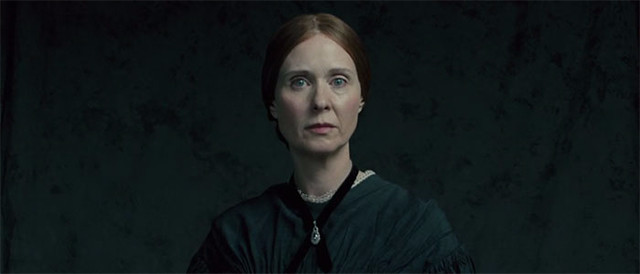
Born in a wealthy, respected family in Amherst, MA with loving parents and supportive siblings, Emily (played by Emma Bell as younger, then Cynthia Nixon as older Dickinson) grows up to be an honest, smart young woman who can think for herself. She is seen first as a young woman in Mount Holyoke Seminary school, defying the wishes of her teacher with her logical defense to be indecisive in either accepting or denying god. But being a woman of the 19th Century, Emily struggles from early on with her self image, patriarchy, conservative, puritanical society, sexism, the thought of death and immortality.

Davies, an ardent reader of Dickinson's poetry, composed a truly beautiful script here, imagining much of the film's dialog that lends the full view of the complicated poet and the great Cynthia Nixon personifies her in flesh and blood. Even though Dickinson lived most of her adult life in isolation, through her letters and 1,800 unpublished poems, and as we see in the film, she led a quite passionate inner life.

Unlike many fathers in Davies' other films who terrorize the working class families and women, Edward Dickinson, played here beautifully by Keith Carradine, is a learned, dignified man who is a main stable force for Emily to depend upon. Strict but humble, it is his dignity and sense of right and wrong that deeply affects Emily's upbringing. She strikes up a friendship with free spirited Ms. Buffam (amusingly played by Catherine Baily) whose acerbic wit matches her own. They talk about being friends forever but both know that when the time comes, more extroverted Buffam would marry and settle and move away. And she does.

Dickinson briefly romances a married pastor but the bitter experience turns her more into isolation. After their parents' death, Emily becomes more embittered with life, she isolates herself even further, wearing only white and communicates her thoughts mostly in letters. Her devout younger sister Vinnie (Jennifer Ehle) becomes her only source of checks and balances against Emily becoming a bitter, defeated person.

Death and immortality were her big themes in her writing as she was weary of attaching herself to anyone and always worried about everyone close to her leaving. Calling herself nobody, she was aware that her writing wouldn't be recognized by anyone in her lifetime.

Davies succeeds in showing a complicated woman bound by tradition and societal rules. But however tragic and lonely her life was, he also shows us that Dickinson lived the way she wanted to, that it was her own choosing, that she was a thoroughly modern woman, defining the world the only way she knew how. A Quiet Passion is another masterpiece from Davies.

Dustin Chang is a freelance writer. His musings and opinions on everything cinema can be found at www.dustinchang.com

Wednesday, April 12, 2017

Interview: Terence Davies on A Quiet Passion and His Love of Poetry

© A Quiet Passion/Hurricane Films/Courtesy of Music Box Films.
With A Quiet Passion, coming out in theaters this weekend, Terence Davies, one of the greatest living filmmakers finds himself prolific all of sudden, having two films back to back (with last year's Sunset Song). The film is about Emily Dickinson, a 19th century American Poet. It's an exceptionally well written and acted film even in Davies' standards. I got a chance once again to talk to him about the poet and his love of poetry.

Was A QUIET PASSION your passion project? How did it come about?

It was sort of four and a half years in the making really. But I discovered her (Emily Dickinson) when I was 18. About 12 years ago, I started rereading her. Then I wanted to know a little more about her. And I read 6 biographies. (chuckles) And it was…I felt that things in her life I could really respond to. Oh she didn’t go anywhere but her life was very rich. These were very intelligent people and in her life, she was I think, a little afraid of the world.

But someone said, 'but why make a movie about someone who didn’t go anywhere?' I thought, but that’s sets power if you think of it in terms of string quartet, it’s a chamber piece: simple things become very very powerful. Even little trivial things become very powerful because you got this enclosed world. And all the things that go on in that very close family. and an idea of how to behave morally and ethically and if you fall below that there is huge rouse. So it wasn’t, it didn’t seem like a dull life to me because she had this rich inner life. But she also, you know, was an ordinary person. She baked, she gardened, played piano. She wrote three volumes of letters and over seventeen thousand poems as well and she was ill. I mean, my god if that wasn’t rich, I don’t know what is.

In our previous conversation that you said making SUNSET SONG was very difficult but process of A QUIET PASSION was a really pleasure from beginning to end. What was the difference?

Money. (laughs)

We didn’t have enough money to shoot Sunset Song. We really didn’t. It was the most difficult thing I think I;ve ever done. Every time when the phone rang, I though, O god what’s gone wrong now? Even going out to New Zealand, hoping to have some hot weather and they give you good tax break.

Right.

And we get there and have the worst weather there in 50 years. I thought, I could stayed home and got this weather for free! Anyway the weather broke and we got those scenes. But there wasn’t just enough money. The post production dragged on for a long time and we had to keep on raising money to finish it. And by the time that happened, A Quiet Passion was already shot and ready to go. (chuckles)

My god.

Sheer accident. And it was a joy. I love working with actors and my crew on Sunset Song but it was hard for all of us. And it was physically unpleasant. Being on a scottish farm and it's pouring with rain and there was mud everywhere and it stank. Where is the glamour, where is the glamour in this? I asked. But this was a complete joy from beginning to end. Nothing went wrong.

I’m very glad to hear everything went smoothly. How long was the shoot?

Actually I can’t even remember. I think it was 8 weeks.

Only 8 weeks?

8 or 9 weeks. What I always say is 'can we have a 5 day working week?' The crew got to have two days off, they got to. Otherwise they will be exhausted. So we got a longer period but it was probably the same amount as the shooting for every independent film. But they got to have two days off.

That’s very nice of you.

Well their hours are so long.

The thing is…I mean there are always showstoppers in your films, like visually striking moments, but this showstopper came in early in this movie for me. It was the portraitures of Dickinson family morphing from younger selves to older, in the beginning of the film. I thought it was very beautifully done in a pure Terence Davies fashion. I thought, oh my god, there is another one!

(Davis laughs)

It’s the same Director of photography you always work with, no? the German cinematographer, Florian…

Florian Hoffmeister. It’s either Florian or Michael McDonough who shot Sunset Song.

Right.

It's because I think they are really really gifted. But I was gifted with a wonderful crew anyway. They do work so hard. Most of the crew in Sunset Song were in Luxembourg and A Quiet Passion in Belgium because we built the replica of the Dickenson house there, obviously we could't shoot in the original house where they lived in.

But no, I had wonderful wonderful people. They don’t do their job, they feel it. You know what I mean? Florian puts on the lens…I can never tell you what lens it is. I just it’s the right one. But Florian is a wonderful man and a great artist.

I know it was shot on digital but I really couldn’t tell. It’s beautifully done.

Isn’t it?

Yeah. Especially in the beginning where young Emily is standing against the window and all the light coming through the window. I really couldn’t tell. So I doesn’t make much difference to you.

I think digital is really fantastic now. Sunset Song was shot on 65mm because digital really wasn’t up to it. But that’s two three years ago. Coming of digital is like coming of sound. It would change everything cause the things that they can do. It’s breathtaking. Some of the scenes in Sunset Song the teams of horses needed to be led by a leader. Because the actors aren’t used to plowing. So I said 'what do we do?' And the manager of all the digital management says 'we will take them out'. I said 'how do you take someone out?' I was completely bewildered. As long as they can do it, I don’t even wanna know.

This film however, is beautifully written. How much of Emily Dickinson’s dialog is based on her actual writing?

I invented most of it. I used some of her dialog but not a lot. The reason I did it like this was because 19 century american english was very formal cause they were trying to imitate England. We were still the dominant power and now it’s the totally the other way around. But also things like The Heiress which has a wonderful dialog, you know. And I wanted it to be good. These were very intelligent people. So I wanted it to be good and funny and shocking and unpleasant. So I constructed it around the idea of American English back then. It was more formal. I used some of her dialog, the dialog of the looming man. It’s almost all hers. I added a sentence I think. But that is all hers. I read that on the footnote of Seawall’s biography of her.

Once you see the characters, you got to speak in their voices. Sometimes you think, 'no she wouldn’t say that. I think she’d say like this or like that'. I wanted it to be good in terms of dialog and I wanted it to be funny.

I think Cynthia Nixon really deserves and Oscar for this. You said something about Nixon becoming Emily Dickinson that she is Emily Dickinson in this film. How did decide on her to play the role?

Well I met her from the film that didn’t come off about four five years ago. And I never forgot her. When we found a little deguerrotype of Emily Dickinson taken when she was seventeen, one of my producers who used to be a still photographer, superimposed Cynthia’s face on her’s and she looks like an older version of Emily. I just knew she’d be right. And when we were talking, she said she had grown up with listening to the disc of Julie Harris reading her poetry. She knew her poetry and more importantly, she could read poetry as well. I just knew she was right. It’s as vague as that. And god bless her! She stayed there for four and a half years. I don’t know what I would have done if she said no. I’d have no idea who to cast.

You cast always perfectly though, especially female characters in your films.

It’s nip and tuck though, I mean we haven’t cast Miss Boffam, five days away from shooting.

Wow.

We were really worried, I couldn’t tell you. The casting company in Britain told me, we will send you another three. But when Catherine Baily came on, I said we found her at last. That was it.

Baily is wonderful, she’s so funny in this.

But it was nip and tuck, I tell you.

How did Keith Carradine come on board?

We were in Los Angeles, auditioning. One of my producers said, 'listen, Keith Carradine isn’t coming in. He won’t read'. I said, 'fine, I don’t understand why but fine'. Then he comes in. So I asked, 'but Mister Carradine, we were told by your agent that you don't read'. 'No i don’t because I’m a terrible reader. All the jobs I’ve gotten, if I read at the auditions, I wouldn't have gotten the job'. I said, 'would you mind?' he said, 'no'. And he read. And I said 'would you do it?' And he said, 'again?' I said, 'no, the movie'. His agent was very grand. My client doesn’t read. Such nonsense.

Carradine is a lovely lovely man. He has the most beautiful voice. He’s a singer as well. But the thing that always touches me even when I think it in my head, after he has told Austin that he can’t go to the war- that close up he does it at the end of that scene, what a wonderful piece of playing. It leaves me speechless.

Unlike many fathers in your films who are portrayed as brutish, abusive men, Edward Dickinson is gentle, supportive man. A little bit of a discinplanarian but nevertheless, very warm father. I haven’t seen that kind of father figure in your films.

Yes, he is the traditional head of the family and so he words are to be obeyed. But I wanted him to be tender as well. He does answer beautifully to Emilly when she goes, 'but it is your house father'. And he says, 'but it is your home emily'. I mean you hear such love in his voice. and I wanted that. But he can be very determined. He says, 'no you are not going'.

Right.

Emily dickinson deals with death and immortality a lot. Do you deal with death and immortality as an artist?

I’m afraid I do. When I was between five and six, my father who was very violent, died. He died at home and his body was in the house for ten days. I was awful. I’ve seen very early on what really horrible deaths are like. I must’ve put in me that nothing is stable. That’s why in primary school I wanted my family to stay together forever. They were the most wonderful family. They were just like the one in Meet Me in St. Louis. I never wanted to change. But then as you grow older, you realize that’s a myth. They get married, have children and die.

When I was eighteen or nineteen, I discovered The Four Quartets (by T.S. Eliot) read by Alec Guiness. He read it from memory. I was absolutely knocked out by it. I had no idea what they meant. I read them and they are my template now. I read them at least once a month. It’s some of the most fabulous poetry written in English. He writes in this rather melancholic way about the nature of being and the nature of time. In Prufrock, he’s much more terrified. He is really frightened of just being.


In the room the women come and go

Talking of Michelangelo.


And when it’s repeated, it’s just terror.


In the room the women come and go

Talking of Michelangelo.


Yes, you may not know but Michelangelo, you usually feel inferior and his terrror of coming down the stairs… that is also true. I could respond to that. Because… I live alone and I do things alone and sometimes having to go to places where people I don’t know, it’s so terrifying. I’ve just got no small talk. I just haven’t. I find that very very hard.

But the nature of time in film anyway is always in the eternal present. Where you cut from and to, it’s the next thing which happens but what’s more interesting is cutting to the next emotional thing that matter and leaving out the middle because that’s not really interesting.

No.

I’ve always been obsessed about that and I always will be. Perhaps I will reconcile with The Four Quartets as much as I love. I still find very difficult,


And all shall be well and

All manner of things shall be well

When the tongues of flame are in-folded

Into the crowned knot of fire

And the fire and the rose are one.


Beautiful. I think that about wraps it up.

Monday, December 19, 2016

My Top 10 Discoveries 2016

This is more like a year end summery of my viewing habits. It pains me that I wasn't more adventurous this year and didn't dig deep enough to see more films, because it is evident that I watched more interesting stuff earlier in the year than later. I'll be more adventurous next year I hope.

Hunter (2015) - Scott Barley
3200254a-3a7b-4526-a62a-92dfbed96449_zpsr6wtr3b4
2016 started with a bang for me. In the KG Artist section at the torrent site, I discovered Scott Barley's work. Dark, mysterious and touching, his portrayal of beautiful loneliness deeply affected me. I've devoured everything the young artist has to offer. I contacted him and to my surprise, he responded and our correspondence resulted in an in-depth interview. There were other short experimental stuff I checked out too, notably:

Crystal World
(2013) - Pia Borg
crystal world2_zpsdetj4ha8

Then I watched
La Cienaga (2001) - Lucrecia Martel
tumblr_obo160iKlZ1r6kxjco4_1280
and I don't have to tell you how great it is. Lucrecia Martel is, borrowing an esteemed fellow filmmaker Christoph Hochhäusler's own words, "she is one of the world's greatest filmmakers working today".
Just like La Cienaga, there were certain well regarded films I've been neglecting to see for a long time, but finally visited and found their greatness:

Long Day Closes
(1992) - Terence Davies
51050a98-2865-4803-8224-2336472e4abc_zpsaxspigbh
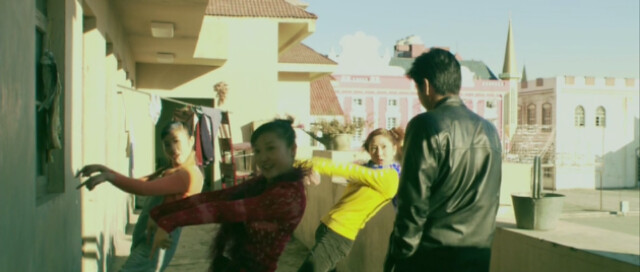
The World (2004) - Jia Zhangke
d6469c56-0abb-45e6-8f3f-aa9b8f1206ac_zps8r4jkfzy
and
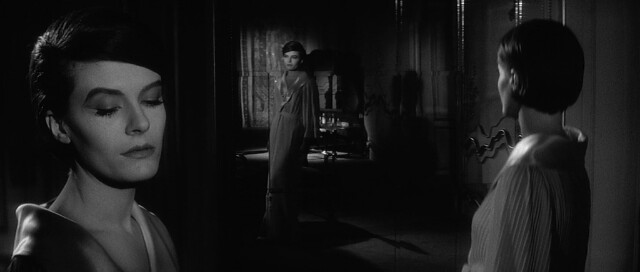
Last Year at Marienbad (1961) - Alain Resnais
Screen Shot 2016-11-20 at 6.25.28 PM
Great, all great stuff...

Found Garrel's self-reflexive artistry delicate and delicious:
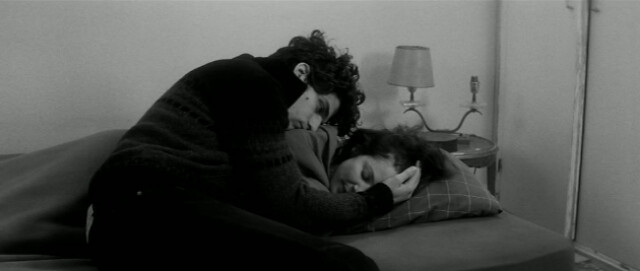
Jealousy (2013) - Philippe Garrel
f1f5811c-b579-4eb4-9fa1-389b0475c28d_zpsm7j0qt7z

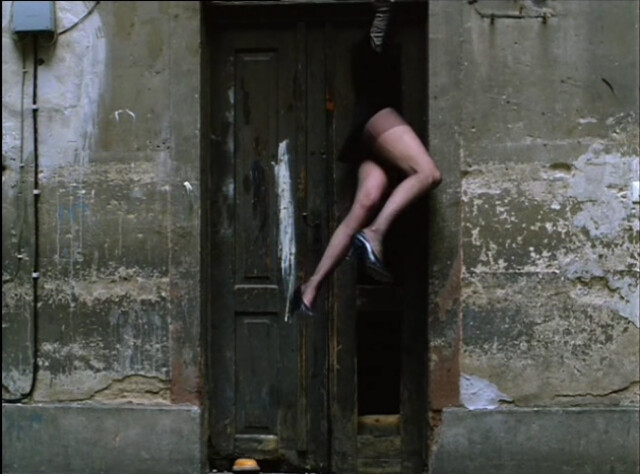
Then there was the heady world of Alexander Kluge to plunge into
Die Macht der Gefühle/The Power of Emotion (1983) - Alexander Kluge
0e481f78-2518-471f-b8bb-5b3d4bd4ecd2_zpsdizwfetx
Der Angriff der Gegenwart auf die übrige Zeit/The Assault of the Present on the Rest of Time (1985)
Screen Shot 2016-12-15 at 9.25.44 PM

Also discovered the sensual world of Brazilian director Gabriel Mascaro
Ventos de Agosto/August Winds (2014) - Gabriel Mascaro
Ventosdeagosto_still_001_credito_beto_figueirora_300dpi

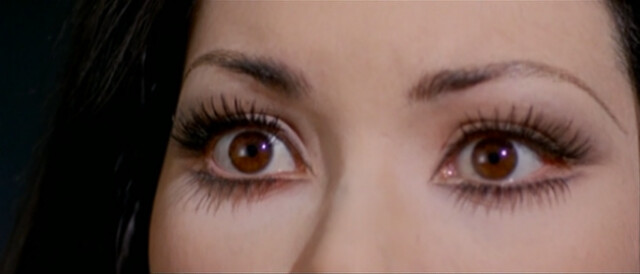
Then I dug into exciting world of Giallo and experienced first hand the sensual violence and the batting eyelashes of Edwige Fenech
abffcb2d-6a3d-4ced-98fc-d8ac4b297f1c_zpspo0i7482
and watched her in many giallos, especially in
All the Colors of the Dark (1972) - Sergio Martino
99e2f782-d1b3-4bd4-9748-f0291e01bd91_zpsagjkwsgr
also discovered that trudging through a dozen notable giallos that a good giallo is hard to come by. Other notable ones (But not as good as All the Colors) are - Strip Nude for Your Killer (1975) and Your Vice is a Locked Room and Only I Have the Key (1972)

Thursday, May 12, 2016

Gloaming

Sunset Song (2015) - Davies
 photo 3811ff72-3935-4bbc-b292-d39288b4dc4c_zpsb91grbtc.jpg
A sweeping tale of changing times in Scotland in the early 20th century, Terence Davies's new film Sunset Song centers around a farm girl Chris Guthrie (Agyness Deyn) in the fictional rural town of Kinraddie near Aberdeen.

Chris is a thoroughly modern woman in-the-making, but held back by a still very much conservative, religious, patriarchal society and her love of the land. She is an educated girl who wants to become a teacher, an honest and noble profession, but her circumstances hold her back from achieving that goal.

Her mother, even though worn out by childbearing -- six kids and counting -- and by her overbearing husband (Peter Mullan at his most brutish), still insists that there's more to life than books and studies. But after finding out that she is pregnant again in her middle age, she has a mental breakdown and takes her own life along with the newborn twins.

After much abuse from pa, Chris's mild mannered, loving older brother, Will, also bails on her gets married and moves to Argentina. Pa reluctantly sends away Chris's two younger siblings to live with the relatives, leaving only Chris to take care of the house and the farm. It becomes unbearable when pa has a stroke and becomes bedridden, leaving Chris to endure all the hardship alone.

Things takes on a brighter side after pa's death. With a little money she inherited and the farm, she marries a charming neighbor farmer named Ewan (Kevin Guthrie) and bears a son. Everything seems hopeful and bright, but World War I comes rolling in and Ewan gets conscripted.

Never into the idea of leaving home and fighting the war, the couple is very opposed to the idea at first, but everyone around them in their nationalistic fervor -- the church and macho men -- keeps egging Ewan to go. After seeing the horrors of war, Ewan is a changed man and becomes abusive toward Chris. Their relationship gets strained beyond repairable and he takes off for another tour without saying goodbye.

It is easy to see why many regard Davies as the greatest living British filmmaker. Impeccably crafted, shot in glorious 70mm, Sunset Song is a stunning achievement. We've seen sweeping crane shots through swaying wheat fields before on screen in Terrence Malick films and his countless imitators, but not like this.

There is certain authenticity in images of Davies films that communicates beyond mere lyricism and beauty. It's in the pacing; Davies is not interested in prolonged nature porn. The compositions are perfect and they lasts no more than 30 seconds before they fade into the next shot.

Nature is worshipped but in a different way than American Westerns. Constantly raining and wind-swept, the Scottish countryside doesn't have that mythic, ethereal quality, but it's more lived-in, its edges dulled by years of cultivation and contant presence of livestock. Still, on the big screen, Sunset Song is a truly cinematic experience, even more visually ravishing than his autobiographical, Liverpool set masterpiece Long Day Closes.

It's in the casting, too; Deyn, a British model whose tall stature and fine, graceful features, truly belong to the era. Always in the center of the screen, erect and defiant, yet vulnerable, seeing our heroine in the autumn field evokes a lot of different emotions. Equally painterly are the interior scenes; shot on 4K digital, Davies and his director of photography Michael McDonough favor naturally dark rooms with warmth coming from fireplace and sunlight coming through the window.

Just like many of his other films, Sunset Song is a tragedy of a woman caught in the changing times. Adapted from the revered Scottish novel by Lewis Grassic Gibbon, Sunset Song is a lamentation on time passing, the loss of a way of life, and a love song to its inhabitants' attachment to the land. Davies captures the essense of the book beautifully. I just wish I had a good ear for languages to enjoy the film more. See the film on the big screen! It's glorious!


Sunset Song plays as part of the Terence Davies Retrospective at Museum of Moving Image May 7-22 and opens theatrically at Film Forum and Lincoln Plaza Cinema on May 13.

Interview: Terence Davies on poetry, art, actresses and more

Terence Davies, regarded as one of the greatest living British directors, doesn't make films too often. So when he does, it's a monumental event every time. With his long delayed passion project Sunset Song finally coming out in theaters this weekend and A Quiet Passion, his new film about American poet Emily Dickinson already in the can, the 70 year-old British director suddenly finds himself more prolific than ever (he's done only 9 features in 4 decades of filmmaking).

He is in town for his complete retrospective at Museum of Moving Image, 5/7 - 5/22, and I got a chance to sit down with him for an interview.

It was quite intimidating meeting the master filmmaker in person, but his unguarded, warm disposition put me at ease. It wasn't long before Davies, in his Liverpudlian accent, enthusiastically, breathlessly, explained his craft to me. It was a truly spellbinding experience.

*Fair bit of warning here: this interview contains loads of spoilers for Sunset Song.

You have Sunset Song and A Quiet Passion coming out back to back! To whom do we owe thanks?

Yes, not by design but a sheer accident. (laughs) It comes down to money as it always does. We didn’t have enough money to shoot Sunset Song. It was a very difficult shoot because of not having enough money and the post production dragged on for a long time, again because of the money. In the mean time I’d already written the Emily Dickson Film, A Quiet Passion. And we ended up having shot that. And by the time we were finishing shooting, that, by sheer accident, happened. It never happened like that to me before.

It’s great. We didn’t have to wait 8 years for another Terence Davies film to come out! Haven’t seen Quiet Passion yet but am very excited.

I just love Emily Dickenson’s poetry. I think she is the greatest 19th century American poet. Although the very first thing I’ve ever read, I was 9 or 10, was The Song of Hiawatha, It has a great stretches in that octosyllabic rhyme. You can’t ever forget it. But thank god now who reads The Courtship of Miles Standish anymore? I’ve never responded Longfellow’s poetry but I think Dickinson was a true genius and was well before her time. And the great poems are truly, truly great. It’s so succinct, i mean it’s distilled down to the bare essence. That’s why it’s so powerful.

The dying needs but little, dear-
A glass of water’s all,
A flower’s unobtrusive face
To punctuate the wall,
A fan perhaps, a friend’s regret,
No color in the rainbow
Perceive when you are gone.


(grabs his chest) Just heartbreaking.

Bravo! I really wish I have a better ear for language. Sunset Song takes place in Scotland and the film’s based on a revered Scottish novel by Lewis Grassic Gibbon. Did you have to do a lot of preparation to get the language right? How was the adaptation process?

Not so much…whenever you do an adaptation of a novel or a play, you try to get an essence of it. While remain true to the source, something has to change. There are things you can do in a film that you can’t do in a novel and vice versa. but if you listen to the material, the content dictates form, never the other way around. I mean, it will tell you. The worst thing is when you get back into the editing room and there are two particular scenes you love and and they got to go. That’s really heart breaking, but the material’s telling you that it’s too much and you have to listen to that.

And sometimes you get the essence of what something is without literally doing what was in the book. I mean at the end of Sunset Song, the whole of Kinraddie come to these standing stones and the preacher preaches about forgiveness. The wind was so strong, the standing stones we had were going like this (swaying his hands). It was awful.

So what is it in the ending that is about forgiveness? Well, let’s make it domestic. We’ve already seen Kinraddie people: there was a thrashing dinner and there was her wedding, we didn’t see them any other time. so let’s make it domestic. And there it’s a poetic license: when the sun comes up, it comes up at the same time, it doesn’t come up separately. And to do that we make up something strange - light enters the room and it’s strange and that’s when we hear him come back. He says, I’ve come home and that captures the essence.

And she goes up to the stones and the sky and the piper and her voice over and that’s how it ends in the book. But it’s the getting there by a different route and you are restricted by what you shot. It looked awful. It was just grey and flat. So you have to something. What does the subtextual meaning of those closing pages? And you think, well I think this will do it. Just as you putting things that are not there - like the scene where she holds his clothes. that’s not in the book.

That was a beautiful scene.

The whole Kinraddie going to church. That's also not in the book. It just says the town goes to church and you hear the sermon which is awful - it's about two and a half pages long and its full of xenophobia and hatred. What would be wonderful I thought, was the whole of Kinraddie arrive, in this gorgeous light. Someone said, well they would not walk through the crops and I said I don’t care. They are going to walk through the crops. So they arrive in this golden light of god. And then, after that, going to the church wanting the grace of god, and the preacher tells to go and kill one another.

Right.


That’s what’s horrific. And I’ve known about that song, All in the April Evening, since I was about 17. That’s when I started to listen to classical music. There was a thing on the radio called your hundred best tunes, the best known classical music, you know, Peer Gynt and Lachmann and all that. And then I heard this and that was an amateur choir from Glasgow, which was founded by a Glasgow Region Undertaker and the singing was just amazing. I’ve never forgot it and when I started the adaptation, I was going to put it somewhere. Because it was really important for me.

Shooting outdoors and a lot of farm animals. Was it hard for you?

It was very very difficult. It comes back to us not having enough money. We all took the risk. There were times when I said, “Can we afford this" and and the answer was "No we can’t, we have to cut it from the script”. I’ve never done that in 14 years and I’d never ever want to do it again. Because it can really seriously damage the film- you are cutting things that perhaps are needed but once in the cutting room, you can’t go back to New Zealand for it. No, we can’t even go back to Scotland to redo things. So that was the great strain.

You went to New Zealand to shoot it?

Yes, for the summer sequences. Because you can’t rely on Scotland’s weather. It rains all the time so we had to go to New Zealand to shoot that. The seasons are characters and if it’s just too grey and flat, there is nothing interesting about that.

But it was a very hard shoot. But everyone pulled together. I couldn’t have done it without not just the crew and not just the actors but financiers and the bond company- they were so supportive, I can’t tell you. It was quite wonderful. But it did take a lot out of me. I thought, "I am not gonna work like this ever again!"

All the exterior scenes are shot on film but all the interiors are shot on digital. Do you have any opinions on all these changing technology and how you make and see the film?

There used to be film then. Film still had an edge. It’s one of the things you have to take care of- you choose the right stock and you do the test and you say yes, it should look like that. But all the interiors are inspired by a Danish painter called Hammershøi who was active in the late 19 and early 20th century. His paintings were like Vermeer but with a smudged northern lights. They are of empty rooms with the doors open and if there was as subject in them, they were usually women back to the view and are exquisite. Obviously not the same class as Vermeer, my favorite painter but they have that Vermeerlike quality - the stillness, the ghosts of those people who used to be in those rooms. Exterior was just the way it was. Sometimes we got lucky and got that gloaming light. But it was pure luck.

But when we came to do Emily Dickinson, the digital replaced the film. It’s just as good. In fact, it’s getting better.

So you are fine with that.

It’s just good. And what they can do now is breathtaking. It’s just marvelous. I think it’s as important as coming of sound really. On a practical level, when you mark the dissolve on a film, it will take you most of the day. It takes two days for it to come back from the laboratories and with this (digital), you can do it in an instant.

Right.


The drawback of that is it can rob you of thinking time. And you got to say no, I want to think about this for two days. You got to wait.

Right right.


Just like anything in your films, the casting is always Impeccable. You’ve worked with some great actresses in the past, Gina Rowlands, Gillian Anderson and Rachel Weisz. Agyness Deyn did an amazing job as Chris Guthrie, the protagonist of the film, but she is kind of unknown, isn’t she? Do you have a preference in with whom you want to work with? How did you get to cast her?

No. I always cast people who I think are right for the part. I don’t care if they are big names or not. I’m not interested in that. And I don’t know anything about popular culture or anything about models. It was our casting agents who found her and she was the first person (at the audition) Monday morning. And she gave the most wonderful audition and I said to my producer that we found her.

You can tell, I get the feeling that she is right for the part. It’s got to be felt. I always know. It’s like when you are shooting and you feel that you gonna get (what you want) this time. The thing is I don’t want them to act. If it doesn’t work, we can try it again, because it’s digital and it’s cheap. But really it’s usually first couple of takes that’s what ends up on the screen. In A Quiet Passion, most of them I got in less than 4 takes. For the rape scene and marriage scene (in Sunset Song) we did it once. I didn’t even plan on doing another take. I told her I can’t possibly put you through that again.

Other times, like the execution scene, these are all young lads from Luxembourg, because all the interiors and war scenes are shot in there. Someone said, “They can’t act.” and I said, “Look, just put them in costumes, frame it and we’ll just watch them.” and of course people don’t stand still. They shift the gun around. That’s what you do when you don’t do anything but stand still. And that’s what makes the scene. In fact we shot that scene in 48 frames per second. It’s slightly slower and what you get is like a ballet performance. It has to be - both balletic and horrible.

The tension and sadness in that scene is unbelievable but I didn’t even notice that it was slowed down.

The train goes by in the background somewhat slowly.

Oh yeah!

You’ve done series of films that feature tragic female protagonists. Has it been a conscious decision on your part?

No, I’m just attracted to the story. But you mustn’t forget that when I was growing up in the 50s the big commercial hits were all about women. Love is a Many Splendored Thing, Magnificent Obsession, All That Heaven Allows, they were all huge successes. So I grew up with the idea of women being the main protagonists. Then a TV came along and that’s where I relearned all Joan Crowford films for instance. And The Letter from Unknown Woman, The Heirless, those are huge riches when they were finally shown on television. And they were all about women. By sheer accident!

It was funny that I found a youtube clip of you introducing 2001: Space Odyssey in some TV program, explaining things very technically.

(Davies laughs)

Because however visually accomplished your films are, I don’t ever think of you as a technical director.

It’s because I work with people who are artists on their own right, they can help me the correct lenses in front of the camera. Because I can ever remember what I’m looking at when I look down on the lens. I write as I see it. And for pure practical reasons, because we haven’t got much money, you can say, this and this days we’ll be tracking, on this day we’ll need a crane and that day we will need 25 extras. Because you’ve got to husband your resources. Since we don’t have vast resources, so you’ve got to know what you are doing technically.

I guess A Quiet Passion is your second American film, set in Massachussettes.

We shot very little in America. Because of the lack of money, we shot most of it in Belgium. (laughs) And a lot of Belgian actors do very good american accent it turns out. So they rebuilt the exact replica of the Dickinson house with two separate floors. It's quite extraordinary. But we shot in America for 3 days or something. We just couldn’t afford it. The whole production was just pure joy. There wasn’t a single problem from beginning to end. Absolutely wonderful. Especially after sunset song which was a murder. Everything went right for A Quiet Passion. It was an absolute bliss. I should never complain again. (laughs)

I am very much looking forward to it. I hope it comes out soon.

Oh me too.

How was Cinthia Nixon as Emily Dickinson?

she was extraordinary. It is the most extraordinary performance. She is Emily Dickinson! She really is! There is this one shot where she turns around and it’s emily Dickinson. And Jennifer Earle, who plays her sister who is just radiant. When they have a rouse, you gotta watch out. They are family and they support each other to the hilt but when they fall out, they really fall out. And they really go for each other. They were quite wonderful. But that performance is the most extraordinary I’ve ever seen.

We did a lot of guide tracks of her reciting poems. After movie was shot and we were in the editing room, she asked me if she needs to recite the poems again. I said that’s not necessary. The way she reads them… The first time I discovered Emily Dickinson was Claire Bloom reading Because I could not stop for death. She read it with this air of amusement, as if this was happening to someone else. It was devastating. It was just…WHAT MADE YOU THINK OF DOING IT LIKE THAT?

So what’s next for you since you became so prolific all of sudden?

Well one is already written. It’s called Mother of Sorrows. It’s based on an American novel by Richard McCann. That’s probably gonna happen next year. And at the moment I am writing a film about Siegfried Sassoon. I was asked to do it.

You have a lot on your plate. And hopefully money will come along?

Now, I’m all for that!
Sunday, May 8, 2016

Memories you'd want to take to your grave with

Long Day Closes (1992) - Davies
 photo 1c555e4a-0a53-457e-9d1f-0f48a25d11dd_zps2om75ysg.png
 photo bbd3edd9-9831-4782-b962-8264cf174255_zpsxcxytvrn.png
 photo 84f59b97-dcb0-4715-868c-6a4bbaa64abf_zpscjzdpft4.png
 photo dc02dbfe-dee7-4af9-85df-301064d2e2bd_zpsv6j1thbr.png
 photo 87f5a6ec-61b4-4073-8956-1dfeccbd36cc_zps7suwr1q5.png
 photo e06efb62-074a-49f7-856f-b9224fb7efe5_zpstg1bpxqt.png
 photo 814bbc48-43d4-47ce-87f2-003e8d5af516_zpshxkmuoj4.png
Davies's deeply personal, fragmentary recalling of his childhood growing up in post-war Britain has all his long-standing preoccupations - loving mother, going to the picture show, religion, the view of the world through the window and burgeoning homosexuality. Laced with show tunes and movie dialog from the 50s against grimy, rainy Liverpool backdrop, Long Day Closes shows Bud Davies, an introverted young boy from a working class family, living with his older siblings (and their mates) and widowed mother, turning to his imagination to escape from bullying, guilt and spartan school surroundings.

But unlike his Distant Voices, Still Lives, there is no villain (brutish father played by Pete Postlethwaite) in this. With no visible narrative, Davies's laments are distinctly impressionistic and extremely warm. Skipping all the philosophizing narration of the usual autobiographical films, Davies instead shows these beautiful, sorrowful, happy moments with amazingly accomplished visual style. I mean I'm not a big fan of dolly moves in films but hot damn! He knows how to use them and does so gracefully. Long Day Closes is one of the best films depicting childhood I've seen. These are the memories you want to take to your grave. It's a beautiful, cinematic experience that is full of warmth and hope.