Showing posts with label Pedro Costa. Show all posts

Saturday, October 12, 2019

A Hauntingly Beautiful Immigrant Song

Vitalina Varela (2019) - Costa
vitalina-varela
In a barely lit alley created by towering concrete slap walls, we see a funeral procession of a day laborer in the urban slums of Lisbon. So starts Vitalina Varela, another stunning masterpiece by Pedro Costa, one of the greatest living directors.

Ever since Casa de Lava (1994), Costa has been tracing the flight of Cape Verdean immigrants, specifically concentrating on the inhabitants of Fontainhas, the concrete urban slum in the outskirts of Lisbon with series of films since 1997. The last couple of films, Colossal Youth and Horse Money, it was Ventura who was the focus of interest with Vitalina playing a supporting role. Now it is Vitalina who is getting the spotlight.

Just where Costa draws the line between fiction and reality, memories and present is difficult to decipher. His highly formalist approach doesn't help the matter either. But boy, it nevertheless creates a glorious cinematic experience.

Vitalina arrives from Cape Verde, a Portuguese colonial island off the cost of Africa, to attend her bricklayer husband's funeral. But she is three days too late. In a highly artificial, even invoking a Kaurismaki comedy, she emerges from the airplane, soaking wet and barefooted. She is greeted not by family, but a group of immigrant workers working as a airport crew. They tell her, “Go back to Cape Verde, Vitalina there is nothing for you here.”

Vitalina situate herself in her husband's concrete shack, getting used to the low doorframes, meeting both hostile and friendly interlopers. We get use to the space too, trying to navigate our way in what seems to be forever nights, poorly lit interiors where we can barely make out the contours of a face or slumping bodies.

Vitalina finds solace in an empty church, presided by a frail preacher (played by Ventura). No one ever comes here anymore, the preacher tells her. She questions why would her husband leaving her, promising her a better life some 20 years ago, only to endure harsh life in a foreign land just to die? The shack is not the palace he promised her. And why is she there in Portugal?

A torrential downpour hits the leaky corrugated roof and makes terrible and frightening noises. Neighbors promised to help to fix it when her husband was alive but the promise was never kept. Even though her husband is gone and unseen, it's as if all the dark corners of the slum is permeated with the ghosts of the past, ready to emerge any minute like some jump scares in a horror movie.

Vitalina hosts a younger homeless couple and feed them, only to find out the girl has died since. People appear and disappear, slowly moving across the frame like zombies in Costa universe, existing and not existing at the same time.

Like Ventura's, Vitalina's weathered and angular face tells thousand stories. Her huge eyes reflect the darkness of the exteriors as well as sorrows inside. She becomes an iconic living statue in Costa's observations of the netherworld.

As usual, Vitalina Varela is stunning to look at. Every frame is a work of art. Greatly aided by Leonardo Simões, Costa's cinematographer since Colossal Youth, and João Gazua and Hugo Leitão's sound work, the film gives the lives of its inhabitants the poeticism they deserve.

Tuesday, October 27, 2015

Take Me to the River

O Sangue (1989) - Costa
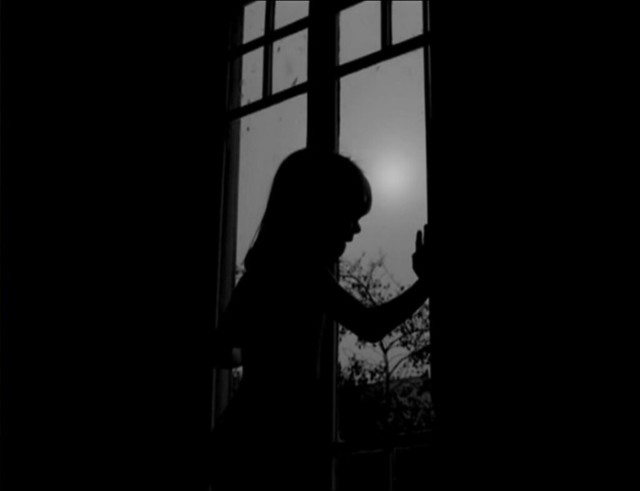
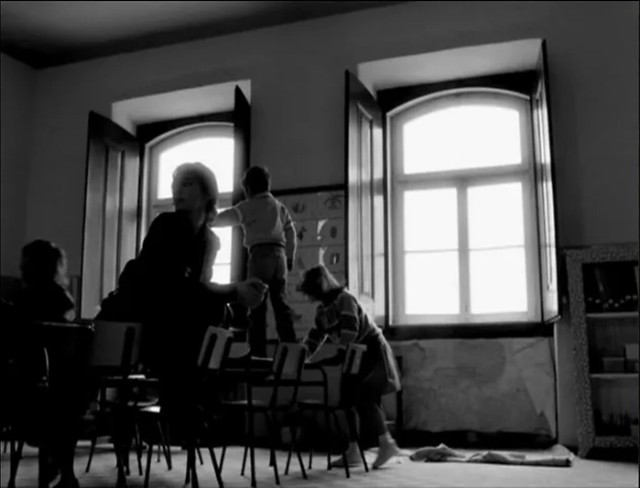
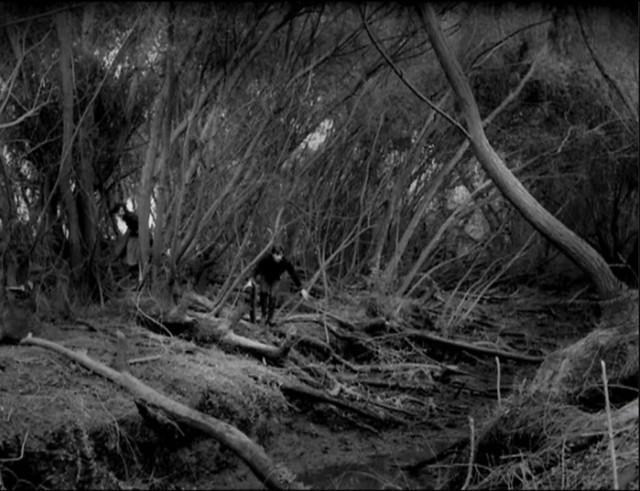
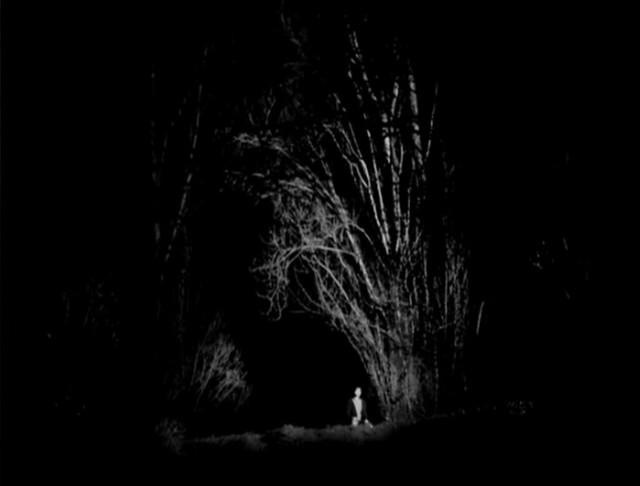
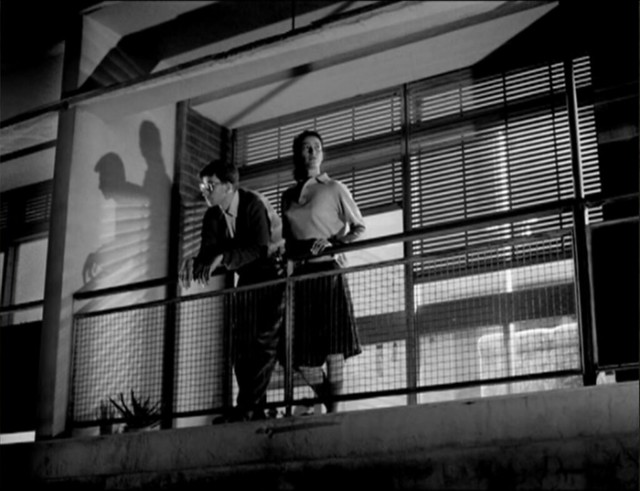
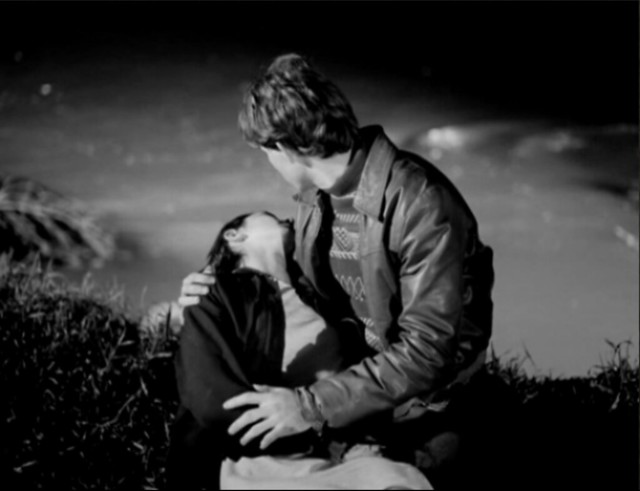
Screen Shot 2021-04-23 at 10.27.28 AM Screen Shot 2021-04-23 at 10.32.45 AM Screen Shot 2021-04-23 at 10.47.41 AM Screen Shot 2021-04-23 at 10.48.15 AM Screen Shot 2021-04-23 at 10.28.55 AM Screen Shot 2021-04-23 at 10.48.46 AM Screen Shot 2021-04-23 at 10.49.20 AM Screen Shot 2021-04-23 at 10.49.47 AM Screen Shot 2021-04-23 at 10.51.42 AM Screen Shot 2021-04-23 at 10.29.21 AM Screen Shot 2021-04-23 at 10.29.42 AM Screen Shot 2021-04-23 at 10.43.14 AM Screen Shot 2021-04-23 at 10.30.22 AM The film starts with a face slap in the middle of rural road. Dying father hides his illness from his young sons. But Vicente (Pedro Hestnes) is growing up too fast and knows what's going on. He in turn, tries to shield the truth from his sickly younger brother Nino (Nuno Ferreira). "He went away and you will never see him again," Vicente announces after finding an empty hole and burying his father in the cemetery at night with the help of his childhood sweetheart, now a school helper Clara (Inês de Medeiros). The brothers' uncle from Lisbon tries to take Nino away and Vicente attacks him. But gangsters whom his dead father owes money to comes after Vicente and the uncle takes Nino to the city. Clara first needs to get Nino back, then Vicente.

Shot rapturously in monochrome with old timey music, O Sangue feels like watching a fairy tale story from the silent era. You can tell that Costa is a good student of old films- the lyricism in O Sangue evokes those of Jean Epstein, Jean Vigo, Jacques Tourneur and Robert Bresson (especially Four Nights and a Dreamer). Beautiful moments between our two young lovers, always by the river at night, are interrupted by deaths - one such scene even reminds me of foggy boat ride in Ugetsu. Look and feel-wise, it also has much in common with Leos Carax (another good student of old films)'s equally stunning debut, Boy Meets Girl. The loneliness he portrays at the balconies on New Year's Eve is just as picturesque as the rest of the film. At once melancholic and optimistic, old and new (there is a dance party near the river where they play 80s dance music), Costa's sodden poetic images and lost but determined souls have magical power to move you. It's an astonishingly beautiful film. Definitely the top 100 material.

Sunday, September 20, 2015

Island of the Dead

Casa de Lava (1994) - Costa
 photo 283e017d-bb70-4681-9d33-99053cd57494_zps9mwmzfqs.png
 photo c9149d4e-d209-499c-aa1f-6e9bf9358918_zps09o2nsaf.png
 photo 2c2b418a-aa6e-4e67-945c-88fdd54a6fba_zpst8gz4sxf.png
 photo ebb1135e-5d91-4f4e-8d4b-5b5fafe8af93_zpso9vlojsx.png
 photo 3cc7b88d-2839-443a-8b61-760cb5b4b5d0_zpsuzxfebet.png
 photo 4ae308a8-7a6b-4f7c-a651-b3f651c9a299_zpsoyzatana.png
 photo d73dd048-7fdb-47dc-88c6-fc942587efa9_zpsv1neoa2v.png
 photo f711269c-b81e-47be-a90f-e9bcff4b7600_zpsejczz2mj.png
 photo f0587b22-c1a1-48ec-94da-c4f2b3e70304_zps2oo6wu87.png
 photo 1ef9ad10-2459-4aed-96d4-ee1383d77766_zps1mwps9dm.png
Costa talks about Casa de Lava as the gateway to his subject of his four films, now gone, Fontainhas, an urban shanty town of Lisbon of which many Cape Verdean immigrants once called their second home. It was the otherworldly landscape of the volcanic island of Fogo, that he had heard so much about from the immigrant workers which lured him in.

A nurse named Mariana (Inês de Medeiros) accompanies a construction worker, Leão (Isaach De Bankolé), who fell into a coma from an accident (or suicide attempt?) to his home in Cape Verde. The transportation fee was anonymously donated by the inhabitants of that island nation who wanted him back. Taking a cue from Jacques Tourneur's I Walked with a Zombie, Costa equates Cape Verdeans or what's left of them (massive immigration to the mainland and many are still preparing to leave) to the dead and the dead are calling back Leão. Devoted Mariana isn't getting anywhwere, stuck in the land of the dead, stuck between her loyalty to Leão and the local white boy, the son of mysterious white woman Edith (Edith Scob).

The colonial past is ingrained in everyone's faces - former booming slave trading post, inhabited by pirates and also used as a penal colony, abandoned after 19th century, the mixed race faces are as distinctive and beautiful as that of Brazilians. Elliptical narrative has no stronghold in this but the glorious nighttime cinematography and the beauty of volcanic surroundings make up for its lyrical poetry. You can totally see his later impressionistic approach to filmmaking brewing in the midst of Casa.

Wednesday, July 22, 2015

Impressionistic Ghost Story

*Originally Posted on 10/6/14 from New York Film Festival coverage

Horse Money (2014) - Costa
 photo 4d3d6c1f-80b4-4d8c-b92a-f293d3d58091_zpse052f091.jpg
Horse Money is astonishingly beautiful in its visual poetry!

Pedro Costa, who wanted to capture the life in Lisbon's ghetto area called Fontainhas in the late 90s, made a beautiful film called Bones (Ossos). During the shoot, he saw much beauty in the place and got to know its poor, working class, immigrant inhabitants. He decided to immerse himself in their lives, abandoning his huge 35mm film equipment, elaborate lighting setups and a big crew and started documenting their lives with small video camera. The experience bore him 2 more extraordinary films-- In Vanda's Room and Colossal Youth, starring the inhabitants of the slum, which are remarkably immersive fictional films bordering on documentary territory. The three films became later known as The Fontainhas Trilogy.

Fontainhas is since demolished and gone. But in Horse Money, Costa continues with that tradition. But it is much more impressionistic and dreamier than The Trilogy. It centers around Ventura, the star of his last fiction film, Colossal Youth, as he wanders around the corridors of underpopulated, haunted places. His hands shake uncontrollably because of nerve disease, he has aged more and is much more frail now. He is committed in a labyrinthine, underground mental hospital but keeps walking off and is brought back in again and again. Costa, like in Colossal Youth, lets Ventura's tales unfold in episodic storytelling.

He visits his former work place, now abandoned and forgotten-- the tall factory building is kept in its decrepitude. He talks to ghosts from his past-- a factory foreman, secretary, even the boss on the phone which stopped working long ago.

We get the glimpse of Ventura's past. A fellow Cape Verdean, Viralina, who finally made to Portugal only to attend her husband's funeral, visits Ventura in the hospital. They talk about the life they left behind. He keeps insisting that her husband is alive. He thinks he is 19 and the present year is 1975. The year holds special meaning for Portuguese people. It was a revolution against the dictatorship (known as the Carnation Revolution). It also meant Portugal giving up its colonies in various parts of the world. As a Cape Verdean working class immigrant, Ventura wasn't too keen on the presence of the soldiers with guns.

Poetic, deliberately slow pace of the first half gives in to a long, surreal, mesmerizing elevator ride with Ventura and a faceless, scary soldier with a rifle. The soldier taunts the old man relentlessly. The nightmarish scene can be interpreted as Costa's therapy session for Ventura, exorcising his past demons that he wants to do without.

The look of Horse Money, with long takes and painterly composition, is simply put, out of this world-- from old photos of workers in mines and shanty towns that starts the film to Ventura wandering in and out of an abandoned factory/office building to labyrinthine tunnels of the hospital to a series of singing sequences. They are even more beautiful and striking than in Colossal Youth if that's at all possible. Haven't seen anything as mesmerizing in a long time. It really needs to be seen on a big screen. I really hope it to have a theatrical distribution soon.

Costa was awarded Best Director at Locarno Film Festival 2014 for Horse Money. It is getting a week engagement at FSLC as part of LET US NOW PRAISE FAMOUS MEN: THE FILMS OF PEDRO COSTA. Please visit their website for tickets and more info.

Wednesday, December 26, 2012

Portuguese Cinema Blocked!: Miguel Gomes Interview

miguelgomes
Tabu, a film that playfully evokes the golden age of silent cinema, took home the FIPRESCI Jury Prize and Alfred Baeur Prize for Artistic Innovation at this year's Berlin Film Festival. Its director, Miguel Gomes, along with Pedro Costa, Manoel de Oliveira and other notable filmmakers working today in Portugal, is the driving force behind Portuguese cinema's opposition to the economically strapped government's austerity measure that cut funding for its small but vibrant film industry. The subject dominated our brief conversation at this year's New York Film Festival. As a great admirer of Portuguese cinema, his insights on the matter were very informative and helpful to understand the state of their struggle.

Seeing your last film, OUR BELOVED MONTH OF AUGUST and now TABU, I can't help thinking that you aren't interested in the traditional narrative filmmaking. Are you just tired of straight up storytelling in general?


I don't know if I can do films any other way. In Portugal, there is a saying that sometimes good things come from bad circumstances. The fact that we are making films with very small budgets, even compared to other countries in Europe: Spain, Italy, England, Germany, we don't have the pressure to make the money back. We are not expected to do big box office hits or anything. That's our only advantage in being poor.

In the case of Our Beloved Month of August and Tabu, the connection was their lack of money. During the production of both of these films, there were moments when my producer came in and told me, "Miguel, we don't have the money to do what's in your script." So I dumped the scripts in the garbage can. And of course in Our Beloved Month of August, that's in the film. The fact that we were not able to do a film that we planned to do became part of the film.

While filming Tabu, the same thing happened. It may not seem that way for someone watching the film but we were not able to shoot the film the way it was written. Shooting in Africa for instance, we had the general story you see in the film but we didn't have money for certain things. There was a wedding scene that was written with about 100 white people in mind but the place I chose to shoot in had like 5 white people. The bride and groom were supposed to make an entrance sitting on an elephant and there were no elephants in that area. I just had to get rid of 100 white people and one elephant from the film.

So what I do is recreate, reinvent as I shoot the film along. So we just went there with the actors who knew a bit about their characters but they didn't know about which scene they were going to play each day because there was no script. I formed a little group in the crew called the Central Committee. The job of the Central Committee was to come up with a menu list of possible scenes. We had about 150 possible scenes that we wrote up in small cards and put them on the wall and everyday after shooting, we took down the cards of ideas that made it into film and then we put up some more new ideas. It was little bit of a mess. I think the actors were quite generous, them being professionals and all: they were in the hands of this Central Committee, not knowing in advance what they were supposed to do.

We knew all the time that by the end of the process we would have a voice over. We did have the first draft of the script with the voice over and everything but only in the editing process did we rewrite the script, restructuring the whole movie with what we had.

How long does the process take when compared with a normal production with locked script and schedule and all that? I assume it takes longer.

Well, in the case of Tabu, the shooting was about 9 weeks for the first part, and about 5 for the second part, which takes place in Africa. But what takes time is in-between. It takes time to know the people for instance. Some of the things that you see in the second part of the film were things that we discovered while shooting there, like the waterfall. In this rural area where we shot, there was a man who was a cook for this Portuguese plantation owner's family. And so we asked him if he could play a cook/wizard in the film. He became the character who foresaw Aurora being pregnant. So you see him preparing the chicken in real life, which we used in the film. We just gave him some props, like a chef's hat and some colorful necklace and made a story out of him being a wizard in the voice over, incorporating the real setting and real life characters in to the film.

That's very interesting because what you see on screen is very effortless. The film is not messy at all. And it does have that lived in feeling as if all the characters have known each other for a long time.

That's how I work. It takes time.

The legacy of colonialism is not portrayed with Aurora in the second half of the film, but with Pilar in the first part of the film, which takes place in the present. It's as if she is taking the burden of being white.


There are a lot of opposite elements between the first and the second part. One of them, in the first part, people are much more aware of, politically and socially, what's around them, maybe even the failure of the society. I mean the world is quite unfair.

Right.

But this awareness doesn't seem any way to bring her to be fair to anyone. But in the second part, characters seem to be completely unaware politically, that they just don't care, as if they are playing in a Hollywood film- having fun. One of the things we had in mind was to start the film with the vague sensation of guilt. Something that we wanted Pilar to be the main character in the first part of the film because she is kind of a character that wants to repair the damage, dealing with the guilt of other people.

The African part is the taboo that we westerners don't want to talk about. There is a strange relationship going on with Santa the maid and Aurora. But there are no mentions or signs of Africa anywhere in Aurora's apartment. I wanted to let the audience see that this old woman who looks senile and then you see the second part and say, "yeah, she has some reasons to be guilty, the way she is acting in the first part.

I heard about the big crisis in Portuguese cinema that ICA (Institute for Film and Television) stopped funding all the national film productions early this year to go along with austerity measures in the midst of the country's financial crisis. Is it still happening? What's the latest news?

At this precise moment as we are talking here, we are waiting for a new law for cinema funding which is already approved in the parliament and it's going to be implemented, we hope, by the end this year/early next year. We are still waiting for these new regulations to see if everything is still the same as before. As you know, what's at stake here is that all the personal filmmaking with such filmmakers as Manoel de Oliveira, Pedro Costa are very different than others, has been taking advantage of the (support) system.

As we were talking about the making of Tabu and Our Beloved Month of August, maybe it doesn't show on the screen the messiness behind the scenes but it's always a process for me- from the script to editing, I am constantly renewing my desire to make films and that's where the freshness comes from. But if they are stopping this support system, all this will be in jeopardy. This fight is not only for us, but also for the generations of Portuguese cinema to come.

It seems only in the last ten years or so that we have discovered this new Portuguese cinema, which seems very vibrant. Indielisboa festival is a household name now among cinephiles who want to look up and see what's going on in global independent cinema. It's amazing to see the amount of small productions, festivals that are being helped by this government subsidy. Then I hear they are not getting funding anymore.

It's a general thing that's happening across the board- even the Lisbon National Cinemateque for instance: when I was flying over here I read the newspaper that the cinemateque showing Russian and East German films without subtitles for the first time because they don't have money to translate them. So people in the theater could not understand what they were seeing.

That's terrible.


So it's a general thing that affects cinemateques, festivals, production of films, everything. But you know what's funny about all this? The funding for the films does not come from the national budget. It comes from the tax applied to the television networks on their advertising profits. 4 percent of the taxes usually go to the Institute of Portuguese Cinema. It would be understandable if the lack of funding was because of the financial crisis, but it comes from a very specific area. Just like everywhere else (I'm assuming here too), politicians are subservient to the financial power of big conglomerates. These big companies are saying now that they don't want to pay that.

Let me get this right. So they are basically saying. "OK. That 4 percent, we want to take it now."


That's what they have always been saying. But what's changed was that politicians could say that they had to pay because it was the law before. And Portuguese cinema has been a minor issue for them. It was surviving because they regarded it as 'public service'. They could care less. Now with the financial crisis, they don't want to lose that 4 percent and there is no political will to stop them.

As a fan of Portuguese cinema, I hope this will work out for you.

My inkling is that the Portuguese government now is more like the Tea Party here ideologically. They believe the market should supply everything, and that the state has nothing to do with the well being of its citizens, that we will all live in capitalistic paradise, even though things are not going well in Portugal and everywhere else.

I have so many questions about the film. But it seems I'm out of time. Good luck with you and your fight for the survival of Portuguese cinema.

Thank you. The fight will continue.

An update on Portugal's new cinema law:

According to The Hollywood Reporter, as of December 5 of this year, the Portuguese government again delayed the new law to be implemented, which means there won't be subsidy money flowing in for the country's audiovisual sector.

Fears that the law would be further delayed sparked an online protest by Portugal's filmmakers. A number of the country's most prominent directors, including Manoel de Oli veira, Joao Botelho, Miguel Gomes and Teresa Villaverde signed a letter of protest, titled "Portuguese cinema blocked!" published on the official blog of the Portuguese film director's association blog.
The letter claims the Portuguese government lacks "the political will" to enforce "the law that it drafted."

For the complete article, please click here.

Tabu opens in New York today, December 26, at Film Forum and rolls out to additional U.S. cities starting in January. For more information, please visit Adopt films' website

My Tabu Review


My Our Beloved Month of August Review


Wednesday, October 31, 2012

Immersion

Colossal Youth (2006) - Costa
colossal youth
colossal youth1
colossal youth2
colossal youth3
colossal youth4
For two and a half hours, we follow Ventura, an eldery resident of Lisbon's slum known as Fontainhas, as he visits his various 'children' and have lengthy conversations with them. Costa concludes his trilogy with this tall, erect man in a dark suit and white shirt in almost every frame. This DV shot film is remarkably beautiful. As with his other two in the trilogy, the film is an immersive experience: with its quiet protagonists and deliverately slow, leasurely pacing, you get to 'live in' with these souls in their darkness, listening to their stories. Costa's docufilms are nothing like I've experienced before and Colossal Youth, with its poetry, is the most beautiful of them all.

In Vanda's Room Review


Ossos Review

Friday, January 6, 2012

Fontainhas

In Vanda's Room (2000) - Costa
Photobucket
Photobucket
Photobucket
Photobucket
Photobucket
It's probably the first time for me that I don't want to say much about a film that I just saw. Not because I don't have anything to say, but the film is so earnest, intimate, unique and undefinable, anything I think of saying sounds extremely trivial. I can just tell you what it's not. Even though it is about junkies in urban ghetto (Fontainhas in Lisbon, Portugal), it's not a poverty porn with pretty pictures. Yes, it contains some mesmerizing images. But I felt like an asshole taking those beauty screengrabs above because they don't justify this 3 hour film and its cumulative effect on me in any way. Gritty, grimy reality Costa captures with the least bit of sentimentality has no equal. The resilience of the inhabitants of Fontainhas has no equal.

My favorite segment is probably Vanda and Nhurro/Pango, her childhood friend in her tiny room- him asking her if he could stay with her a little bit, then them talking about choosing/not choosing the way of life they lead. Really beautiful stuff.

Ossos Review

Monday, October 3, 2011

Barebone

Ossos (1997) - Costa
Photobucket
There are two big questions I asked myself: What is cinema for? What's the truthful representation?, after watching Pedro Costa's Ossos, the first part of the so-called 'The Fontainhas Trilogy' and the only one shot on 35mm. From what I've read about him and Fontainhas so far, Costa was in transition from making films the typical way - big crew, money, equipment... the whole circus, to barebone, to get something more real, substantial, obscure yet concrete. In Ossos, characters barely talk even though there are constant chatters, noises of the city slum around them. Their hunched stature, sad eyes, small gait tell you as much information as in-dept urban safari documentaries. There are no big melodramas or triumphs in this part of the town in Lisbon. Of course, they have emotions, just like anybody else. They are just harder to detect. If anything, Ossos is an impression of a place deeply rooted in its people. The premise of the film resembles L'enfant by Belgian neo-realists Dardennes: young parents, a new born baby. But Costa's drama doesn't arise from two pitted people or the baby baiting. His scope is wider and his aim higher, reflecting these people's resilience, their refusal to die. It's a beautiful film. And I'm still working on the answers to the questions.