Showing posts with label Philippe Grandrieux. Show all posts

Sunday, September 17, 2017

Alienness of Human Bodies

Malgre la nuit (2015) - Philippe Grandrieux
Screen Shot 2017-09-16 at 12.17.44 PM
Screen Shot 2017-09-16 at 11.07.05 AM
Screen Shot 2017-09-16 at 11.09.16 AM
Screen Shot 2017-09-16 at 11.04.01 AM
Screen Shot 2017-09-16 at 11.11.52 AM
Screen Shot 2017-09-16 at 11.12.36 AM
Screen Shot 2017-09-16 at 11.15.13 AM
Screen Shot 2017-09-16 at 12.20.30 PM
Screen Shot 2017-09-16 at 11.18.35 AM
Screen Shot 2017-09-16 at 11.21.16 AM
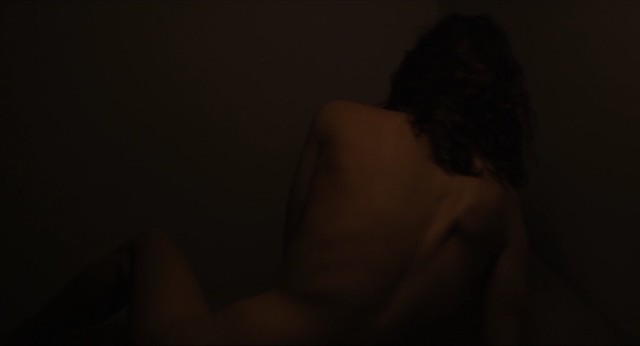
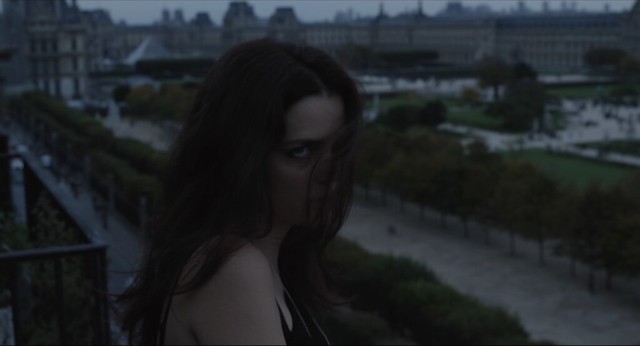
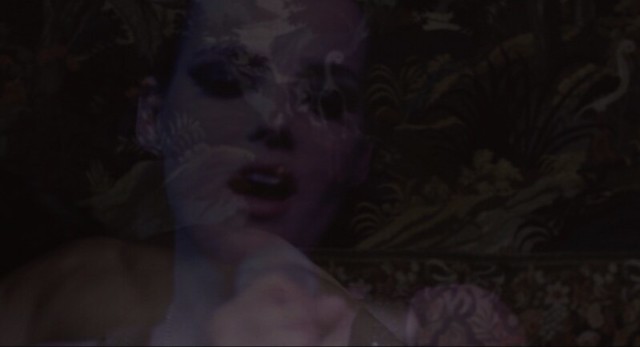
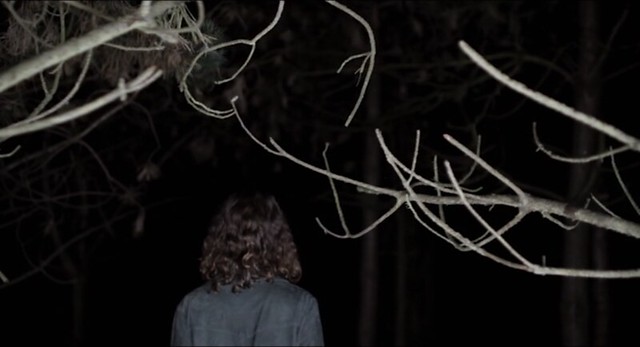
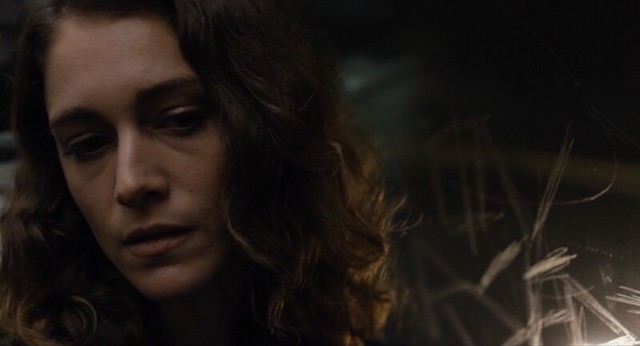
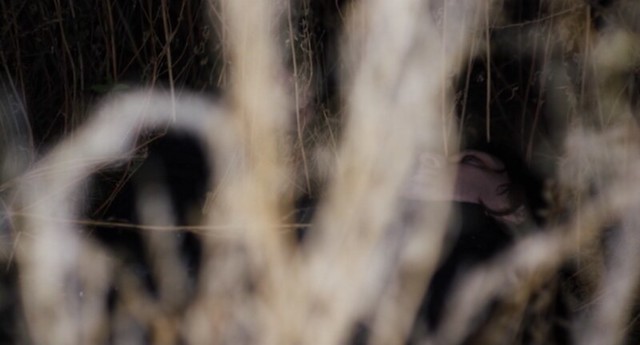
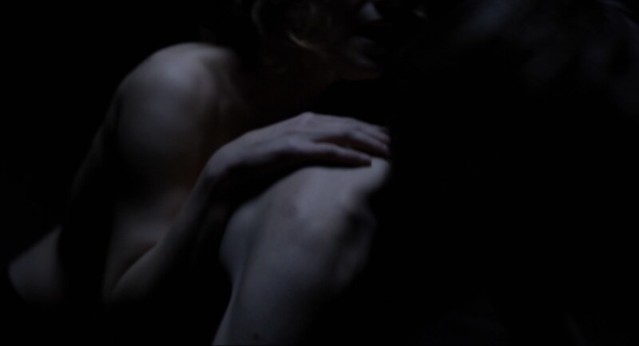
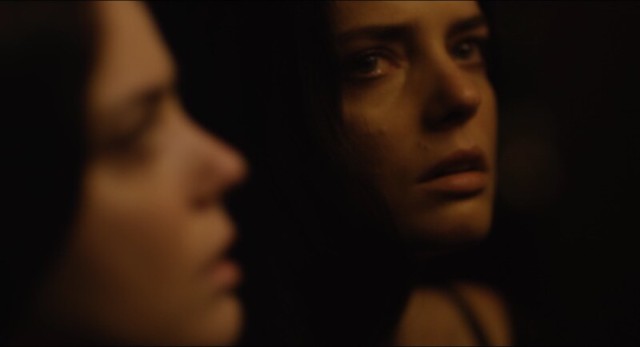
Malgre la nuit plays out like a lurid Lars von Trier film, plot-wise. Gotta say, it is perhaps the most narrative heavy Philippe Grandrieux film to date. But the imagery he presents here is still tour-de-force. The bodies, the alienness of white human skins against its dark backdrop - in the woods, unlit bedroom, basement, whathaveyou... make strong visual impact and brings out visceral, emotional reaction from me. Grandrieux makes a good use of his two skinny actors bodies - Ariane Labed (Yorgos Lanthimos regular) and Kristian Marr. Often completely naked, with their fawn-like sad faces, they go through raw emotions of being in some kind of mythic tragic love story.

Lenz (Marr) is in town, looking for love of his life, unseen Marlene. At some sado-masochistic gathering, he meets Helen (Labed), a deeply troubled young woman with a Laura Palmer style deathwish. Through his sleazy friend Louis (Paul Hamy of The Ornithologist), Lenz is introduced to an alluring dream pop singer Lena (beguiling Roxane Mesquida). She falls for self-distructing Lenz and as he rejects her, she burns with jealousy for both Madelene and Helen. She will be relying on her powerful underground boss dad to exact revenge.

I've said this before. In Lynch's long absence, I welcomed Grandrieux's artistry to fill the void. They are kindred spirits in more ways than one - their love of texture, steeped in noir trappings, fatalistic love, the dark side of human desires etc. As Lynch came roaring back with Twin Peaks: The Return, their differences are more pronounced - Lynch loves puzzles and working in his inner logic, Grandrieux is only interested in images. And these are not criticism at all for either one of the artists. Just an observation. But seriously, narrative is for pussies.

Anyone knows how to get a hold of the soundtrack of Malgre la nuit, please let me know. I need Roxane Mesquida's sweet dream pop in my life!

Thursday, January 14, 2016

Topography of Flesh

Meurtrière (2015) - Grandrieux
 photo 92d57be4-7ad7-462f-b50d-700d156cfe10_zpseecdlrlm.png
The second part of what Grandrieux conceived as trilogy (starting with White Epilepsy in 2012 and planned Unrest), Meurtrière/Murderess is another mesmerizing vertical mobile phone shot experiment. Your eyes gradually recognize human form in criminally underexposed images- the curvatures, concaves, female sex as they move in slow-mo. Distorted, muffled sound crawls to accompany tangle of naked bodies.

It's Caravaggio meets Munch meets Bacon. Slowwww cross-fades add another dimension to it, creating layers of flesh and movement on top of each other. The vertical canvas Grandrieux paints with these trained dancers as they gyrate, falling on top of one another, their light and dark skins contrast and accompany in graceful slow motion is quite intoxicating. Even though it is supposed to evoke or be about "anxiety", watching Meurtrière with all the lights off and plugged in is a beautiful, hypnotic experience.

Meurtrière plays part of First Look 2016 at Museum of Moving Image on 1/24. It is preceded by two shorts, Jet Lag and Lenz Elegy. Please visit MoMI website for more information.

Sunday, February 24, 2013

Primal

White Epilepsy (2012) - Grandrieux
White Epilepsy is the latest from the esteemed French visual artist Philippe Grandrieux (Sombre, La Vie Nouvelle, Un Lac). It makes a US premiere here at this year's Film Comment Selects series.

It starts with a back side of an androgynous nude figure in the dark accompanied by the sound of nocturnal insects. The movement of this body mass is slowed down and as it lurches forward and back, it reveals all the nooks and crannies: every vertebrae, every flutter of muscles becomes subtly visible in an eerie muddy visualization that has become the trademark of the French auteur's haptic cinema.

While watching this 67 minute film, a sort of primal Adam and Eve story with no dialog, displayed in an inverted format (acting taking place only in a vertical rectangle in the center of the screen- like an iphone video) among the room full of adoring cinephiles (myself included), I realized that this is a product of the unavoidable conclusion reached by an uncompromising visual artist whose interest lies in human bodies and nature of violence. This interest was previously presented in a borrowed genre: film noir, in which only a skeletal narrative was present to help the audience move through a string of dark, visual 'sensations'. His 2008 film Un Lac (a slim folklore about a brother and sister told in the Grimm tradition) made me a Grandrieux devotee. Even watching it on a small screen with my headphones on, it was a mesmerizing experience. I just wished I had seen it on the big screen.

So I have been very much looking forward to seeing White Epilepsy in a theater. But stripped of any narrative pulses and plasticity of normal filmmaking, the film stubbornly refuses to be nothing but a moving painting. There are surely some hauntingly beautiful images. But even though I'm not a novice to experimental and challenging cinema, I couldn't invest my full attention to what Grandrieux was trying to achieve here. In the past, he managed to maintain his films from becoming gallery art installations. It was a fine balancing act. White Epilepsy would undoubtedly make a fine gallery installation.

Monday, January 9, 2012

Beauty + Art

It Maybe That Beauty Has Strengthened Our Resolve: Masao Adachi (2011) - Grandrieux
Photobucket
Grandrieux is not in a hurry to introduce Masao Adachi, a radical Japanese Red Army member/filmmaker who preached armed struggle in the 60s. Beauty starts with Adachi, an affable white haired old man narrating free association style while pushing his granddaughter in a swing. With his usual hand held camera, Grandrieux walks among the Japanese crowd in Shinjuku, takes a taxi ride and retraces the steps of Tarkovsky's Solaris (driving scene). Adachi tells an anecdote about reading Jean Genet's Thief's Journal out loud with Oshima while writing The Diary of Shinjuku Thief. Adachi to Grandrieux is a hero, because he's always been trying to find a new ways to looking at the world socially and aesthetically. "Cinema moves from one film to another through time, above and beyond those who make it." Grandrieux muses. Less a biography than an examination of difficulties integrating art in politics/life in a meaningful way, Beauty is a beautiful and contemplative documentary I won't soon forget.

Thursday, January 5, 2012

First Look at Museum of Moving Image

Photobucket
I am ashamed to say that in my 14 year stint as a New Yorker that I've never been to Museum of Moving Image, one of the city's better cultural institutions located in cozy Astoria, Queens. I've heard of all the great things, been impressed by many film series they've been offering over the years. But for some reason, I have never ventured north to visit.

Buried under the end of the year shenanigans, I totally overlooked the newsletters from MoMI about First Look: their first annual independent film showcase by visionaries from all over the world, starting this weekend. As I was beating myself up for missing the boat in getting the press pass for the festival, Tomoko Kawamoto from the press office at MoMI saved me from hurting myself further. Thanks to her, I'll be leisurely attending many of the screenings. The roster is just amazing: Chantal Akerman (Jeanne Dielman, 23 Quai du Commerce, 1080 Bruxelles), Philippe Grandrieux (Un Lac), Philippe Garrel (Regular Lovers), Gariel Abrantes & Daniel Schmidt (A History of Mutual Respect), Raya Martin (Independencia), Andrei Zvyagintsev (The Return), Johnnie To (Exiled)- all showcasing their latest films. I'll be reporting from Astoria for the next two weeks. Stay tuned!

From Museum of Moving Image Press Release:

Curated by Dennis Lim, Rachael Rakes, and David Schwartz

To start the New Year, the Museum introduces a brand-new showcase for inventive, groundbreaking international cinema. Modest in size but ambitious in scope, First Look is a highly selective group of films that are distinguished by their artistic audacity. Established and emerging directors create new approaches to narrative, documentary, and experimental film, in many cases creating hybrid forms. These films are adventures; not only do they bring us to new places, they offer new ways of seeing the world, and they redefine their medium. Nearly all of the selections are New York premieres, and many are accompanied by personal appearances. In-depth articles about the films will be published on Moving Image Source, the Museum’s multimedia magazine.


First Look at MoMI

Wednesday, December 7, 2011

Darkness Visible

Un Lac/The Lake (2008) - Grandrieux
Photobucket
Photobucket
Photobucket
Photobucket
Photobucket
Photobucket
Photobucket
Photobucket
If one could describe a certain cinema as a pure sensory experience, where one can feeeel (as Bruce Lee would say) it without licking the celluloid, Un Lac would be it. Unlike Philippe Grandrieux's two previous films where he seems to borrow the turgid noir/serial killer setting, the storyline (if you could call that) here is totally barebone- a family living in a shack near the lake in the snow swept landscape. A handsome stranger comes in and takes the daughter away, the end.

With extreme close ups, desaturated colors, intentionally underexposed, shaky and out of focus imagery (yet not quite abstract) is also extremely hard to make out especially in indoor scenes. Sound of whirring wind, river, rain, snow, breathing, footsteps, etc., are always present, accompanying the dark, grainy imagery and making Un Lac a living, pulsating entity, much like an injured horse in the film. The only music in the film kicks in the two third way in, by way of beautiful Hege, the sister of Alexi (the young epileptic lumberjack, whom Grandrieux opens the film with). Hege sings Mondnacht from Schumman's Liederkreis, Op. 39. and the music accompanies her high pitched singing. It's not only not out of place but enthralling and sad- sad because Alexi knows that she now loves another man.

The film's darkness gripped me and never let me go. Darkness can convey so much more than light and Grandrieux knows this. All in all, Un Lac is a lovely experience. I can only imagine how the theater viewing of this would be like. If you are interested in watching this, I suggest watching it alone with the headphones on with all the lights off.