Showing posts with label hybrid. Show all posts

Wednesday, March 30, 2022

Art of the Real 2022 Preview

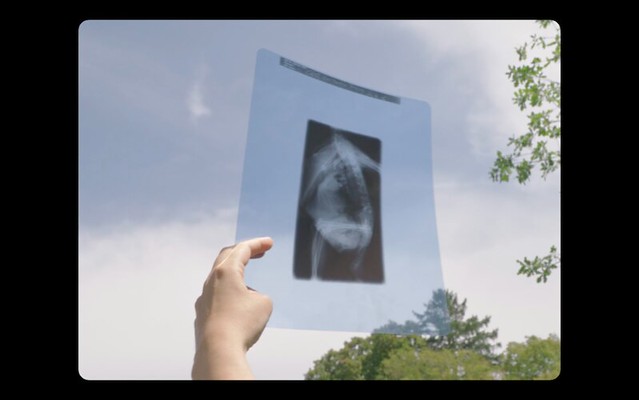
This House - Miryam Charles This-House On the onset, a grown version of a 14-year old girl who died in 2008 tells that the film will travel space and time since in film medium, everything is possible. So starts lyrical staging of unspeakable grief and all the potential of what could have been. Terra, played by Schelby Jean-Baptist, witnesses her funeral, carries on imaginary conversations with her mom (Florence Blaine MBaye), a Haitian immigrant, first to Quebec, then to Connecticut, US.

This House contemplates many things - the idea of home for both body and spirit, how the tragedy rips open a hole in space/time continuum, and giving voice to the voiceless/dead. The film consists of obvious indoor studio stagings, the lush greenery of the Haiti and its coastline and footage of bleak Northeast US footage all captured in grainy 16mm. Filmmaker Miryam Charles sort out a tough subject close to home with cinematic playfulness and poetic lyricism. This House is a poignant and compelling cinematic experience.

Train Again - Peter Tscherkassky Train Again-2 From the beginning of motion picture with Lumière Brothers, trains and film have a long and intertwined history. With Train Again, the assemblage-film master Peter Tscherkassky painstakingly creates a thrilling cinematic cake, pulling clips from as far back as Lumière's, The Great Train Robbery, Ballet Mécanique, to The Spirit of the Behive, Shining to Hollywood B-action films. His usual technique - rapid cutting, erratic camera movement, repetition and flicker effects, Train Again tests your persistence of vision to a dazzling effect. With Dirk Scheafer's tension building score, the 20 minute long film works like a thrill ride just like Tscherkassky's previous works like Outer Space or Dream Work. You really want to see it on pristine film print.

Super Natural - Jorge Jácome Super Natural-2 From the visual void we are introduced to a static noise. This static noise decked with subtitles is an omnipresent being, guiding us through Super Natural, a visual aural invitation to a group meditation called film watching. Shot in stunning backdrop of Madeira, Portugal, the film remind us that we are all connected in this world, the air we breathe in, the rock we are standing on, the fruit we eat, the various sea creatures, a little plastic bugs, our bodies, our imagination, our consciousness....
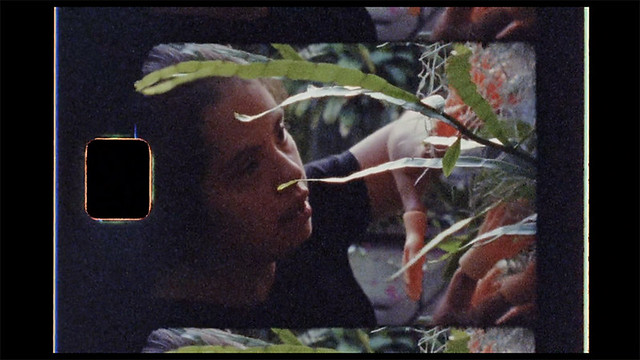
Shot in various medium - super 8, VR computer graphics, instagram images and using a group of people, some with disabilities and some not, Super Natural wants to place us in an environment not as strangers. It wants us to acknowledge that we are part of the ecosystem in the unstable world we are living in. Jácome and his collaborators use loose visual and words associations throughout with vivid colors and humor. The non-narrative images colliding but holds its shape together like a collage. Super Natural is a sensual meditation on human existence and connections with one another.

Geographies of Solitude - Jacquelyn Mills Geographies_of_Solitude_Landscape Zoe Lucas is a naturalist/environmentalist. She first came to Sable Island, a patch of land 20 miles long and one mile wide off the coast of Nova Scotia some 40 years ago to study wild horses living there and made it her home. She has been diligently and meticulously logging data, not only on the horse population, but also sorting through mountains of plastic debris being washed up ashore and cataloging them, leaving records of environmental impacts of the anthropocene age.
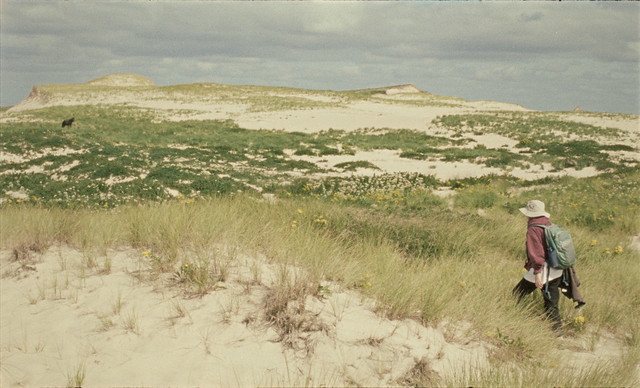
Filmmaker Jacquelyn Mills in collaboration with Lucas, lovingly documents all that a windswept remote island can offer - sand dunes, horses and seals, its intricate ecosystem. She also comments on the human footprints on environment through Lucas while capturing some of the most breathtakingly gorgeous images on 16mm film, plus naturally exposed footage only by moonlight and hand printed footage using natural surroundings. Here, tiny insects footsteps turn into music, grains of sand become twinkle of the stars, dead horse brings forth new vegetation. Geographies of Solitude is one of the loveliest feature debut in years.

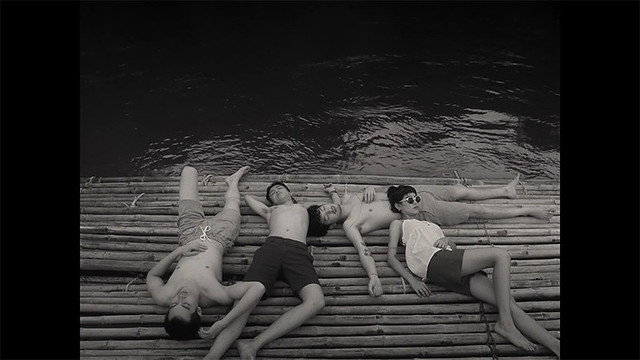
Come Here - Anocha Swichakornpong Come Here-2 A group of young theater actors take a trip to Kanchanaburi, west of Thailand, where Death Railway, once a site for WWII atrocities where tens and thousands civilians and Allied POWs lost their lives in labor camps. But the museum is under renovation and closed. The group, consists of 3 boys and 1 girl, leisurely hangs out at the lake house, smoke weed, mimics animal noises and engage in mundane conversations.
In a parallel action, a woman who is camping in the forest seems to be lost. Dazed and confused, she finds a stream, drinks the water then changes into a boy. Then we see the lakeside bungalow scene play out again on stage, with a scenery shot from the train out the stage window, moving us forward.

In her previous films, Suwichakornpong engaged us in a socio-political history buried underneath the lush forest of Thailand. Her approach is getting more and more abstract with each new film. Come Here, clocking at just over an hour, is like a puzzle piece with some of the vital pieces missing - what's the meaning of the transformation? Is the camper dreamed up by the girl by the lake or vice versa? How does a Bangkok's zoo closing figure into the story?

With the country's train and railway having imbued historical significance, Suwichakornpong's new film charts progress, nature, harkening back to animism, the younger generations collective historical amnesia, and the country's physical and spiritual transformation... in such a mysterious yet seductive manner. Watching Come Here is not frustrating- it provides you enough of threads, not at all in a teasing way, to decipher and mull over its sinuous connections and implications regarding history and it's thrilling.

If From Every Tongue It Drips - Sharlene Bamboat If From Every Tongue It Drips-1 An intimate potrayal of a Tamil queer feminist activist and historian Ponni Arasu and her activist partner Sarala Emmanuel as they record their daily lives and discuss Indian history and quantum physics in relation to human connections and the state repressed desires. Shot in sticky, tropical climate of Sri Lanka, If From Every Tongue It Drips is sensory overload experience with constant chatters of people, birds, insects, mechanical humming, traffic, street noise, water lapping at the shore, and music. Bamboat uses discordant sound, highligting the film's multicultural everywhere-ness. Arasu, almost always a subject of attention, recites Rekhti poetry full of passion and sensuality about female desires for one another that went against British colonialism and its purification of the culture that dominated much of the British rule.
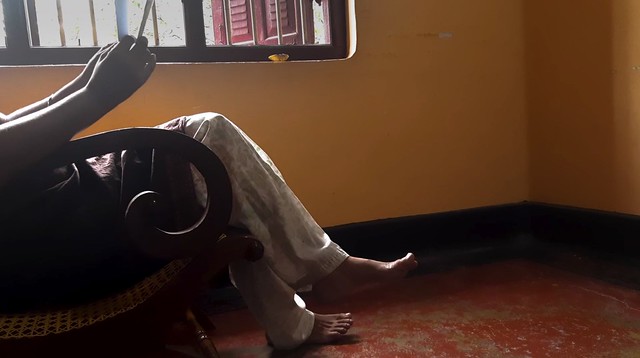
The film is fascinating, informal history lesson done through many languages and culture, all spoken and sang by Arasu who gives a queer perspective on history that is sorely needed to understand the cultural, political landscape of modern India and its feminist movement. The film also celebrates tender, proud and loving relationship the two women shares.

Thursday, November 12, 2020

Art of the Real 2020 Showcases Constantly Evolving State of Filmmaking


I was devastated back in April that Art of the Real, my favorite annual film series at Film at Lincoln Center didn't happen because of Covid Outbreak. But here we are, 7 month later, the celebration of non-narrative/hybrid filmmaking is back, again with superb offerings. Better late than never! And I am so grateful for it. So if you want to get over the election hangovers, and plunge into far reaching, innovative, refreshing and adventurous cinema, please join me to explore some of the most delectable choices in non-narrative/hybrid films the festival is offering. Presented with the support from MUBI, Art of the Real runs two weeks 11/13-11/26 with 34 films presenting. Please visit Film at Lincoln Center Virtual Cinema for tickets and info.

Below are 6 films I had a privilege of sampling:

La vida en común la vida en comun

Ezquiel Yanco’s La vida en común tells a story of a group of teenage boys in Pueblo Nación Ranquel, an indigenous settlement in the San Luis territory in the middle of Argentina. The first thing that you notice is its government built housing the inhabitants live in– a geodesic concrete huts with pipes sticking out, looking like an unfinished 70s sci-fi movie set. There is an unseen puma stalking the village, and these boys see tracking and hunting it as the rite of passage to adulthood.

Part Lord of the Flies, part Waiting for Godot, La vida en común is an engrossing coming of age story that emphasizes the absence – of adults, of things to do in the vast and arid territory. Kids let their imagination go wild, while continuing their machismo culture based on the folklore of the Rankülche tribe.

La vida en común touches upon a lot of issues such as colonial past, assimilation, globalization and cultural heritage. The film is intimately observed and endlessly fascinating. 


Bird Island Bird Island

Maya Kosa and Sergio da Costa’s Bird Island takes place in a bird rehabilitation center in Switzerland. Antonin, a young man with a long bout with illness and isolation, is assigned to the center to reintegrate into the work force. He has to learn everything about taking care of birds from Paul, whose retirement is just around the corner. Paul’s job was prepping meals for various birds in the sanctuary, including breeding and ultimately killing mice for birds of prey, being a part of reintegration procedure when rehabilitated birds are released into the wild.

At a first glance the film with real life characters (all characters are playing themselves), their short exchanges and their wooden demeanors might come across as awkward. But as it plays out, with beautiful full frame photography, this simple, observational documentary exude human kindness and compassion without trying hard. Also interesting is how Antonin’s reintegration to the humanity mirrors that of birds. With his gentle nature, Antonin may never learn how to kill mice before Paul retires, or how to show his crush on the center’s veterinarian Emilie, but the life goes on. Some birds die, some live, some come back after their release, some heal completely.

Emilie wonders why there is an upsurge of wounded birds? What are they feeding on outside that make them sick? With that, here is also an environmental message in this lovely film.


Małni – Towards the Ocean, Towards the Shore Malni

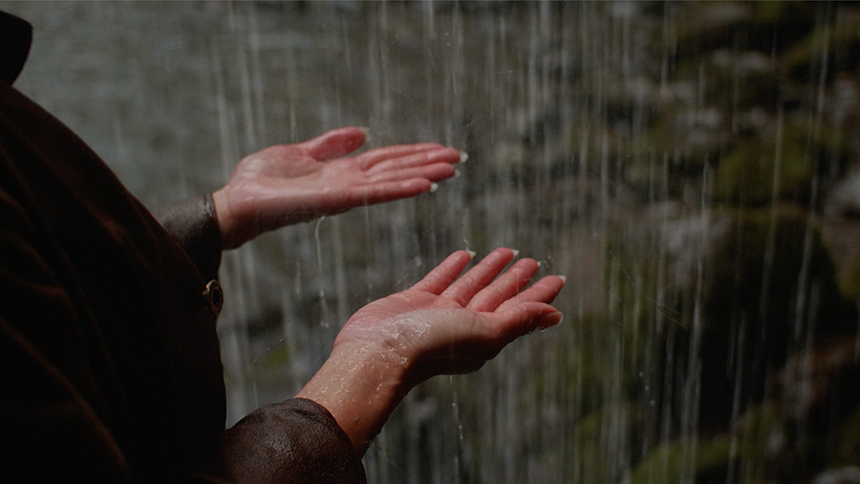
Mostly narrated in chinuk wawa, a rhythmic language of Chinukan people of the Pacific Northwest, by director Sky Hopinka, Małni- Towards the Ocean, Towards the Shore follows Sweetwater and Jordan, two people of the Chinuk origin, as they talk about home, identity and keeping the tradition alive within the frame of the origin of death myth of Lilu and T’alap’as (wolf and coyote). With the two (un)related young expecting parents, Małni is a lyrical contemplation of cyclical nature of life in the gorgeous backdrop of the lush, mossy Pacific Northwest. Everything is related to water – waterfalls, rain, the sea, enveloping everything – death, birth and everything in-between. Beautiful filmmaking.


A Shape of Things to Come  A Shape of Things to Come

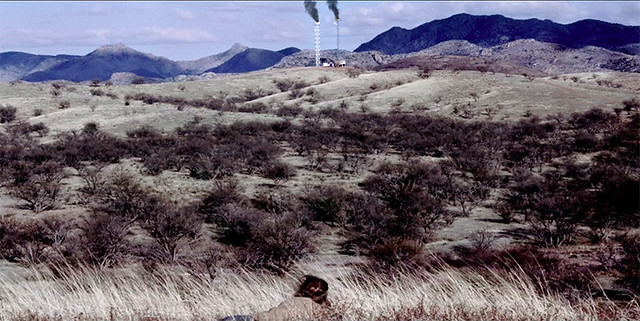
Directed by Havard Ethnography Lab alum J.P. Sniadecki (The Iron Ministry, El Mar La Mar) and Lisa Malloy, A Shape of Things to Come tells a story of Sundog who leads a survivalist existence in his trailer with the Sonoran Desert as his back yard. Sniadecki met Sundog while filming El Mar La Mar, a visually arresting film that also condemned the US Government’s inhumane immigration policy near the Southern border.

The film starts with a constant electronic noise and shots of satellite towers. It’s pretty clear that they are communication towers used by the US border patrols.

Capturing Sundog’s day-to-day life, the filmmakers document the essence of outdoor living- hunting, gathering and animal husbandry with all the connotations that associated with it – freedom, America, western expansionism, self-reliance. Being an herbalist, Sundog collects various of fauna, mixes in with alcohol to make medicine that he sells. He also collects toads at night to extract their white secretions to make hallucinogens out of it, which he eagerly partakes after drying the substance into a fine powder. He also practices with his long range rifle.

Part nature documentary, part character study and part eco-terror fantasy, A Shape of Things to Come offers another fascinating mix of non-fiction/fiction with great intimacy and urgency.


The Two SightsSecond Sights

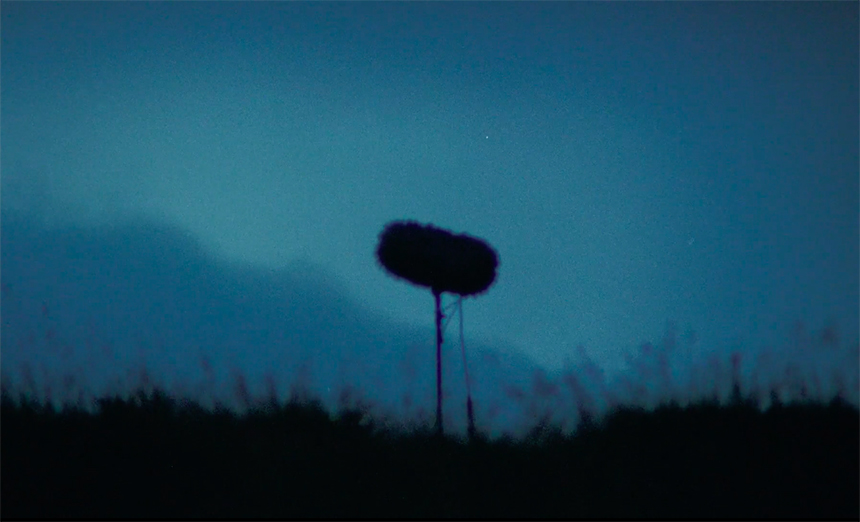
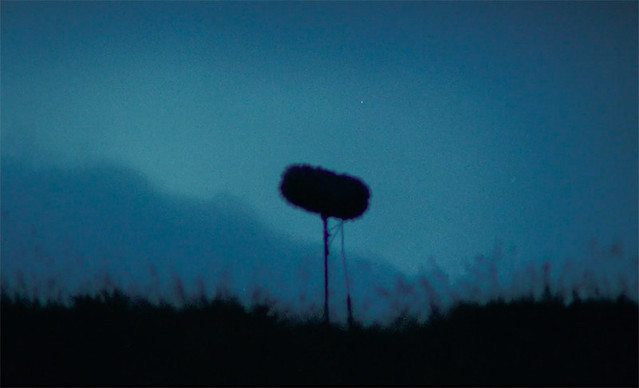
Shot and collected from various Scottish isles, The Two Sights is composed of little eerie Gaelic tales that were sent down in oral tradition. An old timer narrates in the beginning that these sight-seers, either see or hear something in and out of their surroundings. It makes sense as director Joshua Bonnetta sets up his microphone in the windy field and just exits the frame in the beginning of the film. The often picturesque Scottish outdoors feature the elements of nature – rain, waves, birds and other animals, as well as boats and other human made sounds. By looking at the images and hearing sounds Bonnetta collects, you can totally see how these tales took their forms – the rustles against the thatched roofs, a seal floating in the water, the reflections on a calm loch surface, nature can play tricks on you very easily in these parts of the world.

But the narrations take much more spiritual tone. Singing/humming at their loved one’s passing, caring for a beached whale until it expires –the connection and communing with nature are the points of The Two Sights.And it’s also one of the most beautiful cinematic experience I’ve ever seen and heard.


The American Sector Screen Shot 2020-11-12 at 11.18.05 AM

Pacho Velez (Manakamana, The Reagan Show), another Havard Ethnography Lab alum and Courtney Stephens direct this travelogue of sorts. They document concrete slabs that used to be the Berlin Wall which are scattered all over the US. The American Sector is an extremely fascinating examination of symbols, metaphor, propaganda, personal historicity, bias and bigotry, physical artifacts vs intangibles....

You'd find these memento mori in expected places - museums, public parks, college campuses, military stations and government buildings. But they can be also found on the curbside of interstate highways, in front of a restaurants, in private homes, gated communities, corporate headquarters and theme parks.

The film posits some very interesting questions about how to put contexts in inanimate objects to its surroundings. Once removed from its original space and time, does the object hold the same meaning? Its layered spatial-temporal musings on the subject make The American Sector a delightful cinematic experience.


Thursday, April 9, 2015

Art of the Real Remains to be the Best and Most Satisfying Film Series for Cinephiles

Entering only its second year, the Film Society of Lincoln Center's Art Of The Real series is, nonetheless, one of the must-see film events of the spring, and perhaps the year.

This is in large measure due to the boundless, eclectic mix of films, which, while generally classified as documentary, stretch and morph our notions of what both fiction and non-fiction filmmaking can look and feel like.

Running April 10 - 26 at the FilmLinc theater complex (full lineup and ticket info here)
, the series not only features a plethora of new, beguiling works from contemporary filmmakers across the globe, but also includes a tribute to the work of the audacious Agnès Varda, as well as a spotlight on reenactment in film, including Peter Watkins' masterwork Edvard Munch.

From short form works to a new film by visual essayist Jenni Olson, and an avant-garde reimagining of a Philip K. Dick novel, the sky's the limit with the Art Of The Real.

Included here are nine reviews of select films with a Q&A from co-programmer Rachael Rakes.

Q&A with Art of the Real co-programmer Rachael Rakes:
 photo rachael_rakes-thumb-630xauto-54703_zpsjaxqvsdf.jpg

What was the impetus for programming Art of the Real?

Over the past several years, we'd [co-programmer Dennis Lim] both had the experience of seeing really interesting and genre-forwarding work at international festivals, much of which didn't seem to find a place to be screened in New York, and we felt that it was time to bring those here. We also were interested in looking back at earlier pioneers of the documentary form, like Chris Marker, Chantal Akerman, and Jean Rouch, and remarked on how in many ways their work was more experimental and challenging than so much of documentary output today. So we wanted to revisit that work and in the course redefine what might fit within the overall definition of nonfiction art.

What's your criteria in choosing films for the series?

We look for films that in some way are surprising, adventurous or challenging. This could mean that they might disorient narrative, or combine several political ideas together, or combine form and ideas in unpredictable ways. This doesn't mean that they need to be difficult to watch, but that they are entertaining, moving, and captivating in less conventional ways. We do tend to focus on international works, as they are harder to see here, but are open to anything that seems to be doing something exciting.

It seems to be that there is more of an emphasis on queer cinema this year. Can you tell me the impact of LGBTQ filmmakers in relation to the series?

The reenactment sidebar includes a lot of LGBTQ filmmakers, I think because revisiting history is a necessary queer act. History is recorded through a very specific lens and by going back and, for instance, re-imagining a lesbian Beatles (Grapefruit), artists can highlight who has been left out, and help to change the writing of the present.

I Forgot! - Opening Nigh Short Film, Friday, April 10, 7pm
 photo 1dba9919-205a-4973-a84c-6417d61be67b_zps2ivsnf6z.jpg
Jarring, pretty, ambitious and a total sensory overload, Eduardo Williams' I Forgot! only exists in the space between reality and a cinematic realm without any pretension.

The film starts with an underwater shot and ends up in the sky. When it's not hovering between the two realms, it blazes through the wet, crowded streets of Hanoi on a scooter. A wayward youth, going from one job to another, being mistaken for someone else everywhere, forgetting everyone and everything. We get to see some amateur pakor action in an abandoned construction site, then the movie takes off to the sky, while the chatter of youth continues.

Williams achieves in showcasing the essence of the adventurous spirit of the cinematic possibilities in a short, succinct way.

Iec Long - Opening Night Short Film, Friday, April 10, 7pm
 photo 1bbe27d5-ad02-4e86-a8a6-e5205e920a30_zpsr7elpqin.jpg
Just as in their last film The Last Time I Saw Macao (NYFF 2012), the colonial past plays a haunting ghost in João Pedro Rodriguez and João Rui Guerra da Mata's Iec Long. This time, it's the closed firecracker factory Iec Long at its center.

Amazingly, within a very short lyrical cross fade between fireworks, neon lights and gold coins pouring down, the directing duo succeeds in setting up Macao's colorful past as a Portuguese colony and the West's seedy gambling den. The factory itself, now sits in beautiful decay: stained walls, empty corridors consumed by nature, with the remnants of its illustrious past scattered about - the colorful firecracker box wrappers, ribbons etc.

As I was reminded repeatedly that cinema is that of capturing ghosts - its images captured forever on celluloid, a fact it has has always been aware of from the beginning.

Iec Long then, is also haunted by the ghost of its child workers. Rodrigues and da Matta stage super-8 shot B&W footage of a child peeking through the ruins and juxtaposes it with the present day factory. With layers of images, a forlorn voice-over of an old man (a former child worker), ancient Chinese poetry and nature, the filmmakers concoct an intoxicating mix.

Li Wen At East Lake - Wednesday, April 15, 6:30pm
 photo c47c98d0-3d16-46e2-92ce-23e551ef95e1_zpsbej3bxxm.jpg
In my 2012 review of Li Luo's Emperor Visits The Hell, I compared the film's playfulness to the works of Apichatpong Weerasethakul and Miguel Gomes, declaring that Chinese cinema is alive and well.

Now, Li is back with another delightful cinematic exercise, a documentary/narrative hybrid, Li Wen At East Lake. It starts with a university student surveying East Lake, a disappearing cultural/historical site due to rampant land development in Wu Han, central China's ever-growing megalopolis. The developers have been inching away at the lake, filling in to make room for an amusement park, high rises and a proposed second airport. Enter police inspector Li (played by Li Wen, revising his deadpan droll presence in Emperor Visits The Hell), who is tasked to capture a mentally unstable man who keeps disrupting the peace by saying that the dragon of East Lake will take revenge on Wu Han.

There is an element of melodrama (Li's younger colleague is a gay man with an unrequited love story), police procedural, fantasy (the crazy man turns out to be a former fish), all in the background of China's capitalism on steroids. It's also part farce, part interesting character study (Li is an artist and belligerent old male from an older generation who loves to argue with young people about values and life in general). In the end, Li Wen At East Lake is so much fun.

White Out, Black In - Friday, April 17, 9pm
 photo f86bfaaf-789f-4bf1-a91a-698065b16862_zpsdiqjt76b.jpg
White Out, Black In is apparently what police blurted out when they busted a dance club in the city of Ceilandia, a suburb of Brasilia, in 1986.

The racially motivated attack was deeply ingrained, physically and psychologically, in the film's middle aged protagonists - Sartana, a former youth dancer whose leg was run over by police during the raid, and Marquim, a musician who is wheelchair bound from that faithful year. Adirley Queiros's ingenuous low-fi Sci-fi combines real events and people to comment on the racism that scarred the entire generation. The under-populated, derelict city doubles as a dystopian present.

Marquim, working as a radio DJ from his dilapidated apartment, reminiscing about the good times, playing classic music from the 80s, is making a big bomb with the help of Sartana which will certainly change the course of the future. Sensing that threat, the future government sends Dimas, an agent from the year 2073, to stop the bomb. He travels in a time machine that looks very much like a shipping container equipped with a disco ball. But in order to get paid, the agent needs to dig up the evidence of the past. When he finds out the violence against these blacks didn't just take away their mobility but robbed them out of their youth, will Dimas stop the bomb or will he change his mind?
What Queiros is doing here can be also seen as a therapy session for Marquim and Sartana. Playful and poignant, White Out, Black In is a true gem.

Snakeskin -Saturday, April 18, 6:30pm
 photo 31f24b54-7f99-4b8c-a89d-2c3cc44354fd_zpsmf6ijfqc.jpg
The multiethnic nature of Singapore is thoroughly explored in Daniel Hui's Snakeskin. Many voiceovers wash over the film's images of present day Singapore. Among them are Malay-Singaporean, Chinese-Singaporean and Indian-Singaporean experience. Sometimes they are personal recollections told straightforward, sometimes they are the laments of a person reincarnated as a purring cat, other times they are from a time traveler. Some of them are presented as a film within a film. It charts the history of the area from the British rule, Japanese occupation, socialist government, student uprising, all the way into the future.

Just like many lo-fi sci-fi presented in the Art of the Real series that are obviously influenced by Chris Marker, Snakeskin also tinkers with the sci-fi element. Visually and aurally though, the film is gentle and lyrical, like watching someone's lucid dream.

Kamen - Wednesday, April 22, 9:30pm
 photo 637df89d-0339-44ca-b314-c196a9e9d5e3_zpsoel4bbed.jpg
The subject of Florence Lazar's documentary is deeply disturbing. Kamengrad, or more recently known as Andricgrad, is a village within a village in Visegrad, Bosnia and Herzegovina, near the Serbian border. Built from the ground up, this fake 19th century themed village, where every ethnic group is represented and equipped with a multiplex, malls and cafes, was also the site of a mass execution during the Balkan War in the 1990s.

Lazar interviews ethnic minorities from the Muslim population as they try to rebuild their blown up mosques. She digs deeper into the Orthodox Serb majority's attempts to not only erase the history but also rewrite it by tampering with archeological sites and whitewashing with theme parks for tourists.
It turns out the man behind the Andricgrad,"Professor Kusturica", is actually the esteemed film director Emir Kusturica who has a strong Serb Nationalist view. Lazar counters this construction with a survivor, an archivist of the war atrocities. She recounts the dark, shameful days of modern European history, where ethnic cleansing once again took place merely 20 years ago.

Kamen questions the state of Europe where national fervor is once again on the rise. All I can say is I can't look at Kusturica's films the same way again, ever. The inclusion of serious documentary like Kamen shows yet again, the immensity and true greatness of the Art of the Real series.

Androids Dream, Thursday, April 23, 9:30pm
 photo b7f687ae-0afb-4f7e-80c6-5f16bd7573b9_zpspxhtnisr.jpg
The future is here and now in this super cheap Spanish remake of Blade Runner (well, not quite). A different interpretation of Phillip K Dick's seminal Sci-fi novel Do Androids Dream of Electric Sheep?, Androids Dream swaps Ridley Scott's iconic neo-noir images with sunny, sleepy eastern Spanish city of skyscrapers.

Ion de Sosa cleverly doubles empty construction sites, unfinished luxury apartments hit by the housing bubble and global recession as the future earth 2052, which is sparsely populated mostly by old people (pensioners on vacation). Remnants of young people turn out to be not human as we find out in their dialog. And it's our protagonist (Manolo Marin) who must hunt them down so he can afford the real sheep: the status of upper class, which now cost 4 1/2 million pesetas- yes, they have abandoned Euros.

Combining faded family vacation footage and grainy, economically shot (early in the morning presumably for empty streets) 16mm images, de Sosa gets the essence of the source material while commenting on the unending economic crisis of the present. This could be a good double feature with Aimee Siegel's reinterpretation of Louis Malle's Black Moon, presented at last year's Art of the Real, which saw grand abandoned mansions in Nevada (by the housing bubble, similarly) double as the future dystopia.

The Absent - Thursday, April 23, 7pm
 photo 87578547-9617-4fbc-b5d5-adb78958cbd6_zpsqvfc7ttz.jpg
An old man lives in a shack near the beach in Oaxaca. Tending his cows and goats, he leads an uneventful, solitary life. The law says he doesn't have the deeds to the property and the shack will be removed. The old man is seen cleaning a gun in one scene. The next, we see him (from a far) threatening an official with the gun on the beach. The official is presumably there, notifying the demolition of his house.

Past and present exists on the same plane as the younger version (Director Nicolás Pereda regular Gabino Rodriguez) of the old man shows up holding the same gun. At one point he is all bloodied up, missing part of his ear, reflecting the old man's crooked ear. The home now gone, with the mist rolling over the forest, the past and present collide as the old man and the younger version of himself drink and singing together.

Visually ravishing and short on straight narrative, Pereda's The Absent is an enigmatic film full of mystery.

El Palacio - Screening with The Absent, Thursday, April 23, 7pm
 photo da022506-4ec3-4ae4-92cb-8eb82f1ae920_zpsas2tp9lj.png
Nicolas Pereda's short observational documentary focuses on a group of women living together in one house, doing everything communally - brushing their teeth in the morning, cooking, washing dishes, making beds, sleeping all under the same roof. Then there are training sessions in interview style. They are mostly women seeking domestic work - as a housemaid, eldercare or childcare provider etc. More experienced ones train others.

These Mexican women are living together for financial reasons and emotional support. The place they share, as the title suggests, is their home away from home (they refer to it as their home in job interviews). Uncharacteristically, the palace is rather quiet and its inhabitants quite disciplined and serious.

Pereda isn't interested in Oprah style Yaya sisterhood dramatics. Rather, he observes their communal living and their quiet resolve from a distance without elaborating further.