Showing posts with label Film at Lincoln Center. Show all posts

Thursday, July 9, 2026

NYAFF 2026 Preview

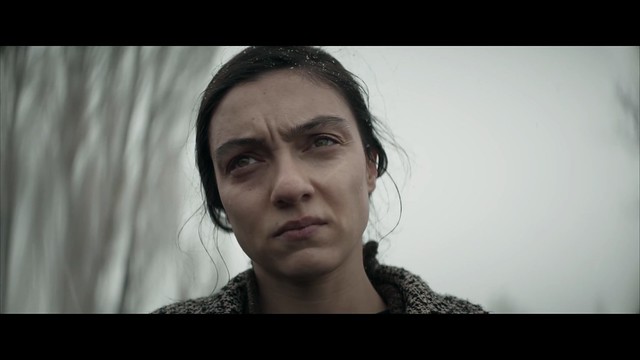
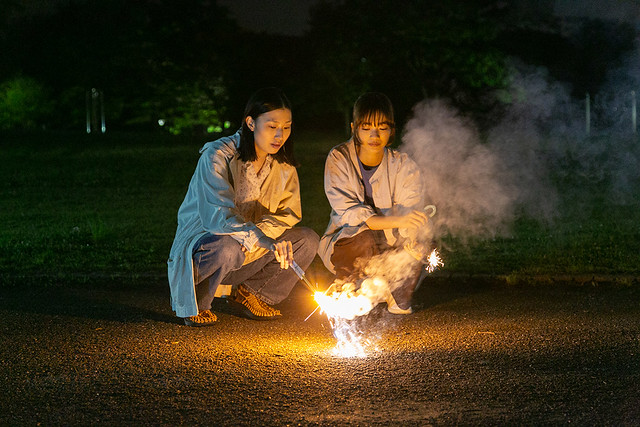
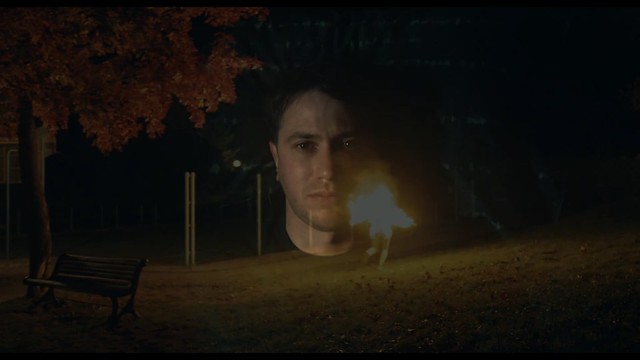
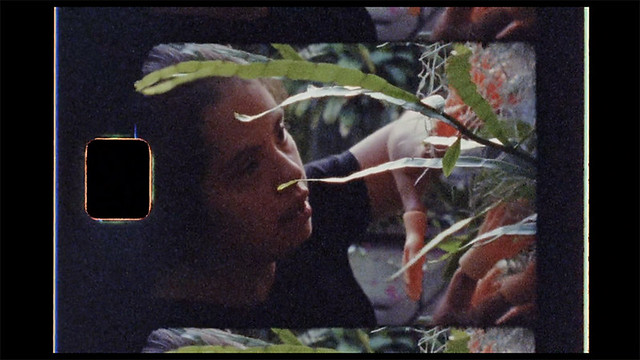
Funky Freaky Freaks - Han Funky Freaky Freaks Yong-gi, Jisook and Dumbo are foul mouthed, troubled highschool friends. When not in class, they engage in various mischief - including selling dirty underwear and pretending to be a girl online. The film's rough, handheld aesthetics and with jumpcuts, mixed media formats, and urban decay settings give it an energetic, edgy feel to the trio's shenanigans. Everything changes with the arrival of Woojoo, a handsome Judo champ transfer student from a rich family. Much to the distress of Yong-gi, Jisook's childhood friend who has been carrying a flame for her, Jisook destructively falls for Woojoo, who is a known womanizer.

After Woojoo unceremoniously dumps Jisook, they devise a plan to kill him - lure him into a deserted building. But Dumbo never shows up and Woojoo gets spooked and runs away. Jisook chastises Yong-gi and drives him to kill Woojoo in school.

Funky Freaky Freaks features the social media saturated environment and its pressure to conform in the most artificial ways, where looking good means everything and deception becomes the weapon of choice for the outsiders and non-conformists. It's a stark, uncompromising debut.

Kinki - Shiraishi Kinki Kinki is a south central region of the mainland of Honshu, also known as Kansai. So despite how it sounds, it's not that kind of film. The found-footage horror master Shiraishi Koji (Noroi), directs this Lovecraftian horror that has a lot of creepy imagery and jump scares, also touching on Japanese folk horror involving torii gates, a cult group and resurrection.

It plays out as a missing persons case involving a reporter on a big mystery case. The mountains of clues in physical media- videotapes of interviews, folklore, anime, CDs and newspaper clippings and thumb drives, throw a young journalist and a friend of a missing reporter deep into the mystery, where peoples head vends back in unnatural ways, disappearing limbs, falling deaths, etc. It's a good throwback to early 2000 Japanese horror.

Human Resource - Thamrongrattanarit Human Resource Fren works at the HR department of a company situated among the glass and steel towers in Bangkok's business district. She discovers she is in early stages of pregnancy, but her feelings on expecting a baby are ambivalent at best. The world is a scary place according to the news which is bombarding the airwaves every day in her commute. Her husband, Thame, is a sales person for an anti-stabbing protective gear company. Fren and her co-worker interview many young people for an entry level position in her company, vacated by a young woman who failed to show up to work for several days now. The applicants are all overqualified and demanding. But in this economy, it is hard to be choosy. The company wants someone who can work 6 days a week with low salary, under a tyrannical boss, whose bad temper goes unchecked.

The threat of the everyday world escalates in a monstrous traffic jam in Fren's neighborhood and confrontations become more frequent. Fren's stress and exhaustion results in a fenderbender and Thame finally finds out that they are expecting a baby. He is overjoyed and busies himself to provide for his family - enquiring about the elite international school, decluttering the house, etc. But for Fren, often seen in silhouette or in profile at night, something is eating at her.

With constant overhead shots of the urban jungle combined with long static shots of inanimate objects and great sound design, Human Resource shares the universal concern of treating human beings like resources, leaving humanity behind.

Montreal, My Beautiful - He Montreal My Beautiful Joan Chen stars in this queer drama set in Montréal. She plays Feng Xia, a dutyful housewife of Wang, an immigrant who has a convenience store business. They have two kids - daughter just started college and son is in elementary school. She is having hot flashes and irritability due to menopause. Her daughter's refusal to translate anymore in public forces Feng Xia to take up French classes, after living in Montréal for 14 years. With the encouragement of a gay Cuban classmate who finds the city liberal and open, Feng Xia joins a dating app and finds Lisa (Charlotte Aubin), a stunning 30 year old blonde, working as a server in a cafe. Feng Xia has a secret love in her youth with another girl.

Forbidden love, duty, culture clash all take part in Chinese Canadian filmmaker Xiaodan He's immigrant story. Joan Chen, at 65 is still luminous and plays Feng Xia, a woman trapped between tradition and desire, gracefully. Aubin, as a young woman still trying to figure out herself and finding love is also commendable.

Tuesday, March 4, 2025

Preview: Rendez-vous with French Cinema 2025

This year marks Rendez-Vous with French Cinema, running from March 6 to March 16, celebrates its 30th year at Film at Lincoln Center, NYC. This celebrated festival offers a dynamic showcase of contemporary French filmmaking, featuring an array of 23 films by both emerging voices—some selected as part of Unifrance’s 10 to Watch 2025 Program*, a yearly initiative honoring a new generation of directors and actors who contribute to the vitality of French creation—and seasoned directors that tackle relevant and enduring themes. This selection of North American, U.S., and New York premieres celebrates the energy, innovation, and range of French cinema.

The stellar lineup this year includes Visiting Hours by Patricia Mazuy, about two woman forging an unlikely friendship over their husbands' incacerations, starring indomitable Isabelle Huppert, the 77th Cannes Film Festival opener The Second Act by Quentin Dupieux, a meta-comedy taking place on a film set and featuring a star-studded cast, Wild Diamond, stunning feature debut by Agathe Riedinger, a gripping exploration of 19-year-old Liane’s (Malou Khebizi) fierce pursuit of fame as a reality TV contestant, Meeting with Pol Pot, a searing indictment of Khmer Rouge regime by Rithy Panh, and Jessica Palud’s Being Maria, which premiered at Cannes, an unsparing exploration of Maria Schneider’s (Anamaria Vartolomei) trauma stemming from her experience on the set of Bernardo Bertolucci’s Last Tango in Paris, with Matt Dillon playing Marlon Brando.

Being Maria - Jessica Palud Being Maria As French film industry's going through a full #MeToo reckoning, Jessica Palud's Being Maria revisits Bernardo Bertolucci's controversial film The Last Tango in Paris and tells the untold story from the perspective of its co-star Maria Schneider and the film's life-long effect on the actress. Schneider, star of many memorable films as Michelangelo Antonioni's Passenger, Jacques Rivette's Merry-Go-Round, later became outspoken activist against sexism in French film industry.

Anamaria Vartolomei of Happening, plays Schneider, a young, unknown actress chosen by Bertolucci (Giuseppe Marggio), to star opposite Marlon Brando (Matt Dillon) in sexually charged The Last Tango, at age 19. It was the 70s and if you are an established auteur like Bertolucci, it was 'anything goes' for art. The premise of the film is two strangers meeting by chance and carrying out a strictly physical relationship, baring their bodies and souls to each other. There will be a lot of nudity, so it will be controversial, the director warns. But you get to work with Brando and your career will be launched. Maria knows what she is signing up for. Yet she needs a consent form (because she is underage) signed by her movie-business disapproving mother. But it's the infamous "butter" scene, an improvised simulated sex scene involving butter, that really breaks Maria. After the scene, she felt violated and humiliated by both Bertolucci and Brando, who never told her what their intentions were for the scene beforehand and never apologized. Her shock and tears captured on screen were real.

She is reprimanded by her manager for speaking out about the incident during the press tour after the film's release. Soon afterwards, she becomes a heroin addict and finding herself branded as 'difficult to work with', by refusing to do a nude scene in most of the roles she is offered. She befriends with a college student Noor (Céleste Brunnquell) who is writing her dissertation on women's roles in films and the two become involved. And it is Noor who sees Maria through her drug addiction.

It is understandable that Vartolomei was chosen to play Schneider, even though there's no physical resemblance. In Happening, where she plays Anne, a high school student in need of abortion which was still illegal in the 60s France. With all the conservative swing around the world, her performance became a women's rights symbols. And she does a great job portraying a principled young Schneider who saw injustices in French film industry run by men, for men, long before #metoo caught up with it.

Wild Diamond - Agathe Riedinger Wild Diamond 19-year-old Liane (Malou Khebizi), living with her unemployed single mother and a younger sister, lives and dies by her phone, getting followers with her looks and dance moves. Platitude of her fans, spreading across the screen is what she lives for. Her emphasis on her looks - she got a boob job and self-administered Botox on her lips, are all part of getting more followers, so she can be famous. Being rich and powerful are her goals in life. She really wants to get out of her less than perfect surroundings. To her, everyone, including her circle of friends, mom, family counselor, and Dino, a local dirt bike mechanic that she has a sweet for, is beneath her.

She gets a call from a casting director of the popular reality TV show, Miracle Island. And she gets a chance to do an audition. This is the golden ticket she has been waiting for. While obsessing over the callback, all the people around her are getting irritated by her diva behavior. Dino asks her what if she doesn't get the TV role. She sullenly replies that she would kill herself. Would she get a break and show all the naysayers, who tells her that being loved is not a talent? Agathe Riedinger creates great intimacy with documentary style camera work with the help of Malou Khebizi's incredibly natural, vulnerable performance in a soul baring role.

Visiting Hours - Patricia Mazuy Visting Hours Alma (Isabelle Huppert) and Mina (Hafsia Herzi), women from two different backgrounds - one of privilege and the other, working class, meet at the family visiting facility of a prison. Both their husbands are incarcerated. Alma, a former dancer now a bored wife of a neurosurgeon who is serving time for DUI manslaughter, sees Mina in distress and lends a helping hand- she invites her and her two young children to stay at her large empty house, so Mina doesn't have to travel 3 hours by bus to visit her husband in prison. This way, Alma doesn't feel so alone by herself.

A friendship blossoms: Mina takes liking to Alma's directness, biting sense of humor and her generosity. It is revealed that Alma's marriage has been on the fritz for a while, even long before the hit-and-run, whereas Mina still has a passionate love for her incarcerated husband- tears and brief tryst on visits. Mina's husband is in jail for robbing a jewelry store and Yassine, his associate outside, is not liking her new situation, suspecting that she and her husband are stiffing him from some hidden stolen goods.
Things take a turn with the news of Alma's husband's early release and Yassine spying on her. Alma's assessment of her husband's collecting art as an investment gives Mina an idea of a staged break-in where Yassin can take one of the paintings from Alma's house and leave her and her family alone. Alma wouldn't mind and won't call cops on her.

Patricia Mazuy's women's empowerment story has similar dynamics with Claude Chabrol's Hitchcockian thrillers. It even starts with Alma shopping for flowers in visually overloaded flower shop sequence reminiscent of Vertigo. Mazuy is a very competent director and gets great chemistry out of Huppert and Herzi. Visiting Hours may not have the gritty, ultra-violent aspect of her last film, Saturn Bowling, but it's a solid film with great performances and great visuals.

Meeting with Pol Pot - Rithy Panh Screen Shot 2025-03-02 at 8.59.30 AM Based on American journalist Elizabeth Becker's personal experience in Cambodia under the genocidal Khmer Rouge regime, Meeting with Pol Pot tells a three French journalist Lise (Irène Jacob), Alain (Grégoire Colin) and Paul (Cyril Gueï) being invited to interview Pol Pot, known as Brother No.1 in 1978.

But however the welcome party, consists of high ranking officials who were classmates of Alain at Sorbonne, paints the pictures of completely just and egalitarian society that they are shown around, the skeptical journalists can't shake off the feeling that there's something hidden amid tightly controlled the rural work-camp compound. Paul, the photographer, who has tendency to walk off from the carefully guided tour, disappears first after witnessing human remains in the field and his films confiscated. Even though Lise protests of their near imprisonment in the compound and lack of transparency by their AK-45 wielding captors, Alain, who forged the friendship through correspondences with Brother No. 1, is in denial of the rumors of the genocide of 1.5 - 2 million people, and still hoping for a chance to interview him.

Cambodian filmmaker Rithy Panh is known for his documentary work on atrocities committed by Khmer Rouge regime (S21: Khmer Rouge Killing Machine, A Missing Picture), combines archival footage, rare projections, and dioramas with clay figures, along with scenes with actors to tell the story of what happens when an ideology overtakes its intent. It's a sobering, clear eyed film. Jacob, as she ages, possesses Charlotte Rampling gravitas in her acting.

Thursday, February 29, 2024

Rendez-Vous with French Cinema 2024 Preview

Taking place from February 29 through March 10, this popular annual festival showcases the verve, creativity, and depth of contemporary French cinema in a variety of genres.

This year's opening night film is the critical and box office hit The Animal Kingdom starring Romain Duris, Adèle Axarchopoulos. Others in the lineup includes Little Girl Blue with Marion Cotillard, Book of Solutions, Michel Gondry's new film in 8 years and loads of films by talented newcomers - Ama Gloria by Marie Amachoukeli, Banel & Adama by Ramata-Toulaye Sy and Nora El Hourch's Sisterhood (HLM Pussy).

With the recent critical success of Justine Triet's Anatomy of a Fall and Tran Anh Hung's Taste of Things, French cinema is having a moment with American Audiences. As always, Rendez-Vous provides the glimpse of what's hot in French cinema here and now.

Rendez-Vous with French Cinema is sponsored by Villa Albertine, TV5 Monde, Maison Occitanie, FIAF, The Plaza, New York

Little Girl Blue - Achache Little Girl Blue Filmmaker Mona Achache recreates her mother Carole through Marion Cotillard in understanding her suicide a fascinating docu-drama Little Girl Blue. In the beginning of the film, Achache hands her mother's jeans, t shirt, blue cardigan, glasses and a perfume to Cotillard who accepts quietly and transforms into Carole, a writer, photographer who left mountains of journals, photographs and audio recordings behind.

Achache, uses a massive studio wall space to painstakingly catalog her mother's life, like a crime investigator. Carole, who herself had tumultuous relationship with her prolific writer mother, Monique, who hung out with other literary giants as Jean Genet, Maguerite Duras and William Faulkner in the 50s Paris.

The film tells the abuse perpetuated by men (all coincidentally named Jean/Juan) and how it reverberates through generations. A little heavy on the use of stock footage to drive home the points, but Cotillard's committed performance on screen, as she fluffs the lines and retries under her breath are all documented as the process. It's a fascinating, personal art therapy of a film.

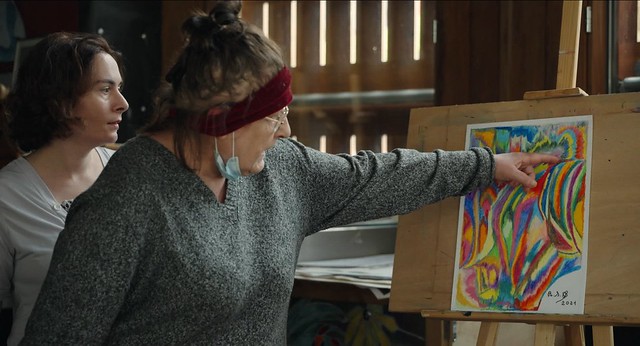
On the Adamant - Philibert ON-THE-ADAMANT_image_FINAL To Be and To Have director Nicolas Philibert's points his camera to the Adamant, a psychiatric daycare center for adults on the embankment of Seine. This floating, two story wooden structure is a safe haven for many people who struggle with mental illness. Philibert gently documents its patients and staff as they conduct series of workshops - music, painting, book keeping, jam making, etc. As one of the participants says, it's all about having someone to listen to their anxiety and neurosis.

Philibert, with his infinite patience and compassion, listens to these people without judgment and shows how each individual is talented and unique in his/her own way in the process.

On the Adamant softens its social stigma placed on mental illness.The Adamant is a project of St Maurice Hospital and all the patients are under some medication to control their conditions - many hear voices or suffer from hallucinations. By providing positive, calm environment, the project has been successfully operating since 2010. There's singing, there is poetry, there is traveling film screenings, all in the backdrop of the lively and romantic Seine. A real gem.

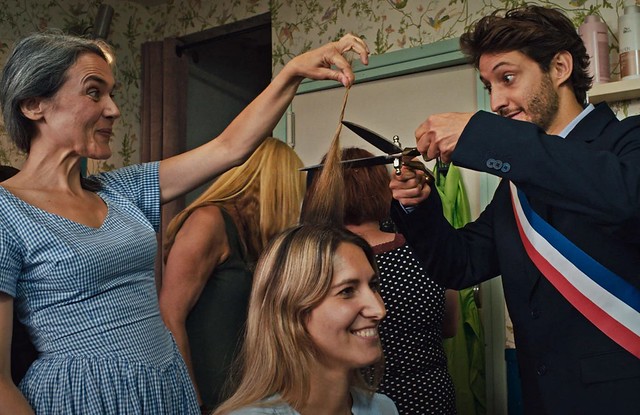
The Book of Solutions - Gondry The Book of Solutions A typical Michel Gondry manchild protagonist is perfectly played by Pierre Niney. Niney is Marc, a film director first seen fleeing the film executive's board meeting after they watch the footage and shut down his project. He drives to his childhood village in the rural home with his producer, editor and assistant in tow, to working on editing his 4 hour long, incomprehensible film. He flushes away all his anti-depressants against the advice from his beloved aunt Denise, in order to free his creative energy and gets sidetracked by everything around him, much to the dismay of all his crew members.

As always, Gondry puts his chaotic creative process on display while keeping it close to his heart with a film director as the protagonist. Not as visually creative as his earlier films but it has that madcap Gondry energy that is quite infectious.

Tuesday, February 20, 2024

The Novelist's Films: The Cinema of Nuri Bilge Ceylan

Ceylan The latest film by Turkish film director, photographer, screenwriter, Nuri Bilge Ceylan, About Dry Grasses is three-plus hours of novelistic contemplation on human conditions in a stunning rural East Turkey backdrop.

Among the best Turkish New Wave directors, along with Reha Erdem (Times and Tides, My Only Sunshine) and Semih Kaplanoğlu (Honey, Commitment Hasan) Ceylan built a reputation as the world's most novelistic filmmaker, with deliberately slow pacing, long takes and themes steeped in vagaries of human existence, in often beautiful rural and urban settings in Anatolia and Istanbul. Indeed, experiencing each of his films is similar to reading a great thick book. And it's deeply satisfying, every time.

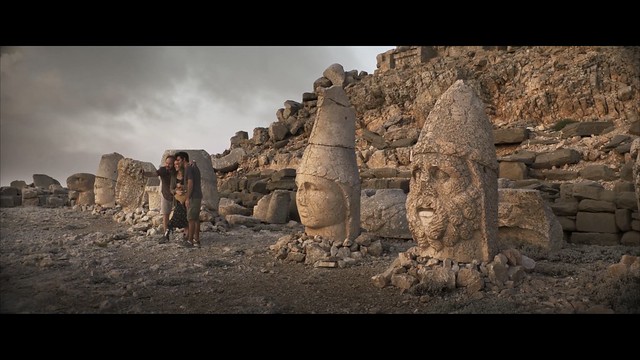
Ceylan studied engineering in school, then became a photographer: it is apparent that he has an eye for landscapes as you watch his films. Consider the snowy streets of Istanbul in Distant, ancient ruins on a hot summer day in Climates, the winding mountain roads from above at dusk in Once Upon a Time in Anatolia, the icicle covered resort in Winter Sleep, and snow-capped mountains in About Dry Grasses, just to name a few. And there is always a cinematic showstopper in every one of his films that makes your jaw drop.

Yet, it's his juxtaposition of close-ups of the faces and their surroundings that gives meaning to his work. We humans exist among those spectacular places, with our jealousies, greed, lust, pride and other qualities intact.

With his wife Ebru Ceylan as a writing partner on most of his films, along with actor/physician Ercan Kesal (Three Monkeys, Once Upon a Time in Anatolia) and actor/teacher Akin Aksu (Wild Pear Tree, About Dry Grasses), he sketches out great, lived-in melodramas like no other.

Within the generous running time -- since Anatolia's comparitively modest 155 minutes, the runtime of Ceylan's films are more than three hours -- we get to know every main character in an intimate way with their faults and weaknesses, as well as their redeemable qualities. We get to live with them, like a main character in a great thick novel, at least a short while in darkened theaters. With Winter Sleep, the Palme d'Or winner 2013, adapting Anton Chekhov's play, The Wife, Ceylan explicitly let his audience know where his influences originate and where his interests lie thematically, while not sacrificing his cinematic playfulness.

About About Dry Grasses: Screen Shot 2024-01-23 at 3.29.12 PM Screen Shot 2024-01-23 at 3.29.52 PM Screen Shot 2024-01-23 at 3.34.36 PM Screen Shot 2024-01-22 at 4.19.55 PM Screen Shot 2024-01-22 at 4.26.07 PM Screen Shot 2024-01-22 at 4.54.37 PM Screen Shot 2024-01-22 at 2.01.27 PM About Dry Grasses deals with the usual Ceylan themes: how to live within your environment without making your surroundings a personal living hell.

Samet, our protagonist, skillfully played by Deniz Celiloglu, is a teacher in a small rural village, returning from the summer recess. He is counting the days until he is to reassigned and out of rural living, after the government's mandatory assignment period ends.

He is easily irritable and self-centered. Overall, he is not a likable character, like many other of Ceylan's male protagonists. All three principal characters -- Samet, Nuray (Merve Dizdar, Best Actress at Cannes 2023), Kenan (Musab Ekici), and Sevim (16-year-old Ece Bağcı) -- are exceptionally great.

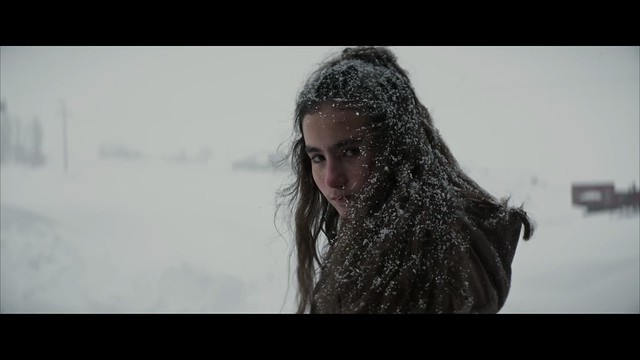
There are many great moments in the film but one showstopper comes in late in the third act of the film. After accusations of inappropriate behavior with the students quiet down, Samet's favorite student Sevim poses for him outside school in the snowy field, as he is an amateur photographer.

It's the closeup of Sevim's face, where Samet sees betrayal, lies and vengeance, while the audience sees innocence, beauty and indifference. While self-absorbed Samet might not realize, but we do, that it's our projection on others that makes our lives miserable.

Also, it is the first time in a long while Ceylan plays with the film medium. He used non-professional actors until the mid-2000s. He even starred along with his wife Ebru in Climates as a fictional couple in a tale of disintegration of a marriage shot on digital video.

If the run of Anatolia, Winter Sleep and The Wild Pear Tree gave the impression that the Turkish auteur is just making wordy filmed plays in a spectacular setting, About Dry Grasses will surprise you. There is a third-wall breaking scene in Grasses, where Samet and Nuray get intimate after being drunk.

The camera follows Samet to the bathroom, then out the door to a film set in a lot, revealing that the tiny apartment filled with trinkets of Nuray's life is indeed a film set, which takes you out completely from the film narrative. It gives you a sudden jolt that all the characters' lives, their thoughts and intimate details and blemishes that you invested in for the last two hours, are indeed a fiction. That now you can take a breather and reset.

With About Dry Grasses, we are witnessing a great, mature filmmaker paving his legacy as a novelistic filmmaker with a visual flair in the league of Tarkovsky and Bergman.

About Dry Grasses enjoys its U.S. premiere Friday, February 23, at Film Forum in New York City.

My review of Once Upon a Time in Anatolia (2012)

My review of Winter Sleep (2014)

My review of Wild Pear Tree (2018)

Monday, September 11, 2023

Unseen-World of Connections

Remembering Every Night (2022) - Kiyohara Remembering-03_s_N0A3551_GuamaUchida and Ai Mikami copy It's a warm spring day. A group of musicians are leisurely rehearsing while sitting in the park lawn in Tama-shi, a quiet suburb of Tokyo. A key is missing from a small Casio keyboard player, and they can't continue. They disband for the day, and this is how Yui kiyohara's quietly enchanting, Remembering Every Night starts. The main thread involves a day in the life of three different women as their lives intersect and don't. Unhurriedly, in series of long takes, Kiyohara's second feature floats in its own delicate rhythm with warmth and longing, very much like the frangrant early summer air and sound of outdoors it portrays.

The three loosely interwoven stories meet and go separate ways naturally, complimenting each other and adding layer and texture of lived human experiences. The first thread of the story features an unnamed middle-aged, unemployed woman's (mis)adventure, getting lost. We observe the woman as she does her daily shores - getting groceries, visiting an unemployment office, looking through mails and other items. Through the conversations she engages in with others, we get her background a little and the modern Japanese society in a nutshell: she used to be a kimono dresser who was let go because of economic downturn and the loss of people's interest in traditions. This quiet, unassuming woman is quite lost (figuratively and literally) in what she wants to do - jobs that the unemployment office suggests - a salesclerk, a receptionist at a company, et cetera, don't appeal to her. While sorting through her mail, one of her neighbor's postcards announcing their move to their new home, becomes her destination for the day. But she becomes helplessly lost in an unfamiliar neighborhood soon enough.

While on her way to an wild goose chase, our middle-aged heroine encounters a couple of kids trying to get their unseen shuttlecock stuck in the tree in front of a housing complex for the elderly. She tries to get it down using the badminton racket to no avail, then she starts to climb uo the tree. The kids lose their interests and leave her on the tree. This tiny, almost insignificant scene is observed by a local gas meter reader, doing her rounds in the neighborhood. These transitions - the shift of focus, occur naturally and seamlessly in Remembering Every Night. Then, this young municipal worker is called upon by one of the elder residents of the building, being chatty while putting her laundry to dry on her balcony. An elderly resident has gone missing. Would the municipal worker be on the lookout for him? The elderly woman requests while handing her a bag full of mandarin oranges. The municipal worker soon finds the said elderly man lost in the neighborhood, mistaking other people's houses for his own. Here, Kiyohara gently addresses the nation's aging population and loneliness.

Then we go back to the lost woman in her adventure story. She sees a young woman practicing dance moves in the park in the distance. She unconsciously mimics the dance moves of the young woman - one of the many slight comic moments of the film, as she passes through the park field. Then the film's focus shifts again to the young woman, a university student in her final year, on her way to visit her dead boyfriend's parents, to hand them the receipt for a film roll that was never picked up from the film developing lab. The mother of the dead boyfriend suggests for her to pick up and keep the photos herself.

Remembering Every Night captures the unseen-world of delicate web that connects us all together. The film's very much in the same vein as Hamaguchi Ryusuke's 2021 crowd pleaser, Wheel of Fortune and Fantasy but from a different, quieter, less punctuated angle. The film's nostalgic tone, imbued with contemplation of time, memories, loss of memories and longing, lingers long after its credits roll.

Wednesday, March 1, 2023

Preview: Rendez-Vous with French Cinema 2023

Showcasing the best of contemporary French films, this year's Rendez-Vous with French cinema features 21 features from old masters to newcomers, including new films by Philippe and Louis Garrel, Arnaud Desplechin, Dominik Moll, Patricia Mazuy and Léa Mysius. Though I feel like I say this every year, about this ultimate festival for Francophiles, but this year's offerings are possibly the strongest in terms of quality and cinematic audacity, in years. Guest attendees include Virginie Efira, Louis Garrel, Christophe Honoré, Alice Winocour, Patricia Mazuy, Melvil Paupoud and more.

Rendez-Vous with French Cinema is presented by Unifrance and Film at Lincoln Center and runs 3/2-3/12 @filmlinc

Here are 5 films I was privileged to sample for the festival:

Brother and Sister - Desplechin Sister and Brother Arnaud Desplechin, one of the most literary minded film directors of our time, comes with Brother and Sister, a family drama rich with beautifully written characters. It stars Marion Cortillard and Melvin Poupaud as Alice and Louis, as estranged siblings coming to terms with their differences after fatal car accident involving their elderly parents. It starts out with a flashback at the wake of Louis and Faunia (Golshifteh Faranahi)'s young son where Alice and her husband are turned away at the doorstep by angry Louis. The film goes back and forth, peppered with flashbacks, giving the fraught sibling relationship its necessary contexts. It turns out that Alice, now a famous stage actress resented her younger brother's success as a writer. After many years of books by Louis writing about their thinly veiled relationship, they are not in speaking terms.

Things get very awkward while both parents are hospitalized because the siblings tiptoe around their visits, trying not to cross paths, while their partners, other siblings and friends encourage and discourage their possible encounters. Both Cortillard and Poupaud are marvelous as they act out the beautifully written script by Desplechin. It's the most emotionally resonant Desplechin film in years.

The Night of the 12th - Moll Screen Shot 2023-02-24 at 8.56.05 AM Gilles Marchant and Dominik Moll, the writer-director team known for tight Hichcockian psychological thrillers over the years, come with The Night of the 12th. It's a policier in the same vein as Memories of Murder and Zodiac. In a picturesque small alpine village near Grenoble on the night of October 12, a young woman is torched to death with a gasoline fluid and a lighter. It devastates the whole town and stumps its police department, headed by young captain Vivés (Bastien Bouillon) with lack of concrete leads. Moll deftly examines inherent sexism rampant in French society and generational differences in approaching romance and relationship. With its economical storytelling and sharply drawn characters, The Night of the 12th is an immensely watchable crime film.

The Five Devils - Mysius Five Devils - Still 2 Léa Mysius's follow up of her stunning debut Ava, is a time traveling queer love story starring Adèle Exachopoulos. The title refers to a small town overlooking the rugged mountain peaks in the southeast region of France. Exachopoulos plays Joanne, a swim teacher at a local pool living a mundane life with Jimmy, her firefighter husband and their adorable daughter Vicky.

Vicky, bullied constantly for her big afro, lives in her own world mostly and has a keen sense of smell of all things. She collects objects in jars to preserve their smells and has visions of the past. Things get shaken up when Julia, Jimmy's sister and Joanne's former flame returns to town. The Five Devils turns into a poignant story about prejudices and acceptance with black girl magic elements.

Winter Boy - Honoré Winter Boy Winter Boy tells a story of Lucas, a 17 year old gay high school student trying to come to terms with the sudden death of his father (played briefly by director Christophe Honoré) which might have been suicide. After the funeral, he tags along with his older brother Quentin (Vincent Lacoste) who is a burgeoning artist in Paris for a week. There, Lucas experiments with anonymous sexual encounters. He also falls for Lilo (Erwan Kepoa Falé), Quentin's roommate. Quentin gets furious when he finds out his sexual shenanigans and sends him home. Lucas then cuts his wrists while with his concerned mother, played by Juliette Binoche, and ends up in a rehab.

The film is set up like a confessional, with both Lucas and later mom talking to a dead father, as they try to deal with grief and absence of a loved one. Like many Honoré films, Winter Boy is a beautifully drawn, melancholic film dealing with truthful emotions when life hits you like waves. The living can't stay mad at the dead. We have a living to do, even with a hole in our heart.

Saturn Bowling - Mazuy Screen Shot 2023-02-26 at 7.09.11 PM Shocking in its depiction of violence against women, Patricia Mazuy's serial killer noir is extremely disturbing and uncompromising as it examines the origin of violence in our patriarchal society. Half-brothers Guilaume and Armand reunites after their father dies. Guillaume is a cop and just inherited a bowling alley from his dad. The bowling alley is a hub of his dad's big game hunter friends who want to keep things as it is. Guillaume doesn't want to deal with the business, so he offers Armand to run the place. Armand reluctantly accepts.

But it turns out Armand is a violent serial killer who preys on young women who frequents the bowling alley. He uses his dad's pad to have sex and kill them there. Bodies mount and unsuspecting Guillaume gets frustrated with the investigation. To complicate things, his love interest is an animal rights activist who doesn't see things eye-to-eye with the big game hunting crowds. With its deliberate pacing, simmering nighttime photography and daring perspective shifts, the film has a peculiar way to get under your skin while condemning male tendency or desire to kill. Making a point in a most brutal and succinct manner, Saturn Bowling is one of the most daring and unflinching film I've seen in a long while.

Wednesday, March 30, 2022

Art of the Real 2022 Preview

This House - Miryam Charles This-House On the onset, a grown version of a 14-year old girl who died in 2008 tells that the film will travel space and time since in film medium, everything is possible. So starts lyrical staging of unspeakable grief and all the potential of what could have been. Terra, played by Schelby Jean-Baptist, witnesses her funeral, carries on imaginary conversations with her mom (Florence Blaine MBaye), a Haitian immigrant, first to Quebec, then to Connecticut, US.
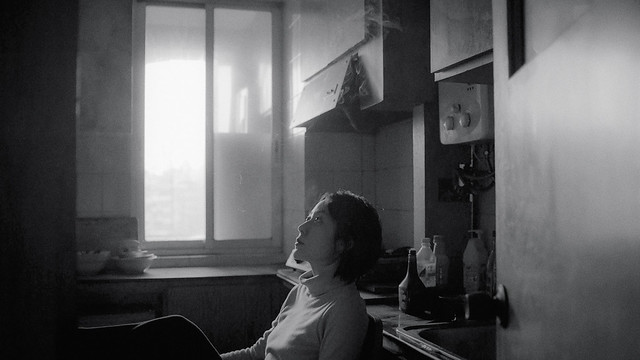
This House contemplates many things - the idea of home for both body and spirit, how the tragedy rips open a hole in space/time continuum, and giving voice to the voiceless/dead. The film consists of obvious indoor studio stagings, the lush greenery of the Haiti and its coastline and footage of bleak Northeast US footage all captured in grainy 16mm. Filmmaker Miryam Charles sort out a tough subject close to home with cinematic playfulness and poetic lyricism. This House is a poignant and compelling cinematic experience.

Train Again - Peter Tscherkassky Train Again-2 From the beginning of motion picture with Lumière Brothers, trains and film have a long and intertwined history. With Train Again, the assemblage-film master Peter Tscherkassky painstakingly creates a thrilling cinematic cake, pulling clips from as far back as Lumière's, The Great Train Robbery, Ballet Mécanique, to The Spirit of the Behive, Shining to Hollywood B-action films. His usual technique - rapid cutting, erratic camera movement, repetition and flicker effects, Train Again tests your persistence of vision to a dazzling effect. With Dirk Scheafer's tension building score, the 20 minute long film works like a thrill ride just like Tscherkassky's previous works like Outer Space or Dream Work. You really want to see it on pristine film print.

Super Natural - Jorge Jácome Super Natural-2 From the visual void we are introduced to a static noise. This static noise decked with subtitles is an omnipresent being, guiding us through Super Natural, a visual aural invitation to a group meditation called film watching. Shot in stunning backdrop of Madeira, Portugal, the film remind us that we are all connected in this world, the air we breathe in, the rock we are standing on, the fruit we eat, the various sea creatures, a little plastic bugs, our bodies, our imagination, our consciousness....

Shot in various medium - super 8, VR computer graphics, instagram images and using a group of people, some with disabilities and some not, Super Natural wants to place us in an environment not as strangers. It wants us to acknowledge that we are part of the ecosystem in the unstable world we are living in. Jácome and his collaborators use loose visual and words associations throughout with vivid colors and humor. The non-narrative images colliding but holds its shape together like a collage. Super Natural is a sensual meditation on human existence and connections with one another.

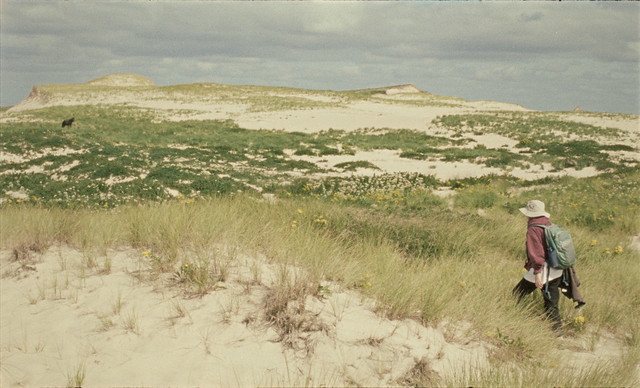
Geographies of Solitude - Jacquelyn Mills Geographies_of_Solitude_Landscape Zoe Lucas is a naturalist/environmentalist. She first came to Sable Island, a patch of land 20 miles long and one mile wide off the coast of Nova Scotia some 40 years ago to study wild horses living there and made it her home. She has been diligently and meticulously logging data, not only on the horse population, but also sorting through mountains of plastic debris being washed up ashore and cataloging them, leaving records of environmental impacts of the anthropocene age.

Filmmaker Jacquelyn Mills in collaboration with Lucas, lovingly documents all that a windswept remote island can offer - sand dunes, horses and seals, its intricate ecosystem. She also comments on the human footprints on environment through Lucas while capturing some of the most breathtakingly gorgeous images on 16mm film, plus naturally exposed footage only by moonlight and hand printed footage using natural surroundings. Here, tiny insects footsteps turn into music, grains of sand become twinkle of the stars, dead horse brings forth new vegetation. Geographies of Solitude is one of the loveliest feature debut in years.

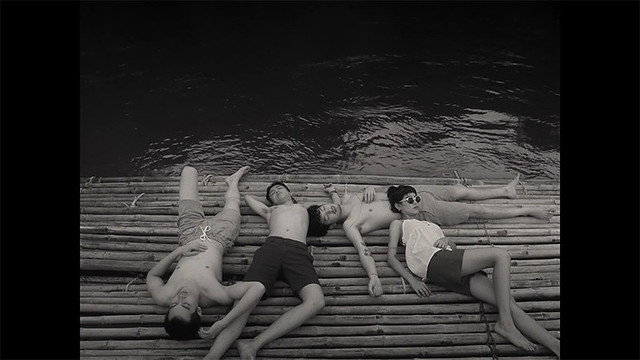
Come Here - Anocha Swichakornpong Come Here-2 A group of young theater actors take a trip to Kanchanaburi, west of Thailand, where Death Railway, once a site for WWII atrocities where tens and thousands civilians and Allied POWs lost their lives in labor camps. But the museum is under renovation and closed. The group, consists of 3 boys and 1 girl, leisurely hangs out at the lake house, smoke weed, mimics animal noises and engage in mundane conversations.

In a parallel action, a woman who is camping in the forest seems to be lost. Dazed and confused, she finds a stream, drinks the water then changes into a boy. Then we see the lakeside bungalow scene play out again on stage, with a scenery shot from the train out the stage window, moving us forward.

In her previous films, Suwichakornpong engaged us in a socio-political history buried underneath the lush forest of Thailand. Her approach is getting more and more abstract with each new film. Come Here, clocking at just over an hour, is like a puzzle piece with some of the vital pieces missing - what's the meaning of the transformation? Is the camper dreamed up by the girl by the lake or vice versa? How does a Bangkok's zoo closing figure into the story?

With the country's train and railway having imbued historical significance, Suwichakornpong's new film charts progress, nature, harkening back to animism, the younger generations collective historical amnesia, and the country's physical and spiritual transformation... in such a mysterious yet seductive manner. Watching Come Here is not frustrating- it provides you enough of threads, not at all in a teasing way, to decipher and mull over its sinuous connections and implications regarding history and it's thrilling.

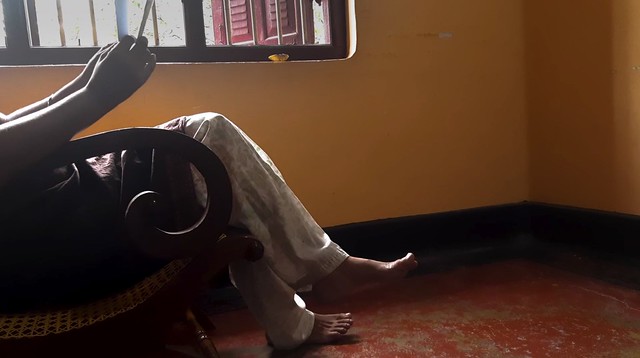
If From Every Tongue It Drips - Sharlene Bamboat If From Every Tongue It Drips-1 An intimate potrayal of a Tamil queer feminist activist and historian Ponni Arasu and her activist partner Sarala Emmanuel as they record their daily lives and discuss Indian history and quantum physics in relation to human connections and the state repressed desires. Shot in sticky, tropical climate of Sri Lanka, If From Every Tongue It Drips is sensory overload experience with constant chatters of people, birds, insects, mechanical humming, traffic, street noise, water lapping at the shore, and music. Bamboat uses discordant sound, highligting the film's multicultural everywhere-ness. Arasu, almost always a subject of attention, recites Rekhti poetry full of passion and sensuality about female desires for one another that went against British colonialism and its purification of the culture that dominated much of the British rule.

The film is fascinating, informal history lesson done through many languages and culture, all spoken and sang by Arasu who gives a queer perspective on history that is sorely needed to understand the cultural, political landscape of modern India and its feminist movement. The film also celebrates tender, proud and loving relationship the two women shares.

Thursday, June 24, 2021

Police Violence in the Yellow Vest and BLM Era

The Monopoly of violence (2020) - Dufresne Monopoly on Violence The Monopoly of Violence is showing as part of Big Screen Summer: NYFF58 Redux at Film at Lincoln Center. The series is sort of making up for the lost times- because of Covid shutdown, the New York Film Festival held only virtual screenings last Fall. The redux includes many of festival titles, including this film. It is currently playing at the Lincoln Center's Walter Reade Theater.

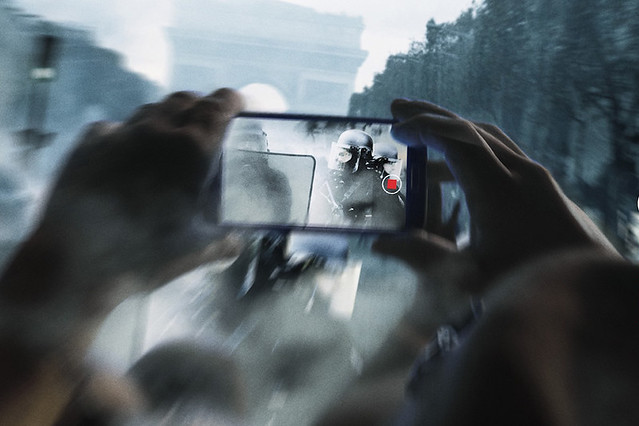
In the middle of the new, very timely French documentary The Monopoly of Violence, directed by David Dufresne, academics talk about the power shift or equilibrium of the playing field between the French National Police and the protesters with the proliferation of representation with the smart phone videos and social media. The documentary footage is mostly assembled from smart phone footages from protesters.

Violent protests in the streets in France are not new. The modern France, born out of a revolution, general strikes and student protests, which shuts down the country for months, have been regarded as normal occurrences. After all, France is an exemplary Western democracy where everyone can freely express himself or herself. Or is it?

The Monopoly on Violence takes a hard look at the police violence captured on camera during gilets jaunes (The Yellow Vest) movement - a nationwide populist movement which started as protesting the rise of fuel costs, high cost of living and Macron government's tax reforms which is seen as favoring the very rich, which started in 2018.

Does maintaining public order in a republic equals use of violence? This is the heart of the question of the film. Against the smartphone-captured videos projected on a giant screen, French academics, politicians, philosophers, protesters and police offer their reactions to the images that are playing out. "The State claims monopoly of the legitimate use of physical force," said Max Weber, an influential German Socioligist in 1919. But what happens if the legality of the power exercised by police becomes illegitimate with abuse, captured by ever-present smart phones? Yes there should be context to the images, and yes there are violence perpetuated by protesters as well. But there's an undeniable truth in a footage where young people are cornered and bludgeoned with clubs by police. A lot of protesters lost eyes, limbs and even their lives.
Many of the interviewees wear eye patches and glasses obscuring their eyes shot out by tear gas canisters or rubber bullets. They see the images of themselves being struck, bleeding profusely and talk about it. Their family members or friends talking about them being hurt on camera makes them emotional. Yellow Vest, born out of frustrations against economic inequality, doesn't have that romantic notion of the May 68'. The systematic violence and brutality is all about instilling fear and power play, more than anything else. Some of them admit that damaging property, holding out that broken corporate logo gives you a sense of power (by wounding its pride), however fleeting.

Finger pointing, as we've seen on mainstream media and heard from rightwing pundits about BLM protests here, towards protesters as if they are the sole perpetrators of these violence, as one of the academics points out, is misleading, as there are three types of violence which are all entwined:

1. Institutional violence (State violence), 2. Revolutionary/reactionary violence (protests) and 3. Repressive violence (police). You can't only point out the violence perpetuated by protesters because it means you are not recognizing the other two.

The Monopoly of Violence ends with the analysis of Macron and Putin meeting where Putin jabs on Western democracy by pointing out all the riots in the streets of Paris. Macron angrily retorts that only in democracy people can protest in the streets. So we have only two choices? Either we live in Minority Report style police state of Russia or China where they curtail protests preemtively, or state violence prone, chaotic, capitalist Western style democracy?

As we witnessed in BLM movement and its urging for the police reform and community policing, for the sake of the younger generation, one would hope another way is possible. I think the film is an exemplary in reflecting these thoughts after one of the most violent and prolonged civil unrests in France's modern history. And I hope we can learn from that.

Wednesday, March 3, 2021

Rendez-vous with French Cinema 2021 Preview

It's Spring in New York. It means it's time for Rendez-vous with French Cinema, the festival showcasing the best of what contemporary French cinema can offer. But this year, with all virtual presentations due to the Covid-19 crisis, the festival is going beyond New York audience. So any lovers of French cinema in the US will have access to all the films presenting!

The 18 film line up includes Sebastian Lifshitz's affecting Little Girl - the first Documentary to open the festival, François Ozon's queer romance nostalgia piece Summer of 85, Nicole Garcia's sexy noir Lovers and Quentin Dupieux's idiosyncratic comedy Mandibles starring Adèle Excharpoulos. Rendez-vous with French Cinema runs 3/4-3/14. Please click on the Film at Lincoln Center link for tickets and information.

Without further a do, here are 6 films I was able to sample:

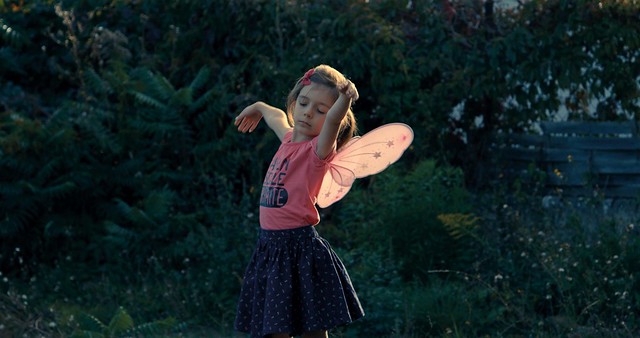
Little Girl - Lifshitz *Opening Night Film Little GirlSébastien Lifshitz, director of such queer art films as Come Undone and Wild Side, directs Little Girl, a poignant documentary on gender dysphoria- a feeling of distress that occur in people whose gender identity differs from the sex they are born with. The film concerns Sasha, a second grader who is having a hard time being accepted in school and the world as she was born as a boy but feels strongly about being a girl. It's a good thing she has a a very supportive family - parents and three siblings. First it's her mom who feels responsible because she wanted a girl when she was pregnant with Sasha as doctors assure her that her child's condition has got nothing to do with her wishes. The prejudices Sasha faces in school, by her principal and teachers make the little girl cry. She is also prejudiced in her ballet class as she is not treated as a girl. And it is heart wrenching to see the child cry in pain. 

There are good moments as Sasha plays with her best friend Lola with bobbie dolls in her pink girly room, or her hanging out on the beach in cute bikinis she picked out. Children don't notice or don't care if Sasha is a boy or girl. It's the adults who are narrow minded. Why not let Sasha be what she wants to be, Lifshitz seems to say. As were his documentaries on LGBTQ pioneers in Les Invisibles and The Lives of Thérèse, Little Girl is a deeply humanistic look at people struggling with identity politics of the still rigid, dogmatic world.

Spring Blossom - Lindon Spring Blossom
A lanky, shy high school student Suzanne (Suzanne Lindon) lives comfortable life in a middle-class Parisian household. But she is bored of her school-home-school routine and feels no kinship among her peers. All that changes when she meets a dashing stage actor (Arnaud Valois) who is rehearsing a play in her neighborhood.

Lindon, 18 year old daughter of French cinema staple Vincent Lindon and Sandrine Kiberlain, makes a directorial debut and also plays the main role of a 16 year old high schooler in this delicately observed, sensitive love story, not predicated by its initial a school girl and an old man set up. It is refreshing to see love and mutual understanding not playing out in flesh but in choreographed dances and movements while not losing true to being a teenage girl crushing on the idea of a man, love and life.

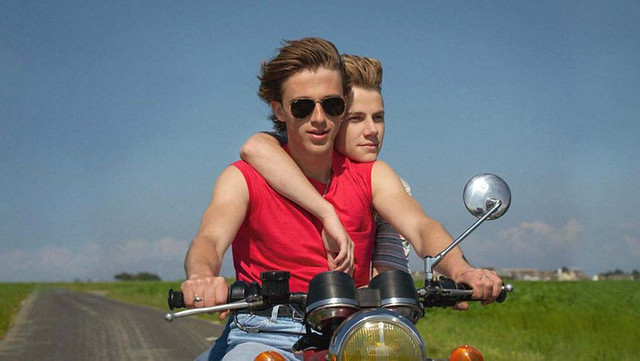
Summer of 85 - Ozon Summer of 85François Ozon is back in his old naughty self and I welcome it. In its pure Ozon set up, a young man retracing his steps in police custody, we are led to believe that the film is about a murder mystery. Alex (Félix Lafebvre) experiences near drowning after his stolen boat capsizes at sea and rescued by David (Benjamin Voisin). They strike up a friendship. David, slightly older, takes the lead in the relationship, taking Alex on his motor bike to dangerous adventures. He is everything Alex wants in a best friend and more.

Taking on a British YA novel Dance on My Grave from the 80s, Summer of 85 invokes the innocent times before the AIDS crisis and harkening back to his more salacious, hormone overloaded earlier works that he is known for. Summer of 85' is a delicious, erotically charged period piece filled with colors and pop songs and a top tier Ozon.

Lovers - Garcia lovers
A sleek noir thriller from veteran director/actor Nicole Garcia. Lisa (Stacy Martin) and Simon (Pierre Niney) are young lovers in Paris. Simon is a high society drug dealer and Lisa, a hospitality management student working various jobs. They get separated when one of Simon's clients die of an overdose and he has to leave the country.

Some years have passed, and Lisa is married to a Swiss businessman Léo (Benoit Magmiel) who travels all over the world for his corporate insurance jobs. When they are vacationing in a fancy Indian Ocean resort, Lisa and Simon (now working as a tour guide) reunite by chance and rekindle their first love and passion. After they return to snowy Geneva, they continue to see each other under the nose of Léo. Things go wrong, as they always do.

Strength of Lovers is in its casting. Two attractive leads, Niney and Martin both possess fatalistic beauty and fit the roles of ill fated lovers like gloves. Also Niney's fawny figure and face are steep contrasts to aging bear actors (Magimel and Grégoire Colin, who plays Simon's brother, both aging and becoming more and more like Gerard Depardieu everyday). Considering Magimel and Colin were once young and angular heartthrobs, I wonder what's going to happen to Niney ten years from now.

Mandibles - Dupieux Mandibles
Two ne're-do-well man Manu (Grégore Ludig) finds a giant fly in the trunk of an old Mercedes he just hotwired for a delivery job. With his buddy Jean-Gab (David Masais), the duo comes up with a brilliant plan- they will train the fly to grab the stuff they want, like money or food, whatever they desire. It will be like a thief drone. So starts another absurd comedy from the maker of Rubber, Wrong Cops and the last year's Deerskin. Dupieux doesn't seem to have any problems attracting top French female talents to have his silly vision realized. It was Adèle Haenel (Deerskin), now it's Adèle Excharpoulos (Blue is the Warmest Color), albeit in a small role as Agnès, who had brain damage from a skiing accident and can't control the volume of her voice.

The case of mistaken identity, babes on a Summer vacation, a school of red herrings/mcguffins plague this film. Think of Mandibles as a lazier French Big Lebowski where things amount to nothing but a chuckle.

Faithful - Cistern faithful 
A rousing period romance taking place in Algiers in 1950s, Faithful features Vincent Lacoste (Sorry Angel, Eden) and Vicky Krieps (Phantom Thread) as members of communist party who takes up armed struggle against occupying French military. It's a little on the nose in terms of dialog - they openly 'speak their minds' and clash with their political beliefs when they first meet in Paris. Born in Algiers, Fernand (Lacoste) is all about being communist and defending his country from France. Hélèn (Krieps), a Polish immigrant, has a different opinions about communism. But they fall in love and move to Algiers with Hélèn's teenage son in tow. Fernand's devotion to the cause and dangerous political activities threaten their daily lives. Fernand gets caught when he plants a bomb at Algerian Electricity and Gas Company where he works as an engineer. And the unjust military courtroom drama ensues.

<b>Faithful</b> is a handsomely made political intrique that exposes the shameful chapter of French history, implicating Mitterrand's role in the execution at the gallows of hundreds of Algerian citizens.

Thursday, December 17, 2020

Or This Dream We Call Human Life

The Cloud in Her Room (2020) - Zheng Lu The-Cloud-in-Her-Room-1 
Muzi (Jing Jin) is home in Hangzhou for the new year's. She is a recent college graduate, trying to find her way in the world. Her parents are divorced and in other relationships. She herself is in uncommitted relationship with a college flame Yu Fei (Zhou Chen) who comes to town to see her. She is also trying to vie for the attention of an older, worldly bar owner (Kangning Dong). She spends a lot of time alone in her parents old high-rise apartment, now empty and abandoned. So this is the backdrop of this densely layered, cinematically inventive debut of Zheng Lu Xinyuan. 

Mixing documentary style handheld camera work, interviews, inverted images, mirror effects and static long takes, the monochrome The Cloud in Her Room is perhaps the most astutely realized work that befits its self-consciously digital cinematography (by DP Mathias Delvaux), even much more so than Alfonso Cuaron's Roma. It's precisely because of its social realism, here and now of changing China, instead of period piece of reimagined Roma - the vast crisp grey mid-tone reflects the smoggy industrial cityscape and one-thousand-cigarettes-a-day urban ennui much more so than the 70s Mexico City. It also accentuate its dreamy, ethereal, soft-edged quality of the film. Some of the compositions and experimental playfulness as well as its mid-tones remind me not of French New Wave (incessant smoking notwithstanding), but that of Japanese New Wave, namely some of Wakamatsu's work and Yoshida's Heroic Purgatory. 

As the characters declare never to fall in love again, and buff each others advances and (not)say farewells in haze and smoke, we realize that it's all been done and seen before. But Zheng Lu seems to have found a new fresh way to look at the human banality and make it beautiful and dreamy, breathing a new life into, uh, life.

Thursday, November 12, 2020

Art of the Real 2020 Showcases Constantly Evolving State of Filmmaking


I was devastated back in April that Art of the Real, my favorite annual film series at Film at Lincoln Center didn't happen because of Covid Outbreak. But here we are, 7 month later, the celebration of non-narrative/hybrid filmmaking is back, again with superb offerings. Better late than never! And I am so grateful for it. So if you want to get over the election hangovers, and plunge into far reaching, innovative, refreshing and adventurous cinema, please join me to explore some of the most delectable choices in non-narrative/hybrid films the festival is offering. Presented with the support from MUBI, Art of the Real runs two weeks 11/13-11/26 with 34 films presenting. Please visit Film at Lincoln Center Virtual Cinema for tickets and info.

Below are 6 films I had a privilege of sampling:

La vida en común la vida en comun

Ezquiel Yanco’s La vida en común tells a story of a group of teenage boys in Pueblo Nación Ranquel, an indigenous settlement in the San Luis territory in the middle of Argentina. The first thing that you notice is its government built housing the inhabitants live in– a geodesic concrete huts with pipes sticking out, looking like an unfinished 70s sci-fi movie set. There is an unseen puma stalking the village, and these boys see tracking and hunting it as the rite of passage to adulthood.

Part Lord of the Flies, part Waiting for Godot, La vida en común is an engrossing coming of age story that emphasizes the absence – of adults, of things to do in the vast and arid territory. Kids let their imagination go wild, while continuing their machismo culture based on the folklore of the Rankülche tribe.

La vida en común touches upon a lot of issues such as colonial past, assimilation, globalization and cultural heritage. The film is intimately observed and endlessly fascinating. 


Bird Island Bird Island

Maya Kosa and Sergio da Costa’s Bird Island takes place in a bird rehabilitation center in Switzerland. Antonin, a young man with a long bout with illness and isolation, is assigned to the center to reintegrate into the work force. He has to learn everything about taking care of birds from Paul, whose retirement is just around the corner. Paul’s job was prepping meals for various birds in the sanctuary, including breeding and ultimately killing mice for birds of prey, being a part of reintegration procedure when rehabilitated birds are released into the wild.

At a first glance the film with real life characters (all characters are playing themselves), their short exchanges and their wooden demeanors might come across as awkward. But as it plays out, with beautiful full frame photography, this simple, observational documentary exude human kindness and compassion without trying hard. Also interesting is how Antonin’s reintegration to the humanity mirrors that of birds. With his gentle nature, Antonin may never learn how to kill mice before Paul retires, or how to show his crush on the center’s veterinarian Emilie, but the life goes on. Some birds die, some live, some come back after their release, some heal completely.

Emilie wonders why there is an upsurge of wounded birds? What are they feeding on outside that make them sick? With that, here is also an environmental message in this lovely film.


Małni – Towards the Ocean, Towards the Shore Malni

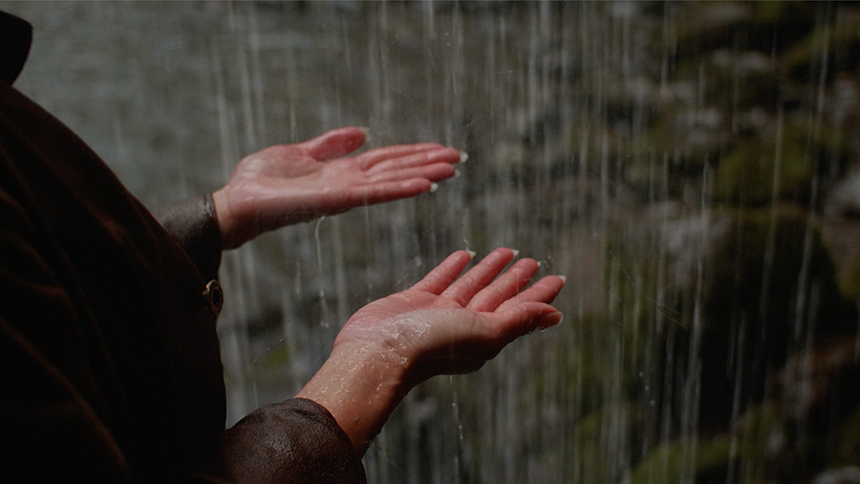
Mostly narrated in chinuk wawa, a rhythmic language of Chinukan people of the Pacific Northwest, by director Sky Hopinka, Małni- Towards the Ocean, Towards the Shore follows Sweetwater and Jordan, two people of the Chinuk origin, as they talk about home, identity and keeping the tradition alive within the frame of the origin of death myth of Lilu and T’alap’as (wolf and coyote). With the two (un)related young expecting parents, Małni is a lyrical contemplation of cyclical nature of life in the gorgeous backdrop of the lush, mossy Pacific Northwest. Everything is related to water – waterfalls, rain, the sea, enveloping everything – death, birth and everything in-between. Beautiful filmmaking.


A Shape of Things to Come  A Shape of Things to Come

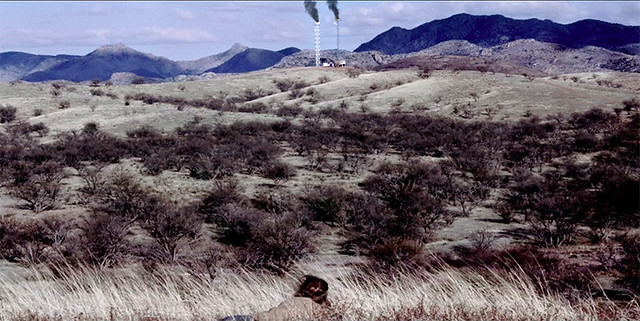
Directed by Havard Ethnography Lab alum J.P. Sniadecki (The Iron Ministry, El Mar La Mar) and Lisa Malloy, A Shape of Things to Come tells a story of Sundog who leads a survivalist existence in his trailer with the Sonoran Desert as his back yard. Sniadecki met Sundog while filming El Mar La Mar, a visually arresting film that also condemned the US Government’s inhumane immigration policy near the Southern border.

The film starts with a constant electronic noise and shots of satellite towers. It’s pretty clear that they are communication towers used by the US border patrols.

Capturing Sundog’s day-to-day life, the filmmakers document the essence of outdoor living- hunting, gathering and animal husbandry with all the connotations that associated with it – freedom, America, western expansionism, self-reliance. Being an herbalist, Sundog collects various of fauna, mixes in with alcohol to make medicine that he sells. He also collects toads at night to extract their white secretions to make hallucinogens out of it, which he eagerly partakes after drying the substance into a fine powder. He also practices with his long range rifle.

Part nature documentary, part character study and part eco-terror fantasy, A Shape of Things to Come offers another fascinating mix of non-fiction/fiction with great intimacy and urgency.


The Two SightsSecond Sights

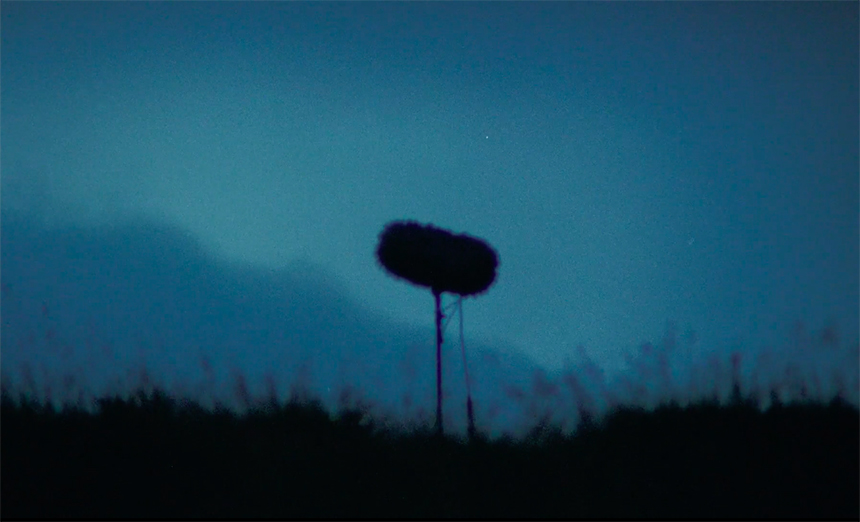
Shot and collected from various Scottish isles, The Two Sights is composed of little eerie Gaelic tales that were sent down in oral tradition. An old timer narrates in the beginning that these sight-seers, either see or hear something in and out of their surroundings. It makes sense as director Joshua Bonnetta sets up his microphone in the windy field and just exits the frame in the beginning of the film. The often picturesque Scottish outdoors feature the elements of nature – rain, waves, birds and other animals, as well as boats and other human made sounds. By looking at the images and hearing sounds Bonnetta collects, you can totally see how these tales took their forms – the rustles against the thatched roofs, a seal floating in the water, the reflections on a calm loch surface, nature can play tricks on you very easily in these parts of the world.

But the narrations take much more spiritual tone. Singing/humming at their loved one’s passing, caring for a beached whale until it expires –the connection and communing with nature are the points of The Two Sights.And it’s also one of the most beautiful cinematic experience I’ve ever seen and heard.


The American Sector Screen Shot 2020-11-12 at 11.18.05 AM

Pacho Velez (Manakamana, The Reagan Show), another Havard Ethnography Lab alum and Courtney Stephens direct this travelogue of sorts. They document concrete slabs that used to be the Berlin Wall which are scattered all over the US. The American Sector is an extremely fascinating examination of symbols, metaphor, propaganda, personal historicity, bias and bigotry, physical artifacts vs intangibles....

You'd find these memento mori in expected places - museums, public parks, college campuses, military stations and government buildings. But they can be also found on the curbside of interstate highways, in front of a restaurants, in private homes, gated communities, corporate headquarters and theme parks.

The film posits some very interesting questions about how to put contexts in inanimate objects to its surroundings. Once removed from its original space and time, does the object hold the same meaning? Its layered spatial-temporal musings on the subject make The American Sector a delightful cinematic experience.


Wednesday, March 25, 2020

AN EASY GIRL: Rebecca Zlotowski Interview

Zlotowski
Before everything went to hell with the COVID-19, I was prepping for attending Film at Lincoln Center's annual Rendezvous with French Cinema Festival as I've been covering it for Screen Anarchy for the last several years. I was even lucky enough to have a chat with lovely director Rebecca Zlotowski (Belle Epine, Grand Central) about her seductive new film An Easy Girl, starring a French tabloid sensation, Zahia Dehar. Dehar made headlines in 2009 in a sex scandal involving players in French National Footbal team. She was a minor at the time. She later used her notoriety to be an internet celebrity and entrepreneur.

A few days after our conversation, the citywide quarantine hit. With the movie slated to come out this Summer, tentatively, here I give you the interview with Zlotowski. Sharp witted and cautious, Zlotowski is a Scorcese-level fast talker. She is careful with what she says and fully aware of the limitations of giving fully formed, thoughtful answers in a 20 minute interview. But I thank her for her sincerity and professionalism all the same.

For those of us who doesn’t know who Zahia Dehar is, can you tell us tell us something about her?

I can’t. I mean, I can mention her backstory and it’s probably part of the reason I met her in France. But it is super interesting to me to see people not knowing the backstory.

Not knowing the backstory?

I mean, she’s been involved in…and that’s why I feel that, in a very modest way, because this film is a modest one about a very complex subject. But if you know her backstory, you can only see the top layers, the perception of her story being that she was involved in the very famous underage prostitution case ten years ago.

Right.

She’s been involved in this “moral affairs” and I think she still does work as a prostitute occasionally. But what she does in private is private. But yes, for French audiences, her backstory absolutely plays in to the film. Yet the fact is, she still inspired me to created a very poetic, literal character. It was part of the process that was interesting to me because it deconstructed certain archetypes and stereotypes that people are maybe not ready for it in France. But everyone is looking at this pretty, sexy French actress in a totally different way when I show the film here in New York.

You have a co-writer….

Teddy Lussi-Modeste. Yes he is a very strong collaborator and we have been working together a long time. A partner in crime. But for this one, I was writing in March, shot it in July and the film was in Cannes in next May. It was a very short process and very fast. Of course I had in mind the subject of the prostitution around the character in mind connected to her. But the thing is that the film was not about the prostitution at all but it was about transaction.

Yes.

That she can receive things in return for her sexuality. But it was done in a very sentimental and very light and sexy and funny way to support those two women, by having encounters and conversation like a normal civil life. Her sexuality is a tool for empowering and social climbing which is kind of difficult to admit, but interesting to write about, nonetheless.

When you were writing, the script, did you have Zahia as Sofia in mind?

Absolutely. Actually, she sent me a message in instagram. I was very confused that she even knew me. People are so narcissistic these days. (laughs) I just looked at her pictures and saw the way she talked and I never heard her voice before and I was surprised. The first thing that shocked me was the way she presented herself. She reminded me of a character from 1969. She was as naïve, as polite and elegant as people would have been in the 60s, using all the elegant words, not cursing or rude or self absorbed. She wasn’t being the character I wrote but she was already that character. There is a strong connection between this film and Eric Rohmer’s La Collectioneuse in the film's theme. That was the beginning idea of the film. I wrote it for her and with her.

You’ve worked with famous actresses before (Léa Seydoux, Natalie Portman, Lily-Rose Depp). How was it different working with two main non-actors – Zahia but also Mina Farid?

I was glad. Yes, to me it was very different not to work with people with strong solid acting background. I knew it was a responsibility to work with someone who is trying the first time. You have to give them advices. For instance, I had to tell them that the camera wasn’t on them, just for them to hold emotions for the next shot because they give you everything right away, so once or twice I had to tell them to look at the camera to remind them that this is a set and we are making a movie. For instance, I had to give them tips and advices that maybe a director says to an actress in the beginning of her career. So that was the only difference. The rest were the same.

Got you.

The same. Whenever you work with an actor or actress, working with them is a new language every time. I wish I have some magical method which I can use it on all actors and actresses but that’s not the case.

Mina Farid is great. How did you cast her?

It was in Cannes. So with my casting director, we set out to find a non-actor. It was tough because she also had to be young. I saw a lot of girls and some of them were very sexual. I wanted someone who was a little more innocent, a little shy about her sexuality because I wanted the film to be a coming of age tale, not a tale of sexuality. Maybe Jacques Doillon or other filmmakers I really love would have chosen someone else, chosen someone with more of a mystery to them, but I didn’t want to do that. I wanted to do a film about what’s happening when you are 15 years old and you have to choose a job in your life.

Right.

Do you think there is a generational difference in characters with all the technologies we have when you think about Prudence in Belle Epine (Zlotowski's first film), the film you made that takes place in the 80s, and Naima in An Easy Girl? You think it is more dangerous growing up with surrounded by all these technology - instagram, twitter, facebook and all that? Because when we were growing up, we didn’t have all that.

Danger? I think it’s a blessing for them. Of course you have terrible things like harassment and bullying and focusing on what people think of them. But what is changed is that there are so many possibilities for lonely people not to feel lonely anymore. I do not feel that as dangerous or threatening at all. When everything is bleak around you I think having all these technology is better.

The other side of the social media equation is this worshipping of rich and famous celebrity culture and being extremely materialistic. Do you think that has any impact on our youth?

Of course, but is it new? Is that really connected to social media? I mean I am a big fan of 60s Italian cinema where people are beautiful and wealthy and sexy and all that. Some of the actresses are saying, “Yes I am a little bit materialistic.” I do not have a problem with that. Everyone wants something different. Even if I am not materialistic, I am privileged enough to have something else that makes me happy. So if they want that, that’s their prerogative.

That’s how I felt at the end of the movie that Naima hasn’t changed much, that she is true to herself.

I didn’t want to punish her. I didn’t want the film to be moral about it. I didn’t want it to be judgmental. Of course she was disappointed at the end, but by the behavior in front of her. She wasn’t disappointed she believed in it and she took pleasure. The film is an ode to pleasure and freedom and adventure and fraternity between those girls.

One scene I loved was when Sophia was questioned by this old rich woman and it turns out she reads Maguerite Duras and she is well read and really cultured. Is that the case with Zahia Dehar in real life?

No. (laughs) But she is a cinephile and once or twice I was very surprised by very specific knowledge of films that she likes. I don't even know them. She is very into Chinese and Hong Kong movies. She watches a lot of movies and goes to movie theaters often. She has many surprising qualities.

At this year’s Ceasar Award, Adèle Haenel walked out of the ceremony along with Céline Schiamma when they announced best director award, which awarded Roman Polanski. Any thoughts?

It’s goig to be a very long conversation if we start that. I mean, I am very close to Céline, I am very much in support of their film, I am in support of the reaction she had, I don’t want to be judgmental and in my mind there is no pro- or anti-. But it happened and I am very glad that it’s generating a lot of discussions around it. The thing is that as an observer that the moment I am being very careful because I don’t want it to be written on your paper that I feel this way or that way, because it’s a very polarized moment. And when you can’t add the complexity to the subject, since we do not have ten minutes, my thoughts will be incomplete.

OK. I will leave it at that.

An Easy Girl played as part of this year's Rendez-vous with French Cinema and tentatively set to release this Summer.