Showing posts with label China. Show all posts

Sunday, October 6, 2024

Silent Observer

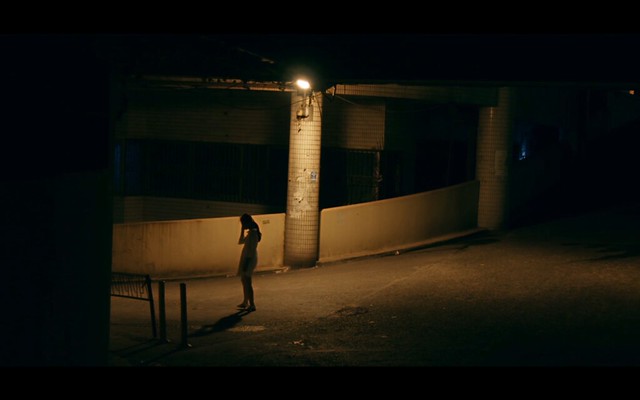
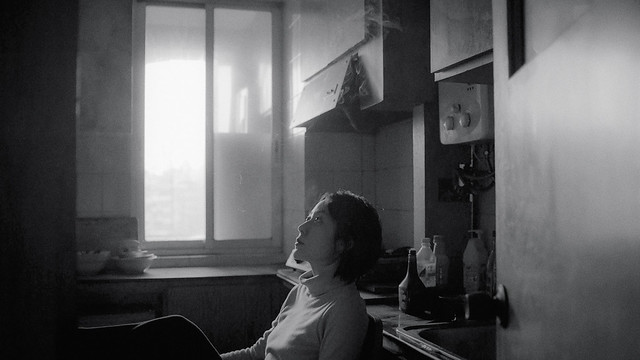
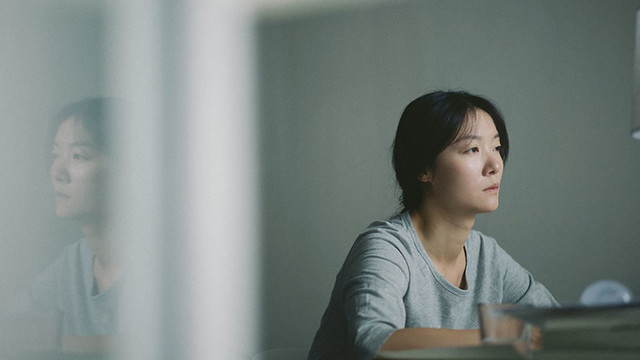
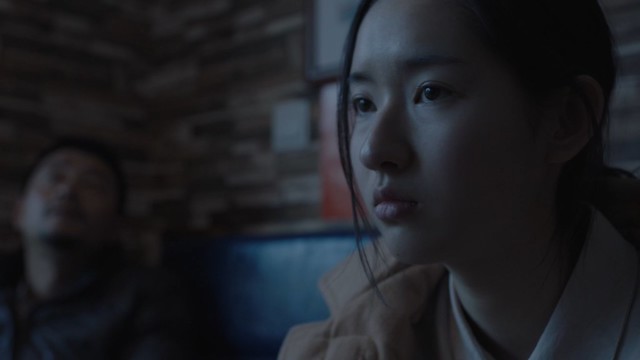
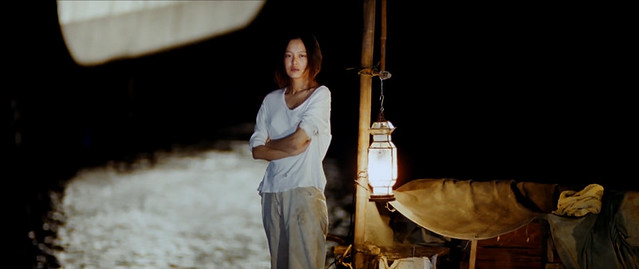
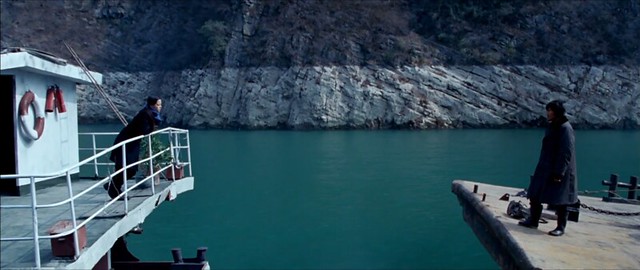
Caught by the Tides (2024) - Jia Caught by the Tides The master chronicler of China's changing times, Jia Zhangke keeps up with Caught by the Tides, again starring his collaborator/wife, Zhao Tao, taking the lead in a silent role. The film charts from 2001 to the pandemic era China. Culling from unused footage from his own films of the last 22 years, Jia, as always, inventively looks back and forward to tell the characters swept up by the times and tides of life.

When we see Qiao Qiao (Tao) for the first time in the city of Datong, She is a hustling dancer, singer, model in nightclubs and shopping malls in her Cleopatra wig. She is in a relationship with her manager Bin (Li Jubin), a two bit, small-time businessman. One day Bin texts her via mobile phone that he is moving to another province to look for business opportunities, that he will pick her up after he makes some money. His business overseeing construction takes him to The Three Gorges Dam and the cities are condemned to be demolished because of the rising water level.

Qiao Qiao decides to follow Bin, even though he doesn't reciprocate her feelings and seldomly contacts her over many years. In the meantime, Bin, trying in several business ventures, gets embroiled in political corruption when his boss takes money and runs off. When Qiao Qiao finally catches up with him in Fengjie, the town condemned by the rising waters with the dam being built, she finally breaks up with him using texts on the phone. The year is 2006.

We find Bin, now old and walking with a cane, taking a plane down to Guangdong Province, to visit an old time business associate. Everyone is wearing masks and some are in hazmat suits. He came to see if there's business opportunities in the south. But his friend is now in a hospital and because of Covid restrictions, they communicate through video chat on the smartphone. When Bin asks if there's anything he can be useful at, as he is well versed in constructions, the bedridden friend tells him that it's all about advertisement revenues off of tiktok. He manages several country bumpkin tiktok stars.

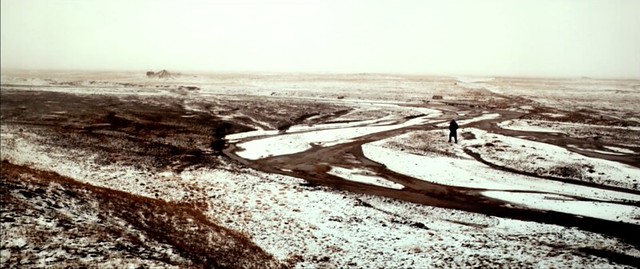
Bin goes back to Datong and finds Qiao Qiao working as a grocery clerk. Even though they wear masks and have aged significantly since they saw each other (Tao not as much because she doesn't age), they recognize each other. A lot of water under the bridge. They walk together silently as the snow falls.

Due to the Covid pandemic and restrictions, Jia couldn't shoot another film. So while looking at unused footage and b-rolls he shot over the years in various formats, he decided to incorporate them into Caught by the Tides. This experiment, in line with his formal cinematic exercises in his previous works - the blending fiction and documentary, tinkering with different genres and using different formats, adds another layer to the poignancy of the film - time passing. Not only rapidly changing technology (there are scenes shot in 360 VR camera in Tides) and landscapes, we see his actors aging right before our eyes.

Without saying much, in Tao's case, nothing at all, it's Qiao Qiao's sad smile looking at a robot greeter at the mall that tells a thousand stories. And it's much more effective than any expositional dialog. Jia finally makes a silent movie star out of his muse, who witnesses the passage of time with her sad gaze.

Tuesday, July 23, 2024

Riverman

Only the River Flows (2023) - Wei Only the River Flows Based on Yu Hua's short novel Mistakes by the River, Wei Shujun's the film is a neo-noir set in provincial, changing Chinese town in Jiangdong in the lower reaches of Yangtze river in 1995. It tells a story of a police detective being obsessed with an unsolved murder case that pushes him into madness. Only the River Flows is a gritty, police procedural gone wrong, with the look of bygone era cinema, shot on film with soft edges and noticeable film grains.

Ma Zhe (Zhu Yilong), a seasoned detective who is up for promotion with a pregnant wife, is tasked to solve a murder of an old woman by the river. The perpetrator used a blunt instrument to kill her. Everything points toward the murderer to be a vagrant with a mental problem. The old woman took him in and took care of him - this is a village idiot well known to the villagers. But the man remains elusive. In the meantime, Ma follows the clues in a woman's hand bag that was left at the murder scene - a music cassette tape with a message; a forlorn love letter recorded in a woman's voice. At this point, Only the River Flows plays out like a good police procedural, as Ma and his young lieutenant steadfastly follow the clues. The recording leads to young lovers who attend poetry readings. Their illicit affair turns up nothing, but only more clues- there was a long wavy-haired woman when the murder took place as witnessed by the poetry reading man. Then suddenly, the poetry reader turns up dead and the village idiot is caught with a bloody cleaver in his hand. Like that, the case is solved. But in Detective Ma's head, it is too obvious of a conclusion to the case. What about the lovers? what about the mystery woman with the wavy hair? What about the factory hairstylist with a rap sheet? For Ma, the case is an unending rabbit hole.
The complications with his wife's pregnancy and following arguments, unable to locate the old certificate of his merits as a policeman from another town (was he ever a decorated officer as he says he was, or is he misremembering it?), and a lot of unanswered questions in his mind, Ma hesitates to turn in his final report on the case, much to the annoyance of his superior. After the death of hairdresser who jumped to his death in front of him, Ma has a mental breakdown. He keeps seeing the village idiot, smiling, taunting him.

Only the River Flows makes the connection between the film medium as a truth telling, seeing is believing device in the age of information technology, fake news and the AI. In the beginning of the film, we are presented with the police station moving into an old, abandoned movie theater. No one is going to the theater anymore, the police chief says. Ma is seen setting up his office in the projection booth. There is constant shots of Ma playing out his fever dreams on the big screen in front of him. Shot on 35mm in constant rain, it is a gorgeous film to look at, reminiscent of the good old days of 90s Wong Kar-Wai and Zhang Yimou's cinema.

The film questions what is considered truth in our complicated modern society. Should we take the obvious answer that is dangling right in front of us and take it as an acceptable truth? Or do we dig deeper into the murky depth and devote our life to find the real truth where there might be no bottom? Only the River Flows ponders these hefty ideas on its celluloid illusion.

Tuesday, July 18, 2023

People Who Remain

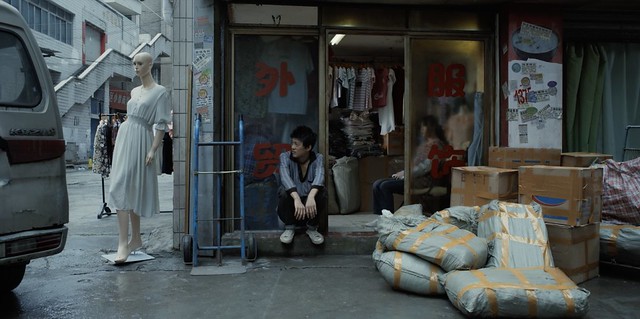
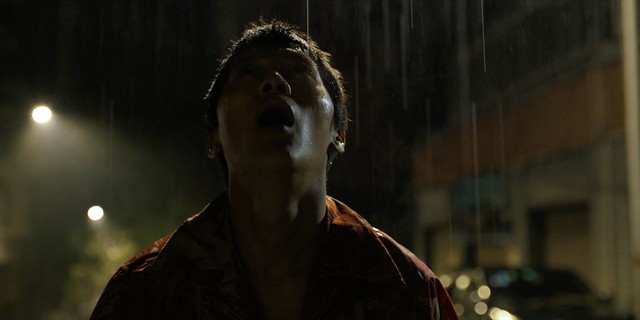
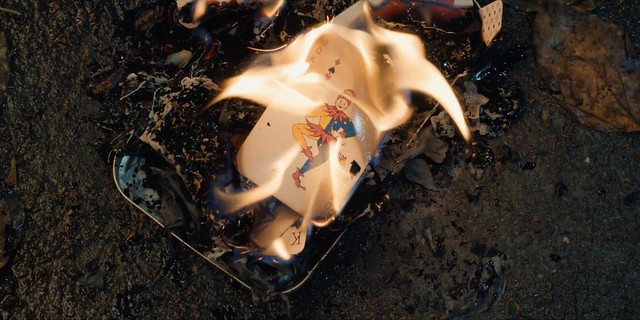
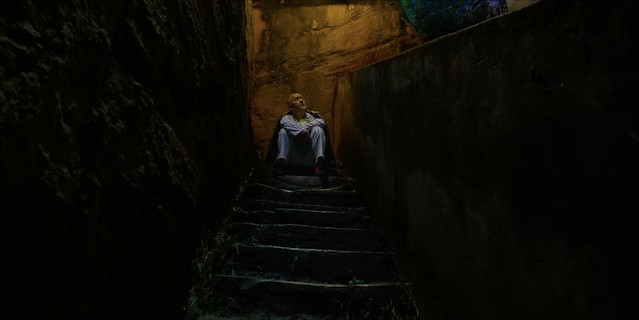
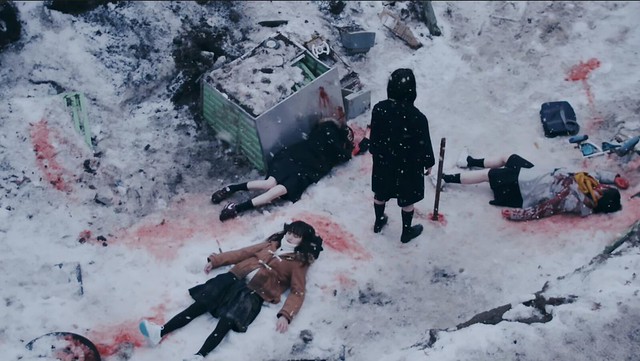
Streetwise (2021) - Na Streetwise 1 Streetwise 6 Streetwise 7 Streetwise 8 Streetwise 10 Streetwise 12 Streetwise 13 Streetwise 15 Streetwise 17 Na Jiazuo's rain soaked neonoir, Streetwise, gets a much-deserved theatrical run stateside. I say this because it's just gorgeous to look at in its grimy, urban decay glory. Set in anytown China in 2000s, where economic growth has considerably cooled, and once bustling streets are now deserted and shops shuttered. There's sense of hopelessness in the air.

Streetwise tells a group of the lonely, lost souls who occupy these wet, decaying dwellings and their sordid lives fatefully entwined like a tangled web which they can't escape from. Zidong (Li Jiuxiao), a gawky young man, is first seen tearing up a mahjong parlor where a debtor hangs out. He is a muscle man for a wry debt collector, Jun, who walks with a limp, probably from some shenanigans from his shady past. By the looks of it, Zidong is a rookie at whatever he does, with Jun constantly showing him the ropes.

Zidong keeps borrowing money from the local tattoo artist Jiu (Huang Miyi) to pay for his dad's mounting medical bills. Dad, once a leader of the street gang, due to his age and health, is forever committed to a hospital bed. Still spry, he still gets into fights and unsavory situations. Zidong and Jiu seem to have a special relationship where they keep each other company without wanting anything other than consoling their loneliness. Their relationship is a purely platonic one, like that of brother and sister. And they might as well be- Zidong's dad keeps insisting that she is a bad luck and they shouldn't ever sleep with each other, not only because she is the ex-wife of the boss, known as Four, the head of a local gang who oversees Jun and Zidong, but also was a protégé of Zidong's dad.

Zidong and Jiu contemplate skipping town and go live somewhere else countless times, even though they don't know where to go. Four, getting rejected repeatedly by Jiu for his pleas to get back together, is getting antsy about Zidong hanging around the tattoo parlor too much. In the meantime, Jun plots revenge after Four humiliates him in front of everyone.

Everyone in Streetwise is trying to runaway from something- the past, dire financial circumstances, love, misplaced loyalty, and themselves, but fails to do so. They can't get away from their own reflections in the putrid puddle strewn with trash in the street.

Jiu briefly leaves the cursed town, only to come back for Zidong and confront her fate.

Li in the role of Zidong bristles with youthful energy and puppy dog innocence. Huang, a graceful beauty, fits reminds me a lot of young Shu Qi.

Na creates a perfect neon colored urban purgatory where lost souls can't ever leave. Everything has a hazy, dreamy, not quite real feel to Streetwise. Even in crowded places like karaoke bars or hospital elevators has otherworldly quality to it. No one is purely evil or saintly. Everyone has baggage and weak spot for certain things or someone. It's that sinewy human connections that Na explores with exceptional visuals and everyday poetry.

Monday, June 14, 2021

Blu-ray Review: Digitally Restored in 4K, Stanley Kwan's Masterpiece CENTER STAGE is a Beauty to Behold

center-stage_cover 

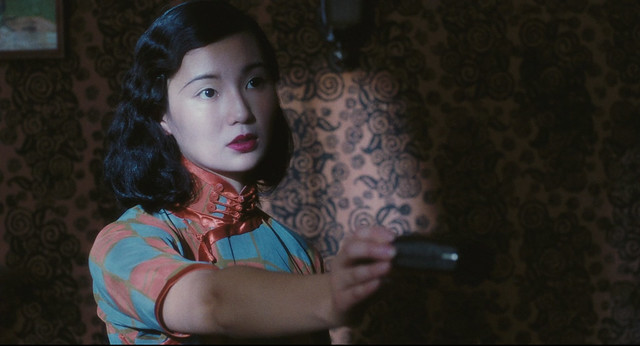
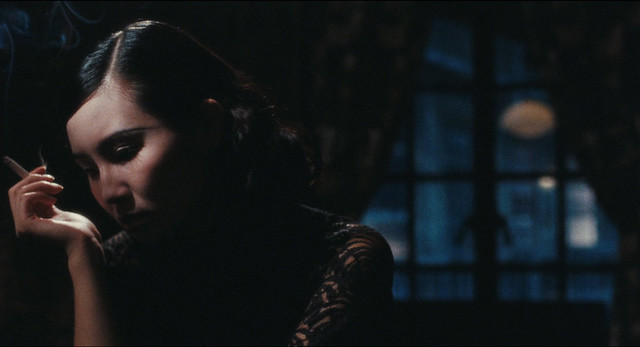
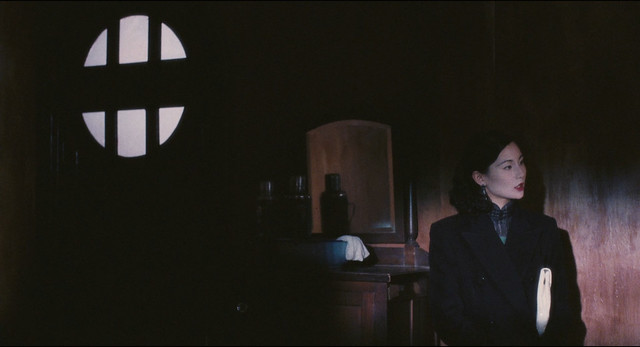
With the news of China's Censorship Board broadening its reach to Hong Kong's film industry (some dubbed as the end of Hong Kong cinema as we know it), here comes Center Stage, regarded as one of the best films Hong Kong cinema ever produced, featuring superstar Maggie Cheung and directed by HK New Waver Stanley Kwan. Digitally restored in 4K, the film is now out in North America for the first time from Film Movement Classics.

Center Stage concerns the life of Shanghainese silent film starlet Ruan Lingyu who starred in ten films between 1930-1935. Working with Lianhua - a thriving studio in the golden era of Shanghainese silent cinema known for making politically progressive films, Ruan played various tragic heroines. She was known for her trademark facial expression of "looking up at the heavens with a forlorn wordlessness." Hounded relentlessly by the tabloids for her affairs with two married men, Ruan took her own life at age 24.

Rather than making a straight forward biopic, Stanley Kwan opts for digging deep into telling a story about a complicated woman who lived in a time in a country at the beginning of modernization and political and social upheaval, using footage from the few surviving films from that era (most of Ruan's films didn't survive), interviews with people who knew Ruan, reenactments, and on-screen candid discussions with actors about the characters they are portraying.

In the center of it all is Maggie Cheung, in the zenith of her beauty and career as an actress, portraying Ruan Lingyu, the tragic heroine both on and off stage with utmost sensitivity and nuance, all captured luminously by veteran Hong Kong cinematographer Poon Hang Seng (Peking Opera Blues, A Chinese Ghost Story, Heroic Trio, Kung Fu Hustle).

Aliza Ma, program director of Metrograph, in a 16-page essay that accompanies the Blu-ray, gives a very thorough back story to Ruan Lingyu's tragic death by examining the social and historical context in what it was like being a woman and an actress in Shanghai in the 30s. She also lays out the climate of Hong Kong cinema and the freedom filmmakers were endowed with, thanks to Lianhua studio's relocation to Hong Kong as well as many artistic luminaries before the war and the subsequent Japanese Occupation.

The new Blu-ray is loaded with exclusive extras, including all-new interview with director Stanley Kwan.

Bonus Features:

  • New Introduction by Stanley Kwan 
  • Interview with Stanley Kwan 
  • Interview with Hong Kong cinema expert Paul Fonoroff (Blu-ray only) 
  • 16-page booklet with a new essay by Aliza Ma, Head of Programming at Metrograph


Center Stage is a breathtakingly gorgeous film and lives up to its reputation as one of the most revered masterpieces of the Hong Kong cinema. Gone are the heavily tinged teal from the previous releases- warm and saturated colors and soft smokey palette dominate the screen. The digitally restored film is now available on Film Movement website. 


Center Stage1 Center Stage2 Center Stage3 Center Stage4 Center Stage5 Center Stage6 Center Stage7 Center Stage8

Sunday, January 24, 2021

Wandering Dreams

Vanishing Days (2018) - Zhu Screen Shot 2021-01-24 at 9.17.42 AM Screen Shot 2021-01-24 at 10.12.38 AM Screen Shot 2021-01-24 at 10.26.42 AM Screen Shot 2021-01-24 at 10.41.53 AM Screen Shot 2021-01-24 at 10.46.39 AM Young Chinese filmmaker, Zhu Xin is apparently a big fan of Apichatpong Weerasethakul. His debut feature shows the Thai master's influence - languid visual style, abstract plot line, supernatural elements... etc. While not quite succeeding to pull off his idol's innate, spiritual lyricism, there are plenty to admire and chew on in Vanishing Days. 

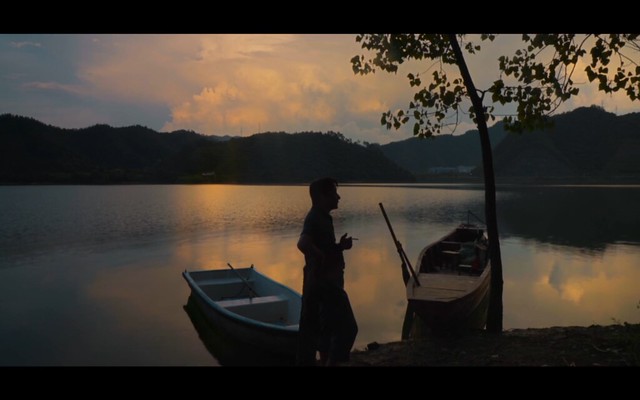
It's the beginning of hot summer days. The film takes place in picturesque Hangzhou- a glut of urban development surrounded by lush nature - parks, caves and lakes. The world is first seen from a wide-eyed teenage girl Senlin. It's everyday life during summer break. She does a lot of lounging around in her small apartment where she lives with her mom. Things change when her middle aged aunt Qui visits. Qui used to sail a freight ship with her deceased husband Bo. The point of views switch back and forth between Senlin and Qui. 

There are couple of indicators that we are either seeing scenes from a parallel universe/dreams. Senlin's dad disappears in the beginning of the film after going into the cave and communicating with his dead son who is also named Senlin. We hear stories Qui tells Senlin's mom - about Qui and Bo being lost in an island, which we see later on the screen. Qui whispers in Senlin's ear in a taxi ride, "Tell mom that you want to come live with me. But don't tell her that I said so." Is Senlin Qui and Bo's daughter in an alternate reality? If this is all a dream, which one is real? It's as if two realities vying for its legitimacy in front of our eyes. Senlin's ordinary existence in the city and her boredom takes on another dimension in Zhu's waking dreams. 

Helped greatly by sound design and editing, Vanishing Days is an intriguing film full of great potential. It's great to see the new generation of young filmmakers emerging from China is doing some extraordinarily cinematic stuff - Bi Gan (Kaili Blues, Long Day's Journey into Night) and Zheng Lu Xinyuan (Cloud in Her Head) come to mind. I wish Zhu's visual was a little stronger: Vanishing Days doesn't quite convey its waking dream aspect of the film.

Thursday, December 17, 2020

Or This Dream We Call Human Life

The Cloud in Her Room (2020) - Zheng Lu The-Cloud-in-Her-Room-1 
Muzi (Jing Jin) is home in Hangzhou for the new year's. She is a recent college graduate, trying to find her way in the world. Her parents are divorced and in other relationships. She herself is in uncommitted relationship with a college flame Yu Fei (Zhou Chen) who comes to town to see her. She is also trying to vie for the attention of an older, worldly bar owner (Kangning Dong). She spends a lot of time alone in her parents old high-rise apartment, now empty and abandoned. So this is the backdrop of this densely layered, cinematically inventive debut of Zheng Lu Xinyuan. 

Mixing documentary style handheld camera work, interviews, inverted images, mirror effects and static long takes, the monochrome The Cloud in Her Room is perhaps the most astutely realized work that befits its self-consciously digital cinematography (by DP Mathias Delvaux), even much more so than Alfonso Cuaron's Roma. It's precisely because of its social realism, here and now of changing China, instead of period piece of reimagined Roma - the vast crisp grey mid-tone reflects the smoggy industrial cityscape and one-thousand-cigarettes-a-day urban ennui much more so than the 70s Mexico City. It also accentuate its dreamy, ethereal, soft-edged quality of the film. Some of the compositions and experimental playfulness as well as its mid-tones remind me not of French New Wave (incessant smoking notwithstanding), but that of Japanese New Wave, namely some of Wakamatsu's work and Yoshida's Heroic Purgatory. 

As the characters declare never to fall in love again, and buff each others advances and (not)say farewells in haze and smoke, we realize that it's all been done and seen before. But Zheng Lu seems to have found a new fresh way to look at the human banality and make it beautiful and dreamy, breathing a new life into, uh, life.

Thursday, October 1, 2020

Read Books Kids

Swimming Out Till the Sea Turns Blue (2020) - Jia Untitled 
Jia Zhangke, the master chronicler of China's changing times, presents Swimming Out Till the Sea Turns Blue, a touching documentary on four contemporary Chinese writers. This is his third feature documentary on contemporary Chinese culture after Dong, about painter Liu Xiaodong and Useless, about the clothing industry. 

The film lays out four writers and their works chronologically. Sometimes in lengthy interviews, sometimes other people reciting the samples of their writings in various places, Jia highlights their individual stories. It starts from the beginning of the People's Republic, the land and marriage reform, the wars, the Cultural Revolution and to the recent economic prosperity. But instead of going through historical events, Jia opts for anecdotal storytelling of his subjects and people around them. Going micro and personal instead of expansive and historical, he achieves something far more intimate and engaging.
 
Jia starts the film by visiting his hometown Fenyang in Shanxi province. This is the region where the famous writer Ma Feng is from. He interviews the town elders who have been living in the region all their lives. They remember the deceased writer through the war against Japan and Russia and the Cultural Revolution. We get the glimpse of tumultuous Chinese history in rural areas through these interviews. As Chairman Mao's many initiatives, including marriage reform, the fabric of the society changed dramatically. Ma Feng's writing reflected these. 

Jia Pingwa, born in the 50 and from Shangluo, recounts his past: how his father's association with KMT was hard on his family and him getting a job. He tells how his good handwriting started his career, and how he was able to move to cultural bureau from doing physical labor. 'Returning to the place you grew up in, even though you are educated somewhere else' is the running theme with all four writers' life trajectories. It's something in the land that they grew up which Jia Pingwa describes it as 'blood land'. 

Then there's Yu Hua, born in the 60s in Haiyan, near the yellow sea. His anecdotal stories of trying to be a writer are often hilarious. He mastered his writing by reading handed-down books (banned during Cultural Revolution) that are missing front and back covers and often missing the end part of the book, so he had to imagine the endings himself. Growing up in rural community, he wanted to be somebody. After countless rejection letters, his writing finally caught an eye of a big time editor in Beijing. One of his books was To Live, one that got a screen adaptation treatment from Zhang Yimou in the 90s. 

Liang Hong, born in the 70s, is a writer and professor. Growing up in a big household in Liangzhuang, a small village in Henan province, she had to endure her mother's illness, her village people's prejudices (her father remarried after mother's death), and crippling poverty. Her work became synonymous with a case study for China's rural villages and migrant workers. In corresponding chapters (like a book, 18 chapters total), we get to hear about and from her family members, including her 14-year-old son. 

The title of the film is from Yu Hua's phrase, as he reminisces about his childhood. The sea is supposed to be blue in his school textbooks, but the sea near his house has been always yellow. 

As always with his films, Jia tells the story of changing times, migration and coming home. Added here is his love for literature. It's a big plus that all writers he features are gifted storytellers as much as he is. As an avid reader who is very concerned about the younger generation only capable of fragmented thoughts growing up with Twitter and Weibo, Swiming Out Till the Sea Turns Blue is not only a lamentation of the disappearing past but also an effective reading initiative campaign.

Saturday, September 19, 2020

Finding Inner Peace in Wondering

The Calming (2020) - Fang
The Calming

The Calming, like its title suggests, is a quiet contemplation of life and on our relationship with nature. Song Fang, who played the Chinese film student nanny role in Hou Hsiao Hsien's Flight of the Red Balloon, is a gifted director with gentle sensibilities who has a great eye for landscapes reflecting the mood of her protagonist. It turns out to be one of the best kinds of a 'woman wondering around in unknown places' cinema, one of my favorites, if there's such a genre.

Lin Tong (Qi Xi) is a Chinese filmmaker in Tokyo for an exhibition of her film. It's winter. It is revealed in conversation with her Japanese curator friend (played by Ichiyama Shozo, who produced many films of Jia Zhangke, who also serves as the film's producer) that she has broken up with her long time boyfriend. She tells him that she will visit to snowy Niigata, a prefecture in northern Japan, the setting for Snow Country, a classic modern Japanese literature by a famed writer Kawabata Yasunari. This is where Japanese people go to find a solace and tranquility. Qi's tall slender figure sticks out in the streets of Japan.

We are introduced to a magnificent view of the beautiful snow county, as the train takes her up north. Lin walks in the snowy streets, observes people in the streets, looking into the windows of shops, taking it all in.

Then we are in Mainland China. Lin has just moved to her new apartment in Beijing. She spends some time in her work - talking to colleagues and selecting slides for her next exhibition and such. She visits her elderly parents in the country. Her father's not doing well. The window from her parents’ house gives a view of a forest. She doesn't mention her breakup with her boyfriend when asked.

She travels to Hong Kong for her film, which is about a documentary on forests. She gives a talk afterword and makes a case for watching films in cinema vs gallery exhibitions. The impact is different, she says. While in Hong Kong, she stays with her friend who has a white husband and an adorable son. Their apartment with a rounding terrace again also offers spectacular view of lush mountains, spread out like a backs of green sea serpents in motion.

It's summer. She is back at her parents’ home. They take a stroll in a big park where she used to go as a child. The scenenery with the trees, lakes and bamboo forests are all very beautiful. They go down the memory lane, about Lin as a headstrong child, who'd defied her parents to go to the park at night in the rain and wonder around.

The Calming doesn't offer that much dialog. Lin is not very kin on showing much of her emotions either. Only one scene where we see Lin being emotional is her attending an opera. We see her in the audience, her eyes closed, tears streaming down her face. It is Handel's Alexander Balus. It's an aria where Cleopatra sings "Convey me to some peaceful shore" when she learned her husband and her father's death.

Taking place in different seasons and regions, shot by Lu Songye, the film is a lush cinematic experience. With Qi almost always in the frame looking afar in profile but never in close up, there's a constant visual dialog between our female protagonist and her surroundings.

The recent Harley Quinn film Birds of Prey was criticized for the actions of its female protagonist predicated on her breakup with her man in finding herself. I believe The Calming lends something bigger than man-woman tit-a-tat. It is rather, relieving of various pressures in life through constant movement. It's a very personal, semi-autobiographical film and doesn't hide that fact. As a quiet observational drama, it has a kinship with many HHH, Akerman, and Varda’s films. With The Calming, Song Fang emerges as a major female voice in filmmaking.

I am privileged to witness the rise of gentle cinema this year and couldn't be happier with masterpieces like Kelly Reichardt’s First Cow, Bas Devos's Ghost Tropic and now, Song Fang's The Calming. Blessed are the meek, for they shall inherit the earth!

Tuesday, May 21, 2019

'Tis a Pity, No Elephant

An Elephant Sitting Still (2018) - Hu
Screen Shot 2019-05-21 at 10.35.06 AM
Screen Shot 2019-05-21 at 11.06.31 AM
Screen Shot 2019-05-21 at 12.29.04 PM
Screen Shot 2019-05-21 at 12.43.00 PM
Its a day in a grey and cold border town in China. With always moving camera with long takes, the film closely trails the lives 4 of its citizen's ultra depressing lives. There is a bullied high school boy (Peng Yuchang) with unsympathetic parents, a local gang leader (Zhang Yu) who is out to get the boy after his younger bully brother gets pushed down the stairs and dies, a classmate/love interest (Wang Uvin) of the boy, whose afraid of her affair with vice principal ever being discovered and an old man whose family is passive=aggressively pushing him to go to a retirement home. Suicide of a jilted lover, death of a pet dog, uploaded scandalous video and social media stigma, betrayed friendship, their lives never lets up.

Director/writer Hu Bo portrays these down in luck, relentlessly bleak lives with much empathy and tenderness. Honestly I didn't think I would like An Elephant Sitting Still. But after an hour and a half in, I was drawn to their flight, their impossible, inescapable situations. With very intimate, highly subjective camera and lens work, An Elephant achieves a rare familiarization with the audiences. Its one day in the life of... premise really works to the benefit of its 4 hour running time. There is even Nolan style (but not used as a stupid plot device) time bending with character story lines crossing, overlapping timelines.

It's a substantial human drama with deeply felt characters with their crushed, burdened souls. The idea of using an immobile circus elephant (which never materializes on screen) as a wised out Buddha who silently observes human follies play out around him as some sort of metaphor for happiness/salvation has a direct lineage from that of a whale in Werkmeister Harmonies. It's better off that we don't get to see it. Only hear its roar during its end credit, just like that that donkey's cry in the beginning of Au Hasard Balthazar. The beast of hopes and dreams. The beast of burden. An Elephant Sitting Still is beautifully tragic. And it a major film that came out in recent years that I can recall.

Monday, March 11, 2019

Interview: Jia Zhangke on Gangster Genre and Ash is Purest White

5dbf9a22b1e6441e379836ea00ac25da80b8caae
With his sprawling gangster epic melodrama Ash is Purest White opening this Thursday in New York, Jia Zhangke, the master chronicler of changing China, was in town and I was lucky enough to snag an interview. Spanning 17 years, Ash is a culmination of all of Jia's work, once again, starring his wife/muse, the great Zhao Tao in a performance that gathers more power and poignancy as the film goes along. The film ended up near the top of my favorite list for 2018 and everyone needs to see this beautiful film. So without further a do:

It seems you are going back to the long form storytelling with ASH IS PUREST WHITE, harkening back to your old films like PLATFORM or UNKNOWN PLEASURES rather than episodic storytelling of your past two films, A TOUCH OF SIN and MOUNTAINS MAY DEPART.


So first, thinking about doing a film about underworld (Jianghu), not only as a subject but as a genre. What attracted me about those jianghu films, is about the philosophy and their codes of conduct into personal relationship, cultivation of sense of loyalty. These are the values that I wanted to examine but did’t want to somehow pinpoint one particular era or one particular time pertaining my youth or contemporary time. What I wanted to examine was how these values and philosophy of the underworld evolved and changed and eroded in these long stretch of time so I can explore the connections between these- how it had changed and shifted to pursue wealth and power in the mainstream society. That’s the reason why I decided to not only narrating this particular underworld genre and motif but also long time span of 17 years in order for me to do so.

And another point of departure is I remember that when I was young and growing up in Shanxi Province, there was a big brother character, like a Brother Bin (Liao Fan of Black Coal Thin Ice) in the film in my own neighborhood. I remember that he was strikingly handsome and very masculine and well versed in cultivating that kind of personal bond and resolving conflict. He made a huge impression on me growing up. Later when I went back home from College I saw him middle aged, squatting by the street eating a bowl of noodles. All his underlings and brothers were gone. So I think that not only examining this particular underworld genre portrayal of how they evolved and how the values have been eroded, I also wanted to see how time change and change an individual such as this particular case the head of the gang and how this person changed internally but also externally in terms of appearance. How this face aged through time. Those are the two elements I wanted to examine.

It’s interesting you say that because the big part of the film belong to Zhao Tao’s character. In some strange magic she hasn’t changed not only physically but she had this inner strength and it’s her who goes to jail for and rescues Brother Bin at the end. She was the only one who was loyal to him all throughout those years. How did you come up with that character?

I wanted to make a comparison gender-wise in jianghu and also society in general. China is a very male oriented society and that kind of principles we used to have have changed. Male population seems to be more inclined to pursue those wealth and power and lose themselves in it. And on the other hand, the female population ironically are the ones holding on to those traditional values and cultures and those principles they didn’t lose. I wanted to create those contrast in current society. I’m not saying that the past was better. I‘m just showing what is changed in society.

The film is French co-production. How was working with the French crew?

In terms of collaboration with my french partner MK2, the distribution company which I worked with past 3 films. So I do think that gave me more options in terms of finding the talents and the people I can work with from the French side. For this particular film, the cinematographer was Eric Gautier collaborating with me for the first time. Sound mixers and also the hair and makeup were all french artists. In the past I tend to have a very close-knit crew from China. It was not so much about the funding and investment on the film that was important. It was more to do with creative team that I can pull from French side. I enjoyed a lot more that collaboration.

Was it a challenge to create that period in terms of production design?

The challenge was how to recreate this period that was seen in 2001. Because the people back in the day the way they look and their faces were completely different from how people look now. When doing the casting process I needed to make sure that I find the faces that had a bit of wear and tear, that show the ravages of time and hard work. They tended to have darker complexion and so on. Today’s young people, even if they are from the same province, same county, same hometown, they have a lighter skin tone with smoother surface - hamburger face that I constantly joke about- well-fed, well- nurtured and well protected in terms of sunblock and all that. So how I’m going to choose the right faces - actors and actresses and extras. So when I was actually positioning my main characters with all the makeup and movie magic, I was very concerned about how they would look believable so people will say yes these are indeed from 2001. So restaging of it was pretty challenging.

What’s interesting to me is that you are retracing your steps of your previous films be it Shanxi Province or Three Gorges Dam. How much have they changed since then?

So in terms of revisiting those places I previously shot my films in, instead of change of scenery that I witnessed that astonished me, it was how much it hasn’t changed for 17 years. For example, a lot of public spaces that were there are still standing, shockingly, compared with most of the 1st tier and 2nd tier mega cities- tend to demolish everything and restart completely. So the skyline would be completely different. Places like Datong and Three Gorges Dam, 17 years ago and when I made Still Life, many of the buildings and public spaces are still there and still very much the same. So many feels that as a country, China is a fast changing society and of progress. At the same time, it’s not balanced in urban city and in rural areas. So a lot of people are left behind and they never had a chance to catch up with mainstream progress that’s been so visible to the world.

Qiao (Zhao Tao’s character) in the first part of the film, when she bid farewell to her father at the train station and also the worker’s dormitory in the background - those were already there when I made unknown Pleasures in 2001, so I was so shocked. You see it a little weathered and can see the traces of time, but they are still there!

The question I had about Qiao is that she had a chance to leave everything behind and go west (Xinjiang) with this venture capitalist that she met on the train. But she doesn’t. I wonder about the choices that she made.

I think after breakup with her long time lover, she decides that it’s time to make a change, to break away from that past relations and trying to find the new one. It just happens to be this chance encounter with that person. It was almost like a very very short fling. But after that experience that she realizes that to go with him, to Xinjiang in this case, she would be removing herself completely from the underworld that she still very much see herself a member of. So she at the end makes the final decision. At the end of the film she says “I am jianghu and you are not.” She is actually telling this to Bin. It’s that spirit of jianghu she is abiding by, not any men.

You told me in 2014 that you might be doing a period piece about Chinese journeyman traveling West first, Europe and then South America. Is it still happening? If not, what’s next for you?

It’s not anywhere in preparation stage. It’s still one of the films I very much want to make. The next film we are preparing for is a period piece set in the late Qing dynasty. It’s going to be Wuxia genre film.

I am very much looking forward to that!


My review of Ash is Purest White

Tuesday, October 2, 2018

Bi Gan's Sophomore Effort, Long Day's Journey Into Night is a Stunner

Long Day's Journey into Night (2018) - Bi
NYFF_MainSlate_LongDaysJourneyIntoTheNight_01-1600x900-c-default
Bi Gan's sophomore effort, Long Day's Journey into Night, after his phenomenal debut Kaili Blues (2015), doesn't disappoint in terms of ambition, technical prowess and sheer ecstatic beauty. I've never experienced anything quite like it as far as an immersive movie going experience goes. If the uncut 40 minute shot in Kaili Blues took your breath away, just wait until you see a continuous hour long 3D scene in the later half of the film. Its pure cinematic power let you believe that cinema is still alive and well. Bi Gan is no joke folks. He is that rare combination of a filmmaker who really knows how incorporate technology into an artistic medium and runs amok with it.

Lu Hongwu (Huang Jue) returns to Kaili for his father's funeral after many years of absence. There at his father's house, he finds an old photograph of a woman hidden in an old clock. As Lu tries to find her whereabouts, the noirish road trip morphs into an internal journey where his past and present and dreams are all intermingled. There are some very loose and abstract connections throughout, about his lost love and his sidekick named Wildcat who was murdered. It's a monsoon season in Kaili, the southern subtropical region of China. The air is damp, the walls are blackened, the basements are flooded and it's night. It's always night. The water drops flicker under the overhanging lighting fixtures. The sound of raindrops gently hitting the metal sidings, the cigarette smoke, the colors.... The atmosphere is so rich and dense, you want to reach out and touch it.

Lu hits up a mysterious woman (Tang Wei of Lust, Caution) in a shimmering green dress and follows her in his car into a dank tunnel. Her resemblance to his old flame is uncanny, he tells her. She flirts but never gives in, always leading, always seductive. Her name is Wan Qiwen. That's a Canton popstar's name, he quips. Is this scene from the past or is it a dream? In an outdoor stage, Lu waits for Wan to come out and sing. A woman suggests going to a movie to kill the time. This is just over an hour into the movie. He goes into the movie theater and puts a 3D glasses on and this is our cue to follow the suit.

We see the title for the first time in 3D as we follow Lu at night. A boy in a room where Lu wakes up in, says he will show him the exit if he beats him at ping-pong. Lu handily beats the kid at the game. The the boy leads the way down to an outdoor market. There is only one way to go down and it's the jerry-rigged one-seat cable car/zip-line. We follow him from behind and slowly descends into the dimly lit labyrinthine market. Now Wan is a young woman who manages a pool parlor. There are young hooligans giving her a hard time. Lu intervenes. It's her boyfriend's business and she is just overseeing it in his absence. It's dead of the night and she is closing the shop. Lu is mesmerized by her likeness to Wan/ex-lover and can't get away.

This lucid, languid night stroll continues ever so leisurely. Lu loses Wan and then finds her again. Like in a dream, the time stretches yet stands still. We take a literal flight to the other parts of the market, we take the steps up and down, waiting for a daybreak, all in one continuous take. The darkness in Long Day's Journey into Night is comforting, seductive and beautiful, never ominous or threatening. You are taken for an intoxicating ride and you don't want to wake up from this dream. You don't want to get out of the spell Bi Gan put on us. Long Day's Journey into Night is an unforgettable moviegoing experience and the most audacious film in years. Please see it in a theater, if you can.

Friday, September 28, 2018

Jia Zhangke's Ash is Purest White is an Epic Melodrama at Its Finest

Ash is Purest White (2018) - Jia
Screen Shot 2018-09-22 at 10.22.58 AM
An epic melodrama spanning 17 years, Jia Zhangke's new film, Ash is Purest White, harkens back to the Chinese auteur's earlier films. I say this not just because it mostly takes place in Shangxi province (the director's home province where he made 3 of his early films), but also because he abandons the episodic/omnibus storytelling of Touch of Sin and Mountains May Depart, two of his last films. Instead, he concentrates on a long and arduous relationship between Qiao (Zhao Tao, Jia's long time partner in crime) and Bin (Liao Fan of Black Coal Thin Ice). Ash can be seen as the compendium of 48-year-old auteur's filmography and its 144 minute running time can feel like a slog at certain points. But it's one of those films that gains strength and poignancy over time and certainly is the future classic in the making. It's definitely his most mature film to date.

The film starts in Datong, the nothernmost area of the director's home province Shangxi. The year is 2001. Qiao is seen in full frame video shot footage instructing dance moves in a dance hall. With her bangs and youthful looks, this footage might as well be from Unknown Pleasures (which came out in 2001). She enters the majong parlor, and it's in 1:85 aspect ratio (they used several different formats for varying degrees of success). She is the squeeze of a local low level mob Bin, who runs a majong parlor. It's a dangerous business and there are competing younger mob factions ready to take him and his men down when given an opportunity. Times are a changing.

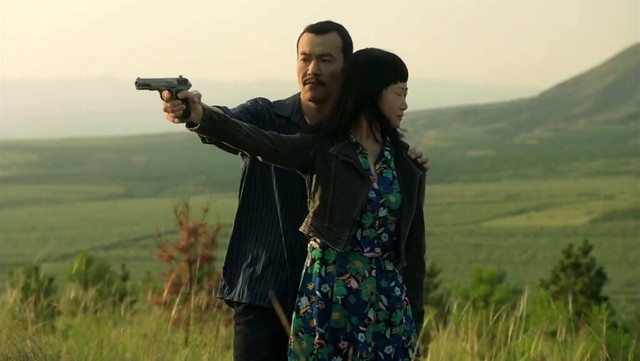
Bin brings Qiao to a field which saw volcanic activity thousands years ago, to teach her how to shoot a hand gun. It's an unregistered, illegal gun he acquired. The Chow Yun Fat-starring Hong Kong action movies had a bad influence on Bin and the rest of his generation. He mentions that the ashes from the volcanic eruption is the purest white, foreshadowing the rapid change in China, where anything old is demolished, buried or drowned for the new generation. A clean slate. A new beginning where no regrets, no tears, no sentimentality are allowed.

After a hit on Bin's crew sees him fatally attacked, Qiao fires the said illegal gun to save his life and is sent to jail for 5 years. Now it's 2006, and Qiao is out of jail and looking for Bin. He never visited her in jail and has moved to a town near Three Gorges dam. So this is where the road movie of Qiao starts: she meets various characters on the road/river with the rapidly changing nation in the background. The technology has changed appropriately, the fancy office buildings go up, all sorts of business ventures spring up. But people, the flood of people, trying to eke out the living with the changing times and circumstances, remain the same.

Bin, with a new girlfriend, refuses to see Qiao. Heart broken and with nowhere else to go but back to Datong, she almost agrees to go with a new venture capitalist whom she meets on the train, to the west. Decisions we make in our lives, good or bad, would lead to a different life than where we are right now. But how much can we deviate from our natural instincts, our traits, our character?

It's the New Year, 2018. Qiao finds Bin back in her life in Datong. He's had a stroke due to excessive drinking and is now a wheelchair bound. Qiao, who never married, silently takes care of him. He throws a fit sometimes, reliving his jianghu (underground gang) days in his head. She doesn't let him go off though. Is he ever going to change?

Ash is Purest White is a full-on (un)sentimental melodrama in epic scale. It's perhaps Jia's most down to earth, character study work. The long stretch in the middle gains more poignancy as the film goes along and afterwords. Some people reinvent themselves along with the changing times and some people don't. Some things in them though, remain the same. Jia expertly juxtaposes these conundrums, reflecting the soul of a changing nation. Ash is the Purest White is a deep and poignant masterpiece from a seasoned filmmaker.


Thursday, June 28, 2018

NYAFF 2018 PREVIEW

Dubbed as the Savage Seventeenth edition, this year's festival hosts four world premieres, three international premieres, 21 North American premieres, three U.S. premieres, and twelve New York premieres, showcasing the most exciting comedies, dramas, thrillers, romances, horrors and arthouse films from East Asia.

NYAFF 2018 runs from 6/29 to 7/13. Please visit FSLC Website for more tickets and more info.

ONE CUT OF THE DEAD
Screen Shot 2018-06-20 at 1.31.40 PM
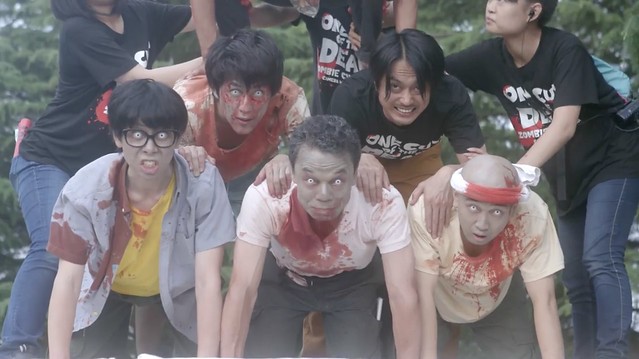
With Romero's Night of the Living Dead, the zombie genre has a humble, low-budget indie beginning. Taking the cue from this idea, Ueda Shinichiro's One Cut of the Dead serves a love letter to the indie filmmaking process as much as it works as being an entertaining zom-com.

It starts out with as an impressive 37 minute uncut zombie movie where a frazzled director screams at a young actress, who has just gone through her 42nd take. She needs to look more frightened. That she really needs to fear for life! His wish comes true soon enough, as real zombies run amok in the filming location, a large water treatment plant where the Japanese army conducted human experiment in the days of WW2.

The film rewinds and becomes a making-of documentary where it shows how the uncut movie was made in clever, comical ways. As anyone ever involved in low budget filmmaking would attest, no matter how terrible the end product turn out, there is tons of hard work and on-the-spot problem solving that goes in to each film. An interesting aside to considering: The movie gives the 'crane shot' a new meaning...

One Cut of the Dead is part zombie movie, part making-of documentary and part touching family drama. And it's hugely entertaining.

HUNGRY LION

Screen Shot 2018-06-20 at 8.18.04 PM
Comprised only with short static shots that cut to black, Ogata Takaomi's Hungry Lion takes a non-sensational, clinical approach to reflect on the peril of our society completely under siege by social networking. It's very Haneke yet very Japanese.

The film begins in a high school classroom where a teacher is getting led away by the police. The video of him having sex with a student went viral. Hitomi, a normal high school student who has a considerable SNS following or someone who looks very much like her was in that video. She denies that it is her. Some of her immediate circle believe that she is innocent at first. But once the rumor starts doing rounds, it spreads fast. People turn on her and the adults who are supposed to protect her innocence openly exploit her. The gossip at the school and home become too much for Hitomi and she throws herself in front of a train.

Hungry Lion digs deeper into our relationship with the world in the internet age and how we see things in a distorted way and prey on the most vulnerable. It's a compelling movie watching experience.

LIVERLEAF

Screen Shot 2018-06-19 at 11.48.20 AM
Violent Japanese schoolgirls! This is what I love about NYAFF!!

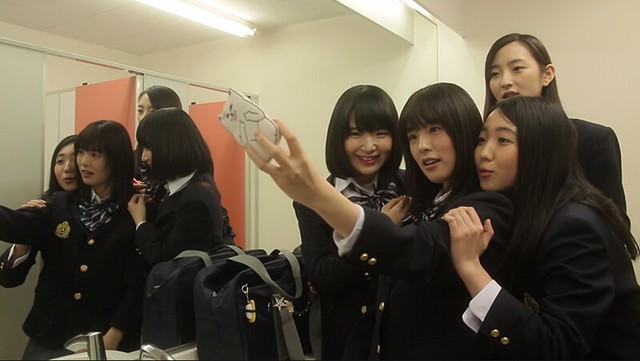
Based on a manga of the same name, Naito Eisuke's Liverleaf is a school bulling revenge movie. Haruka Nozaki (Anna Yamada) is a transfer student from Tokyo in a rural town Middle School. She is relentlessly bullied by a gang of close-knit friends, headed by cool redhead Taeko (Rinka Otani). It is said Haruka stole Aiba (Hiroya Shimizu) from Taeko. How dare she!

Things take a violent turn when Rumi (Rena Otsuka), a loner who would do anything to impress Taeko, actually carries out burning down Haruka's house with her family in it. With her parents killed and her little sister in an intensive care from burns, Haruka exacts revenge on the gang, one by one, using a rusty nail, a pair of wire cutters, a crossbow and a pocket knife. As usual, nothing is more beautiful than blood on the pure white snow in the Japanese countryside.

THE BLOOD OF WOLVES

Screen Shot 2018-06-22 at 11.30.36 AM
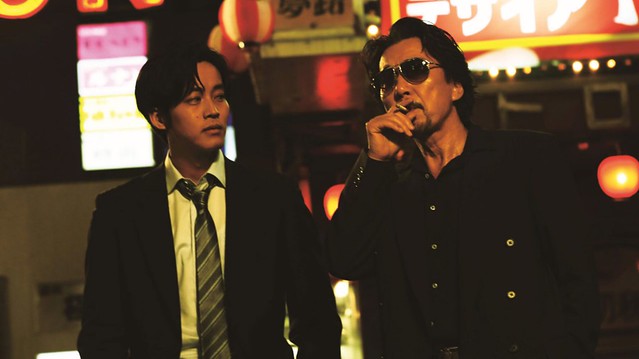
Detective Ogami (Yakusho Koji), known affectionately as 'Gami by his colleagues and yakuza friends alike, leads a colorful existence, walking a tightrope without falling to either side. He has been the key figure in keeping the peace between too warring yakuza clans. But it's Gami's method - taking bribes, getting favors, extortion, violence, etc that irks a young idealist rookie partner Hioka (Matsuzaka Tori). While investigating the murder of a civilian accountant, Hioka realizes Gami might be in too deep with Irako (Ishbashi Renji), one of the crime bosses. Would Gami find out that Hioka is an agent from internal affairs? Would they still bring down the gangs together?

As flamboyant Ogami, always dependable Yakusho is fabulous here playing against type. Without honor, loyalty or fear, his character is only interested in protecting civilians. With large, great supporting roles played by many familiar faces in Japanese cinema (including Maki Yoko of After the Storm, Like Father Like Son and Abe Junko of Still the Water), Blood of Wolves is an excellent, gritty crime film that is hugely enjoyable.

PARADOX

Screen Shot 2018-06-23 at 8.40.41 AM
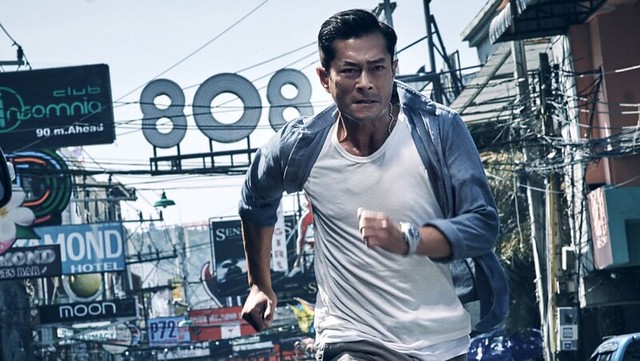
Hardened HK detective Lee (Louis Koo) sees his young daughter grow up to be a teenager. As soon as she takes up a no-good boyfriend and gets pregnant. After an abortion, she runs away to Thailand only to be kidnapped by local thugs who in deal organ transplants. Yes, just like previous SPL series, you don't watch Paradox for the plot. You watch it for a handful of heavenly action sequences!

Choreographed by Sammo Hung, with picturesque backdrops of the bay city of Pattaya, we get some glorious fight scenes involving Koo, Lue Wu and Tony Jaa (as local cops) and Chris Collins (as a sadistic organ trafficker). One set piece in the narrow hallways and rooftops with Collins and Jaa is breathtaking. So are the extended meat packing facility fight sequences, fully equipped (for your pleasure) with plenty of sharp, clanking cutlery. It's not great as the previous SPL series and the typical cheesy HK plotline drags down its greatness a notch. And you only wish you want to see more Jaa, but oh well. Vithaya Pansringarm (Only God Forgives) also shows up as a police chief.

Sunday, November 26, 2017

Going Up the River

Crosscurrent (2016) - Yang
Screen Shot 2017-11-25 at 1.38.35 PM copy
Screen Shot 2017-11-25 at 2.06.09 PM
Screen Shot 2017-11-25 at 1.42.57 PM copy
Screen Shot 2017-11-25 at 1.43.29 PM
Screen Shot 2017-11-25 at 1.44.39 PM
Screen Shot 2017-11-25 at 2.30.13 PM
Screen Shot 2017-11-25 at 1.46.30 PM
Screen Shot 2017-11-25 at 1.49.44 PM
Screen Shot 2017-11-25 at 2.29.28 PM
Screen Shot 2017-11-25 at 1.52.35 PM
Screen Shot 2017-11-25 at 1.57.06 PM
Screen Shot 2017-11-25 at 1.58.56 PM
Screen Shot 2017-11-25 at 2.01.10 PM
Screen Shot 2017-11-25 at 2.03.13 PM
Screen Shot 2017-11-25 at 2.03.52 PM
Screen Shot 2017-11-25 at 2.05.39 PM
Screen Shot 2017-11-25 at 2.04.43 PM
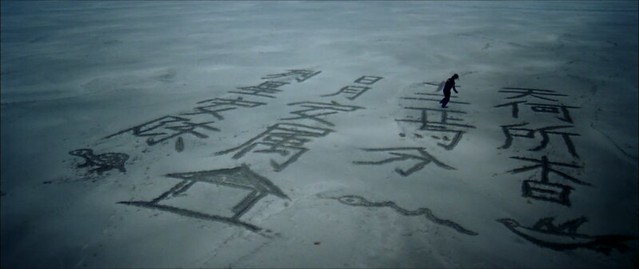
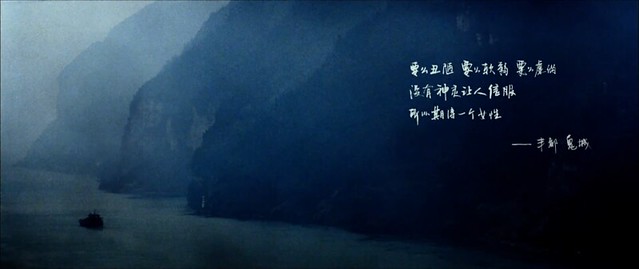
Yang Chao's Crosscurrent is an ambitious undertaking- he tries to show China's changing times up through the Yangtze River, both literally and in metaphysical sense, on a small cargo boat. And it's a glorious one.

Gao Chun (Qin Hao), just lost his father and as the tradition calls it, he needs to keep a black fish caught in the river in an urn until it expires naturally, so he can set his father's soul free. But he also inherited his father's tattered small cargo boat, a broad headed hunk of metal all rusted blue and red with age. Hired by some hotshot shady businessman, he is tasked to carry some unseen illegal cargo up the river. With an old man and an impatient young deck hand, and narrated by a diary found inside the boat -poems on each port Chun visits, he embarks on a long metaphysical journey through waterways, from Shanghai all the way to the source of the river near Tibet.

Chun lays his eyes on beautiful An Lu (Xin Zhilei), first as a prostitute on a floating riverboat in Shanghai, but she appears on every port Chun's boat docks along the river, waiting for him. Sometimes they meet, sometimes they miss each other, but without fail, she is there on the next port, reappearing again and again in a different form or another. An Lu in Mandarin is safe road/inner path, therefore the presence of An Lu serves as a nature spirit/old China left at a port as the ship sails.

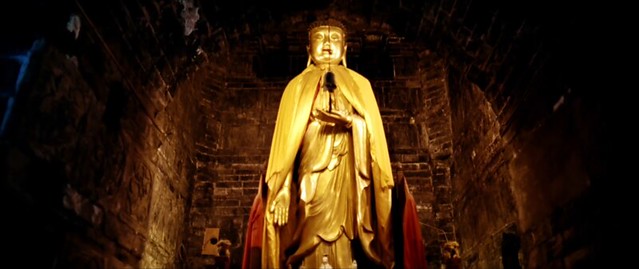
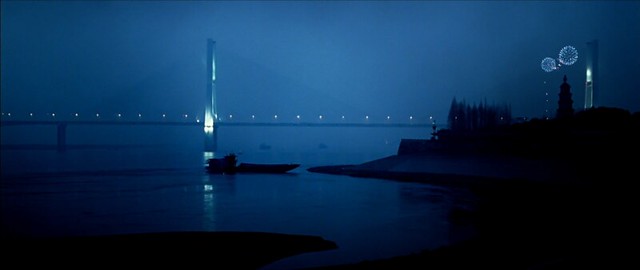
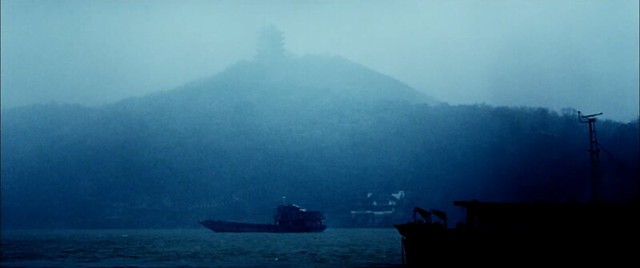
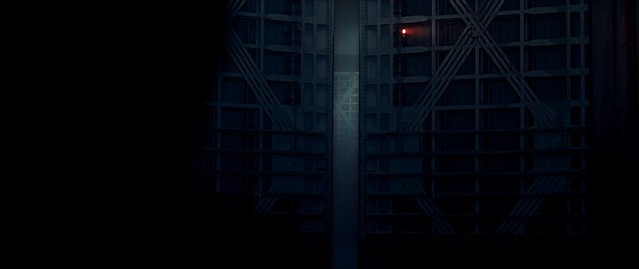
As we go up the river, we are presented with China old and new - ruins of flooded towns, pagodas on top of the mountains, natural beauty of the waterways contrasting with ultra modern bridges and gigantic steel walls of Three Gorges Dam. Tears roll down on Chun's face when he observes the wonders of human ingenuity of the dam and when he encounters An Lu for the last time, indiscriminately.
Yang's approach might be too broad and can be seen as too arty farty and pretentious as the film tackles grand themes like the country's identity and its past and present in a poetic and spiritual way. And it many ways it is. But who cares. Mark Lee Ping Bin's cinematography is insanely gorgeous here.