Showing posts with label Hong Kong. Show all posts

Monday, June 14, 2021

Blu-ray Review: Digitally Restored in 4K, Stanley Kwan's Masterpiece CENTER STAGE is a Beauty to Behold

center-stage_cover 

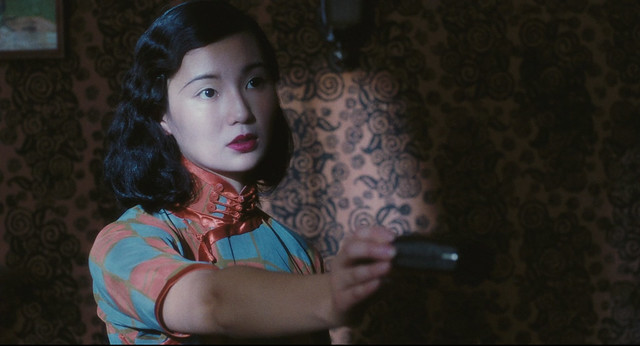
With the news of China's Censorship Board broadening its reach to Hong Kong's film industry (some dubbed as the end of Hong Kong cinema as we know it), here comes Center Stage, regarded as one of the best films Hong Kong cinema ever produced, featuring superstar Maggie Cheung and directed by HK New Waver Stanley Kwan. Digitally restored in 4K, the film is now out in North America for the first time from Film Movement Classics.

Center Stage concerns the life of Shanghainese silent film starlet Ruan Lingyu who starred in ten films between 1930-1935. Working with Lianhua - a thriving studio in the golden era of Shanghainese silent cinema known for making politically progressive films, Ruan played various tragic heroines. She was known for her trademark facial expression of "looking up at the heavens with a forlorn wordlessness." Hounded relentlessly by the tabloids for her affairs with two married men, Ruan took her own life at age 24.

Rather than making a straight forward biopic, Stanley Kwan opts for digging deep into telling a story about a complicated woman who lived in a time in a country at the beginning of modernization and political and social upheaval, using footage from the few surviving films from that era (most of Ruan's films didn't survive), interviews with people who knew Ruan, reenactments, and on-screen candid discussions with actors about the characters they are portraying.

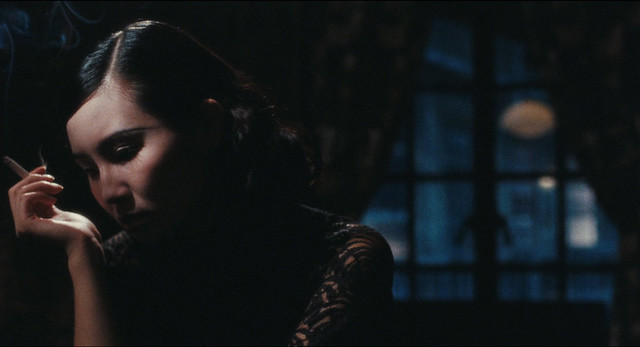
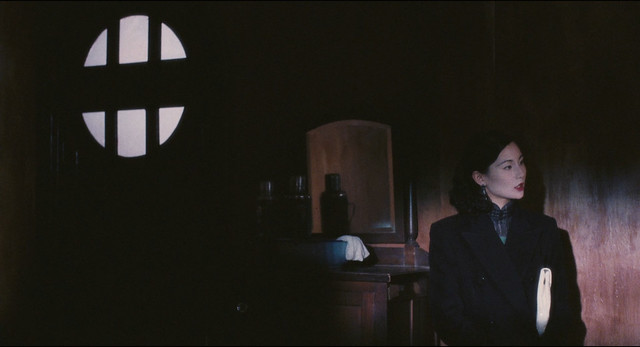
In the center of it all is Maggie Cheung, in the zenith of her beauty and career as an actress, portraying Ruan Lingyu, the tragic heroine both on and off stage with utmost sensitivity and nuance, all captured luminously by veteran Hong Kong cinematographer Poon Hang Seng (Peking Opera Blues, A Chinese Ghost Story, Heroic Trio, Kung Fu Hustle).

Aliza Ma, program director of Metrograph, in a 16-page essay that accompanies the Blu-ray, gives a very thorough back story to Ruan Lingyu's tragic death by examining the social and historical context in what it was like being a woman and an actress in Shanghai in the 30s. She also lays out the climate of Hong Kong cinema and the freedom filmmakers were endowed with, thanks to Lianhua studio's relocation to Hong Kong as well as many artistic luminaries before the war and the subsequent Japanese Occupation.

The new Blu-ray is loaded with exclusive extras, including all-new interview with director Stanley Kwan.

Bonus Features:

  • New Introduction by Stanley Kwan 
  • Interview with Stanley Kwan 
  • Interview with Hong Kong cinema expert Paul Fonoroff (Blu-ray only) 
  • 16-page booklet with a new essay by Aliza Ma, Head of Programming at Metrograph


Center Stage is a breathtakingly gorgeous film and lives up to its reputation as one of the most revered masterpieces of the Hong Kong cinema. Gone are the heavily tinged teal from the previous releases- warm and saturated colors and soft smokey palette dominate the screen. The digitally restored film is now available on Film Movement website. 


Center Stage1 Center Stage2 Center Stage3 Center Stage4 Center Stage5 Center Stage6 Center Stage7 Center Stage8

Friday, March 6, 2020

Made in Hong Kong 4K Restoration is a Gutter Punk Goodness

Made in Hong Kong (1997) - Fruit Chan
made in hong kong
Fruit Chan's Made in Hong Kong came out right after Hong Kong Handover to Mainland China in 1997. With its youthful energy and boisterous amateur cast, the film reflects rather an anxious and pessimistic view of what lays ahead for the new generation facing uncertainty.

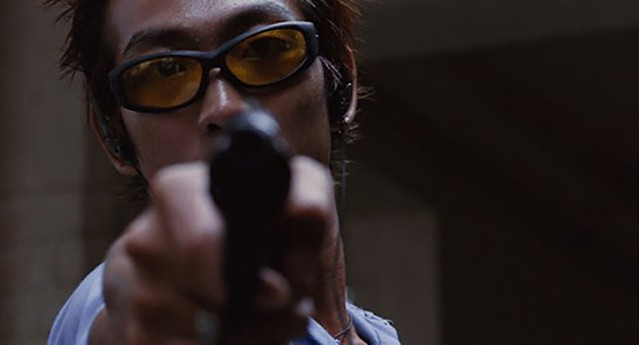
It's a kinetic, viseral, shoe-string budget film about a wayward high school drop out/triad wannabe Moon (Sam Lee in a star making role) working as a low level debt collector. Moon spends most of his days jerking off, going through his mom's purse, hanging out with his buddy Sylvester (Wenders Li), a big simpleton who gets bullied around by high school students. Moon terrorizes people who owe Big Brother Cheung money for living.

On one of these runs for collecting money, he meets Ping (Neiky Hui-Chi Yim), a naif with a pixie haircut and falls in love. They soon become an inseparable trio, roaming the busy streets of Hong Kong, having fun. But their carefree lives turn sour after witnessing a suicide of a high school girl named Susan in the neighborhood. Being in possession of the dead girl's suicide note haunt Moon, all throughout, as he procrastinates to do the right thing and return it to her parents.

Moon finds out Ping is dying of a kidney failure and Sylvester is always in need of his protection from the bullies. Then there is a turf war in the neighborhood involving his rival Fat Chan that he has to reckon with.

Made in Hong Kong does not only serve as an anxiety ridden, wayward youth film but also work as a time capsule. Fruit Chan has captured some extraordinary details of the places in Hong Kong in late 90s on celluloid: overcrowded subsidized housing projects, bustling city markets, decrepit corridors and alleys, long stair cases, signs and architecturally uneven skyline of the forever changing city. If Chris Doyle lensed Hong Kong in Wong Kar-Wai movies are hyper romanticized version of the city, Made in Hong Kong, shot by O Sing-pui (who went on to shoot Ip-Man), presents an energetic, ghetto punk version of the same city through a glass darkly.
There are some spectacular scenes that stands out in the film: a steep mountain top cemetery of Chai Wan as the trio runs around looking for the Susan's grave. The kinetic hit sequence where Moon fails to kill the businessmen, alternating between attempt and fantasy, Moon being attacked by a skateboarding hitman with a screwdriver sent by Fat Chan. Made in Hong Kong is filled with nervous energy all the way through its pessimistic, melancholic end.

In 2017, on the 20th anniversary of its release, Made in Hong Kong was restored by the Udine Far East Film Festival (Italy), starting from the original camera negatives and working under the direct supervision of Fruit Chan and cinematographer O Sing-pui. The restoration is as authentic and true to the original film as possible. The film is gorgeous to look at. Pristine images preserve Hong Kong in its uncertain times and jittery atmosphere perfectly, like in a time capsule. See it on the big screen. You won't be disappointed. The film opens Friday 3/6 at Metrograph

Thursday, June 28, 2018

NYAFF 2018 PREVIEW

Dubbed as the Savage Seventeenth edition, this year's festival hosts four world premieres, three international premieres, 21 North American premieres, three U.S. premieres, and twelve New York premieres, showcasing the most exciting comedies, dramas, thrillers, romances, horrors and arthouse films from East Asia.

NYAFF 2018 runs from 6/29 to 7/13. Please visit FSLC Website for more tickets and more info.

ONE CUT OF THE DEAD
Screen Shot 2018-06-20 at 1.31.40 PM
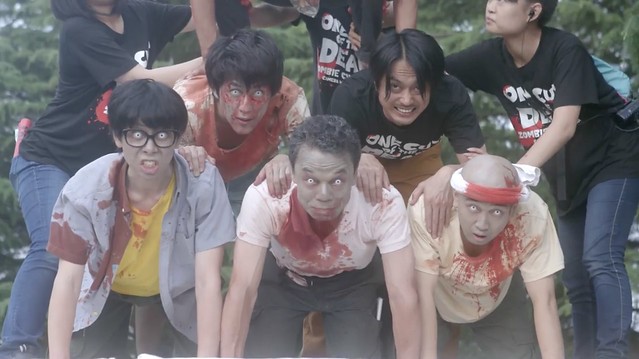
With Romero's Night of the Living Dead, the zombie genre has a humble, low-budget indie beginning. Taking the cue from this idea, Ueda Shinichiro's One Cut of the Dead serves a love letter to the indie filmmaking process as much as it works as being an entertaining zom-com.

It starts out with as an impressive 37 minute uncut zombie movie where a frazzled director screams at a young actress, who has just gone through her 42nd take. She needs to look more frightened. That she really needs to fear for life! His wish comes true soon enough, as real zombies run amok in the filming location, a large water treatment plant where the Japanese army conducted human experiment in the days of WW2.

The film rewinds and becomes a making-of documentary where it shows how the uncut movie was made in clever, comical ways. As anyone ever involved in low budget filmmaking would attest, no matter how terrible the end product turn out, there is tons of hard work and on-the-spot problem solving that goes in to each film. An interesting aside to considering: The movie gives the 'crane shot' a new meaning...

One Cut of the Dead is part zombie movie, part making-of documentary and part touching family drama. And it's hugely entertaining.

HUNGRY LION

Screen Shot 2018-06-20 at 8.18.04 PM
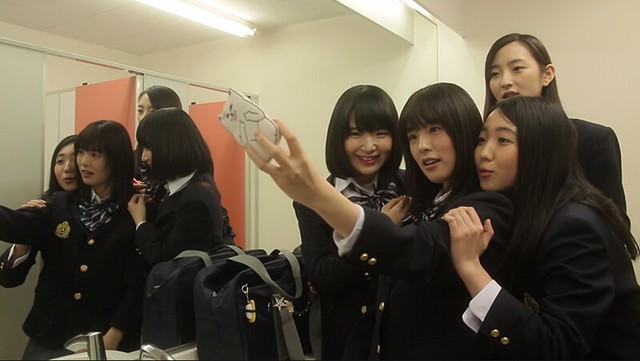
Comprised only with short static shots that cut to black, Ogata Takaomi's Hungry Lion takes a non-sensational, clinical approach to reflect on the peril of our society completely under siege by social networking. It's very Haneke yet very Japanese.

The film begins in a high school classroom where a teacher is getting led away by the police. The video of him having sex with a student went viral. Hitomi, a normal high school student who has a considerable SNS following or someone who looks very much like her was in that video. She denies that it is her. Some of her immediate circle believe that she is innocent at first. But once the rumor starts doing rounds, it spreads fast. People turn on her and the adults who are supposed to protect her innocence openly exploit her. The gossip at the school and home become too much for Hitomi and she throws herself in front of a train.

Hungry Lion digs deeper into our relationship with the world in the internet age and how we see things in a distorted way and prey on the most vulnerable. It's a compelling movie watching experience.

LIVERLEAF

Screen Shot 2018-06-19 at 11.48.20 AM
Violent Japanese schoolgirls! This is what I love about NYAFF!!

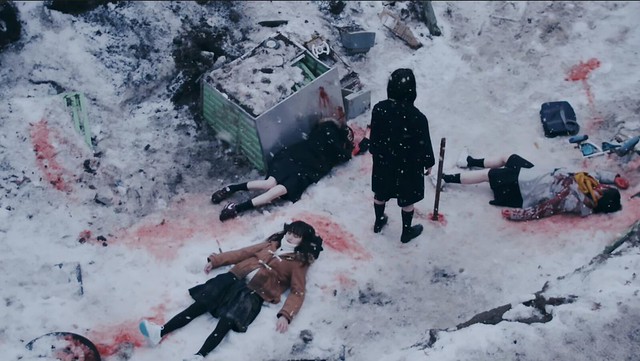
Based on a manga of the same name, Naito Eisuke's Liverleaf is a school bulling revenge movie. Haruka Nozaki (Anna Yamada) is a transfer student from Tokyo in a rural town Middle School. She is relentlessly bullied by a gang of close-knit friends, headed by cool redhead Taeko (Rinka Otani). It is said Haruka stole Aiba (Hiroya Shimizu) from Taeko. How dare she!

Things take a violent turn when Rumi (Rena Otsuka), a loner who would do anything to impress Taeko, actually carries out burning down Haruka's house with her family in it. With her parents killed and her little sister in an intensive care from burns, Haruka exacts revenge on the gang, one by one, using a rusty nail, a pair of wire cutters, a crossbow and a pocket knife. As usual, nothing is more beautiful than blood on the pure white snow in the Japanese countryside.

THE BLOOD OF WOLVES

Screen Shot 2018-06-22 at 11.30.36 AM
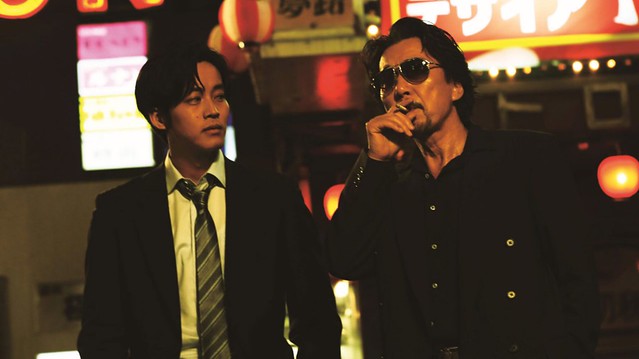
Detective Ogami (Yakusho Koji), known affectionately as 'Gami by his colleagues and yakuza friends alike, leads a colorful existence, walking a tightrope without falling to either side. He has been the key figure in keeping the peace between too warring yakuza clans. But it's Gami's method - taking bribes, getting favors, extortion, violence, etc that irks a young idealist rookie partner Hioka (Matsuzaka Tori). While investigating the murder of a civilian accountant, Hioka realizes Gami might be in too deep with Irako (Ishbashi Renji), one of the crime bosses. Would Gami find out that Hioka is an agent from internal affairs? Would they still bring down the gangs together?

As flamboyant Ogami, always dependable Yakusho is fabulous here playing against type. Without honor, loyalty or fear, his character is only interested in protecting civilians. With large, great supporting roles played by many familiar faces in Japanese cinema (including Maki Yoko of After the Storm, Like Father Like Son and Abe Junko of Still the Water), Blood of Wolves is an excellent, gritty crime film that is hugely enjoyable.

PARADOX

Screen Shot 2018-06-23 at 8.40.41 AM
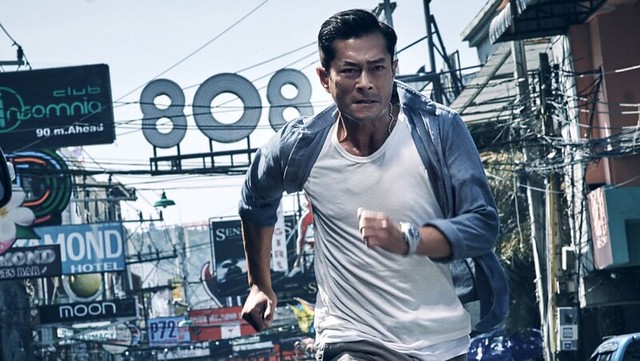
Hardened HK detective Lee (Louis Koo) sees his young daughter grow up to be a teenager. As soon as she takes up a no-good boyfriend and gets pregnant. After an abortion, she runs away to Thailand only to be kidnapped by local thugs who in deal organ transplants. Yes, just like previous SPL series, you don't watch Paradox for the plot. You watch it for a handful of heavenly action sequences!

Choreographed by Sammo Hung, with picturesque backdrops of the bay city of Pattaya, we get some glorious fight scenes involving Koo, Lue Wu and Tony Jaa (as local cops) and Chris Collins (as a sadistic organ trafficker). One set piece in the narrow hallways and rooftops with Collins and Jaa is breathtaking. So are the extended meat packing facility fight sequences, fully equipped (for your pleasure) with plenty of sharp, clanking cutlery. It's not great as the previous SPL series and the typical cheesy HK plotline drags down its greatness a notch. And you only wish you want to see more Jaa, but oh well. Vithaya Pansringarm (Only God Forgives) also shows up as a police chief.

Monday, August 19, 2013

Grand Visual Master

The Grandmaster (2013) - Wong
 photo 4e8eb5ad-35ea-49f6-910e-c10303c1488b_zpseee0cdc6.jpg
 photo 35abb7d5-f94d-4d8b-ab86-3aa980f5acc0_zpsb8d858d4.jpg
 photo e5cd277a-bd94-41c3-8956-4f3f4306544a_zps8a414a16.jpg
 photo b537ed9f-fbd4-4760-875a-00794327832f_zps739a8f4d.jpg
 photo 8f3c3183-4991-4d12-b243-0581c49b2714_zps00df7f63.jpg
 photo 2555cb0b-8e30-4de2-b3b4-dcebbadf2566_zps55ef1dd9.jpg
 photo 058c8cd9-647b-44d8-a5d3-b1f30b20ec96_zpse14aaa2b.jpg
 photo 058e5a34-7020-47b7-8bc2-af871cc769f7_zps9078d636.jpg
 photo 70bab9ed-ff56-44f5-8c20-07fd492d275d_zps09ca83bc.jpg
 photo 05b9c93d-7c7f-4f45-8c92-9342458b2608_zps84a2ec16.jpg
Wong Kar Wai fans who's been waiting for this since it's first announcement back in...when was it, won't be disappointed. Even though it was Wong who initially started this Ip Man craze, given his notoriety for procrastination, his Grandmaster is the last to open after a series of Ip Man franchise. And since it's a WKW movie, Grandmaster is less about the famous martial arts master but the extreme visual fetishization of his life. There is not one frame of the film that are not screengrab worthy. Every frame, a work of art. As far as pure visual porn goes, it surpasses last year's Dredd (detractors, now is the time to speak up!)

Much like In the Mood for Love and 2046, theme-wise, we are safely in Wong territory: Unrequited love, lost chances, eternal beauty, etc. Unfortunately, because the film is based on a real life character, Wong has to resort to title cards for dates (as the timeline is heavily jumbled), hence, cramping his perfect sense of style. The unrequited love between Ip Man (Tony Leung) and Lady Gong (Zhang Ziyi) is fluidly meshed together even though they have very little screen time together. It's as much Ip Man movie as it is Lady Gong movie, who is the real tragic figure in the story. Wong paints Gong as a woman who fell victim of its time and place: she takes the burden of revenging her father(master Gong)'s death, which consumes all her strength, despite everyone's advice to walk away from the man's world and 'settle down'- no time for love, no time for life. It is that short sparring between her and Ip, that fleeting moment when their bodies mingled like two dancing flames that she cherishes forever...wow cheesy.

Seriously, that fight scene is not even the best one. The best is the one between Lady Gong and Ma San, the former pupil of/who killed papa Gong at the snowy train station, Leone style. Wong employs slightly slower shutter speed in seriously dark (the whole movie is dark dark dark) fight sequences where actors' faces and moving hands get accentuated against velvety black backdrop. The effect is close to an elegant ballroom dancing rather than kung fu. The worst are the ones in the trailers in the rain which is nothing more than an exercise in super slow-mo for a tire/windshield wiper commercial.

Since it's about these two lovebirds (who are not really lovers), everything else is just window dressing. Ip's wife and two kids never once factor in to the picture, nor does the Japanese Occupation and unfortunately, nor the Razor (Chen Chang) who takes up three meaty scenes which never develops into anything. My guess is his scenes are severely cut due to its length (the version I saw was already 2 hrs 10 minutes and seemed long). Since it's a Wong movie, I wouldn't be surprised if there already was a redux version or director's cut in the works.

All in all, it's a rapturous visual experience and on par with his later works on every level. Too bad I don't find joy in his films anymore. At some point he traded off his playfulness with static elegance, coquettishness with stoicism, humor with slow-mo raindrops. He might be back in form, but I'm not interested in what he's selling anymore.

**It's been said that the version I saw is different than the US version. The US release is shorter and more linear in structure. Keep that in mind, folks.

Monday, December 6, 2010

Hong Kong, My Love

Chinese Box (1997) - Wang
Photobucket
Photobucket
Photobucket
Photobucket
Wayne Wang's love letter to Hong Kong coincides with the 1997 handover of HK to China from the British rule. Jeremy Irons is John, a Brit journalist who never figured out the place where everyone speaks nothing but money. Gong Li is Vivian, a successful business woman who can't get out of the shadows of her past and Maggie Cheung is Jean, a young woman with a scarred face who can't get over her first love. Thanks to Jean-Claude Carrière's nuanced, mature script, the three are not merely stand-ins for the dying Empire/end of the era, old generation bound by tradition and bitter new generation. He captures the year of uncertainty in a specific place/specific political climate like a time capsule. Shot mostly hand-held by Vilko Filac, regular of Emir Kustrica's, HK has never been this intimate or beautiful. Ruben Blades steals the show as a serenading roommate of John. Jared Harris as a straight-faced, forgetful former high school sweetheart of Jean is also memorable. I like this a lot.