Showing posts sorted by relevance for query winter sleep. Sort by date Show all posts

Friday, December 19, 2014

Winter Ennui

Kis uykusu/Winter Sleep (2014) - Ceylan
Winter Sleep
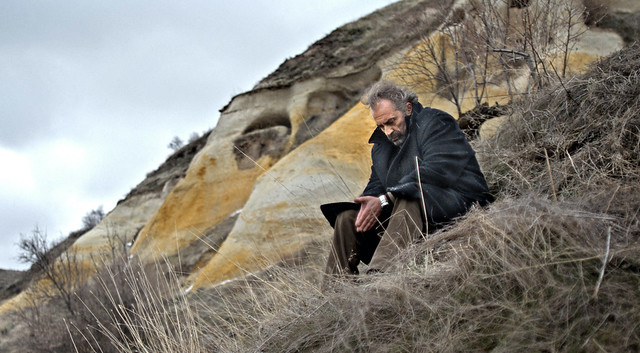
Aydin (Halruk Bilginer) is a proprietor of an ancient, picturesque carved-cave inn. He also owns a lot of properties around this Anatolian mountain community. He is an insolent, arrogant man who inherited his father's wealth and once a stage actor. He lives with a much younger, beautiful wife Nihal (Melisa Sözen) and equally insolent divorcée sister Necla (Demet Akbag). Aydin writes flowery columns for a community paper and is preparing to write a book on history of Turkish theater. When he is not writing, he talks to various guests who are staying at the inn. Things hasn't been good between Aydin and Nihal. She's been accusing him of not being interested in her philanthropic work and he in turn talks down on her lack of life experiences.

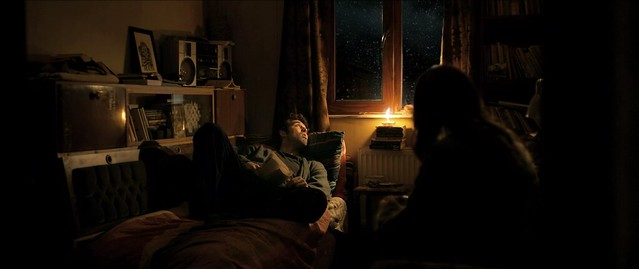
Winter Sleep is mostly composed of long winded indoor scenes broken up by some striking outdoor scenery. It's like kitchen table stage play where everyone sits down and argues for ages while drinking copious amount of tea. I really hated all three major characters who are extremely self-centered and very good at hurting each other's feelings with their petty resentments. I hate dialog where characters are all wearing their hearts on their sleeves and it happens A LOT in Winter Sleep. The only remotely interesting parts are about how Aydin and Nihal deal with poor folks - it starts out with Aydin and his property manager Hidayet visit one of the piss poor family after a young son from that family throws a stone at Aydin's car and breaks the passenger side glass. The family has been suffering financially and can't pay the rent. Hidayet had to remove their TV and other home appliances for collateral. Aydin is far removed from these tit-tat earthly affairs and has a hard time when confronted by it. Guilt ridden Nihal tries to help them but her ways lead to highly melodramatic results. What I didn't like about Ceylan's international breakthrough Distant was its pretty pictures have little to do with uninteresting main characters. There is no cohesion with its surroundings and these people who inhabit it. I have the same problem here with Winter Sleep, but only this time, they yak all the way through. It's as if Ceylan lifted his magic filter used in Once Upon A Time in Anatolia. The magic is gone: dialog is atrocious, slow zoom-in has no context whatsoever and voice over at the end felt like a cheat.

Winter Sleep is based on Chekov's short stories "Excellent People" and "The Wife". It's basically a filmed chamber play. I can see Nehal being a young wife trapped in a loveless marriage with a emotionally abusive older husband, a typical Chekov stuff. The thing is it's way too familiar, too predictable and too melodramatic, whereas in Anatolia there was a mystery that we are sort of trying to solve (setup being a police investigation). I checked imdb for writing credit as Ceylan writes everything with his wife Ebru and Ercan Kesal (Anatolia and Three Monkeys). Kesal's not credited as one of the writers for WS. Maybe that was the problem?

WS imho, definitely one of the weakest of all Ceylan I've seen. However unaffecting it was, Distant's minimalistic approach was refreshing and relies a lot on the viewer's imaginations to get into the minds of those two characters who are very different and distant. Chekov's work is all about confessing, divulging their inner thoughts for the readers/audiences. This may work on stage, but cinematically, it's too general and one note - Yeah it's winter and desolate. Yeah that's how they feel. FOR THREE HOURS. Anatolia was more layered, thematically and cinematically. I felt WS was just plain lazy filmmaking.

Tuesday, February 20, 2024

The Novelist's Films: The Cinema of Nuri Bilge Ceylan

Ceylan The latest film by Turkish film director, photographer, screenwriter, Nuri Bilge Ceylan, About Dry Grasses is three-plus hours of novelistic contemplation on human conditions in a stunning rural East Turkey backdrop.

Among the best Turkish New Wave directors, along with Reha Erdem (Times and Tides, My Only Sunshine) and Semih Kaplanoğlu (Honey, Commitment Hasan) Ceylan built a reputation as the world's most novelistic filmmaker, with deliberately slow pacing, long takes and themes steeped in vagaries of human existence, in often beautiful rural and urban settings in Anatolia and Istanbul. Indeed, experiencing each of his films is similar to reading a great thick book. And it's deeply satisfying, every time.

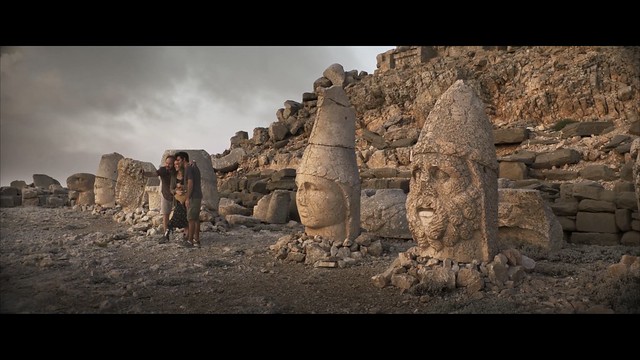
Ceylan studied engineering in school, then became a photographer: it is apparent that he has an eye for landscapes as you watch his films. Consider the snowy streets of Istanbul in Distant, ancient ruins on a hot summer day in Climates, the winding mountain roads from above at dusk in Once Upon a Time in Anatolia, the icicle covered resort in Winter Sleep, and snow-capped mountains in About Dry Grasses, just to name a few. And there is always a cinematic showstopper in every one of his films that makes your jaw drop.

Yet, it's his juxtaposition of close-ups of the faces and their surroundings that gives meaning to his work. We humans exist among those spectacular places, with our jealousies, greed, lust, pride and other qualities intact.

With his wife Ebru Ceylan as a writing partner on most of his films, along with actor/physician Ercan Kesal (Three Monkeys, Once Upon a Time in Anatolia) and actor/teacher Akin Aksu (Wild Pear Tree, About Dry Grasses), he sketches out great, lived-in melodramas like no other.

Within the generous running time -- since Anatolia's comparitively modest 155 minutes, the runtime of Ceylan's films are more than three hours -- we get to know every main character in an intimate way with their faults and weaknesses, as well as their redeemable qualities. We get to live with them, like a main character in a great thick novel, at least a short while in darkened theaters. With Winter Sleep, the Palme d'Or winner 2013, adapting Anton Chekhov's play, The Wife, Ceylan explicitly let his audience know where his influences originate and where his interests lie thematically, while not sacrificing his cinematic playfulness.

About About Dry Grasses: Screen Shot 2024-01-23 at 3.29.12 PM Screen Shot 2024-01-23 at 3.29.52 PM Screen Shot 2024-01-23 at 3.34.36 PM Screen Shot 2024-01-22 at 4.19.55 PM Screen Shot 2024-01-22 at 4.26.07 PM Screen Shot 2024-01-22 at 4.54.37 PM Screen Shot 2024-01-22 at 2.01.27 PM About Dry Grasses deals with the usual Ceylan themes: how to live within your environment without making your surroundings a personal living hell.

Samet, our protagonist, skillfully played by Deniz Celiloglu, is a teacher in a small rural village, returning from the summer recess. He is counting the days until he is to reassigned and out of rural living, after the government's mandatory assignment period ends.

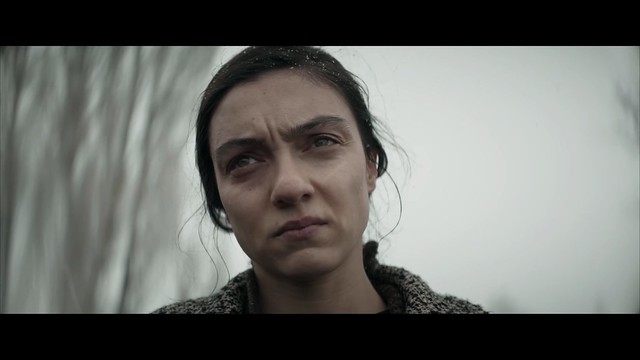
He is easily irritable and self-centered. Overall, he is not a likable character, like many other of Ceylan's male protagonists. All three principal characters -- Samet, Nuray (Merve Dizdar, Best Actress at Cannes 2023), Kenan (Musab Ekici), and Sevim (16-year-old Ece Bağcı) -- are exceptionally great.

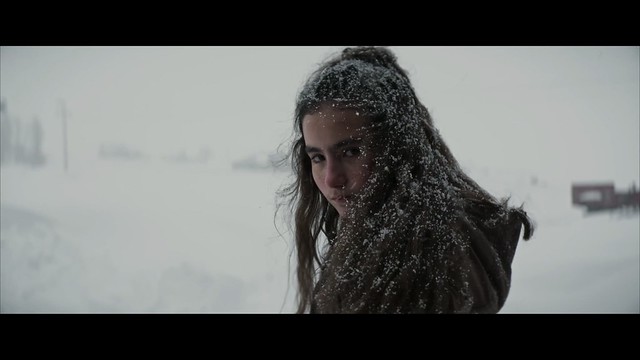
There are many great moments in the film but one showstopper comes in late in the third act of the film. After accusations of inappropriate behavior with the students quiet down, Samet's favorite student Sevim poses for him outside school in the snowy field, as he is an amateur photographer.

It's the closeup of Sevim's face, where Samet sees betrayal, lies and vengeance, while the audience sees innocence, beauty and indifference. While self-absorbed Samet might not realize, but we do, that it's our projection on others that makes our lives miserable.

Also, it is the first time in a long while Ceylan plays with the film medium. He used non-professional actors until the mid-2000s. He even starred along with his wife Ebru in Climates as a fictional couple in a tale of disintegration of a marriage shot on digital video.

If the run of Anatolia, Winter Sleep and The Wild Pear Tree gave the impression that the Turkish auteur is just making wordy filmed plays in a spectacular setting, About Dry Grasses will surprise you. There is a third-wall breaking scene in Grasses, where Samet and Nuray get intimate after being drunk.

The camera follows Samet to the bathroom, then out the door to a film set in a lot, revealing that the tiny apartment filled with trinkets of Nuray's life is indeed a film set, which takes you out completely from the film narrative. It gives you a sudden jolt that all the characters' lives, their thoughts and intimate details and blemishes that you invested in for the last two hours, are indeed a fiction. That now you can take a breather and reset.

With About Dry Grasses, we are witnessing a great, mature filmmaker paving his legacy as a novelistic filmmaker with a visual flair in the league of Tarkovsky and Bergman.

About Dry Grasses enjoys its U.S. premiere Friday, February 23, at Film Forum in New York City.

My review of Once Upon a Time in Anatolia (2012)

My review of Winter Sleep (2014)

My review of Wild Pear Tree (2018)

Sunday, December 2, 2018

Literary Cinema

The Wild Pear Tree (2018) - Ceylan
Screen Shot 2018-12-02 at 4.03.36 PM
Screen Shot 2018-12-02 at 3.46.12 PM
Screen Shot 2018-12-02 at 3.47.41 PM
Screen Shot 2018-12-02 at 3.48.40 PM
The Wild Pear Tree is yet another Nuri Bilge Ceylan's leisurely paced, literary filmic experience. Just like his previous efforts, Once Upon a Time in Anatolia and Winter Sleep, it starts out slowly and you don't know where it's going exactly. The film is basically a post-college blues movie where the young protagonist is excessively downtrodden and cynical. It provides some Ceylan-ian visual showstoppers in beautiful rural Turkey setting, again sumptuously lensed by Ceylan's long time collaborator cinematographer Gökhan Tiryaki. Watching The Wild Pear Tree feels like, as always with Celyan's films, reading a dense, good book, filled with rich characters and delicious philosophical musings.

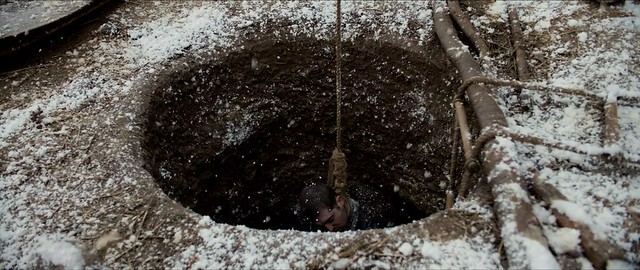
Sinan (Dogu Demirkol) is a young man who just graduated from college wanting to be a writer. He just came back home to his parents in small rural town. He has some decisions to make - does he get some silly job in town writing travel brochures or does he go to mandatory military service and delay entering the adulthood a little bit longer? His schoolteacher father Idris (Murat Cemcir) is squandering all his money on gambling, and digging a well where the water never comes, while annoying everyone around him with his stubbornness.

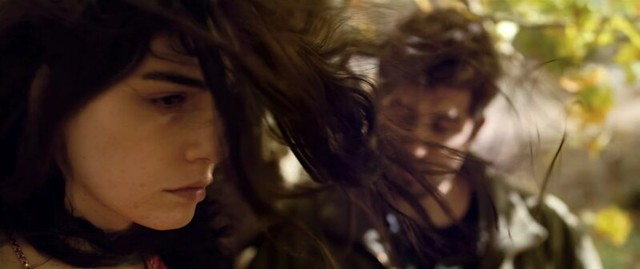
A showstopper comes early with Hatice (Hazar Ergüçlü), Sinan's High School sweetheart, not sure about her impending marriage to an older man which will surely guarantee a safe but boring life. They converse under a leaves-turning tree and share a forbidden kiss. The whole sequence, as the golden autumn sunlight bathes the young lovers and the wind caresses and ruffles Hatice’s raven hair every each way – is stunning.

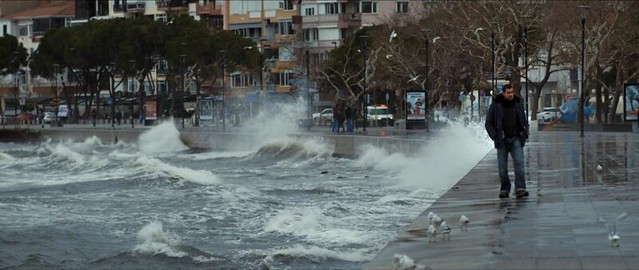
There are two very lengthy conversation scenes that shows Sinan's world view - one with him confronting a successful local author at a bookstore. Half jealous and half resentful, he questions the author's legitimacy of success. Later in the film, Sinan follows him the author along the docks of the coastal city of Çanakkale to harass him and almost ends with a physical confrontation in which the author accuses Sinan of "callow excess of young heart".

The other one shows him getting in to testy discussion with two young imams about interpretations of Koran and the religion's place in the modern world. Obviously, the young man could do without faith.

Balancing petty earthly matters (his family dynamics – long suffering mom, feisty younger sister and of course the no good dad) and the philosophical musings and steeped in metaphors, The Wild Pear Tree plays out like a thick Russian novel. Murat Cemcir deserves a recognition for his portrayal of Idris, a dreamer and a gambler whose self-deprecating humor, goofy chortle and occasional otherworldly wisdom, is right out of a Dostoevsky novel.

The Wild Pear Tree is that rare film that captures the trial and tribulations of a young person who is intelligent enough to be both self-aware and pessimistic. His disdain for his father and the older generation obviously stems from his disenchantment about the dim future prospects that awaits him. The film's title is also the title of Sinan's book, which is supposed to be an honest observation of humanity filled with colorful characters. Therefore we realize unceremoniously that his book is actually what we’ve been watching. Wild Pear Tree is yet another rich, resonant film from Ceylan.

The Wild Pear Tree opens 1/30 at Film Forum, New York

Wednesday, December 7, 2016

Leather Pants

Screen Shot 2016-12-07 at 10.54.00 PM
This tiny Indian restaurant was lit like some Christmas fanatic’s suburban mansion. Those bright, colorful blinking lights were almost seizure inducing.
“Are we ready for a birthday treat?” Marais said, grinning ear to ear.
“Whose birthday?” I asked.
“Yours of course, silly!” Everyone at the table burst out laughing.
Two Indian waiters sang Happy Birthday song while carrying out a special dessert cake with one lit candle in the middle of it. I blew it out unenthusiastically. Applauses all around. It wasn’t a big deal really. A harmless fun to get a free dessert out of this BYOB joint for a night out with my co-workers. But because it was Marais who initiated it, I resented it.

Marais was one of those people who got it easy in life because of his good looks. He resembled very much of a British actor, Ralph Fiennes. His wavy blond hair and charming smile were irresistible to many.
Marais came in for some carpentry work at a gallery where I worked as a lowly art handler. Then he charmed his way up to become a permanent hire in no time.

I got a leather jacket for my birthday that year. It was a jacket I had my eyes on for years but never had enough money to buy. I wore it day in and day out, not just because I loved it so much, but because it was my only winter jacket. Soon the pockets inside were worn out and had big holes in them. I’d lose my keys and change and they jangled inside it as I moved.
One day after work, I put my jacket on and found the inside pockets miraculously fixed. Marais tapped me on my shoulder.
“I think this is yours.” He said, handing me a leather jacket, which looked suspiciously similar to mine.
Apparently, Marais had exactly the same jacket as me.
“That’s funny, what a coincidence!” I told him, feeling mighty fraternal.
“Serendipitous it’s not. Mine isn’t all fucked up like this.” He said.
Holes in the inside pockets. Change, gone.
“Why do you have such an expensive jacket?” He asked me, smirking.
I didn’t like this guy.

It was an opening night at the gallery. People in fancy clothes crowded the place. As usual in these events, it wasn’t about marveling at those wallpapers passing as art but rather art of seeing and being seen. All staff had to work, serving wine and o'd'oeuvre to rich patrons. Marais fit in perfectly. He was having the grandest time chatting away. I saw countless old society ladies giving Marais huge tips and their phone numbers as they exited smiling at the end of the night. Call me petty. I hated Marais.

Then he disappeared. A Visa problem I heard.

I ran into him a year later on the street. I was contemplating where I would come up with $300 in two days for the deposit on our new apartment as I walked. I was still living with my then-girlfriend in a tenement building in Alphabet City, Manhattan; a real shit hole. We were about to move to Brooklyn for a better place. Everything was packed up and moved to a storage space and we were only sleeping there for a couple of nights until the move. Still $300 short. Those were hard times. Then I saw Ralph Fiennes smirking at me at the corner of 4th and Avenue A. It was Marais.
He looked sharp in a black dress shirt, a fancy velvet vest, black leather pants and riding boots. My fingers kept playing with the tattered inside pockets.
“I’ve got to ask you a favor. I need a place to crash tonight.” He said, smelling like gin and smoke.
“Bad timing. I’m about to move and-“
“But you are not moving today, are you?” He cut me off.
“Well, no.”
I told him the place didn’t really have a living room space. It was true. It had a useless long narrow hallway that led to two tiny rooms- one for me and my girlfriend and the other for my roommate. Marais was adamant and very persuasive.
“Come on, just for one night. I’ll sleep on the floor.”
I finally caved in.
“Okay. You can sleep in the hallway.” I told him.
“All right, see you then.” He said as he turned around to leave.
“What? Where are you going?”
Apparently, he had some prior engagement. He’d call me when he came around.

“What an asshole!” My girlfriend exclaimed as I told her about Marais.
“And you’re letting him stay?”
“Well, you know that I usually don’t pick up an Euro-trash from the street on a regular bases. But gotta tell you, he’s very good looking.” I told her.

Marais finally showed up at the doorstep at two in the morning. He was completely inebriated. Before I even properly introduced him to my girlfriend, he fell on the floor face down. I had to back up because of the narrowness of the hallway.
“Well, nice to meet you too.”
I nudged Marais with my foot. No movement. Out cold.
“Look at him. Look at what he’s wearing. I bet those leather pants alone must’ve cost more than our rent.” She said with the tone of disgust.
That gave us an idea. We looked at each other and smiled mischievously.
Everything was going to be okay.

Monday, May 14, 2012

Norwegian Crumb

Pushwagner (2011) - Benestad,Hanssen
pushwagner
pushwagner1
pushwagner2
An aging Norwegian pop artist, Hariton Pushwagner, is the subject of this larger-than-life documentary, directed by Even Benestad and August B. Hanssen. And it's a great doc about an eccentric artist, rivaling Crumb in its charm and scope.

It is clear from the beginning, this pint sized, chain smoking, always inebriated man let us know just who is in charge; he dictates the first scene of the film, "Ok, it starts with me reading a book, now you ask me a question 'what are you reading Push?' and I just hold up the book over my face like this." We soon find out that there is no need to cover his face. Resembling Harry Dean Stanton on a bad day, his face, devastated by years of drug abuse and alcoholism, is worth a thousand words. The book he is reading is Lord Byron's Selected Letters. He goes on saying that one has to live like he reads. "This will be a meta-movie," he predicts.

Pushwagner's philosophy: one has to be living in action, not in theory, is what he realized late in his life. As the lawsuit proceedings against his former assistant, Morten Dreyer (in his muddled mental state, Pushwagner apparently signed a contract enabling Dreyer all the rights to his artwork in the 1990s), put much stress on his mental health and aging body, he knows that he hasn't got much more time left. His only regret in life is everything but the moment right now. His only pleasure left in life is the booze, fame, TV appearances and meeting adoring fans.

The main attraction of the documentary is of course, Pushwagner's idiosyncratic art: crudely drawn, yet extremely detailed Kafkaesque nightmare of banalities of everyday life. Benestad and Hanssen makes the most of these bright colored, repetitive figures and buildings to their advantage in computer animation sequences such as the artist's best known work, Soft City.

A born exhibitionist, Pushwagner is not shy about his dark past. In one of the many hilarious sequences in the film, he eagerly shows the film crew around where he spent his nights in his homeless days- next to an air duct of a roof of some building. It kept him warm on winter nights. He loses his trace of thoughts in an impossibly tiny shack where he used to sleep. He and the team also reenact his collapse from a kidney failure and subsequent hospitalization. But it has a lot of tender moments too. A footage of him visiting the deathbed of his long time mentor/collaborator, novelist Axel Jensen is very touching.

Lack of dates and contexts surrounding the artist, unless you are Norwegian, it is perhaps hard to imagine the whole magnitude of the tragicomedy that is Pushwagner's life. But with loose, intimate and visually inventive storytelling with compelling hero, Pushwagner is a great entertaining documentary and the one to remember.

Wednesday, January 4, 2017

Compassion

0.5mm (2014) - Ando
4765399_film-review-05-mm_e43310df_m
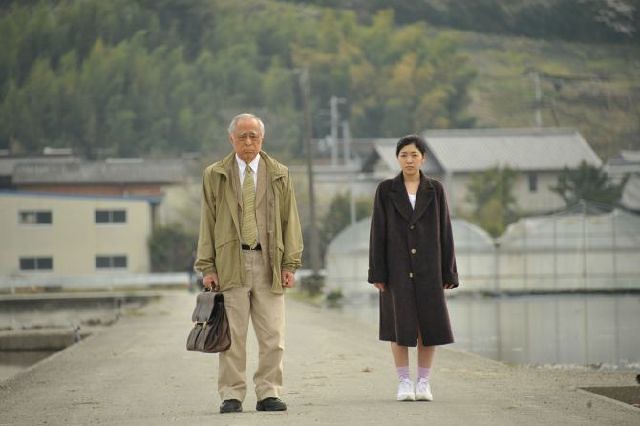
Clocking just over 3 hours, 0.5 mm tells a sprawling journey of a young caretaker of elderly people (director Momoko Ando's little sister, Sakura) as she travels through Japan. It's a comical, tender and deadly honest look at aging Japan and its seemingly unbridgeable generation gap.

Sawa (Sakura Ando), is a comely caretaker of an bedridden old man- she changes his diapers, cleans his fluid tubes and feeds him every day. The man obviously hasn't long to live. Sawa expertly handles it all. One day, the man's daughter asks him if she's willing to sleep with the dying man- that it is his dying wish, and assuring her that he is quite flaccid. Breaking the agency protocols for a large sum of money and compassion, Sawa agrees to go through with it. But it only ends in a disaster that costs the old man's life. Something breaks in Sawa and she takes off on the road.

Without any money, she witnesses an eccentric elderly man (Tatsuo Inoue) who's compulsively going around town stealing bicycles and puncturing tires. She blackmails him into pressing herself into his life as his live-in caretaker. There are many funny moments in this prolonged segment as Sawa flirts and disinfects his desires, fights off a sleazy scammer of elderly people, until he decides to go to the fancy retirement home, leaving Sawa his long, worn-out winter coat and his beloved old vintage sport car which has been sitting in his garage.

Sawa moves on to another elderly man, a former professor (Masahiro Tsugawa), who pretends to go to teach every morning, but instead hangs out in the mall all day and spends his time looking at dirty magazines instead. No challenge is small for Sawa, as she pushes herself into the professor's life, guising herself as a former student and admirer of the professor, she forms an uneasy alliance with his older housekeeper and caretaker of his bedridden wife. Sawa insists upon taking care of the wife, who must have been a cultured woman, as she sings arias in the middle of the night. The professor was a navy captain in the war. He reflects contemporary Japan's directionlessness. With the collective will of the people, they could've moved a mountain 0.5mm if they wanted, back then. Just like his wife, he too, slowly loses his mind to aging.

Sawa travels to a small fishing village where she meets a slovenly mute boy whom she's known before and follows him to a shack where his brutish scavenger father lives. The boy turns out to be a girl underneath all the baggy clothing and Sawa and her father has several physical altercations.

With these encounters, Ando takes a current snapshot of Japan, where elderly population problem needs to be dealt with. That they need to be respected and seen with compassion. She also vilifies the post war generation who lacks compassion. They are passing responsibilities of taking care of elderly on to the directionless younger generation. In the center of 0.5mm is brave, ferocious, magnificent Sakura Ando. Not afraid of the physicality and wackiness of her character but also conveys deep compassion and understanding Sawa has for her elderly counterparts. With 30 percent of Japan's population over the age of 65, it's no surprise that Japanese cinema is the first to tackle growing elderly population problems. Biting, uncompromising and deeply poignant, 0.5mm is an impactful film mostly because its untethered, sprawling narrative. There are certain new breed of Japanese indie-filmmakers who totally ignore the typical 3-act narrative structure- Sion Sono, Shinji Aoyama  come to mind. I see Ando is also the cut of the same cloth. There is a sense of freedom, freshness to their storytelling.

Monday, August 3, 2020

5 Best Japanese Films of the Decade

This list reflects my tastes and preferences only. Please keep that in mind. Not in any order. Please suggest some good Japanese films from the last decade.

Japanese Girls Never Die (2016) - Matsui
20161203160159
With its intentionally jumbled chronology, Japanese Girls Never Die goes on to tell the story of Haruko (Aoi Yu), an aimless 27 year old who works at an office and still lives at home. Then there is an accidental graffiti artists and an anarchic High School girl gang on a crime spree, beating up unsuspecting men subplots. In series of flash forward, we learn Haruko hooking up with a grocery store clerk/childhood playmate, Soga (Ishizaki Huey). She has to deal with daily sexism at work place - hearing male superiors shit talking 35-year old, unmarried female co-worker and constantly being asked whether she has a boyfriend, then told she won't have problems getting married because how she looks. They even say to her point blank that they'd rather hire a 18 yr old girl with no experience rather than a male applicant with experience because they have to dole out more money for a male workers.

Then she goes missing. Yukio and Manabu, two 20 yr olds working dead end jobs and Aina (Takahata Mitsuki), a slightly pumped up version of cutesy Japanese girl decked with a blinged out cell phone and a gaggle of flush toys on her car dashboard, start stenciling Haruko's face from the police missing sign all over the neighborhood walls. The image goes viral and gets tied into the violent crimes perpetrated by the girl gang. In her absence, Haruko becomes a unwitting heroine of a movement.

Japanese Girls Never Die is a strong indictment of the society where girls are subjugated and sexualized at an early age. It's a structurally daring, thought provoking work. Aoi Yu, the baby faced star of millennial classics like All About Lily Chou-Chou and Hana and Alice does a great job, carrying the burden of being twenty something female in society where self-worth is hard to come by. It's crazy to think that Aoi is old and therefore can easily be discarded. What kind of world is this? Even though it's more than a decade apart from each other, it would make a great double feature with Kurosawa Kiyoshi's Bright Future.

0.5mm (2014) - Ando
4765399_film-review-05-mm_e43310df_m
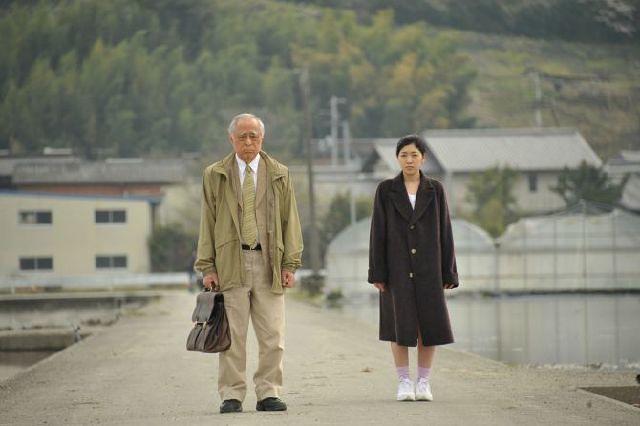
Clocking just over 3 hours, 0.5 mm tells a sprawling journey of a young caretaker of elderly people (director Ando Momoko's little sister, Sakura) as she travels through Japan. It's a comical, tender and deadly honest look at aging Japan and its seemingly unbridgeable generation gap.

Sawa (Ando Sakura), is a comely caretaker of an bedridden old man- she changes his diapers, cleans his fluid tubes and feeds him every day. The man obviously hasn't long to live. Sawa expertly handles it all. One day, the man's daughter asks him if she's willing to sleep with the dying man- that it is his dying wish, and assuring her that he is quite flaccid. Breaking the agency protocols for a large sum of money and compassion, Sawa agrees to go through with it. But it only ends in a disaster that costs the old man's life. Something breaks in Sawa and she takes off on the road.

Without any money, she witnesses an eccentric elderly man (Inoue Tatsuo) who's compulsively going around town stealing bicycles and puncturing tires. She blackmails him into pressing herself into his life as his live-in caretaker. There are many funny moments in this prolonged segment as Sawa flirts and disinfects his desires, fights off a sleazy scammer of elderly people, until he decides to go to the fancy retirement home, leaving Sawa his long, worn-out winter coat and his beloved old vintage sport car which has been sitting in his garage.

Sawa moves on to another elderly man, a former professor (Tsugawa Masahiro), who pretends to go to teach every morning, but instead hangs out in the mall all day and spends his time looking at dirty magazines instead. No challenge is small for Sawa, as she pushes herself into the professor's life, guising herself as a former student and admirer of the professor, she forms an uneasy alliance with his older housekeeper and caretaker of his bedridden wife. Sawa insists upon taking care of the wife, who must have been a cultured woman, as she sings arias in the middle of the night. The professor was a navy captain in the war. He reflects contemporary Japan's directionlessness. With the collective will of the people, they could've moved a mountain 0.5mm if they wanted, back then. Just like his wife, he too, slowly loses his mind to aging.

Sawa travels to a small fishing village where she meets a slovenly mute boy whom she's known before and follows him to a shack where his brutish scavenger father lives. The boy turns out to be a girl underneath all the baggy clothing and Sawa and her father has several physical altercations.

With these encounters, Ando takes a current snapshot of Japan, where elderly population problem needs to be dealt with. That they need to be respected and seen with compassion. She also vilifies the post war generation who lacks compassion. They are passing responsibilities of taking care of elderly on to the directionless younger generation. In the center of 0.5mm is brave, ferocious, magnificent Sakura Ando. Not afraid of the physicality and wackiness of her character but also conveys deep compassion and understanding Sawa has for her elderly counterparts. With 30 percent of Japan's population over the age of 65, it's no surprise that Japanese cinema is the first to tackle growing elderly population problems. Biting, uncompromising and deeply poignant, 0.5mm is an impactful film mostly because its untethered, sprawling narrative. There are certain new breed of Japanese indie-filmmakers who totally ignore the typical 3-act narrative structure- Sono Sion, Aoyama Shinji come to mind. I see Ando is also the cut of the same cloth. There is a sense of freedom, freshness to their storytelling.

Asako I & II
(2018) - Hamaguchi
Screen Shot 2019-05-29 at 6.47.08 AM copy
Asako (Karata Erika), a passive young girl eyes a tall, good-looking boy, Baku (Higashide Masahiro) at a gallery. With the sound and smell of firecrackers set by rowdy school boys still ringering in the air, they kiss and hook up, just like that. They become a young couple very much in love. Asako's dependency on Baku is total. But always aloof, he disappears for days on end without explanation. Her friends warn her that he will break her heart one day. And one day, Baku goes out for errand and never comes back. At this point, I am expecting some existential, poetic drama along the lines of Maborosi or Before We Vanish. But I'm wrong.

It's been five years. Asako relocated from Osaka to Tokyo, has an stage actress roomate and works at a coffee shop. While delivering coffee at a coporate conference at the building across, she is shocked by a presence of Baku. But it's not him. His name is Ryohei (Higashide again in a double role) who works for a sake sales company. In turn, Ryohei is extremely intrigued by Asako who seem to have an extreme aversion to his presence. It's her shy but clear, direct stares that draws him in. After multiple attempts with the help of his Chekov quoting, English speaking colleague as a wingman, they hook up. It takes a long time for Asako to finally get over her first love and fall in love again to another man, a very different man who is down to earth and real.

Then Baku shows up in Asako's life again. Now a famous model, he turns Asako's life upside down.

Based on Shibasaki Tomoka's novel Netemo sametemo - Waking and Dreaming, the film tackles on letting go of the first love from a woman's point of view in a very unique way. Hamaguchi has a great sensitivity dealing with delicate subject and make his actors shine. Young Karata embodies depth and mystery of a young woman coming out of her shell without compromising her core self, while Higashide shines in dual roles with great empathy and maturity. All the supporting roles are also great and well drawn out. It is refreshing to see a Japanese film that is modern and direct and not trying to be overtly Ozu-y or arthouse poetic or genre-y, yet very Japanese. I very much appreciate Hamaguchi Rusuke's work.

It Feels So Good
(2019) - Arai
It feels so good 1
'What would you do in the face of impending doom?' is the question posed on Kenji (Emoto Tasuku, Your Bird Can Sing) and Naoko (Takiuchi Kumi, Greatful Dead) in It Feels So Good. Writer/director Arai Haruhiko's new film, based on a novel of the same name by two time Naoki Literary Prize winning novelist Shiraishi Kazufumi, written right after Fukushima nuclear meltdown, sees a couple in the precipice of another major natural disaster in Japan.

It starts out with Kenji, unemployed thirty something divorcee seen on a riverbank, fishing half-heartedly, then getting a phone call from his unseen dad informing him that his cousin, Naoko, is getting married. Would he be able to come down from Tokyo and attend?

Naoko is getting married to an older career military man, who is in charge of disaster relief missions, in five days. He is involved in some National Security briefings right now. It turns out Kenji and Naoko share a past: they both were young and very much in love. Naoko even kept graphic photo album full of their sex acts taken by themselves. They tried every position, and everywhere. They used to explore every inch of each other's body. The memories of their affair come flooding back and they can't keep their hands off each other. They will continue to have sex until the day Naoko's fiance returns.

Arai makes sure that we see Kenji and Naoko and them only. We are invited into the couple's intimate bubble. No one else is seen and only heard occasionally on the phone. They go out to restaurants and street festivals, but the camera is only concentrated on them. But mostly, we see them having sex in his old mother's house, her parents house and her big empty new home which she will move in with her husband after the wedding.

Emoto and Takiuchi give commited, brave performances as lovers against socital norms and impending natural disasters. They have great chemistry together.

It is slowly revealed why they are not together. Kenji got someone pregnant and had to marry. Naoko only wants to marry the military man because she wants to have a baby. Obviously they have made some bad choices in their lives, they realize. Incest among cousins is looked down upon in Japanese society. But Japan is also a few countries which allow the first cosins to marry. There is a talk of inevitable eruption of Mt. Fuji, the sacred mountain of Japan. They reminisce about how they made love in front of the large picture of the caldera of Mt. Fuji, swearing their love into the volcano, as if sacrificing themselves to the mountain gods. They even took a picture to commemorate that night. Would they go their separate ways when Naoko's fiance returns?

It Feels So Good's theme is letting all your inhibitions go and live your life the way you want to, because it will all end anyway. Living in a country where natural disaster is way too common and people lead perpetually suspended in temporary existence, Ken and Naoko realize, it's now or never. From their point of view, their behavior might come across as nihilistic, but they are portrayed with much warmth and humanity by Emoto and Takiuchi. If we are to die tomorrow, who are we to judge how others led their lives? Intimate, natural and helplessly romantic, It Feels So Good is one of the best contemporary Japanese film I've seen.

A Story of Yonosuke
(2013) - Okita
StoryOfYonosuke_2013
From reading a brief synopsis online of A Story of Yonosuke, and with its 2 1/2 hour plus runtime, and the fact it is a period piece (taking place in 1987), I was fully expecting a Being There or Forest Gump type parable steeped in a socio-political survey on Japan's economic boom and its downturn in recent years. In a way the film is a parable, but in the subtlest terms.

It's a winsome tale about an affable young man named Yonosuke (a funny sounding name, I was told), who is not mentally handicapped nor an ethereal butler who may or may not exist. Rather, he is a regular guy who still manages to touch many lives with his gentle, optimistic nature.

Even though the film's periodic details are astutely recreated and observed, it is not the nostalgia piece where someone would say, "Yes, I remember the Yomiuri Giants winning the world series that year". As you delve into Yonosuke's life, it makes you forget the film's artificial backdrop soon enough.

Yonosuke, a college freshman from Nagasaki, is played by Kora Kengo (Norwegian Wood, Woodsman and the Rain). His sharp features and intensity are diffused by his big fuzzy hair and goofy smile. He is an ordinary, good natured kid whom everyone wishes would be their best friend. Yonosuke first befriends Kuramochi (Ikematsu Sosuke) and Yui (Asakura Aki) (they later become a couple), when they stumble into the school's samba club in an orientation week. They become an inseparable trio. After getting infatuated with an older, alluring 'party girl' Chiharu (Ito Ayumi), Yonosuke unloads his feelings about her on the reluctant ears of Kato (Ayano Go), a reserved man Yonosuke mistakes for someone he knows. They also become best friends. Then he meets Shoko (Yoshitaka Yuriko), a rich industrialist's daughter, who is always chaperoned by a driver and waited by a maid. Their class differences provide many comedic moments in the film. A wide-eyed naif, Shoko falls for good natured Yonosuke right away. She even follows him to Nagasaki for the summer break at a moment's notice, bewildering him and his rightfully suspicious parents. Their courtship is perhaps the most beguiling part of the film: awkward, funny, tender and uplifting- as should any first love be remembered by.

"When I die, would anyone cry?" wonders Yonosuke at his grandma's funeral. It's a question all of us ask ourselves at some point in our lives. "No, everyone will laugh when they think of you." Shoko tells him. And this they do. Throughout the film, director Okita Shuichi unhurriedly inserts people from Yonosuke's life reminiscing about their time with him after some 16 years, without sacrificing the film's gentle narrative flow and without corny sentimentality. Their chance encounters with Yonosuke enriched their lives immeasurably and they feel privileged to have known him.

I take the film as a reminder that beauty and kindness is in all of us, in this time of economic hardship/post-Fukushima Japan. It's a warm hearted, hopeful film subtly realized by Okita and its spirit is beautifully embodied by Kora.