Showing posts with label Documentary. Show all posts

Tuesday, July 14, 2026

Proof of Existence

Mother, You Have Not Died Yet. But You Will. And When You Do, You Will Finally be Alive Again (2026) - Beni Mother key still_credit Advik Beni\ With perhaps the longest movie title that I've encountered, South African filmmaker Advik Beni's impressionistic film examines the post-apartheid Indian township of Cato Manor, near Durban, South Africa, still simmering with ethnic tension. It is told through Lishana, an Indian descendent who is caring for her aging, dying mother and her family history.

Lishana describes her grief after the hindi funeral ceremony, as she feels the void of her mother's presence in her everyday life - everything and nothing has changed at the same time. As memories of her mother, Leela, doing mundane things with her - cooking, tending to the garden, having conversations and eating together, persist, it's like the line between the past and the present is blurring.

Everyone deals with grief differently- Lishana delves into her art practice: portrait photography. With her relative's barbershop in town, she takes pictures of her neighbors and citizens of Durban - young, old, black, indian. And her photographs are physical links to the sordid history of colonialism, immigration, and apartheid.

Lishana's family history is an interesting one - Her grandmother was one of thousands of Indians brought in to South Africa to work in the sugarcane plantations, an indentured labor force by the Colonial British Empire. Lishana, who never had been to the homeland of her ancestors, nevertheless kept her Indian traditions and hindu culture within the working class neighborhood of Cato Manor. Her imagined India created a lore in her mind, much grander than the reality.

There has always been violence in KwaZulu-Natal province and the city of Durban both under apartheid and post-apartheid period. The 1949 Durban riot was against Indian settlement, then the unrest in 2021 amid economic hardship during COVID-19 and the imprisonment of former president, Jacob Zuma. Accompanied by archival footage, Lishana recounts the region's checkered history and ongoing tension and violence.

Shot on grainy film stock and shaky handheld camera, Mother... has the looks and feels of old ethnography documentaries of the bygone era. Beni also incorporates a multitude of art/film techniques that include stop motion, drawings, immersive sound design and reenactments. The filmmaker portrays a picture of an immigrant enclave using impressionistic film language, often focusing on life's little details - the color, sounds, ephemeral qualities of everyday life.

Merging past and present, personal and historical, the film has a quality of a lucid dream, where memories and imaginations merge and create new reality personalized for its subject. Mother, You Have Not Died Yet. But You Will. And When You Do, You Will Finally be Alive Again, is a beautiful audio visual experience. Mother, You Have Not Died Yet. But You Will. And When You Do, You Will Finally be Alive Again, enjoyed its world premiere at FID Marseille 2026 where it won the Audience Award. Visit the film's page at the official festival site for more information.

Wednesday, April 29, 2026

Two Competing Narratives

Nuestra Tierra/Our Land (2025) - Martel OUR LAND (NUESTRA TIERRA)_Courtesy of Strand Releasing Known for her visually and aurally, densely layered films, taking on Argentina's society of haves and have nots, esteemed filmmaker Lucrecia Martel's foray into the documentary form culminates to Our Land, a long gestating project that started in 2011, when Martel started reading the materials surrounding the murder of Javier Chocobar, a leader of Chuschagasta indigenous community in Argentina's Tucumán Province.

Combing through old archives, old video footage, testimonies and interviews and oral history, aided by new technology, Martel creates another complex and nuanced continuation of her investigation into the country's colonial history and injustices perpetrated on its indigenous population, mirroring in spirit, her epic masterpiece, Zama which came out 8 years ago.

Our Land starts with the satellite image of earth, then we zoom in to the topography of Argentina's northwest legion, revealing lush forest, then to the young girls playing soccer in the soccerfield, as the drone glides over the landscape. Uncharistically, Martel seems to be incorporating technology into her documentary, in stark contrast with her subjects - the people who worked the land for generations and their adversaries- founding fathers of Argentina; the colonizers who exploit the natives and went on the land theft, ever since the 15th century. The dissonance of her bird's eye view/big-brothers-watching-you method, and the rugged landscape and its inhabitants, is the point of Our Land.

Case in point, Martel leaves the footage of a drone getting hit by a bird in mid-air - as jarring and humorous as it looks, she is not interested in perfect gliding shots of drone footage over nature, like some David Attenborough style nature documentary. She is using the technology to make a point.

In 2009, the defendants, the landowner Dario Luis Amin and his two former police officer friends who went into the territory, armed with guns to intimidate and forcefully evict the Chuschagasta community, their best evidence of their innocence (in their minds) is their own videotaping of the confrontation and murder. The shaky video tape is played over and over again throughout the film.

As the trial finally takes place 9 years after the murder in 2018, the defendants' thin justification was that they were threatened and outnumbered. On paper, Amin, a former government official, is the land owner and according to the government records, indigenous people in that region went extinct in the 1800s.

Martel provides a wealth of interviews and ephemera - photographs, family histories and artifacts, years of court documents from the legal battles the community waged on for decades, long before Chocobar's death. It's also in the faces of the region's inhabitants- distinct from Argentina's general population with mainly their European ancestry. Antonia Hortensia Mamani, the widow of Chocobar, displays hundreds of old fading photographs, many taken by her late husband who was an analog photography enthusiast, and laments the legacy of their history being lost.

It becomes clear as the trial goes on, that what we are witnessing are two competing narratives - One the Argentine state's account and the other, people's account. At one point, the defendants explain in their own words, why they shoved approaching Chocobar, "the Argentine State taught us to do that," effectively making the government the defendant as a whole.

Our Land's story resonates because we see it happening everywhere in the world now - from Gaza, Lebanon and Ukraine to a local level- here in New York, it's deed theft - coaxing longtime black and brown residents out of their homes, by greedy landowners and corporations, aided by NYPD.

The arrogance displayed in Amin's video becomes the defendants' downfall. Technology can be a double edged sword. The recordings are there for everyone to see and judge. But with deepfakes and A.I., the future of truth is unknown. Amin's 22 year sentence was appealed and he served only two years in jail, only to die of Covid. Two other dependants' 15 year sentence was appealed but then upheld later.

As with her narrative films which show satiric lives of the Argentine upper-class and the state's ugly colonial history, Martel shines a light on the daily struggles of her country's indigenous population with Our Land. The film is a meticulously researched and tactfully shot and presented, comfortably fitting in her impressive filmography.

Our Land opens in New York and San Fransisco May 1, followed by Los Angeles May 8. National rollout to follow. The Headless Woman 4K restoration opens at Metrograph in NYC on May 8.

Friday, January 16, 2026

Bad Math

Orwell: 2+2=5 (2025) - Peck Screen Shot 2026-01-16 at 5.49.33 AM Disappointing. First off, I am a big fan of Raoul Peck as a filmmaker. His astute observations both in his narrative and non-narrative films always rang true and powerful to me. But with his new overproduced (produced by Alex Gibney and distributed by NEON- both I'm less fond of) Orwell documentary, he connects the dots while ignoring others, ends in conclusion with the old saying "people have power", which in this terrible world we are living in, doesn't land as powerful and hopeful as before but almost sounds naive. I have to admit, after attending the rally against the ICE raids and everything else, I was feeling hopelessness taking over and we are fighting the battle already lost and as if feeling like I was just going through the motions, like an old habit. Yes, with Trump in power with all the craziness that he is inflicting on the world every day, Orwell's predictions of the dystopian future seems tame.

The film's whole narration is from Orwell's own words - letters to his friends and family and excerpts from his diaries (narrated by Damien Lewis). Peck starts promisingly with Orwell's background; his days as a policeman in British colonial India and how it shaped Orwell's view - the injustices of the oppressors and indignities of being oppressed. His acute description of the British class system - his family was 'middle class' pretending to be upper class and therefore the middle class disparaged the poor. But this important thread never resurfaces ever again as he juxtaposes the various film versions of his work - Animal Farm and 1984 and the past and present reality - dictators, the rise of ultra right conservatism across the globe, the atrocities in Rohingya, El Salvador, Ukraine, Gaza, January 6th and so forth.

Yes, the surveillance state and media disinformation campaign he foresaw came true. But the dignified portraits of 'everyday people' doesn't hold the power as it might have had decades ago. I don't know, maybe I am jaded and giving in to hopelessness. I will still go through the motion as that's what I know. So see you at the next demonstration?

Thursday, July 3, 2025

Hands of God

Thelonious Monk: Straight No Chaser (1988) - Zwerlin Screenshot 2025-07-03 at 9.58.25 AM Screenshot 2025-07-02 at 4.26.43 PM Screenshot 2025-07-02 at 4.26.51 PM Screenshot 2025-07-02 at 3.20.27 PM Screenshot 2025-07-03 at 10.01.49 AM Screenshot 2025-07-02 at 4.34.57 PM Screenshot 2025-07-03 at 9.23.07 AM Screenshot 2025-07-03 at 9.25.33 AM Screenshot 2025-07-03 at 10.28.10 AM Lucky for us jazz fans, the pioneer of Direct Cinema, Charlotte Zwerlin (co-director of Salesman & Gimme Shelter with Albert Maysles) got involved making a documentary of the jazz great, Thelonious Monk, with the candid newfound footage of Monk's 1968 European tour by the Blackwood Brothers for German television in the early 80s. Straight No Chaser is that rare filmed testament of genius at work.

They wanted to involve Monk in the film but his health was failing and eventually passed away in 1982 and the estate complication and funding problems prevented from the completion of the film until 1988 (with large thanks to Clint Eastwood, a huge fan of bebop and whose production company Malpaso Productions provided funding). The film captures the hulking, introverted, inarticulate man at work, always donning various funny hats and wire rimmed glasses, on stage and off stage. It shows his astounding composing skills - the sophistication of his arrangement and meticulous music notes on paper, and how he conveyed that to other musicians. It features his devoted wife Nellie and his relationship with the millionaire Baroness Panonnica de Koenigswarter (née Rothchild).

With interviews with family and friends, musicians and managers, we get the complicated picture of a genius who wasn't really appreciated in the beginning of his career. Just like many jazz greats in the 50s, he was targeted by cops and frequently harrassed. Jazz, for many black musicians at the time, was the freedom of expression. Monk's complex compositions weren't selling, but few afficionados in the music industry let him keep making his music. The docu tells a funny story about Monk taking the rap for his musician buddy Bud Powell on narcotics possession charges and had his permit to play suspended. And in turn Rothchild taking the rap for marijuana possession later on. It speaks about his physical ailment and mental decline - that he sometimes would not recognize people and stare at a space for moments. It also shows his jubilant on stage antics - twirling around on stage then back to his piano. Twirling around at the airport and on the streets with music always playing in his head.

It's the closeups of Monk's hands though, that god-like hands dancing energetically above the keys- creating and playing something incredible, something out of this world - real genius at work. Plus, we get to find out he was a cat lover. For Monk fans, Straight No Chaser and the recent Alain Gomis's Rewind & Play make a great double feature. Rhythm-A-Ning

Tuesday, June 10, 2025

Deep Time

Underland (2025) - Petit Underland Caves, underground waterways, mines, catacombs, scientific labs are some of the locations featured in Robert Macfarlane's bestselling non-fiction book, Underland. His prose, at once scientific, lyrical and philosophical, has been an open invitation and demystification of 'the awful darkness inside the world'. Traveling through the dizzying expanse of geologic time, the book is a revelatory dive into deep time, a contemplation of our fear of the dark void, reflection of a paralleled world underneath, the myths and memories and our deep connections to the unseen environment.

Underland happens to be one of my all-time favorite books. So, when it was announced that Robert Petit, a visual collaborator of MacFarlane - they did a short film, Upstream together, which features an aerial view of the Cairngorms Mountains and River Dee of Scotland, is directing it, it became one of my most anticipated films to see this year.

Narrated by actress Sandra Hüller whose clear and calm voice is a great match for the material, and voiced by archeologists, urban explorers and scientists, the film takes liberty from the book and sets this visual poem in 3 different locations in 5 chapters: a cenote and its labyrinthine cave systems in Mexico, Underground storm drains in Las Vegas and a science laboratory 2 kilometers underneath Canadian Rockies, each invoking heady metaphors, myth and human connection with our surroundings.

It starts in a black and white grainy pictures of an ancient ash tree, just like how the book starts. The ash tree is located in Mendip Hills of Somerset, where Macfarlane's childhood was spent. Beneath the tree presents the subterraneous passage into the underworld cavern.

Following Fatima Tec Pool, a Mexican archeologist and her team, into the 'entrance to the underworld', - an elaborate cave system where her Mayan ancestors congregated, Petit and his team - cinematographer Ruben Woodin Dechamps and producer Lauren Greenwood, crawl through the rocky, slimy, dark limestone caverns. With all their modern equipment, the archeologists wonder aloud how it must have been with Mayan explorers with only torches some thousands of years ago. For Pool, it's a personal journey to connect with her Mayan ancestors who treated the caves as a sacred place.

We are introduced to an urban explorer Bradley Garrett, who descends into the storm drain system under Vegas Strip. He explains the smell and texture of the system, a distinct sensory experience in an Anthropocene age. All these will be future caves, the remnants from our current civilization, he muses. There's a cryptic note on the concrete wall, warning the rise of water level when it rains.

Garrett witnesses the remnants of life in the drain system. People live down there: the undesirable, unseen people above ground making their way down to escape from the elements, even if that means risking drowning when flooded. It's not only humans, but underland is also filled with discarded materials - cars, washing machines, everything our modern world want to get rid of and make it out of sight.

Then there is Mariangela Lisanti, a theoretical physicist who is in search for Dark Matter, an unseen material that consists of 65 percent of all of our universe. It was her musings as a child looking up at the starry sky, wondering what we are made of. She and her colleagues find the suitable space to test, in which dark-matter particles bump into target material and scatter off atomic nuclei, resulting in a measurable nuclear recoil, 2 kilometers down in an underground laboratory, away from elements and noises. She knows well that her experiments might not result in finding the existence of Dark Matter in her lifetime. Nevertheless, she perseveres, with her childlike curiosity and wonder intact.

Petit and his team capture some glorious images of the subterranean world, conjuring not only physical but spiritual side of our understanding of the hidden world. The past, present and future mingle seamlessly as a sensory experience. As Pool's team reaches the end of the cave, they discover the ancient palm prints left on the wall by Maya people thousands of years ago. She stretches her hand to meet the old palm prints and, in that stillness and silence, deep down underground, we experience deep time.

Underland might be short on the political urgency in nature preservation of Macfarlane's book, but it is at once sensorial, philosophical experience to be had, preferably in a darkened theater.

Underland had its world premiere at Tribeca Film Festival and will also play at DC/Dox on 6/12.

Friday, April 11, 2025

Escaping Time

Le cinquième plan de La Jetée (2024) - Cabrera Screen Shot 2025-04-11 at 9.12.47 AM Screen Shot 2025-04-11 at 9.12.08 AM Screen Shot 2025-04-11 at 9.10.53 AM Screen Shot 2025-04-11 at 9.13.19 AM Screen Shot 2025-04-11 at 9.14.03 AM Screen Shot 2025-04-10 at 3.04.40 PM Screen Shot 2025-04-09 at 5.43.43 AM Chris Marker's photo roman La Jetée is regarded as one of the best and most influential Sci-Fi films ever made. Made in 1962, just as Algeria was declaring its independence from France, the film reflects on the colonialism and history repeating itself. The premise of The Fifth Shot of La Jetée is an intriguing one. Henri, a cousin of Dominique Cabrera the director, recognized himself and his parents in Marker's film, the still of a family, back to the camera, looking at the planes landing from the balcony of the Orly airport. The boy is the one who witnesses his own death. In those days, watching planes taking off and landing was a family pastime activity, and because of that, Marker was able to capture many candid shots for the film. The Fifth Shot is a cinematic detective story and how we, as an audience, have a claim in telling these stories in cinema.

As Cabrera digs through the archives and interviews with people from Marker's inner circle and her own family, it becomes very plausible that the shot is of Henri and his parents. Also, interesting coincidences come to life: Henri, like most Cabreras who were French citizens living in Algeria grew up in the same town as the actor, Davos Hanish, who played the main character in La Jetée. And Henri's mother had gone out with a Hanish boy, according to an old relative. And their resemblance is remarkable.

Cabrera weaves intriguing stories around Marker, who was a very private man, and his work, along with her family history and French colonial past. She reflects on how history repeat itself that we are all slaves to time. The Fifth Shot is a great contemplation on our relationship to cinema.

Friday, November 22, 2024

This is No Communist Speaking, This is an Angry Black Man Speaking

Soundtrack to a Coup d'Etat (2024) - Grimonprez Screen Shot 2024-11-22 at 11.11.16 AM Screen Shot 2024-11-22 at 11.17.56 AM Screen Shot 2024-11-22 at 11.15.31 AM Screen Shot 2024-11-22 at 11.19.15 AMScreen Shot 2024-11-22 at 11.16.27 AM Screen Shot 2024-11-22 at 11.14.29 AM Screen Shot 2024-11-22 at 11.28.23 AM Screen Shot 2024-11-22 at 11.13.08 AM Screen Shot 2024-11-22 at 11.13.58 AM Screen Shot 2024-11-22 at 11.18.24 AM Screen Shot 2024-11-22 at 11.20.24 AM Screen Shot 2024-11-22 at 11.20.32 AM Once upon a time, there was a hope and solidarity enough to counter the First World (The US and Europe): when the UN assembly was more democratic, in part, because of a bloc of newly independent African and Asian countries had votes and power to oppose the First World hegemony- This is when Castro, Nehru, Khrushchev, Malcolm X, Shukarno, Nasser, Tito hung out together in New York. The year was 1960 and The Belgian Congo was seeking independence. Belgian filmmaker Johan Grimonprez creates a comprehensive intersectional picture of post-colonial, Cold War world with American Civil Rights Movement, Black Nationalism and jazz in 2-hour-30-minute runtime. It's quite a lot for a historical documentary. But believe you me, it's worth it.

Jazz, that unique American music genre, was in its hay days in the 1960 with bebop (with Dizzy Gillespie widely credited as origin of this style) dominating the scene with the greats like - Max Roach, Miles Davis, Thelonius Monk, John Coltrane, Duke Ellington, Gillespie, Art Blakey, Melba Liston and singers such as Nina Simone, Abbey Lincoln... There are just too many to name all here. So how does Grimonprez pick and choose for this film? His decision is a wise one - include them all. First and foremost, with title cards closely resembling Blue Note album covers, jazz takes center stage with many musicians stating their political views in their interviews and music. Patrice Lumumba of the Congo and Kwame Nkrumah of newly independent Ghana and their desire to create the United States of Africa resonated deeply with Malcolm X, Black Nationalists and many musicians in the States.

It was an exciting time but also a dangerous time, especially for Lumumba, who had many admirers including Khrushchev and Castro. For Belgians who reluctantly gave the Congo their independence, the riches of the minerals in the Southern region of Katanga was too much to give up. Here Grimonprez connects the dots with the history of exploits of the region that continues to this day - from uranium to make atomic bombs that fell on Hiroshima and Nagasaki, to cobalt and nickel to make batteries for Tesla and iphones with gross human rights violations. With so much corporate interests at stake, the Belgians, British, the CIA and even the UN - at the time Secretary General Dag Hammarskjöld favoring and arming different factions to eliminate Lumumba. There's a funny bit about the US State dept. sending Louis Armstrong as a cultural ambassador to Africa and the Congo to snoop around what's going on there. Armstrong apparently later found out the CIA's real motivation and threatened to give up his US citizenship and move to Ghana.

The film builds up to the assassination of Lumumba. There is plenty of historical footage of Lumumba and his close associates including his speechwriter/political activist Andrée Blouin, Khruchshev, and enemies, mercenaries, diplomats, government officials all accompanied by jazz greats.

There are some modern documentary pitfalls in the film - obvious visual metaphors like an elephant being clumsily transported by the whites and Chubby smiling Khruchshev banging on the table over and over again, whitewashing his brutal oppression and invasion of Hungary, but Soundtrack to a Coup d'Etat is a comprehensive look at the turning point in history - a glimmer of hope for the third world what it aspired and what it could have been - and how it was quickly snubbed out by the colonialist, imperialist, capitalist power that threw African continent into a turmoil with its tragic consequences still playing out all over the continent. During the Cold War, the US and Europe were seeing the world in dichotomy, quick to accuse voicing injustice as a communist activity. And how it became the prevalent mantra of the public even now. Boppers knew. Malcolm X knew. People protesting the European’s and CIA's roles in Lumumba's death in Harlem knew. Soundtrack to a Coup d'Etat is a tremendous film and certainly one of the best of 2024.

Wednesday, October 2, 2024

Living Under Occupation

No Other Land (2024) - Adra, Ballal, Abraham, Szor No Other Land_Still_courtesy Antipode films As I write this non-review-review of a documentary on the West Bank in the Occupied Territories, Israel is engaging in military conflicts with Palestine, Lebanon, Iran, Syria and Yemen. Iran just launched retaliatory bombing of the airbase in Israel.

Going through what's been happening for the past year is going to be futile because it will need detailed context with how we got here; on the verge of World War III, it would take way too long. As I cover New York Film Festival, which this film is part of, there's a boycott happening against the event because many of the sponsors have been deemed to be pro-Israel donors.

I say this is not a movie review because I'm about to lay down what happens in this very personal documentary and explain what it means at this time and place in the world, not as much about how the film was made and put together. This article is from the perspective of a person living in New York, married to a woman of Jewish descent: this is how I see it from my perspective and no one else's. So please keep that in mind as you read along.

No Other Land, a documentary by a group of Palestinian and Israeli activists, shows what it's like to be living under an apartheid state, in the Occupied Territories of the West Bank. Five years in the making, it documents the ongoing destruction in Masafer Yatta, an area consisting of a small group of Palestinian villages in the South of the West Bank. It focuses on Basel Adra, a young activist (serving as one of the directors of the film) who grew up in the village and has been documenting Israeli incursions since he was a child.

He meets Israeli journalist Yuval (Yuval Abraham who is also credited as a director) in 2019, covering land siege and demolition of the Palestinian inhabitants’ brick and mortar homes on the dry hills by Israeli military, which cites the Israeli Supreme Court ruling that Israel has the right to the land in the Occupied Territories as a justification, to build a military training ground. Confrontations ensue.

But it's been like this forever. Basel's dad has been arrested many times in the past. The homes get destroyed, then rebuilt (with great difficulty I might add), destroyed and rebuilt.

They live in constant fear of being evicted or being arrested. The military cuts their water lines, confiscates their generators, and pours cement into the wells; all these actions are documented by Basel and others. Basel, along with his father, are known to the Israeli military officers as troublemakers. They are constant targets for harassment and threats.

Yuval is rightfully enraged by all of the things he sees, done by the Israeli military, by his name. He is an Israeli. At the end of the day, he gets to go home by breezing through checkpoints, using the Israeli citizen only lanes. He gets to shower and sleep in a cushy bed.

On the other hand Basel, about the same age as him, with a law degree, can't get a job, other than jobs doing manual labor. He needs to tend the gas station when his father gets arrested for protesting, since that's the sole source for the family income.

Yet, it's Basel who comforts Yuval, who tells him to calm down. "You are too enthusiastic. You want to see the change overnight, it won't come tomorrow." After years of living under occupation, people in the Occupied Territories become realists.

The network of resistance is done via phone; neighbors communicate that there's a raid or bulldozers coming to this town or that house, as the military seemingly selects their targets at random. They mobilize to stage a demonstration.

A neighbor gets shot while being evicted from their house. He is paralyzed from the shoulders down. They can’t afford to stay in the hospital. Their home destroyed, they move into the cave (the region is known for its natural caves).

With a small camera, Basel records everything. He uploads it to the web and hopes to get the words out of the struggle. That's all he does, constantly looking at the phone. Hey, two thousand people liked my post.

Their activism sometimes bore fruit and gave a moment of reprieve, like that time Tony Blair toured the region and saw their situation first-hand. And the Israelis backed down their expansion temporarily. Basel's father has a picture with him to prove it.

When they are chilling at night, sharing hookah, the conversation leads to other things between two men. "Do you see yourself having a family?" Yuval asks. Basel hesitates to answer. He is too tired. The years of struggle weighs him down. He is married to his phone, always looking at the likes and responses to his posts about the daily lives of his struggle and the news. He is tired. There's nothing else he can do.

Dominating the Middle East news cycle for a year has been the ongoing indiscriminate bombing of civilians in Gaza since October 7th of 2023 by Israel, in retaliation of the surprise attack from the Hamas militants in Gaza Strip. This emboldened the zionist Israeli settler movement in the West Bank.

Accompanied by Israeli soldiers, the settlers start violently attacking the homes in Masafer Yatta. Basel records his cousin getting shot by a settler. His father gets arrested. The movie ends in early 2024. Basel and thousands of other stories like his still go on. People's suffering is staggering; so is their resilience.

Basel Adra, Hamdan Ballal, Yuval Abraham, Rachel Szor capture what it's like living under the occupation, that is so immediate and telling. The systematic injustice and oppression are well documented in No Other Land. Everything we take for granted, such as a roof over our heads, running water, and electricity, is in constant threat. The scarcity of economic opportunities, healthcare plus the restrictions of movement, makes the everyday life of people in the West Bank extremely challenging.

Social media serves a very different purpose in the Occupied Territories. Palestinians really count on getting the footage out to the world to show what’s really going on. I had no idea how much they depend on the pressure tactics by us on politicians to improve their lives.

It seems no distributor is picking up this film because of its 'sensitive' nature and fear of offending the Israeli government and its powerful lobby groups, even though No Other Land won the awards at this year’s Berlinale. But injustice is injustice. These people in the film are not actors. The oppression is real. The racist vitriol is real. And I feel it is our (people who've seen the film) duty, to advocate for their plight.

Balls, Tassels, Panty Hose and Death

Afternoons of Solitude (2024) - Serra photo After garnering global critical acclaim of his South Pacific Cold War espionage thriller throwback, Pacifiction, Albert Serra, the Catalan "enfant terrible" of cinema, offers a documentary on bullfighting. A self-professed non-lover of the genre, Serra goes on to show the gory, testosterone and blood-filled world inside the bullring through the eyes of Andrés Roca Rey, a famed bullfighter from Peru. But again, this is Albert Serra film, so it is no ordinary documentary. In fact, it's nothing but.

Filmed almost entirely in close-ups in and around the bullring, It is clear that Afternoons of Solitude's aim is quite different. With the help of Serra close collaborator Artur Tort (Pacifiction, Death of Louis XIV) helming at the camera and also serving as an editor, the film has a striking consistency and rhythm to it. The bullfight is a highly ritualized endeavor: the getups - the montera (the Mickey Mouse hat that toreros wear), the tassels, the sparkly elaborate embroidery on the jacket, the pink pantyhose, the dainty satin shoes that resemble a ballerina's. And the actual bullfighting - with horse mounted lancers and the whole cuadrilla first attacking the bull and tire them out until matador steps in and finishing the job.

It's also highly gruesome business- stream of blood on the beast's back, the dirt, mud, mucus, the staring, strutting, and hollering, then death. The sight is not for the squeamish or animal lovers. There are multiple deaths of the bulls in the film. This highly ritualized killing has been a controversial tradition, criticized and protested from animal rights groups for years. Rightly or wrongly, Serra narrowly concentrates on what's in and around the ring, nothing else. This means nothing about Roca Rey, his entourage, the bulls, nothing. And this is what makes Afternoons of Solitude fascinating.

The sound we hear are heavy breathings of the beast and Roca Rey, his team feverishly singing the praises in the ring over and over again: You got the biggest balls! You are the greatest! You are the most beautiful human being in the world! With the pouty gaping mouth, Roca Rey stares down his beasts, while strutting like Mick Jagger. The battles are tense and the danger imminent. He gets gored a couple of times yet sustain only minor injuries. He hears other toreros with broken ribs over conversations.

Afternoons of Solitude has more common with Lucian Castraing Taylor (Leviathan, Sweetgrass) and the rest of the Sensory Ethnography Lab (SEL) filmmakers' outputs, portraying haptic images on screen. Plus, examining machismo of the Spaniards associated with the bullfighting, not narrated but shown directly with no guise or insinuation. Serra's aim is capturing the purity: the purity of the ritual, the purity of the filmmakers who haven't had any prior experience with bullfighting, the purity of worship, the purity of self-assurance. It's a hard to sit through experience but another worthy effort from one of the most adventurous filmmakers of our time.

Tuesday, October 1, 2024

Repatriation

Dahomey (2024) - Diop dahomey-trailer Darkness. Then a booming female/male voice announces the journey to their homeland. It's the voice of a statue, one of the 26 such artifacts France is sending back to its former colony, Benin. The statue was taken by the French soldiers from the kingdom of Dahomey 130 years ago. The voice raises concerns about its return since it was uprooted from their homeland so long ago. It's made from the image of King Ghezo, who ruled the kingdom in the early 19th Century. It doesn't have a name. The name that was given for this occasion is 26, as in, the 26th statue that was chosen to make the journey back out of 7,000 artifacts that are currently in Europe after being taken from Benin.

Mati Diop, acclaimed French actor/director (Atlantics) with Senegalese ancestry, chronicles the journey of the artifacts step by step in Dahomey, from handling and putting them into the wooden crates by workers, under the watchful eyes of artists and other cultural emissaries, painstakingly assessing the conditions of each wooden pieces of art. They comment on the significance of the events. Diop’s camera joins the serious gaze of these officials and respectfully captures these large, awe inspiring objects - Besides King Ghezo's likeness, there's King Glele as half-man, half- lion, King Béhanzin as half-man, half-Shark. There are exquisitely carved thrones and doors of the kings taken from the Royal Palace of Abomey of the Dahomey kingdom. The return of these artifacts are the result of what came as calls mount in Africa for European countries to return the colonial spoils in their museums, universities and private collections.

As the large, magnificent artifacts are getting set up in Benin's Presidential Palace for exhibition, Diop cross-cuts the exhibition with the lively debates on the repatriation in a public forum among young people, in the background of bustling Cotonou, the capital of Benin.

The return is a direct result of a pressure campaign by local and international activists. In the forum, some liken the return to putting the souls back to these artifacts. Still, some see it as a shrewd ploy by Macron and Patrice Talon, Benin's president, who are eager to score political points with the African populace. Some see it as an insult, with only 26 out of thousands being returned and deem that celebration is premature. For others, the return is welcome, but understand the repatriation of physical culture doesn't replace the intangible culture - song, dance and oral storytelling which stood in place of the absence of these objects. Through these spirited debates, Diop captures the awakening national pride, questioning the remnants of the colonial education system and even speaking French as the official language - when there are many different local languages spoken throughout the country. No one can argue that the return is not a good start though. It's reflected in the faces of the children when they see these treasures in person at the exhibition.

Dahomey is a spiritual heir to Alain Resnais and Chris Marker's 1953 essay film, Statues Also Die (1953) about how colonialism affected the way African Art is perceived and also Abderramane Sissako's Bamako (2006) in terms of self-determination and awakening of African consciousness through debates in the globalized world. It's a hopeful avant-documentary that needs to be seen widely.

Wednesday, January 10, 2024

Posthistory

Last Things (2023) - Stratman Screen Shot 2024-01-10 at 8.21.21 AM Screen Shot 2024-01-10 at 8.21.33 AM Screen Shot 2024-01-10 at 8.26.19 AM Screen Shot 2024-01-10 at 8.28.22 AM Screen Shot 2024-01-10 at 8.32.57 AM Screen Shot 2024-01-10 at 8.46.31 AM Screen Shot 2024-01-10 at 8.54.46 AM Deborah Stratman's new film, Last Things, composed mostly of found footage, is a Sci-fi non-fiction about the future imagined from the point of view of a rock. 16mm timelapse images of crystals forming, the living cell structures, 3D satellite footages of a distant planet, the sight of Petra in southern Jordan, Darwin's evolutionary trees, staging of 'star people', accompanied by great sound design and music, the film is an multifaceted, engaging, fascinating contemplation of time in the face of our environmental catastrophe. It's Based on the text of J.-H. Rosny (narrated by Valérie Massadian in English and French). And with the help of structural geologist Dr. Marcia Bjørnerud, the filmmaker lays down the vision of the future where all living things have died out and cyclical nature of how all things start and end and start again.

Dr. Bjørnerud talks about polytemprality. Everywhere you go, you see the remnants of the deep time. Your backyard could have been under shallow sea 400 million years ago, or the river valley that was carved into clay by a giant lake during the late ice age. The way Stratman goes about presenting the smallness of human existence within the deep time with a completely unsentimental eye is, above all things, refreshing. Clocking in short 50 minutes, Last Things is, as usual, an aesthetically, politically, intellectually invigorating work by Stratman. Please go watch on film print at Anthology Film Archives starting 1/12. Stratman will be doing Q&A in person on this Friday and Saturday.

Friday, November 10, 2023

Wrestling Picture

Neirud (2023) - Faya Neirud Brazilian filmmaker Fernanda Faya's Neirud is an intimate and affecting documentary that tells a larger-than-life story of a woman whom Faya thought she knew. Using wealth of family home videos, photos and historical news reels, Faya sets out to solve her family mystery like a good detective and constructs a beautiful portrait of her family friend, aunt Neirud, who happened to be a trailblazer in a country where things were still very much steeped in traditional ways.

With the Roma heritage on her father's side of the family, the filmmaker’s family has a long history being in the circus business. And her ancestral history is a fascinating one - they fled the persecution during the war in Europe to Brazil, moving place to place to avoid prejudice and racism. Faya's grandmother, Nely, a trailblazer in her own right, became the first in the family to be educated, and became a well-known actress in a traveling theater group. After a stint in Europe, Nely came back to her roots and start managing the circus theater group as an artistic director. That's where she met Neirud.

Aunt Neirud is seen in many home movies shot by Edgard, the filmmaker's father, gleefully holding the baby Faya on many occasions with Grandma Nely in the background. They are joyful family occasions. Donning full afro, Neirud, a towering black woman was a gentle giant. Her life story, told by herself in an inquisitive interview conducted by Faya, which was filmed when Neirud was nearing the end of her life, is as dramatic as any great fiction - after being abandoned by her biological mother in the small village to be cared for in a better to do household (as it was a common practice back in the day), young Neirud, being black, was put to work while attending school, not like other white children. At 8, she was already very tall and strong.She ran away to the city and asked to be hired as a nanny. At 12 when the circus was in town, enamored by the spectacle, she runs away again to join the circus. Strong as she was, she quickly established herself as a pivotal member of the troupe, then a main attraction. The legend has it, Neirud was the only one who can wield two hammers, one on each hand to put the spike in place to pitch the circus tent. The female wrestling, forbidden by law in still a conservative society, was allowed as the circus act. Developed by Nely, the female performers took on their own special characters -a pretty one, a vampire etc. In the ring, Neirud was the kimono wearing, 200 pounds of pure muscle, invincible Gorilla Woman.

Faya, finding wealth of pictures and footage of Grandma Nely, as she was the matriarch of the family and the face of the family business, but none of aunt Neirud from the wrestling days, sets out an investigation into her family history. She tracks down the only living remaining wrestler, Rita, from back in the day. In series of phone interview, Rita reveals that most of the photos were lost in the flood. She sends her a poster featuring "the Gorilla Woman" from that period. It's a towering picture of Neirud staring down. Neirud never wrestled again after Nely's passing, retired from the business, and lived in the house by the beach that she shared with Nely. Rita also informs the clue to Nely and Neirud's relationship. From all the materials she gathered, to her surprise, Faya finds a fantastic love story between the two women whom she dearly loved. It is also revealed that how they fled together on a road trip all over South America and ultimately formed their own circus troupe.

Neirud is not only a great love story, but an acute survey of Brazilian history and progress made in women's place in society. Aunt Neirud, along with Grandma Nely turn out to be a trailblazer in more ways than one. Switching gracefully between intimate home movie and a historical documentary, the film is also a wistful love letter to a person who meant a lot to the filmmaker. Gently bookending with the reenactments of her childhood memories of aunt Neirud driving with big colorful inflatable balls strapped on the roof of her station wagon on the beach, Faya possesses a kin eye for visual lyricism that conveys yearning and sweet sorrow.

Along with this year's Kleber Mendonça Filho's Pictures of Ghosts, Neirud chronicles changing Brazilian society through the bounds of first-person home movie narrative. Neirud works as a playful cinematic investigation with great warmth and heart.

Neirud plays part of DOC NYC. It has a theatrical premiere on 11/11 at Village East by Angelika, NYC.

Wednesday, September 14, 2022

Otherworldly Worldly

Moonage Daydream (2022) - Morgen Moonage Daydream The Queen is dead. She lived to be 96 years old. David Bowie passed on in 2016, at only 69. There is no justice in this world.

More than any other cultural icon's death, Bowie's passing was most shocking to me. It's because I didn't think he was capable of dying. For more than half a century, his presence in our lives, in every facet of art and creativity was undeniable. Me and my wife, aging Gen Xers, have 4 Bowie t-shirts in our daily wardrobe rotations between us, Man Who Fell to Earth art print as well as Aladdin Sane vinyl album cover adorn our living room wall, and we both consider The Rise and Fall of Ziggy Stardust and the Spiders from Mars, the perfect album from start to finish. In short, our Brooklyn apartment is better equipped with Bowie memorabilia than the SoHo Bowie pop-up store.

So how do you go on about making a documentary about one of the greatest musicians of our time, whose illustrious career spans more than five decades? What should it look and sound like? How do you capture a legend who knew little boundaries?

Brett Morgen, music documentarian is best known for his innovative Kurt Cobain doc, Montage of Heck back in 2015. With the unprecedented access he got to make that film, he made sure that the film is from the subject's point of view, not anyone else’s'. Concentrating on the music itself was the key. Moonage Daydream, narrated by Bowie in his own words then, with the wealth of unseen pristine materials of him in his most gorgeous days, highly benefits Moonage Daydream. And Morgen's approach here is more resonant and better fit here than Montage with because after all, it is Bowie, whom the camera adored. I have to hand it to Morgen, to have a vision for a kaleidoscopic biographical documentary to convince the estates of these musicians to grant him compete access to the precious, never-before-seen materials.

So how this shy boy from Brixston become a music, film, theater, dance and fashion icon? From the get-go, with the 70 mm IMAX projection and Dolby sound system, Moonage Daydream wastes no time blasting Bowie singing All the Young Dudes in concert footage. Morgen jumbles the pristine footage of Bowie in a Ziggy Stardust tour, backstage interviews, talk show appearances, his days in Singapore and the Blackstar music video to set the tone. Then the film slides into a chronological career of Bowie for the next two hours. It's a loud, candid, glorious and fitting celebration of the life of an artist.

Bowie's transformations and delving into different music genre over his career is well documented. The film highlights his endless searching and candid moments of reflection; from his glam rock days where he experimented with cut-up lyrics, to his grunge Berlin days when he went there to isolate himself and find new sound in electronica, to his hugely successful pop music stint in the 80s, to industrial sound of the 90s and 2000s. In candid interviews, he regrets and self-conscious about some of the career paths he has taken. Like appearing in a glitzy Pepsi commercial with Tina Turner.

We learn that even though he dabbled in painting and sculpture (in striking German Expressionism style), he never really exhibited them in public because he didn't think they were good enough.

Morgen also uses Stan Brakage inspired animation of exploding primary colors to accompany the glorious music, punctuating the isolated beats and guitar riff that starts many of the Bowie's famed songs. More than anything, Moonage Daydream sounds and feels like a rousing concert documentary where one can't help but feeling emotional several times.

A consummate professional and entertainer, Bowie worked on Blackstar album while he was dying of cancer. The album is staggeringly beautiful in its content, contemplating his entire career, his mortality and transient human life. He also became the first musician to reach No.1 spot after his death.

Moonage Daydream is definitely the maximalist gift for Bowie fans. And no doubt, it will introduce to one of the most, if not the most, important artists of our time, who was taken too soon, to a new generation of music lovers in a big way. See it big and see it loud. It's one of the best movie going experience of the year.

Moonage Daydream opens in Theaters and IMAX globally on 9/16.

Tuesday, July 5, 2022

Same Passion

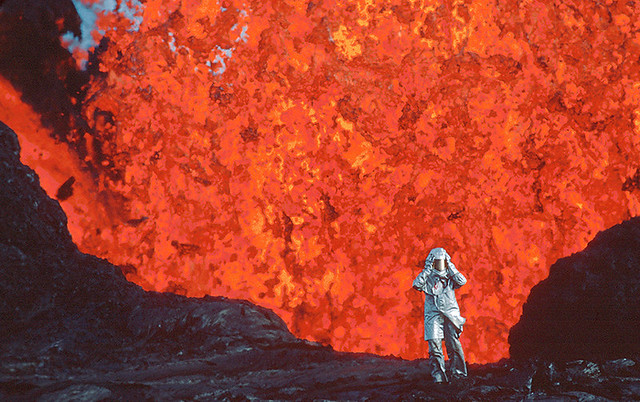
Fire of Love (2022) - Dosa Fire of Love Facing volcanos and their sudden eruptions can cause anyone into a deep existential crisis – is anything in life ever stable? What is human existence compared to the awesome power and magnitude of these cataclysimic natural events?

The first time I’ve seen the footage of mesmeric volcanic eruptions with unnaturally glowing bright red lava, captured by The Kraffts, Katia and Maurice, the famed volcanologist couple, was in Werner Herzog’s Fireball. Using long lenses with a 16mm camera, the Kraffts captured some of the most awe-inspiring, iconic volcanic eruptions ever recorded on film. Through that Herzog’s film, I learned that they lost their lives in 1991 when they were on the path of a deadly pyroclastic flow after the eruption of Mt. Unzen near Nagasaki, Japan.

Filmmaker Sara Dosa (The Seer and the Unseen), sifting through tons of film and TV footage, photos and books the volcanologist couple left behind, crafts a poignant narrative about two people who lived and died together doing what they loved. Fire of Love starts with the last known footage of Katia and Maurice together, at the foot of Mt. Unzen, the day before their death. Then it retraces back to how they met in Alsace region in Strasbourg, France.

Growing up in post-WWII with all the aftermath of destruction, both Katia and Maurice leaned toward nature early on, visiting volcanos of Italy –the Mts. Etna and Stromboli respectively. Both were drawn to volcanos and its awesome power. After their first meeting in 1966 and attending anti-Vietnam War demonstrations of 1968, they decided to dedicate their lives to studying volcanos, “because we were disappointed with humanity. And since a volcano is greater than man, we felt this is what we need. Something beyond human understanding.” Maurice was the wanderer with his film camera, trying to capture everything and Katia, sharing the same passion, trying not to lose sight of him. Not that they had a deathwish, both preferred intense and short life rather than long and monotonous one.

So, they married in 1970 and the Geologist/Geochemist volcanologist couple was formed. They traveled everywhere volcanic eruptions were about to happen through the network of fellow scientists and ran straight to the calderas to study and archive, with Maurice’s trusty Arri SR 16mm camera and Katia’s still cameras. For them, studying volcanos is the science of observation. The closer you get, the more you see. And the images they captured were out of this world. And we see plenty of jaw-dropping images in Fire of Love, all culled from the Krafft archive- hundreds of film rolls. Their ‘freelance’ profession took them to Italy, Congo, Iceland, Indonesia, Washington State, Colombia, Japan… to all continents except Antarctica.

Since most of the footage was shot on film without accompanying sound recorder, Dosa and her team do a fantastic job in sound design – explosions, bubbling lava, lava flows, rocks falling, gaseous rolling clouds. And lyrical stop-motion animation illustrates the couple’s early encounters as well as many cataclysmic eruptions throughout human history.

The film is narrated by filmmaker/artist Miranda July, who came onboard after seeing Dosa’s first cut and deeply moved by what she saw: their passion, curiosity, and sense of awe toward nature- all things she as an artist could relate to. Her voice quivers at times as she is choked with emotions. July’s vulnerable delivery adds greatly to the love story narrative.

Volcanic eruptions were everything for them: as Katia describes as ‘feeling of being nothing’ in front of them. To keep chasing volcanos to the far sides of the world, they had to keep making appearances on TV, write books and give interviews and lectures. They definitely took advantage of being the only volcanologist couple in the world in their matching Jacques Cousteau-style red beanies.

The relatively safe ‘red’ volcanos that gave them otherworldly images of lava spewing and flowing gave way to studying more dangerous and unpredictable ‘grey’ volcanos in their later years, which ultimately killed them.

They knew the danger of these unpredictable, deadly eruptions. It was Nevado del Ruiz eruptions in Colombia in 1985 that killed estimated 25,000 that the Kraffts questioned their purpose in life. And they worked hard to create a warning system for evacuations which they are in place across the world now.

It is hard to find someone to spend our lives with, let alone to find one who shares the same passion. Armed with explosive materials accompanied by lyrical collages, Dosa accentuates the story of two lovers who shared the same passion and lived and died together. Fire of Love is an ultimate love story for the ages, presented in a spectacular manner. See it on big screen. Fire of Love is distributed by NatGeo, opens in theaters in NY and LA and national rollout to follow.

Saturday, May 21, 2022

Queer Space

Terminal Norte (2021) - Martel Screen Shot 2022-05-21 at 8.32.17 AM Screen Shot 2022-05-21 at 7.41.16 AM Screen Shot 2022-05-21 at 8.34.40 AM Screen Shot 2022-05-21 at 8.13.07 AM Lately I've been reading up a lot on 'queer space' - the periperal space where one can create their own utopia and at the same time, giving a middle finger to the heteronomative and highly patriarchal majority. After Zama, Lucrecia Martel, one of the greatest living filmmakers, goes back to Salta, the Nothern Andean region where she hails from, during pandemic induced lockdown, and makes Terminal Norte, a short documentary on copleras/female singers and musicians. Our guide is Julieta Laso, whose gravelly voice makes my spine tingle into the mountainous slopes and introduces many queer, trans artist dabbling in traditional and non-traditional music (Trap and Noise included). In Martel's hands, one loses themselves soon enough, and becomes multitudes of voices across gender, age and time. What a pleasure to witness an artist in her zenith of power creating something so consistent and true to her craft in the time of global crisis, where togetherness, human touch has become the enemy? As Laso sings in her moanful voice with her tiger's stare, I feel that it's only art that can help us through in tough times.

Thursday, April 7, 2022

Love (is) Unclassifiable

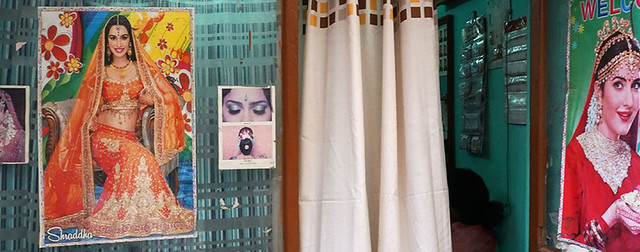
Yeh Freedom Life (2018) - Sen Yeh Freedom Life Priya Sen's film, Yeh Freedom Life, sketches out two queer love stories in bustling Delhi streets. Parveen is a street bendor who has strings of female lovers and currently in love with a married woman who keeps vascillating, going back and forth from her family to Parveen. Sachi works at a local beauty parlor. She fell in love with a woman who works as a security guard, their stories unfold in Ambedkar Nagar, a densely populated neighborhood in Old Delhi, India. It feels very real and intimate. The film starts with a mass 'baby shower' that Indian Gov. initiatives to 'educate' pregnant women and these officials rhetoric are some of the most sexist I've ever heard. They all culminates to 'if you don't follow these common rules, your husband will leave you" variety. The radio show overheard in driving car shot suggests that women are inferior intellectually is also very demeaning to woman. It's as if making the rudimentary case for intelligence equals emotional intelligence. In a later conversations with the subjects and one of the 'aunties' saying queer love that Sachi has for her lover is 'too strong' to be natural, seems to be based on observation soley based more on emotional level, as if it is a bad thing.

Yeh Freedom Life makes an interesting pair as I saw another Indian (actually Sri Lankan) queer documentary last week at Art of the Real, If From Every Tongue It Drips by Sharlene Bamboat. Unlike ordinary subjects in Sen's film, Bamboat's subjects are well-known Tamil feminist activists, as the director records their intimate daily lives together and touches upon the repressed desires. The two films contrasts and accompany each other in terms of its subjects' class differences and human desires and love. Sen's subjects, in discussing their love, are more direct but quite unconcerned with their sexual identities. It's their uncluttered nonnomative view on love, even in highly heteronomative and extremely patriarchal society that is refreshing and hopeful, especially in the context of India decriminalizing homosexuality in 2018.