Showing posts with label India. Show all posts

Monday, May 27, 2024

Bright Lights, Big City

All We Imagine as Light (2024) - Kapadia AWIAL-photo-principale-validee-e1716489610494 Payal Kapadia's soul stirring docudrama, A Night of Knowing Nothing, delicately weaved India's national politics, student protest movement and cinema and its nostalgia in 2021. Her follow up narrative film, All We Imagine as Light proves that she is one of the most exciting new talents emerging in the current international cinema scene.

All We Imagine as Light starts with the documentary style footage of bustling Mumbai, as its citizens start the day in a 'city symphony' style intro paired with voice-overs of actual workers who came to the big city, looking for work: street vendors getting ready for their businesses, people hanging on the back of trucks in a packed traffic, large crowd milling in to the commuter train stations, filling in a crowded train cars, talking, sharing music, taking a nap - it's a cacophony of sight and sound of the city of 22 million souls. With this routine, everyday chaos as a backdrop, we are introduced to Prabha (Kani Kusruti) and Anu (Divya Prabha).

Prabha is a practical, sensible head nurse working in a busy hospital. Her young roommate Anu work at the same hospital as a receptionist. Just like many people, they are transplants from the rural villages who came to look for work in Mumbai. Prabha hasn't seen her husband in years - he left right after their arranged marriage for a factory work in Germany. Anu is a subject of a gossip at work, as she is constantly coming home late, prone to daydream at work and always short on money, that she is secretly in love with Shiaz, a young Muslim man - the relationship that their parents don't approve of.

A mild-mannered doctor takes an interest in Prabha, since he too is a transplant from Kerala region and he can comfortably speak with her in Malayalam, as he still struggles with his Hindi at work. He walks her to the train station and shyly gifts her with his book of poems.

Nights take on a different air in the film as the craziness of the daytime activities slow down and give the city’s inhabitants a slight reprieve. It affords some of the most lyrical scenes in the film - with the rain hitting the window in what seems to be the middle of the region's rainy season, Prabha reads the doctor's poetry with only her phone flashlight while sitting against the window as the train goes by outside her window. After cleaning up the rain leak on the floor one night, Prabha hugs the brand-new red rice cooker that her absent husband supposedly sent (as a farewell gift?) And Anu and her boyfriend frolicking through the night market and sharing a passionate kiss in dimly lit underground parking lot of a mall.

Parvaty (Chhaya Kadam), a hospital cook, is about to get evicted from her home, in which she has been living in for more than twenty years, due to a shiny new development. Prabha tries to help her by contacting a lawyer. But because of Parvaty's lack of papers - her late husband didn't leave any of the paperwork necessary to prove her residency, she has to resort to go back to her rural village in the south.

Fluidly switching from documenting what it's like living in bustling Mumbai to the melodrama of these three women with their emotional and economical insecurities, All We Imagine as Light comments on many social and political issues in India. The early voice-over suggests that at least one of the family members in each household from the country leaves home to go to work in Mumbai. Anu wears burqa to have a secret rendez-vous with Shiaz in his predominantly Muslim neighborhood, which is an indicative of Modi's right wing Hindu government making it harder to reconcile between Hindu and Muslim relationship. Parvaty attends worker's rights meeting at night and Prabha and Parvaty clandestinely throw stones at the billboard advertising near Parvaty's house, that reads, "Class is privilege reserved for privileged." Kapadia's tapestry of sensorial storytelling and sociopolitical commentary of Mumbai is on the level of Jia Zhangke's observations on changing Shanxi province he frequently depicts in his films.

In the third act of the film, Kapadia changes the film's tempo and breaks the physical, social, political confinement of the city life for the women as Prabha and Anu accompany Parvaty to her home in rural India. In a fantasy sequence where Prabha resuscitates a castaway found on the beach, tells the yearning of a woman who was cruelly abandoned, to imagine a better life. Shiaz who followed Anu to the countryside, gets to be acknowledged in public without scrutiny. All We Imagined as Light is a major work of contemporary Indian cinema. Kapadia along with Chaitanya Tamhane (Court, The Disciple) showcase the emergence of new voices that is not by the Bollywood system, depicting underrepresented working-class India from a woman's perspective, in a still heavily patriarchal society.

Thursday, April 7, 2022

Love (is) Unclassifiable

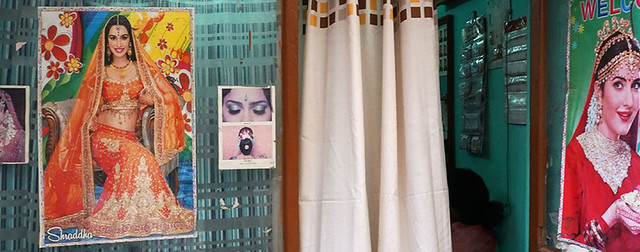
Yeh Freedom Life (2018) - Sen Yeh Freedom Life Priya Sen's film, Yeh Freedom Life, sketches out two queer love stories in bustling Delhi streets. Parveen is a street bendor who has strings of female lovers and currently in love with a married woman who keeps vascillating, going back and forth from her family to Parveen. Sachi works at a local beauty parlor. She fell in love with a woman who works as a security guard, their stories unfold in Ambedkar Nagar, a densely populated neighborhood in Old Delhi, India. It feels very real and intimate. The film starts with a mass 'baby shower' that Indian Gov. initiatives to 'educate' pregnant women and these officials rhetoric are some of the most sexist I've ever heard. They all culminates to 'if you don't follow these common rules, your husband will leave you" variety. The radio show overheard in driving car shot suggests that women are inferior intellectually is also very demeaning to woman. It's as if making the rudimentary case for intelligence equals emotional intelligence. In a later conversations with the subjects and one of the 'aunties' saying queer love that Sachi has for her lover is 'too strong' to be natural, seems to be based on observation soley based more on emotional level, as if it is a bad thing.

Yeh Freedom Life makes an interesting pair as I saw another Indian (actually Sri Lankan) queer documentary last week at Art of the Real, If From Every Tongue It Drips by Sharlene Bamboat. Unlike ordinary subjects in Sen's film, Bamboat's subjects are well-known Tamil feminist activists, as the director records their intimate daily lives together and touches upon the repressed desires. The two films contrasts and accompany each other in terms of its subjects' class differences and human desires and love. Sen's subjects, in discussing their love, are more direct but quite unconcerned with their sexual identities. It's their uncluttered nonnomative view on love, even in highly heteronomative and extremely patriarchal society that is refreshing and hopeful, especially in the context of India decriminalizing homosexuality in 2018.

Thursday, February 10, 2022

Nostalgia for the Present

A Night of Knowing Nothing (2021) - Kapadia Screen Shot 2022-02-03 at 9.59.40 AM Screen Shot 2022-02-03 at 9.26.50 AM Screen Shot 2022-02-03 at 3.18.18 PM Screen Shot 2022-02-03 at 3.06.54 PM Screen Shot 2022-02-03 at 3.10.08 PM Screen Shot 2022-02-03 at 2.58.15 PM Screen Shot 2022-02-03 at 9.20.59 AM Payal Kapadia's debut film, A Night of Knowing Nothing is a tapestry of grainy 16mm, archival and surveillance cam footage, beautifully capturing the spirit of youth and their undying idealism in chaotic, uncertain times we live in.

A woman reading wistful letters written by L, a lovelorn student at The Film and Television Institute of India, narrates the film. Her belongings were found in the dormitory where she stayed as a student. These letters, addressed to her boyfriend who is no longer in school, were written on a notebook and never sent. From that, we gather that her love is not reciprocated because of India's rigid caste system: his parents don't approve of their relationship and have taken him away. Kapadia and her team use her letters as a springboard for an essayistic examination of contemporary India.

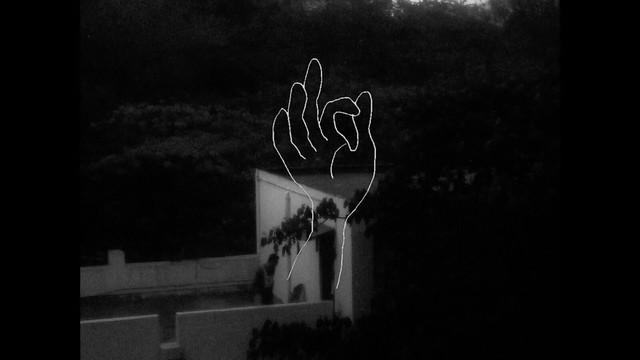
A Night of Knowing Nothing starts and ends with black and white footage of young people dancing. These silent images of undeterminable time period, is joyous, energetic, and emblematic of college life. They are dancing in front of a movie projected on a big screen. Cinema or visual image here is already tied to the past, invoking nostalgia. There are images of young people in their rooms- some laying in bed half naked, some watching Godard's Breathless on a small TV.

There are empty darkened alleys and billowing curtains, sound of rain and birds chirping accompany these images. Then there's a home movie shot in color, of a wedding, which seems like from the 70s. (judging by their clothes)

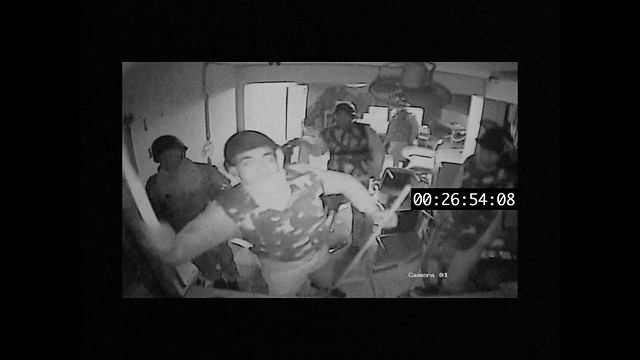
As L writes to her lover about their mutual friends, we get the glimpse of 2015 strike at the FTII, a public college, protesting the appointment of a Hindu Nationalist actor to the chair by the right-wing Modi Government. Their strike spreads to college campuses across India, protesting not only the government's assault on public education system but also the violent crackdown of the minority Muslim population. The footage of protests and sloganeering is cheerful at times. But the baton wielding police in the streets and the surveillance footage of masked right-wing militia thugs breaking down the barricaded doors of a university building full of students and corralling them and beating them mercilessly are truly terrifying.

These issues are explained with the voices of newscasters and leaders of the demonstrators with or without visuals, always shot on grainy film. The mood and energy is same as that of May 1968, when universities across Europe exploded in protest against the governments and its policies and war in Vietnam. And just like back then, students question if their movement could be truly successful without the support of the country's working class. This is especially true with a country like India where the deep-rooted social tradition of the caste system make things a lot more complex and difficult. Justice for Dalit (the lowest in the caste system) become the theme of the protests. And L's love affair with a boy from another caste comes up again, tying the narrative threads.

As the film plays out, L in her later letters, isn't sure if she was writing to her unresponsive lover or the ideal version of him, whom she can confide in her thoughts and feelings. Memories fade, but nostalgia remains. From Godard and May 68', Mythical Hindu God films, to Chris Marker, A Night of Knowing Nothing weaves intoxicating visual, textural contemplation of our relationship with cinema as an unintentional but nevertheless undeniably nostalgic medium, even if the image is from only few years ago. It ends in a hopeful tone. As one leader of the protesters addresses the crowds that it doesn't matter what came before them or what's handed down to them and no matter what today's circumstances are, the moment right now is theirs for them to seize it. Keep on dancing.

Wednesday, January 19, 2022

Leprosy of the Heart

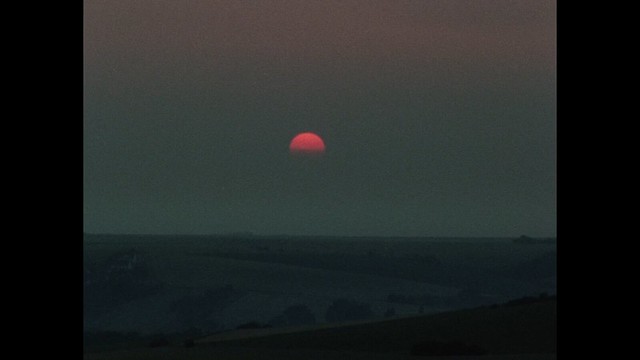
India Song (1975) - Duras Screen Shot 2022-01-17 at 9.40.12 AM Screen Shot 2022-01-17 at 10.02.41 AM Screen Shot 2022-01-17 at 11.49.45 AM Screen Shot 2022-01-17 at 10.24.40 AM Screen Shot 2022-01-17 at 11.13.45 AM India Song is a slow, melancholic jazz tune that plays out over and over again throughout the film. And it fits into the narrative of colonialism in Marguerite Duras's film. With the setting sun that opens the film, India Song tells the end of the Western colonialism. She equates that with love and how insatiable it is.

The film starts with a narration, talking about a mad woman who came all the way from Indochina, singing an old tune. No one knows how she got to India. The madwoman's voice and singing is also heard, throughout the film.

Anne-Marie (Delphine Seyrig), a wife of an absent French diplomat, resides in a grand, decaying, ornately furnished mansion with wordless turbaned servants. We are introduced to her many lovers, lounging around the corridors, standing still, looking forlornly and slow dance with our red haired aging beauty. There's a stink of decay in the air, as if these people are ghosts inhibiting their old playground, not knowing they are dead, forever trapped in time. The film's many voice-overs say as much, that she later died on an island, out of lethargy, boredom. Seyrig exudes that unachievable mirage, the symbol of western civilization in its last days.

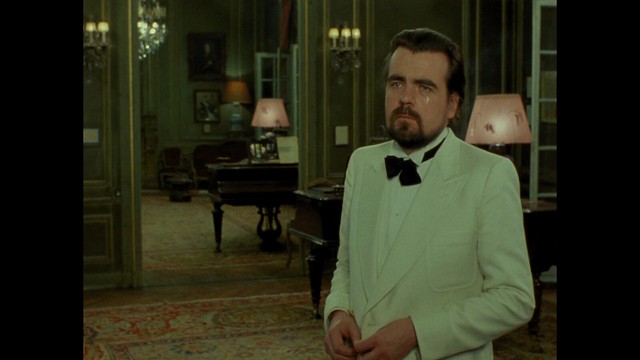
A vice-consul of Lahore (Michael Lonsdale), nicknamed the last virgin of Lahore, is madly in love with Anne-Marie, but unlike all her other suitors, she never reciprocates and never gives him a time of day. He cries, watching her dance with her many lovers, standing still in the corner of the room. He later warns her that he will make a scene unless she flees with him to the islands after a brief slow dance to India Song with her. He howls in pain, begging her to leave with him, to give him a chance to be with her. His cries are heard all night long after he gets dragged out of the frame.

Meticulously staged and filmed with slow tracking shots and intentionally wooden performances, India Song strongly resembles fellow nouveau roman scribe Alain Robbe-Grillet's Last Year at Marienbad, directed by Alain Resnais. Highlighting decadence of the Western colonizers with their completely out of place sense of entitlement and how it rots the human hearts, India Song is a cinematic achievement that encompasses all of Duras preoccupation- colonialism, war, love, memories, from a woman's point of view, equally as man's.

Sunday, September 27, 2020

Life's Little Disappointments

 The Disciple (2020) - Tamhane

the-disciple
Chaitanya Tamhane's follow up to his great debut, Court, is The Disciple, about an artist struggling with a life long self-doubt. It might be a more personal subject, but it's even more nuanced observation of life than his previous film. The Disciple shows Tamhane is wise far beyond his age portraying subjects such as ambition, devotion and pride as well as realizing life's crushing disappointments as we age.

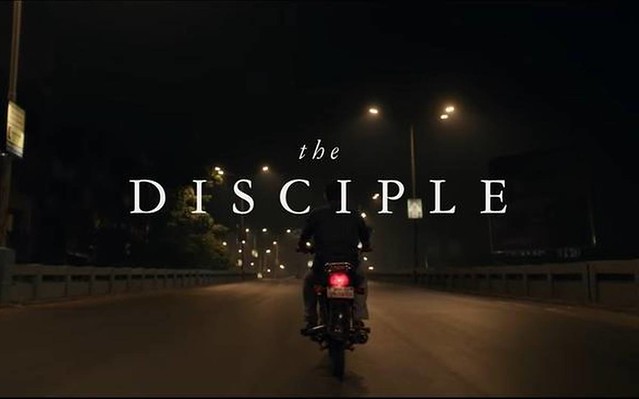
Khayal, I am told, is a classical Indian singing style that puts emphasis on improvisation and micro-tonal changes. For devotees of this art, mastering it is an eternal quest. Young Sharad (Aditya Modak), practicing this Hindustani classical music is a vocation he was sort of born into - his father was a devotee of this music tradition even though he ultimately failed as a singer. Studying under his guru/mentor (Arun Dravid) and listening to lectures, given by legendary, reclusive singer Maai, who was guru to both his father (who secretly recorded her lectures) and his mentor. Maai was almost a yogi figure, preaching purity and discipline in body and mind to truly devote to the music. She never allowed recordings of her music nor had her images taped or photographed. Tamhane provides some great night tracking shot of Mumbai, of Sharad riding his motorbike in slow motion, listening to Maai's lectures on tape. Emphasizing the lonely road the young man has chosen. The year is 2006.

Sharad practices and practices while dealing with all the distractions of life - constant nagging of his grandmother, pressure to get a job, loneliness, lust, etc. He is not winning any awards at singing competitions, at least not yet.

Sharad now is a fat middle aged man with a mustache, still trying to get his music career off the ground. He teaches music at a school, still takes care of his now ailing guru, while seeing others, more talented than him passing him by, career-wise. One of his pupil's mother comes to the school asking him for his advice: should her son join a fusion band in his college? He tells them not to come back to school if the young man joins the band. Some TV singing competition shows a young woman's transformation from a homely classical singer to a Bollywood style pop sensation. Is purity of the music and personal pride that important? Even Maai's words get warped in his mind. She directly addresses to him that his guru loves him so he doesn't have hearts to tell him that he is not talented, just like his father.

In one flashback scene, meeting with a rare music collector who seems to have dirt on everybody crushes Sharad's idols, including his guru and even Maai, whom he recalls as a self-righteous, pretentious fraud.

The Disciple deals with any artist's nightmare - total devotion is hard to achieve while living in the real world. In the mean time, self-doubt eats you away slowly over the years. Modak gives a beautiful, heart breaking performance, transforming himself from a bright eyed young man to a defeated middle-aged schlub . Both Modak and Dravid are actual singers and the music in this film is truly glorious. Tamhane again, proves himself to be one of the brightest and most talented filmmakers working today.

Friday, March 8, 2019

Interview: Mia Hansen-Løve on Her India Set, Daring New Film Maya

mia_hansen-love
Mia Hansen-Løve is one of my very favorite directors working today. Her infinitely wise films about time passing, beautiful characterization of people who inhabits her films and her willingness to always expand her cinematic universe at whatever the cost, leave me in awe. Her new film Maya isn't an exception to this rule. Structurally daring, logistically ambitious but always heartfelt, the filmmaker is reaching a new height. I got a chance to talk to her while she was in town for Rendez-Vous with French Cinema. Stuck in traffic and suffering from a cold, I was about ten minutes late for our appointment but she was so accomodating and kind to me. I thank her from the bottom of my heart.

So here is how our conversation went:

Throughout your filmography you try to do something different and something bigger, grander in scale each time. I like that about you.

Oh thanks for saying that. Not many people notices that.

Gabriel, one of the main characters in MAYA, played by Roman Kolinka, is a war journalist. Is he based on anybody?

Not really. I got some of… my inspiration from a former hostage but it stops when the trip to India starts. The only thing you could say is his story was inspired by true events and it has to do with captivity but film doesn’t deal so much with that. I mean it’s just the starting point of the film. But this trip to India to me is mostly an inner journey. And the film is really about invisible transformation... of not anyone in particular, maybe only pertains to me, in a more indirect way. But the character is not certainly inspired by someone in particular.

Speaking of something that is more personal and has more direct relationship with you, does India and especially Goa, have special connection to you?

It does. I’ve been traveling to India for the last ten years or so. I’ve been there almost every year. I’ve written one of my films there. But I’ve been attracted to india since I was in my 20s. Of course it had to do with me wanting to move on and do something different and so on. But I actually needed it, both as a person and as and artist. And at some point it made sense to me to try to confront my sensibility to India. It wasn’t like I wanted to make a film about or taking place in India then make up the story. This story for the film came to my mind first.

Right.

The story and characters came first and I thought it would make sense at this point, especially after Things to Come which was a such a ‘home movie’ in a way. (laughs) In another way, but you know what I mean. I wanted to go to a very different place and take that risk. I think risk somehow always excites me too. It was a way to get close to India and to go further in my relationship to India and not stay on the surface of it. Because you go there as a tourist, even if you go many times, it’s hard to go beyond the surface, unless you live there and….

But I thought to myself what’s the best way to know india better? Maybe to shoot a film there. That’s a great way to experience the place - to know places and people and experience things that I would never get to do otherwise. It’s challenging but also very exciting. I think it’s a very good way to go deeper into different culture and a country.

Did it feel like that when you were shooting part of EDEN, in New York?

I think all of my films somehow have been ways to get deeper into certain world. There are never documentary because I am really into fiction but somehow there was always this dimension in my films using fiction and making films as a way to further my experience and my knowledge. I think that’s what films should do anyway.

Right. Definitely. I have to tell you that EDEN is one of my favorite films of all time. It’s a masterpiece and I really really love that film.

Oh thank you. I will tell my brother (Sven, whose DJ career was the basis for Eden) will be happy to hear that.

How was shooting in India?

I think it was both amazing, extremely how do you say…joyful and also very tough. I mean it was actually amazing to be so far away to work with Indian people, to work with an Indian actress - just to lose myself and Immerse into such a different world. I got so much from it and I feel I am so much stronger since I made that film.

Gotcha.

For me there is before and after Maya. So the experience will stay forever with me. But on the other hand it was tough. When I started shooting I was already exhausted. both physically and mentally. I had tons of health issues at that time.

Oh sorry to hear that.


Nothing really bad but you know when you have that and when you are about to shoot a movie in India, it's not the best moment to have these kind of issues. Mentally also because the film was so difficult to finance. I felt huge responsibility toward my producers. I felt I had to not to do any overtime…, I'm always pushing for time. I felt I had great weight on my shoulders because all the risk they had taken to make that film. Maybe that was the most difficult thing on that shoot - this guilty feeling on some level. (laughs) But months after shooting, looking back what stays the strongest is a what unique experience it was.

It’s a unique movie too in a lot of aspects.

Oh thank you.

How did you find this beautiful actress, Aarshi Banerjee, who played Maya?

It took me some time to find Aarshi. We spent months looking for girls mostly in Mumbai but also around Mumbai, Maharashtra, but also in Goa and even in London, because we had some connections there, so we were looking though the Indian community- I was looking for a girl who speaks English. So it was casing but also in Facebook and social media. In many videos I got, I thought the girls were too much like actresses and too elegant. And I received this video of Aarshi where she filmed herself in a living room with a dog and she was so raw… I mean on the one hand she is extremely beautiful, in my head the character had to be, but on top of that she was so direct and so authentic. She moved me a lot with her maturity and depth and authority but at the same time she is also very much rooted…how do you say in…

Grounded.


Grounded, you know? she is really into her Indian reality. She’s not like ideal or romantic figure. she’s a real girl. And because my character Gabriel is a such a ghost when he arrives in India, I felt it was important that she shouldn’t be a ghost. She would have to be very real. I love the fact that she has a very timeless beauty but she also has a very contemporary quality to her. I think I used that a lot in her character.

That makes a lot of sense because I was wondering about the title because it could well have been Gabriel. Because the film starts with him and it’s his journey. But talking to you it makes sense that it’s called MAYA.

I think it is a poetic choice. The film doesn’t have to… the film is not a summery or… The title of the film is Maya and it says something. She brings something essential to the film and yes the main character is definitely Gabriel and you could say she just passes through the film, but she brings him back to life somehow. She bring him grace in his life. I thought it was beautiful to call the film Maya - the beauty and the fragility and youth that she symbolizes. She is the direction. She is the starting point. He might be the main character but she’s what the film looks at.

Is that also about that special person when we think back our lives there was this one person who changed the course of my existence somehow, that Gabriel can be that person for Maya by meeting her?

Totally. Maybe that was the starting point of the film. Also when I look back my own life I think of some persons I have met when I was a teenager and maybe they made me suffer at some point but they meant so much too and they helped me grow up and become aware of who I was and… So I am happy to hear that you understood that because that’s what the film is about. It’s a love story in a way but It’s more than a love story. The film is less conventional than that. Of course there’s love involved but even more than that, it’s about just what you said. Like how at some point two people who are very different who can’t really live together or make a couple… why they had to meet, why, there is something crucial that has a deep impact on your life coming out of this encounter, even though they go separate ways at the end.

That’s how I took it when I watched it. Why I admire you as an artist is that your film’s scale is getting bigger even though your theme - time passing and meeting someone important in your life. You always try something that is more difficult to achieve. You once told me that you were having hard time financing these films because they are grander in scale.

It’s the guilt I feel when I make these films because they are not financially viable. I obviously don’t want them to be expensive but the fact is I fight for shooting on 35mm film which is personally very important to me. And I struggle to keep a certain time, to have possibility of minimum of time because I have so many locations, I keep running from one place to another. I mean they are still cheap compared to 90 percent of films that are being made in the world but economically viable while still being free creatively like some other directors I know, I’m not smart on that side of things yet. I know I should be because it is vital to keep doing what I love doing.

No I think with all your films you show the audience that you really suffer for your art. I am grateful for it. I am grateful for watching these.

Thank you so much. Because it makes all worth it when people tell me this. It give me courage and confidence and we actually need it.

Keep doing it by all means. I don’t want to downplay the importance of this film but I’d love to see a sequel to this film. The way it ended, I want to see more of Maya since she is just starting her life.

I don’t know. it is hard to predict for myself what I’m going to do next but I enjoyed so much working with Aarshi and Roman that one thing for sure is I’d very much to work with them again at some point. I still feel frustrated about not getting enough from them.

Goa, the way you portray it, it’s going through a radical transformation with all the new constructions and all that. Is it actually happening? That the gentrification of Goa is real?

It’s maybe one thing that I’m the most proud of of the film. How faithful it is to today’s Goa. It’s a fiction and definitely not a documentary. But I’d like to frame it in such a way in fiction that I reflect the reality and capture the moment in time. I’ve seen Goa change a lot within the last 15 years and I’m not sure if I would go back there again anymore now because of these changes. Goa is certainly not a paradise but more like paradise lost. And that’s what I tried to show because there are still beauty and charms in many ways but you have so much mixed feelings when you are there because I think there are still a lot of poetry there in its heterogeneity in cultures and people all mixed up and magical because it’s still india but it’s ruined by tourism and corruption. It’s spoiling away literally both physically with pollution and mentally. I think in a way the film was my goodbye letter to Goa.

Tuesday, August 8, 2017

Cog in the Machine

Machines (2016) - Jain
machines 3
Machines1
Machines
machines4
Machines2
In my humble opinion, digital filmmaking, with its extremely sharp image, isn't really suited for general narrative filmmaking. I do not need to see every pore on Charlize Theron or Scarlet Johansson's face. I do not need to see every piece of debris when an alien space craft explodes.

But the high resolution digital technology renders wonderfully in documentary filmmaking, capturing nitty-gritty details of everyday life that was not possible with shooting on a film stock. In comparison and in context, I can think of Forest of Bliss, a lyrical documentary depicting life and rituals in Benares, India, directed by much-revered documentarian Robert Gardner.

Even though I have a film background and am a big fan of anything shot on film (just the sight of 16mm shot, grainy images triggers Pavlov's effect on me), seeing that deteriorating film reel projected on screen -- scratched, high contrast, with no details in the shadows -- I can only speculate what Gardner, Malle, Van der Keuken and a lot of other great documentarians could've captured with light(er) weight, larger censor cameras that can shoot 6K to 8K images for hours on end without stopping.

Machines, a film by Rahul Jain, answers that possibility. Shot entirely in and around a textile factory in the Guajarat region of India, the film doesn't only depict the everyday working conditions of the hundreds of manual laborers, but also captures it in a startlingly clear, beautiful imagery.

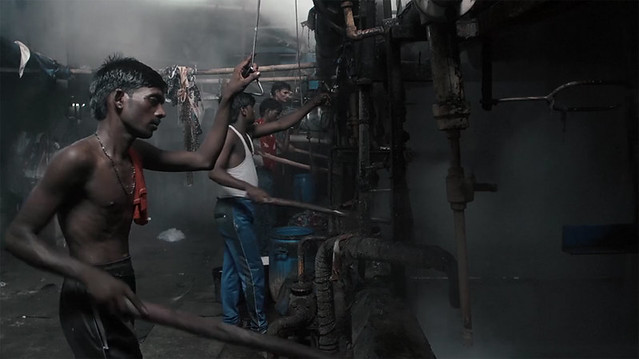
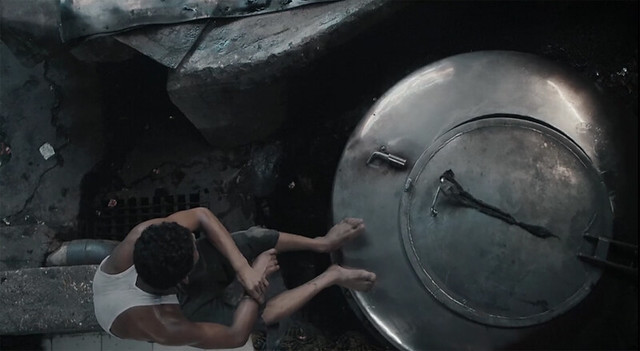
Using only medium to wide lenses, Jain invites us into the giant, labyrinthine factory where shirtless male workers go on about their work day. Even though the process is pretty heavily machinized on the floor, each step of the process needs human hands and eyes: moving the heavy loads of fabric, dragging paint drums from one place to another, the actual silk screening process, mixing paints, guarding fabrics through the machines, keeping the furnaces going, maintaining the axles of the machines. Their shifts in the factory require long, grueling, hard work.

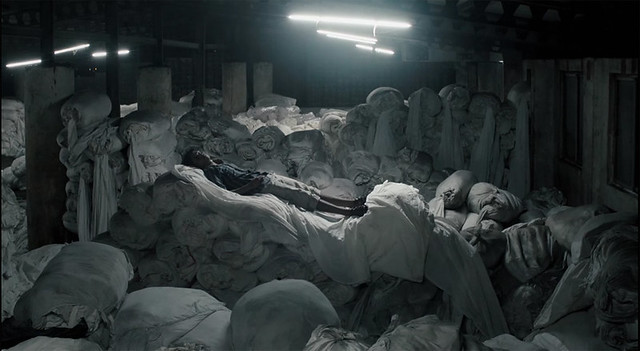
Perfectly framed, these static shots of the interiors of the greasy, grimy factory, lit only with cold, dim fluorescent lights, is strangely, hauntingly beautiful. Colors and texture -- steam, metal, glistening human skin, the brightness of the fabric they produce -- all contrast/accompany each other in mind-boggling detail on the screen.

Is Jain drawing a correlation between heavy machinery and human labor, as demonstrated in cinema history as early as Fritz Lang's Metropolis and Charles Chaplin's Modern Times? Machines and their beautiful imagery can be easily used for poverty porn, but Jain takes a different approach.

Without a swooping score to manipulate audience's emotions, he silently observes the workers and they in turn talk about their working conditions. The filmmaker rightfully excuses himself from being seen or heard, leaving his silent questions to be answered by workers in a breathtaking 360 degree shot just outside the factory, surrounded by workers.

They came to Guajarat because there is work. Their travel cost put them into debt. Their 12 hour shift pays 300 rupees (about 5 US dollars). They have a short break, then go back for another 12 hour shift. The only thing they can afford is chewing tobacco which will keep them awake.

They talk about the futility of organizing; who has time for union activities? In debt and exhaustion, they literally can't afford to go to a union meeting. It's a vicious cycle. Jain interviews the management also. A boss gives a speech that's right out of some early 20th century capitalist handbook: "If the workers get paid more than what they get now, they get lazy. They need to be hungry to be a good worker."

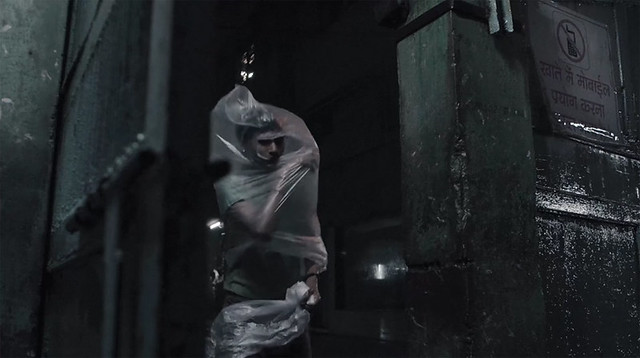
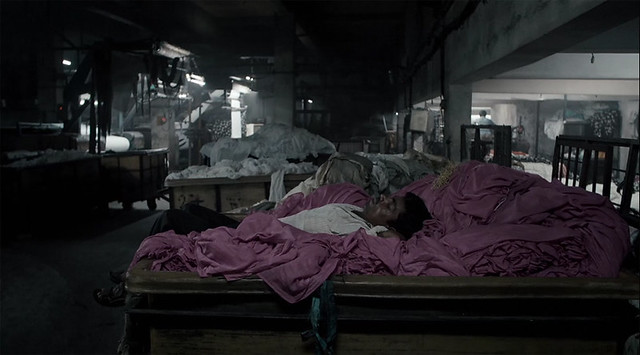
There is an imminent danger we feel when a child worker nods off while on the job, then there's a tranquility in the shots of workers taking a nap during their break wherever they can. It's all beautifully captured. Even their makeshift raincoats, a big plastic bag with the hole for their face under a torrential downpour, are beautiful.

Bosses vs workers is an age old subject. But Machines is a visually sumptuous observation piece that transcends being a mere social commentary.

Machines will have a one-week engagement, August 9 – 15, at Film Forum.

Saturday, October 24, 2015

Rhythmic Passion

Junun (2015) - Anderson
 photo 251ac4df-986f-4097-97d4-e0d77c10c2fc_zps02la1bhy.png
 photo f0ec9158-ba7a-4013-9757-3b099e84f4e7_zpso28yfgul.png
 photo ea0a14e4-c5f3-443c-833e-23a3fe42f53f_zpsbtxjy65k.png
 photo 4aee782a-148f-4ded-8511-eb9529accd87_zpsgvmz3m0m.png
 photo 1faa38dd-d559-431a-9408-90a83b81e76d_zpsopfcep9r.png
PT Anderson documents the recording session of Israeli musician Shye Ben Tzur and Radiohead's Jonny Greenwood, set in ancient Mehrangarh Fort in Rajasthan, India. There is no title card or introduction for musicians involved or about the project. It's context free and all music. Anderson doesn't interrupt anything and just let it play. There are glimpses of beauty of Rajasthan through drone shot footage and some handheld outdoor shots. But it's all music and it's glorious. Interesting that Anderson decided to put it out through Mubi streaming right after its debut at NYFF this year. I guess these streaming platforms could be a playground for seasoned filmmakers' one-off experimental endeavors.

Monday, July 13, 2015

Sobering Look at India's Judicial System

*Originally posted on 3/25/15 for New Directors/New Films coverage

Court (2014) - Tamhane
 photo 7f82bd88-acca-4fb5-80fa-ecacd8a3558e_zpsdc0az9ek.jpg
Winner of the two prizes at Venice Film Festival 2014, Chaitanya Tamhane's Court lends an earnest look at India's judicial system. The film is a sobering, eye opening experience.

It starts with an arrest of an old folk singer and tutor of children, Narayan Kamble (Vira Sathida) at an outdoor stage in a Mumbai slum, as he sings an incendiary, but deliciously catchy song about government corruption and unjust system. In the court, he is accused of abetting the suicide of a sewer worker who died in a manhole. It was one of his songs that allegedly drove the worker to his death. He was working the same job for 5 years but he was found dead without any protective gear inside the manhole, so says the prosecution.

The charges are obviously absurd and unfounded, but as we soon learn, everything needs to go through the judicial proceedings. Narayan seems to be used to this: he's been a radical activist in the slums since the 70s. When he is asked if he wrote and performed a song, "Manhole workers should suffocate and die," he wryly responds, "I haven't written that one yet, but now I might." 

It's his human rights activist attorney Vinay Vora (Vivek Gomber, who also serves as a producer) who is more affected by the arrest because without bail, the possibly lengthy trial and being in the judicial custody will undoubtedly worsen the health of 65 year old defender. The presiding judge, following the procedure by the rules, just orders that.

John Grisham Courtroom thriller it's not, Court has no star witnesses or heart stopping twists and turns. The crowded courtroom is shown in static shots where other cases are waiting one after another. Narayan's case is one of many of that day in front of the same judge. With the rigid caste system, the film paints much more complicated picture of the society than a simple white-trash-been-done-wrong-by-the-big-corporation scenario. Tamhane avoids the film becoming a melodramatic hero/villain story. We don't see Narayan in jail at all. Instead, the film follows the inner lives of Vinay the defense attorney, the public prosecutor (wonderfully played by Geetanjali Kulkani) and the judge (Pradeep Joshi) in succession.

Vinay is the face of India's global elite society: from a wealthy household, he drives an expensive car, listens to jazz and hangs out with his suave friends in chic bars where a musician sings English and Portuguese songs on stage. Still living at home, he is seen throwing tantrums at his nagging parents. Yet he is a compassionate one, trying to do right by his defendant.

We see the prosecutor taking the public transportation, talking to her friends about the latest fashion, picking up her son from a daycare, going home and cooking food for her diabetic husband. Her family time is in front of the small TV set. For entertainment, her family goes to see a comedy play that is extremely jingoistic. For the judge, he goes to a water park with his large extended family for the summer vacation.

For our public prosecutor and judge from the middle class backgrounds, even though they are socially close to the defendants they are persecuting, they process the cases by the book, lacking any kind of sympathy or considerations. The film raises questions about the nature of our society where only wealthy can afford to be compassionate and the within-the box-mentality of the judicial system.

After finding out the prosecution's witness is likely bought by the police and wife of a dead worker testifies that the dead man never wore any protective gear while cleaning the sewer and drank heavily before the job to ease the smell (these facts are revelatory for everyone involved), the case against Narayan is dismissed and the bail's granted. Vinay ends up paying for the bail.

The most powerful and telling scene plays out in a car ride. After testifying, the dead man's wife and her family is chaperoned by Vinay in his white sedan. He instructs her to fasten her seat belt which she doesn't seem to know how to. It's her bewildered expression as the car passes through the streets of Mumbai that tells thousand words. She fled out of fear to her village when her husband died and doing so she lost her job in the city. She tells Vinay that she would take any kind of job so if he knew any, please send them her way. She doesn't want his monetary help, she just wants a job. He drops them off in a slum populated by a murder of crows.

The next scene is Narayan getting picked up by the police again from a printing press factory while supervising his book, A History of Humiliation, getting printed. This time, the charge is using his tutoring place as a breeding ground for terrorist elements who are obviously into seditious activities. The police's persecution of the untouchables continue, packing up the courtrooms, making the procedure an unending cycle.

When Vinay protests that summer recess will put the defendant in judicial custody for a long time, the same judge replies, "We are closed, but you can always take it up to High Court."

All the performances are stellar, considering many of them are non-actors. In the heart of it all is Vira Sathida. A real life activist, his rhythmic, infectious, biting songs come to life whenever he performs. I would love to see him perform for hours.

Tamhane's understated, layered script highlights the lack of understanding among different social strata in a complex society which is still deeply bound in tradition in the 21st century. As the film ends with the judge falling asleep on his chair on his vacation, the audience is left to grapple with the death of a sewer worker who's already forgotten by everyone. It is also chilling to think that there isn't going to be any kind of investigation on the condition of these lowly workers. Biting and devastating, Court is one the best films I've seen so far this year.

Court opens July 15 at Film Forum in NY. Please visit their website for tickets and times.

Sunday, December 2, 2012

Labyrinthine Tales

Arabian Nights (1974) - Pasolini
"Truth lies not in one dream but many". - Arabian Nights
arabian nights6
arabian nights5arabian nights4
arabian nights3
arabian nights2
arabian nights1
arabian nights
arabian nights7
Arabian Nights starts with a story of a confident, beautiful slave girl choosing her next owner, a young man she deems the handsomest. It's a story within a story within a story within.... The film is filled with plenty of nudity, frank sexual scenes involving both sexes, decapitation and dismemberment. It's like watching more down to earth and raunchier Fellini. There is no Sinbad or Ali Baba or Genie, but other stories Pasolini chooses for the film are just as colorful and fascinating. Men are often foolish and women often exude wisdom. Beauty and youth are worshipped. World weary wisdom only comes after hardships. Lovers perish, lovers reunite. It jumps from many majestic African settings to that of Middle East and India and back and forth. Ennio Morricone's score and Dante Ferretti's production design help bring out these fantastic tales too. Over all, Arabian Nights plays out like a film totally unencumbered by Western influence (eventhough some Italian actors playing the parts are a little distracting). A fascinating, strangely moving film.

Friday, October 29, 2010

Kashmir

Harud/Autumn (2010) - Bashir
Photobucket
Kashmir, a hotbed of India-Pakistan territory dispute is the subject of Harud (Autumn). A young man, Rafiq (Shahnawaz Bhat), is seen trying to cross the border over to Pakistan only to be captured and returned to his home, to his parents. The village is under watchful eyes of heavily armed occupying Indian Soldiers. Rafiq's brother is one of the thousands of young men who have gone missing since the military insurgence. His mother is still hopeful that her older son will turn up some day and attends rallies by APDP (Association of Parents of Disappeared Persons). His father, a traffic cop, having seen a lot of violence, is deteriorating fast due to post-traumatic stress disorder. Rafiq sleepwalks through the day with his friends who are dreaming about escaping from Kashmir. The jobs are scarce for young people and the news of cell phones arriving in town is quite possibly the most exciting thing they ever heard in quite some time.

Harud, directed by a Kashmir born actor turned director Aamir Bashir, is a quiet, understated drama that acutely presents what living under siege is like. Absence of soundtrack and sparse dialog adds to the gloomy, suffocating tone of the film. It's Shahnawaz Bhat's expressionless face that speaks volumes. There is no life left in that blank stare. We see a glimpse of emotion stirring up in Rafiq when he finds his brother's still camera. He has to bear witness to what's happening in Kashmir through the lens. Bashir meticulously builds up to the film's climax which coincides with Eid (a three-day festival marking the end of Ramadan) where a lamb needs to be sacrificed.

Subtlety is both the film's strengths and weaknesses: Harud never lets up its depressive mood and Bashir keeps it from falling into sappy stereotypical situations. With its unavoidable but artfully done ending, the film is a bit underwhelming. Given the heady subject matter, a little harder, grittier filmmaking would've been more suitable to make a bigger impact.

Harud plays on November 1st (7:30PM) at SVA Theater as a part of 2010 SAIFF.

Review at twitch

Tuesday, October 26, 2010

Virtual Reality

The Image Threads (2010) - Vijay
Photobucket
What better country to make a film about the internet age than India, the largest IT labor exporting country? This serene, visual contemplation on the nature of the virtual world and finding one's identity in it starts with an ironic quote: "I had a dream about reality. It was such a relief to wake up." by a Polish aphorist Stanislaw J. Lec, which sets the tone of The Image Threads.

An IT professor named Hari, 'pimping (in his own words)' the information technology laborers to the US and Europe, narrates most of the film in philosophical monologue. He sometimes engages in conversations online with a virtual persona who might be either a sultry female model or a man in a mini-skirt or both. Other times he recalls his black magic priest grandfather.

At one point, parallels are drawn between internet virus and the Plague by a girl seductively treading around him, singing the nursery rhyme, Ring Around the Rosie. But the film's languid pace and beauty betrays the ominous subject. Shot in exotic Kerala locale, the film is nothing short of stunning- water stained walls, rusty water pipes, vegetation infused houses, ancient temples, lush jungles, dark caves, bearded yogis, beautiful girls in colorful costumes, sleek gizmos, wires, lights and wikipedia, all vying for your attention. Every frame is work of art. Director Vipin Vijay and his cinematographer Shehnard Jalal often distinguish, then blur the boundaries between the past and present, technology and nature, reality and fantasy, tangible and intangible.

Devoid of any visible narrative, The Image Thread is unlike any film I've ever seen. It is more like a visual essay than a film. To enjoy it, you have to give in to its luscious visuals to wash over you. Calming and hypnotic, it's literally the best films to meditate on.

The Image Threads plays on October 28th (7:30PM) at SVA Theater as a part of 2010 South Asian International Film Festival here in NY.

Link to SAIFF
Review at twitch