Showing posts with label Africa. Show all posts

Friday, October 3, 2025

Commercial Colonialism

The Fence (2025) - Denis The Fence Taking place in one night, Claire Denis's new film The Fence charts both familiar and new territories for the 77-year old master filmmaker. Set in a fenced and heavily guarded industrial factory in an unnamed Western African country, The Fence once again invokes Denis's continued interests in post-colonial Africa (due to her upbringing in Cameroon) then and now.

Matt Dillon plays Horn, a grizzled foreman of the factory, who is in charge of workers. Except for his young lieutenant Carl (Tom Blyth), all workers and guards in the compound are black. Earlier in the day, a black worker died in an accident. And the victim's brother Alboury (Isaach De Bankolé) appears outside the fence, to claim his brother's body. But Horn has a lot on his plate: it's the eve of the handover, a Chinese company is taking over the ownership in coming days, and his newly wedded young wife Leonie (Mia McKenna-Bruce) is soon arriving from Britain. He tries to wave off the grieving brother by offering money, also utters thinly veiled threats of violence, but Alboury won't budge from the spot until he gets the body of his brother back.

Through several tension-filled exchanges between Horn and Alboury, we gather that Horn is deliberately delaying the release of the body, that the death wasn't really an accident and hot-headed Carl was directly responsible for the death. It becomes pretty clear that Horn is not only covering for his company, but also protecting Carl, that there is something more than a boss-worker relationship between them.

To make matters worse. Leonie arrives in her high heels with big luggages. At first naive and innocent, Leonie catches on quickly with the tension filled surroundings. Something is not right: it's not only no air conditioning and a shared bathroom, but the fenced off compound doesn't feel safe, despite her husband's repeated assurance.

From her debut film Chocolat, Beau Travail to White Material, Denis examined the colonization and its aftermath of the African continent by white Europeans. Entitlement, guilt, violence and eroticism were all there. Then she made films depicting the African diaspora experience in No Fear, No Die, I can't Sleep and 35 Shots of Rum with her trademark grace and sensuality. With The Fence, (shot by veteran French cinematographer Eric Gautier, their third collaboration after Both Sides of the Blade and Stars at Noon), the political message here is much more blunt. In the beginning of the film, there's a surreal sequence of a vicious dog biting the flesh off of a human with his brain exposed. The film is based on Bernard-Marie Koltès's play Black Battles with Dogs. Bankolé addresses the audience directly- breaking the fourth wall, “Every White man’s dream.”

Matt Dillon who became an European cinema darling recently, and here working with Denis for the first time. He makes a perfect white American company man. Tom Blyth is great as a volatile young man, so is McKenna-Bruce as a quick witted gold digger thrown into the tense situation that she has no business to be part of. But it’s Denis’s frequent collaborator De Bankolé’s towering presence that makes the mark as the grieving brother of the deceased, who knows that the death wasn’t an accident. His weathered face and dignified stare speaks volumes alone.

The rich minerals needed for anywhere from smart phones and computers to nuclear weapons attract global conglomerates. This time, the African continent in the 21st century is under commercial colonialism. Appeasing the local population is not the company policy.

Main actors engaging in long dialog as if it is a stage play, the dialog in The Fence seems a little stilted and on the nose. But it makes the point across more clearly. It’s a film that is more direct in messaging while retaining the sensuality and lyricism Denis is known for.

Wednesday, May 24, 2023

Kaleidoscopic Picture of Africa Here and Now

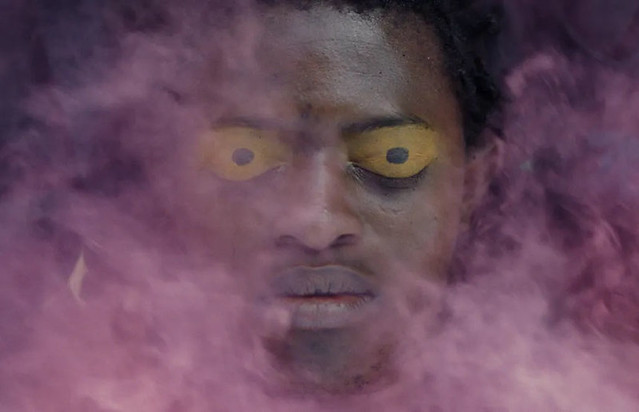
Omen (2023) - Baloji Omen Omen, a new film by Belgian rapper, Baloji, presents a compendium of pan-African experience told in a vibrant palette. It addresses variety of different issues in modern day Africa: African diaspora, colonialism, youth gang, sexuality, tradition, progress, among other things. You won’t see any other films this unique and different, this year.

The film starts with Koffi (Marc Zinga), cutting his sizable afro off as he prepares to travel to his home country with his pregnant Belgian wife, Alice. They are expecting twins. He is seen practicing his Swahili. It will be a tense trip for him because he hadn’t been back home for many years and now must present their biracial marriage to his family and get their blessings. Also, they need to give $5,000 dowry to his parents as it is a custom.

It is a total chaos when they get to the unnamed African city (the film is shot in bustling Kinshasa, in part). His very busy sister Tshala (Eliane Umuhire of Neptune Frost) doesn’t pick them up at the airport and the young couple must navigate the crowded city in their rental car. They first drive out to the coal mine where Koffi’s father works but it turns out that it’s his day off. It becomes a running joke that Koffi’s father is never around every time he wants to see him.

No one, in their extended family, including his stern mother, Mujila, seems to be happy to see them. Things get a lot worse than they anticipated at the family luncheon, when Koffi accidentally nosebleeds (due to stress) on one of his sisters’ new baby. Born with a large purple mark on his face, Koffi is known to be a sorcerer from his mother’s side of the family. The religious elders, practicing a mix of Christianity and shamanism, perform a gruesome ritual on him in full costume that involves a head mask and nails, to lift his curse while Alice helplessly protests.

Koffi and Alice cross paths with a pink dress wearing street gang, Goonz, headed by Paco (Marcel Otete Kabeya). Still mourning the death of his little sister, Paco is in a fierce turf war against a rival gang. They have to fight out their differences in the makeshift wrestling ring under the mountain of coal.

With multiple storylines and characters, Omen introduces a different kind of storytelling that the Western filmmaking is not used to. Much like Anisia Uzeyman and Saul Williams’s Neptune Frost couple years back, the film is not bound to a straightforward narrative. Presenting a multicultural society in flux, where things clash with each other for dominance, the film’s colors and texture vie for your attention. It takes everything from everywhere – from the Democratic Republic of Congo, South Africa, and multiple other African nations, even from the Creole culture of Louisiana.

The film is mainly told through sensations and visual poetry. It’s in Mujila’s breastfeeding the river in the beginning of the film with purple milk as purple milk slowly spills out. It’s in a decrepit school bus full of pink dress wearing street urchins violently being towed. It’s in a group of women mourners crying until the floor of the house is ankle deep with their tears. It’s in witch doctor trying to exorcise a couple with sexually transmitted disease by painting their bodies and pelting them with a tree branch soaked in palm oil.

Omen is a truly unique experience to be had. Using the magical realism and symbolism steeped in tradition old and new, the film is a kaleidoscopic picture of bustling Africa that is here and now.

Omen plays as part of Cannes 2023’s Un Certain Regard section.

Wednesday, June 1, 2022

Interview: Saul Williams and Anisia Uzeyman on Taking Back the Power in Afrofuturist Musical, Neptune Frost

Saul and Uzeyman Neptune Frost, an Afrofuturist musical directed by multidisciplinary American artist Saul Williams and Rwandan visual artist Anisia Uzeyman, is a stunning film that defies conventions both content and form. When I saw it in a packed theater at New York Film Festival last year, I was enraptured by its sheer beauty - the DIY aesthetic, from the costume design to production, and its languid visual language. Then I was impressed by its very progressive politics - a non-binary superhero emerging and resistance movement against neo-colonialism.

I am very happy to see the film getting a theatrical release, thanks to good folks at KinoLorber, because Neptune Frost needs to be experienced visually and aurally on the big screen and talked about for the years to come.

Crowd-funded, the long arduous journey of production of Neptune Frost is something that needs to be looked at, concurrently with the release of the film, as an example of sheer will power and enthusiasm of its creators and everyone involved. I am very happy to bring you some of these backstories and more by having a chance to interview Williams and Uzeyman last week. So without further a do:

Saul and Anisia, thank you for talking to me today. I watched Neptune Frost at last year’s New York Film Festival and with a packed audience and was totally blown away by it. It must been such a monumental task and I don’t know how you pulled it off, but it was an amazing experience.

Saul Williams/Anisia Uzeyman: Thank you!

I understand you met each other on the set of Tey, directed by Alain Gomis, a Senegalese director’s film, as actors in 2012, am I correct?

Williams: Well actually we met at Jean-Michel Basquiat’s exhibition in Paris. It was even before Gomis film. And everything started from there. The desire to work together or collaborate came very early and the idea of this film, which didn’t start as a film but a stage play, a musical and as a graphic novel. Because both of us are actors, we wanted to create something that we can both act in, but when a producer, Steven Handel who produced Fela! On Broadway, read what we were putting together, told us that he loved the story and suggested that it would make an extraordinary film. We eventually realized that, as a film, it would shift and open much more possibilities, because here is a story that according to our writing that it would take place in Burundi and what have you, suddenly the idea of that we can go on location to shoot, the excitement about meeting all of the new faces and new actors and new talents - what it would mean for all the other artists whom we can bring in. But we had no idea what was in store for us when we accepted the idea of making a film. We hadn’t met our costume designers/set designers, Cedric Mizero, not until we went to Rwanda in 2016 to shoot a test.

Anisia Uzeyman: So we thought of the film taking place in Burundi but in 2015, Burundi kind of went through a lot (with the violent political, civil unrest), so it became a complicated location for shooting. But the idea of shooting the film there felt more liberating in terms of how our imagination went. So we went to Rwanda in 2016 to see how things were there. You know it’s the same landscape of hills and so on and there’s a lot of connection between the two countries. So we arrived there and met a lot of Burundian activists because of the flow of refugees fleeing the situation in Burundi.

Williams: 2015-2016, just as we were arriving.

Some two hundred thousand refugees?

Uzeyman: Yes. All these young people - students, activists, artists, fled the country and into Rwanda. It was this alignment of what you dreamt and what you found there that allowed us to say, “OK, this is the place!” It was synegistically clear.

Something that clicked in you, during that trip.

Williams: Yes. The first week of that trip, we encountered the majority of our cast. We also met Cedric Mizero our costume and set designer, and within the first conversation with Cedric about what the project was about, he was like 21,22 years old then, he understood immediately what we were doing. He came back the next day with sandals made of motherboards.

Oh wow.

Williams: and we said OK. This is it. We found the right person and we found the right people. Everyone introduced us to each other and the excitement in the story we were telling–

Uzeyman: And we also met the ensemble.

Williams: Yes, we also met the drum ensemble. They were refugees from Burundi who crossed the border with their drums, taking refugee in Kigali.

Uzeyman: That’s when we met Kaya Free who plays Matalusa. So we met almost everyone in the cast pretty early on. I told Saul to come and see these people and how to incorporate all these people and music and so on.

There are a lot of languages spoken in this film. When you composed the music, was it planned that way or was it something more fluid, a collaboration among all of the artists instantaneously?

Williams: So this is kind of a simple answer to your question. In that region of the world, when you are on the ground, what you find is that everyone speaks about 5 different languages. When you are sitting down at the table having conversation, they’d use expression that works best with each language. So we might say something in French or Swahili or Kinyarwanda or Kirundi and after a while we go, 'fuck this'. Me I speak English and French and I get certain words that might come through… the thing is, it’s extraordinary how we can communicate this way. All we wanted for the film was to reflect that. That’s why it’s like that. It’s not like bringing in a specialist to translate this or that language, it was naturally occurring. Our cast members naturally communicated with each other in many languages regularly. I remember going to karaoke in Kigali, Anisia’s people would be like, I want to sing this song from Mexico or this song is from Congo and this is from France. No one was flexing or showing off. They just knew that Spanish song, they knew that English song… It was just normal to them.

Uzeyman: This is very much so to the region and its history. It is also very much the case with fluidity of our culture as it expands as we open ourselves to the world.

I was going through the list of cast and crew and most of the names are not European or American, even though you both have connections in Europe and America as artists. Was it a conscious decision to employ local artists?

Williams: Yes. It was an extremely conscious decision to work with, both cast and crew locally and to bring in as few people from outside. It is true with a lot of different production companies with foreign money - European or American money, they fly in everybody and Rwandan people would be third and forth assistants. And we thought it was important to have local people heads of the departments. It was crucial to us. Secondly, there is no cinema rental facilities in Rwanda. So just because of our finance and what have you, we had to choose between spending all our resources to try to ship in all the lights for example, or build them.

DIY style.

Williams: It was easier to build our cinema lights and LED panels, dollies and 18 kilowatts cinema lights and even apple boxes. Everything you see in Neptune Frost was built by the crew. That was part of the excitement as well. We were not going in there like European or American film crew…

Uzeyman: We are from there. Simply because I was born there and Saul was adapted. (laughs) That’s why we did everything with our community. It was our desire to share the experience as a communal experience.

For those who don’t know about MartyrLoserKing Project. Can you tell us a little bit about that and its connection to Neptune Frost?

Williams: This whole project was born out of multimedia conceptualization. And so we were telling the same story as a graphic novel, as a stage play, as a musical and through a music album. As I mentioned, it was transition from musical to film- the graphic novel is still coming out next year. It's a surprise to us that our film is beating the graphic novel, but you see unlike the long list of names working on the film, there will be one or two illustrator and the writer for the graphic novel to tell that story. (laughs) Neptune and the hackers as a collective is known as MartyrLoserKing which we learn as it happens in the film. The biggest difference is that in the graphic novel, we see a little more from the MartyrLoserKing, the hackers collective's and the miners' perspectives. You see more of Techno’s perspective, you see more of that. It’s because there’s a lot more backstories in many of these characters. In the film there’s visual and there’s music and there’s a lot of space for you to explore and contemplate. But in the graphic novel, there’s a lot more texts.

That’s great. Already there’s a lot of layers in the film but there are a lot more to those characters and I am happy to hear that there will be more of them in the graphic novel. I think it’s also interesting to hear how you put all these elements together.

How I processed Neptune Frost and how it all clicked together is from the very beginning - the sound of the miners with their hammers and pickaxes digging and their singing were very similar to how American railway was built on the backs of African slaves and how the blues came about - that everything is cyclical with this global economy and rebellion and exploitation of resources and exploitation of the black bodies.

Neptune Frost is played first by Elvis Ngabo, then Cheryl Isheja. With this non-binary, intersex idea with all the young people involved in this project, you think it’s the future of humankind? Is that the message?

Uzeyman: Definitely. I think discussion on gender is ongoing. I think young people are fatigued by the old way of thinking and rightly questioning the patriarchal, empirical, the neo-colonial societal norms and this pushes people to find way to be more open and to liberate themselves from that thinking.

Williams: Yes. I mean, it’s our intention to through this film to be part of that dialogue, to provide working examples to be a part of that very modern dialogue that is crucial, to our understanding of each other, to the freedom and excitement of the new generation has and realizing the importance of being themselves beyond what they are assigned or being who they were told to be and who they were told they are.

Uzeyman: I think it’s so courageous also and I think it’s a kind of revolutionary moment that we are witnessing and being part of, in the desire of transforming, of refusing the status quo of the hierarchy of unfair and brutal society. It's not so much that we were projecting this with our film this is the discussion that’s happening right now.

Williams: And you see the pushback, you see the people trying to maintain a certain level of rigidity. It’s important that it’s not only the future but also the past - the colonial imprint that was heavily placed on people’s necks. That rigidity has put people lining up on the borders and the confines of the prison of rudimentary, heteronomative, binary definitions and–

Uzeyman: And people realize that it only starts with you.

Williams: Exactly. It affects everything. You asked about the fluidity of language. People on this side of the ocean were like, “You know how much money we are losing for not having the film in English?” When you're talking about seeing that it’s all connected that there is binary connection on every level and these rigid boundaries are placed on expression. So the authenticity of it and expression like you see in this film would automatically be thrown out. Why? Because there’s no famous people in it and it’s not in a language people of this country speak. There’s so much. It’s not only what we were doing on screen there. But every conversation, every experience we had in every festivals that everything we encountered to, just reach an audience to see the film has been a fight. It was intentional with its time. It was last year and the year before when we were talking about black bodies exploited, we were talking about BLM movement, transgender rights. We said, well here is something that is in conversation with that conversation. How do we respond to that, how do we support that? How do we uplift that or do we just go on to perpetuate the same cycle- the same bullshit, the same violence, the same bigotry, the same rigidity in our creative choices?

When we talk about Afrofuturism, how it provides not just mere escapism but a space to have this kind of conversation and exchange these kind of ideas. Do you think it’s possible to make films like Neptune Frost only in Africa - just because the wealth of cultural, social upheavals are happening there?

Williams: I’d say not at all. I need to hear from the people who are working in mines of China, Brazil, Peru, in Bolivia–

Uzeyman: We just saw a beautiful film from Bolivia.

Williams: It was about young miners. What was it called…

Uzeyman: ...and there was wonderful music in that too. It was El gran... it will come to me…

El Gran Movimiento! A great film!

Williams: Yes! So no. We at one point was thinking about shooting the film in Haiti. Our research brought us to shoot all over the world. The story of Neptune Frost- the exploitation of workers, the role of authority, belongs to the workers of the world. Those workers are still in Ireland, in Thaliand, in Cambodia. So no. I think Africa is a wonderful place for our story to be told, but for all the other places, there’s need to see and connect with those group of humanity and resources so we can share them. Yes, so at the same time, the story belongs to many, many people.

Uzeyman: Neptune Frost is kind of a retelling of a folktale, a fairytale, a birth of a superhero, right? It’s a journey of that person gaining their power. It’s just like any other superhero story. I’m pretty sure you will find that there is the same narrative everywhere.

Williams: Yeah, it’s a shared history. As you stated that while watching the film, you are connecting the dots. So yes, indigenous people of many lands can connect those dots and see themselves in this film. And that’s the first layer of what this film is about. It’s them realizing that their land is mined for power. Their land where they think and dream and birth and work on, is the power in us. Do we have that power? Are they mining our ancestors that we buried? Is that what’s affording them to communicate wirelessly? Is that our power? And Neptune is saying, yes. And that realization can be shared throughout the planet. Of course, it belongs to many.

This has been an amazing. I can’t thank you both enough for this conversation. Everyone needs to see this film on the big screen. BIG SCREEN.

Williams/Uzeyman: Yes.

Neptune Frost opens in theaters on June 3rd in New York and June 10th in LA. National rollout to follow.

Thursday, March 11, 2021

The House of Ubuntu

The Inheritance (2020) - Asili Inheritance A Philly native artist/filmmaker Ephraim Asili's experimental whatsit The Inheritance draws from his days as a member of West Philadelphia Black radical collective, where a group of like-minded young African American activists, artists lived and shared their thoughts and ideas in a communal setting. The idea was heavily indebted to MOVE, a black liberation group founded by John Africa and his followers who preached importance self-sufficiency and living in harmony within nature.

A loose narrative concerns Julian (Eric Lockley) and Gwen (Nozipho Mclean), childhood friends who move in together when Julian inherits his late grandmother's multi-story house in Philadelphia. The grandma also left myriads of black cultural artifacts: books, magazines, and records - most of them from the black liberation era. They decide to take in roommates - philosophers, educators, artists, and activists and open the place up to the neighborhood as a communal space/library.

The film's staccato, but unhurried episodic structure gives way for Asili to interject with many archival footage: Shirley Chisholm's Presidential campaign, MOVE's standoff with police in 1978 and the police bombing of MOVE compound that took 11 lives in 1985. It also features black liberation luminaries such as Mike Africa Jr and Debbie Africa and renown poets, Sonia Sanchez and Ursula Rucker who appear on screen as guests in Asili's narrative universe.

The Inheritance's freewheeling form owes great deal to Godard, right down to the brightly colored walls, editing and the constant, exaggerated noise of a 16mm camera rolling. Asili doesn't try to hide his influence by putting a giant poster of La Chinoise as a centerpiece on the living room wall. His intention was to make a hip-hop/reggae version of Godard's agitprop classic.

The film is heady with many memorable quotes from black liberation era thinkers and writers, often provided by giant black boards located on the wall and Julian, Gwen and others repeating many of the quotes in dramatic fashion, looking straight at the camera. But in Asili's hands, The Inheritance doesn't feel like a dogmatic film. There are many funny moments as the residents of the 'house of Ubuntu' have to deal with any communal living, following such strict rules as 'no shoes inside the house', 'don't eat someone else's food in the fridge without asking' and so on. Rather, this airy fusion of filmed experiment gives opportunity to its unsuspecting viewers the window to unseen/under seen, unheard/under heard pieces of American history that give them the proper context to understanding the current political climate - the continuing police brutality against black community, the BLM movement and the white supremacists storming of the Capitol building.

In its rather conventional movie ending, Asili closes his narrative part of the movie on a positive note. But we all know that there's more work to be done. The Inheritance is an ode to black resistance and fitting cinematic experiment for the BLM era.

The Inheritance opens virtually on 3/12. Please visit Grasshopper film website for more info.

Tuesday, May 15, 2018

New York African Film Festival Celebrates Its Magnificent 25th Year! 5/16 - 6/10

With plenty of evidence of the decline of Western Civilization presenting itself on TV news these days, NYAFF (not to be confused with New York Asian Film Fest) , in it's 25th year, with more than 30 films on its slate, criss-crossing 3 of New York's venerable film institutions (FSLC, BAM and Maysle's Cinema), gives filmgoers a chance to experience fresh perspectives on the world.
This year's festival includes new films from emerging filmmakers, shorts programs, revivals, panel discussions and an art exhibition.

Opening Night will spotlight Apolline Traoré’s award-winning film, Borders, which speaks to migration as well as to African women’s struggles, in a timely echo of the #MeToo movement. French director Berni Goldblat’s Wallay will have its New York premiere as the festival’s Centerpiece film.

The festival tips a hat to key figures in the history of African film with the U.S. premieres of Abderrahmane Sissako: Beyond Territories, Valérie Osouf’s intimate portrait of the acclaimed director of Bamako and the Oscar-nominated Timbuktu; a 2017 version of the 1983 classic Selbe: One Among Many, by Safi Faye, the first sub-Saharan woman to direct a theatrically released film, now restored to its original Wolof language; and Mohamed Challouf’s Tahar Cheriaa: Under the Shadow of the Baobab, which documents the career of the founder of the Carthage Film Festival, Africa’s first film festival. The festival will include the 1989 documentary short Parlons Grand-mère by the late Senegalese director Djibril Diop Mambéty.


These are the dates for this year's New York African Film Festival:


FSLC: 5/16 - 5/22, Brooklyn Academy of Music: 5/24 - 5/28 & Maysle's Cinema: 6/7 - 6/10

Make no mistakes, below outstanding, touching, funny, powerful and hopeful films are definitely not made in shithole countries:

Borders - Apolline Traoré *Opening Night Film
AFRICAN_Borders_01
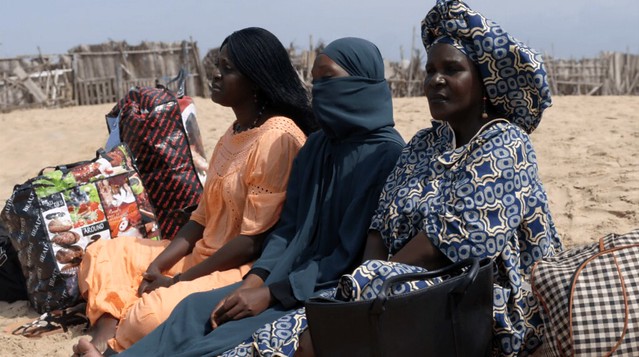
Adjara, a Senegalise woman with her savings in her waste bag, travels to Lagos, Nigeria in the hopes of becoming a trader. Along the way, she meets 3 other female travelers in various situations.

This six day journey from Senegal through Mali, Burkina Fasso, Benin to Nigeria is an arduous one as they face rampant border corruptions among the sub-Saharan countries, violence, rape and fighting with other passengers, shady transportation and breakdowns.

Borders highlights pan-West African sisterhood and imagines the better future for its female citizens.

Wallay - Berni Goldblat *Centerpiece
Screen Shot 2018-05-15 at 8.52.46 AM
I've seen quite a few films over the years about a troubled youth going through right of passage visiting and connecting with his/her ancestral homeland, but none as funny and touching and joyous as Wallay.

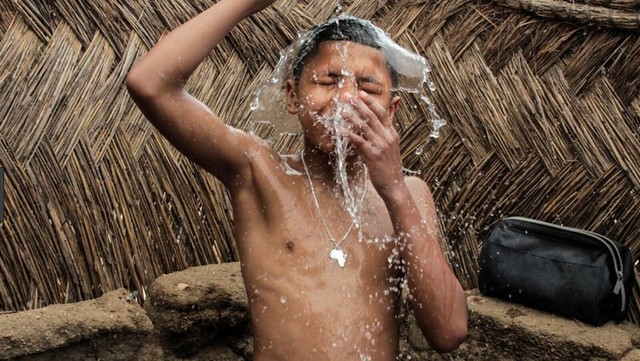
Wallay takes place in small village in Burkina Fasso, where Ady, a troubled 13 year old city kid from Paris is sent to by his father, after stealing money from his home to buy a shiny pair of red sneakers. Decked out in street gear, an iphone and fancy headphones, the spoiled brat faces reality of no electricity and two buckets of water per shower in the African village. Add to this unimaginable hardship, his uncle Amadou, a respected village elder, is a hardass and wants him to work on a fishing boat for 2 euros per day to pay off his debt. Not only that, after finding out Ady is not circumcised, the uncle wants the local doctor to perform circumcision on the boy to make him a real man.

At Amadou's urging, Jean, Ady's grown up distant cousin and a guide, takes the boy to meet his grandma who lives in a remote mountain town. Ady becomes grandma's instant favorite who calls him 'Little Hubby'. With the help of 'chilled out' grandma, Ady slowly learns the importance of family, discipline and respect. He gets to experience a bit of romance too with Yeli, grandma's little helper.

Shot beautifully on film, Wallay benefits from amazing performance by Makan Nathan Diarra as Ady, an insolent city kid with an attitude, slowly turning himself into a man. Goldblat doesn't rely on its spectacular locale or its customs, he doesn't have to. The story of Ady is universal enough. Everything plays out naturally. Hugely captivating and entertaining, Wallay is one of the best films I've seen this year.

Abderrahmane Sissako: Beyond Territories - Valérie Osouf
AbderrhamaneSissakoBeyondTerritories_05 copy
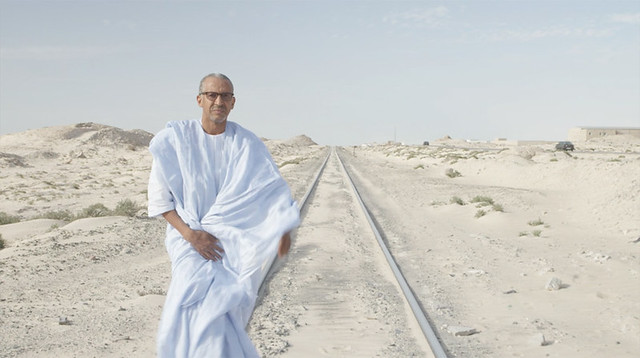
Valérie Osouf's documentary on one of Africa's most revered filmmakers, Abderrahmane Sissako, is not only an intimate portrayal but an essential viewing in understanding the man behind the camera. Widely regarded as a modern day master filmmaker with his simplicity, directness, colors and movement in films like The Life on Earth, Bamako and Timbuktu, highlighting the lives of fellow Malians in the age of global capitalism and ISIS, Sissako elevated modern African cinema to the world stage. Thankfully, with the help of Western admirers - Martin Scorsese and Danny Glover (both are interviewed for the film), he keeps on making gems reflecting the world with Africa at its center.

In an informal open house setting, Sissako invites and talk with everyone - a film enthusiast cop, a philosopher, scholars, actors, dancers while the life is happening all around them - roosters walk across the court yard, children play around, a woman gets water from the well. His background gets revealed - from his Moscow film school days - his mentor Marlen Khutsiev reminisces that he knew Sissako would be a great filmmaker because he noticed his thoughtful gaze when they first met. He gets his intellectual side from his father's family and warrior side from his mother's who are from very different parts of Mali, therefore his deeper understanding of different cultures.

The last segment of the film takes place in China, where he's researching for his new film, a love story about a Chinese man and an African woman, tentatively going to be taking place in China, Ethiopia and possibly Nigeria. He chats with his good friend Danny Glover over skype about his project. The film ends in an optimistic note. The influence of China is already felt globally. But Africa can't be recolonized. Connecting these elements, it's more like Silk Roads connecting different worlds with mutual respect than one side dominating the other.

As we witness the obvious decline of Western civilization every day, I can see Sissako's vision and it's pretty bright.

*My interview with Abderrahmane Sissako last year

Five Fingers for Marseilles - Michael Matthews
Five Fingers of Marseilles
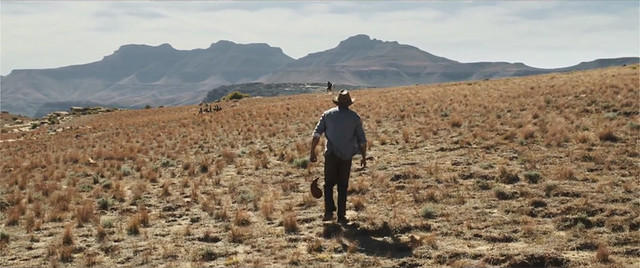
Marseilles is a railroad town in South Africa which still bears the name of its colonial days. Michael Matthews' sumptuously shot Western Five Fingers for Marseilles starts with 5 young friends making an oath to protect their town as freedom fighters, even if it means from each other. Tau, nicknamed Lion of Marseilles, one of the five, flees town after killing corrupt and abusive white police officers, leaving his friends and lovely Lerato behind to fend for themselves.

Now a grown man and a small time outlaw, Tau (Vuyo Dabula) comes back to town. The 'New Marseilles' is a booming town with Pockets, one of the five friends, as a mayor who is keeping uneasy peace by making pact with Lepoko - a ruthless, one eyed super-villain who wants to bring chaos at any cost with his marauding gang known as Nightrunners. No one notices Tau, and start calling him 'Nobody' except for 'Pastor', a storyteller of the five. As the Lepoko's grip on the town becomes tighter, and everyone needs a savoir, Tau, the cowardly, disgraced freedom fighter rise to the occasion?

Just like a typical Western genre film, there will be bloodshed, sacrifices will be made, reckoning, redemption.... With the stunning backdrop of Lesotho Valley, Matthews morphs post-apartheid South Africa into a gripping Western.

Thursday, August 13, 2015

New/Old Colonialism

We Come as Friends (2015) - Sauper
 photo ad63a400-5831-43ad-bab4-0631624aa8a0_zpsqq9ekyjq.jpg
Hubert Sauper, a Paris based filmmaker known for his searing eco-disaster exposé in Tanzania, Darwin's Nightmare (2005), continues to document the African continent in his new documentary, We Come As Friends. This time, he sheds light on the post-referendum era Sudan. And it is a damning indictment of new-old colonialism that casts shadows on every corners of the youngest country in the world - South Sudan.

Sudan's decades long civil war claimed estimated 2.5 million lives and created the biggest humanitarian crisis since WWII. In the West, Sudan became synonymous with child soldiers, Lost Boys of Sudan and various Human Rights violations.

After decades of the bloody conflict, South Sudan's Christian majority finally broke free from Khartoum's merciless Islamic government and voted resounding yes to the cessation in 2011.

Still, as Sauper examines, that the newly founded country is riddled with many serious problems. He makes a broader claims that the chaos stems from the colonial past. He draws parallels with then and now, with British and French drawing the line in the sand throughout the continent and Chinese and American companies competing for dominance securing the country's natural resources - the oil fields that precariously borders the north and south.

Sauper, seen on the fields documenting and asking questions, shows that the control for oil fields are still raging among different factions. The oil revenues buy more weapons to fuel the conflict. Chinese oil and mine companies buy up the lands from locals who don't have the concept of land ownership exploit the land and don't take responsibilities for environmental damages. It's jarring to see garbage strewn road to the oil company compounds and seeing so many Chinese workers living in workers camp in the middle of nowhere. There are no contacts between them and its native inhabitants nearby.

With animosity between Muslims and Christians are scarier than ever and the threat of violence is regarded a necessity between them. Whenever Sauper and his crew lands their rickety plane, the first question people ask is whether they are Muslim or Christian, the intensity of their question and stares barely contains the possibilities of violence.

Stock footage of group of white settlers and dignitaries chilling near poolside is juxtaposed with modern day missionaries and foreign dignitaries. Farmers and other inhabitants are losing their land to 99 year leases for Christian missionaries and their western style schools. Children in their traditional garb are banned from attending schools. And well meaning white settlers are seen giving out T-shirts and putting sox on a Sudanese toddler on the dirt floor.

Just like Darwin's Nightmare some years ago, We Come as Friends points out overwhelmingly dire circumstances the post-colonial Africans find themselves in. We see the human cost of up close and personal and its devastating. The film's a little unwieldy and expansive, but one should give Sauper a credit for trying to encompass everything that's been going on for decades in a country still riddled with open wounds of the colonial past in 1 hour 40 minutes. It's another strong case against the long lasting effect of colonialism.

We Come as Friends opens August 14 at IFC Center. Please check IFC Center website for tickets & more info.

Monday, May 4, 2015

NY African Film Festival 2015

Scanning through the list of this year's New York African Film Festival, I am once again astonished by the breadth and scope of African diaspora in the 21st century transnational society. The countries represented in this year's festival, excluding the ones from the continent, are: Denmark, Spain, Brazil, Israel, Czech Republic, France, United Arab Emirate, USA and Canada. All in all, the staggering lineup represents 25 countries from all over.

22nd edition of the festival places special emphasis on digital technology and short form filmmaking which freed new generation of filmmakers from budgetary and technical limitations. The highlight of the result is shown in Women in the Media and Afripedia sidebar sections as well as two feature length documentaries - 100% Dakar and Stories of Our Lives. These films and filmmakers respresent the vibrant, multi-ethnic, collaborative art communities that are springing out from everywhere throughout the continent that we don't hear much about.

The Festival also put a spotlight on the modern classics of African cinema, including Kirikou and the Sorceress (1998), Mossane (1996) and last year's Oscar nominated Timbuktu.

*Read my interview with Abderramane Sissako (Timbuktu)

*Read my review of Timbuktu

Many of the filmmakers and actors will be on hand for the Q & A sessions after the screening of each film.

The quality of all 7 feature films I was able to preview here for this year's festival is quite extraordinary. For the list of the films and tickets please visit New York African Film Festival website.

The festival runs from 5/6 - 5/12 at FSLC, 5/14 - 5/17 at Maysles Cinema Institute and 5/ 22 - 5/25 at BAM Cinematek.


Cold Habour (Dir. Carey McKenzie, South Africa) *Opening Night Film
 photo 430896b3-fcbe-474d-9a11-cc8ac00af228_zpslyklwrum.jpg
Sizwe (Tony Kgoroge) is a beat cop and an ex-soldier against apartheid. He is a hard working man, but finds himself pitted against corrupt police establishment and former comrades-turned-criminals.

While investigating the death of a Chinese triad member at the harbor, involving illegal abalone poaching and drugs, he gets a much sought after promotion as a detective. But forces behind the promotion are dictating his actions. Sizwe must play his boss, seductive Chinese triad boss (scrumptious Nan Yu) and the Specialist (underworld crime boss and his former comrade in struggle) in order to survive.

Cold Habour is a superb policier from South Africa. Moody and understated, McKenzie's cold palette is big a contrast against sunny and earthy disposition of other recent South African films. Tony Kgoroge has a real presence as a brooding cop whose loyalty is being tested in an uncertain world.

Wednesday, May 6th, 7pm (Q&A with Carey McKenzie and Tendeka Matatu) – Walter Reade Theater, FSLC

Monday, May 11th, 2pm – Elinor Bunin Munroe Film Center, FSLC


100% Dakar - More Than Art (Dir. Sandra Krampelhuber, Austria/Senegal)
 photo f4523e54-6a67-4fdb-b313-cd8d8ed79902_zpsuzk9hjxr.jpg
Austrian filmmaker Sandra Krampelhuber documents a booming artist community in Dakar, Senegal. These young musicians, rappers, graffiti artists, fashion designers and dancers talk about their beloved city - Dakar is where it's at. For an African artist, days of being an expat, living in Europe or America is over. As the case of many interviewees, they were educated in other parts of the world but all have decided to come back.

They are short on resources, but counting on the country's 60% population being under the age of 25, they see a great potential being just where they are.

They talk about success in collaboration. These business savvy artists seized the opportunities after historic presidential election in 2012 where corrupt incumbent prez Abdoulaye Wade lost in a landslide. The young Senegalese said goodbye to the old ways of doing things- depending their future solely in the hands of politicians and authorities. As one says in the film, 'cultural activism became much more effective than political one.'

These artists are like kids left to their own devices. They are full of enthusiasm while being practical. It's their sense of optimism that I take away the most from watching 100% Dakar. And it's a good feeling.


May 9th at 4:15pm (Q&A with Sandra Krampelhuber)
Tuesday, May 12th at 4pm – Elinor Bunin Munroe Film Center, FSLC

Love the One You Love (Jenna Cato Bass, South Africa)
 photo 92bd7ad4475e66ee0ea284eaeb912b395ea4cfb6a6704a4288ca8d128837bf9e_large_zpswyzlziyb.jpg
Terri (Chiedza Mhende) works as a sex phone operator and Sandile (Andile Nebulane) works at a dog shelter. They are a great couple. All their friends say so. They themselves seldom question this fact. But deep down, Terri wants more than just love. She never utters "I love you"s but receives it aplenty from Sandile. For her love is the most insidious weapon there is. There is a world out there and South Africa is too small for her.

Everyone, including a shaman and a priest, reiterates that the commitment to love is a burden- might be a light one, but all the same. Terri's indecisiveness becomes a great chasm between them.

Then there is Nelson (Nelson Da Neves), having a hard time letting go of the memories of his ex. He hangs out with the ex's younger brother and leaves the side of the bed where she used to sleep untouched, keeping his melancholy vigil of the love that got away.

A conspiracy finds its way to the two interweaving stories - Sandile is convinced that it's some kind of outer force working against their happiness. Nelson finds an undisputed fact on the internet that he and his ex are meant to be together.

First time director Jenna Cato Bass has a delicate, fluid touch in sketching out the big questions/minutia in love and relationship in multi-culti, burgeoning Johannesburg. Love the One You Love is honest depiction of a relationship that is both charming and melancholic.

Friday, May 8th, 9:00pm – Elinor Bunin Munroe Film Center, FSLC


Red Leaves (Bazi Gete, Israel) *Centerpiece Film photo 3b45227c-be82-434c-be52-6ad02bff83f9_zpslgwzti6x.jpg
Ethiopian Israeli director Bazi Gete tells a King Lear inspired story taking place in bustling cosmopolitan city, Tel Aviv, starring non-actors. Not long after his wife's passing, an old Ethiopean-Israeli patriarch, Meseganio, announces at the shabatt dinner that he sold his apartment and that he intends to move in with one of his children. It's a shock to all three of his children, who have their own family to take care of and have gotten used to modern way of living.

Meseganio goes to his older son only to discover his daughter in-law being disrespectful and his daughter disobeying his wishes. Disgusted and upset, he leaves for his second son's house. Everything is ok at first, but soon he finds that there has been rift between his womanizing son and his long suffering wife. They fight like children in front of him and their teenage son. It is too much to bear for an old man who is a forever immigrant in a foreign country where he doesn't even speak the language.

To make matters worse, two sons decide to suggest Meseganio go to an old folks home, full of white Israeli retirees. He throws a fit, and leaves the house, only to be picked up and handcuffed by immigration services.

Red Leaves is a film that is shot like an observational documentary. Easy comparison can be made with Ozu's seminal Tokyo Story. But unlike the Japanese counterpart with its passive, aging father, Meseganio is still spirited man who is too proud to give up his old Ethiopian ways. His belligerence is treated without any sympathy. It's a harsh reality both generations have to face with head on and Gete doesn't shy away from its ugliness.

Friday, May 8th, 6:45pm (Q&A with Bazi Gete)

Sunday, May 10th, 4:15pm (Q&A with Bazi Gete) – Elinor Bunin Munroe Film Center, FSLC


The Narrow Frame of Midnight (Tala Hadid, Morocco/France/UK)
 photo 3721c5dc-74b0-4e94-9df1-3aaa8030738d_zpsy4plaswi.jpg
A stunningly beautiful, haunting film about displacement, memories and human connection. Moroccan-Iraqi Zacaria is on the road to find his brother, Yoseph, who went back to Iraq. Yoseph always has been the brave one, the one who had conviction.

Zacaria's path crosses with Aicha, a little girl kidnapped and sold to some Westerner sleazebag for pleasure, on route to a meeting point with her pimp and his girlfriend. She's come from a long way and wants Zacaria to take her away with him. He drops her off to his former French lover/wife Judith (Marie Josée Croze) living in remote Moroccan village. His journey takes him to Turkey then to Iraq.

Rather than long expositional dialog, director Tala Hadid relies on impregnated, poetic images and flashbacks to roughly sketch out the character's back stories. Lensed by Sokurov cinematographer Aleksandr Burov (Second Circle, Father and Son), the images and colors have real impact on understanding the violent history of the region and sorrows and loneliness of the displaced.

Monday, May 11th, 6:30pm (Q&A with Tala Hadid and Danny Glover) – Elinor Bunin Munroe Film Center, FSLC


National Diploma (Dieudo Hamadi, Democratic Republic of Congo/France) photo c78e644d-60ee-4067-8f50-300d12e4ad39_zpsrryey2em.jpg
Dieudo Hamadi documents trials and tribulations of high school students in Democratic Republic of Congo as they prepare for the National Exam. It's a do or die situation for many impoverished students because without the diploma, their fate is pretty much sealed in living in poverty forever. The school year has been bad - teacher's strike left many of the students lagging behind their studies. Teachers subsist on student's fees, so unpaid students get kicked out of the classroom every morning, during the roll call. It's cutthroat like that in Kisengani. The students who can't afford, and there are many, get together, chip in a little money for marquis (common house), start living together to study day and night for two months for the exam.

It's mindblowing to see how motivated and driven they are to pass the exam. It's an intense religious affair also- a preacher at the church blesses their ball pens, a girl falls down to the floor because she is possessed by ghost of her family members who don't want her to pass the exam so she needs to be exorcised, a kid goes to see a traditional witch doctor to bless him, etc.

Corruption is rampant. There is a racket for selling leak answers to the exam and everyone talks about strategies on how to cheat. Teachers come in to their marquis, complaining how they are not getting paid.

Come the exam days - one day it's a disaster because of leaks didn't provide right answers, the next day everyone's overjoyed because the given answers were right. Two months later, there are mad celebrations on the street. Then there are heartbreaks. We talk about our education system being broken. National Diploma is an eye opening experience into an education system that has everything going against students.

Sunday, May 10th, 9:00pm – Elinor Bunin Munroe Film Center, FSLC


Run (Philippe Lacote, Ivory Coast/France)
 photo 53bcbbae-2573-4ec6-a1ab-69a07d3fd17d_zpstlduahqm.jpg
A gritty modern parable that reflects recent civil war of Ivory Coast. Run tells an orphan boy named Run (played by Abdoul Bah as a boy and later Abdoul Karim Konaté), always running away from his ever changing circumstances and changing his allegiance.

Run starts first as the rainmaker's apprentice which signifies the west African country still steeped in mysticism. It's his hand that the rainmaker has to be sacrificed but he runs away. Then runs into and becomes an assistant to 'greedy Gladys', a plump woman touring and making money off of binge eating reflecting short-lived good times and greed after the country's independence. When she can't eat no more, he denies his acquaintance to her and joins a rebel group, Young Patriots, on the street. Young 'admiral' as their leader, the rebels act as the invisible arm of the government who incites jingoistic patriotism against all foreigners. Run, again, with shifty identity, running from one situation from another out of survival, has no loyalty toward the group.

It's Assa (Isaach de Bankolé), a father figure who gives him a purpose in life by training and arming him to kill the newly minted country's Prime Minister (who happens to be Admiral of the Young Patriots) for the better future of all Ivorians. The act also corresponds with the old rainmaker's prediction in the beginning what Run is destined to do.

From it's cyclical structure to beautifully shot and edited images, Lacote's skillful filmmaking is in its highest order. Combining elements of mysticism, political intrigue, gritty urban drama, Run is hypnotic and original film artfully reflecting the beleaguered nation's complex history.

Monday, May 11th, 9:00pm (Q&A with Isaach de Bankolé) – Elinor Bunin Munroe Film Center, FSLC

Tuesday, January 27, 2015

Je suis Timbuktu: Abderramane Sissako Interview

abderrahmane-sissako-ccf1589b-a107-49ad-9b5c-e52a84705cd-resize-750 A lot has happened since I talked with Abderramane Sissako last October at the New York Film Festival. Islamic terrorists' attack on the headquarter of French satire magazine Charlie Hebdo and a kosher grocery store in Paris this January shook all of Europe. And Sissako's film Timbuktu got nominated for Best Foreign Film Oscar this year.

The anti-Islam sentiment and jingoism are on the rise in Europe. With that, unfortunately, Timbuktu is embroiled in controversy on the eve of its theatrical release in France. (Read the full article from Washington Post here) It's a pity because Timbuktu is such a beautiful film and a strong condemnation of religious extremism.

The film struck me very strongly. For the little time I was given for the interview, I was fully committed to have Sissako speak about the film the whole duration. But however passionate and knowledgeable he was on the subject, he wasn't interested in schooling me about what happened in Timbuktu, he was more interested in engaging in conversation. For that I am very honored and grateful.

The film opens in New York on January 28 and January 30 in Los Angeles. And in my humble opinion, it should win an Oscar.
 

TIMBUKTU is such a powerful, tragic film. I know I don't get much time with you so I won't bother with bunch of silly questions. I just want you to talk about the film.

Abderramane Sissako: (laughs) No no no. Of course you can ask questions.

TIMBUKTU is based on/inspired by a true story. I'd like to know how you went about building a film around this true story.

Sometimes you feel that a film is useful and also necessary. I don't know if this is true but it's possible that that is true. It's not that I felt obligated to do so but I felt it was important for me to tell the story and to tell it quickly. Because I think what's happening in this part of the world is not usually told well. Because in the West, we only report about it when it's something that specifically touches us - namely, a hostage. Of course, a hostage is a dramatic situation. But we forget that on a daily bases there are people who are being held hostage and humiliated. When Timbuktu was under siege by Islamic militants, people were having their hands cut off - a guy sees that an air conditioner doesn't work so he goes there to fix it, they think he's stealing it and cut off his hand! It's just horrible. And it's as awful as hostage, but we don't talk about these arms and legs being cut off. So I think what filmmaker needs to do is that he needs to focus on ordinary people and their everyday lives.

People whose daily lives don't appear in the news. To really directly answer your question, this film really took sustenance from the city itself and the beat and the life in it.

One thing that struck me about the film was how diverse the city of Timbuktu is. There are several different languages spoken and different culture presented within the Muslim community. It is a reminiscent of other occupations who bring in their own laws and completely oblivious about the culture and customs of the people who are living there.

Timbuktu is an old city and it's historic. It's always been a meeting place, situated at a crossroads. People from different cultures have always lived there. And that was one of the reasons why they had decided to take Timbuktu, as a symbol. The parallel I can make is in New York after 9/11. What happened in New York, not only people who lived here but everyone felt like a New Yorker because what was happening. Because here every English speaker speaks another language. If you ask anyone on the street they will tell you. And it's this diversity and culture that the city was attacked because it was a symbol and that's why so many people reacted.

You made a film about Poverty of Africa with your last film BAMAKO. It's about the influence of the World Bank and the West and they are literally on trial. This one, even though extreme Islamic fundamentalism stems out of that western influence but you don't talk about the West in this film at all.

I think that's a very good question. With Bamako, I wanted to talk about the fault of other people and I didn't want this film to be like that. In this film, I wanted people to look inward, to look inside themselves and to understand that this is something that that's happening and we could say it's brought on by foreigners but those foreigners are not so distant from who we are. And Timbuktu was liberated by the French army. But I didn't want to show that. What I wanted to show was that the first revolt was by the citizens themselves - people who play soccer without a ball, that's what the resistance is.

Yes.

A woman who sings and they beat her and she sings anyway.

I read about the retreating occupiers burning down the famous Ahmed Baba Institute. I'd like to know if the sense of normalcy came back to Timbuktu after what happened in 2012.


I think the destruction of the library really had a huge impact on many people. The same thing with the mausoleums: the ground burial sites. But what's important to know is that before that happened, a lot of the people in Timbuktu have saved these artifacts. (read about it here) And today the situation is better.

How was your collaboration with your DP, Sofian El Fani (BLUE IS THE WARMEST COLOR), because there are a lot of handheld sequences and a lot of running around?

I knew his work. When I chose him, he also wanted to work with me on the project. So things were very simple between us. He works a lot with (Abdellatif) Kechiche and Kechiche is always about handheld camera and they are very tight shots. What makes El Fani a really great cinematographer is his adaptability. He knew right away what I was looking for in framing.

There were discussions of course. I don't really like closeup shots in cinema. I always want to create space because, for me, that space is an invitation, to enter into it. When I make a film I don say, "look!" I say, "come in".

I know that BAMAKO was funded in part by actor Danny Glover because no one was funding movies of African origin. Was it the case with TIMBUKTU? Was getting funding just as difficult?

No. With Bamako, what Danny Glover did was extraordinary. He was the first person who really believed in the kind of film I wanted to make. And I knew Timbuktu was supposed to be made very quickly, so the funds came very quickly too. So it wasn't really necessary to involve many people.

Oh good.

It was important to move quickly.

How long was the entire shoot?

All together, about six weeks.

Six weeks!? Wow, that's fast.

And these are distances where you are on the road full day. It was very difficult. And of course there were no trails or anything. It's also difficult to deal with people who aren't professional actors for 6 weeks. But you know, sometimes, things are difficult.

But you pulled it off beautifully.

Thank you.

What's next for you?

Without talking too much about it, it's going to be about China and Africa. But a love story.

I will very much look forward to that.


Read my Timbuktu Review Here

Thursday, December 4, 2014

Potent Indictment of Colonization of Africa and Its Aftermath

Concerning Violence (2014) - Olsson  photo 4b83902c-18de-4bf9-a778-55b728690872_zps6886afef.jpg
Whew, where do I begin....

Concerning Violence, a new stock footage documentary from Goran Hugo Olsson (Black Power Mixtape) is an extremely sharp indictment on the colonization and its aftermath of the African continent. The matter of fact headiness of Olsson's style may turn off some viewers in its college thesis paper dryness, but one can not deny its power of arresting images and portent words.

Borrowing the text of Frantz Fanon, a Martinique born controversial Afro-French thinker and revolutionary, from his book The Wretched of Earth and powerfully narrated by musician Lauryn Hill as the large white texts appear on screen, the film explains how Europe's five hundred years of exploitation and violent oppression led dehumanization of the whole continent.

Gayatri Chakravorty Spivak, a Columbia professor, opens the film in its preface, noting that Fanon's dissertation and books were rejected and criticized by the likes of Sartre as inciting violence against the colonizing oppressors. She urges us to read between the lines and acknowledge that under murderous colonizing power, the poor and the oppressed were forced to resort to violence in order for change to occur.

A long time admirer of Fanon, Hill came on board to narrate the film for Olsson after he sent her the texts and his idea for the documentary. Here she gives a strong, commanding oration to Fanon's fiery words.

Most of the of footage in the film comes from the Swedish TV archive from the 60s and 70s -- as was the case with Black Power Mixtape, Swedish TV seems to possess great wealth of black experience on film all over the world during that time -- and covers pretty much the whole continent, from Angola to Zimbabwe. The images are upsetting, unforgettable and revelatory. 

The film starts with an aerial view of the green field below and the African soldiers senselessly mowing down peacefully grazing cows, Apocalypse Now! style. Then close up of cow as it gets shot to death. The image is shocking and extremely upsetting. This is the legacy of Europe's ruthless colonialism over the continent. And one of the more unsettling images of the film is 'black venus' as Spivak calls it in the preface (she even criticizes the film of its inclusion): a young mother and her suckling baby. She is missing an arm (like Venus de Milo) and the baby is missing a leg, they are both victims of a bomb dropped by government forces. In my opinion, Olsson's fearless approach (and not shying away even from the criticism) is completely appropriate and commendable.

As most African countries gained their independence around the 60s and 70s, the film is a good time capsule; there are a lot of footage of white settlers being interviewed and expressing their views in changing political climates in their large homes with black servants and workers. There are also embedded war journalists filming the carnage of guerrilla wars on both sides. Even though The Wretched of the Earth was published (and subsequently banned) in 1961, Fanon's words are just as relevant today as it was then. In the film's hopeful conclusion, because Europeans, and in turn, Europe aping capitalist Americans, were so successful at dehumanizing the world, Fanon through the hopeful voice of Ms. Hill, calls all African comrades to find the new way to be 'whole human' and completely abandon European approach to build the new post-colonial world.

But Concerning Violence is most impactful when one reflects on the current state of Africa -- kidnappings by Boko Haram and the siege of Timbuktu, and realizes that the death grip of colonialism on the continent is still very hard to pull away from. Along with Joshua Oppenheimer's The Look of Silence, Concerning Violence is one of the best and most potent documentaries I've seen this year.

Concerning Violence is a Kino Lober release. It opens 12/5 at IFC Center, New York

Tuesday, September 30, 2014

A Strong Condemnation of Religious Extremism

Timbuktu (2014) - Sissako
 photo 59dc077c-18de-4e76-be8b-989a801919b9_zps979acb1a.jpg
Timbuktu, that faraway place, the end of the world, is an actual city in Northern Mali in Africa, being once the bustling trade town in sub-Saharan Africa and famous for its fabulous architecture, libraries and scholars. Abderramane Sissako (Bamako) tells a tragic tale based on true events, taking place in this famed city.

The film starts with traditional wooden African statues being used as targets in a target practice by the Islamic militants who just rolled into town. When Alain Resnais and Chris Marker made Even Statues Die, I don't think this was the image they had in mind: they were talking about reappropriation of those artifacts being mass produced for Western consumption, losing its intended cultural significance, not being literally blown to pieces. Now times have changed. These so called jihadists, walks around with AK-47s across their chest, warning the townsfolk that they are under strict sharia law from now on - no smoking, no music, women have to cover their hands, faces and feet, no public gatherings, the list goes on. Despite city imam's pleading, they start arresting people and carrying out the punishment - public lashings or executions for playing music, unmarried men and women hanging out together, playing football, women washing their hair in public.... They even start marrying their young soldiers (who don't even speak the language) to local girls without their parents' consent.

In the midst of all this, is a story of Kidane, a nomadic herder with his beautiful wife and daughter, living in the desert. All their friends and neighbor are gone, fearing these rude Arabs from the north. But he and his family have no intention of moving on. They have seen many occupiers come and go, so this also will pass. Besides they don't have anywhere else to go. A tragedy strikes when one of his cows gets killed by a local fisherman and during heated dispute, Kidane accidentally kills the fisherman. He is promptly arrested and condemned to death by sharia law.

Timbuktu's tragedy is accentuated by achingly beautiful surroundings shot in widescreen format by cinematographer Sulfiane El Fani (Blue is the Warmest Color). There is a lyrical sequence of young people playing soccer without the ball in the sun drenched desert. They sprint, pass the invisible ball, score or block and cheer. A sort of an impromptu in-your-face defiance and condemnation, highlighting the ridiculousness of the law. The sequence is both comical and sad.

Sissako paints a complex society where several different languages are spoken. Even though all of the inhabitants of Timbuktu are people of faith, the director makes it clear that they have different cultural backgrounds and customs. Timbuktu is a strong statement against the extreme Islamic militants who seem to take the moral high ground and impose their laws upon people they don't understand. It's even more disgusting when they don't even try to understand. We've seen this kind of hubris time and time again in any types of colonial occupying forces. And we know that it breeds human tragedies everywhere.

As the film builds up to its heartbreaking conclusion, one wonders the true fate befallen on Timbuktu and its inhabitants in 2012 when it was briefly taken over by Islamic rebels - many were killed and maimed. Its famed Ahmed Baba Institute which housed many invaluable manuscripts was set on fire. The film is a beautifully told human tragedy and strong condemnation of religious extremism.

Timbuktu won Prize of the Ecumenical Jury and François Chalais Prize at this year's Cannes Film Fest. The film screens on 10/1 at 6pm and again 10/2 at 4pm. For more information, please visit FSLC website.

Saturday, September 13, 2014

Song of Sorrows

Bamako (2006) - Sissako
 photo fa424eb2-1339-4cc6-a54d-49871340a785_zps68a2b10d.png
 photo 8e1e88f5-4c37-4551-87e7-eb18b016ce35_zps4077c795.png
 photo 5dbbf0e0-d8b8-42f8-8801-808246e9ebcb_zps5468a90c.png
 photo 9fb3e738-5d5f-4a22-8144-b5bff877ff1b_zps6335da63.png
 photo dcdaf07b-bb8b-41e4-b914-a3ad814d22e6_zpsa10ec232.png
 photo 88bc2fc1-9b93-4b8e-9807-94c0b2ce83a7_zps165cf200.png
Bamako is a seething indictment on policies of 'structural adjustment' imposed by IMF and The World Bank on Africa. The setting is an outdoor trial, a courtyard of ordinary Malian households where everyday life happens simultaneously with the proceedings. The witnesses, from all walks of life, testify against how the astringent policies of the western institutions that started 25 years ago brought more poverty, deaths and unpayable debt to many African nations including Mali, instead of development and prosperity. In the meantime, there is a slight narrative with an impoverished, emasculated husband and his beautiful wife who sings at bars for their income. He is learning Hebrew in the hopes of becoming a guard for an Israeli embassy in Mali that doesn't exist. A wedding and funeral happen in the same courtyard, life goes on still. Sissako playfully exerts film within a film called Death in Timbuktu, where cowboys are played by Danny Glover, Elia Suleiman and other film directors from developing countries doing OK corral style gunfights bearing not so subtle outcome - dead are the innocent local bystanders. Music in Bamako, traditional or otherwise, is a big part of expressing people's frustrations rather than dialog. It's a pointy yet poetic film that needs to be seen by anyone who has interests in the state of Africa.

Saturday, April 5, 2014

You Don’t Have a Home Until You Leave It

Touki Bouki (1973) - Mambéty
 photo 11d1db22-39d8-4b4d-a8a4-1f7a97c5d5e9_zpsc74556cc.png
 photo c41d08b8-faed-4f3e-ad9f-67ae4d831792_zpscefe9e19.png
 photo ea4954d5-efcd-4783-81fa-800e3f20c9ba_zps0147740a.png
 photo f1b0df0f-a76d-4c51-a4aa-75fef4eaed6c_zps17f14f36.png
 photo 35e28f16-708b-4456-bcba-f963d48de61f_zpsc3803627.png
 photo d5f847e6-1d71-48f4-aeeb-5f7a4b5f4791_zps8834c220.png
 photo 3134256c-d80e-4772-b566-e037ac2cc34b_zpsd6be57ec.png
Mory (Magaye Niang) dreams of leaving Dakar and going to Paris with his college student girlfriend, Anta (Mareme Niang). Always on his trusty motorbike with a cow skull attached to the front, Mory is somewhat of a dreamer and doesn't really fit well in a society where young men only talk about revolution. The couple cheats and steals their way through getting tickets for a sea voyage, but Mory has second thoughts at the last minute. He realizes that wherever he goes, he will be like that of a bull in the slaughterhouse with a noose around his neck. That is the legacy of colonialism. It dawns on him that there is no escape, that he might as well stay.

Even though Mory and Anta are from a shantytown, Touki Bouki is not an overtly socio-political condemnation of colonialism or anything. It's definitely there though. There are elements that stress the view of white Europeans on Senegalese but that's beside the point. The film is, first and foremost, fun. It has a very loose structure and fluidity and playfulness throughout. It's very much French New Wave. You can totally see Breathless- Touki Bouki- Leos Carax connection here. The energy combined with colors and sound make quite an arresting experience.

Thursday, November 21, 2013

Melancholic Landscapes

Une femme en Afrique (1985) - Depardon
 photo 7242d831-2ad2-4fcb-aa81-1c200b4b9f4f_zps794cc92d.jpg
 photo e40855ab-ed2a-411e-bb8c-d3458a9e2420_zps274f5dee.jpg
 photo 23f2173b-97ca-4162-8b89-44d17d064cc9_zpse462863a.jpg
Photographer/director Raymond Depardon equates his unfulfilled desire with the vast, empty desert. The whole film is told by an unseen narrator observing a young, androgynous French woman/traveling companion (Françoise Prenant) as she mumbles back sweet nothing to the camera in various stages of undress. The main draw of the film is not the Woody Allenesque neurosis of the narrator. It's the scenery from Djibouti to Alexandria, seen from the balcony, train, boat and plane, mostly over the young woman's shoulders. Depardon captures the melancholy of the desert landscape like no other.

Sunday, December 2, 2012

Labyrinthine Tales

Arabian Nights (1974) - Pasolini
"Truth lies not in one dream but many". - Arabian Nights
arabian nights6
arabian nights5arabian nights4
arabian nights3
arabian nights2
arabian nights1
arabian nights
arabian nights7
Arabian Nights starts with a story of a confident, beautiful slave girl choosing her next owner, a young man she deems the handsomest. It's a story within a story within a story within.... The film is filled with plenty of nudity, frank sexual scenes involving both sexes, decapitation and dismemberment. It's like watching more down to earth and raunchier Fellini. There is no Sinbad or Ali Baba or Genie, but other stories Pasolini chooses for the film are just as colorful and fascinating. Men are often foolish and women often exude wisdom. Beauty and youth are worshipped. World weary wisdom only comes after hardships. Lovers perish, lovers reunite. It jumps from many majestic African settings to that of Middle East and India and back and forth. Ennio Morricone's score and Dante Ferretti's production design help bring out these fantastic tales too. Over all, Arabian Nights plays out like a film totally unencumbered by Western influence (eventhough some Italian actors playing the parts are a little distracting). A fascinating, strangely moving film.

Wednesday, May 11, 2011

Hunting the White Man

Naked Prey (1966) - Wilde
Photobucket
A manager of the white man's hunting party (Cornel Wilde, director/producer/star) in South African jungle knows the area and the customs of its natives. When the party encounters a seemingly friendly tribe, who asks for offering to their chief, the insolent, fat white man who only wants to shoot elephants in the face for sport and go in to slave trade rejects the tribe's bribe despite our manager's urging.


After successful elephant hunting, the party is raided and captured by the same tribe they insulted. Many meet grisly death - covered in clay and roasted alive, feathered and tarred and clubbed to death by the entire topless tribal women, trapped in a fire pit with a snake, etc. Our manager is saved for the last - stripped down and given a little bit of head start for 'hunting of the white man'.


The rest of the movie is pretty much a long cardiovascular activity. Our hero is not particularly resourceful but he sure can run. While he's killing and outsmarting many pursuers, we are introduced to many African nature settings - baboon fighting off cheetah (ooh, symbolism?), lion snatching off a speared gazelle, etc, etc.


The most poignant moment comes later, when our hero stumbles upon a tribe getting seized by another slave trading tribe. The sole survivor, a little girl, thanks to our hero's diversion, in turn saves him from drowning. They share food and fire and exchange songs.


Naked Prey is an oddity. It clearly says something about race, but rather concentrates its energy on the chase. But it's not overtly racist and videogamey as Apocalypto, nor as lyrical as Walkabout. Our hero is no McGyver either. He suffers from starvation, exhaustion and stomachache. The mutual respect is felt by the end and I enjoyed it.