Showing posts with label Belgium. Show all posts

Monday, January 15, 2024

Soup for the Soul

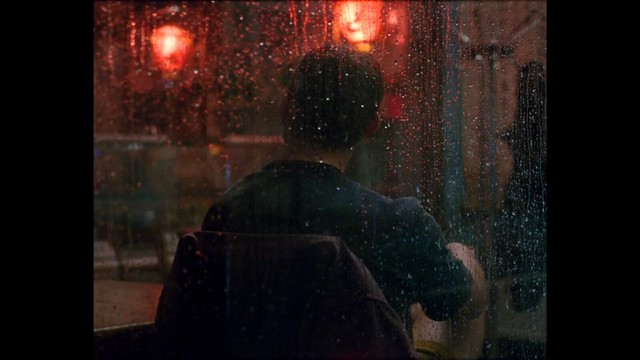
Here (2023) - Devos Screen Shot 2024-01-14 at 9.27.46 AM Screen Shot 2024-01-14 at 9.39.49 AM Screen Shot 2024-01-14 at 9.48.09 AM Screen Shot 2024-01-15 at 8.38.08 AM Screen Shot 2024-01-15 at 8.50.26 AM Screen Shot 2024-01-15 at 8.52.33 AM Screen Shot 2024-01-15 at 8.55.23 AM Screen Shot 2024-01-15 at 9.09.20 AM Screen Shot 2024-01-15 at 9.00.15 AM Screen Shot 2024-01-15 at 9.11.37 AM Screen Shot 2024-01-15 at 9.01.24 AM Screen Shot 2024-01-15 at 9.10.31 AM Screen Shot 2024-01-15 at 9.19.27 AM Devos's nocturnal ASMR session continues with Here, after Ghost Traffic. Just like in his previous film, Devos explores the interconnected lives of immigrants in Brussels. If the night was the rug that tied rooms together, this time it's the forest in an urban setting. And as always, in its full frame presentation and still images, it's gorgeous.

A good looking Romanian construction worker (Stefan Gota) is about to take his well earned vacation and drive off soon as his car is fixed. In the mean time, he is clearing out his fridge and using all the remaining vegetables to make a batch of soup in order not to have them go to waste before his trip. He takes his soup in containers to give to his friends and relatives. A Chinese bryologist and lecturer (Liyo Gong) who is working at her auntie's Chinese takeout place meets him one day as he takes shelter from the rain and eats in the restaurant. They converse about his wet shoes.

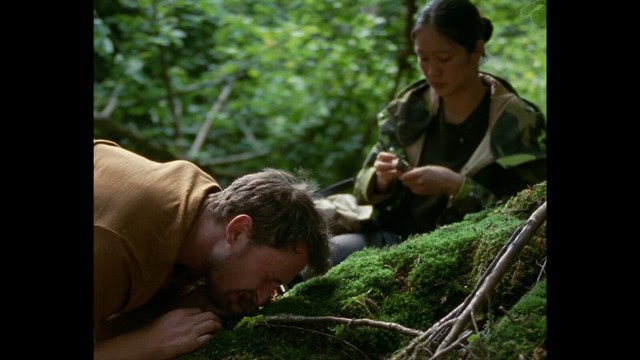
When he walks through the park on the way to retrieve his car from the garage, he meets the bryologist again, studying and collecting moss samples there in the forest with her little magnifying glass. She introduces him to the world of mosses, and fascinated by the whole ecosystem through the magnifying glass, they are lost in time and spend all day together and walking and talking in deep of the park.

There's a little magic about the film. The mysterious seedlings that glow, the sound of nearby train running replaced by rustling of the trees and unseen birds, the well timed rain showers, etc. The little romance between the two charcters are so understated and happens literally off the frame, yet so sublimely lovely. Remember, making soup for somebody is the most romantic thing to do.

Wednesday, May 24, 2023

Kaleidoscopic Picture of Africa Here and Now

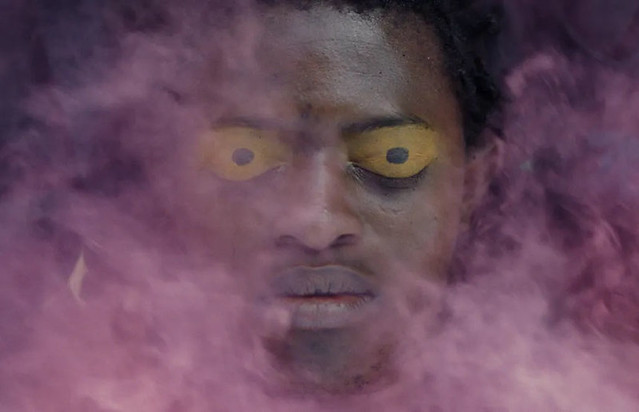
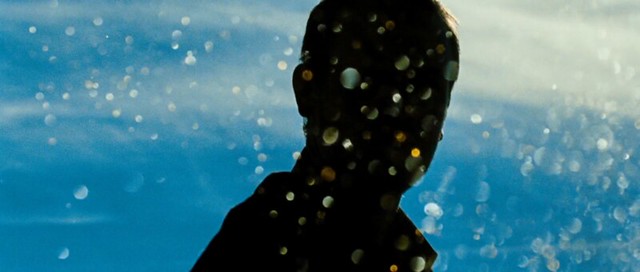
Omen (2023) - Baloji Omen Omen, a new film by Belgian rapper, Baloji, presents a compendium of pan-African experience told in a vibrant palette. It addresses variety of different issues in modern day Africa: African diaspora, colonialism, youth gang, sexuality, tradition, progress, among other things. You won’t see any other films this unique and different, this year.

The film starts with Koffi (Marc Zinga), cutting his sizable afro off as he prepares to travel to his home country with his pregnant Belgian wife, Alice. They are expecting twins. He is seen practicing his Swahili. It will be a tense trip for him because he hadn’t been back home for many years and now must present their biracial marriage to his family and get their blessings. Also, they need to give $5,000 dowry to his parents as it is a custom.

It is a total chaos when they get to the unnamed African city (the film is shot in bustling Kinshasa, in part). His very busy sister Tshala (Eliane Umuhire of Neptune Frost) doesn’t pick them up at the airport and the young couple must navigate the crowded city in their rental car. They first drive out to the coal mine where Koffi’s father works but it turns out that it’s his day off. It becomes a running joke that Koffi’s father is never around every time he wants to see him.

No one, in their extended family, including his stern mother, Mujila, seems to be happy to see them. Things get a lot worse than they anticipated at the family luncheon, when Koffi accidentally nosebleeds (due to stress) on one of his sisters’ new baby. Born with a large purple mark on his face, Koffi is known to be a sorcerer from his mother’s side of the family. The religious elders, practicing a mix of Christianity and shamanism, perform a gruesome ritual on him in full costume that involves a head mask and nails, to lift his curse while Alice helplessly protests.

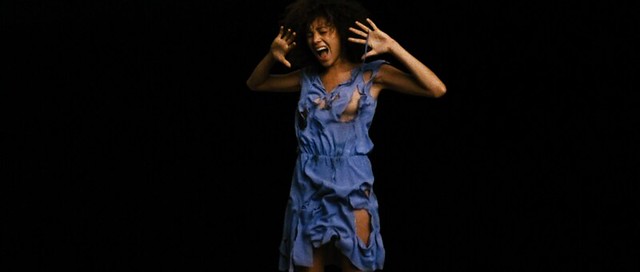
Koffi and Alice cross paths with a pink dress wearing street gang, Goonz, headed by Paco (Marcel Otete Kabeya). Still mourning the death of his little sister, Paco is in a fierce turf war against a rival gang. They have to fight out their differences in the makeshift wrestling ring under the mountain of coal.

With multiple storylines and characters, Omen introduces a different kind of storytelling that the Western filmmaking is not used to. Much like Anisia Uzeyman and Saul Williams’s Neptune Frost couple years back, the film is not bound to a straightforward narrative. Presenting a multicultural society in flux, where things clash with each other for dominance, the film’s colors and texture vie for your attention. It takes everything from everywhere – from the Democratic Republic of Congo, South Africa, and multiple other African nations, even from the Creole culture of Louisiana.

The film is mainly told through sensations and visual poetry. It’s in Mujila’s breastfeeding the river in the beginning of the film with purple milk as purple milk slowly spills out. It’s in a decrepit school bus full of pink dress wearing street urchins violently being towed. It’s in a group of women mourners crying until the floor of the house is ankle deep with their tears. It’s in witch doctor trying to exorcise a couple with sexually transmitted disease by painting their bodies and pelting them with a tree branch soaked in palm oil.

Omen is a truly unique experience to be had. Using the magical realism and symbolism steeped in tradition old and new, the film is a kaleidoscopic picture of bustling Africa that is here and now.

Omen plays as part of Cannes 2023’s Un Certain Regard section.

Tuesday, May 23, 2023

New Wave Noir

The Other Laurens (2023) - Schmitz The Other Laurens A case of mistaken identity in Claude Schmitz’s The Other Laurens plays out like a neo-noir directed by Aki Kaurismaki or a Belgian Big Lebowski with New Wave aesthetics.

In the center of all the convoluted plot twists and turns is Gabriel Laurens (Olivier Rabourdin), an unkempt, sad, middle-aged, private investigator specializing in lurid marriage infidelity cases whose mother is dying in the hospital. It is pretty clear that it’s his more flamboyant twin brother François, who has always been his mother’s favorite... and everyone else’s, it turns out.

Gabriel’s uneventful life gets turned upside down when his sexy niece, Jade (Louise Leroy) shows up at his doorstep, informing François’s death and suggesting there might have been a foul play in his accidental death. She doesn’t trust the local authorities and insists Gabriel to investigate. She also feigns that she is being followed by a dangerous man on a bike. Gabriel reluctantly agrees to accompany Jade to her home in the south.

When they get to Perpignan, A town in Southern France bordering Spain, Gabriel is coldly received by François’s American wife Shelby (Kate Moran of Yan Gonzalez films) and her entourage of aging biker gang, headed by Valery (Marc Barbe) living in her opulent white mansion. Shelby says drily of Gabriel’s appearance, “like seeing a ghost, the same but out of focus.” Even though Gabriel is eager to get back to Brussels, things keep getting in the way of his departure every time. And he begins to doubt that the car accident that resulted the death of his brother. Someone’s hiding something.

With theatrical lighting and primary and neon colors, The Other Laurens has the look and feel of highly stylized 1980’s New Wave aesthetics. Think of Jean-Jacques Beineix’s Diva or Luc Besson’s Subway. It’s in the yellow of the sports car, Jade’s tight blue jeans and black leather jackets and neon signs of a nightclub.

Rabourdin’s accidental hero, skulking around like 80's Gerard Depardieu is a charming mess caught among shady side of his brother’s dealings, Shelby’s scheming, the Spanish mob, and Jade’s affection.

While snooping around Spain with Jade, to find out what François was up to there, Gabriel attempts to leave everything behind once again, denouncing François’s gaudy lifestyles and how his bad taste permeates everything around him. It is revealed he has never got over the fact that his twin brother stole away the love of his life- Jade’s mother, from him. Gabriel and Jade exchange some hurtful truths to each other.

Then in an act of revenge, Gabriel hooks up with François’s Spanish mistress, whose affair started the whole mess in the first place, by pretending that he is his twin brother. Then he figures it all out.

It all builds up to the final shootout between the Shelby’s biker gangs and the Spaniards, resulting a daring helicopter escape involving Shelby’s American pilot.

The Other Laurens is an enjoyable deadpan noir with visual flair resembling the cool era of filmmaking.

The Other Laurens plays as a Director’s Fortnight selection at Cannes Film Festival.

Wednesday, April 26, 2023

Of Mountains and Men

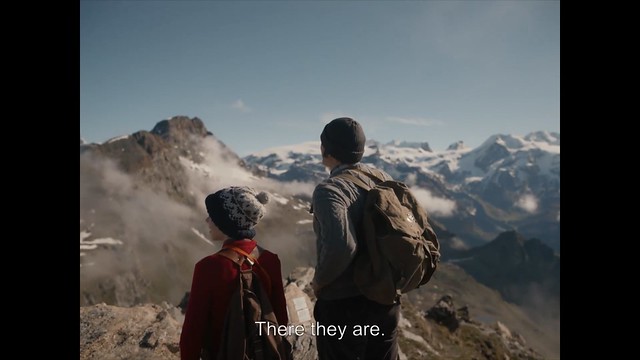
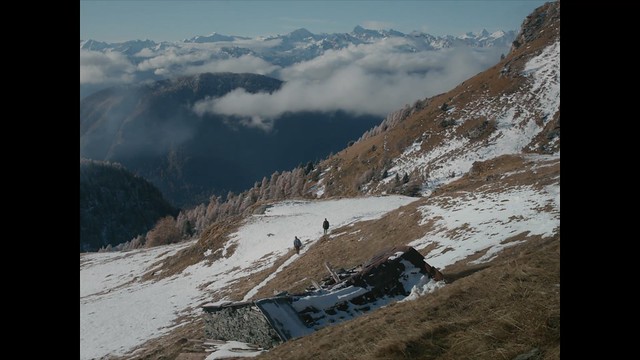
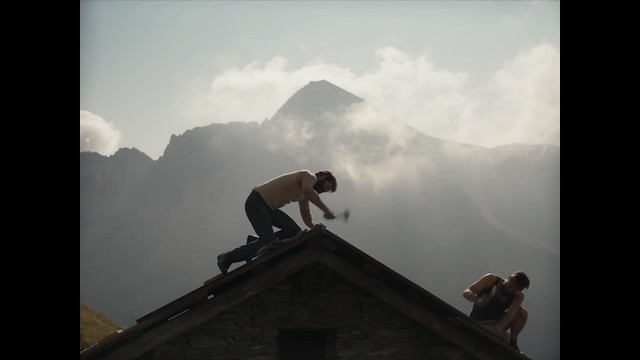
Le otto montagne (2022) - van Gronigen, Vandermeersch Screen Shot 2023-04-21 at 12.16.23 PM Screen Shot 2023-04-21 at 12.15.11 PM Screen Shot 2023-04-21 at 12.24.09 PM Screen Shot 2023-04-21 at 1.24.59 PM Screen Shot 2023-04-21 at 3.34.47 PM Screen Shot 2023-04-21 at 3.35.16 PM Based on Paolo Gognetti's book of the same title, Belgian filmmakers duo Felix van Gronigen and Charlotte Vandermeersch (The Broken Circle Breakdown)'s The Eight Mountains is an affecting epic tale of male friendship that is quite rare to see in films these days.
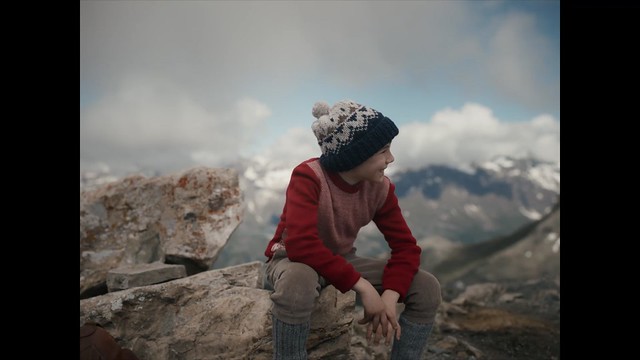
Shot in fitting full frame by Titane and Raw DP Ruben Impens, highlighting the majestic alpine peaks of Northern Italy, van Gronigen and Vandermeersch go on unhurriedly, telling the life-long friendship of Pietro (Luca Marinelli, Martin Eden, The Old Guard) and Bruno (Alessandro Borghi).

Narrated by an older Pietro, who would eventually become a writer, the film starts with him as an 11-year-old city boy from Turin spending his summer vacation with his parents up in the rural mountain regions. He befriends Bruno, who describes himself as the only child left in the region, because everyone has left to look for work in the city, including his father, as farming is a dying profession. Pietro's father, an engineer from the city, who secretly dreams about living the care-free life in nature, brings his family back to the mountains year after year. And the two boys' friendship grows.

The scenes where two boys forge their friendship -- swimming in the pristine alpine lake, playing in the field and hiking in the stunning mountain vistas -- are really something to behold. And these are innocent times, when children are less aware of their position in society and class differences.

Because of their budding friendship, Pietro's parents ask Bruno's guardians (uncle and his wife, who are cheesemakers) to take Bruno with them to Turin to get educated. In young Pietro's mind, it doesn't make sense: why do they want to take Bruno into the city life they always complain about? And why would Bruno even want to leave these heavenly, carefree surroundings? The move doesn't happen when Bruno's father, a brick layer who's rarely around, refuses the offer. And they stop going back to the mountain for vacation, partly because Pietro is now a teen and going through a rebellious stage, and resents his father, who is a salaryman, married to his work.

After the death of Pietro's father, their friendship re-emerges, now they are both bearded 30-something men and supposedly all grown up. Pietro finds Bruno waiting in the mountain village and takes him straight to an abandoned ruin of a cabin that they once stayed as children, while they were hiking with Pietro's father. Pietro learns that his father and Bruno kept in touch all those years. It turns out that his father had been helping Bruno, and sharing their love of the mountains, hiking together. That it was his wish for them to rebuild the cabin. And it dawns on Pietro that Bruno became a surrogate son to his father.

He finds his father's journal on the top of 'Grana,' one of the mountain peaks they frequented, detailing his thoughts and wishes, and how he wanted to live more freely. Pietro, who has not found the path in life and struggling, accepts the challenge, and the two men work on building the cabin together that summer. It will be their summer house. It is one of Pietro's girlfriends, who hooks up with Bruno upon visiting there and eventually starts a family with him in the mountains. Pietro laments how Bruno has found his path in life and he himself has not. But now Bruno has to contend with a struggling cheese-making business & a family to care for. The mountain life is not as carefree as when they were children.

In the meantime, Pietro, searching for the meaning of life, finds it in writing and the Himalayan mountains in Nepal. But their friendship continues, as he comes back, time and time again to spend his summer days in the cabin. It is Bruno who calls Pietro for help when life gets to be too much. Pietro comes back to the cabin from Nepal without hesitation. They argue about how to live life and say hurtful things to each other. And Bruno decides to spend the winter in the cabin alone.

The strength of The Eight Mountains is its complex depiction of a male friendship. It speaks volumes in their knowing glances and silences as they spend time together up in the mountains. Our circumstances change but the mountains don't. It illustrates men's ultimate desire and to retreat from the human world and finding it futile.

As they grow older, Pietro and Bruno understand this connundrum, and take refuge in each other's company. This all sounds corny as hell in words, but van Gronigen and Vandermeersch's earnest approach works beautifully, with awe-inspiring views of nature and superb, stoic acting by the two leads. Swedish singer Daniel Norgren's soulful, melancholic soundtrack does here what Leonard Cohen did for McCabe & Mrs. Miller. The film is one of the year's best.

The Eight Mountains opens Friday, April 28 in New York at Film at Lincoln Center and Angelika Film Center, with a national rollout to follow. Visit the official site for more information.

Wednesday, March 22, 2023

Emotional Necessity

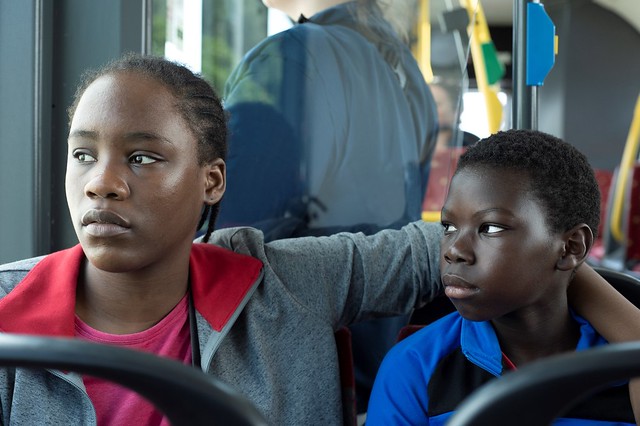
Tori and Lokita (2022) - Dardenne Tori and Lokita The Dardenne Brothers, Jean-Pierre and Luc have been making social realist dramas since the 90s. With Tori and Lokita, they tell a heartbreaking tale of two immigrant children bonding over their traumatic experience and trying to survive in a foreign country. Their makeshift family is quite different from that of Kore-eda's films: if Kore-eda's characters bonded together because of economic necessities, Tori and Lokita's bonding is simpler and based on innate emotions first and foremost: the everyday violence and fear the immigrants face on all sides are quite real and immediate and their need for each other's presence in absence of adults is even greater.

It starts with a teenage girl Lokita (Joely Mbundu) being questioned at a panel hearing which will determine whether they will grant her the necessary papers to stay in Belgium. But her story doesn't quite add up to prove that she is indeed Tori (Pablo Schils)'s older sister. She is prone to panic attacks, and they have to stop the interview. Later we see that they are rehearsing their questions and answers together (Tori already has papers). While staying at a communal housing provided by authorities, the two are inseparable, sharing a bed together where Tori only falls asleep to Lokita's lullaby. They sing together at a restaurant for money and Lokita delivers weed to client. It's Betim, the restaurant's chef, who runs the drug business out of his kitchen in the basement, that she works for. With the African smugglers, who brought them first to Europe from Benin, constantly demanding money with threats of violence, and Betim asking sexual favors all the time, it's quite difficult for Lokita to send money home where mom and five siblings are dependent on her, and also subsist a living in an unforgiving foreign country as a child. But Lokita is insistent on Tori continuing his education and not get involved with Betim's business.

The point the Dardennes are driving home with the film is pretty clear. It's the shared trauma that bonds Tori and Lokita together as they met on the boat that took them to Europe. Their bond is quite simple to understand – going through horrendous hardships together thousands of miles from home. Their need for emotional support for each other is tremendous. Lokita's panic attacks and their need for seeing and talking to each other every day is well illustrated throughout the film.

Things get darker when Lokita agrees to work at a weed farm in a faraway undisclosed location, tending weed while locked in the facility for days at the promise of fake documents that will let her stay in the country. It’s a modern slavery at work. Tori's desire to be reunited with Lokita and his resourcefulness locates her. He sneaks in through the ventilation system of the compound, and they plan to rip the chef off of his game. But they get caught.

Tori and Lokita hits you hard. It's one of the most brutal and emotionally bare films the Dardennes ever directed. Mbundu and Schils are terrific as two young leads. The film addresses some uncomfortable truths about horrible immigration system and lack of support for refugees, especially the children, to survive and deal with the trauma.

Wednesday, December 28, 2022

Not so Goodtime

Le bonheur (1965) - Varda le bonheur François and Thérèse are young ideal working class couple with two adorable children, living in a provincial town. He’s a carpenter and she is an occasional dressmaker working at home. It’s all love love love happiness and happiness until he meets and starts having an affair with Émilie, a post office/phone clerk. He is happy with having two loves and Émilie contends with him being married. But what a girl to do, as long as her man is happy? The trio’s sunny happy lives come crashing down when he tells Thérèse about his affair, since he proudly says he doesn’t want to lie. He loves them both and happy with having more happiness. After seemingly agree with the arrangement and after they make love in the park near the lake, Thérèse drowns herself. After bit of mourning period, Émilie slides into Thérèse’s place and they continue to go on their lives with little changed.

Le bonheur is a really subversive film and a great counterpart to what was happening with male dominated French New Wave at the time - 1965. It's a film that challenges the patriarchal society's notion of happiness. Why does a woman's happiness always have to be tied to her man's? Why does she have to settle for what she has or be the one making sacrifices?

Shot in idyllic summertime w/sun-kissed photography, the film hides its real prodding intentions very well. Varda was much more than some frivolous artist Godard regarded her as.

Monday, June 21, 2021

Appetite

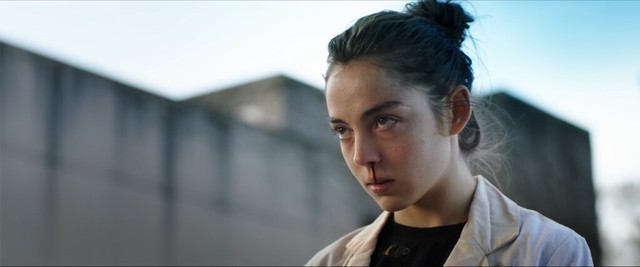
Raw (2016) - Ducournau Screen Shot 2021-06-21 at 7.09.07 PM Screen Shot 2021-06-21 at 8.07.47 PM Screen Shot 2021-06-21 at 7.10.07 PM Screen Shot 2021-06-21 at 7.10.34 PM Screen Shot 2021-06-21 at 8.09.00 PM Julia Ducournau's the rite of passage through cannibalism movie, Raw, is an icky and messy business. But with Garance Marillier's dedicated, feral performance as virginal Justine who has to find herself through series of trials, Ducournau makes her mark with her debut film that is unlike anything else. Sure it's not flawless, and the ending is a little bit conventional than I had hoped, but the ferocity and raw energy of the film is really something else.

Justine gets dropped off to a veterinary college by her dotting parents. Her older sister who is already attending the college is supposed to guide through her freshman years. Right away Justine is thrown into a over-the-top hazing rituals by class 'elders' (including her sister), starting by eating a raw kidney of a rabbit - Justine is a vegetarian, or at least she thought. Move over UPenn, this college happens to be a hardest party school ever! You really don't want to take your cats to a graduate of this college.

It's all bodily fluids and raging hormons everywhere. Justine discovers that she likes human flesh while getting a botched bikini wax from her sister - I don't wanna give anything away, but the scene's hilarious and terrifying at the same time.

Mixing not so subtle metaphors of cannibal and carnal, Ducournau charges ahead like a juggernaut, one gross incidents after another with the similar energy that is usually reserved for macho directors (Gaspar Nöe comes to mind). It's a remarkable achievement and I can't wait to watch her new film Titane.

Monday, May 28, 2018

Unapologetic Visual Feast

Let the Corpses Tan/Laissez bronzer les cadavres (2017) - Cattet, Forzani
Screen Shot 2018-05-28 at 10.27.23 AM
Screen Shot 2018-05-28 at 9.37.14 AM
Screen Shot 2018-05-28 at 9.38.13 AM
Screen Shot 2018-05-28 at 9.41.49 AM
Screen Shot 2018-05-28 at 10.28.35 AM
Screen Shot 2018-05-28 at 9.33.53 AM
Screen Shot 2018-05-28 at 9.25.07 AM
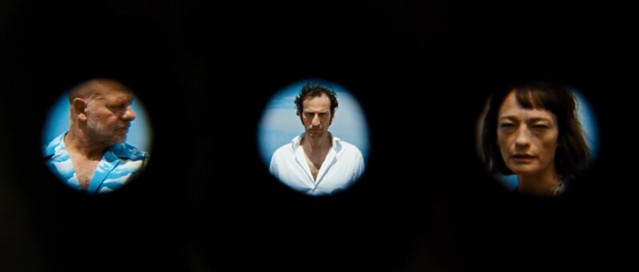
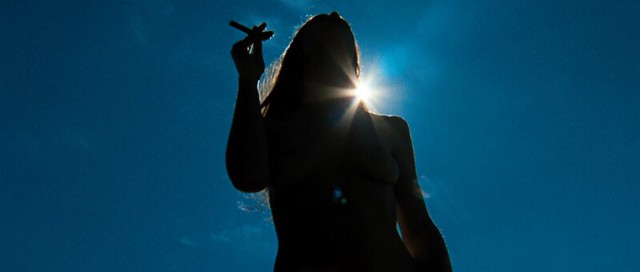
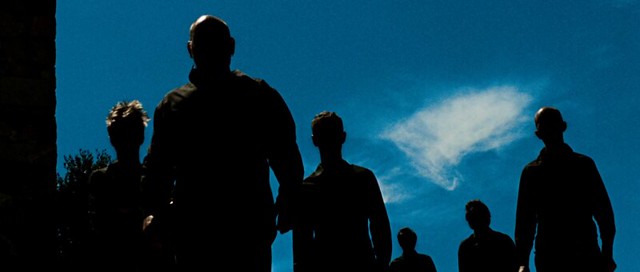
As usual, Belgian visual stylists duo, Hélèn Cattet and Bruno Forzani, creates unapologetic visual feast. Good to see Elina Löwensohn becoming a European arthouse queen in recent years as she plays an aging matron of a group of criminals hiding in some sunny Island here. It seems she has been wielding some cult like sexual power over these men and a writer (Marc Barbé), as she struts around with very little clothing. Things get a little crazy after the gang's gold heist and unexpected visit from the writer's wife, kid and a pretty nanny.

But really, story has little importance here. It's all to do with ultra stylized assault on the senses. Sex and violence mingles. Rapid editing, colors, shadows, sound design... Cattet and Forzani know what they are doing. Their craft pushes its giallo trappings on to another level, elevating it to an art form.

Wednesday, March 14, 2012

I Want to Ride My Bicycle

Le Gamin au Vélo/The Kid with a Bike (2011) - Dardenne
Photobucket
The Kid with a Bike opens 3/16 at Lincoln Plaza Cinema in NY. It will undoubtedly be ending up on my year end top 10 list for sure. Please go see it.

Just when I thought I comfortably settled in the world of the likes of Godard, Denis and Weerasethakul, the Belgian neo-realists the Dardenne Bros' The Kid with a Bike floors me and humbles me to appreciate the power of simple narrative once more.

Cyril (Thomas Doret) is an 11 year-old kid with a serious abandonment issue. After briefly running away from some sort of reform school to find his dad while adamantly denying the fact that his young dad abandoned him and sold his beloved bike for money, he has a run-in with Samantha, a hairdresser with a heart of gold (Cecil de France). She buys back his bike and agrees to be his foster parent on weekends. Cyril's not giving up finding his dad though and Samantha obliges to help him. But the young father working menial jobs, can't take care of him and doesn't want to see him. The result is devastating- Cyril scrapes his face and bangs his head against the car door repeatedly on the way back. Cyril is so desperate to find any kind of father figure, he falls in with the local 'dealer' who lures him in. One of many heartbreaking moments comes when the dealer plans a armed robbery of the local business using Cyril: When asked if 300 would be enough for him, Cyril answers, "I don't want any. I just want to do it for you."

With no acting experience beforehand, Doret is a revelation playing a physically violent, emotionally damaged kid. De France underplays her character and keeps her motivations hidden but she doesn't need to try hard. Her warmth pours out with a hint of her smile. You really get to feel for the kid. You really want the best for him.

Talk about quality, I bet every one of the Dardennes' films are exceptionally good. I've seen only two- La Promesse and Rosetta, both excellent. I shunned their films afterward thinking that every movie the Belgians are doing is pretty much the same. I moved away from the pleasures of watching a simple humanist (but never sentimental) drama. Not challenging enough, not edge enough, I kept telling myself. The Dardennes are undoubtedly the master at what they do. They hit the right note every time. Deeply moving and beautifully acted, The Kid with a Bike is undoubtedly one of the year's best. And I am saving some of their films at bay for those days when I get so worked up and angry at this ugly ugly world.