Friday, August 21, 2026

Touch of Leather

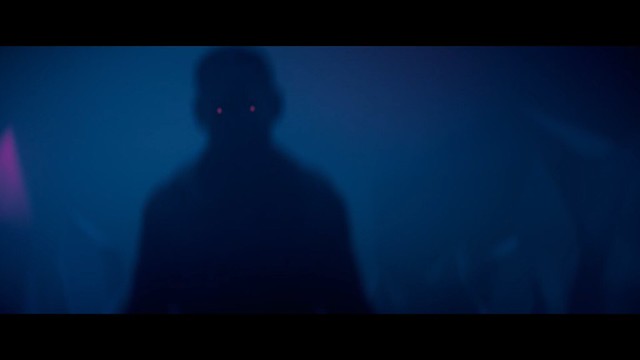
Her Private Hell (2026) - Refn Screen Shot 2026-08-14 at 5.46.41 AM Screen Shot 2026-08-14 at 6.04.34 AM Screen Shot 2026-08-14 at 6.23.58 AM Screen Shot 2026-08-14 at 6.27.42 AM Screen Shot 2026-08-14 at 6.30.37 AM Screen Shot 2026-08-14 at 6.57.01 AM Screen Shot 2026-08-14 at 7.20.04 AM Screen Shot 2026-08-14 at 7.20.42 AM Screen Shot 2026-08-14 at 7.21.38 AM Screen Shot 2026-08-14 at 7.25.39 AM Her Private Hell is Refn's new feature since 2016's Neon Demon, and after his stint in streaming platform: miniseries Too Old to Die Young for HBO Max and Copenhagen Cowboy for Netflix, with increasingly patient-trying style where pretty pictures moving in snail's pace and nothing much happens during the hour duration of each episode. Gone are his mystique and art-for-art's sake haydays of the early 2000s and 2010s, Her Private Hell shatters like a glass box within a few minutes in candy colored neon lights and artificial fog. I do not want to invoke style over substance and give Refn a pass as a visual stylist. I just can't, any longer.

Elle (Sophie Thatcher) and her step mother Dominique (Havana Rose Liu) live on a high sky scraper above the clouds. It's all neon colors of blue and red everywhere. It's supposed to be Japan because of the subplot involving American GI Private K (Charles Melton) and two MC characters who appear in tandem? Anyway, a new bright eyed girl, Hunter (Kristine Froseth) just moves in with Elle and Dominique. There's a strange father/daughter dynamic with Johnny Thunders (Dougray Scott), who's always busy traveling but says some cryptic things to the girls. It's Johnny Thunders, he is the most powerful, fascinating man, etc, etc... we are told. 'Johnny Thunders is gonna protect you and take care of you.' Whatever that means.

There's a mysterious entity on the loose killing women, and Private K journeys through the yakuza underworld shrouded in the mist, to find his daughter who was abducted. It doesn't really matter if the two parallel stories connect or not. It's not really the point. But why do we need a point when we have pretty faces in gaudy makeup and colorful lights? Well, they were not enough to Keep me interested.

The vacuous pretty images of Her Private Hell belong to perfume and fancy handbag commercials, not the entirety of the duration of a narrative film. Refn really has a knack for making a 1 hour 50 minutes film feeling like 5 hours. Thatcher and Liu along with Melton, walk, pose and lie around like they are in a fashion shoot. They are pretty but whenever they try to act with the stilted deliveries of hilariously bad dialogue, it shatters the movie illusion, where you get lost in the imaginary world, created by a good filmmaker. It's bad. It doesn't even work as a tongue-in-cheek satire, like Neon Demon did. With its slow pace and total lack of suspense, it also fails as a homage to giallo. And it certainly doesn't come across as Hans Christian Andersen's dark fairytale as Refn not too subtly suggests.

The only thing that is lost in this movie is unfortunately Thatcher. She has the looks, but she can't act for shit. Or at least she hasn't found the right role to shine yet. And this movie ain't it.

Monday, August 17, 2026

Unfinished

Franz (2025) - Holland FRANZ 3 Seasoned Polish director Agnieszka Holland's biopic of perhaps the most celebrated Czech writer Franz Kafka shares much unconventionality in filmmaking as Peter Watkins' Edvard Munch biopic - with jumbled timeline - Vonnegut style, breaking the 4th wall with protagonists glancing at the camera, etc. Like Watkins's Munch, Holland relies on these dizzying formalist filmmaking - unruly zoom-ins, shallow focuses, to accentuate the craziness of early 20th century hurtling towards world wars and nazi Germany.

In Franz, Kafka (Idan Weiss), is a man of words, writing strange short stories in the household of gregarious industrialist patriarch, Hermann (Peter Kurth). Growing up with 3 sisters and an obedient mother and later, suffering from consumption (which he died of at the age of 40), in many film versions, Kafka is treated as an effeminate and sickly man, a complete outsider who couldn't deal with outside society. Not in Holland's version - here, he is depicted as a well-rounded, vigorous young man who enjoys the company of women, physical exercises and being sociable when he wants to. He even enlisted in WWI in support of the Austro-Hungarian empire.

It's his words on many letter exchanges with women that gets him in trouble. First with Felice Bauer (Carol Schuler), whom he was hastily engaged with, then her best friend Grete (Gesa Schermuly) and later, his best friend and publisher Max Brod (Sebastian Schwarz)'s wife Milena (Jenovéfa Boková). In many ways, Kafka is depicted as an everyman who happens to be a great writer with a very dark imagination. As a tour guide to Kafka museum in present day explains, Kafka wrote only a handful of short stories and novels but himself is a subject of millions of writings.

But I think Holland's cinematic approach to Kafka's genius was taken for granted too much. The only time we see one of his writings coming to life is Penal Colony in the beginning. It is appropriately shocking and gruesome - an accused is bound on a board face down. And countless beds of needles press down on his bare back to write his crimes on his skin for hours. As Kafka reads giddily in front of live audiences, the half of the crowd, sickened by the story, walk off. I just wished she used more of his writing imagined on screen, throughout the film.

With a kaleidoscopic depiction of the life of the famous literary figure, what Holland is trying to get at with Franz, is that it is impossible to present someone truthfully. It is true that Holland's Kafka is not a caricature of the famous writer but more of a person, but in doing so misses the mystique about the man who was one of the most influential writers of all time.

Tuesday, August 11, 2026

Past Future Perfect

Rose of Nevada (2025) - Jenkin Screen Shot 2026-08-09 at 7.37.51 AM Screen Shot 2026-08-09 at 7.39.25 AM Screen Shot 2026-08-09 at 7.39.47 AM Screen Shot 2026-08-09 at 7.43.51 AM Screen Shot 2026-08-09 at 8.05.11 AM Screen Shot 2026-08-09 at 8.09.54 AM Screen Shot 2026-08-09 at 8.11.12 AM Screen Shot 2026-08-09 at 8.21.52 AM Screen Shot 2026-08-09 at 8.55.06 AM Screen Shot 2026-08-09 at 8.58.16 AM Screen Shot 2026-08-09 at 9.10.30 AM Screen Shot 2026-08-09 at 9.15.08 AM Mark Jenkin, a Cornish purveyor of celluloid art, has been shooting his films exclusively on 16mm film on Bolex camera, now comes up with time traveling, seafaring film with great efficiency and intrigue with two big movie stars, George MacKay and Callum Turner, as a couple of hired fishermen off the Coastline where Jenkin comes from.

Rose of Nevada, a small fishing boat that disappeared 30 years ago, returns to the harbor. The declining fishing community is still reeling from the loss of Alan, the fisherman who set out to sea on that boat, and Luke, whose guilt of not accompanying Alan that day drove him to suicide. The boat's owner/businessman Mike recruits young family man Nick (MacKay), who happens to be the next door neighbor of Luke's grieving parents and Liam (Turner), an interloper who needs a job. The boat is steered by a seasoned, mysterious snarling seaman Murgey (Francis Magee), who might or might be the connection between the past and present.

After a successful haul, Nick and Liam return home and find themselves to be regarded as Alan and Luke by the townsfolk thirty years earlier. The Richards - Luke's parents, think their son is having some sort of mental breakdown from stress and Alan's fidgetty wife regards, he is having one of those moody episodes. As they go on another fishing trip and things remain stuck in the past, Nike is having a hard time accepting a new reality than Liam, who slowly embraces his role as Alan, a family man with wife and daughter.

Nick refuses to go on board for yet another fishing expedition because he can't go on without seeing his wife and young daughter because like himself, they are not born yet in 1993. He contemplates suicide by jumping off the cliffs, like Luke did, thus, completing Terminator/Twelve Monkeys like self-fulfilling profecy. But he thinks better of it. He accepts fate and joins the Richards as Luke.

Featuring working class characters and their circumstances that Jenkin is familiar with growing up, he beautifully crafts a sort of low-fi sci-fi with sodden social realism with Rose of Nevada. The details of the fishing village is vividly captured in glorious 16mm with vibrant colors, blemishes and grains. I gotta check out Jenkin's other films now.

Friday, August 7, 2026

Self Discovery Through Slasher Genre

Teenage Sex and Death at Camp Miasma (2026) - Schoenbrun Teenage_Sex_and_Death_at_Camp_Miasma_TMDB-9rsvyKSQ4y9EJNq1Rr1PR5XPjOW A mousy, Sundance winning filmmaker Kris (Hannah Einbinder) has been given a chance to direct a reboot of the Camp Miasma, the 80s slasher franchise, reminiscent of Sleepaway Camp, Friday the 13th, Burning and the like. Miasma franchise is now a butt of a joke to everyone who remembers it being steeped in blatant homophobia, transphobia, gore and titillation of the flesh. Still, it’s a cult classic to diehard horror weirdos.

Kris is keenly aware that her new hot status as an indie darling, plus being a queer filmmaker, landed the job because the studio desperately wants to be seen as woke by hiring them. They understand the fact that the Hollywood ecosystem is a mutual exchange of who's using who.

Under the microscope of a gaggle of Hollywood producers and moneymen, Kris has to get the project off the ground, soon. They are obsessed with the starlet of the first Miasma movie, Billy Presley (Gillian Anderson). They keep watching the VHS copy of the movie over and over again.

In a hilarious pitch zoom meeting with the executives, using their newly earned auteur clout, Kris tries to dictate the project the way they wanted, not in the studio's terms. It doesn’t go well to say the least. While their team tries to smooth over the aftermath, Kris has to convince reclusive Billy to partner up with them to realize the grand vision of the complete and utter transformation of the dead franchise. Little do they know, it is Billy, the Final Girl of the first Miasma movie, who lost her virginity in it, the sultry recluse, ends up helping them to give The Little Death (La Petite Mort - euphemism for orgasm in French), the spear wielding boogie-person of the franchise, the correct backstory and transform them into a sympathetic character.

With two previous somber films, We are All Going to World's Fair and I Saw the TV Glow, Jane Schoenbrun explored desire, fantasy and missed opportunities in an emotionally resonant search for queer identity. In turn, Camp Miasma is a campy, tongue-in-cheek, gory, meta rendition of nostalgia ridden romp. It’s a tale of self-discovery and joyful celebration of queer sex, guided through the great Gillian Anderson, who embodies Billy, Kris’s desire and myth personified, in the Dolly Parton drawl.

With intentionally fake production design, and the great mix of Bob Ross inspired matte paintings, over the top cartoon violence and campy humor, Schoenbrun seems to be finally letting it loose and just having fun- embracing their queerness fully and sexuality all out in the open, matching the main theme of the movie - self-acceptance and showing who they really are. Teenage Sex and Death at Camp Miasma is great fun.

Monday, August 3, 2026

Thoughts on Theater of Thought

Theater of Thought (2022) - Herzog Screen Shot 2026-08-03 at 8.56.23 AM Screen Shot 2026-08-03 at 8.55.45 AM Screen Shot 2026-08-03 at 10.28.54 AMScreen Shot 2026-08-03 at 10.28.34 AM At age 83, Werner Herzog, legendary filmmaker, seems he has no plans to slow down. Over 80 films in his filmography, he continuously churns up one or two films every year or so, with widest variety of subjects one can imagine. For a moment, please set aside your misgivings about his aggressively grandious and what can be seen as culturally insensitive films he is best known for, from the 70s and 80s. Without much public attention or interests, he's been quietly building his reputation as a documentary filmmaker in parallel with his narrative works, especially from the 90s to present.

Objectively speaking, he is one of the few established filmmakers, who is in a position (well, he has no scrupples taking on a role in Mandalorian to finance his films), can and will choose to make films about what he is interested in.

His documentary work lately though, has been inclined to science and technology. And there, he has been exploring subjects with child-like wonder and curiosity, which he professes are and should be the bases of all filmmaking. In Theater of Thought, he explores technology and human brain and its philosophical and ethical implications by asking neuroscientists, industrialists and medical doctors and using his reputation as a legendary filmmaker, gains extraordinary access to their work.

It is not really possible to objectively critique Herzog's films in its filmmaking merits anymore - especially on his documentary inclined work. What interview technique or his framing or music choices are not the focus of his films. But his unending curiosity to human experience is. Keeping that in mind, here are some of my thoughts on Herzog's Theater of Thought:

At its infant stage, the advancement neuroscience has two big implications to the world we live in- to help disabled individuals to experience human life to more fully, and dangers of government/coporate manipulations of individual rights and freedom.

Human brains are too complex and fickle, it is impossible (for now, and probably not in our lifetime) for AI to replicate it fully.

Herzog never wavers in his curiosity about human existence and experience. That's why he never looks back in his films. Because there are still so much to explore. Nostalgia is not his game.

Theater of thoughts, again, as all of his films, is an invigorating, fascinating and thoughtful inquiry into our existence. I really hope Herzog keeps making these until the end.