Showing posts with label Denmark. Show all posts

Friday, August 21, 2026

Touch of Leather

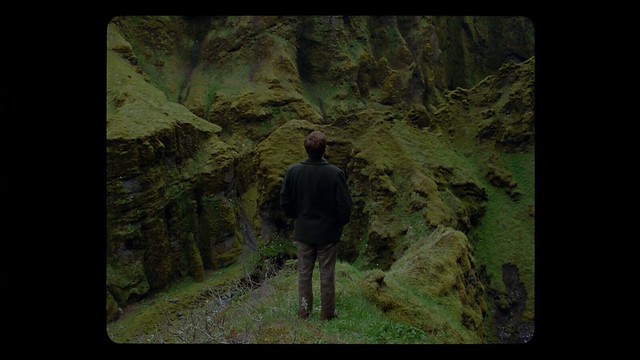
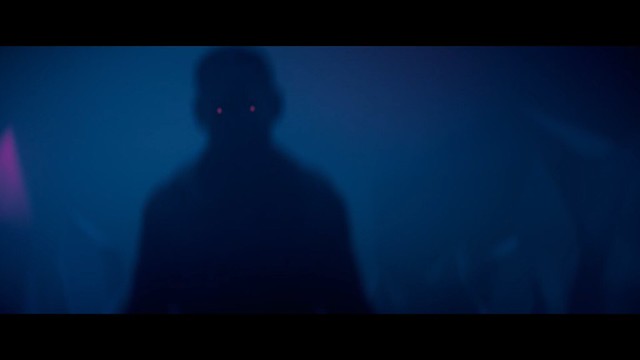
Her Private Hell (2026) - Refn Screen Shot 2026-08-14 at 5.46.41 AM Screen Shot 2026-08-14 at 6.04.34 AM Screen Shot 2026-08-14 at 6.23.58 AM Screen Shot 2026-08-14 at 6.27.42 AM Screen Shot 2026-08-14 at 6.30.37 AM Screen Shot 2026-08-14 at 6.57.01 AM Screen Shot 2026-08-14 at 7.20.04 AM Screen Shot 2026-08-14 at 7.20.42 AM Screen Shot 2026-08-14 at 7.21.38 AM Screen Shot 2026-08-14 at 7.25.39 AM Her Private Hell is Refn's new feature since 2016's Neon Demon, and after his stint in streaming platform: miniseries Too Old to Die Young for HBO Max and Copenhagen Cowboy for Netflix, with increasingly patient-trying style where pretty pictures moving in snail's pace and nothing much happens during the hour duration of each episode. Gone are his mystique and art-for-art's sake haydays of the early 2000s and 2010s, Her Private Hell shatters like a glass box within a few minutes in candy colored neon lights and artificial fog. I do not want to invoke style over substance and give Refn a pass as a visual stylist. I just can't, any longer.

Elle (Sophie Thatcher) and her step mother Dominique (Havana Rose Liu) live on a high sky scraper above the clouds. It's all neon colors of blue and red everywhere. It's supposed to be Japan because of the subplot involving American GI Private K (Charles Melton) and two MC characters who appear in tandem? Anyway, a new bright eyed girl, Hunter (Kristine Froseth) just moves in with Elle and Dominique. There's a strange father/daughter dynamic with Johnny Thunders (Dougray Scott), who's always busy traveling but says some cryptic things to the girls. It's Johnny Thunders, he is the most powerful, fascinating man, etc, etc... we are told. 'Johnny Thunders is gonna protect you and take care of you.' Whatever that means.

There's a mysterious entity on the loose killing women, and Private K journeys through the yakuza underworld shrouded in the mist, to find his daughter who was abducted. It doesn't really matter if the two parallel stories connect or not. It's not really the point. But why do we need a point when we have pretty faces in gaudy makeup and colorful lights? Well, they were not enough to Keep me interested.

The vacuous pretty images of Her Private Hell belong to perfume and fancy handbag commercials, not the entirety of the duration of a narrative film. Refn really has a knack for making a 1 hour 50 minutes film feeling like 5 hours. Thatcher and Liu along with Melton, walk, pose and lie around like they are in a fashion shoot. They are pretty but whenever they try to act with the stilted deliveries of hilariously bad dialogue, it shatters the movie illusion, where you get lost in the imaginary world, created by a good filmmaker. It's bad. It doesn't even work as a tongue-in-cheek satire, like Neon Demon did. With its slow pace and total lack of suspense, it also fails as a homage to giallo. And it certainly doesn't come across as Hans Christian Andersen's dark fairytale as Refn not too subtly suggests.

The only thing that is lost in this movie is unfortunately Thatcher. She has the looks, but she can't act for shit. Or at least she hasn't found the right role to shine yet. And this movie ain't it.

Tuesday, January 31, 2023

Elemental

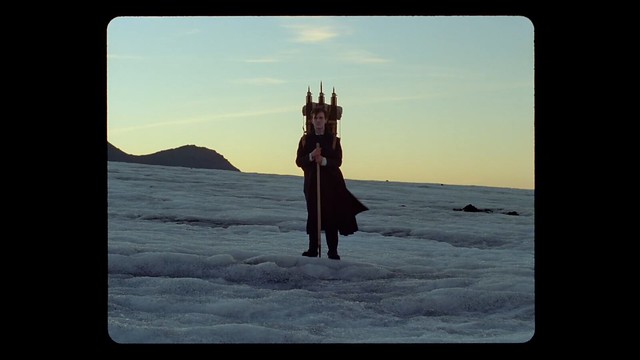
Godland (2022) - Pálmason screen shot 2023-01-24 at 9.36.43 pm screen shot 2023-01-24 at 9.35.30 pm screen shot 2023-01-24 at 9.31.31 pm screen shot 2023-01-24 at 9.44.40 pm screen shot 2023-01-24 at 9.36.32 pm screen shot 2023-01-24 at 9.46.18 pm screen shot 2023-01-24 at 9.36.07 pm screen shot 2023-01-24 at 9.46.50 pm screen shot 2023-01-24 at 9.38.04 pm screen shot 2023-01-24 at 9.39.23 pm screen shot 2023-01-24 at 9.40.10 pm Godland, directed by Icelandic director Hlynur Pálmason, is inspired by the first photographs found in the early settlement in the southwest of Iceland. The film has an awe-inspiring, majestic setting characteristic of many films shot in the active volcanic island nation. Indeed, everywhere Pálmason and his DP Maria von Hausswolff points their camera to, in its full frame portraiture style, the film is cinematic as hell. But it's not the gentle, sun-kissed nature we see in Terrence Malick films. Rather, it's an unforgiving, overwhelming, and downright threatening environment. There's little poetry or lyricism. Matching that backdrop, the film is not about one man's admirable, unwavering faith or enduring love. It's about guilt, envy, pride, prejudice, distrust, lust... in other words, humanity in a nutshell, and its insignificance against Mother Nature.

Young Danish priest Lucas (Elliott Crosset Hove) is ordered to travel to Iceland, which was a remote Danish Territory back in the late 19th century, to build a church for the small Danish settlement there. He is assigned a translator (Hilmar Guðjónsson) who is a half Dane and half Icelandic, and a small crew of Icelandic laborers. With his clunky large plate camera set up always tethered to his back (with upside down tripod sticking out over his head and shoulders like some sort of a religious artifact), he is an uneven match against scruffy crew of seasoned working-class journeymen.

When they get to the shore of Iceland, they hook up with Ragnar (Ingvar Sigurdsson), a brutish Icelandic man, as their guide. Ragnar's down-to-earth workingman ethics and his local knowledge of the land is a stark contrast to Lucas's nebbish priest from the so-called civilization. They don't see things eye to eye on many occasions.

At first it seems reasonable to trek the rugged surroundings, as they soak in the beauty and adventure spirits. But things fall apart quickly when they reach a river crossing. Against Ragnar's advice, Lucas orders the party to cross the raging river. Some of the horses carrying the supplies get swept away in the rapids, resulting the drowning of the translator whom the priest built a sort of friendship with. Wrecked with guilt, Lucas has a nervous breakdown shortly thereafter, and falls gravely ill. It is Ragnar who carries Lucas, tied to the back of the horse, all the way to the settlement.

Lucas is recovered in the care of Anna (Vic Carmen Sonne) and Ida (Ída Mekkín Hlynsdóttir), two daughters of Carl (Jacob Lohmann), a statesman of the settlement who helps build the church next to his home. Carl is stupefied for the fact that Lucas and his crew came all the way on foot, rather than sail to the settlement which would be much easier and faster. “To see the land and get to know its inhabitants?” he muses, puzzled.

Lucas is smitten by the older daughter Anna. Carl, sensing there is a weakness in Lucas’s character, warns her not to get close to him. These people come and go, he says. But Anna secretly yearns to go back to the motherland, back to civilization.

As the church construction is near completion and Ragnar and his crew is about to head back to their dwellings, things get tense between Lucas and Ragnar. First Lucas scoffs at the idea of Ragnar being interested in Christianity. They confront each other at a local celebration where they take part in traditional wrestling match in front of all the settlers and laborers. Then Lucas refuses to take photographs of Ragnar as a parting gift. Lucas’s deep seeded prejudices comes bubbling up to the surface. These Icelandic savages don’t deserve God’s love. Ragnar counters with extreme measures.

With its circle of life ending, Godland is a contemplation of us humans’ fleeting existence on earth. In a true Herzogian sense, with large brushstrokes, Pálmason draws a grand allegory that we are after all, elemental. And it's magnificent.

Sunday, July 3, 2016

Los Angeles Eats Itself

The Neon Demon (2016) - Refn
 photo 61e66d4f-9a91-4bf5-aa51-900336afee34_zpsatwgvwla.jpg
Once again, in David Lynch's absence, NWR carries the torch, delving more and more into flashy, neon-colored abstraction. If Lynch is a true artist creating certain mood with set design and texture (I'm grossly simplifying his artistry, forgive me), Refn is all about the use of lights. Still abiding by a thin narrative, he creates gothic fantasy/nightmare filled with the notion of beauty, fragile innocence and narcissism. The Neon Demon can easily be dubbed as Los Angeles Eats Itself, literally.

The paper thin story revolves around Jesse (Elle Fanning), a beautiful High School dropout from bumfuck nowhere in LA. Living out of a skeeziest motel, run by a menacing, predatory man (Keanu Reeves at his sleaziest- Refn's genius in casting), our wide-eyed ingenue is at first a bunny in a wolf's den. She befriends a pretty makeup artist Ruby (Jena Malone) who introduces her to LA modeling scene. Jesse knows she can make money off of her looks. Her natural beauty soon finds her fame and causes her meteoric rise and in doing so accumulates number of enemies. Soon her success gets to her head.

Refn has grown as a visual artist. His use of shapes, namely triangles in this film, is pastiche of 70s psychedelia or 80s rudimentary video games than actual symbols with meaning. They trigger a certain uneasy mood. Some of the images here are really striking and unforgettable yet again, devoid of any meaning. One might argue that all these are empty symbols and skin deep but so does the subject Refn portrays. Just like Lynch's Mulholland Dr., the parodying LA is not the main draw here. It is certainly imbued in its view, but artistically it's much more. The Neon Demon is very much like a Dario Argento film in his haydays. You have to enjoy it for its aesthetics and mood. Let it wash over you and you will be richly rewarded.

Wednesday, August 5, 2015

Silent Grief

Violet (2014) - Devos
 photo 1681c94d-4a60-4ccd-944d-ced13b3e6cc6_zpscj1rmkkn.png
 photo 4b50a562-9d8c-4154-86e5-4298a1499ab9_zpslknzrtxh.png
 photo f5b02ba4-e191-4958-a4b5-4a1384d2d893_zpsttlstcpa.jpg
Stunningly photographed in full frame, Violet expresses the physical & emotional detachment from grief and shock after a senseless murder. The film is extremely understated and somber yet 10 times more cinematic than anything Gus Van Sant has done. Use of shallow depth of field, sparse dialog and disorienting yet highly effective sound design conveying the silent grief, first time Belgian director Bas Devos achieves something remarkable here.

Devos knows just about how long to hold a mute static shot or hover over youth inhabiting suburbia to have resonance and depth. The 7 minute one shot ending is worthy of Antonioni comparison.

Wednesday, January 29, 2014

"Please Think of the Children!"

The Hunt/Jagten (2012) - Vinterberg
 photo e292fd1a-dae3-4d71-87c3-e74ed7599543_zpsd835418b.png
Yes, Mads Mikkelsen is great as Lucas, a kindergarten teacher who's falsely accused of sexual molestation in a small, tight knit community. He deserved the best actor award at the Cannes and everything. But it's Vinterberg's regular Thomas Bo Larsen who plays Theo, Lucas's best friend and the father of a little girl whose little lie that starts up a shitstorm, really shines here. Vinterberg is smart not to make it a courtroom drama or about the loss of innocence. It still retains the sharp critique on the 'please think of the children' mentality and deals with thorny subject expertly without sacrificing the narrative. The Hunt is about simmering tension underneath the society that looks picture perfect. That even someone as well regarded and decent like Lucas isn't safe once the seed of doubt is planted. The Hunt is a less grandiose, down to earth Haneke film. It's a chilling reminder of once well to do northern Europe and its turmoil in a much more complicated world. The ending is really chilling.

Saturday, October 12, 2013

Bangkok Dangerous

Only God Forgives (2013) - Refn
 photo 9eb52376-ac8d-4239-bb2f-2c00fdc68cff_zps4b81c90e.jpg
Only God Forgives is not very different than Refn's previous films. And I have no complaints. Immaculately designed and choreographed, the film looks and sounds fantastic. Its composition and colors all seem like house of cards at first, but its plasticity grows on you. Ryan Gosling's expressionless face and sparse but totally lol dialog hurtle the film toward unintentional black comedy territory. But once you shake off that unavoidable, nagging tendency to compare him to the stylings of Kubrick and Lynch, deep down you know this guy has got something. It's his use of silence that gives his vulgar, low life characters weight. And I love that. All in all, it works. It was a blast!

Monday, August 6, 2012

People are People

The Red Chapel (2009) - Brüger
the red chapel
bvredchapel
A very promising premise: 3 Danish comedians travel to North Korea to pull a Borat style stunt in front of stunned, humorless audience. Mads Brügger doesn't come close to achieving that goal. It's not even that funny. But instead, The Red Chapel becomes something else entirely.

The Red Chapel, comprised of two Korean-Danes- brawny Simon Jul Jørgensen and spastic Jacob Nossell who's bound to a wheelchair most of the time and managed by Brügger, arrives in North Korea under the guise of a cultural exchange act and set to perform a traditional Danish comedy act (whatever that means) that's all fart gags and involves singing Wonder Wall. The idea gets shot down by NK Cultural Ministry bigwigs. Brügger, deathly afraid of blowing the cover, compromises on everything with authorities despite Simon & Jacob's protests. It becomes something else when Nossell has a breakdown and refuses to comply with Brüger's deception. For Brüger, there are no moral scruples- North Korean regime kills its own citizens and they are thoroughly brainwashed and pretending to live in worker's paradise. And we see the evidences of that time and time again: adorable but robotic little children can't seem to stop waving at the camera. Mrs. Pak, assigned to be the translator and the shadow of the crew, breaks down in tears whenever the late Great Leader is mentioned.

Young Nossell (18 at the time) realizes Pyungyang's two faced niciety and is horrified by it. There is a scene where Brüger and the crew is pressured to march with the huge military march commemorating Korean War (for them, instigated by the imperialist US). Brüger has no problem shouting slogans with his fist in the air- it's gonna look great in the film. However, Nossell can't bring himself to be part of it. Obviously both Mads and North Koreans try to manipulate him for their own benefit. The whole footage of them marching is on the State owned TV that night.

What Brüger doesn't realize is that for N Koreans, the nationalistic fervor overcomes everything, including famine, personal freedom, even their own death. Pak's maternalistic, genuine niciety toward invalid Nossell is touching too. Nossell tries to put Pak in the corner when he says that everyone he meets is beautiful, asks her to meet other invalids in his slurred English (North Koreans kill off their invalids at birth to show their purity and strength as people) but decides to save face at the end, saying, "maybe next time." Only part that made me smile was a group of pretty teen girl performers playing with Nossell and Jørgensen. It shows that their ideology maybe different, but young people behave the same way everywhere. Even though he failed to capture what he set out to do, Brüger reveals a lot about the hermit kingdom in The Red Chapel: people are people.

Tuesday, October 18, 2011

The Thing Revisited

The Thing (2011) - van Heijningen Jr.
Photobucket
Danish filmmaker Matthijs van Heijningen Jr.'s interpretation of what happened to the Norwegian camp prior to the iconic 1982 Carpenter thriller The Thing, is a noble attempt that comes up short. It lacks Carpenters trademark slowburn, building up suspense. The original is full of characters and class tensions, these Scandinavians just confirm their stereotypes, that they are human lettuces. Mary Elizabeth Winstead is thrown in the mix as a smart American Paleontologist, Kate, to give this prequel a slight break the otherwise sausage fest. There is a little bit of reverse power dynamic when Kate screams "OPEN YOUR MOUTH!" to all the burly bearded Nords to check their fillings to see if they were human or not (the thing can't duplicate anything that is not organic material). The pacing too fast, effects too CG and interpretation too literal, this thing works as a so-so horror and a novelty item but that's as far as it goes.

Sunday, July 18, 2010

Unleavened

Valhalla Rising (2009) - Refn
Photobucket
I gotta admit, Nicolas Winding Refn(The Pusher Trilogy, Bronson)'s macho posing looks and works much better in this period piece. Hell, any film looks much better if it took place in a desolate, stark, unforgiving nature background. Valhalla Rising almost rises above its thin premise by its beauty- a.k.a.; New World. Not even Mads Mikkelsen's one eyed mute warrior from Sutherland can save this hallucinogenic black metal music video. Granted, Refn's use of wide screen format is impressive and often breathtakingly gorgeous. But like his first and last American film, Fear X, it's muddled in Lynchian (but nowhere as intriguing) trippy-ness. Then again, it's not set in American Midwest and not about a small time security guard.