Showing posts with label Thailand. Show all posts

Saturday, May 17, 2025

Act of Remembering

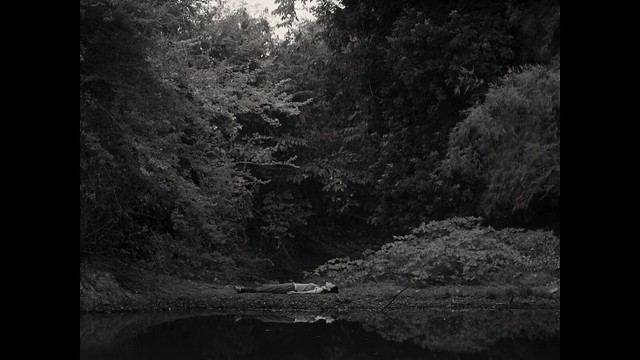
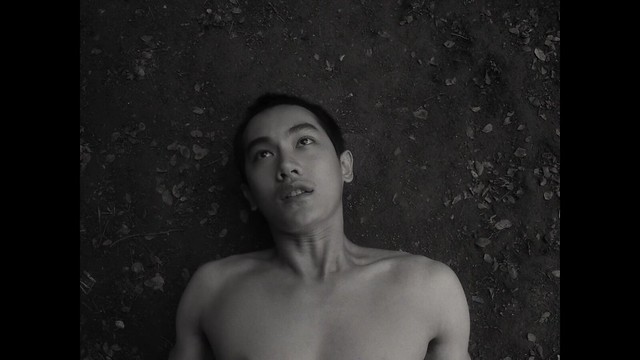
A Useful Ghost (2025) - Boonbunchachoke A Useful Ghost Cinema, capturing moving images in time and space, projecting them and promising endless reanimation, is the ghostliest of all media. Ghosts, in literature and films, in large part, have been staple stand-ins for the unfinished businesses. With that in mind, Ratchapoom Boonbunchachoke's feature debut, A Useful Ghost tells a very queer ghost story within a story about the importance of remembering. Set in modern day Thailand, the layered film takes the traditional Asian vengeful ghost story horror trope, but told with a great deal of deadpan humor. It suggests that remembering the dead, in our exploitative neoliberal world on the brink of environmental catastrophe, can be an act of resistance.

A Useful Ghost starts with our protagonist (Wisarut Homhuan) introducing themselves only as an 'academic ladyboy', having trouble with their vacuum cleaner. A handsome repairman shows up at their doorstep and starts telling an enchanting ghost story. His yarn unfolds in a factory which makes household appliances. A worker dies of an illness at the job and his ghost haunts the place, by taking over various machines and appliances. The owner, Suman (Apasiri Nitibhon), who inherited the factory from her dead husband, has to shut down the factory until the place is exorcized.

In the meantime, Suman's son March (Wisarut Himmarat), a grieving widower, is visited by the ghost of his dead wife, Nat (Davika Hoorne), who died of air pollution related illness, in the form of a red vacuum cleaner. It's not a good sight as March makes out with a vacuum cleaner while the company elders tour the haunted factory. Suman and the elders try to stop this unholy relationship in various ways (including electroshock therapy). They only tolerate their reunion when she becomes useful in driving out other pesky ghosts, just like Suman’s first born gay son whom they accepted- only, when his Australian born husband turns out to be useful as business liaison.

Soon the rich and powerful friends of Suman seek Nat's exorcising service, as they are haunted by the ghosts of people who died in government crackdown under military dictatorship, industrial accident, etc. In turn, they will grant Nat and March to conceive a child through artificial insemination - because ghosts have no legal rights.

At this point of storytelling, our ladyboy protagonist is furious. “Nat is a traitor to the other ghosts!” He only relents at the charm of the handsome repairman as the story continues.

A Useful Ghost speaks volumes about how the neoliberal society operates: the rich and powerful trying to erase inconvenient truths and their misdeeds while only feigning tolerance when it's financially beneficial to them. The electroshock therapy scenes are both hilarious in its absurdity and frightening-- frightening because they are reminders of the sex-conversion therapy pressed upon the young LGBTQ community and also the frequent torture tactics under a military dictatorship.

Boonbunchachoke not only takes the Asian horror trope of a vengeful ghost, but plays with the concept of ghosts both physically and metaphorically to get his message across. He understands the ghostliness of the film medium, as many transition shots resemble overexposed burnt out last frames of a film as they roll out of the film gate of the camera leaving the ghostly image.

The cold, urban liminal spaces mise-en-scene, as well as retro design of appliances, practical effects and deadpan delivery of the actors, all add to the success of this absurdist, yet poignant comedy. Great mix of humor and messaging, A Useful Ghost is an accomplished debut film by a promising director.

A Useful Ghost makes a world premiere in Critics Week section of Cannes 2025.

Monday, December 27, 2021

Train of History

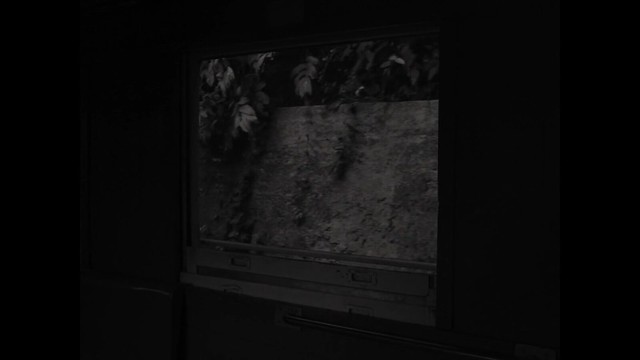
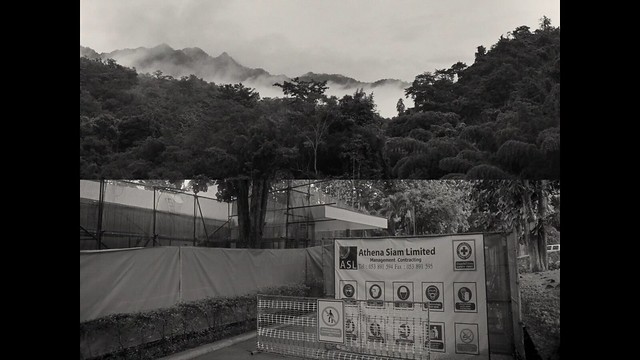
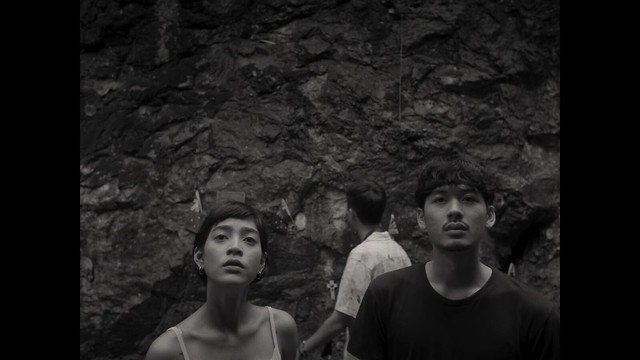
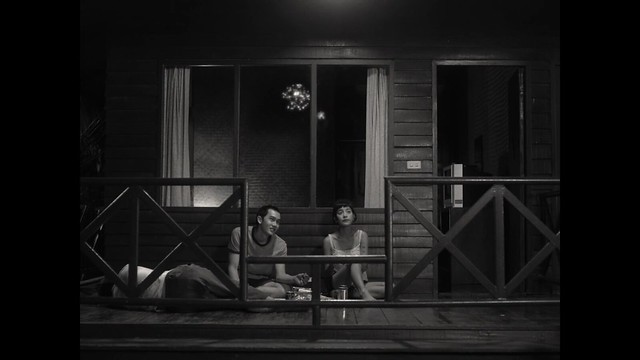
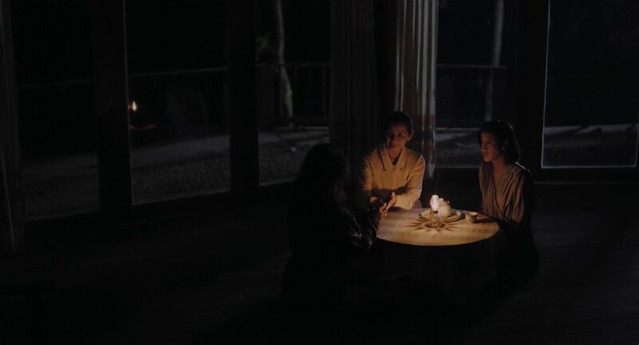
Come Here (2021) - Suwichakornpong Screen Shot 2021-12-27 at 10.14.54 AM Screen Shot 2021-12-27 at 9.52.04 AM Screen Shot 2021-12-27 at 9.52.37 AM Screen Shot 2021-12-27 at 9.34.35 AM Screen Shot 2021-12-27 at 9.37.15 AM Screen Shot 2021-12-27 at 9.39.03 AM Screen Shot 2021-12-27 at 9.54.41 AM Screen Shot 2021-12-27 at 9.55.04 AM Screen Shot 2021-12-27 at 9.55.13 AM Screen Shot 2021-12-27 at 9.36.34 AM Screen Shot 2021-12-27 at 9.44.56 AM A group of young theater actors take a trip to Kanchanaburi, west of Thailand, where Death Railway, once a site for WWII atrocities where tens and thousands civilians and Allied POWs lost their lives in labor camps. But the museum is under renovation and closed. The group, consists of 3 boys and 1 girl, leisurely hangs out at the lake house, smoke weed, mimics animal noises and engage in mundane conversations.

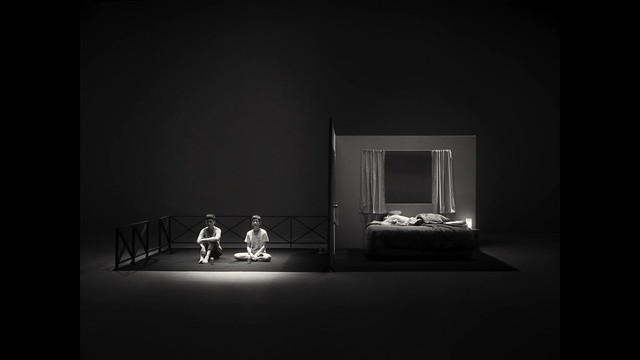
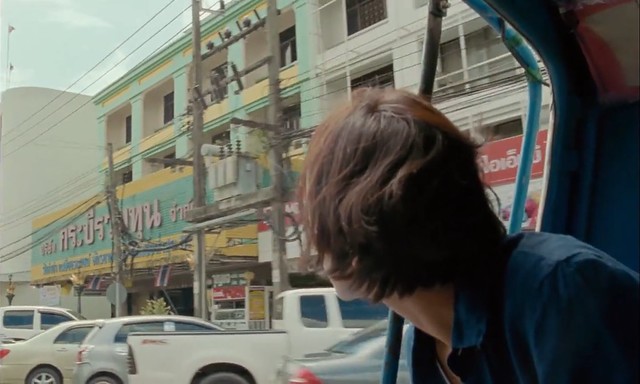
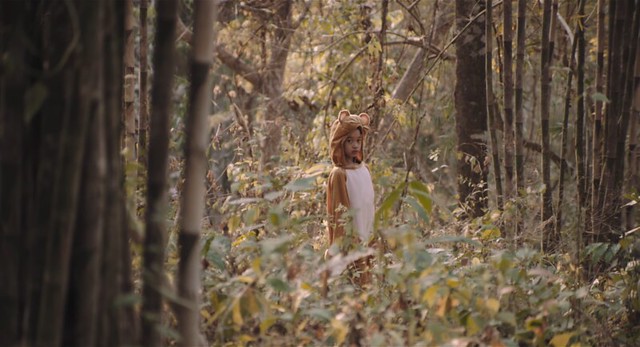
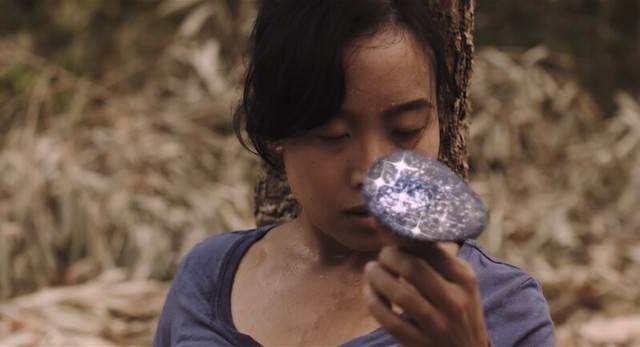
In a parallel action, a woman who is camping in the forest seems to be lost. Dazed and confused, she finds a stream, drinks the water then changes into a boy. Then we see the lakeside bungalow scene play out again on stage, with a scenery shot from the train out the stage window, moving us forward.

In her previous films, Suwichakornpong engaged us in a socio-political history buried underneath the lush forest of Thailand, very much like the fellow Thai filmmaker Apichatpong Weerasethakul. Her approach is more clinical and getting more and more abstract with each new film. Come Here, clocking at just over an hour, is like a puzzle piece with some of the vital pieces missing - what's the meaning of the transformation? Is the camper dreamed up by the girl by the lake or vice versa? How does a Bangkok's zoo closing figure into the story?

With the country's train and railway having imbued historical significance, Suwichakornpong's new film charts progress, nature, harkening back to animism, the younger generations collective historical amnesia, and the country's physical and spiritual transformation... in such a mysterious yet seductive manner. Watching Come Here is not frustrating- it provides you enough of threads, not at all in a teasing way, to decipher and mull over its sinuous connections and implications regarding history and it's thrilling.

Thursday, July 1, 2021

Socio-politi-cultural Layers and Beyond

Krabi, 2562 (2019) - Rivers, Suwichakornpong Screen Shot 2021-07-01 at 10.55.43 AM Screen Shot 2021-07-01 at 10.59.18 AM Screen Shot 2021-07-01 at 11.01.17 AM Screen Shot 2021-07-01 at 11.02.08 AM Screen Shot 2021-07-01 at 11.03.36 AM The filmmakers Ben Rivers and Anocha Suwichakornpong met at the Thailand Bienniale and decided to work together on a project: specifically on Krabi, a touristy Southwestern town. And no Doubt, the collaboration between two of the most adventurous contemporary filmmakers produces a multi-layered and intoxicating work that is a part travelogue, part ethnological study, part Antonioni-esque mystery, part contemplation on artificiality of cinema and part Spatial-temporal musing on human existence.

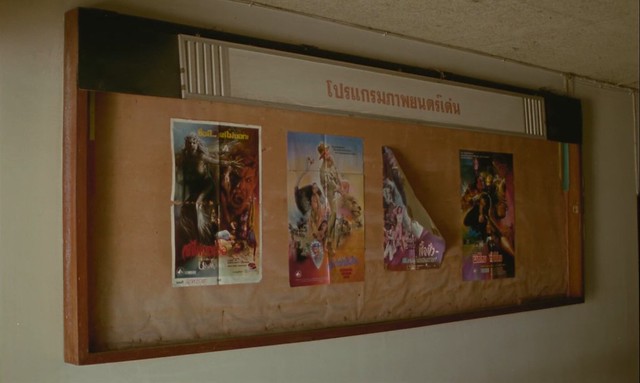
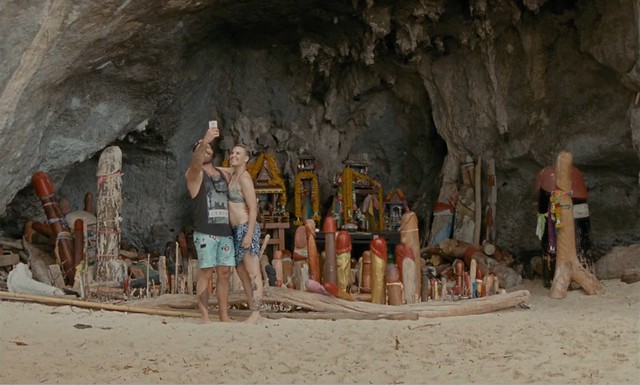
Krabi concerns a nameless woman (Siraphan Wattanajinda), tall and slender with the central Thai dialect who comes in to the touristy beach town. She looks like she is in 'pictures'. She is location scouting for a movie, or she is doing market research, or she is tracing steps to her parents honeymoon where she is conceived.(?) She hires a local tour guide who also dubs as a film crew for a commercial shoot. The mystery woman visits the famous fertility shrine located on the beach, takes a kayak ride into one of the numerous dark water caves along the shoreline, then visits a shuttered movie theater, now a home of hundreds of flying starlings and warn out B-movie posters. Then she disappears. The interviews with the tour guide and the movie theater manager and various others confirm this incident.

Collision and blurred line between the artificial and the real - the actors playing their parts mixed in with the locals, cinema as both business and nostalgia, neanderthals both reanacted and parodied, first world and third world, the symbiotic relationship of tourists and locals in popular tourist destination are all presented, in layers upon layers and they are delicious. Rivers and Suwichakornpong are less interested who is exploiting who, but the delicate dance that is human existence between real and imagined world both in physical and spiritual sense. Injected are the hint of Thailand's militant history, as the woman rides with gaggle of school children in the back of the truck in city proper with the sound of military marching, reminiscent of her masterpiece By the Time It Gets Dark, grounding the film from more surreal elements usually associated with Rivers work. Krabi, 2562 is one of the most exciting cinematic endeavor I've encountered in recent memory.

Friday, October 13, 2017

Germination

By the Time It Gets Dark (2016) - Suwichakornpong
Screen Shot 2017-10-13 at 11.26.29 PM
Screen Shot 2017-10-13 at 11.28.55 PM
Screen Shot 2017-10-13 at 11.17.17 PM
Screen Shot 2017-10-13 at 11.17.39 PM
Screen Shot 2017-10-13 at 11.31.30 PM
Screen Shot 2017-10-13 at 11.10.34 PM
Screen Shot 2017-10-13 at 11.12.04 PM
Screen Shot 2017-10-13 at 11.15.14 PM
Screen Shot 2017-10-13 at 11.16.23 PM
In a disjointed, fragmented, abstract, but best possible way, Anocha Suwichakornpong makes a case for moving images as a germinating force when depicting a historical event with By the Time It Gets Dark. It's also a self-reflexive contemplation on the role of a filmmaker depicting such an event.

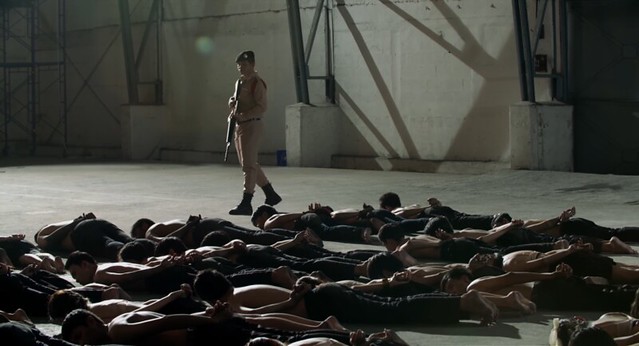
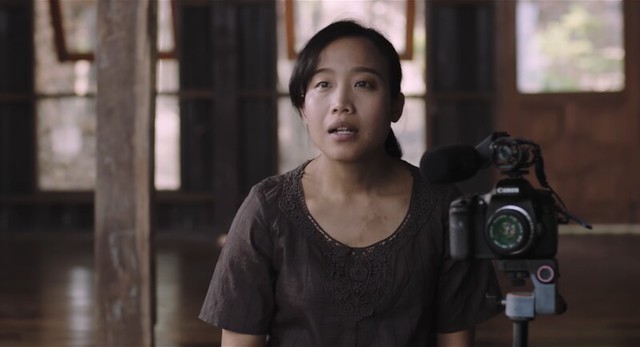
It starts with a reenactment photo shoot of a pro-government paramilitary raid- roomful of shirtless young people lying on the ground in a warehouse with their hands tied behind their backs. A woman on the megaphone directs the soldiers with machine guns, " Be more forceful," "Hit them if you want to, " and so on. Then it's a countryside. In a large, airy, modern stone and wood house, a film director (Visra Vichit-Vadakan) is prepping her film about a former activist/survivor of the 1976 Thammasat University massacre. She brought the older woman whose memoir she's adapting down there, so she can interview her and record it on camera. But she struggles at the mere mention of her intentions- "I guess I want to make it because my life is so mundane..." She soon has a full blown breakdown in the forest and stumbles upon a magic mushroom. Roll the old science class time-lapse images of fungi in the forest.

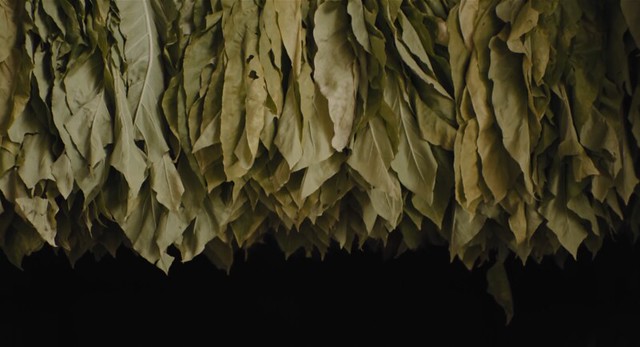
The film takes several detours. One involves a long documentary style segment on tobacco plant harvest where we see from the harvest of the tobacco leaves to the industrial drying process. Then there is a continuing narrative involving a popstar (first seen at the tobacco farm) and his opulent lifestyle and fandom which includes a musical number ('making of' music video) in the middle of the movie. Then there is a young woman character who appears here and there, doing menial jobs - waitress in the cafe near where the filmmaker and her subject were staying, working as a busboy in the city tour boat, toilet cleaner at the airport and so on. But she turns out to be the one who instigates the breakdown of the filmmaker in the first place.

The fateful massacre where many student protesters lost their lives by the right-wing military troops, hangs over the film like a dark cloud. But Suwichakornpong treats everything non-judgmentally. Later in the film, prettier, more mannered actors repeat the scene of the director and her subject again in the same location, highlighting that the futility of adapting historical events on the screen.

The film might sound too precious on paper - those too self-aware films in love with themselves. But the result of layers of these slightly connected vignettes and visual metaphors are anything but. Images are democratic- whether it's a trashy, seemingly inconsequential pop culture, the serious historical reenactments, Buddhist temple, disco tech and pixelated visual noise have the same value. It's a very Dostoevskian concept- like a tobacco leaves and fungi, to give them meaning and purpose, these layers Suwichakornpong presents will need to sit and rot. I am just amazed by her wisdom and skills to convey this kind of complicated thoughts through film medium. By the Time It Gets Dark is an incredible achievement and one of the very best film I've seen.

Friday, April 21, 2017

Living in the Present

Mundane History (2009) - Suwichakornpong
mundane3
Mundane
mundane1
mundane2
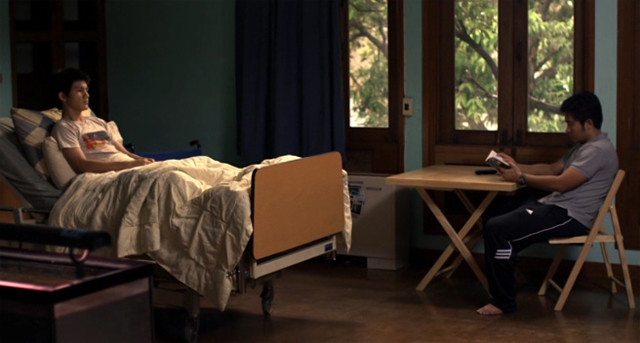
With fractured timeline, Anocha Suwichakornpong's gorgeous film tells a slight friendship that develops between Ake, a young paralyzed man and his home care male nurse Pun. From what I gather, Ake's from a rich family and Pun is from a countryside. It was an accident that made the young man bed ridden and seems to have attributed to his general somber mood. We see their repetitive days - eating, talking, reading, day after day. Stars born and die just like us humans, even though it takes billions of years. Does our lives really matter? All we can do is live in the present.

Mundane History veers away from expensive philosophizing a la Tree of Life or soapy life affirming movies. There is no eureka moment. It just unhurriedly goes on about making a simple point its own measured, quiet ways. And it's mad affecting.

Sunday, January 24, 2016

Life is but a waking dream

Cemetery of Splendour (2015) - Weerasethakul
 photo 51736493-5aba-49b5-ab18-037cc2c243a7_zpsqy6airxg.jpg
A former school-turned-hospital in Kon Kaen is the main setting for Cemetery of Splendour. A group of soldiers suffer from sleep disorder where they sleep most of the time, each hooked up to a glowing, color changing apparatus which gives you good dreams ("American soldiers used it in Afghanistan"). These giant glowing sticks stand out in a tropical setting like black monolith in 2001. But they are also pretty and give colorful glows, cinematically speaking. A middle aged local volunteer woman, Jen, takes care of a handsome soldier Itt who's suffering from the illness. They are played by Joe's regular, Jenjira Pongpas and Banlop Lomnoi. According to the young medium Keng (another Joe regular, Jarinpattra Rueangram), the ground the hospital is sitting on used to be a cemetery of ancient kings and they are harnessing the souls of these soldiers to fight for them when they are asleep.

Jen and Itt talk when he's awake. They talk about Jen's American husband whom she met on the internet, Itt's desire to leave the army and set up a Taiwanese style mooncake shop, etc. There are the usual, unsubtle yet natural eroticism and scenes of other ordinary bodily functions in Cemetery that you've seen in Joe's other films. They very naturally fit in to the gentle rhythm of the film. If the recent political unrest of the country is addressed in any way in Cemetery, it's regarded, blended within the universe Joe creates - the collective coma of the soldiers, unexplained digging of earth, some hushed government conspiracy theories uttered by characters. But the film feels more personal- like all his films, the film takes place in Isan province, Northwest of Thailand where the director grew up. And like his other films, Cemetery is infused with his memories of the place and myths and legends he grew up with.

'Life is but a waking dream' is much more pronounced in this film than any other weerasethakul films. But he also acknowledges a certain melancholy in resisting to let go earthly desires. Not as boisterous (for Weerasethakul standards) as Uncle Boonmee, but just as touching and beautiful, Cemetery of Splendour doesn't disappoint.

Saturday, October 12, 2013

Bangkok Dangerous

Only God Forgives (2013) - Refn
 photo 9eb52376-ac8d-4239-bb2f-2c00fdc68cff_zps4b81c90e.jpg
Only God Forgives is not very different than Refn's previous films. And I have no complaints. Immaculately designed and choreographed, the film looks and sounds fantastic. Its composition and colors all seem like house of cards at first, but its plasticity grows on you. Ryan Gosling's expressionless face and sparse but totally lol dialog hurtle the film toward unintentional black comedy territory. But once you shake off that unavoidable, nagging tendency to compare him to the stylings of Kubrick and Lynch, deep down you know this guy has got something. It's his use of silence that gives his vulgar, low life characters weight. And I love that. All in all, it works. It was a blast!

Thursday, December 20, 2012

Pobbish

Mekong Hotel (2012) - Weerasethakul
mekong hotel
I remember the famed Thai director mentioning this Mekong river project back in 2010 when I interviewed him via Skype for his award winning film Uncle Boonmee. Commissioned by French TV, this slight, less than an hour film doesn't quite work as a standalone. His regular actors show up playing loose characters, ever so softly talking about themes in his other films- ghosts, incarnation, Thai-Lao geopolitics plus recent devastating flood in Bangkok in a grand, if too-modern looking hotel by the wide, sluggish Mekong river. There is a spirit called 'pob' floating around the hotel, inhabiting human bodies, preying on humans and livestock alike. Mekong River lacks hypnotic power and visual grace other Weerasethakul films possess. Accompanyed by an accoustic guitar most of the time by a musician the director interviews in the beginning of the film, the film ends in a languid, long take of jet skiers jig-jagging the muddy river seen from the veranda of the hotel.

Tuesday, March 1, 2011

Notes on Uncle Boonmee

Uncle Boonmee Who Can Recall His Past Lives (2010) - Weerasethakul
Photobucket
A ghost, a monkey spirit with glowing red eyes and a talking catfish all inhabit Apichatpong Weerasethakul's latest film, Uncle Boonmee Who Can Recall His Past Lives. This disjointed and time transcending narrative follows Boonmee at his farm in the Northeastern region of Thailand, as he encounters the ghosts of his family and is himself serenely waiting to die from kidney failure.

With his usual languid pace and long takes, the famed Thai director weaves personal memories and a latent political commentary into a gentle contemporary folklore. With its deliberately low-tech filmmaking, Uncle Boonmee playfully alludes to the genre conventions of Thai TV melodramas which Weerasethakul recalls from his childhood. Memory is an essential theme in his films, informing the storyline as well as the director's creative process.

As a part of Weerasethakul's multi-platform art project, Primitive, the Thai-Lao region's tumultuous history figures into Uncle Boonmee and the collective memories of its people. The landscapes themselves are characters in his films; caves play a significant role, figuratively and metaphorically, in Uncle Boonmee as well as in Tropical Malady (2004), illustrating the process of reincarnation. Uncle Boonmee is expression of an artist whose ingrained Buddhist philosophy and formative experiences which have shaped him into who he is.

Uncle Boonmee Who Can Recall His Past Lives is independent filmmaking at its best, without gimmick or pretense. The recent accolades on the film reminds us that there still is room for such a personal filmmaking in this day and age and I'm grateful for it.

Read my interview with Apichatpong Weerasethakul