The Love That Remains (2025) - Pálmason
With his last feature Godland, Icelandic director Hylnur Pálmason showed the insignificance of human existence against grand, awe inspiring landscapes of the volcanic island nation. The Love That Remains follows the same vein, albeit less grandiose, but just as beautiful landscapes. The gentle comedy of a modern family follows a family of 4 where parents Magnus and Anna have recently separated. There is a teen daughter, Ida and younger twin boys. Magnus is a fisherman working in a commercial fishing vessel and Anna is a struggling artist. They live in a rural farm where they engage in foraging, tending farm animals while Anna practices a large scale art made out of rusting geometrically cut iron sheets- she just lays out these iron pieces on a white canvas outside the elements until they rust and leave patterns on the sheets.
Magnus is still carrying the torch for Anna and wants to be included in the family. He lingers and makes advances at Anna, but she won't budge. The kids notice their predicaments and are generally sympathetic to the situation. It is important to note that three children playing the parts are Pálmason's own kids, pretty much playing themselves.
What differentiates The Love That Remains from other sad sack, middle-aged loser dad pity party movies is the contrast of the surroundings which the family lives on: the nature is consistent, solid, fluid, omnipresent, and forever beautiful- whereas humans are lustful, violent and idiotic at times. The plane goes down, hit by a flock of birds, kids shoot each other with arrows by accident, a man dreams of making out with Joan of Arc. If Godland contrasted nature's indifference to human existence, The Love That Remains emphasizes that we live with nature and all our incongruities are part of the elements, not separate entities, nothing more. Pálmason humbles you in different ways in the presence of nature.
Godland (2022) - Pálmason
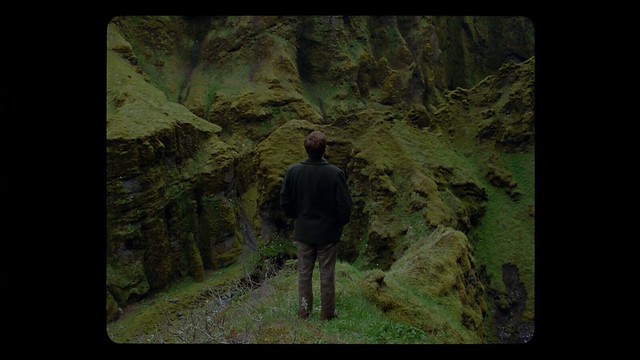
Godland, directed by Icelandic director Hlynur Pálmason, is inspired by the first photographs found in the early settlement in the southwest of Iceland. The film has an awe-inspiring, majestic setting characteristic of many films shot in the active volcanic island nation. Indeed, everywhere Pálmason and his DP Maria von Hausswolff points their camera to, in its full frame portraiture style, the film is cinematic as hell. But it's not the gentle, sun-kissed nature we see in Terrence Malick films. Rather, it's an unforgiving, overwhelming, and downright threatening environment. There's little poetry or lyricism. Matching that backdrop, the film is not about one man's admirable, unwavering faith or enduring love. It's about guilt, envy, pride, prejudice, distrust, lust... in other words, humanity in a nutshell, and its insignificance against Mother Nature.
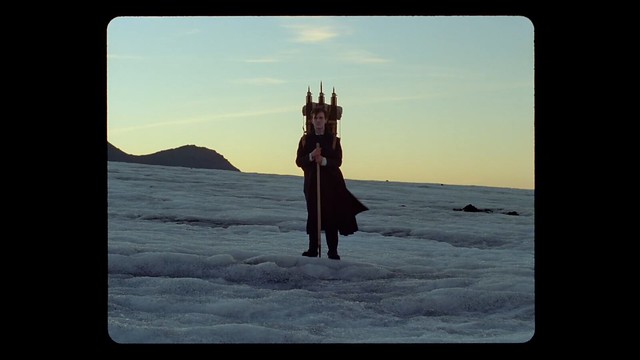
Young Danish priest Lucas (Elliott Crosset Hove) is ordered to travel to Iceland, which was a remote Danish Territory back in the late 19th century, to build a church for the small Danish settlement there. He is assigned a translator (Hilmar Guðjónsson) who is a half Dane and half Icelandic, and a small crew of Icelandic laborers. With his clunky large plate camera set up always tethered to his back (with upside down tripod sticking out over his head and shoulders like some sort of a religious artifact), he is an uneven match against scruffy crew of seasoned working-class journeymen.
When they get to the shore of Iceland, they hook up with Ragnar (Ingvar Sigurdsson), a brutish Icelandic man, as their guide. Ragnar's down-to-earth workingman ethics and his local knowledge of the land is a stark contrast to Lucas's nebbish priest from the so-called civilization. They don't see things eye to eye on many occasions.
At first it seems reasonable to trek the rugged surroundings, as they soak in the beauty and adventure spirits. But things fall apart quickly when they reach a river crossing. Against Ragnar's advice, Lucas orders the party to cross the raging river. Some of the horses carrying the supplies get swept away in the rapids, resulting the drowning of the translator whom the priest built a sort of friendship with. Wrecked with guilt, Lucas has a nervous breakdown shortly thereafter, and falls gravely ill. It is Ragnar who carries Lucas, tied to the back of the horse, all the way to the settlement.
Lucas is recovered in the care of Anna (Vic Carmen Sonne) and Ida (Ída Mekkín Hlynsdóttir), two daughters of Carl (Jacob Lohmann), a statesman of the settlement who helps build the church next to his home. Carl is stupefied for the fact that Lucas and his crew came all the way on foot, rather than sail to the settlement which would be much easier and faster. “To see the land and get to know its inhabitants?” he muses, puzzled.
Lucas is smitten by the older daughter Anna. Carl, sensing there is a weakness in Lucas’s character, warns her not to get close to him. These people come and go, he says. But Anna secretly yearns to go back to the motherland, back to civilization.
As the church construction is near completion and Ragnar and his crew is about to head back to their dwellings, things get tense between Lucas and Ragnar. First Lucas scoffs at the idea of Ragnar being interested in Christianity. They confront each other at a local celebration where they take part in traditional wrestling match in front of all the settlers and laborers. Then Lucas refuses to take photographs of Ragnar as a parting gift. Lucas’s deep seeded prejudices comes bubbling up to the surface. These Icelandic savages don’t deserve God’s love. Ragnar counters with extreme measures.
With its circle of life ending, Godland is a contemplation of us humans’ fleeting existence on earth. In a true Herzogian sense, with large brushstrokes, Pálmason draws a grand allegory that we are after all, elemental. And it's magnificent.
Into the Inferno (2016) - Herzog, Oppenheimer
It's not the first time Werner Herzog has delved into an explosive subject.
In 1977, he rushed down to the Caribbean island of Guadeloupe, because he was told that La Soufrière, the island's looming volcano (and also the title of his resultant film), was about to erupt. All its inhabitants fled. But that eruption never happened. Instead, he found three people who stayed behind and ended up talking philosophically about their attitude toward death and their belief system.
During another volcano trip in 2006, this time in Mt. Erebus while filming Encounters at the End of the World, a film about Antarctica and its quirky inhabitants, he met enthusiastic young volcanologist Clive Oppenheimer. Even though Mt. Erebus and Oppenheimer never made it into the film, the two men struck up a friendship. After the volcanologist's book Eruptions that Shook the World was published in 2011, they decided to make a film together.
This collaboration here is special. Unless the person is his subject, never in Herzog films have I ever seen this kind of rapport before, but Oppenheimer, a Cambridge academic who prefers field work, does the great job being the filmmaker's surrogate. The questions he asks the various subjects here are most definitely Herzogian. It also helps that he is a big fan who is familiar with the filmmaker's filmography.
In Into the Inferno, this dynamic duo, in true Herzogian fashion, takes us to various volcanoes around the globe -- from North Korea to Ethiopia to Iceland to the Vanuatu Archipelago -- and touches upon the impermanence of human existence on literally 'thin crust' and the awesome power of nature and our belief system. Because he is armed with tons of awe-inspiring archival footage of molten lava flowing inches from the screen and exclusive access to the remote, isolated places, we are once again at the hands of a prolific master storyteller who keeps on churning out his contemplations on the vagaries of human existence every chance he gets. (The funding came from Netflix and the film will be premiering globally on October 28.)
We start in Vanuatu, where the team is looking down at the center of the active volcano. The bright orange of bubbling magma has a hypnotic effect. Herzog's long time cinematographer Peter Zeitlinger too seems having a hard time looking away from it, following its glowing, spewing trajectories over and over. Then we travel to Indonesia's Mt. Sinabung where they narrowly escape a deadly eruption, and then visit Mt. Merapi on Java, one of the most sacred volcanoes to its people. The chief and his son of the tribe, discusses the spiritual implications of living on the slopes of the volcano.
The film talks about the pivotal role volcanoes have played in everything from farming, migration and religion. So we find ourselves in an archeological dig in Ethiopia, serendipitously come across a renowned paleoanthropologist Tim White and his team, working on digging up bones of 20,000 year old human, remarkably preserved because of volcanic activity nearby. Oppenheimer helps out, brushing off dirt in Danakil desert, the lowest and the hottest place on earth.
We are hoisted over to volcanic island nation of Iceland where national identity is closely co-mingled with volcanoes: Codex Regius, Iceland's most precious posession, an ancient text that tells of a tenth-century volcanic eruption. As we all remember the 2010 eruptions of Eyjafjallajökull volcano that caused massive air travel disruptions. All these surroundings spawned religion and myth making.
Then we are in North Korea, on Mt. Paektu; a dormant volcanic mountain with a giant caldera lake. The mountain is the sacred setting for the Korean creation myth and also the communist revolution led by Kim Il-sung, the nation's eternal leader. Herzog places emphasis on how Kim co-opted the symbol of national identity to his own myth making.
Mt. Paektu garners little interest outside Korean peninsula but Herzog explains that through Oppenheimer's connections, he jumped on the opportunity to film in North Korea, the most secretive, isolated country in the world. Even though Herzog can't get personal opinions out of North Korean guides and its scientists, he and Oppenheimer gets unprecedented access (I'm sure it took Herzogian persuasion and mind-controlling of his own) into the seldom seen, majestic view of the mountain.
We move on to the religion in Vanuatu that centers around American G.I. named John Frum, who will return and bring 'cargos' of prosperity and wealth. Its literal combination of Waiting for Godot/My American Uncle is fascinating and disturbing at the same time.
Herzog, once again, demonstrates his unparalleled ability in storytelling, weaving vastly different elements from world over -- music, belief systems, natural phenomena, and contemplates the entire human existence build upon the not-so-permanent ground. It's also not short on Herzogian quotes: "The volcanoes could care less about scurrying roaches or retarded reptiles or what we are doing up here." The Ethiopian desert and North Korea scenes runs a little too long without contributing much, but they showcase Oppenheimer as our very likable guide and a scientist who can explain things in very easy terms.
Many of his films have been about man's desire to conquer nature, and failing miserably, Herzog makes a point that however benevolent the volcanic activities are to us, such as creating breathable atmosphere and nutrient rich soil for farming, it might cause the end of the world as we know it. Into the Inferno is yet another entertaining philosophical musing -- the second offering this year, after his Lo, and Behold, Reveries of the Connected World -- from the master storyteller. And I couldn't be happier.
Into the Inferno opens in select theaters in New York and Los Angeles on Friday, October 28. It will also be available to stream on Netflix worldwide on the same day.
Of Horses and Men (2013) - Erlingsson
Iceland's most celebrated theater director, Benedikt Erlingsson, makes a film debut with Of Horses and Men, a wry, episodic tales of love and death in a small community all reflected on the eyes of the much coveted Icelandic horses. The film garnered directing awards at San Sebastian and Tokyo Film Festival last year.
Despite their short and stocky physique, Icelandic horses are much prized for their stamina and hardiness and still factor largely into the lives of the inhabitants of the island nation. It's springtime and love is in the air. The setting is a windswept rural town and it's everyone's business what others are up to: they spy on each other with binoculars and gossip, not in words as much, but their frowning, weather beaten faces. First, it's a stately gentleman (Ingvar Eggert Sigurðsson) who wants to show off his beloved white mare to his long time love interest, a homely widow (Charlotte Bøving) in front of her yard. He struts around proudly and even showcases the tölt (an ambling gait only inherent in Icelandic horses). But alas, the widow's black stallion, in his spring heat, gets loose from his inclosure and mount on the mare while its master is still on the saddle. Scandal!
As we hop from one episode to another, we discover there is a gentle rhythm, the harmony of everyday life at present in Of Horses and Men, just like the steady galloping of those majestic (despite their stature) beasts: there is a town drunk who takes his horse to the icy ocean to get to a passing Russian ship which supplies him with illegal booze, a young, perky Swedish rancher who shows her cowgirl skills in front of burly, slightly sexist Icelandic men, a feud between neighbors over a grazing ground that involves a tractor race ends in fatality, and an affable young South American man learning about how to survive in frozen landscape, Tauntaun-style from Empire Strikes Back.
Of Horses and Men are filled with these little absurd human/animal comedies all throughout against stunning Iceland backdrop. Its understated, dry humor and multi-culti, fish out of water segments strongly recall the films of Jim Jarmusch and Aki Kaurismaki. Erlingsson weaves the lives of the people and the animals effortlessly. With long takes and picturesque composition, there is a gentle lyricism in Erlingsson's storytelling that is quite unique and refreshing in today's 30 seconds attention span movie landscape. The film will delight the fans of Jim Jarmusch and deadpan comedies.
Of Horses and Men will be shown as part of FSLC and MoMA's New Directors New Films series on March 22 at 6:15pm and again on March 24 at 6:30pm. For tickets, please visit ND/NF website.


 With his last feature Godland, Icelandic director Hylnur Pálmason showed the insignificance of human existence against grand, awe inspiring landscapes of the volcanic island nation. The Love That Remains follows the same vein, albeit less grandiose, but just as beautiful landscapes. The gentle comedy of a modern family follows a family of 4 where parents Magnus and Anna have recently separated. There is a teen daughter, Ida and younger twin boys. Magnus is a fisherman working in a commercial fishing vessel and Anna is a struggling artist. They live in a rural farm where they engage in foraging, tending farm animals while Anna practices a large scale art made out of rusting geometrically cut iron sheets- she just lays out these iron pieces on a white canvas outside the elements until they rust and leave patterns on the sheets.