Showing posts with label NYFF 2021. Show all posts

Monday, June 6, 2022

Altitude Sickness

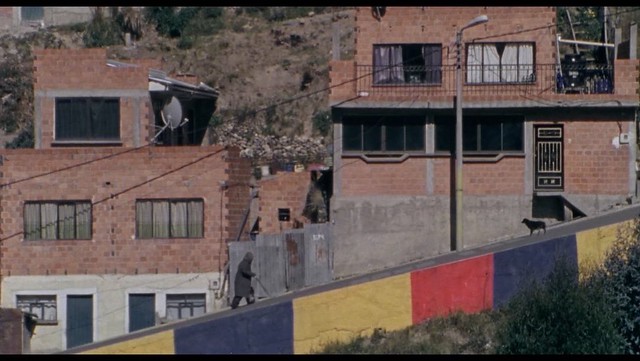
El Gran Movimiento (2021) - Russo Untitled Untitled Untitled Untitled Untitled Untitled Untitled Untitled Untitled La Paz, Bolivia's capital, sitting on the high plains of the Andés is a bustling city and home of close to 1 million souls. With electric wires and cable cars criss-crossing the ultra-modern glass skyscrapers against rugged natural vistas, the city spells out the rapid progress of the global economy in the ancient colonial capital where agriculture, mining, human labor are still dominant force. Director Kiro Russo conveys this imbalance in strong visual terms without employing too many words in the beginning of his 16mm shot beautiful film, El Gran Movimiento.

The film starts with a miner's street demonstration in the city center. They lost their jobs and came to voice their opinion in the capital. Elder (Julio César Ticona) and two other miners walked 7 days to get to La Paz. Elder seems to be suffering from some mysterious illness. Others chime in about his conditions, that he might be suffering from altitude sickness or might have miner's lungs. Doctors say it's more psychological.

In the parallel storyline, there is Max (Max Bautista Uchasara), a hooded vagrant who lives in the wilderness on the rim of city. He occasionally comes down to the city and serves as a mystic healer and converses with the locals. Elder and Max's storyline converge, thanks to Mama Pancha (Francisa Arce de Aro), an old street bendor who knows everyone and seems to be everyone's godmother.

The narrative here is decidedly loose. Russo's almost documentary style suits the film as he comments on the modern society's illness, tying it with La Paz's stunning geography - the fact the city is sitting on the Amazon basin (the highest elevation by the largest human settlement at 12000 feet) surrounded by towering natural peaks, affording its otherworldly atmosphere and contrast.

El Gran Movimiento culminates to Max giving Elder some sort of an elaborate, spiritual exorcism and we witness Elder’s pale body slowly gaining its color back and its modern illness leaving his body.

It might be too inelegant and inadequate assessment to see Pancha and Max as stand-ins for the universal guardian and healer, as film doesn't really come across as a typical, steeped in traditional, psychedelic, old versus new, didactic lesson. Russo lets his visuals to do the talking - the white dog running down the hills at night, Elder having a panic episode in the street among crowds, mangled electric/telephone wires, meat grinder image preceded by mining operation... culminating to rapid-cut images all jumbled together climax serving as a mirror to complex global society we live in.

But not everything is doom and gloom. There's a memorable, non-sequitur choreographed dance sequence at night by the locals. It comes completely out of nowhere and breaks the film’s otherwise immersive documentary feel. Emma Goldman once famously said, “If I can't dance I don't want to be in your revolution”. And it adds to the message of the collective power of everyday people. Russo seems to know all the tricks of narrative filmmaking and goes against it intentionally and having fun with it while doing it. El Gran Movimiento is a topical film with strong visuals as well as boundary pushing cinematic exercise that is undoubtedly one of the best films of the year.

Wednesday, June 1, 2022

Interview: Saul Williams and Anisia Uzeyman on Taking Back the Power in Afrofuturist Musical, Neptune Frost

Saul and Uzeyman Neptune Frost, an Afrofuturist musical directed by multidisciplinary American artist Saul Williams and Rwandan visual artist Anisia Uzeyman, is a stunning film that defies conventions both content and form. When I saw it in a packed theater at New York Film Festival last year, I was enraptured by its sheer beauty - the DIY aesthetic, from the costume design to production, and its languid visual language. Then I was impressed by its very progressive politics - a non-binary superhero emerging and resistance movement against neo-colonialism.

I am very happy to see the film getting a theatrical release, thanks to good folks at KinoLorber, because Neptune Frost needs to be experienced visually and aurally on the big screen and talked about for the years to come.

Crowd-funded, the long arduous journey of production of Neptune Frost is something that needs to be looked at, concurrently with the release of the film, as an example of sheer will power and enthusiasm of its creators and everyone involved. I am very happy to bring you some of these backstories and more by having a chance to interview Williams and Uzeyman last week. So without further a do:

Saul and Anisia, thank you for talking to me today. I watched Neptune Frost at last year’s New York Film Festival and with a packed audience and was totally blown away by it. It must been such a monumental task and I don’t know how you pulled it off, but it was an amazing experience.

Saul Williams/Anisia Uzeyman: Thank you!

I understand you met each other on the set of Tey, directed by Alain Gomis, a Senegalese director’s film, as actors in 2012, am I correct?

Williams: Well actually we met at Jean-Michel Basquiat’s exhibition in Paris. It was even before Gomis film. And everything started from there. The desire to work together or collaborate came very early and the idea of this film, which didn’t start as a film but a stage play, a musical and as a graphic novel. Because both of us are actors, we wanted to create something that we can both act in, but when a producer, Steven Handel who produced Fela! On Broadway, read what we were putting together, told us that he loved the story and suggested that it would make an extraordinary film. We eventually realized that, as a film, it would shift and open much more possibilities, because here is a story that according to our writing that it would take place in Burundi and what have you, suddenly the idea of that we can go on location to shoot, the excitement about meeting all of the new faces and new actors and new talents - what it would mean for all the other artists whom we can bring in. But we had no idea what was in store for us when we accepted the idea of making a film. We hadn’t met our costume designers/set designers, Cedric Mizero, not until we went to Rwanda in 2016 to shoot a test.

Anisia Uzeyman: So we thought of the film taking place in Burundi but in 2015, Burundi kind of went through a lot (with the violent political, civil unrest), so it became a complicated location for shooting. But the idea of shooting the film there felt more liberating in terms of how our imagination went. So we went to Rwanda in 2016 to see how things were there. You know it’s the same landscape of hills and so on and there’s a lot of connection between the two countries. So we arrived there and met a lot of Burundian activists because of the flow of refugees fleeing the situation in Burundi.

Williams: 2015-2016, just as we were arriving.

Some two hundred thousand refugees?

Uzeyman: Yes. All these young people - students, activists, artists, fled the country and into Rwanda. It was this alignment of what you dreamt and what you found there that allowed us to say, “OK, this is the place!” It was synegistically clear.

Something that clicked in you, during that trip.

Williams: Yes. The first week of that trip, we encountered the majority of our cast. We also met Cedric Mizero our costume and set designer, and within the first conversation with Cedric about what the project was about, he was like 21,22 years old then, he understood immediately what we were doing. He came back the next day with sandals made of motherboards.

Oh wow.

Williams: and we said OK. This is it. We found the right person and we found the right people. Everyone introduced us to each other and the excitement in the story we were telling–

Uzeyman: And we also met the ensemble.

Williams: Yes, we also met the drum ensemble. They were refugees from Burundi who crossed the border with their drums, taking refugee in Kigali.

Uzeyman: That’s when we met Kaya Free who plays Matalusa. So we met almost everyone in the cast pretty early on. I told Saul to come and see these people and how to incorporate all these people and music and so on.

There are a lot of languages spoken in this film. When you composed the music, was it planned that way or was it something more fluid, a collaboration among all of the artists instantaneously?

Williams: So this is kind of a simple answer to your question. In that region of the world, when you are on the ground, what you find is that everyone speaks about 5 different languages. When you are sitting down at the table having conversation, they’d use expression that works best with each language. So we might say something in French or Swahili or Kinyarwanda or Kirundi and after a while we go, 'fuck this'. Me I speak English and French and I get certain words that might come through… the thing is, it’s extraordinary how we can communicate this way. All we wanted for the film was to reflect that. That’s why it’s like that. It’s not like bringing in a specialist to translate this or that language, it was naturally occurring. Our cast members naturally communicated with each other in many languages regularly. I remember going to karaoke in Kigali, Anisia’s people would be like, I want to sing this song from Mexico or this song is from Congo and this is from France. No one was flexing or showing off. They just knew that Spanish song, they knew that English song… It was just normal to them.

Uzeyman: This is very much so to the region and its history. It is also very much the case with fluidity of our culture as it expands as we open ourselves to the world.

I was going through the list of cast and crew and most of the names are not European or American, even though you both have connections in Europe and America as artists. Was it a conscious decision to employ local artists?

Williams: Yes. It was an extremely conscious decision to work with, both cast and crew locally and to bring in as few people from outside. It is true with a lot of different production companies with foreign money - European or American money, they fly in everybody and Rwandan people would be third and forth assistants. And we thought it was important to have local people heads of the departments. It was crucial to us. Secondly, there is no cinema rental facilities in Rwanda. So just because of our finance and what have you, we had to choose between spending all our resources to try to ship in all the lights for example, or build them.

DIY style.

Williams: It was easier to build our cinema lights and LED panels, dollies and 18 kilowatts cinema lights and even apple boxes. Everything you see in Neptune Frost was built by the crew. That was part of the excitement as well. We were not going in there like European or American film crew…

Uzeyman: We are from there. Simply because I was born there and Saul was adapted. (laughs) That’s why we did everything with our community. It was our desire to share the experience as a communal experience.

For those who don’t know about MartyrLoserKing Project. Can you tell us a little bit about that and its connection to Neptune Frost?

Williams: This whole project was born out of multimedia conceptualization. And so we were telling the same story as a graphic novel, as a stage play, as a musical and through a music album. As I mentioned, it was transition from musical to film- the graphic novel is still coming out next year. It's a surprise to us that our film is beating the graphic novel, but you see unlike the long list of names working on the film, there will be one or two illustrator and the writer for the graphic novel to tell that story. (laughs) Neptune and the hackers as a collective is known as MartyrLoserKing which we learn as it happens in the film. The biggest difference is that in the graphic novel, we see a little more from the MartyrLoserKing, the hackers collective's and the miners' perspectives. You see more of Techno’s perspective, you see more of that. It’s because there’s a lot more backstories in many of these characters. In the film there’s visual and there’s music and there’s a lot of space for you to explore and contemplate. But in the graphic novel, there’s a lot more texts.

That’s great. Already there’s a lot of layers in the film but there are a lot more to those characters and I am happy to hear that there will be more of them in the graphic novel. I think it’s also interesting to hear how you put all these elements together.

How I processed Neptune Frost and how it all clicked together is from the very beginning - the sound of the miners with their hammers and pickaxes digging and their singing were very similar to how American railway was built on the backs of African slaves and how the blues came about - that everything is cyclical with this global economy and rebellion and exploitation of resources and exploitation of the black bodies.

Neptune Frost is played first by Elvis Ngabo, then Cheryl Isheja. With this non-binary, intersex idea with all the young people involved in this project, you think it’s the future of humankind? Is that the message?

Uzeyman: Definitely. I think discussion on gender is ongoing. I think young people are fatigued by the old way of thinking and rightly questioning the patriarchal, empirical, the neo-colonial societal norms and this pushes people to find way to be more open and to liberate themselves from that thinking.

Williams: Yes. I mean, it’s our intention to through this film to be part of that dialogue, to provide working examples to be a part of that very modern dialogue that is crucial, to our understanding of each other, to the freedom and excitement of the new generation has and realizing the importance of being themselves beyond what they are assigned or being who they were told to be and who they were told they are.

Uzeyman: I think it’s so courageous also and I think it’s a kind of revolutionary moment that we are witnessing and being part of, in the desire of transforming, of refusing the status quo of the hierarchy of unfair and brutal society. It's not so much that we were projecting this with our film this is the discussion that’s happening right now.

Williams: And you see the pushback, you see the people trying to maintain a certain level of rigidity. It’s important that it’s not only the future but also the past - the colonial imprint that was heavily placed on people’s necks. That rigidity has put people lining up on the borders and the confines of the prison of rudimentary, heteronomative, binary definitions and–

Uzeyman: And people realize that it only starts with you.

Williams: Exactly. It affects everything. You asked about the fluidity of language. People on this side of the ocean were like, “You know how much money we are losing for not having the film in English?” When you're talking about seeing that it’s all connected that there is binary connection on every level and these rigid boundaries are placed on expression. So the authenticity of it and expression like you see in this film would automatically be thrown out. Why? Because there’s no famous people in it and it’s not in a language people of this country speak. There’s so much. It’s not only what we were doing on screen there. But every conversation, every experience we had in every festivals that everything we encountered to, just reach an audience to see the film has been a fight. It was intentional with its time. It was last year and the year before when we were talking about black bodies exploited, we were talking about BLM movement, transgender rights. We said, well here is something that is in conversation with that conversation. How do we respond to that, how do we support that? How do we uplift that or do we just go on to perpetuate the same cycle- the same bullshit, the same violence, the same bigotry, the same rigidity in our creative choices?

When we talk about Afrofuturism, how it provides not just mere escapism but a space to have this kind of conversation and exchange these kind of ideas. Do you think it’s possible to make films like Neptune Frost only in Africa - just because the wealth of cultural, social upheavals are happening there?

Williams: I’d say not at all. I need to hear from the people who are working in mines of China, Brazil, Peru, in Bolivia–

Uzeyman: We just saw a beautiful film from Bolivia.

Williams: It was about young miners. What was it called…

Uzeyman: ...and there was wonderful music in that too. It was El gran... it will come to me…

El Gran Movimiento! A great film!

Williams: Yes! So no. We at one point was thinking about shooting the film in Haiti. Our research brought us to shoot all over the world. The story of Neptune Frost- the exploitation of workers, the role of authority, belongs to the workers of the world. Those workers are still in Ireland, in Thaliand, in Cambodia. So no. I think Africa is a wonderful place for our story to be told, but for all the other places, there’s need to see and connect with those group of humanity and resources so we can share them. Yes, so at the same time, the story belongs to many, many people.

Uzeyman: Neptune Frost is kind of a retelling of a folktale, a fairytale, a birth of a superhero, right? It’s a journey of that person gaining their power. It’s just like any other superhero story. I’m pretty sure you will find that there is the same narrative everywhere.

Williams: Yeah, it’s a shared history. As you stated that while watching the film, you are connecting the dots. So yes, indigenous people of many lands can connect those dots and see themselves in this film. And that’s the first layer of what this film is about. It’s them realizing that their land is mined for power. Their land where they think and dream and birth and work on, is the power in us. Do we have that power? Are they mining our ancestors that we buried? Is that what’s affording them to communicate wirelessly? Is that our power? And Neptune is saying, yes. And that realization can be shared throughout the planet. Of course, it belongs to many.

This has been an amazing. I can’t thank you both enough for this conversation. Everyone needs to see this film on the big screen. BIG SCREEN.

Williams/Uzeyman: Yes.

Neptune Frost opens in theaters on June 3rd in New York and June 10th in LA. National rollout to follow.

Sunday, January 23, 2022

Faces

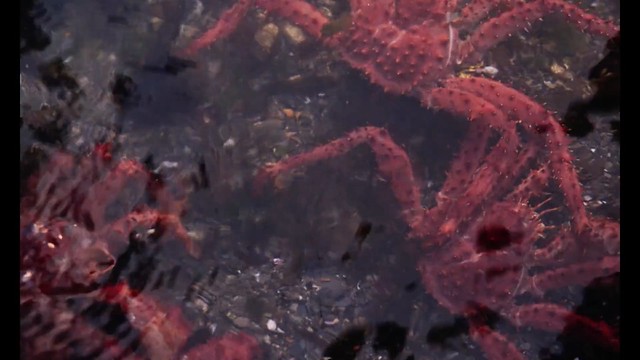
The Tale of King Crab (2021) - de Righi, Zoppis Screen Shot 2022-01-21 at 4.45.02 PM Screen Shot 2022-01-23 at 10.46.45 AM Screen Shot 2022-01-23 at 10.47.01 AM Screen Shot 2022-01-23 at 10.51.31 AM Screen Shot 2022-01-21 at 3.29.45 PM Screen Shot 2022-01-21 at 1.21.13 PM Screen Shot 2022-01-21 at 3.27.54 PM Screen Shot 2022-01-21 at 1.22.46 PM Screen Shot 2022-01-21 at 1.41.06 PM Screen Shot 2022-01-21 at 3.25.07 PM Screen Shot 2022-01-21 at 4.44.46 PM I am a fan of people's faces in films. Uglier, craggier the better. They tell thousands of untold stories on their own. No explanations necessary. And they leave lasting impressions long after I forget the plot of the films they peek their heads in. I remember an ageless street urchin's face, smoking silently in Sharunas Bartas's Three Days. I remember Harry Dean Stanton's weathered face in Slam Dance. Denis Lavant's too with that ugly smile. More recently, I remember the face of Amador Arias in Fire Will Come.

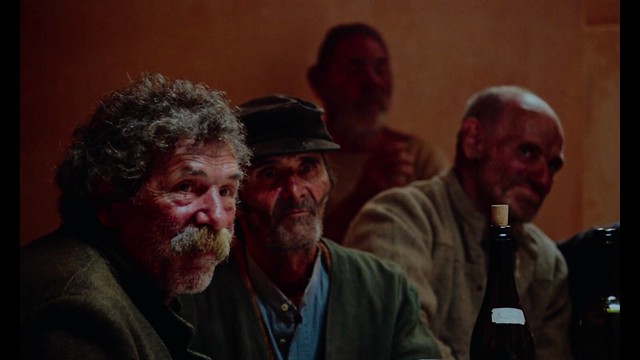
Same here in The Tale of King Crab, by documentary filmmakers Alessio Rigo de Righi and Mateo Zoppis, trying their hands on fiction - a hybrid of documentary elements with fictional retelling of a folklore or two. The film starts in present-day with the old and craggy residents of a small town in Italy, all played by locals, telling each other a folklore that's handed down from generations to generations. Their faces are so distinctive inside a dim hut, they resemble van Gogh's Potato Eaters.

They tell the stories about Luciano (Gabriele Silli), a local drunkard with bad temper who abandoned his aristocratic lineage and making enemies with peasants and landowners alike. The story goes and we get to see them reenacted as Luciano falls in love with a sheepherder's daughter (all grown up Maria Alexandra Lungu, who played the memorable child lead in Alice Rohrwacher's The Wonders). But a local aristocrat landowner has hots for her and as he stops allowing locals to use his property to be used as a footpath becomes a crying rally for hot blooded Luciano. And their confrontation ends in tragedy.

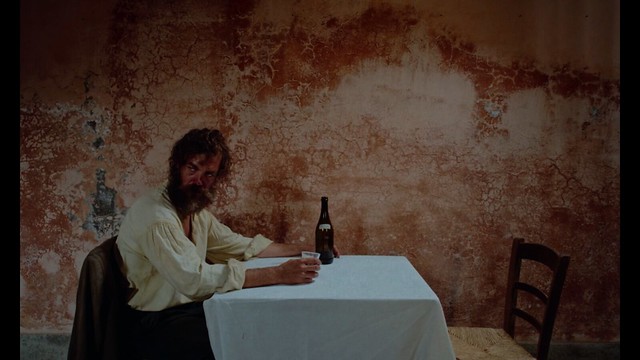
Silli too, has that face: A scar runs down on his forehead, his unkempt beard and wild hair hides his past secrets but its his penetrating steel blue gaze stops you in your tracks. After burning down the village gate in a fit of rage, Luciano is banished to the end of the world (in this case, South America). But he resurfaces again as he takes an identity of a dying priest he met in an Argentinian wilderness and inherit a giant red land crab who works as a compass to find a hidden Spanish treasure atop of mountain lagoon.

We don't get to know, if the later half of the story is a folklore or something the filmmakers came up with, because the narration of the local folks stops in the middle. After all, any stories handed down in oral tradition have thousands of additions and modifications. The temporality is out the window: the first story might have taken place in medeval times, as the second one takes place decades later. Who knows? But the transition between the two stories is so smooth and you don't even get to notice it or care, because you already have bought into Luciano's crazy adventure narrative and intrigue. The views are stunning as Luciano, the crab and other treasure hunters slowly venture up to the rugged, unforgiving Andes mountains as the film becomes an odd adventure/western.

Simone D'Arcangelo, cinematographer and DIT on various projects (Il Solengo and Woody Allen films), captures stunning landscapes and colors, resulting in dated, Herzogian beauty on grainy 16mm film. The Tale of the King Crab is that rare breed of films which inhabits both past and present; harkening back to the ambitious days of cinema of the 60s and 70s, possessing that spirit of capaturing a fever dream that was/is cinema and all knowing modern sensibility to experiment and be playful at the same time.

The Tale of King Crab is an adventure in more ways than one. Silli's recurring craggy face with his smooth, clear voice guides us through the most unlikely places both the narrative and form, making a delicious concoction, worthy of its spectacular crustacean subject.

The Tale of King Crab opens in theaters 4/15 in New York and 4/29 in Los Angeles and national rollouts to follow. Please visit Oscilloscope website.

Wednesday, December 8, 2021

France Finds Faith in a Celeb TV News Personality

France (2021) - Dumont p Bruno Dumont has tried everything, from a sobering police procedural (Humanité) to a symbolic take down of the US hegemony and violence (Twentynine Palms) to an unflinching biography (Camille Claudel 1917) to a slapstick comedy TV series (P'tit Quin-Quin) to heavy-metal period musical(s) (Joan of Arc Series), all the while working with non-actors and big time movie stars alike. His diverse filmography has drawn comparisons to works of such auteurs as Bresson and Dreyer, both in method, form and spirituality. 


With French superstar Léa Seydoux in a title role in France, he surprises us once again, with an astute take on the role of the media in our complicated world where trust and belief are hard to come by. 


Seydoux fits right in as glamorous France de Meurs (rather unsubtle wordplay and metaphor), a big haired, famed TV personality in designer clothes and posh apartment. She practices combat journalism where she throws herself into the world's hotspots and edits news segments in such a way to be seen as a brave, noble and caring journalist.

Her tit-a-tat with politicians -- including cleverly edited actual TV conference footage of French President Emmanuel Macron, and a Crossfire-style news segment she hosts with political pundits -- bring her fame and fortune. She indeed is the defacto face of French TV infotainment.


But a fender-bender with a delivery man on a bike puts France into a mid-life crisis where she questions every choice she has made in her career, including her loveless marriage to a semi-famed writer Fred (Benjamin Biolay), and parenthood. Meeting with the man's parents, who are disabled and unemployed, takes her out of the affluence bubble a bit as well.

Is she playing the part of a saint on camera or is she trying to get some instant points on her karma? Dumont, with many of the film's slow zooms into the close-up of Seydoux's alabaster face and painted lips, in which she looks straight at the camera, never makes it clear.

One thing for sure is that she is unhappy. France declares her retirement from her TV career in her show while tears stream down her face.


To avoid public scrutiny, and trying to figure out her next step, France flees to the German Alps, into a very exclusive mountain retreat health clinic where the rich and famous go to rest and rejuvenate. She meets a charming and unassuming young man, Charles (Emanuele Arioli), there and they have an affair, only to find out he is a journalist implanted to write about France in a magazine.


TV and being famous are the only things she knows how to do, so she gets back to the TV world, only to stumble when her carefully organized boat ride with immigrants fleeing their 'oppressive regime' segment goes on live with an off-screen conversation between her and her wisecracking producer Lou (Blanche Gardin), in which they disparage immigrants, without knowing their mics were still on.


France is not quite a media culture, first-world liberal satire. Sure, there are few laughs here and there, including a slo-mo car crash that are too stupendous to be taken literally, but that’s not where Dumont’s interests lie. And the film's second half veers more into a melodrama of the classic Holywood style 'women's movie' territory where a female protagonist have to choose between her career and love, calling to mind Broadcast News.


Based on his track record, Dumont is always searching for a spiritual side of things in unlikely places, across time and the class divide. In France he seems to be likening the news celeb culture to a new religion, with France's garishly decorated apartment, including stained glass wall featuring some mundane pop art pastoral, as our new altar. 


France herself -- a blonde, blue-eyed white beauty in designer clothes -- is perfect for being our flawed, needy god, in our wired, neo-liberal capitalist society. Her simultaneously fake and sincere demeanor both in public and private, her desire to love and be loved, her ability to cry on cue are all the attributes the new news anchorwoman needs: France is 'fair and balanced,' 'the most trusted name in the news,' and so forth.

Underneath all the glitzy and bougie shenanigans of a celeb news personality, Dumont finds the post-irony era belief system we deserve in France de Muers, the flawed infotainment queen, as our new god. And a nation, still holding on to the colonial mindset of military presence in the world’s hotspots, embodied by a pretty woman in nice clothes, in whom the French public still put their trust, whether the motto of the revolution -- liberty, equality and fraternity -- still rings true in an ever changing world we live in or not.

France opens in theaters in New York on Friday, December 10, followed by a national roll out, via Kino Lorber.

Wednesday, December 1, 2021

Animation as a Buffer

Flee (2021) - Rasmussen FLEE_still_2_Amin_carpet_copyright_FinalCutforReal Jonas Poher Rasmussen's animated documentary, Flee, chronicles harrowing journey of Amin Nawabi (pseudonym used for protection and privacy), an Afghan war refugee to the West, as he recalls his traumatic childhood experiences.


Rasmussen, a Danish radio-documentarian, teaming up with Copenhagen based animation studio, Sun Creature Studios, concocts layered, delicate, personal story that is as haunting and powerful as any live action narratives and documentaries about war and refugee crisis in the last couple of years - Fire at Sea, Human Flow, The Load, Quo Vadis, Ida and Limbo.


Flee owes a lot to Ari Folman's groundbreaking auto-biographical animated documentary, Waltz with Bashir, about Sabra and Shatila Massacre and Marjane Satrapi's Persepolis, from the perspective of her Iranian upbringing. Like with Bashir and Persepolis, Flee uses animation to elucidate one's memory. But if the former are culled from directors' own life experiences, subjects who were willing to express themselves as artists in a specific medium, the latter is using the medium to give a distance from its introverted subject: Rasmussen thought in telling a story of his shy, refugee friend since middle school, using animation was a good way to provide him a buffer and anonymity. With muted colors, simply but functionally rendered style only the Scandinavians can offer (overseen by animation director Kenneth Ladekjær, characters storyboarded by Simon Rouby then animated by Gilles Cuelier), balances out perfectly with a very heavy subject. Flee draws on highly subjective and personal memories of war, using both figurative and more abstract style to depict them.


Flee is about a young Afghan boy, Amin, who liked to run around in his sister's dress, embroiled in Afghan conflict in the late 80s - Taliban's take-over the country as Soviet troops retreated. Amin's father who was an intellectual and deemed a threat to Taliban, one day got arrested and disappeared, and his aging mother and siblings had to flee the country and to go to the West.


Some of Amin's traumatic memories and secrets were never revealed to anyone before - especially about his family and him being gay. It all comes out in the interviews his friend Rasmussen conducts, a casual interviewing method where subjects are lying down, like in a therapy session. So the preliminary interviews with Amin stayed intact in the film, with the subject's real voice. Flee moves freely in and out of those interviews making temporal leaps as Amin recalls his painful memories and at times, memories that are hard to articulate in words.

Amin's mother and his siblings took a plane out of Kabul on the eve of Taliban takeover and landed in Moscow, the only destination that accepted their tourist visa. This is the time where Soviet Union dissolved and was in complete chaos. Corrupt cops were shaking anyone for money and abusing its frightened citizens.


Amin's oldest brother, then living in Sweden, arranged an apartment for them to stay and sent money for them to get the smugglers to cross the border to the West. The smugglers turn out to be the worst people in the world, as bad as corrupt Russian cops. Their words took roots in Amin's brain forever: "When you get to your destination, tell them you don't have a family that they are all dead." This was the only sure way to get a refugee status. And this is what Amin would later tell anyone, even to his closest friends.


Two sisters went first, trapped in shipping containers for months with sixty other people off the coast of Sweden in the Baltic Sea. The experience was so traumatizing, they can't even speak about it to this day. Marooned in Russia with threats from cops to deport them back to Afghanistan, Amin, his older brother and his mom takes off again, leaving their fate in the hands of vicious, inhumane smugglers. After crossing the snowy border and a boat ride, witnessing human miseries everywhere, they get captured by the Estonian coastguards and end in a refugee camp where nothing works. Time stand still, after many months, they are given two choices - either rot in Estonian refugee camp forever or back to Moscow.


Flee is accompanied by some 80s and early 90s news reel footage of post-USSR world, of the horrendous human suffering in captured refugee boats, refugee camps and it reminds us once again, how the West and its media devoted too little time and attention to the humanitarian crises at hand, same as today.


Marooned what seems to be forever in Moscow, it lends some time for some tender moments as Amin discovers his sexuality, however repressed his was, accompanied by the opening of the first ever McDonald's in Moscow and its creepy celebration with the real news footage.


After many years in Moscow, they decide that it will be Amin who should be first to go: this time, with the more expensive smugglers route. Leaving behind his mother and older brother, Amin is instructed by the smuggler that he has to rip off his fake Russian passport as soon as he gets to the West and declare his family dead. He finally gets to Copenhagen- a wrong destination, but the Western city in a Western country nonetheless. 


There are many touching moments, but I teared up when young Amin asks the attending doctor in Copenhagen if he could get a medicine to cure his attraction to men. Coming out as gay to his supposedly conservative Afghan family later on is another tender, heartbreaking scene that really struck me.


Flee is an intimate, compelling account of a refugee story and a beautiful coming of age story told in a friendly, easier to digest way, via animation. But it's an important reminder that there are thousands of stories like Amin's and refugee crisis hasn't really ever stopped, if not vastly intensified with the whole world in sociopolitical crises for the past decades.

Wednesday, November 3, 2021

Fairytale and Power of Cinema

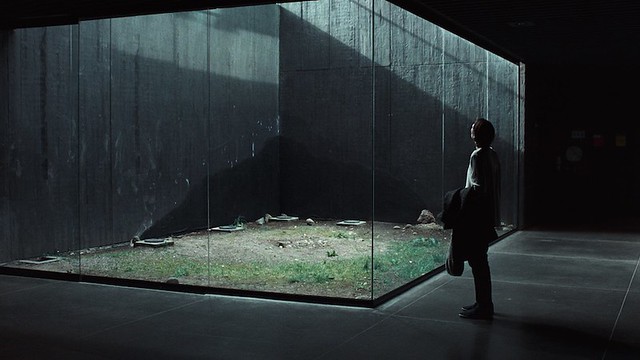
What Do We See When We Look at the Sky (2021) - Koberidze What do we see It seems Georgian cinema is having a renaissance of sorts past few years; there was Beginning, a stunning debut film, indicting religious patriarchy, by Dea Kulumvegashibli and Comets, a complex lesbian love story, by Tamar Shavgulidze just last year, now we are blessed with What Do We See When We Look at the Sky?, a modern day fairytale that is patiently observant and whimsical as well as politically astute and cinematically daring, by a relative newcomer Alexandre Koberidze (Let the Summer Never Come Again).


With other former Soviet block countries which became Independent States - Ukraine, Bosnia-Herzegovina, Georgia have been experiencing a rocky relationship with Putin's Russia, which flexes its political muscle with military might in the region with number of incursions and invasions over the years. For Georgia, not only dealing with Russia but also two pro-Russian separatist states within its borders, Abkhazia in the west and South Ossetia, north of Tbilisi, Georgia's capital. The not so distant civil wars and incursions are not far from the collective psyche of its citizens and make them look over the shoulder with any sort of disturbances. Enter the magic of cinema to offer a momentary reprieve. For the next 150 minutes, you are introduced to a peaceful, unhurried life in the ancient Georgian city of Kutaisi.


In What Do We See When We Look at the Sky? we are introduced to two attractive young people, Lisa (Oliko Barbakadze), a pharmacist and Giogi (Giogi Ambroladze), a soccer player, as they bump into each other twice, and falling in love at first sight. Without exchanging numbers, they promise each other to meet the next day in the park. But alas, the ancient spirits have different ideas. And they put a curse on the couple. As they go to sleep at night, Koberidze warns the audiences to close their eyes momentarily, because when they wake up, they will be completely different people.


Now Lisa and Giogi are played by Ani Karseladze and Giogi Bochorislivili. They lose the power of their profession (part of the curse) and have to take menial jobs at a same cafe near the Rivoli river without knowing that they are cursed lovers. 


For next two leisurely hours, we are introduced to the daily rhythm of the idyllic small town in the summer where we get to focus on every person, element and even each stray dog, told by an omniscient narrator. It's the World Cup season and everyone is glued to the big TV screen, and as the ritual goes, there are two spots where townspeople and dogs choose to go to watch. We unhurriedly move from kids playing soccer in slow motion, to a vibraphone practice at the music school across town, to outdoor parties where young people hang out, to the bridge over Rivoli river where Giogi has set up a pull bar, as a silly marketing gimmick by an old man who owns the cafe. The film is full of charm, wonder and the pleasure of watching everyday miracles. Faraz Fesharaki's sun kissed cinematography and immersive sound design accentuate the peace and tranquility. 


But let's not lose the sight of our cursed lovers to be - Lisa and Giogi. There is an old documentary filmmaker team going around town selecting couples to be filmed. Lisa and Giogi catch their eyes and even though they are not a couple (yet!), both are too polite to say no. So they decide to pose for the documentarians. And the power of cinema does its magic.


The film is about training our gaze on ordinary things. There are so much violence and hate in the world, why don't we focus on the beauty and wonder of our daily lives, the omniscient narrator seems to suggest. Gentle, joyous, and beguiling, What Do We See When We Look at the Sky? floats like a calm river over you and makes you forget about the ugliness of the outside world for a short while and embrace the power of cinema in revealing the beauty of everyday life.

What Do We See When We Look at the Sky? has a preview screening as a part of What We See: New Georgian Cinema at Museum of Moving Image on November 6 and in theaters November 12 at Film at Lincoln Center and Metrograph in NYC. National expansion to follow. A Mubi release.

Thursday, October 7, 2021

Body Memory

Memoria (2021) - Weerasethakul Memoria A long-awaited new feature film by Thai auteur Apichatpong Weersethakul, his first since Cemetery of Splendour in 2015, Memoria is a major departure from the rest of his filmography in many ways. It's the first feature shot outside his home country and not in his native language. The film takes place in Colombia and stars Tilda Swinton, along with Daniel Jimenéz Cacho (Zama), Jeanne Balibar and a large Colombian cast. The dialog is mostly in Spanish. And notably, not that sound wasn't important in his previous work, but the sonic-scape in this film takes the center stage and plays a pivotal role as a character of its own.


But as always with Weerastakul's other films, watching Memoria is like sleepwalking through an unfamiliar territory. It's like a lucid dream; you are not quite sure if you are awake or dreaming. This film, for me, in a darkened theater, provides the best kind of film-watching experience. Let the film wash over you. It's a liberating feeling.


Jessica (Tilda Swinton) is awakened in the middle of the night by a short, loud thud, a metallic bang that doesn't sound like anything she has ever heard before. Her friend Juan (Jimenéz Catcho), a professor of music at Bogota University, tells her that there has been no construction going on next door to the house where she is staying.

Deeply alarmed, she seeks out a doctor for an explanation. She tells her, 'Maybe it's the altitude of Bogota. Maybe it's stress. Sometimes it make your ear pop.' Jessica protests that it was not a mere 'pop.'

She meets with a sound engineer named Hérnan (Juan Pablo Urrego), a student of Juan, to replicate the sound that she heard. He offers examples of sound clips for her to hear. This amusing scene, where the sound engineer is trying to create what Jessica remembers in her head, is quite revealing and says much about the collaborative process that is filmmaking, and art in general.

All artists want to express themselves through their art, making the intangible tangible. And it is difficult to express things in your head to another person sometimes. Ironically for Jessica and Hérnan, they find something similar that already exists, in a movie sound-effects library, among many funny sound clip names like Short Punch to the Gut, etc. Hérnan can now just tweak that sound until it is closer to the sound Jessica heard that night.


Hérnan shows great interest in Jessica as she shops for a refrigerator unit for her orchids in the bustling Bogotá streets. Is he hitting on her? Or do they have some other connections? We don't exactly know why Jessica is there in Colombia or how long she has been there. We don't know her profession. There are skeletal threads about her life but nothing really pans out definitely. She is a mystery to us and to Colombians as the city of Bogota and the Colombian countryside are a mystery to her.


Weerasethakul toys with the idea of body memories, the trauma rippling through sound. A mechanical thud might sound like a mortar shell or bomb exploding or a gunshot to someone. It is illustrated in the middle of the busy Bogota street crosswalk - the same loud mechanical thud is heard and we see one man ducking and scampering away. Colombia has been experiencing relative peace and prosperity in recent years after decades of state- and narco-sponsored violence. But the trauma of the checkered national past is just underneath the surface and can be triggered easily. 


The remnants of the violent past have always been present in Weerasethakul's work, as the titular character in Uncle Boonmee talked about killing communists in his days in the army or soldiers waging war in their sleep in Cemetery of Splendour, to just name a few. With Memoria, he is mapping the ripples of violence more explicitly through sound and shows the universality of past trauma. In this way, the film is not all that different than what he always has shown in his films.


Things are getting jumbled up. In the beginning, it was Jessica's sister in the hospital, going in and out of consciousness, saying nonsensical things. Now, in normal conversations at a dinner party, it's Jessica who misremembers things. Who's dreaming who? And the metallic thud continues, disrupting the otherwise tranquil state of things.


Jessica travels to the jungle and encounters a man living alone in a remote area. He is scaling fish with an ancient tool. His name happens to be Hérnan (Elkin Díaz) and they spend long silences and long conversations together. Past is present and present is past; time is relative in their philosophical exchanges. Rain clouds pass by, bringing heavy rainfalls, drowning out all the other noises.


Memoria, with languid long takes and tranquil setting, is a deeply contemplative film that offers you to experience a dreamscape in a place strange yet familiar, where you can embrace the mysteries of life.

There’s been a lot of talk after Neon, the film’s distributor, with the blessings of the filmmaker and its executive producer (Swinton), announced that there will only be a theatrical distribution of Memoria and no streaming platform or DVD release. It will be a traveling roadshow from city to city, like the olden times,with one screening at a time for a week. I have very conflicting feelings about their strategy.

On the one hand, not offering streaming or home video seems extremely elitist and undemocratic for those who don’t live near the cities the film is going to travel. But, as one of the lucky few who has experienced the film in a theater, I have to concede that only way to experience this masterpiece is in a theater on a big screen with a good sound system.

Wednesday, October 6, 2021

Like Mother, Like Daughter

Petite Maman (2021) - Sciamma Petite Maman You wouldn't have expected Céline Sciamma doing a miniscule scale project like Petite Maman after riding high on the international success of The Portrait of a Lady on Fire. But without big stars or a grand production, she is back to what she does best, directing an intimate story of growing up and getting unbelievable performances out of young actors. Clocking at astonishingly short 72 precise minutes, Petite Maman is a marvel of a movie in its storytelling, execution and acting. Sciamma is proving herself to be, once again, one of the best directors working today.


Gabrielle and Josephine Sanz, 8 year old twins who play Marion and Nelly give the most affecting performances by children, even by Sciamma standards, up there with Pauline Acquart in Water Lilies, Zoé Héran in Tomboy and Karidja Touré and entire cast of Girlhood, if you also count teenagers. 


The fairytale premise of Petite Maman is a very simple one: a young girl meets a child version of her mother and befriends her. In a very short period of time they get to understand each other and learn from one another. There is no Hollywood style hijinks or a slapstick comedy involved here. There are no special effects to speak of. With only a few characters, the time traveling film rolls with just a concise, plain old great storytelling from a child's point of view.


Petite Maman starts in a nursing home where Nelly is saying goodbye to its residents one by one. It is revealed that her grandmother has just passed away there. She regrets not saying goodbye to her. With her mom (Nina Mourisse) and her good-natured dad (Stéphane Varupenne), she goes to her grandma's house to clear out. It's an old house in the woods where mom grew up. Mom is sad, but she might have been that way for a while. And she disappears soon afterwards. 


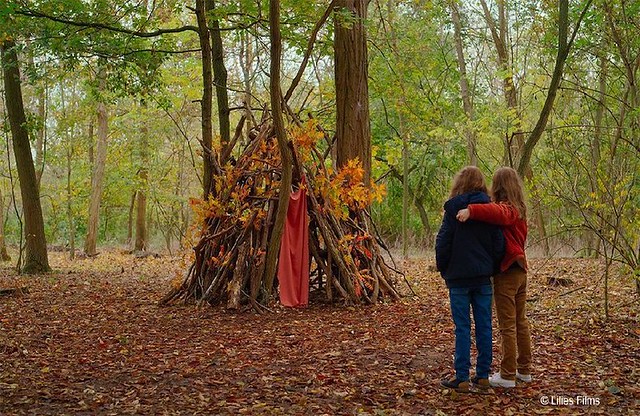
While playing in the woods, Nelly sees a girl building a safe house made of tree branches alone in the middle of the woods. It's the safe house from mom's childhood that she told Nelly about. Also, the girl's name is Marion, same as her moms and they look strikingly similar. As the days progress and they get closer to each other, Nelly is convinced that Marion is her mom as a child. It becomes clear when Marion invites Nelly to her house. It is the same house but with all the stuff still in it. And Marion lives with her mother, who is Nelly's grandma who is young and very much alive. She accepts Nelly into her house as Marion's new friend.


Nelly finally reveals the big secret to young Marion. In a very poignant scene, they go back to the house in present time and Marion meets Nelly's dad, her future husband. With the days in the house coming to an end and the young Marion's surgery coming up (same genetic disorder as her mom), they decide to spend the last day together. 


Sciamma understands children's ability to absorb her surroundings and how much of those details affect them. She also knows the otherworldly wisdom they possess, sometimes seeing things much clearer and straightforward than most adults do. It is also reflected in the title of the film: a little mom. They might be mother and daughter, but they are also 8-year-old kids being kids. And Sciamma's there to capture that also.


As with always with her previous films, Sciamma has a gift working with child actors. Her ability to connect and getting affecting, naturalistic performances out of them have no parallels. I've never seen such affecting performances by a child/children since Jacques Doillon's Ponette. 


Guileless and astute in its observation of the childhood, Petite Maman is a fairytale without fringes and definitely one of the most touching films of the year.

Monday, October 4, 2021

Unanimous Goldmine

Neptune Frost (2021) - Uzeyman, Williams Neptune Frost The coltan mines on the hills of Burundi supply minerals that makes tantalum capacitors used in most of world's electronic devices. Multidisciplinary artist Saul Williams (Slam) along with Rwandan artist Anisa Uzeyman use the mines as a springboard to embark on an ambitious DIY Sci-fi musical, Neptune Frost. Expansive in theme - shedding light on the continuing exploitation of the raw materials and black bodies in the globalist economy, non-binary look at the current society in a continent riddled with anti-gay laws sowed by the American evangelical missionaries, the vast network of internet warriors against hostile authoritarian regimes, the film is an amalgamation of the Afrofuturists' utopian version of what's to come.

Matalusa (Bertrand Ninteretse) works at a coltan mine, enduring harsh, inhumane treatment with fellow miners from armed military guards. When his brother Tekno is killed by the guards, the whole camp erupts in protests with the drumbeat and their chanting becomes songs: "Hack!" becomes their motto. Matalusa flees the camp and starts his journey into a commune, protected by an invisible barrier, called Digitalisa. It's a refuge for young hackers.

Intersex hacker Neptune, first played by Elvis Ngabo then Cheryl Isheja, is also on the run and finds her way through Digitalisa. She is greeted by the members of the community with names like Memory, Psychology and together start discussing the disruption in the system and help Neptune becoming Matyrloserking, a master hacker and disruptor of normative social code (the name came from Williams’s French friend pronouncing MLK badly).

Neptune Frost toys with heady ideas of colonialism, politics, history, tradition and gender fluidity in the era of Internet communication and global commerce. Instead of relying on techno-jargons to explain away the ills of the society, the film instead shoot for poetic dialog, singing and rapping infused with multiple languages, and soundscape steeped in African tradition. Always moving camera and vibrant colors, (by Uzeyman who serves as a DP of the project), and stunning set and costume design by Cedric Mizero, the film captures the energy and resourcefulness of the African art community.

The details and care that put into the project is astounding - clothing covered in various alphabet from the computer keyboards and other electronics parts, represent the scraps from the end of tech's cycle that began with the coltan mines in the same continent. Use of the blacklight paints and recycled bicycle wheels on mystics and artful copper wires extending from people's hair and make up are some examples of putting layers upon layers of texture and subtext. It would take multiple viewings to absorb the whole world created by Williams & Uzeyman and their team.

As the authorities' drones encroaching into the camp, the hope for the reclaiming technology grows, culminating to the rise of Matyrloserking from the ashes of Digitalisa.

Originally conceived as a graphic novel and a stage play, Neptune Frost has its faults: Its ethereal dialog and not well-defined narrative structure might throw people off the track. The film might lack the political urgency of Afrofuturist classics like Born in Flames, or Space is the Place but it's a grand experiment that requires attention and participation. Think of it as a spiritual, joyful lo-fi cousin of Matrix and Bacurau. The message might be the same here, but with more music and dancing. And it still manages looking like a badass cyberpunk film. Neptune Frost is a future cult classic in the making.

Saturday, October 2, 2021

Lamentation on Young Love

Introduction (2021) - Hong Screen Shot 2021-10-02 at 9.20.25 AM Introduction, Hong Sang-soo's second film at the festival, is a timeline jumbled, melancholic piece about young love in the eyes of adults. Shot just before Covid pandemic and the ensuing lockdown in February-March of 2020, this slight film, clocking at mere 65 minutes, is an unusually serene drama for the director. Perhaps it was the result of our collective helplessness and fear for the future that Hong felt when he conceived the project, in regards to the younger generation.

It starts with a doctor practicing Chinese medicine at his office, praying to god that he would devote himself if god gives him a second chance. To do what? We never find out. Distraught, he forgets that he left patients with acupuncture needles still on them in the examining tables and even his son, Young-ho (Shin Seok-ho) who's been waiting to see him in the waiting room, and falls asleep at his desk.

We move to Berlin, where mom (Seo Young-hwa) is dropping off her daughter Ju-won (Park Mi-so) in the care of a painter friend (Kim Min-hee). Ju-won is there to study fashion design. She sneaks off to see Young-ho, who surprised her by flying over to see her. They talk about Young-ho coming to study in Germany too, that they want very much to be together. HIs parents should help him financially to study abroad, he wishes.

Next we see Young-ho summoned by his mom (Cho Yun-hee, also in In Front of Your Face), to consult his career with a famous stage actor (Ki Joo-bong) in Kangwon province. (Hong's favorite destination for his characters to 'run away'to) Young-ho brings his buddy with him to the meeting, just to be his buffer. The meeting gets heated after a copious amount of soju is consumed: the reason Young-ho gave up acting was he felt guilty kissing other women in student films because of his girlfriend. The old actor blows up on him. How naive. 'Hugging' a woman, in Korean alludes to 'making love'. He shouts to the young men in his drunken stupor. "So hugging in acting is also an act of love. Everything an actor does is an act of love! How can your girlfriend not understand that?!"

Young-ho excuses himself and runs out to the winter beach and finds Ju-won playing in the sand. She tells him that she left her German husband and came back to Korea. She is also going blind. He comforts her, saying everything will work out.

Then we do a double take on the beach, Young-ho is braving the water in his underwear, and his buddy warns him of catching a cold. In the distance, his mom is watching him from her hotel balcony.

Characters overlap in three chapters. Hong's cinematic playfulness is there. Loose structure and double takes are there too. But with black and white cinematography and blustery and cold winter landscape give way to the film's overall melancholic mood.

Introduction is a bittersweet love story of a young couple deeply lost, as they are swayed back and forth by the older generation. Even though they went through the same thing in their youth, the elders don't spare the youth in their criticism: they are too weak, too naive, and too idealistic. Kim Min-hee's painter, who is pragmatic and understanding, plays a bridge between two generations here.

The worldwide pandemic exposed many unnerving truth about our society, but how it affects the younger generation is seldom discussed and the future effect of this period remains to be seen. Perhaps Hong is asking us to be more introspective in the time of crisis and cut our young ones some slack.

Chances and Do-Overs

Wheel of Fortune and Fantasy (2021) - Hamaguchi Wheel of Fortune and Fantasy Wheel of Fortune and Fantasy, Hamaguchi Ryusuke's second film at the festival, is a breezy, entertaining contemplation on chance and desires and how they all play out differently for different people. Again, Hamaguchi proves himself to be one the most astute observers of human conditions in contemporary cinema.

The film is divided in three equal parts. Episode one is titled Magic (or Something Less Assuring), Ep.2, Door Wide Open and Ep.3, Once Again. Each episode examines different scenario of coincidences that affect its characters with a vastly different outcome. There are no tangible or overlapping connections among the three tales. But the third episode ties the theme of chance and road to redemption nicely, and takes a sweet, positive turn. The film also makes a broad swipe at our Internet, social media dependent society.

The first episode concerns a former flame and jealousy. Meiko (Furukawa Kotone), a fresh-faced model, shares a cap ride with Tsugumi (Lee Hyunri), who works for an agency, after a fashion photo shoot. Tsugumi is in the middle of telling Meiko about an amazing date she had with Kazu (Nakajima Ayumu), a young business executive and how they clicked right away. And Meiko seems to be really into the story, asking details of the date. They even discuss if it's ethical to sleep together on a first date. But it sounds like Kazu's still not out of the shadow of his previous relationship that ended two years ago. It turns out that Meiko is Kazu's ex. And without telling Tsugumi the truth, Meiko confronts Kazu at his office the same night. She psychologically tortures him, getting a confession that he still loves and wants her.

Meiko shows up at the cafe Kazu and Tsugumi's next date. Now Meiko has two choices: She can tell unsuspecting Tsugumi the truth and destroy the budding romance, or be nice and pretend she doesn't know Kazu when she gets introduced and wish the couple the best luck and excuse herself.

The second episode concerns a revenge plot that involves 'honey trap'. Professor Segawa (Shibukawa Kiyohiko) just humiliated Sasaki (Kai Shouma), a student in front of the entire class. And Sasaki seeks revenge by using his older lover and classmate, a single mom, Nao (Mori Katsuki). And she is up for the challenge. She's read Segawa's just published award winning book and loved it.

Nao visits the professor at his office and asks for a private talk. No can do, the professor informs. He's very careful in the #MeToo age and the door to his office remains open while they talk. Showering him with platitudes, she says she is very taken by his book. She then asks him if she can read an excerpt from the book. He gives an ok. It's a very erotic description of fellatio and he's visibly gripped by her reading. Nao asks if this is what he desires in real life. He says what he wants and what he writes are two different things. Nao then confesses that she has been recording their conversation the whole time, trying to implicate him for an inappropriate behavior and ruin his reputation, but she can't bring herself up to do it. But taken by her erotic rendition of his book, he states that he wants the recording for himself. Nao promises Segawa that she will send it to him via email. We've all clicked that 'Send' button by mistake to unintended receivers and realize it seconds later. That happens in this episode.

The third episode comes with a prologue: An Internet virus released everyone's secrets out in the open. This fact doesn't figure deeply into the story but contribute to the over all theme of human connections and false sense of security in the Internet age. Natsuko (Urabe Hisako), an introverted woman comes to town to attend a high school reunion. It's been twenty years. She is overjoyed when she finds her long lost love at the train station. But after talking for a while, they realize that they are not who they thought they were to each other, but complete strangers. But the strong bond has formed between two women and they take turns to take on the role of their long lost friends.

We all have regrets and wish for do-overs sometimes, Hamaguchi exercises these second chances and fantasies in intimate human stories in Wheel of Fortune and Fantasy. It's funny and touching and very well acted. Maybe it's the Covid time thing, but there is a pleasure seeing characters just talking to each other at length in Hamaguchi's delicately written dialog. It's one of those films you want to see it again immediately after finishing it.

Drunken Promises

In Front of Your Face (2021) - Hong In Front of Your Face The voice-over that starts Hong Sang-soo's In Front of Your Face is more like a prayer. It belongs to Sang-ok (Lee Hye-young), a serene faced, aging beauty crashing on the couch in her younger sister Jeong-ok (Cho Yun-hee)'s high-rise apartment in the sprawling suburb of Seoul. Living abroad, she is visiting her sister for the first time since their mom's funeral long ago. Again, her narration has a feel of detachment and a confessional. Something is up. So starts yet another wry snapshot of life by Hong, who remains prolific as ever, with presenting two films in this year's NYFF. But In Front of Your Face turns out to be much more emotionally invested affair, if less inventive structurally and narratively from a formalist standpoint.


Over the morning coffee, the sisters commiserate about their lives. Jeong-ok is rightfully miffed that Sang-ok never contacted her for all these years and never visited. The older sister is quite cagey about her life story, but the her narrative is pretty typical immigrant story - financial hardships, peripheral jobs, no savings unlike native Koreans who seem to have a lot of money to buy real estates in a housing boom, Sang-ok observes.

It is springtime and everything is in bloom. The greenery surrounding mega vertical structures, in Hong's minimalist aesthetics, complete with auto zooms, looks oppressively sweltering, rather than calm and refreshing. It turns out Sang-ok was a famous actress as some fans recognizes her in the street, on the way to a meeting. It is revealed that she is in Korea partly to have a meeting with a film director later that afternoon. But again, she is tightlipped about it. Jeong-ok drags her around to show new real estate developments, in the hopes of having her estranged older sister coming back to Korea permanently and settle down near her.

After splashing some ddukbokki (spicy rice cake) juice on her blouse at her nephew's small snack shop, Sang-ok is off to see the film director. But on the way there, she stops by at an old house where she grew up, which now is a fancy gift shop. She immediately regrets her visit, beating herself up for being nostalgic and sentimental. Because her zen-like voiceover has been suggesting to live only in the present - to 'seize the day'.

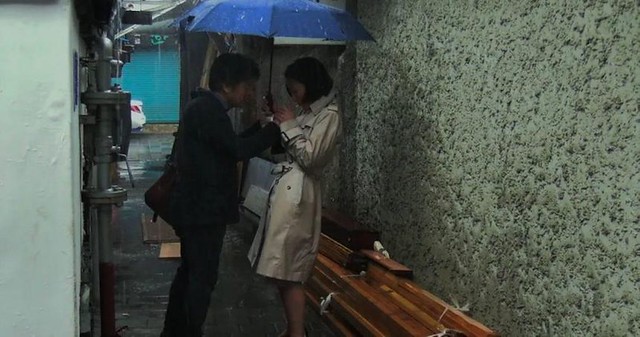
The meeting with a film director (played by Hong regular Kwon Hae-Hyo) takes place in a bar in a trendy part of Seoul. He arranged a meeting so they can be alone together. He is a big fan ever since he saw her films in his youth in the 90s and wants to do a film with her. After Chinese food delivery with copious amount of liquor, the truth comes out. She only has 5-6 months to live. Heartbroken, they cry and laugh together. The director then suggests they take a trip together the next day to Kangwon province, he would like to make something very quick and capture her on film as much as he can. She asks him if he wants to sleep with her. They have a moment. It's raining outside and all so romantic. It's a scene right out of some fatalistic French romance movie. Would Hong really end a movie like this?

In Front of Your Face may lack Hong's narrative and structural inventiveness but it has a nasty hook that gets you at the end, defying the conventional romance narrative. It's wickedly funny too. Lee Hye-young, who started her career in Lee Jang-ho's salacious Korean classic Between the Knees (1984) and starred in countless TV dramas, is a revelation here. Her graceful features and beauty dominate the screen in a bittersweet performance. Her hysterical laugh at the end listening to a voicemail over and over, is the funniest/saddest film moment of the year. I really adored this film.

Friday, October 1, 2021

Red Saab Turbo 900

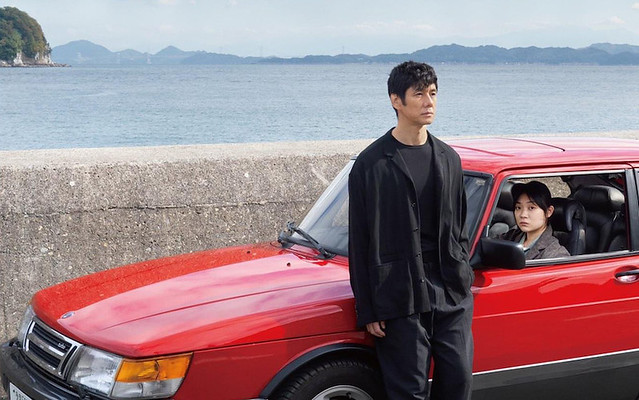
Drive My Car (2021) - Hamaguchi Drive My Car Hamaguchi Ryusuke's new film, Drive My Car, based on a short story by famed Japanese author Murakami Haruki, from the collections Men Without Women, is a skillfully adapted and directed tale of human connection and redemption. The film more than justifies its three-hour running time, by developing relationship among its characters and audiences in a natural, unhurried pace. I can't think of any contemporary directors who have this much care and patience in creating illuminating characters like Hamaguchi.

Hamaguchi's adaptation draws on only few things from its source material- main protagonists Kafuku Yusuke the theater director, Misaki the young driver, Yusuke's beloved Saab Turbo 900 (color of the car is changed from yellow to red) and Uncle Vanya the play, and that's about it. Most of the supporting characters and the road trip to Hokkaido are the filmmaker's own addition (co-written as usual by his writing partner Oe Takamasa). But what he captures so well is the essence of the Murakami's usual themes – mystery and melancholy of life. Hamaguchi expertly expands a slight character study of its source material into a deeply humanistic film full of beauty and grace.

Yusuke (Nishijima Hidetoshi) is a middle-aged theater director. His wife Oto (Kirishima Reika) is a TV scriptwriter and his long time writing partner. By chance, Yusuke finds out her infidelity but says nothing because he doesn't want to disturb the peaceful and tranquil existence they share together as a couple. But after she dies suddenly and takes all her secrets to the grave, he is left with many unanswered questions. And the credits roll and this is how Drive My Car starts, a good twenty minutes in.

Some years have passed. After a minor car accident, Yusuke is diagnosed with glaucoma in one of his eyes that may lead to blindness later in life. This fact doesn't sit well with the Hiroshima cultural institute, where he is invited to put up Uncle Vanya on stage with a pan-Asian cast. The institute insists hiring a driver to drive him around - it's a liability issue, they explain. Enter Misaki (Miura Toko), a tight-lipped, withdrawn young woman as a driver the organizers recommend. It takes some time for Yusuke to entrust his beloved 15-year old red Saab but Misaki exceptional driving skills convinces him to accept her as his personal driver during his artist residency in Hiroshima.

Yusuke, along with the organizers from the institute, holds a rigorous casting process. One of the actors, auditioning is Oto's former lover Koji (Okada Masaki), a young hotshot actor fallen from grace after a public scandal. He followed Yusuke down, with an intention of finding out more about Oto. Yusuke, equally curious to know his wife's secrets, surprises him by hiring him as Vanya, not the part he originally auditioned for. Later, for an inquiry as to why he himself is not playing the title role, Yusuke replies that he doesn't want that kind of emotional exposure, because Uncle Vanya "drags out the real you."

As the multinational cast start the table reading, we hear Japanese, Mandarin, Filipino and Korean spoken, plus the sign language, all mixing in to create Yusuke’s version- the pan-Asian version of Uncle Vanya, in a city where the atomic bomb fell that ended Japanese colonial past. The subtext is there for anyone who seeks it.

We get to know some of the supporting characters and their stories: there is a mute Korean actress Yoona (Park Yoorim) who turns out to be the wife of one of the event organizers. Park gives a striking performance as she emotes her lines with her expressive sign language and on stage as Sonya, the lovelorn daughter in Uncle Vanya.

A car to many is a very personal space. But the red Saab here doesn't merely serve as one of Murakami's fetishized brand objects. As Yusuke and Misaki spend a lot of time together in the car, it becomes a communal, hallow space for two, where they share intimate secrets of their lives. It's at once a confession booth and altar for the dead. Its red color also stands out from the neutral color palette of the film, not ostentatiously, but rather warm and familiar.

Drive My Car is about the survival guilt, loneliness and human connections. It's Oto's death that brings Yusuke and Koji together, mourning the death of a woman they both loved. It's Yusuke and Oto's daughter's death (she died young and would've been 23 if she was alive) and Misaki's mom's death in a landslide that ultimately brings Yusuke and Misaki together. And they decide to take a road trip to Hokkaido, Japan's snow swept northern island, where Misaki's from.

The most beautiful moment in the film is the shot of Misaki and Yusuke's stretched arm with cigarettes sticking out of the sunroof of the Saab, as they smoke together, instead of opening the windows to let the smoke out.

All the small human interactions and connections have cumulative effects as the film reaches its well-earned emotional catharsis. The epilogue suggests unending friendship forged and continuing fraternity of the ones left behind, if you will. Drive My Car is a beautifully written and thoughtfully directed film full of humanity and warmth.

Monday, September 27, 2021

Octane Baby

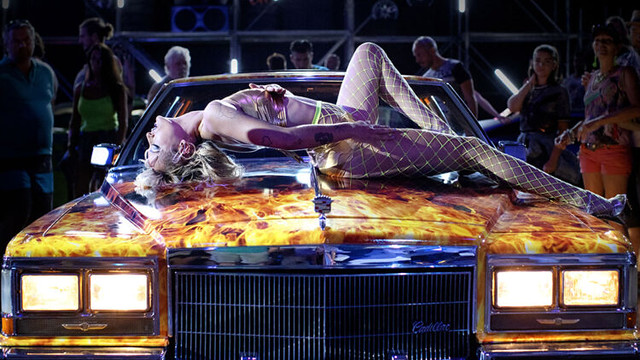
Titane (2021) - Ducournau Titane-750x422 How do you describe Titane, Julia Ducournau's Palme d'Or winner, a follow up to sensational debut, Raw? A Cronenberged feminist fever dream? A J.G. Ballardian vision of the future? A sexed up version of Electra Complex with Twelfth Night thrown in? Remove all the glitzy exterior and many cringe worthy moments from it, Titane is a sweet father-daughter story. But it is how it is told. And it is told with gusto.

Young Alexia is first seen in the car driven by her dad. Distracted by her behavior, dad loses the control of the car and crashes. Alexia ends up with a metal plate in her head. Now grown up Alexia (Agathe Rousselle) is oiled up blonde working at a car show as an exotic dancer. Her overtly sexy dance routines earn many fans. But she also is subjected to daily harrassment and unwanted sexual advances along with her co-workers. It is clear that she has some deep seeded daddy issues as well as intimacy issues, as she kills off those who wants to be close to her with pluging her trusty metal chopstick that she uses to hold up her lanky hair, into the ear of her victims. She seems to have connections with those big muscle cars she represents at the shows and has loud orgasms in the cars masturbating.

The bodies pile up and now Alexia is on the run, disguising her appearances and taping her boobs to appear as a lanky boy. She also is pregnant and car engine oil like substance are coming out of her orifices. She finds a missing person's leaflet and decides to be an imposter as a long lost son of Vincent (Vincent Lindon), a macho captain of a firehouse in a small town. Vincent, who has been hoping to find his son Adrien for so long, when beaten and battered (self-inflicted) and mute Alexia shows up, pretending to be his son, he is overjoyed. It doesn't matter that Alexia doesn't resemble his son, or why his returned son is cagey about his appearances. He has his son back and he's gonna groom him as a macho firefighter like himself.

The story Ducournau presents is totally bonkers. And it features some of the funniest scenes including a crazy firehouse party, which is very much like a college frathouse party with lots of shirtless, ripped firefighters dancing and binge drinking and it being sabotaged by Alexia/Adrien's sexy girl showroom dancing is perhaps the most cringe inducing scene, since Sacha Baron Cohen's cage fight/makeout scene in Bruno.

Ducournau has an agenda to fulfill, to bring down the patriachy to its knee in the most shocking way while rubbing male gazing sexism in its face. And it is glorious.

Vincent Lindon, the reigning symbol of French masculinity, gives an uninhibited performance as a bullheaded macho man succumbing to his desire to take care of his offspring even if it turns out to be a daughter instead of a son. Agathe Rousselle, seesawing between menace and volnerability in a very tricky and physically demanding role, is a real treasure. Ducournau is a new breed of filmmaker who isn't afraid of breaking conventions. With Larrain's Ema early this year, Titane is one of the most exhilarating films I've seen this year.

After New York Premier at NYFF, Titane opens theatrically on 10/1. Please visit Neon website.

Saturday, September 25, 2021

Perfect Antidote to Covid Lockdown Blues

The Tsugua Diaries (2021) - Fazendeiro, Gomes tsugua diaries Miguel Gomes, no stranger to mixing real life and fiction in such films as Our Beloved Month of August and Arabian Nights: Volume1-3, with co-director Maureen Fazendeiro, whips up a delightful antidote to Covid lockdown blues with a slight romp The Tsugua Diaries. Taking place in a small remote farm in Sintra, near Lisbon, this sun-drenched little cinematic exercise has more ingenuity and charm that's probably made with an equivalent of 1/100th of a Marvel movie-catering budget I am sure.

We start with the day 22 of the diary. There is a rotting quince someone placed on the table. Christa (Christa Alfaitate), Carloto (Carloto Cotta, of Diamantino), and João (João Nunes Monteiro) are first seen at a makeshift party dancing and drinking the night away in the infectious tune of The Night by Frankie Valli & The Four Seasons. To hunky Carloto's dismay, he witnesses the beguiling Christa making out with nerdy João. And it turns out, that that was the end of the movie. Don't worry I didn't blow the ending. Even though The Tsugua Diaries is told in reverse, it's not like an intricate puzzle piece or anything. Fazendeiro and Gomes are simply showing the variations and possibilities of day-to-day existence on an isolated movie set in the Covid era.

As the days progress backwards, we get to see the three of them doing house shores, working on butterfly enclosures together and enjoy their time in the pool. It's Joao's diary we are following. But is it João the actor's diary or is it the character João's? We slowly realize that they are actors in a film. It's the trio's affair for a while, being in the film we are watching, Jules et Jim style love triangle maybe? There is an air of aimlessness of an improvisational project where anything and everything is permitted, and nothing is normal because of the pandemic. 


The Covid element doesn't kick in until the talk of Carloto the actor sneaking out of the compound to surf, breaking the Covid protocols Portuguese Government Health Ministry put out. Now they can't have kissing scenes with Carloto anymore because everyone's rightfully afraid and angry. This explains why Carloto is sleeping separately, alone in a van in the beginning of the film.

Fazendeiro is seen looking at the director's monitor in a separate room laid out in a couch. Later we learn that it's because of she is an ego maniac or lazy, because she is pregnant and told to lie on her back by her doctor. 


The crew and cast meeting gets heated up with the actors not knowing the direction of the film and not well-defined guideline for anything and everything. As the diary goes back, counting down to Day 1, the unused dirty pool is drained and scrubbed by the crew and cast to be used. The rotting quince slowly turns into a fresh one, getting fresher by the day.

Wryly reflecting the nature of 'expect the unexpected' in both life and filmmaking, Fazendeiro and Gomes create a delightful little summer movie that is cinematically inventive while reflecting the state of the worldwide pandemic and its effect on filmmaking. The Tsugua Diaries is a perfect antidote of a movie in our trying times.

Sound and Fury

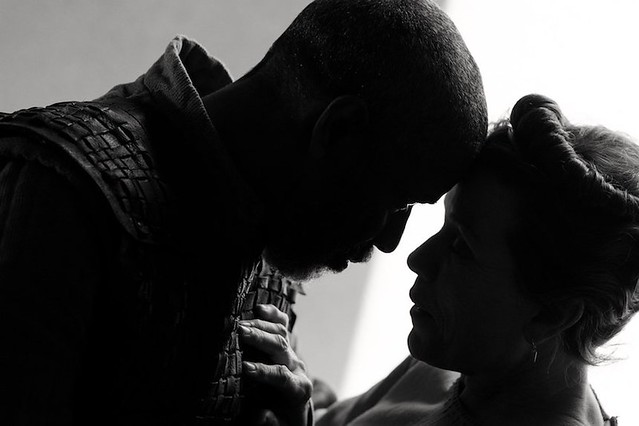
The Tragedy of Macbeth (2021) - Coen the-tragedy-of-macbeth-film With The Tragedy of Macbeth marks the solo outing of Joel Coen as a director, one half of the brothers team behind such classics as No Country for Old Men and A Serious Man. It stars indomitable Denzel Washington as the ambitious, murderous Scotsman and the great Frances McDormand (also the director's wife) as the Lady M. With a great ensemble of the British, Scottish, Irish and American actors, including Brendan Gleeson, Corey Hawkins, Bertie Carvel and Kathryn Hunter, I have to say, acting in this is fantastic.

But there have been many famous screen adaptations of the Shakespeare’s play before this reiteration. So the first question anyone would naturally ask is, is another adaptation of the famous Scottish play really necessary? Most recently we had a sexy, action packed version directed by Justin Kurzel and starring Michael Fassbender and Marion Cortillard that no one saw.

Macbeth and Banquo (Bertie Carvel) return after victorious battle over invading Norwegian forces, then encounters witches (?) in the forms of crows. They instill the ideas in the returning warriors that Macbeth will be king and Banquo's offspring will take over down the line. The rest of the film is predicated on that foretelling and Macbeth acting upon it. From the get-go, Lady Macbeth is all over the idea of killing off King Duncan (Gleeson). But after the deed is done and Macbeth assumes the throne, they get increasingly paranoid with guilt, with imaginary approaching heavy steps and bloodstains that never washes away. Sleep no more. Macbeth can never rest easily.

There is nothing wrong with Washington and McDomand's acting, eschewing the bard's juicy monologues with gusto and ease. His greying hair and beard and her wrinkles give their performances more edge, accentuating the aging couple's desperate last shot at glory. But it's Kathryn Hunter who steals the show. She portrays the manifestation of three witches. Her contortionist body movement and cadence of her gravelly voice in the beginning sets the uneasy tone of the whole film.

Shot in black and white in academy ratio, it is closer to filmed stage play than a cinematic adaptation. Its German expressionism inspired, minimalist set design and CGI fog and a murder of crows come across as cheap. And digital cinematography (nonetheless shot by usually great DP Bruno Delbonnel) looks extremely flat and surprisingly uninspired.

Unfortunately, there is nothing special about Coen's directing: there are no battle scenes, the weird vibe has been done much better both in Polanski's and Welles's version as well as in Kurosawa's Throne of Blood. It's as if Coen couldn't decide what direction he wanted to go and took the most boring, lazy route. The result is boring, flat adaptation with hodge-podge styles from other classic period pieces, as if Macbeth the film is wearing an ill-fitting suit.

Even any semblance of Coen-ness is only briefly found in the appearance of Stephen Root, a character actor and frequent collaborator of the brothers as Porter, a comic relief.

At best, The Tragedy of Macbeth feels like a vanity project where a director trying to please his wife a role she always wanted to play (for 15 years apparently). It also gives a clue to which Coen might be a Garfunkel of the duo.

Friday, September 24, 2021

A Meta-Contemplation on an Artist's Creative Process

Bergman Island (2021) - Hansen-Løve Bergman Island For the last decade, Mia Hansen-Løve, with a string of beautifully written and acted, melancholic films about life and passing of time, has emerged as one of the most highly-regarded directors working today.

Her delicate and subtle films, be it a coming of age tale in Goodbye First Love, about pursuing one's dreams and succumbing in Eden, or about taking life's curve balls in stride in Things to Come, there has always been plenty of evidences of a great writer/director cementing her own unique voice in film world, which is a still very much male-dominanted industry.

It is interesting then, that we see Hansen-Løve digging deeply into the subject that concerns a woman's artistic struggles in finding her own voice while being a longtime partner of someone who's more established and better known, taking a not so guised reference from her real life, for she was a long time partner of director and mentor, Olivier Assayas.

Even though Bergman Island is her first English language film with an international cast -- Vicky Krieps, Tim Roth, Mia Wasikowska and Anders Danielsen Lie -- the theme doesn't quite give enough distance from her real life. Sure, an older man who has a big influence on how a young woman develops and finds her own self has always been there in her films, most recently in Maya.

But her self-reflexiveness was not as out in the open as in Bergman Island. I'm not faulting this move and don't want to call it regressive, but a female director finding her own voice and out of her male partner's shadow in a place called Bergman Island seems quite an unusual choice for already established and well-regarded director. Perhaps that was her intention, though, to differentiate herself and reiterate that her working method is different, that her creative process is not like that of Assayas nor Bergman.

Bergman Island concerns a film director couple Tony (Roth) and Chris (Krieps) coming to Faros Island, where the famed Swedish director Ingmar Bergman made a bulk of his films and had a house there, to work on their new projects. Many writers, filmmakers and architects have been flocking around there to get inspirations from where the maestro lived and worked.

Tony is a world-renowned filmmaker and is always surrounded by adoring fans. It's no different, even on the remote island. He gets invited to the soirées thrown by the Bergman Society, film screenings, and frequently ta;ls on the phone with his producers about his latest project. While Tony works on his new script with ease in the main house, Chris sets up shop in the mill across the yard from him to work on her own script.

She's a little taken aback by the fact that Bergman was not a nice man to be around and had 11 children from nine wives. She also doesn't like the idea that him being a bad father was somehow a prerequisite for him to be a prolific genius. "You think he was changing diapers while being a genius?," a Bergman fan quips. It also bothers her that the beauty of the island -- the sun-kissed coastline, deep blue sea, idealic pastures -- produced a dark, disturbing and pessimistic view of life in many of his films.

After frolicking around the island, she concocts a script about a young woman named Amy, coming to the island for her friend's wedding and confronts her first love, Joseph, again. They have only three days together on the island.

Chris starts telling the story in the hopes of getting some guidance from Tony. Tony attentively listens. And now we are thrown into a unrequited love story of two lovers (Wasikowska and Lie) who were too young to realize what they had and now it's too late to reconnect, in film-within-a-film. Amy, a filmmaker from New York, can't forget Joseph, her first love, even though they both grew up and have moved on with their lives.

The story is slight and without an end. But their love and attraction are palpable. For a long period of time, we only see the couple's story unfolding, as they rekindle their love, then realize they can't be together. From time to time, that story is interrupted by Chris checking on Tony, to see if he is paying attention to her story/film.

There are many funny bits referring to Bergman: like Scenes from a Marriage causing millions of divorces, a Bergman Safari tour, a deadpan projectionist at the Bergman's private theater calling out that he doesn't have a print of Saraband, so Tony and Chris was subjected to watching Cries and Whispers.

The film's meta-ness, the story of Amy and Joseph slowly melding into Chris's own life, suggests that the film Bergman Island is itself is a way of showcasing a filmmaker (Hansen-Løve)'s creative process. And it can come across a little too precious at times. The film is certainly not the usual Hansen-Løve's ultra-wise life observations.

All the ingredients to make a great Hansen-Løve film are here: great assemblage of talented, intriguing actors, great location, self-reflexive storytelling, young love. But it doesn't quite gel together.

We all process our surroundings differently and express ourselves in unique ways. Contrasting oneself to others might be one way. Perhaps Bergman Island is Hansen-Løve's most personal film to date, showing her incongruities and subtle ways towards filmmaking.