Showing posts with label Bruno Dumont. Show all posts

Monday, June 24, 2024

Same As It Ever Was

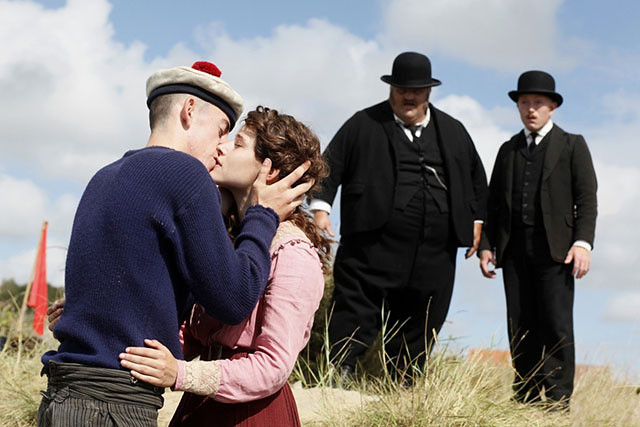
L'empire (2024) - Dumont Screen Shot 2024-06-23 at 8.59.38 AM Screen Shot 2024-06-23 at 9.13.06 AM Screen Shot 2024-06-23 at 9.22.40 AM Screen Shot 2024-06-23 at 9.24.29 AM Screen Shot 2024-06-23 at 9.39.47 AM Screen Shot 2024-06-23 at 9.49.41 AM Screen Shot 2024-06-23 at 10.27.00 AM Screen Shot 2024-06-23 at 10.29.30 AM Screen Shot 2024-06-23 at 10.34.24 AM Screen Shot 2024-06-23 at 10.37.42 AM Bruno Dumont's cinematic stunt continues with a large-scale Sci-fi Star Wars/Dune parody L'empire. It's completely over the top and ridiculous, you wonder what happened to this once a practitioner of Bressonian way of filmmaking and lost his ways. For those who remember, Dumont's foray into absurdist comedies started with P'tit Quinquin, a 4-part TV mini-series taking place in his beloved Brittany featuring odd-looking locals and odder police pair Weyden (Bernard Pruvost) and Carpentier (Philippe Jore) investigating odd happenings in the windswept sand dunes of the provincial sleepy coastal community. That was a decade ago. Since then, the director's charade continued with Slack Bay, two Joan of Arc musicals, a sequel to Quinquin, a TV journalism satire, France. It's been 10 years of this funny/unfunny, French comedies. When would this end and when is he going to snap out of this cringe fest? Well with L'empire, not anytime soon.

Again, in a small windswept dune-y small French town, nothing is what it seems. The townsfolks are divided into the intergalactic forces of Ones and Zeros. Get it? Ones are the benevolent beings trying to defeat Zeros from taking over earth by siring a demon offspring called the Wain. Their spaceships are fashioned on a giant cathedral with stained glass windows (Ones) and a Marienbad inspired Palace (Zeros). Ones are trying to appeal goodness in humanity and Zeros are counting on bad, destructive impulses of humans. There's a local fisherman, Jony (Brandon Vlieghe) who turned into a black knight for the Zeros, protecting his infant son, the Wain who will bring out the apocalypse in the earth. Then there's Jane (Anamaria Vartolomei of Happening), a princess on the side of Ones. There's going to be light sabers battle, a black hole, dancing Fabrice Luchini in a funny costume as the ruler of the Zeros and of course, our clueless gendarmes Weyden and Carpentier too, oblivious to the dueling intergalactic empires in their backyard.

Jony and Jane hook up and have wild sex because Jony convinces prudish Jane that while they are in human form, they might as well enjoy. They are sworn enemies for eternity, but deep inside they are in love!

L'empire's ham fisted approach on colonialism - the European empires dueling for the 'heart of the people,' and its obvious parodying of Hollywood sci-fi epics, are funny for a while. But it’s also extremely silly and unengaging, save for the presence of Vartolomei and Lina Khoudri who plays Line, a selfie obsessed influencer who becomes a partner of Jony. I just hope someone talk some sense to Dumont and stop this nonsense. The joke has been going on for too long!

Wednesday, December 8, 2021

France Finds Faith in a Celeb TV News Personality

France (2021) - Dumont p Bruno Dumont has tried everything, from a sobering police procedural (Humanité) to a symbolic take down of the US hegemony and violence (Twentynine Palms) to an unflinching biography (Camille Claudel 1917) to a slapstick comedy TV series (P'tit Quin-Quin) to heavy-metal period musical(s) (Joan of Arc Series), all the while working with non-actors and big time movie stars alike. His diverse filmography has drawn comparisons to works of such auteurs as Bresson and Dreyer, both in method, form and spirituality. 


With French superstar Léa Seydoux in a title role in France, he surprises us once again, with an astute take on the role of the media in our complicated world where trust and belief are hard to come by. 


Seydoux fits right in as glamorous France de Meurs (rather unsubtle wordplay and metaphor), a big haired, famed TV personality in designer clothes and posh apartment. She practices combat journalism where she throws herself into the world's hotspots and edits news segments in such a way to be seen as a brave, noble and caring journalist.

Her tit-a-tat with politicians -- including cleverly edited actual TV conference footage of French President Emmanuel Macron, and a Crossfire-style news segment she hosts with political pundits -- bring her fame and fortune. She indeed is the defacto face of French TV infotainment.


But a fender-bender with a delivery man on a bike puts France into a mid-life crisis where she questions every choice she has made in her career, including her loveless marriage to a semi-famed writer Fred (Benjamin Biolay), and parenthood. Meeting with the man's parents, who are disabled and unemployed, takes her out of the affluence bubble a bit as well.

Is she playing the part of a saint on camera or is she trying to get some instant points on her karma? Dumont, with many of the film's slow zooms into the close-up of Seydoux's alabaster face and painted lips, in which she looks straight at the camera, never makes it clear.

One thing for sure is that she is unhappy. France declares her retirement from her TV career in her show while tears stream down her face.


To avoid public scrutiny, and trying to figure out her next step, France flees to the German Alps, into a very exclusive mountain retreat health clinic where the rich and famous go to rest and rejuvenate. She meets a charming and unassuming young man, Charles (Emanuele Arioli), there and they have an affair, only to find out he is a journalist implanted to write about France in a magazine.


TV and being famous are the only things she knows how to do, so she gets back to the TV world, only to stumble when her carefully organized boat ride with immigrants fleeing their 'oppressive regime' segment goes on live with an off-screen conversation between her and her wisecracking producer Lou (Blanche Gardin), in which they disparage immigrants, without knowing their mics were still on.


France is not quite a media culture, first-world liberal satire. Sure, there are few laughs here and there, including a slo-mo car crash that are too stupendous to be taken literally, but that’s not where Dumont’s interests lie. And the film's second half veers more into a melodrama of the classic Holywood style 'women's movie' territory where a female protagonist have to choose between her career and love, calling to mind Broadcast News.


Based on his track record, Dumont is always searching for a spiritual side of things in unlikely places, across time and the class divide. In France he seems to be likening the news celeb culture to a new religion, with France's garishly decorated apartment, including stained glass wall featuring some mundane pop art pastoral, as our new altar. 


France herself -- a blonde, blue-eyed white beauty in designer clothes -- is perfect for being our flawed, needy god, in our wired, neo-liberal capitalist society. Her simultaneously fake and sincere demeanor both in public and private, her desire to love and be loved, her ability to cry on cue are all the attributes the new news anchorwoman needs: France is 'fair and balanced,' 'the most trusted name in the news,' and so forth.

Underneath all the glitzy and bougie shenanigans of a celeb news personality, Dumont finds the post-irony era belief system we deserve in France de Muers, the flawed infotainment queen, as our new god. And a nation, still holding on to the colonial mindset of military presence in the world’s hotspots, embodied by a pretty woman in nice clothes, in whom the French public still put their trust, whether the motto of the revolution -- liberty, equality and fraternity -- still rings true in an ever changing world we live in or not.

France opens in theaters in New York on Friday, December 10, followed by a national roll out, via Kino Lorber.

Thursday, May 21, 2020

An Experiment in Austerity: Bruno Dumont's Joan of Arc

Joan of Arc (2019) - Dumont
Joan of Arc
On an intellectual level, I understand what Dumont, the famed contemporary auteur of French cinema, with Joan of ArcA. He has been fully exercising the Bressonian minimalist approaches to all of his cinematic outputs throughout his entire career. And he is doing it with the Joan of Arc franchise (if you will), but that doesn't necessarily make it an enjoyable movie going experience. If you find his exploration and experiment endearing and noble, you are in the right place. If not, you will be bored to death with intentionally bad, or if you will, natural, acting by non-actors, babbling in ancient speech style and strange intonations.

After Jeannette: The Childhood of Joan of Arc; a headbanger's ball that was part musical, part comedy of manners, part historical retelling of a young French maid who believed that she was god's messenger to take up arms and lead the French army to rid of the English invasion, Dumont continues to tell the other half of the story, following Charles Péguy's rhythmic prose from the later parts of his three part poem/play, which tells Joan's defeat, trial and burning at the stake, faithfully, word by word. There is a little bit of singing, but no rapping, synchronized dancing or headbanging in this unfortunately.

If you expect an exciting battle scenes or bloody battlefield, you are watching the wrong movie. Battle scenes are adroitly replaced with bird’s eye view of an extended equestrian cavalry display. It’s pomposity and unintended comic effect is the point. With minimal settings and mostly non-professional actors playing themselves- real life judges playing inquisitors, a Dominican monk playing a monk and so on, Dumont examines Joan (reprising the role is Lise Leplat Prudhomme, a ten year old girl who played the younger Joan in the first film). The real Joan died at the stake at 19. Obviously, Dumont is taking a gigantic artistic license here and even goes against his previous effort in terms of authenticity or chronology. But hey, that’s his prerogatives. Most of the film is comprised of Joan struggling to answer her accusers of heresy. She doesn't hear the voice that was guiding her to the battle anymore. Does she still keep her faith or admit that god might have abandoned her?

The tragic beauty of the story of Joan has always been her inner struggle and her unwavering faith in the face of torture and death. Again, Prudhomme does an admirable job and Dumont makes a point of using a child instead of a grown woman as innocent victim of sexism and hypocrisy of the church. But it doesn't make a compelling experience to watch as clergies dryly argue over Joan's fate in an ancient ways of speech as it was written in Péguy’s book, while the child screams on top of her lungs, "It is none of your concern!" over and over.

Even though I’m a huge fan of Dumont’s previous films, I think I am done with Dumont’s experiment in comedy or historical period pieces. It’s the tone that I find it off in his later work. Looking forward to his new, set in present day film On a Half Clear Morning, starring Léa Seydoux as a war journalist.

Thursday, April 12, 2018

Devotion in Free Form

Jeannette: The Childhood of Joan of Arc (2017) - Dumont
Screen Shot 2018-03-06 at 9.29.00 AM
It does makes sense that Bruno Dumont's latest is about Joan of Arc. She personifies the religious devotion and spirituality, so it comfortably fits in his filmography - alongside Hedewijch, Outside Satan and Camille Claudel 1915. It also seems like a logical progression that Jeanette: The Childhood of Joan of Arc is a musical comedy: as he brazenly makes it clear since his first foray into comedy with Li'l Quinquin that comedy is just a flip side of a coin - that his austere films (dotted with bizarre surrealist moments) can easily be rip-roaringly funny when they go two millimeter off center. So why not venture into a musical genre?

Based on Charles Péguy’s The Mysteries of the Charity of Joan of Arc and heavily borrowing his simple but direct ‘musical verses’, Dumont creates a Bressonian musical that is as emotionally resonant and cinematically daring as his other films.

Young Jeanne(tte) (Lise Leplat Prudhomme, and later played by Jeanne Voisin) is a precocious girl living in Domrémy, North-east France (Dumont's beloved home region). She has been praying to god to save France from English invaders to no avail. She converses (in songs of course) with her best friend Hauviette (Lucile Gautier and later Victoria Lefebvre) who counters sharply to her beliefs. Jeannette seeks wisdom of Madame(s) Gervaise – two identical twin dancing nuns and has a religious epiphany of Ste. Marguerite & Catherine (played by the same twin). They sing to her to lead the French army. They conclude their meeting with a choreographed headbanging with heavy metal music.

Then there is Jeannette’s rapping young uncle, Durand Lassois (played by fresh faced Nicolas Leclaire) who serves as a comic relief character. And he’s uproarious.

You have to keep in mind that this is a Dumont film. Everyone involved are non-actors and not trained singers or dancers. When they sing, their abilities are earnest at best. The choreographed dance numbers come across as completely out of place and therefore often hilarious.

Dumont’s full-framed beautiful composition is there, so as the windswept, soft lit sand hills of Brittany, lensed by Guillaume Deffontaines who worked all of Dumont’s comedies since Li'l Quinquin.

No doubt, Jeannette will draw sharply divisive reactions from audiences. For some, the film would come across as a grade school level musical. For others, deeply moving contemplation on devotion- In Péguy’s words, young Jeannette wanted to be a better savior than the savior.

When you think of Joan of Arc, it's usually the haunting close ups of Renée Falconetti's face in Dreyer's poetic masterpiece, The Passion of Joan of Arc that come up to mind. It might rub some the wrong way to have a b-boy moves and falling off a horse in Joan of Arc movie.

Jeannette is a real gamble of a film. In theory, with everything Dumont is striving for, spiritually and artistically, it should satisfy fans of his work. But intellectually understanding what he is up to and enjoying the actual piece are two different things. As a big fan of Dumont, and was taken aback by his ‘comedies’ and repulsed by Slack Bay (I have to say that I’m not a big fan of seasoned actors playing over-the-top characters or acting like retards), I had a lot of reservations going in. But considering Dumont’s intensions with the project, Jeannette gets a lot better in second viewing. You just have to work a little harder to dig through its genre trappings to see its austere beauty: the beauty in a young girl’s unwavering, sacred devotion to god in free form.

Jeannette: The Childhood of Joan of Arc opens 4/13.

With Jeannette: The Childhood of Joan of Arc, Bruno Dumont Charts Yet Another Cinematic Territory

Screen Shot 2018-04-08 at 9.21.24 AM
Full disclosure: I've regarded Bruno Dumont as one of the most exciting figures in current cinema ever since I saw his debut Humanité (1999). His Bressonian approach to human conditions and faith in somber, beautifully tragic stories spoke to me and touched me like no other contemporary filmmaker's work ever have. Then it was his foray into comedies, starting with his TV mini series Li'l Quinquin (2014) that my enthusiasm started to wain a little. I just couldn't buy into his new world filled with odd looking characters and their slapstick antics. Then last year's star studded Slackbay really rubbed me the wrong way. I really had problems with the film's grotesque over-the-topness of its characters.

So when I heard his new project was a musical comedy about Joan of Arc, I was more than skeptical. It was hard for me to bridge the gap between intellectually understanding what the director was doing and actually enjoying his comedies.

I watched Jeannette: The Childhood of Joan of Arc early this year and was still on the fence about how I felt about it. I thought talking to Dumont would help me to accept the direction he was going. And it did. Borrowing the texts from Charles Péguy's The Mysteries of the Charity of Joan of Arc, Jeannette is a singular cinematic experience, completely in tune with his rather serious, somber masterpieces. I'd recommend seeing it in theaters to get the full experience of his unique, direct approach to cinema.

Jeannette: The Childhood of Joan of Arc opens 4/13.

I have to tell you that I am a big fan.

He makes a cross with his fingers.

No seriously.

Help! (laughs)

It does make sense that you would tackle Joan of arc story since you have made films about pure faith before. But I never would’ve thought it would be a musical comedy. Did you conceive the film as musical to begin with?

Yes of course. I would never have conceived doing Péguy without music because Péguy without music is inconceivable. I like musical comedies very much. I was looking for a subject that needed that balance, that needed the music. I was looking for a text that would be pertinent to use music.

Some texts don’t need music because they are very clear as they are. Péguy is a complicated, complex writer and my hope was that music would give access to him. That we don’t have to give up on Péguy because he is too hard to get into. It’s like we don’t throw away a rose because it has thorns- the idea is to keep the thorns but somehow pacify things with music.

So in most musical plays, they mostly turn to poets to complete their work so there is nice relationship, one could even call it, a friendship between poetry and music. A companionship.

There is a repetitive rhythmic quality almost like Philip Glass in the text when they sing.

Absolutely you are right.

Why portray the childhood of Joan?

Once I had the music and the rhythm, I needed the subject. Joan of Arc is major French myth. But the fact is the subject is secondary, since we have the music. So the subject should be not too complicated. Joan of Arc is very well known. I needed to combine that with this new kind of experience in cinema. It happens that her childhood is not very well known that Péguy brings us luckily for us. So we have a known element Joan of Arc and not too well known – her childhood. So combining all these things together, I wanted to make something interesting. It’s more like a composer looking for a book for his next opera. But for me the subject herself was not that important.

One could not think of Joan of Arc story without the close ups of Renée Jeanne Falconetti in Dreyer’s The Passion of Joan of Arc. Is there any correlation between your Jeannette and Dreyer’s Jeanne?

Not immediately. The fact that I was dealing with the childhood, it created sharp break. So I didn’t have to deal with this major figure of Dreyer, who is always lurking around. The fact I am dealing with the nine year-old, means that I am, perhaps naively, cutting that influence.

Tell me about the work you’ve done for this movie with the choreographer Philippe Decouflé.

Dance is a way of expressing Péguy’s mysticism- it’s the way of embodying it. So for example, the little girl would say to me, “I don’t understand this part.” Then, I would say, “ Well, then dance.” Dance becomes another way of expressing the inexpressible. There are a lot we don’t understand in Péguy's texts. What we have in there is the rhythm, and that’s where the correspondence is.

Like the headbanging. There is not explanation for that. It’s a form of expressing grace. In a Heavy Metal concert, there is that absolute grace in that energy. So when we came to the part we didn’t understand, we’d go, “Girls, go ahead. Headbang!”

What we are looking for is harmony. It’s the dance, the shots, in the editing… it’s the effigy of harmony, whether it’s in the words, in the movements. It’s the formal thing that is an absolute quest and the meaning doesn’t matter. We are looking for beauty, we are looking for the shots to be happy between themselves.

So it doesn’t really matter to you whether they are real singers or not. Or they sing well.

They shouldn’t be real singers. It mustn’t be sung well. There is something inhuman, something false about perfection. We need the flaws in the little girl. You know she has to go down so she can go up. She has to sing badly, so that when she sings well, it’s something special. It’s not interesting to hear someone sing well all the time.

It’s like listening to the record and listening to the concert. It’s powerful to hear a singer in concert because you hear the flaws in their voices. It has to be a live spectacle, live sound. Records in perfect dolby sound, I don’t listen to them anymore. It’s boring. My cinema is live.

How did you cast the young actresses? What quality were you looking for?

I was looking for the heart of Joan of arc. The part was an effigy of all little girls. I was looking for the process from sowing to blossoming of all the hearts of little girls. It’s an extraordinary thing. If you put a little girl in Péguy’s texts, you just watch her grow. You water her a little bit and she blossoms.

She is intelligent, gracious and peculiar – she was herself. She had her own ways and when you put some Péguy, then you really hear Joan of arc.

It’s the contrary to idealization. It’s not believing in the idea of Joan of Arc but making a regular little girl and it’s the regularity that will take us to the thing I am looking for.

So you didn’t have to convince them about what Joan of Arc has decide to do? That she wanted to save the damned? that she wanted to be more savoir than jesus?

Yes. She did learn the texts. She had questions and we accompanied her. But the real questions were them as a musical interpreter- how they are going to sing. She was more interested in how to sing than what the text means.

Nicolas Leclaire, who plays Jeannette’s uncle, how did you find him? He is hilarious.

One of the main criteria for our casting was looking for someone who could sing, obviously. So I met this young man who’s a rapper. The music composer didn’t want him. He said, “What do I do with him? He’s a rapper.”

We took in what’s beautiful and marvelous about him. He was a bit off. But we accepted that and took that quality in him in. He was touching and also funny which is rare. He is never ridiculous. He has his own poetry and musicality. He couldn’t sing and only rapped. But we took that in and he was extraordinary. There was something very audacious about us taking Nicolas in, who didn’t fit at all in what we were trying to do. He had his own dance practices and our choreographer found a way to integrate him.

He was a counterweight to Peguy’s over seriousness and that’s where we found the balance.

Speaking of overseriousness, I am a big fan of your serious dramas. I haven’t gotten accustomed to your comedies yet. (Dumont laughs)

I think I understand what you are doing with these comedic films since P’tit Quinquin, that these are just a flipside of a coin to your more austere dramas that they are always on the verge of becoming comedies. Would you plan to do more comedies or are you going back to serious dramas?

I find balance in tragicomedies but not in outright comedies. I needed to go off from tragedy. I wanted to find balance. And I find it in tragicomedy. It’s like the presence of the uncle in Jeannette. Because Jeannette is too heavy. It becomes too pontificating. It’s just like what you find in the paintings of Bosch and Brueghel – you have these grotesque images but inside them there are humorous bits.

I think you can really express deep thoughts and feelings in comedies. You can go really profound in ways you can’t do in dramas. Funny is deep, rich and surprising. What counts is to surprise the viewer.

Wednesday, March 7, 2018

Rendez-Vous with French Cinema 2018 Preview

There are different ways to celebrate the arrival of Spring. But if you are in New York, there is only one way to do it, in style- you go see some great new French films at the Film Society of Lincoln Center. It's a proud tradition around this neck of the woods.

The 23rd edition of Rendez-Vous with French Cinema is here with array of films by established filmmakers and first timers alike, including Bruno Dumont (Jeannette: The Childhood of Joan of Arc), Mathieu Amalric (Barbara), Raymond Depardon (12 Days), Toni Marshall (Number One), Léonor Serraille (Montparnasse Bienvenüe), Léa Mysius (Ava), just to name a few.

FSLC is partnering again with UniFrance this year, putting emphasis on presenting emerging women directors. To quote Executive Director of UniFrance Isabelle Giordano:

French cinema today is unafraid to delve into the issues at the forefront of our collective consciousness, which is reflected throughout this year’s selection. In particular, we’re extremely proud to showcase a wide variety of women’s stories—films about women’s resilience during times of war, millennial women trying to find their place in the world, the glass ceiling, and even the childhood of a young girl destined to become a legend. As ever, we are thrilled to introduce American audiences to bold newFrench voices, this year including Léa Mysius, Léonor Serraille, Maryam Goormaghtigh, and Marine Francen.
The series runs 3/8 -3/18. For tickets and more info, please visit FSLC website.

Here are the films I was able to sample:

Jeannette, The Childhood of Joan of Arc - Bruno Dumont
Screen Shot 2018-03-06 at 9.29.00 AM
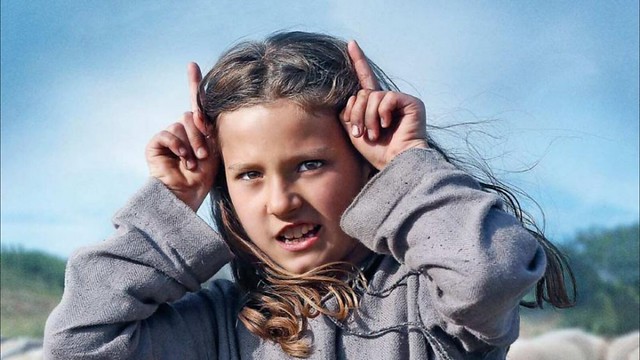
It does makes sense that Bruno Dumont's latest is about Joan of Arc. She personifies the Christian devotion and spirituality, so it comfortably fits in his filmography. It also makes sense that Jeanette is a musical comedy: as he brazenly made it clear since his first foray into comedy with L'il Quinquin and last year's Slack Bay that comedy is just a flip side of a coin- that his austere films (dotted with bizarre surrealist moments) can easily be rip-roaringly funny when they go two millimeter off the path.

Young Jeanne (Lise Leplat Prudhomme, and later played by Jeanne Voisin) is a precocious girl living in Domrémy, north-east France (Dumont's beloved home region). She and her friend have been praying to god to save France from English invaders to no avail. She encounters a twin dancing nuns or, has a religious epiphany of Ste. Marguerite & Catherine, telling her to lead the French army. They conclude their meeting with a choreographed headbanging with Heavy Metal music.

I get what Dumont is trying to do and Jeannette should work in theory. His Bressonian approach, using non-professionals to convey the serious subject such as faith and purity of Joan of Arc is a noble attempt and should be praised. But when you think of Joan of Arc, it's usually the haunting close ups of Renée Jeanne Falconetti's face in Dreyer's poetic masterpiece Passion of Joan of Arc that come up to mind. In comparison, Jeanette can come across as a bad high school musical, complete with b-boy moves and falling off a horse for laughs.

Dumont's full framed beautiful composition highlighting the big sky country is there, so as the picturesque, windswept, soft lit sand hills of Brittany. But can it offset the silliness? You will be the judge.

Barbara - Mathieu Amalric *Opening Night Film
barbara
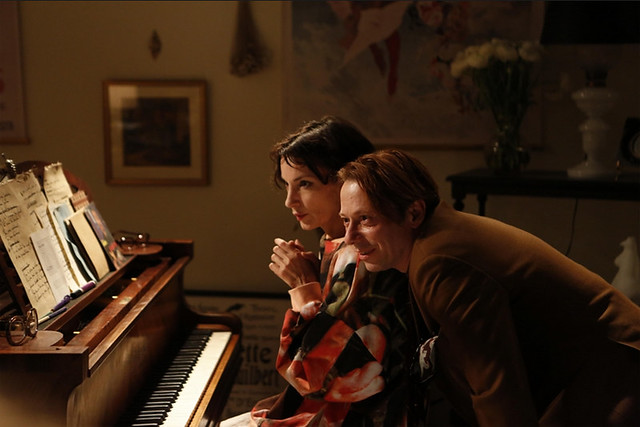
Mathieu Amalric's continues to show his impressive directing chops with Barbara, starring his ex, the immensely talented singer and actress, Jeanne Balibar. As the case with his award winning On Tour, Amalric's kaleidoscopic reverie on show business is a Fellini-esque controlled madness. Still, his deep love for performers is always palpable. And it's Balibar front and center here. She plays Brigitte, an actress interpreting the details from the legendary french singer's life, being directed by aimless, but passionate film director Yves (Amalric). As the film moves along, it becomes hard to distinguish Brigitte from Barbara and vice versa.

The title sequence accentuates the importance of Barbara's dictation of each word as she speaks, title appearing in intervals as she pronounces words rhythmically. It's all about mannerisms and gestures and the heavy make-up and her singing style, which Balibar tackles confidently. Added is movie within a movie meta-ness. But it doesn't take away the spotlight from its star.

Born Monique Andrée Serf in a Russian Jewish immigrant household, the singer took her grandmother's name as her stage name and became Barbara. Her melancholic love songs which were all written by her, touched a generation of listeners and helped her to become a national treasure. She also had a very pronounced nose which Brigitte lacks. There is a scene where Brigitte gets her face cast for the nose. In some scenes she wears it and in others she doesn't. Amalric is interested in recreating those details up to a point but leaves it to the flow of the film. He uses archival footage of the real singer in the beginning and back to Brigitte faithfully studying and practicing her every gesture and singing style. But as the film progresses, he cuts rapidly back and forth between Barbara and Brigitte, with added grainy footage of Balibar reenacting Barbara on stage, blurring the line among all three.

Amalric is an astute student of cinema. He is keenly aware of the medium and knows how to benefit from its possibilities but not in a showy way. His aimlessness is also his best asset. The film is rhythmic, fluid and free. One of the year's best.

A Memoir of War - Emmanuel Finkel
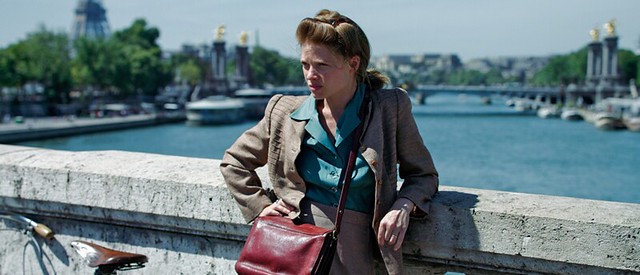
Screen Shot 2018-03-02 at 6.49.25 AM
Emmanuel Finkel tackles on semi-autobiographical book by writer & film director Marguerite Duras. And it's an ambitious one. The film starts with Marguerite (Mélanie Thierry) in German occupied Paris at the tip end of WWII. She had found her own journal which is essentially the book the film is based on, but she doesn't recall if it was she who wrote it. She is waiting for her husband Robert's return. He has been in custody for his resistance activities. Robert's prolonged absence has been a disorienting, unraveling experience for her.

We roll back to 1944, just before the scale tipped for the Allied forces. Marguerite was approached by Rabier (Benoit Magimel, becoming more and more like young Gerard Depardieu), a collaborator, working for the Vichy regime, offering help to find where Robert is. He is a working class bloke who dreams of opening up a bookstore and thus fancies Margueritte because she's a writer. Her circle of friends in the resistance first think it's too dangerous for her, then admit that it might be a good opportunity for her to play Rabier to get important information.

First, fear and intimidation grip her but she plays along as Rabier leads her on to the promise of Robert's well being. It is clear that he wants something in return - ratting on her resistance friends. A dangerous game of cat and mouse play out.

Not unlike Duras scripted Hiroshima mon amour, A Memoir of War concerns the effect of war has on people- the guilt that survivors have to carry around weighs so heavily on them that they lose their sense of self. Marguerite often sees her surroundings in a third person perspective. She also sees herself from a distance as if she is experiencing an out of body experience. Duras doesn't put blames on a collaborator alone. Holocaust happened. As a human being, we all have to wrestle with the fact that it happened. Using shallow depth of field, Finkel makes sure there that there is a distance between people at all times. There is a striking scene of empty Paris just before its liberation where Marguerite rides her bicycle. But she will never be free from that guilt. And it won't stop even if she has Robert back finally.

Thierry is a revelation as Marguerite, a learned, intellectual woman who slowly gets broken emotionally. A Memoir of War is a great film.

12 Days - Raymond Depardon
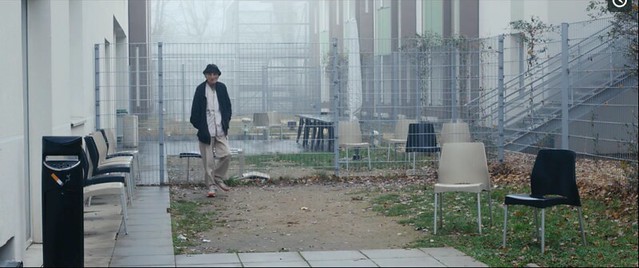
Screen Shot 2018-02-25 at 11.30.28 AM
The French law requires 12 days of involuntary hospitalization in a psychic ward for anyone deemed danger to him/herself and others. Nearly 92,000 people are placed under psychiatric care each year. After those initial 12 days, a judge makes fateful decisions based on doctor's observations on these cases in the courtroom.

The famed filmmaker/photographer Raymond Depardon gets an access to these court hearings for the first time and gives voices to the voiceless for better or worse. The result is a fascinating documentation of the unseen, underexposed mental problems the modern society faces.

The courtroom cases with 3 camera setups, we witness these hearing sessions to determine if the involuntarily hospitalized persons will continue to be involuntarily hospitalized or not. Many of them are obviously disturbed and suffering from mental disorder- a girl who was repeatedly raped thinks only way to get the bad sexual energy out of her body is to slit her wrist, a man who killed his father 10 years ago longs to go home to his father, etc. Some are comparatively mild encounters with the law- an office worker who brandished a knife in front of her boss and co-workers, a man in a violent outdoor brawl. All of them don't want to be locked up. All they do is medicate. Judges listen, they can be compassionate, but the results are always the same - ruling for involuntary hospitalization beyond 12 initial days. The film is a startling and chilling document of real life unfolding because we see these kind of cases all the time on our streets, in our subway stations and homeless shelters. 12 Days remind you of our complicated, psychologically fragile society where we are not equipped with dealing with the massive flow of mental illness.

The Lion Sleeps Tonight - Nobuhiro Suwa
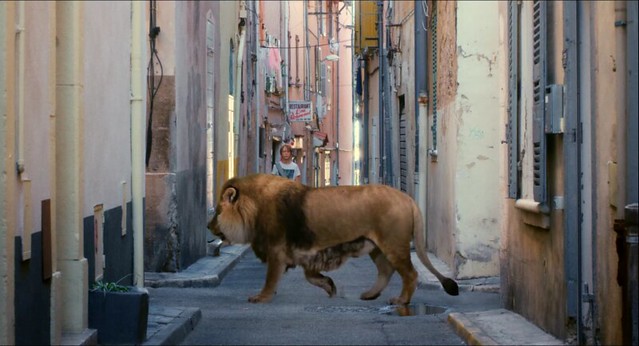
Screen Shot 2018-02-24 at 12.06.02 PM
Jean-Pierre Léaud plays an aging actor Jean, starring in a movie in southern France. He is having a hard time how to play death. The director (Louis-Do de Lencquesaing) insists it being played like him quietly falling asleep. Jean prefers it as an 'encounter', something more impactful, at least on camera.

The project is getting delayed because of his young co-star refuses to come out of her trailer because her heart is broken after an affair with a dancer. "It will pass soon", Jean says. So he has an unintended mini vacation and free to roam around a picturesque, sun drenched town.

He encounters the ghost of his long lost love Juliette (Pauline Etienne) in an abandoned mansion where he once lived. He abandoned her 40 some years ago and she committed suicide by throwing herself in the lake. As he starts to living in that abandoned house, the local kids armed with amateur movie making equipment, barges in and starts following him around.

Along with last year's Death of Louis XIV, Léaud plays a role that deals with aging and mortality. As the face of French New Wave, he is an embodiment of living legend. But he's not really considered as a great actor. At 73, with his leathery, sagging face, he is rather the testament of ravaging flow of time. Nobuhiro Suwa, a Japanese director who's been making films in France, like Albert Serra and Tsai Ming-Liang before him, uses this walking icon for a subtle contemplation on lost love, the joy of cinema and passage of time. Falling somewhere between The Great Beauty and Cinema Paradiso but very very muted in tone, The Lion Sleeps Tonight might be a little too sentimental for some.

Custody - Xavier Legrand
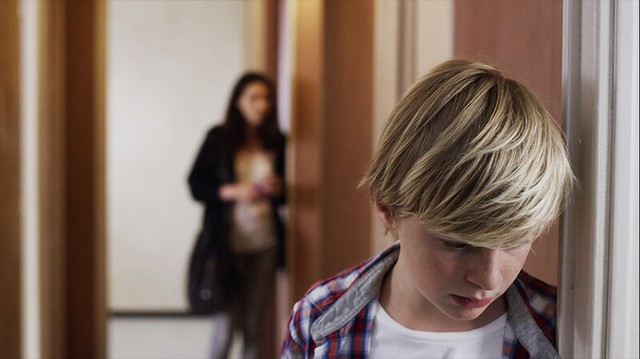
Screen Shot 2018-03-04 at 11.09.37 AM
Xavier Legrand's debut feature Custody is about a domestic violence case that plays out like a thriller. Going for detached, observational documentary style of Dardennes brothers, his mastery in getting an amazingly natural performance out of his talented cast must be commended.

Custody starts out with the custody mediation hearing which lays out the typical situation - abusive husband (Denis Ménochet) who has an upper hand financially gets the joint custody of their 11 year old son (Thomas Gioria) on weekends, even though the kid wrote a statement that dad has been abusive and threatening to his mother (Léa Drucker). Because there is a little evidence of physical abuse.

It's really painful to watch as physically imposing, threatening dad manipulating the kid to get at mom and into their lives again against their wishes. Custody slowly builds up to an explosive conclusion and it's unbearably tense.

It says a lot about the inadequate system in terms of domestic abuse and how things are stacked up against women to prove that abuse can take many different forms.


Montparnasse Bienvenue - Léonor Serraille
montparnasse bienvenue
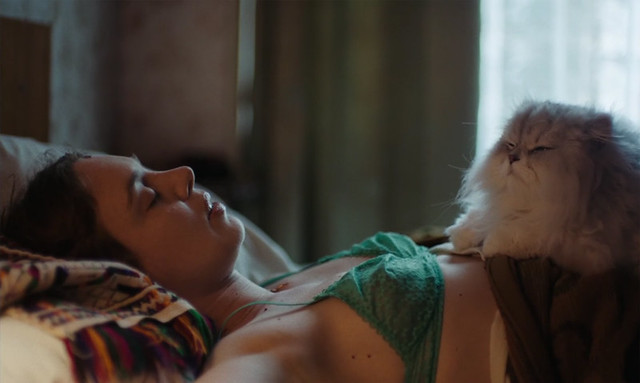
Paula (Laetitia Dosch) just got dumped by her professor boyfriend of 10 years. She makes a scene outside his flat by screaming and banging her head against the door and ends up in a hospital getting stitches on her forehead. With a fluffy cat in tow, homeless, aimless Paula drifts from one place to another, trying to score a place to spend a night while cursing out Paris, the most unfriendly city in the world.

While on the metro, Paula meets exotic Yuki (Léonie Simaga) who mistakes her for her elementary school classmate (it's her Heterochromia iridium - one brown and one green). Yuki invites her to stay at her flat and even gives her a lead for a job - babysitting for a wealthy woman in exchange for a maid's room in the attic. Paula also gets a job at a lingerie shop in a department store after many failed interviews. Naturally chatty, she makes friends everywhere she goes.

At first, Dosch's Paula strikes as a typical 'crazy girlfriend' but after a while, we ease into her quirks and get charmed by her personality. Dosch makes her character endlessly endearing and relatable. First time writer/director Serraille does a great job painting a complicated young woman trying to navigate the world.

'Nothing is that black and white', one of the characters says to her. This resonates throughout the whole film. Montparnasse Bienvenüe is not really about post-college syndrome (think of Francise Ha!)- Paula is 31 but always lies that she is 29 as if that makes a huge difference. But as the film's original title (Jeune Femme - young woman), suggests, it paints a general picture of a modern woman who charges through life with 'fake it till you make it' spirit. Constantly hilarious and immensely watchable, Montparnasse Bienvenüe is a comedy gem.

Tuesday, February 14, 2017

Bressonian Comedy Fail

Slack Bay/Ma Loute (2016) - Dumont
94aecab6b30ce0e76c6bf87b3c120fd5
Dumont does Discreet Charm of Bourgeoisie? Known for his austere films about human conditions or religious faith being tested, Dumont, hailing from Northern France, sets Slack Bay in Channel Coast, just like in most of his films. So how do I feel about Dumont doing comedy... I quietly bailed out on his 4 part TV series Lil' Quin Quin. I found its weird sets of characters (played by non-actors, true to Dumont tradition) coming across as extremely inauthentic, opposite of his dramas. He does another all-out comedy here, but this time with big French movie stars pitted against another set of weird looking non-actors.

The Van Peteghems, (Fabrice Luchini and Valeria Bruni Tedeschi) with their two daughters are vacationing on the coast in their 'Egyption style' mansion, overlooking a picturesque bay consist of sand dunes and cliffs. They are soon joined by Aude (Juliette Binoche), M. Peteghem's sister with her tomboy daughter/son Billie (stunning newcomer Raph) and mentally challenged Christian (Jean-Luc Vincent), Mme. Peteghem's brother. Down below, the Bruforts, a long faced hearty fisherman clan live, making extra pennies by carrying visitors (man and woman) across the channel in their arms slogging through knee deep water- I guess rich doesn't want their clothes wet? People have been disappearing in the bay and Laurel and Hardy of a bumbling police inspectors are dispatched to solve the mystery. Just like the police in Lil' Quin Quin, the duo in Slack Bay are also extremely inept and disarmingly peculiar in their behavior and mannerisms.

The thing is, it's really uncomfortable to see all these esteemed actors acting grossly over the top characters- Luchini slurrs his lines in his hunchback posture, Tedeschi is overly hysterical, Binoche's acting, with rolling eyes and over-exaggerated faint spells, can only be described as camp.

Yes, the notion of 'Eat the rich' is literally fulfilled in Slack Bay. The Van Peteghems are nothing but snotty nosed inbreds. But Dumont doesn't show how the Bruforts are any better. There is a scene where Ma Loute Brufort (Brandon Lavieville) brutally beating Billie after he finds out she is a he. I find that very disturbing. The faces of Dumont's Bruegel-esque non-actors worked to his advantage to ground his films firmly on the ground. With well known actors acting like retards in Slack Bay, it loses grip on its reality and floats away like the obese police inspector does in the movie.

M. Dumont, you've proven that your Bressonian filmmaking doesn't work on comedies. Can you go back to searing dramas now?

Monday, December 30, 2013

Top 20 Discoveries 2013

Looking through the list, I admit my film viewing wasn't as adventurous as the last year's. I don't even have anything before 1969 on the list. Shame on me. I did exercise some concerted effort to explore certain filmmakers which I never consciously have in my film viewing previously, ever. Still there are so many filmmakers to explore...

Top 20 in order watched:
*Click on the titles for full reviews

Life and Nothing More... (1992) - kiarostami
Image
Kiarostami's moving picture continues. A middle aged man and his young son are on the road to Koker, a northern rural town leveled by the devastating earthquake in 1990. It is only revealed later on that the man is a film director (a Kiarostami stand-in) who is looking for a child actor who starred in his previous film, Where is Your Friend's Home? (AK's 1987 film also taking place in that region). As they encounter monstrous traffic jam and many victims of the 'god's will', the line between reality and fiction evaporates: the traveling pair encounters an old man who was also in the said film, carrying a porcelain sink to his house amid devastation around him. He explains, "You never know when you need it." When asked if the big house he is entering (but doesn't have a key to) is his, he replies, "This is not my house. It's only my house in this film. My real house collapsed in the earthquake."

Shot shortly after the real earthquake that took the lives of 50,000, and based on his own experience driving around (with his real son), Life and Nothing More... shows resilience of the people amid a horrible disaster. As they make ends meet, digging out their household items from debris, they still look forward the better future. They fidget a TV antennae to watch a World Cup match in ruins. With Through the Olive Tree (a fictional 'making-of' Life and Nothing More...) as the third film taking place in Koker, these films are seen as the Koker Trilogy. There are many elements here that are present in his later films: interior driving shots, wide scenery long takes, no close-ups. Elegantly simple and captivating throughout with an open ending, Life and Nothing More... is a beautiful film.

Taste of Cherry (1997) - Kiarostami
Image
Inquisitive dialog, just like intimate questionnaires in documentaries is where it's at with all Kiarostami's films, staged usually in moving cars. The beauty of Taste of Cherry lies in its simplicity- a man drives around looking for someone to assist him in his suicide. They don't have to do the deed. He will take sleeping pills and lie down in an already dug up grave. In the morning, they can put some earth on him if he's dead. They will be rewarded handsomely. First, a young soldier runs away after finding out what the man is up to. Second, a seminary student from Afghanistan objects because of his religious beliefs and tries to dissuade him. Finally, an old taxidermist agrees to it, because he has a sick child.

Kiarostami lets us know that we are watching a film. With Louis Armstrong's St. Jame's Infirmary playing at the end over the image, he tells us that death is inevitable for all of us and makes us think. His cinema is precious because it doesn't resemble any other. If Tarkovsky tried to make us feel the 'passage of time' with his virtuosic camera movements, framing and lighting, Kiarostami succeeds in astounding simplicity, in one hour and forty minutes. Life is a moving car. Done. The impact is still immense. The abrupt intrusions of continuity in the middle and at the end are quite delicious in cinematic terms. It all fits nicely with his theme of life, death, cinema, reality... just amazing!

Hadewijch (2009) - Dumont
Image
Austere and sincere. Another masterpiece from Dumont.

The White Ribbon (2009) - Haneke
Image
Masterful examination on the existence of 'innocence'.

It's the Earth Not the Moon (2011) - Tocha
Image
Loved every single moment of this 3 hour Portuguese documentary.

Le pont du nord (1981) - Rivette
Image
Loveliness of Pascal Ogier is just an icing on the cake in this playful comedy by one of the unsung heroes of French New Wave.

La captive du desert (1990) - Depardon
Image
Desert + Sandrine Bonnaire = cinematic heaven

Céline et Julie vont en bateau (1974) - Rivette
Image
One of the classics I hadn't seen that I was able to get to this year. It lives up to all the praises.

A Nous Amours (1983) - Pialat
Image
One of the best cinema debuts ever- 16 year old Sandrine Bonnaire ignites the screen. Pialat's uncompromising direction goes down in my book as one of the best coming of age movies of all time.

Coup de Torchon (1981) - Tavernier
ImageThe most hilarious Jim Thompson adaptation ever!

Emperor's Naked Army Marches On (1987) - Hara
Image
Crazy documentary. You can totally see the continuation of Japanese New Wave in this anti-gov/anti-war film.

Peppermint Candy (1999) - Lee
Image
Dehumanization of a man who experienced the Gwangju Massacre in Korea, 1980, told in reverse timeline. It's definitely the best Korean film I've ever seen.

City of Sadness (1989) - Hou
Image
Hou's history lesson of Taiwan is masterful and affecting.

Mon Oncle Amerique (1980) - Resnais
Image
Slowly getting into master filmmaker Resnais's artistry. There are still so much to explore in his filmography!

Mandala (1981) - Im
Image
I grew up watching Im Kwontaek's films. I was too young to appreciate them back then. Beautiful, if not a little conventional storytelling. If you want good films about Buddhism, look no further than Im's films.

Heart of Glass (1976) - Herzog
Image
This was One of my blind spots in Herzog's filmography. As expected, a grand experience at the cinema.

35 Rhums (2008) - Denis
Image
So simple yet so perfect. This quiet family drama reaffirms why Claire Denis is one of my favorite director of all time.

Caravaggio (1986) - Jarman
Image
I was planning on taking large volumes of screenshots from this visually stunning film. But it turns out the dvd I got from netflix is too scratched to play on my computer. I'm seriously thinking about buying this. Jarman was a true visionary. Taking on the well known cocky post-Renaissance painter Amerighi Caravaggio's life with his painterly, dramatic style that surpasses even the best of Greenaway's bombastic visuals, he shows the painter's lust for life and disdain for what was socially acceptable in a very Catholic era. Young Tilda Swinton and Sean Bean are sculpted with theatrical light skillfully thus their youthful beauty immortalized on the celluloid forever. Nigel Terry (King Arthur in Excalibur) plays famed painter with messy private life who was attracted to many of his subjects, including young Tilda and Sean. It wouldn't have worked if it was done by any other, but when Jarman mixes old and new (modern costumes, typewriter etc), transcending time and space, it works wonders. Amazingly beautiful and playful, I am totally blown away by this.

Days of Eclipse (1988) - Sokurov
Image
Yes, Sokurov is quite different from Tarkovsky as a director and visual storyteller. I realize that after seeing this film. It's quite hard to describe this 'Sokurovian cinema'. But this film was an eye opener.

Shame (1969) - Bergman
Image
What more can I say about this? Bergman is a true master of cinema.

Directors explored:

Jacques Rivette:
Le pont du nord
Celine et Julie vont en bateau

Maurice Pialat:
A nous amours
Loulou
Police

Abbas Kirarostami:
Life and Nothing More
Taste of Cherry
Homework
The Reoprt

Hou Hsiao Hsien:
City of Sadness
Millennium Mambo

Bruno Dumont:
Flandres
Hadewijch
Hors Satan
Camille Claudel 1915

Alain Resnais:
Mon oncle Amerique
Muriel
Vous n'avez encore vu

Raymond Depardon:
Une femme en Afrique
La captive du desert
L'homme sans O'ccidental

Alexandr Sokurov:
Days of Eclipse
Mother and Son
Moloch

Hong Sangsoo:
In Another Country
Nobody's Daughter Haewon

Top 20 Discoveries 2012

Saturday, December 28, 2013

Angels and Sinners

Flanders (2007) - Dumont Image
Image
Image
It's a northern rural non-descript French town in winter. Livestocks, mud and snow. Andre (Samuel Boidin), a hulking, young farmer is due to ship out to a war along with some other village men. He has casual sex with Barbe (Adélaïde Leroux), angelic looking village slut on the frozen ground near a hedgerow. The boys ship out to a hellish war in some desert country (Afghanistan probably). Barbe has a miscarriage and a nervous breakdown. The baby wasn't Andre's but his army buddy, Blondel's. Andre ends leaving Blondel behind enemy lines to die. If this sounds like Notebook or a Green Day music video, I can assure you Flanders is far from that.

Dumont's parable on the higher power and its unconditional love is embodied by non-professional actors as usual. In ordinary people at their base level is where Dumont finds fallen angels and sinners who are capable of forgiveness and unspeakable acts. Adélaïde Leroux here is the fallen angel who sees all but accepts Andre's sins. Flanders is not as striking, but colder and more austere than Dumont's other films. But it's still deeply moving.

Tuesday, October 15, 2013

Woman Under the Influence

Camille Claudel 1915 (2013) - Dumont
 photo 11287_zps5690123e.jpg
With each new film, a controversial French filmmaker Bruno Dumont continues to fascinate me. His fixation with purity is quite unflinching, and his characters suffer for (or for the lack of) it. Camille Claudel 1915, an even more characteristically stripped-down, austere Dumont film, concerns 3 days in the life of Camille Claudel, a famed sculptress and one time August Rodin's mistress. She has been abandoned and committed by her family to a mental asylum where she would spend the rest of her life until death. Her younger brother Paul, a famous poet and writer with a strong Christian bent visits her during this time, not to rescue her, but to chastise her.

Juliette Binoche, who continues to choose intriguing projects as she gets older, plays the unglamorous title role and giving a measured and beautiful performance of a woman (slightly) under the influence. From what I hear, the famed actress reached out to Dumont because she wanted to work with the director and challenge herself. She wanted to play a woman in a confined space. Camille Claudel 1915 is the result of their collaboration.

So this is quite the rare film where Dumont uses a famous actor (other than the late Katerina Golubeva in Twentynine Palms back in 2003, which I feel was the only misstep in his otherwise singular filmography). In a true Bressonian fashion, he usually populate his films with non-actors. In this film, he mainly focuses on Binoche's non-made up, anguished, hollow face as she spends her days in boredom and frustration surrounded by other mental patients.

It starts with Camille preparing her meal alone in the kitchen- a couple of boiled potatoes. A greenhorn intern who is not familiar with Camille's arrangement tries to stop her only to be the victim of her outbursts. A seasoned nurse quietly informs him that Camille is allowed to prepare her own meals because of her 'condition' that she thinks someone is trying to poison her. Tearful Camille joins the rest of the group at the dining table. It's a group of sad creatures- a toothless, drooling, howling bunch of real mental patients.

For naturalism and fluidity, Dumont and the crew shot the film during the daily routine of the mental hospital (where the film was shot): real patients going about their daily schedule and real nurses playing Sisters of the old Catholic mental asylum. The result is quite astounding. I can assure you that the controversy surrounding using real mental patients in film, that the film is exploitative is quite unfounded. Dumont has proven over the years that what he strives for in his filmmaking is showing purity and authenticity in both physical and spiritual form.

The sibling's differences are portrayed in two nearly identical, long, technically daring scenes: with the other patients in tow, Camille and the Sisters climb a rocky hill. Preoccupied but not unhelpful or uncaring, Camille assists others who are much more handicapped than her to reach the top of the hill. It's a beautiful site. But it's just a hill. As soon as they reach it, they go back down. The afternoon walk is over. Then there is Paul (Jean-Luc Vincent)'s long walk up to a hill behind a church with a friend who is an ordained priest. On the way to the top, Paul describes his first religious epiphany in detail to his friend, his story coming to a crescendo at the peak.

The only time we see Camille smile is when the news of her brother Paul's visit is announced. She is fully expecting to be freed from her unjust confinement. She might be a little paranoid, but she is still a sentient, sensible thinking being. When they meet, he lectures her why she is in her state of misfortune. He deems that it is her arrogance which is prevalent in artistically talented types that gave way to her delusions of grandeur. In his mind, God loves everyone but punishes those who are insolent. It's an unforgivable sin.

Dumont always grapples with the idea of purity of faith in his films. It can be devastating (Humanité). It can be beautiful (Hadewijch, Hors Satan). In Camille Claudel 1915, he examines this purity in a historical context in the lives of historical figures.

Camille Claudel was a tragic figure, not because she was punished by God. She was as much a victim of her paranoia as of the sexist society and its times. As Dumont throws Paul's view in, the film becomes another contemplation of the purity of faith which can be quite rigid, inhumane and self-righteous.

All the controversy aside, the film remains to be beautiful in its austerity. It's a hard film to watch but a very strong one, one that will definitely ring over your head long after you leave the theater.

Camille Claudel 1915 has an exclusive two-week theatrical run at Film Forum, starting October 16. It's distributed by Kino Lorber. For tickets please go to Film Forum website.

Thursday, February 21, 2013

Invisible Gods

Hadewijch (2009) - Dumont
 photo 18a1694c-42fb-4f0a-95bb-92735b8f2747_zps3d6c776e.jpg
 photo 616957e5-3620-41f8-8e11-63c0936ef31b_zps6cf7468f.jpg photo 86da0e95-907f-468d-a726-0113cef7b4be_zps165bbc52.jpg
 photo 6c688bba-013b-4111-8f29-9feab8c2890a_zpse84b6dab.jpg
Hadewijch is a film with immense power and beauty. The innocence and religious devotion are embodied by non-professional actor Julie Sokolowski. After getting kicked out of the convent because of her zealotry (refusing to eat and not covering herself against the cold) by concerned mother superiors, Céline (Sokolowski) is befriended by an Arab youth, who at first is attracted by her beatific demeanor, then impressed by her devotion. He in turn introduces her to his older brother who teaches Q'oran. Dumont serenely shows how an innocent can easily get bought into the martyrdom without judgment. It is not easy to buy into Céline's existence- a daughter of an extremely wealthy family, studying theology at her age, her unquestioning faith, etc. But Dumont's approach is so austere and sincere, these little set ups don't really matter too much. Elliptical climax threw me off a little but redemptive ending, with the constant presence of David Dewaele (the soulful lead from Hors Satan) really moved me as a whole. Hadewijch is definitely a great reward of a movie for adventurous filmgoers. I am really getting into Dumont.