Showing posts with label Hou Hsiao-Hsien. Show all posts

Sunday, October 14, 2018

Running Away is Not a Solution

Taipei Story (1985) - Yang
Screen Shot 2018-10-13 at 12.25.30 PM
Screen Shot 2018-10-13 at 12.27.29 PM
Screen Shot 2018-10-13 at 12.30.37 PM
Screen Shot 2018-10-13 at 12.28.22 PM
Screen Shot 2018-10-13 at 12.31.58 PM
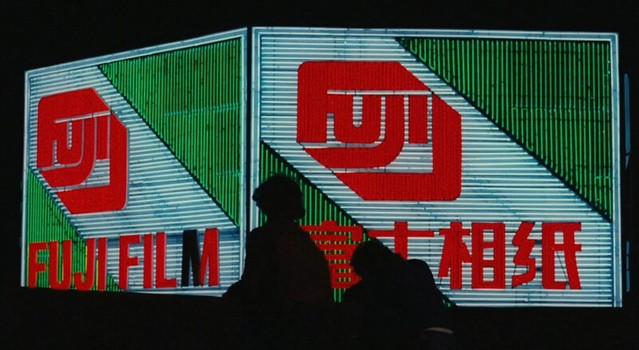
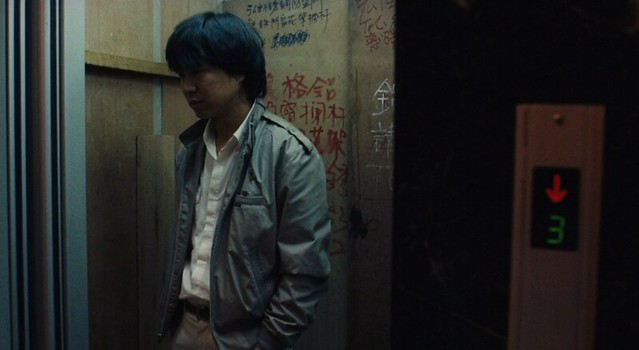
It is hard to let go of old ways. Taipei Story tells the story of Lung (Hou Hsiao Hsien) and Chin (Tsai Chin), an on and off childhood sweethearts adulting in the fast changing world. And it's a good one.

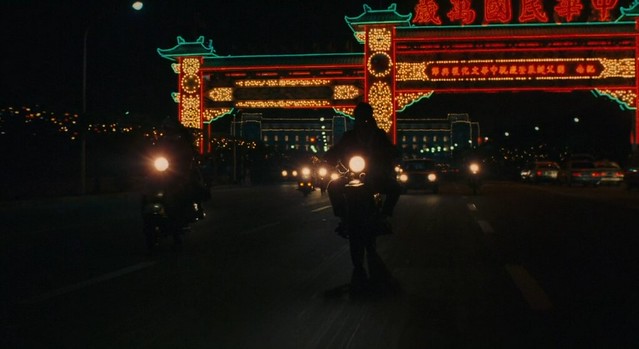
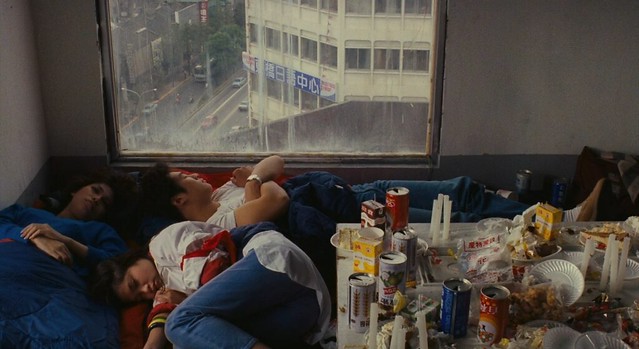
Lung just got back from living in California and finding it way too easy and comfortable slipping in to old ways - managing his father's fabric shop, visiting his old baseball coach and reminiscing good old times with Chin's father. It seems Lung left Taiwan because of his love Gwan (Ko Su-Yun) chose Kobayashi over him and moved to Japan. Chin, working at a classy architecture firm as an assistant to powerful Mme. Mei, finds herself out of the job after a company takeover. Chin decided to take some time off, hoping that now Lung's back, maybe they can get together and move to Cali. In the mean time, she hangs out with her little sister's motorcycle riding group of youngsters. And this provides some of the most memorable visual sequences in the film.

Still bound by tradition and loyalty, Lung blows an opportunity partnering with his brother-in-law in Cali by lending his nest egg money to Chin's father who is a sentimental drunkard and helping his old buddy who now drives a cab to make ends meet. Lung hates all these sinewy old connections in Taipei, but realizes running away is not the solution. You can't run away from who you are.

Chin's brief fling with her married co-worker doesn't go anywhere and she gets super jealous when Gwan visits the city. And her shenanigans with cram school kids brings more complications when one of the boys taking a liking to her. Where is her prince charming, her knight with shining armor to take her away from all this clinginess? Always hiding behind her dark shades, Chin wants very much to be free.

Somehow I could see the ending from a mile away. But don't matter, Taipei Story is a terrific film with great characters charting growing pains of 30 somethings in a specific city which also happens to be very universal. Hou is amazing as Lung, a moody man with a chip on his shoulder.

Wednesday, December 23, 2015

Don't Cry, So Why Don't We Sing?

Good Men, Good Women (1995) - Hou
 photo 292ad633-a2d1-47c4-baf3-abac0b593c49_zpsixgenv4i.png
 photo 3dc6908f-b160-4d10-9e3c-3c2fbe9ad058_zpsjvr1f4xl.png
Compared with Hou's another Taiwanese historical epic City of Sadness which is told as a straight forward family saga, Good Men, Good Women is a much more complex film, both structurally and thematically. So it makes a much more challenging viewing experience. It starts out with a young actress Liang Ching (Annie Shizuoka Inoh) with a troubled past as she prepares the role of Chiang Bi-yu, a real life character in a film version of Good Men, Good Women, about a group of young Taiwanese idealists going over to the mainland China to join the resistance against Japanese in WWII. The monochrome version of the film within the film is scattered through out, giving the island nation's tumultuous history through these well intentioned characters who fell victims to political circumstances. It also loosely connects with the life of Liang in the present time who has been leading rather a trashy, decadent life.

Someone is stalking Liang with late night phone calls and faxing her the snippets of her own diary which was stolen. The diary reflects on her seedy past to herself as a bar hostess and a drug addict. She is also haunted by the memories of her lover, Ah Wei, a low level gangster who was murdered some years ago. We spend most of the running time with Liang in her present life and in flashbacks with Ah Wei, shot and framed beautifully in typical Hou mastery. The seemingly unconnected story resonates in the film's end as the same wide shot of people crossing the field of Chinese countryside, singing (one in monochrome and one color) reminding the prologue: "When yesterday's sadness is about to die/When tomorrow's good cheer is marching towards us/Then people say, don't cry. So why don't we sing." Liang's life can be construed as the director's comments on decadent present Taiwanese society. But Liang is a deeply unhappy character who can't escape the shadow of her past. We can't help but sympathize with her. There is obviously a larger context in play here - the nation's shameful past needs to be recognized in order to go forward.

Complex, asymmetrical and enigmatic, yet richly rewarding, Good Men, Good Women is the Hou film I was craving for. But now I have to watch Puppetmaster to finish the Hou's Taiwanese History Trilogy.

Sunday, December 20, 2015

Beautiful Melancholia

Dust in the Wind (1987) - Hou
 photo b7898d79-c7f4-43e5-a887-6e40bcd354a4_zpsnkbrzxik.png
Wan (Wang Chien-wen) and Huey (Hsin Shu-fen) are teenage lovers in a small mining town. After graduating middle school, they decide to go to bustling Taipei to earn money for their families. Wan takes a job at printing factory then later as a motorcycle delivery man while going to night school. Huey works as a seamstress. They befriend with billboard painter and his gang at a movie theater, hang out and drink sometimes. But life is tough and as you know, things never go the way you wanted.

Hou's elegy to his adolescent times is full of stunningly beautiful moments - a train ride home in the beginning, normally shy Huey taking off her shirt in a spur of the moment, grandpa's firecrackers, suspicious, shipwrecked Chinese family in the army barracks, watching people fighting fire from across the street, drunken dad trying to lift a stone, etc. It feels almost indecent to share these memories of Wan and Huey as intimately and vividly as I watch Dust in the Wind. But like past memories, Hou's treatment of these moments are so fleeting and democratic, it just quietly floats by without much time for reflection (which comes later). And before you know it, the film ends and leaves you with beautiful melancholia. Another bittersweet masterpiece by Hou.

Thursday, October 8, 2015

Wuxia of a Different Kind

The Assassin (2015) - Hou
 photo 701ba8b9-a2f1-44ae-bb37-12d832b3131e_zpsvxmnfvrv.jpg
The Assassin plays out like a overly conscious filmmaker going over the script of Crouching Tiger, Hidden Dragon and say, "OK, we will do complete opposite of what's written here, line by line." But it's Hou Hsiao Hsien. So you know he is aiming for something else entirely.

There is a complicated plot set in 8th Century Tang dynasty, in the region of Weibo where the talk of revolt against the imperial court is brewing. There is a love story somewhere and a beautiful assassin Yinniang (Shu Qi) wrecking havoc. In a beautiful crisp black and white intro, Yinniang is seen cutting her target's throat who's mounted on a horse in blinding seconds. Again, it being Hou's wuxia, action sequences are brief and often cut abruptly by the following scene without any resolution. Yinniang was taken and trained by a nun princess (the backstory we only briefly hear about) who chides not for her swords skills but the resolve in her heart because she refuses to kill intended targets when they are with their children. Just as fleetingly as the flow of the film, Yinniang is assigned to kill her cousin/childhood sweetheart Tian (Chang Chen), the governor of Weibo. Would she fulfill her mission? Or is it ever a point of the film?

Watching the Assassin is like watching the river flowing down in autumn sunset. You were watching an object reflected in golden sunlight just above the surface of the water all the way on the right corner of your eye, you were mesmerized by the sparkling, undulating water and before you realized that the object was flowing down the river all the way to the left corner of your eye and one hour and forty minutes have gone by. Hou is the kind of director who's more interested in steam rising from the ornate bathtub than his actress's beautiful naked body. His decisions are so efficient, yet it conveys everything any costume melodramas convey, without corny tears, excessive expositions and phony intrigue. He doesn't need to show the wounded bare back of Yinniang for emotional effect. We already know she is a kick-ass assassin and she will get over it with some Chinese herb patch. Sumptuously shot on film in full frame by Hou's regular cinematographer Mark Pin-Bing Lee, The Assassin is rapturously gorgeous. Shu Qi looks amazing in her black Assassin's outfit. Marvelously elegant in its simplicity and subtlety The Assassin is a true beauty to behold.

Monday, December 30, 2013

Top 20 Discoveries 2013

Looking through the list, I admit my film viewing wasn't as adventurous as the last year's. I don't even have anything before 1969 on the list. Shame on me. I did exercise some concerted effort to explore certain filmmakers which I never consciously have in my film viewing previously, ever. Still there are so many filmmakers to explore...

Top 20 in order watched:
*Click on the titles for full reviews

Life and Nothing More... (1992) - kiarostami
Image
Kiarostami's moving picture continues. A middle aged man and his young son are on the road to Koker, a northern rural town leveled by the devastating earthquake in 1990. It is only revealed later on that the man is a film director (a Kiarostami stand-in) who is looking for a child actor who starred in his previous film, Where is Your Friend's Home? (AK's 1987 film also taking place in that region). As they encounter monstrous traffic jam and many victims of the 'god's will', the line between reality and fiction evaporates: the traveling pair encounters an old man who was also in the said film, carrying a porcelain sink to his house amid devastation around him. He explains, "You never know when you need it." When asked if the big house he is entering (but doesn't have a key to) is his, he replies, "This is not my house. It's only my house in this film. My real house collapsed in the earthquake."

Shot shortly after the real earthquake that took the lives of 50,000, and based on his own experience driving around (with his real son), Life and Nothing More... shows resilience of the people amid a horrible disaster. As they make ends meet, digging out their household items from debris, they still look forward the better future. They fidget a TV antennae to watch a World Cup match in ruins. With Through the Olive Tree (a fictional 'making-of' Life and Nothing More...) as the third film taking place in Koker, these films are seen as the Koker Trilogy. There are many elements here that are present in his later films: interior driving shots, wide scenery long takes, no close-ups. Elegantly simple and captivating throughout with an open ending, Life and Nothing More... is a beautiful film.

Taste of Cherry (1997) - Kiarostami
Image
Inquisitive dialog, just like intimate questionnaires in documentaries is where it's at with all Kiarostami's films, staged usually in moving cars. The beauty of Taste of Cherry lies in its simplicity- a man drives around looking for someone to assist him in his suicide. They don't have to do the deed. He will take sleeping pills and lie down in an already dug up grave. In the morning, they can put some earth on him if he's dead. They will be rewarded handsomely. First, a young soldier runs away after finding out what the man is up to. Second, a seminary student from Afghanistan objects because of his religious beliefs and tries to dissuade him. Finally, an old taxidermist agrees to it, because he has a sick child.

Kiarostami lets us know that we are watching a film. With Louis Armstrong's St. Jame's Infirmary playing at the end over the image, he tells us that death is inevitable for all of us and makes us think. His cinema is precious because it doesn't resemble any other. If Tarkovsky tried to make us feel the 'passage of time' with his virtuosic camera movements, framing and lighting, Kiarostami succeeds in astounding simplicity, in one hour and forty minutes. Life is a moving car. Done. The impact is still immense. The abrupt intrusions of continuity in the middle and at the end are quite delicious in cinematic terms. It all fits nicely with his theme of life, death, cinema, reality... just amazing!

Hadewijch (2009) - Dumont
Image
Austere and sincere. Another masterpiece from Dumont.

The White Ribbon (2009) - Haneke
Image
Masterful examination on the existence of 'innocence'.

It's the Earth Not the Moon (2011) - Tocha
Image
Loved every single moment of this 3 hour Portuguese documentary.

Le pont du nord (1981) - Rivette
Image
Loveliness of Pascal Ogier is just an icing on the cake in this playful comedy by one of the unsung heroes of French New Wave.

La captive du desert (1990) - Depardon
Image
Desert + Sandrine Bonnaire = cinematic heaven

Céline et Julie vont en bateau (1974) - Rivette
Image
One of the classics I hadn't seen that I was able to get to this year. It lives up to all the praises.

A Nous Amours (1983) - Pialat
Image
One of the best cinema debuts ever- 16 year old Sandrine Bonnaire ignites the screen. Pialat's uncompromising direction goes down in my book as one of the best coming of age movies of all time.

Coup de Torchon (1981) - Tavernier
ImageThe most hilarious Jim Thompson adaptation ever!

Emperor's Naked Army Marches On (1987) - Hara
Image
Crazy documentary. You can totally see the continuation of Japanese New Wave in this anti-gov/anti-war film.

Peppermint Candy (1999) - Lee
Image
Dehumanization of a man who experienced the Gwangju Massacre in Korea, 1980, told in reverse timeline. It's definitely the best Korean film I've ever seen.

City of Sadness (1989) - Hou
Image
Hou's history lesson of Taiwan is masterful and affecting.

Mon Oncle Amerique (1980) - Resnais
Image
Slowly getting into master filmmaker Resnais's artistry. There are still so much to explore in his filmography!

Mandala (1981) - Im
Image
I grew up watching Im Kwontaek's films. I was too young to appreciate them back then. Beautiful, if not a little conventional storytelling. If you want good films about Buddhism, look no further than Im's films.

Heart of Glass (1976) - Herzog
Image
This was One of my blind spots in Herzog's filmography. As expected, a grand experience at the cinema.

35 Rhums (2008) - Denis
Image
So simple yet so perfect. This quiet family drama reaffirms why Claire Denis is one of my favorite director of all time.

Caravaggio (1986) - Jarman
Image
I was planning on taking large volumes of screenshots from this visually stunning film. But it turns out the dvd I got from netflix is too scratched to play on my computer. I'm seriously thinking about buying this. Jarman was a true visionary. Taking on the well known cocky post-Renaissance painter Amerighi Caravaggio's life with his painterly, dramatic style that surpasses even the best of Greenaway's bombastic visuals, he shows the painter's lust for life and disdain for what was socially acceptable in a very Catholic era. Young Tilda Swinton and Sean Bean are sculpted with theatrical light skillfully thus their youthful beauty immortalized on the celluloid forever. Nigel Terry (King Arthur in Excalibur) plays famed painter with messy private life who was attracted to many of his subjects, including young Tilda and Sean. It wouldn't have worked if it was done by any other, but when Jarman mixes old and new (modern costumes, typewriter etc), transcending time and space, it works wonders. Amazingly beautiful and playful, I am totally blown away by this.

Days of Eclipse (1988) - Sokurov
Image
Yes, Sokurov is quite different from Tarkovsky as a director and visual storyteller. I realize that after seeing this film. It's quite hard to describe this 'Sokurovian cinema'. But this film was an eye opener.

Shame (1969) - Bergman
Image
What more can I say about this? Bergman is a true master of cinema.

Directors explored:

Jacques Rivette:
Le pont du nord
Celine et Julie vont en bateau

Maurice Pialat:
A nous amours
Loulou
Police

Abbas Kirarostami:
Life and Nothing More
Taste of Cherry
Homework
The Reoprt

Hou Hsiao Hsien:
City of Sadness
Millennium Mambo

Bruno Dumont:
Flandres
Hadewijch
Hors Satan
Camille Claudel 1915

Alain Resnais:
Mon oncle Amerique
Muriel
Vous n'avez encore vu

Raymond Depardon:
Une femme en Afrique
La captive du desert
L'homme sans O'ccidental

Alexandr Sokurov:
Days of Eclipse
Mother and Son
Moloch

Hong Sangsoo:
In Another Country
Nobody's Daughter Haewon

Top 20 Discoveries 2012
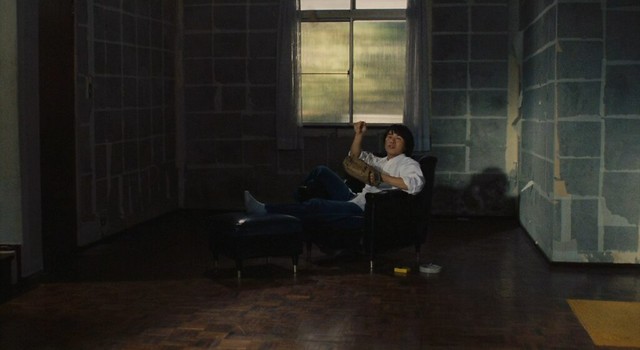
Saturday, June 1, 2013

Film as History

City of Sadness (1989) - Hou
Image
Image
Image
Image
Image
Hou quietly observes a prominent Lin family in a mountain town as it breaks apart during turbulent times in Taiwan after WWII. Handsomely photographed static interior shots accompanied by naturalistic performances, City of Sadness looks and feels like Ozu. Sung Young Chen is great as boisterous eldest son, so as Jack Kao as the middle child who suffers from PTD who were drafted to fight in a Japanese army and later is tortured by Kuomintang as a collaborator. Young Tony Leung also shines as the youngest, sensitive, deaf (because Leung couldn't speak Taiwanese, I found out, but it works him being as a slient witness) brother of the family. It's he and his long time family friend and later wife Hinomi (Xin Shu Fen) who bear witness to the changing times.

I had a very little knowledge of Taiwanese history going in City of Sadness: didn't know about their 51 year Japanese Occupation (compared to Korea being under 30 year occupation, and we still hold grudges) and the rather unique colonial past (as the first Japanese colony since 1894, taking cues from the Brits, the Japs governed them differently at first and to this day, I hear Taiwanese don't have too much adversarial feelings toward Japs as the rest of Asia do) , didn't know about their diverse ethnic groups, culture and languages, didn't know about Kuomintang's atrocities after the WWII against its own people. It is rather wrong to base your knowledge of a certain people's history solely on one mere film, but knowing Hou and his detached yet humanistic approach, I'd take his film over any dry history textbooks.

Thursday, May 30, 2013

Party Like It's 2001

Millenium Mambo (2001) - HouImage
Image
Image
Image
Image
Image
Gorgeous, just gorgeous. With mangled timelines and sporadic and repetitive voiceovers, the film focuses on a beautiful wayward youth Vicky (Shu Qi). She is in a sadomasochistic bind with controlling Hao Hao (Tuan Chun-Hao), breaking up and going back to him many times. While working as a bar hostess, she meets Jack (Jack Kao), an older gangster type who takes her under his wing. I loved the scenes shot in snowy Hokkaido where Vicky loses herself to her surroundings. Colors, compositions, all amazing. With Hou, it's all touch and go for me. I adored Cafe Lumiere, Goodbye South Goodbye but meh about Flight of the Red Balloon. Mambo really clicked with me. And like with all Hou, the film, the characters are in love with its past. It's a 2001 movie told in 2011 being nostalgic about 2001! A free flowing, beautiful film.