Showing posts with label Vicky Krieps. Show all posts

Tuesday, September 6, 2022

Grieving and Letting go

Serre moi fort (2021) - Amalric Hold Me Tight I have said many times that Mathieu Amalric is not only a great actor but a great director as well. Over the years, he has proven the fact time and time again with his incredibly diverse work in his filmography: On Tour, a film about a group of burlesque performers touring with a washed-up manager to ‘the end of the world’, Blue Room, a Gustave Courbet inspired sexy noir courtroom drama and Barbara, fiercely inventive biography of a popular French singer. He does it yet again, with Hold Me Tight with the great Vicky Krieps in a very affecting performance. Amalric's strength as a director has always been his seeming aimlessness or controled chaos if you will, which always ends up greatly resonating on an emotional level. Hold Me Tight is no exception.

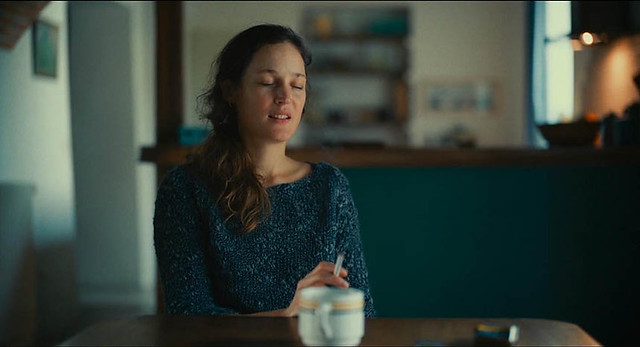
It starts out with Clarisse (Vicky Krieps) playing polaroid pictures of her family like a deck of cards on her bed, then sneaking out of the house in the middle of the night, driving away in a dusty old car that’s been sitting in their garage, leaving behind her loving family - Marc, her hunky husband and two adorable pre-teen children, Lucie, and Paul. She tells herself that after a while they will not miss her. She is never coming back, and they will have to accept the fact. But why is she running away? What is she running from? She is seen saying goodbye to her friend in town (it’s mountainous region of Northwest France near Luxembourg/Germany border) at the gas station.

The film wisely cuts back and forth with Clarisse’s road trip and the happy family life. They are always on her mind and the thoughts of them make her smile while on the lonely road. As the film plays out, it’s as if she is watching her children grow up from a distance, as if by choice. Then the film becomes something else entirely.

Clarisse’s seemingly aimless road trip, listening to an old cassette tape recording of Lucie playing piano, incessant smoking, her pauses, staring at inanimate objects, silent smiles- each of these tell a story, so do her inexplicable, seemingly random behaviors as the film goes on: Why does she hug a stranger from behind in a pub? Why does she bury her head in ice in a fish market? Why does she berate tourists for not keeping an eye on their children? Why is she so insistent of getting the same room with bunk beds at a ski resort over and over again? Amalric builds upon these details to the film’s ultimate big reveal. But unlike the gotcha moments in other films, Hold Me Tight’s conceit doesn’t feel like a conceit. This is mainly because of Krieps, (in my opinion, the best actress working today), who embodies Clarisse with natural grace, inner strength, intelligence, and unassuming beauty all at once.

The fragments of memories of Clarisse's family that she plays in her head and the construction of what the life with them would have been clashes, when she tracks the life of a local piano protégé. Believing that it is her Lucie, now a fiery teenager, playing in an important competition, Clarisse acts out her mostherly concerns at the teenager. And it causes a scene.

Krieps gives a gut-wrenching performance in a film about grieving and letting go that is so portent and heartfelt than any other film I've seen in a long time. Constantly going back and forth with her and her family, feeling the absence of one another yet articulating the connection in a very ingenious way, Amalric, adapting from Claudine Galea's play Je reviens de loin, makes perhaps the most heartfelt film as a writer/director. Give Krieps all the acting awards there are!

Hold Me Tight opens 9/9 in New York, 9/16 in Los Angeles. National rollout will follow.

Tuesday, June 21, 2022

Critique of Critical Critique

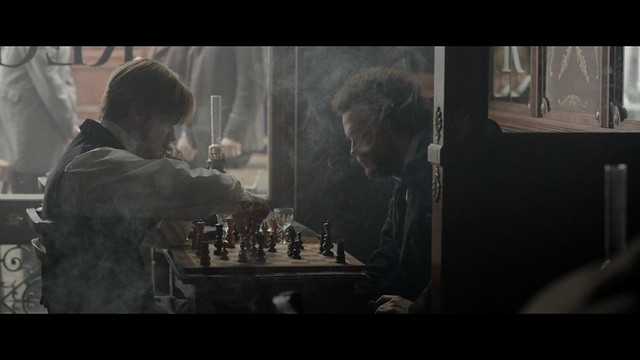
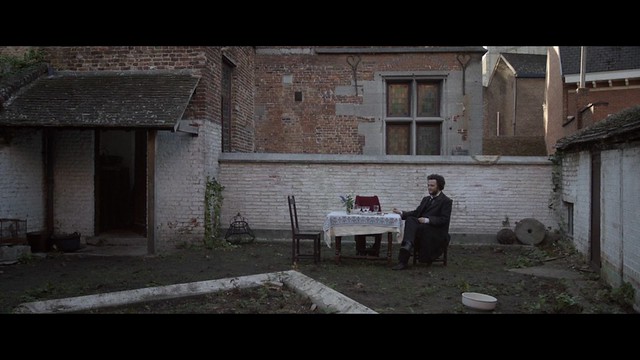
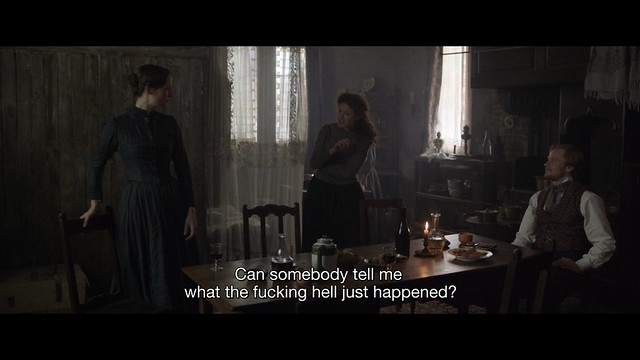
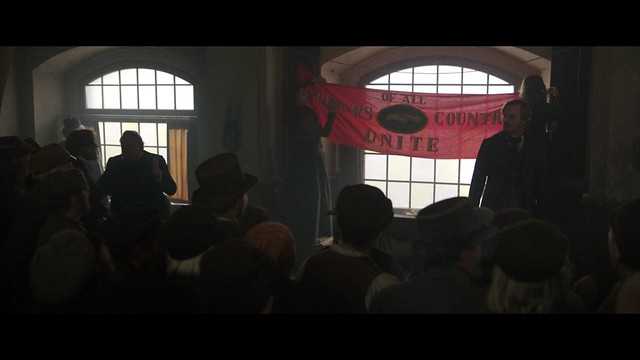
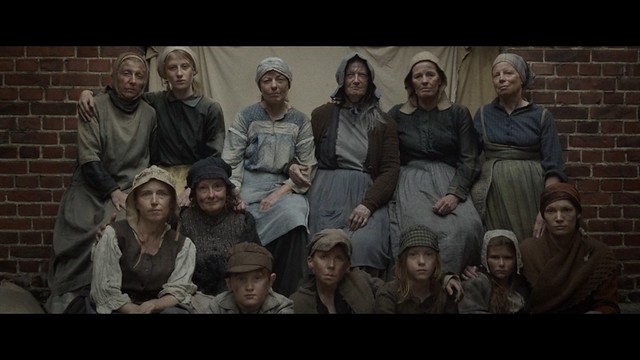
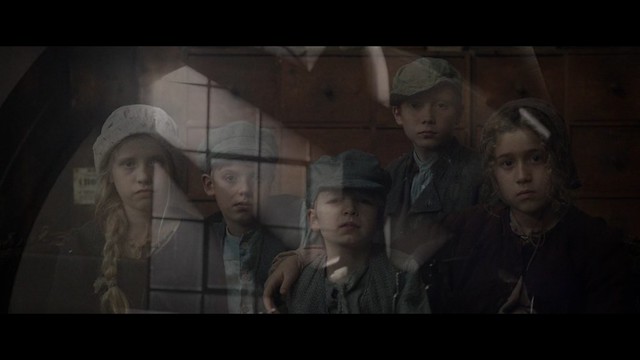
Le Jeune Karl Marx (2017) - Peck Screen Shot 2022-06-21 at 12.55.41 PM Screen Shot 2022-06-21 at 12.57.04 PM Screen Shot 2022-06-21 at 1.01.06 PM Screen Shot 2022-06-21 at 1.02.35 PM Screen Shot 2022-06-21 at 1.28.49 PM Screen Shot 2022-06-21 at 1.05.44 PM Screen Shot 2022-06-21 at 1.07.04 PM Screen Shot 2022-06-21 at 1.08.40 PM Screen Shot 2022-06-21 at 1.08.08 PM Screen Shot 2022-06-21 at 1.06.03 PM It amazes me that people still use 'commie' as a slur. That after all these years, the idea of common ownership, brotherhood among all mankind and the utopia once touted by as far back as Greek philosophers are hijacked by the powers that be and still being used as a fearmongering, scare tactic. That they don't differentiate it with state capitalism of Russia and many other who followed suit after WWII. Director Raoul Peck with The Young Karl Marx, trying to show the noble intent of a young German thinker in the start of his career as a political thinker and activist, along with his friend Fredrich Engels. The result is a soul stirring work that is emblematic of all other Peck's films - direct, clear, devoid of cheap sentimentality and emotional crescendo often associated with historical biographies.

The film starts out with illustrating the serfdom and the idea of commodity and ownership - peasants gathering fallen tree branches in the woods for fire, while being careful not to break them off from the living tree, were mercilessly raided by weapons wielding raiders who treat them all equally as thieves. This is what Marx witnessed as a child. The background of the film is the 1840s, in the wake of Industrial Revolution in England. And the working class is realizing that they are living in two class system - Bourgeoisie and Proletariat, and that their living conditions are not so different from feudalist system.

Young Marx (August Diehl), persecuted by his activities and writing, flees Germany, first to Paris where Proudhon (Olivier Gourmet), a much-respected political theorist and other prominent thinkers were at the time. Paris is also where he met and married his wife Jenny (Vicky Krieps) who is from a noble family hailing from Trier, a city near Luxembourg. He also befriends with Engels (Stefan Konarske), a 26-year-old son of a rich German textile mills owner in London. Conflicted by how wealthy industrialists, including his father, treat their workers, Engels rebels against his father and marries an Irish textile worker, Mary (Hannah Steele). Marx finds in Engels his intellectual equal and rabble-rousing partner. The two join The League of the Just, an elder statemen group of communists, a predecessor to Marx and Engels' the Communist League.

Struggling with poverty and hounded by police, Marx leads a life of a constant state of exile (Germany, France, Belgium, and England), often supported and encouraged by Engels to keep going. Where everyone's rhetoric not being supported by meaningful action - that of Proudhon, Weitling and Ruge, faltered and fizzled out, the young Marx and Engels writing and theories, based on the lived experience of the proletariat paved the way for the violent struggle, 1848 Revolution, then Russian Revolution and the concept of the trade unions, workers solidarity and eventually permanent revolution.

Peck, as always, the case, brings much humanity out of the political history and figures with great compassion and urgency. The period details are impeccably replicated and acting, from Diehl, Konarske and Krieps and the supporting cast, solid. The Young Karl Marx is not sensationalized in any way. It's a total antidote to throw in someone's face who is accusing you of being a commie, just because you don't subscribe to the capitalist way of thinking. Maybe the film is too even tempered, and that might be the reason the film wasn't widely seen, but it deserves some serious attention while our world is burning more ways than one right now.

Friday, September 24, 2021

A Meta-Contemplation on an Artist's Creative Process

Bergman Island (2021) - Hansen-Løve Bergman Island For the last decade, Mia Hansen-Løve, with a string of beautifully written and acted, melancholic films about life and passing of time, has emerged as one of the most highly-regarded directors working today.

Her delicate and subtle films, be it a coming of age tale in Goodbye First Love, about pursuing one's dreams and succumbing in Eden, or about taking life's curve balls in stride in Things to Come, there has always been plenty of evidences of a great writer/director cementing her own unique voice in film world, which is a still very much male-dominanted industry.

It is interesting then, that we see Hansen-Løve digging deeply into the subject that concerns a woman's artistic struggles in finding her own voice while being a longtime partner of someone who's more established and better known, taking a not so guised reference from her real life, for she was a long time partner of director and mentor, Olivier Assayas.

Even though Bergman Island is her first English language film with an international cast -- Vicky Krieps, Tim Roth, Mia Wasikowska and Anders Danielsen Lie -- the theme doesn't quite give enough distance from her real life. Sure, an older man who has a big influence on how a young woman develops and finds her own self has always been there in her films, most recently in Maya.

But her self-reflexiveness was not as out in the open as in Bergman Island. I'm not faulting this move and don't want to call it regressive, but a female director finding her own voice and out of her male partner's shadow in a place called Bergman Island seems quite an unusual choice for already established and well-regarded director. Perhaps that was her intention, though, to differentiate herself and reiterate that her working method is different, that her creative process is not like that of Assayas nor Bergman.

Bergman Island concerns a film director couple Tony (Roth) and Chris (Krieps) coming to Faros Island, where the famed Swedish director Ingmar Bergman made a bulk of his films and had a house there, to work on their new projects. Many writers, filmmakers and architects have been flocking around there to get inspirations from where the maestro lived and worked.

Tony is a world-renowned filmmaker and is always surrounded by adoring fans. It's no different, even on the remote island. He gets invited to the soirées thrown by the Bergman Society, film screenings, and frequently ta;ls on the phone with his producers about his latest project. While Tony works on his new script with ease in the main house, Chris sets up shop in the mill across the yard from him to work on her own script.

She's a little taken aback by the fact that Bergman was not a nice man to be around and had 11 children from nine wives. She also doesn't like the idea that him being a bad father was somehow a prerequisite for him to be a prolific genius. "You think he was changing diapers while being a genius?," a Bergman fan quips. It also bothers her that the beauty of the island -- the sun-kissed coastline, deep blue sea, idealic pastures -- produced a dark, disturbing and pessimistic view of life in many of his films.

After frolicking around the island, she concocts a script about a young woman named Amy, coming to the island for her friend's wedding and confronts her first love, Joseph, again. They have only three days together on the island.

Chris starts telling the story in the hopes of getting some guidance from Tony. Tony attentively listens. And now we are thrown into a unrequited love story of two lovers (Wasikowska and Lie) who were too young to realize what they had and now it's too late to reconnect, in film-within-a-film. Amy, a filmmaker from New York, can't forget Joseph, her first love, even though they both grew up and have moved on with their lives.

The story is slight and without an end. But their love and attraction are palpable. For a long period of time, we only see the couple's story unfolding, as they rekindle their love, then realize they can't be together. From time to time, that story is interrupted by Chris checking on Tony, to see if he is paying attention to her story/film.

There are many funny bits referring to Bergman: like Scenes from a Marriage causing millions of divorces, a Bergman Safari tour, a deadpan projectionist at the Bergman's private theater calling out that he doesn't have a print of Saraband, so Tony and Chris was subjected to watching Cries and Whispers.

The film's meta-ness, the story of Amy and Joseph slowly melding into Chris's own life, suggests that the film Bergman Island is itself is a way of showcasing a filmmaker (Hansen-Løve)'s creative process. And it can come across a little too precious at times. The film is certainly not the usual Hansen-Løve's ultra-wise life observations.

All the ingredients to make a great Hansen-Løve film are here: great assemblage of talented, intriguing actors, great location, self-reflexive storytelling, young love. But it doesn't quite gel together.

We all process our surroundings differently and express ourselves in unique ways. Contrasting oneself to others might be one way. Perhaps Bergman Island is Hansen-Løve's most personal film to date, showing her incongruities and subtle ways towards filmmaking.

Monday, October 22, 2018

Tug and Pull

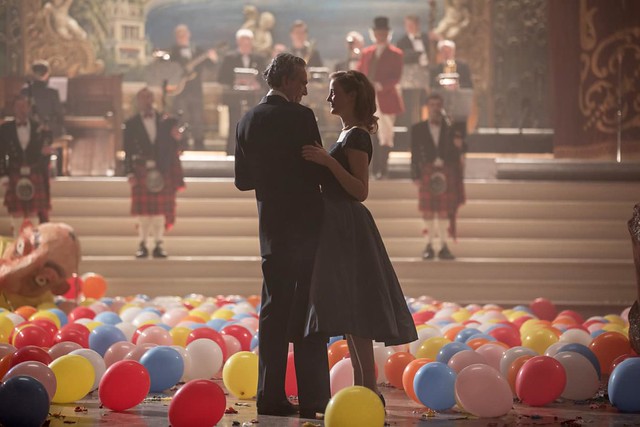
Phantom Thread (2017) - Anderson
phantomthread015
If you love someone, do you want to emulate their ways of life or make them conform to your ways? Or do you compromise half way? Phantom Thread, PT Anderson's exquisitely executed film, is in many ways, more refined version of The Master.

Reynolds Woodcock (Daniel Day-Lewis) is a middle aged, famous designer of women's clothes- specifically, dresses. He lives and works in his townhouse in London and follows strict daily routine. His life is always surrounded by women - Cyril (Leslie Manville), his sister and trusted confident of his business and about a dozen seamstresses working for him. He can be fickle sometimes, and lets his irritation known when the slightest details bother him. Obviously he has mommy issues. Mostly, his life is all about work and nothing else.

Woodcock drives out to the countryside for a short getaway. At a restaurant of an inn where he is staying at, he takes an instant liking to a clumsy waitress, Alma (Vicky Krieps) of an indeterminate origin (never really pronounced in the entire film). He whisks her to his London atelier and starts measuring her size under the watchful, cold eyes of Cyril who quietly jots down the numbers. The process is all work, not desire. Her gawky figure is perfect for a fitting model. So starts a delicious tug and pull relationship drama.

Alma turns out to be much more than a muse for Woodcock. As difficult of a man he is to be with, for the man she loves, Alma is determined to show him that life doesn't have to be a constant work even if you are that talented or a genius. But Phantom Thread is not 'life lessons' kind of a movie, nor does it pretend to be one of those life affirming movie where a younger woman makes older, driven man stop and smell the daisies. Anderson makes it about a woman going to extreme measures into be part of the man she loves and he finally accepting it - there is something endearing and sexy about that, even though there is no sex scene in the film. Luxembourgian actress Vicky Krieps is totally up to the challenge against Day-Lewis who tones it down for the role significantly. And it's a beauty.