Showing posts with label Kwon Hae-hyo. Show all posts

Sunday, July 6, 2025

Drinking Test

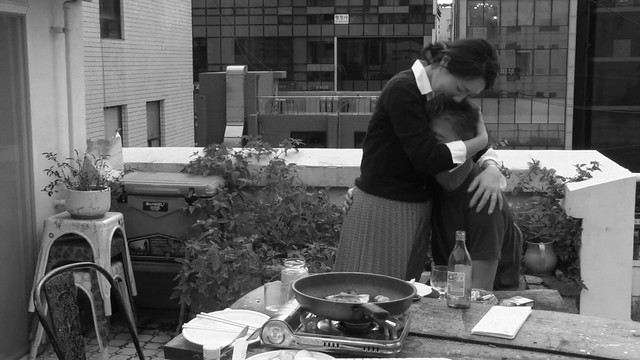
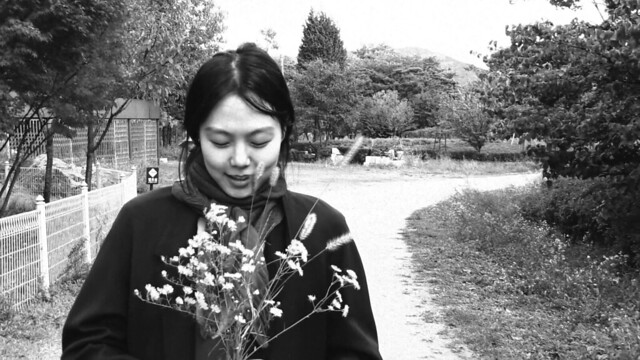
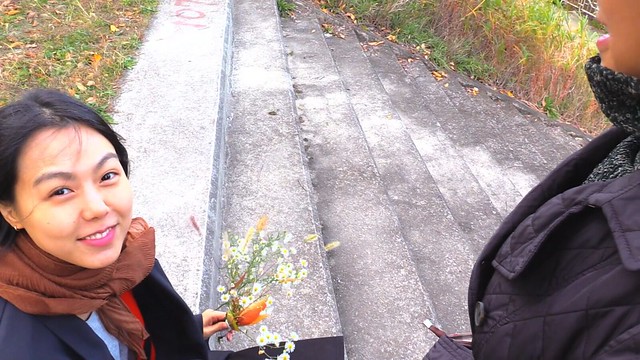
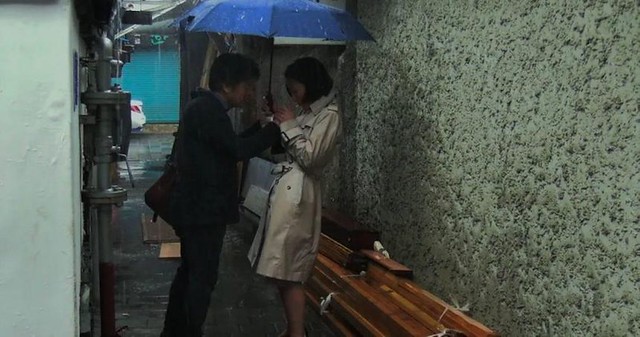
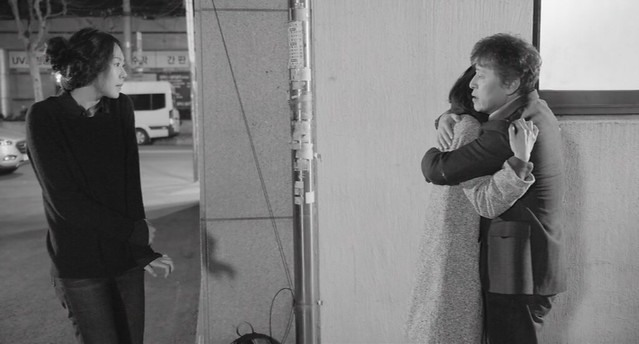
What Does That Nature Say to You (2025) - Hong Screen Shot 2025-07-06 at 7.01.42 AM Screen Shot 2025-07-06 at 7.33.16 AM Screen Shot 2025-07-06 at 7.53.40 AM Screen Shot 2025-07-06 at 8.32.51 AM Donghwa (Ha Seongguk), a thirty-something poet drops off his girlfriend Junhee (Kang Soyi) to her parents' house outside Seoul in his used old car that he loves. And the clunky blue car is the one that her father (Kwon Haehyo) notices, along with his facial hair. Maybe out of politeness, Dongwha and the father carries on an awkward conversation about the rural house that the father built for his now deceased mother, which is equipped with a chicken coop, a cozy private shack, and the impressive landscaping behind the house all the way up to the top of the hill with a majestic view. All is well and the father invites him to stay for dinner. Donghwa seems to be enamoured with the beautiful surroundings and Junhee's parents' DIY house. Whenever he finds an inspiration for his poetry, he jots it down in his little notebook that he carries everywhere.

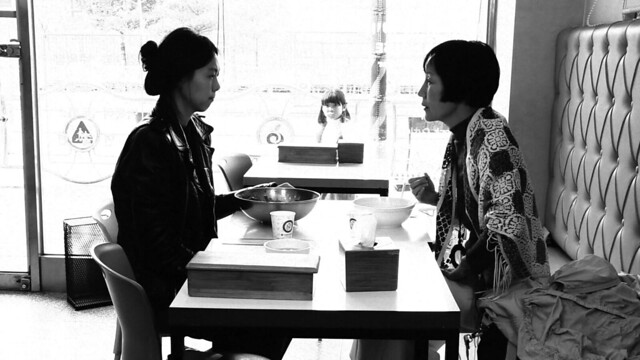
Dongwha, Junhee and her reclusive older sister (Park Miso) who might be suffering from depression, have lunch at a local restaurant by the river. Junhee's sister is not sure if Dongwha, a son of a famous TV defense attorney, working as a photographer at weddings, is as self-reliant and immaterialistic as he professes to be.

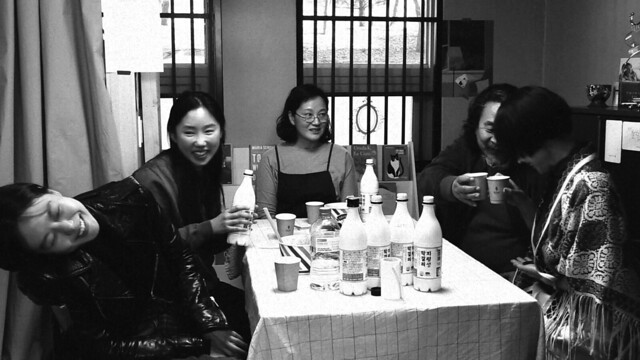
Junhee's mom (Cho Yunhee), who is also a published poet, lays out a chicken feast for the possible future son-in-law for dinner. And the conversation naturally turns interrogative. After a bit of Korean rice wine is consumed, by the encouragement of mom, Dongwha recites his terrible and naive poetry about night blooming flowers, eliciting polite responses. But it's the sister's niggling questions about his rich and famous father and whether he is truly self-reliant that sets Donghwa off. And the dinner ends in drunken outbursts and Dongwha passing out on the dinner table.

At night at his shack, the dad and mom assess Dongwha, just as any prospective in-law would - but not in definitive terms: He obviously has some deep seeded issues with his father. Junhee loves him now, but with life experience she will figure it out if they are gonna be good together. They laugh about him bombing the 'liquor test'- and if that was the dad's real intention, which he denies vehemently.

Dongwha is seen walking around at night on the hills, looking at flowers lit up by his cell phone, then tripping and falling, hurting himself.

With What Does That Nature Say to You, Hong Sangsoo sketches out another slice of life effortlessly: The awkward, funny interactions among the characters ring true as usual. The youthful idealism fades when we face the real world and responsibilities. The pursuit of truth and beauty is admirable, but it's not cute anymore when you are 35 and without a steady job. You can't guise it with junk cars, facial hair and actively not wearing glasses because you want to see the world a little bit fuzzy (a dig on Hong's own late style where things are intentionally out of focus) as your aesthetic.

Hong, as usual, is showing his cynicism toward young artistic types. It's probably because he went through that phase himself and now can look back and have a laugh.

Wednesday, October 9, 2024

If I Fall from Grace

By the Stream (2024) - Hong By the Stream Clocking at 111 minutes, Hong Sangsoo's new film, By the Stream, is perhaps the most busily plotted and the most sinewy among his recent output. It touches on many of Hong's preoccupations and reflexive filmmaking, along with the recent surge of the Korean feminist movement.

It concerns a disgraced actor, now a small bookstore owner Siyeon (Kwon Hyeho) in Kangwon province, being invited to stage a play in the year end festival in a women's university in Seoul, by his niece Jeonim (Kim Minhee) that he hadn't seen for years. It turns out that he is a last minute replacement, because the young director who was in charge of the production was dismissed because he slept with 3 of the cast members. The actor sees this opportunity as a kind of redeemable occasion which would rekindle his passion for art as he felt when he first started his career, which happens to be at the same university long ago.

Jeonim, in her early 40s, is living a quiet, uneventful life as a textile artist and working at the university. She is first seen sketching in her notebook by the steam in earth colored Fall attire. It was the university's department chair Jeong (Cho Yunhee) who gave her the job and trusted her and became a big sister figure in her life. It turns out Jeong is a big fan of Siyeon as an actor and really wanted to meet him. After a couple of drinking occasions and some grilled eels, the actor and Jeong get along swimmingly and that makes Jeonim a little uneasy and jealous. In the meantime, with new materials that Siyeon wrote, the 4-female play team rehearses their play under his guidance. The young women are eager and full of optimism in their expression of joy and outlook- the way only not-yet-jaded-by-life young people say and behave.

Jeonim confronts the young director (Ha Seongguk) who was let go, when he comes back into the university campus to talk to one of the girls he professed his love for. His remorseless behavior and demands to get his job back and his material being staged receives Jeonim's contempt and anger. Her reaction is almost feral.

When the young man makes a second appearance to propose to one of the girls, Siyeon steps in and has a talk with the young man. We don't get to see what's being said.

Hong leaves a lot of threads messy and untidy, unlike Jeonim's textile patterns with intricate designs. What really happened to Siyeon the actor? What made Jeonim content with her life? Why did their play receive poorly and why did the dean of the school want to talk to Siyeon? It Doesn't matter. Hong's characters interactions are delicious as always. It's a change of pace from his minimalist work with his last couple of outings, even the Isabelle Huppert starring A Traveler's Needs that came out this year as well.

Tuesday, July 30, 2024

Live Life Truthfully

A Traveler's Needs (2024) - Hong Screen Shot 2024-07-29 at 9.21.02 AM Screen Shot 2024-07-29 at 9.31.03 AM Screen Shot 2024-07-29 at 9.53.17 AM Screen Shot 2024-07-29 at 10.11.44 AM Screen Shot 2024-07-29 at 10.17.15 AM It is hard to quantify Hong's films, and I am not talking about him making two or three films of the year as he has been for the last decade or so. It's not that what Hong does need to be measured by the likes of me, but as someone who watched vast swaths of his films, with my ADHD triggered rating system toward a director's filmography going, I can't help myself ranking which of his films are better, more impactful than others in my head. and I am happy to say that A Traveler's Needs, his new film starring indomitable Isabelle Huppert, is one of his best films.

A Traveler's Needs concerns Iris (Huppert), a French woman living in Korea. She started giving French lessons to two Korean women recently. Her method seems interesting: she writes down a custom-made phrase on wads of index cards she carries in her bag for each person she is tutoring. Eager to please the foreign woman, Korean women play musical instruments in front of her. She asks each of them how they feel when they play. And they both in turn give generic answers which turn out to be identical. Iris pushes harder - but how do you really feel? Then she writes down her French phrases for them.

All the Hong signatures are present - a subtle comedy based on repetition, copious amounts of alcohol consumption - in this film, the choice is Makguli, a milky Korean rice wine.

The third act concerns a young man, Seong-guk who shares his flat with Iris. It turns out that he met her in a park, sitting there alone, playing a flute badly without a care in the world. It is revealed that she didn't have any means for living, so he suggested tutoring French which she has no prior experience in. Seong-guk's estranged mom stops by unexpectedly and chastises her son for living with some foreign woman. He explains that Iris lives her life truthfully. Mom wants him to ask her about her background. She doesn't want this mysterious foreign woman taking her naive son for a ride.

A Traveler's Needs have much in common with Wim Wenders's Perfect Days. These protagonists are people of very limited means and ambitions. They just float around living life as truthfully as they can. Never looking backwards but always forward. There's some sort of universality here - Wenders directing in Japan seeing the world through the eyes of Koji Yakusho and Hong directing and seeing the world through Huppert's eyes. Gentle, living by the moment, enjoying the surroundings - nature, sleeping, drinking, small human interactions.

I see that Iris can be the continuation of a character Huppert played in Mia Hansen-Løve's L'avenir/Things to Come (2016), a professor losing her job and marriage, trying to find the footing in the world for the first time in a long time as an aging woman. It is not difficult to imagine her character taking off to some foreign land and keep on living like that.

Huppert is marvelous as Iris. The best scene is perhaps her flirting with Kwon Hye-ho's character: obviously there's an attraction between them. She touches him on the shoulder and winks at him, then giggles like a schoolgirl. He is spellbound obviously.

A Traveler's Needs is up there in Hong canon and one of my favorite films of the year for sure. Here is my review for Things to Come

Tuesday, March 21, 2023

Hong's Multiverse

Walk Up (2022) - Hong Screen Shot 2023-03-17 at 10.51.20 AM A little three-story white building in Seoul is the setting for Hong Sang-soo's new film, Walk-up (Tab in Korean which means tower or monument). Kwon Haehyo plays Byeungsu, a film director of some repute. Always playing supporting role in Hong films, this is the first time I remember Kwon playing the main character. Like many of his previous films, Hong plays with multiple scenarios and possibilities involving same set of characters in the same place, all the while contemplating about steady companionship vs being alone, being productive, retirement, health and mortality.

Byeungsu is seen arriving in a European made small car with his daughter, Jeongsu (Park Miso, Introduction). He is trying to get his shy, estranged daughter a job through an acquaintance who is an interior designer Ms. Kim (Lee Hye-young, In Front of Your Face) who is the owner of the said building. She has a cafe on the first floor and rents out the second and third floor. The top floor has access to the roof. After introducing his daughter, Byeungsu leaves for an important meeting nearby, promising to come back soon. Jeongsu and the cafe owner converse awkwardly over some wine while waiting for Byeungsu to return. A couple of wine bottles later, Jeongsu drunkenly puts herself forward, aggressively asking for a job. Then she goes out to get more drinks.

When Byeungsu comes back on foot, he, Ms. Kim and Sunhee (Song Seon-mi), one of Ms. Kim's tenants, a cook and a big fan of Byeungsu, start drinking. Byeungsu tells them that his new project that he was working on for the last two years just got rejected by the investors. They also talk about how Jeoungsu working for Ms. Kim didn't work out. And there is palpable attraction between Byeungsu and Sunhee as they keep drinking and exchange their mutual admirations.

When we come back to the scene again, it's them as a couple living in the tiny place and Ms. Kim as their landlord. The ceiling is leaking, and the toilet doesn't work well. And Byeungsu is having health problems. Even though they seem happy together and Sunhee cares for him, feeding him some fresh salad concoction. But something is still off. And it bothers him that she is going to go see her old frenemy he doesn't approve. The place, once a charming space becomes unbearable tiny trap. Byeungsu wonders to himself that if being alone is better.

Next time we see him, he is living with yet another woman (Cho Yun-hee), a very supportive, affectionate woman who brings meat to grill and soju, while also getting Korean medicinal roots preserved in honey. This is an ideal scenario for an aging man. Is this his imagination, daydream or real?

With its elliptical ending, Walk-Up concocts different alternatives for our director protagonist. There is a natural flow to Walk Up that is harmonious and playful, yet never disruptive. It's as if Hong was daydreaming about the possibilities of his future, dreaming about retiring in Jeju Island, possibly with someone who will support him and spoil him. It's funny that this simple small white concrete building in the middle of glass urban jungle serves as an oasis that inspired Hong to dream up Walk Up. It's a good addition to Hong's expanding multiverse.

Sunday, June 12, 2022

Compulsion/Stagnation

The Novelist's Film (2022) - Hong Screen Shot 2022-06-12 at 6.16.28 AM Screen Shot 2022-06-12 at 6.27.12 AM Screen Shot 2022-06-12 at 6.43.19 AM Screen Shot 2022-06-12 at 6.50.26 AM Screen Shot 2022-06-12 at 6.54.47 AM In Hong's latest, The Novelist's Film, the conversations revolve around a period of creative stagnation among artists. And it unfolds how chance meetings could break such a dry spell and give everyone involved a new direction. Junhee (Lee Hae-young of In Front of Your Face), a novelist in her slump, visits her old writer friend who fled Seoul and set up a bookshop in the suburb. She is salty about her friend's sudden disappearance and not contacting her. But they make up and Junhee is dropped off to a tall building nearby, which seems to be a local attraction, equipped with an observation deck where one can see the stretches of the Han River and nearby park. There she meets a film director Park (Kwon Hae-hyo) and his wife. Awkward pleasantries suggest that they have some histories together. Looking down at the river park, they decide to drive down to the park to have a walk. In the park, it is revealed that their project, an adaptation of Junhee's book, fell apart. Then they run into an actress Gilsoo (Kim Min-hee) who is contemplating quitting her profession. Park laments about the loss of a talent and wasted potential and Junhee vehemently defends Gilsoo's decision about her career. After the director and his wife leave embarrassed, the novelist and the actress hit it off. With Gilsoo's film school student nephew joining in, they concoct a short film project that Junhee wants to make, if Gilsoo and her artist husband agree to be in it.

By another chance, Gilsoo takes Junhee to her friend who is in need of help. Her friend turns out to be the bookshop owner. There, in the small corner of the bookshop, 5 people are crammed in to talk and drink copious amount of makgeoli (Korean rice wine). Junhee stopped writing because she found her words felt like exaggerating, as if she had to find meaning in each word she writes.

So goes another meta auto fiction of Hong as he reveals sliver of his filmmaking process - 'compulsion' to make films in the director's earlier days are gone, giving way to stagnation, brought on by success, relative comfort and getting old. Story isn't as important. It can be as simple as something from the real life. Inspirations and directions can't be forced and life provides them in unexpected ways. But as the director has always done by reflecting life with actors and script, he gives it a distance from himself, and by not putting any extra weight of what it all means. It doesn't have to be a documentary to be 'truthful', nor needs to be metaphoric and imbued with 'meaning'.

With his consistent output, Hong's metaverse has become as comfortable as home for his fans. Watching his films is like meeting and conversing with an old friend now - they know you, you know them. But also, you start noticing small things, a delicate story within a story and small nuances in characters that you find pleasurable. I find the bookshop owner's cutting all her ties in Seoul and 'start over' in anonymity in some other town story an added bonus. The beginning of the film where we hear off screen her berating her younger employee contrasts with Gilsoo's description of her as a good natured woman, gives more complex pictures of the character. The younger employee, played by Introduction's Park Mi-so, who played a young student lover, reveals that she is (despite her looks) 33, indicating that all these characters are grownups and no one can be told about what they need to be doing with their lives (and by extension Hong's both artistic and private life). There is a little girl staring through the restaurant's window while Gilsoo and Junhee eat lunch. Maybe she is staring at Gilsoo because she is a famous actress. Gilsoo excuses herself and goes out to talk to the little girl. We don't hear it, but she talks to the girl a long while, all captured in one take. Loved the poet (Ki Joo-bong) not remembering an unwelcomed story he wanted to tell while drunk. These are all delicious.

The Novelist's Film ends with Gilsoo watching the novelist's film. The film within a film, just like the rest of the film shot in high contrast black and white, most of the time Gilsoo looking directly at the camera, thus breaking the forth wall. The last spurts of color at the end gives a jolt, as if it is revealed that we are watching something real, private, truth.

Prolific as ever, Hong is not stagnating for sure. But I guess with the pandemic it crossed his mind. I hope his compulsion never stops.

Saturday, October 2, 2021

Drunken Promises

In Front of Your Face (2021) - Hong In Front of Your Face The voice-over that starts Hong Sang-soo's In Front of Your Face is more like a prayer. It belongs to Sang-ok (Lee Hye-young), a serene faced, aging beauty crashing on the couch in her younger sister Jeong-ok (Cho Yun-hee)'s high-rise apartment in the sprawling suburb of Seoul. Living abroad, she is visiting her sister for the first time since their mom's funeral long ago. Again, her narration has a feel of detachment and a confessional. Something is up. So starts yet another wry snapshot of life by Hong, who remains prolific as ever, with presenting two films in this year's NYFF. But In Front of Your Face turns out to be much more emotionally invested affair, if less inventive structurally and narratively from a formalist standpoint.


Over the morning coffee, the sisters commiserate about their lives. Jeong-ok is rightfully miffed that Sang-ok never contacted her for all these years and never visited. The older sister is quite cagey about her life story, but the her narrative is pretty typical immigrant story - financial hardships, peripheral jobs, no savings unlike native Koreans who seem to have a lot of money to buy real estates in a housing boom, Sang-ok observes.

It is springtime and everything is in bloom. The greenery surrounding mega vertical structures, in Hong's minimalist aesthetics, complete with auto zooms, looks oppressively sweltering, rather than calm and refreshing. It turns out Sang-ok was a famous actress as some fans recognizes her in the street, on the way to a meeting. It is revealed that she is in Korea partly to have a meeting with a film director later that afternoon. But again, she is tightlipped about it. Jeong-ok drags her around to show new real estate developments, in the hopes of having her estranged older sister coming back to Korea permanently and settle down near her.

After splashing some ddukbokki (spicy rice cake) juice on her blouse at her nephew's small snack shop, Sang-ok is off to see the film director. But on the way there, she stops by at an old house where she grew up, which now is a fancy gift shop. She immediately regrets her visit, beating herself up for being nostalgic and sentimental. Because her zen-like voiceover has been suggesting to live only in the present - to 'seize the day'.

The meeting with a film director (played by Hong regular Kwon Hae-Hyo) takes place in a bar in a trendy part of Seoul. He arranged a meeting so they can be alone together. He is a big fan ever since he saw her films in his youth in the 90s and wants to do a film with her. After Chinese food delivery with copious amount of liquor, the truth comes out. She only has 5-6 months to live. Heartbroken, they cry and laugh together. The director then suggests they take a trip together the next day to Kangwon province, he would like to make something very quick and capture her on film as much as he can. She asks him if he wants to sleep with her. They have a moment. It's raining outside and all so romantic. It's a scene right out of some fatalistic French romance movie. Would Hong really end a movie like this?

In Front of Your Face may lack Hong's narrative and structural inventiveness but it has a nasty hook that gets you at the end, defying the conventional romance narrative. It's wickedly funny too. Lee Hye-young, who started her career in Lee Jang-ho's salacious Korean classic Between the Knees (1984) and starred in countless TV dramas, is a revelation here. Her graceful features and beauty dominate the screen in a bittersweet performance. Her hysterical laugh at the end listening to a voicemail over and over, is the funniest/saddest film moment of the year. I really adored this film.

Wednesday, October 7, 2020

Monotony vs. Chaos

The Woman Who Ran (2020) - Hong The Woman Who Ran Gamhee (Kim Minhee) is visiting Youngsoon (Seo Younghwa)'s house in the outskirts of Seoul. It's an almost pastoral setting. Youngsoon has a back yard and her neighbor has a chicken coop. Gamhee, married for five years, tells her long time friend that her trip to the house is the first time she is not accompanied by her husband. They never have been not together for even a day. How is that possible, Youngsoon and her roommate wonder over the grilled meat that Gamhee brought along with liquor. Gamhee says her husband believes that if they love each other, then they should be together all the time. And she doesn't seem to mind.

Again, Hong's new film is built around his muse Kim Minhee's character as she observes her surroundings. And of course the conversation naturally leads to reveal her relationships with men. Although Kim played many roles in slightly varying degrees in previous Hong's films, her characters were, however beguiling, more often than not, confrontational toward her male counterparts. In The Woman Who Ran, Gamhee seems to be more subdued and more comfortable with her situations and herself. Being a little bit older, it's as if she is tired of human entanglements and unnecessary interactions. But as the title suggests, Hong might be playing with something here. And everything is not what it seems. Who is the woman who ran if not Gamhee?

While they are having pleasant BBQ dinner, a new neighbor visits them. It's a young man and he passive aggressively complains about Youngsoon and her roommate feeding stray cats. His wife is afraid of seeing cats in their backyards and he wants to discourage them to feed the cats. They decline to do so, arguing the cats needs are just as important as humans. There are many references to animals in the film, including chickens, cows and cats, as women make case that humans are not the only animal with a conscience. With that, Hong seems to suggest that these relationships and entanglements are silly, in a larger scheme of things.

The next house Gamhee visits is Suyoung (Song Seonmi), a pilate instructor and a dancer friend. She lives alone in a modern apartment with a great view of a mountain. She recently bought the place with divorce settlement and some bank loan. She even scored a major discount because the building owner favors artistic types to live there. Gamhee again, tells the story about how she and her husband being inseparable. She could be so lucky. Their peace is interrupted by a 26 year old lovelorn poet at the door. He is in love with Suyoung. She shoos him off. The young man makes matters more complicated since she likes the neighbor who frequents the bar also frequented by the young man, she tells Gamhee. Gamhee makes an observation, "You live an interesting life!"

Considering Hong's penchant for a double take, these two encounters with older female friends might be a variation of the same encounter, suggesting infinite possibilities. And both of these encounters are interrupted by irate males.

Now Gamhee is in a cafe of a cultural center, coincidentally run by her frenemy Woojin (Kim Saebyuk). Gamhee used to date Woojin's now husband Jung (Kwon Haehyo), who is doing a book tour in the same building downstairs. Gamhee says she is there to watch a movie. Woojin, feeling guilty about stealing a man from her, apologizes to Gamhee who says it's all in the past and insists that she is not there to see him. Gamhee asks if he changed in any way since his career took off. Woojin says he is a chatterbox now and he comes across as insincere as he repeats his stories a lot in front of other people. It's becoming annoying.

She runs into Jung who was taking a cigarette break outside the building. Did she really come to see a movie or did she come to tell him off?

Deceptively simple yet deliciously playful, The Woman Who Ran again shows that Hong, a truly unique voice in cinema at his best, honing his skills as a storyteller by constantly experimenting with his usual theme.   

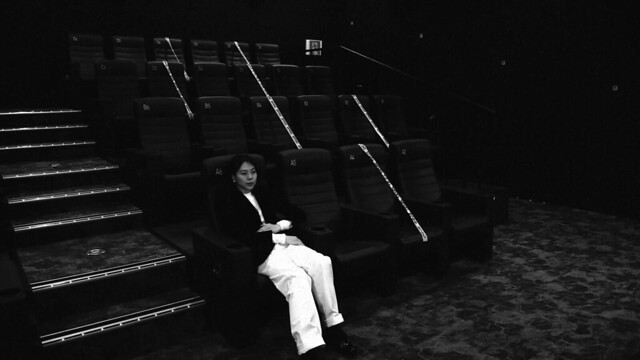
She goes back to watch the movie that she just came out of. It's the same scene of a beach with a jangling guitar soundtrack seen previously. Is Hong suggesting watching the film again to give it a second take? Or does the movie theater work as a sanctuary, a comfortable place for our heroine? In these Covid times, whether Hong intended or not, I'd like to think the latter is the case. As Gamhee sits alone in a cushy movie theater seats alone, eating a piece of bread, I want nothing more than being in the comfort of a movie theater, preferably alone.

Saturday, November 18, 2017

Selfish Love

The Day After (2017) - Hong
Screen Shot 2017-11-18 at 12.26.43 AM
The Day After is just as delicious as Alone on the Beach at Night. Clocking just over an hour, it tells an illicit love affair of a small time book publisher (Kwon Haehyo) and his mousy employee (Kim Saebyeok) from the point of view of a new employee named Arum (beauty in Korean, played by Hong's muse Kim Minhee). Arum gets tangled up in the publisher's messy life on her first day on the job, when she gets assaulted by his suspecting wife. After half-convincing the wife that Arum is not the one, and telling her that the girl he was seeing went away, and asking Arum not to quit after one day at the job, to complicate the matter, the mousy lover comes back the same night. So he has to let Arum go (he can only afford one employee) after all. Arum is dejected and disgusted by this love affair she was involuntarily ensnared into, but ultimately could care much since it's not her problem.

As always in Hong fashion, The Day After is shot unremarkable and is in ugly black and white. Don't matter, it's still great human comedy about fickle relationships. Not as angry as Alone on the Beach, but just as confessional, Hong makes a case for how hurtful affairs can be. He and the publisher know too well that the affair is not going to end well. But when you are in love nothing really matters- you will sacrifice everything including a stranger who just happens to be there. Love can be a very selfish and ugly thing.

It's sad, funny and poignant all the same. Grown to love Hong's naturalism. There is no movie phoniness or over the top self-reflexiveness in his work. Kim's natural performance, as a kind of shy, yet frank beauty is a great fit in his films.