Showing posts with label Senegal. Show all posts

Monday, October 3, 2022

Chimeric

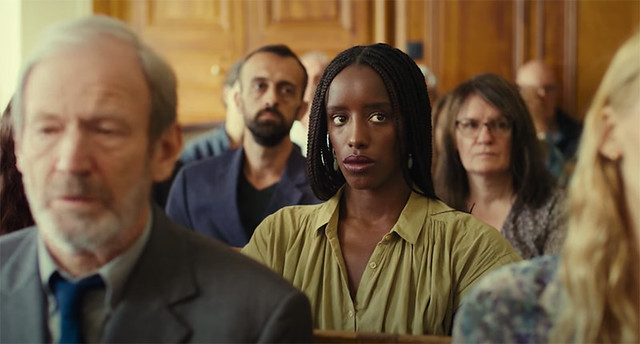
Saint Omer (2022) - Diop SaintOmer The fascism and hard-right are on the rise all over Europe and the US southern States are rounding up immigrants at the border, and putting them on the planes bound to more liberal north for political stunts, Iranian women are protesting in the streets against hijab laws are where things are at right now, when I seek the context while watching Alice Diop's powerful courtroom drama, Saint Omer. It is a French documentary filmmaker's first narrative feature. Mainly consentrating with African immigrant communities in the suburbs of Paris where she grew up in her documentaries, Diop sets this courtroom drama in Saint-Omer region of Northern France this time. It concerns an insanity defense of a young Senegalese immigrant, who drawned her baby in the sea. Going through the questioning of both a defense lawyer and a prosecutor and testimonies, we see the precarious position the society and the system puts countless migrant women in and demonstrates its effects in sobering ways.

Rama (Kayije Kagame), is a successful author and lecturer. She is seen at the lectern in a hall, showing the footage of women with shaved head in the nazi concentration camp. Her lecture is on Marguerite Duras and her theme of humiliation and the permanent scars it leaves on women. Rama is a sullen and serious woman who has a complex relationship with her Senegalese mother and her large family. Nothing is said outright, but it's her mother's gesture or silence that tells her that however successful she is, she would never satisfy her parent. This is something as an immigrant, I can totally relate to.

For her new book, Rama is following the sensational trial of Laurence Coly (Guslagie Malanga), a young Senegalese immigrant who is accused of the infanticide of her 15-month old daughter. She is termed as 'Medea' of Saint-Omer, a character in a Greek Tragedy, who killed her own children in a vengeful act against her unfaithful husband. In court, everyone comments that Coly speaks in highly educated French. She is well spoken, calm and doesn't seem to be under the spell or curse as she claimed to have been at the time where she knowingly abandoned her baby on the beach at high tide. It seems out of character since she is a Western educated woman. The prosecution is making the case as a manipulative woman killing her baby because of the baby was in the way of her career.

Yet Coly's journey has been a sad one: just like most of parents who is sending their children abroad, her Senegalese parents' priority was on education. Coly was supposed to study law in France. The pressure of being successful in her parents eyes was enormous while working as an au pair in a foreign country. Through relatives she met a much older white man who promised her financial security. But when she found out she was pregnant, she fell into a deep depression. She abandoned her studies, hid from the world and didn't leave her apartment for months.

Rama, attending the Coly trial everyday for her book research, slowly finds parallel storyline emerging with her own life. Meeting Coly's mother doesn't help the matter. Mrs. Coly's there to support her daughter. She immediately recognizes Rama as a fellow Senegalese and chats up in Wolof. Her judgmental stares is too much for Rama's guilty conscience. But guilty of what? Why her stares make her extremely uncomfortable? Even though her white, good natured husband's consoling that she is not her mother's daughter, what she sees in Colys is too much to bear.

Saint Omer directly addresses the pressures and impossible situations many immigrants and especially migrant women find themselves in, in a foreign country where there is nowhere else to turn to. And the mind plays tricks on you when you are desperate. Irrational becomes rational. For Coly, a bright young woman whose pride is crushed by circumstances and worse, humiliated by her predicaments went into a postpartum depression.

The film doesn't end with the verdict of the trial, but rather, ends with defense lawyer talking directly to the camera/audience and explaining the clinical term, a microchimera, an inter-change of cells between a fetus and its mother that goes both ways. That, in metaphorical sense, all women are chimeras, the mythic monster composed of different parts of the beast. Diop here is making a powerful statement, about the highly patriarchal society, colonialism, racism and women's rights, both subtly and unsubtly. Saint Omer is undoubtedly one of the best films of the year.

Sunday, October 6, 2019

A Ghost Story with Female Solidarity Twist

Atlantics (2019) - Diop
Atlantics
Mati Diop, better known as an actress for such films as 35 Shots of Rum, Simon Killer and Hermia & Helena, makes her feature directorial debut with dazzling Atlantics, based on her 2009 short of the same name. In her short, young Senegalese boys were shown discussing the pros and cons of leaving the country for Europe on the beach at night. The feature narrative version expands the premise with a whole narrative that shifts from the male to female perspective, as women are usually the ones left behind with the emotional trauma and economical hardships to deal with.

Atlantics starts with a young day laborer Souleiman (Traore) along with hundreds of others working on a futuristic glass tower in outskirts of Dakar. They eat and sleep together in a cramped bunk bed housing. Against the hypnotic, undulating ocean in the background, they go on about their back breaking work. The whole sequence has a documentary feel to it.

The workers haven't gotten paid for months and things are heating up at the payroll office. Souleiman is in love with Ada (Mame Bineta Sane), a young woman who's still living with her parents. Her conservative friend in hijab, Mariama (Mariama Gassama), chastise her for leading him on even though she is set to marry a local hotshot businessman Omar - arranged by their parents. Defiantly, she goes off to see Souleiman. Even though clearly something is eating at him, Ada urges him to wait until they meet again at the local beach bar run by her friend. She sneaks out through the window at night to the bar, only to find out that Souleiman, along with many of his friends set sail to make a dangerous trip across the Atlantic to Spain. Then the news arrive of a capsized refugee boat. Ada is crestfallen.

Someone torches Ada's bridal bed on her wedding night. It prompts a police investigation. The main suspect is Souleiman since there are some witnesses who saw him at the wedding. Police detective Issa (Amadu Mbou), who is suffering from dizzy spell at night, is determined to solve this mystery. Convinced that Ada is protecting Souleiman, he interrogates her harshly and starts trailing her.

Then local girls, including Ada's friends start appearing at night with milky eyes at the house of shady construction manager Mr. N'Diaye, demanding the wages he owes to the workers. It's the spirits of the drowned boys taking over the bodies of girls temporarily every night, haunting the greedy man. The girls, found in various places in the morning, has no recollection of the events. Sometimes the possessed girls show up at the bar, asking for food since they are starving.

Expertly weaving the current headlines of marine disasters, which countless African refugees searching for better life meet their watery grave at the bottom Atlantic ocean, and the ghost story with the female solidarity twist, Atlantics has all the right ingredient to be a success story of a small art film breakthrough recalling Uncle Boonmee Who Can Recall His Past Lives. It's a melancholic romance film set in bustling Dakar, featuring the lives and hopes of young Senegalese we seldom get to see. It's also hopeful and lyrical yet pointy. And without a doubt, it is my choice for the best film of the year.

Tuesday, May 15, 2018

New York African Film Festival Celebrates Its Magnificent 25th Year! 5/16 - 6/10

With plenty of evidence of the decline of Western Civilization presenting itself on TV news these days, NYAFF (not to be confused with New York Asian Film Fest) , in it's 25th year, with more than 30 films on its slate, criss-crossing 3 of New York's venerable film institutions (FSLC, BAM and Maysle's Cinema), gives filmgoers a chance to experience fresh perspectives on the world.
This year's festival includes new films from emerging filmmakers, shorts programs, revivals, panel discussions and an art exhibition.

Opening Night will spotlight Apolline Traoré’s award-winning film, Borders, which speaks to migration as well as to African women’s struggles, in a timely echo of the #MeToo movement. French director Berni Goldblat’s Wallay will have its New York premiere as the festival’s Centerpiece film.

The festival tips a hat to key figures in the history of African film with the U.S. premieres of Abderrahmane Sissako: Beyond Territories, Valérie Osouf’s intimate portrait of the acclaimed director of Bamako and the Oscar-nominated Timbuktu; a 2017 version of the 1983 classic Selbe: One Among Many, by Safi Faye, the first sub-Saharan woman to direct a theatrically released film, now restored to its original Wolof language; and Mohamed Challouf’s Tahar Cheriaa: Under the Shadow of the Baobab, which documents the career of the founder of the Carthage Film Festival, Africa’s first film festival. The festival will include the 1989 documentary short Parlons Grand-mère by the late Senegalese director Djibril Diop Mambéty.


These are the dates for this year's New York African Film Festival:


FSLC: 5/16 - 5/22, Brooklyn Academy of Music: 5/24 - 5/28 & Maysle's Cinema: 6/7 - 6/10

Make no mistakes, below outstanding, touching, funny, powerful and hopeful films are definitely not made in shithole countries:

Borders - Apolline Traoré *Opening Night Film
AFRICAN_Borders_01
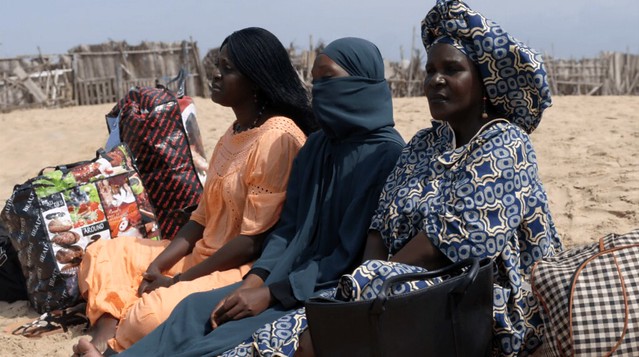
Adjara, a Senegalise woman with her savings in her waste bag, travels to Lagos, Nigeria in the hopes of becoming a trader. Along the way, she meets 3 other female travelers in various situations.

This six day journey from Senegal through Mali, Burkina Fasso, Benin to Nigeria is an arduous one as they face rampant border corruptions among the sub-Saharan countries, violence, rape and fighting with other passengers, shady transportation and breakdowns.

Borders highlights pan-West African sisterhood and imagines the better future for its female citizens.

Wallay - Berni Goldblat *Centerpiece
Screen Shot 2018-05-15 at 8.52.46 AM
I've seen quite a few films over the years about a troubled youth going through right of passage visiting and connecting with his/her ancestral homeland, but none as funny and touching and joyous as Wallay.

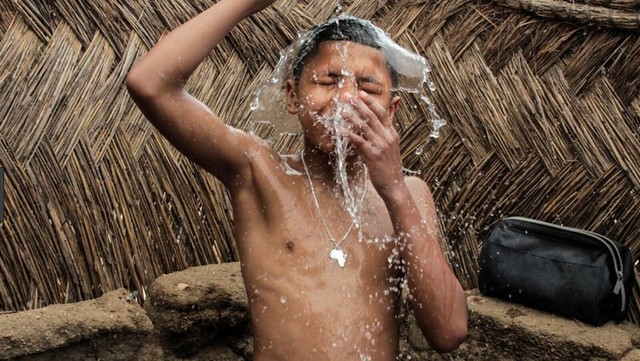
Wallay takes place in small village in Burkina Fasso, where Ady, a troubled 13 year old city kid from Paris is sent to by his father, after stealing money from his home to buy a shiny pair of red sneakers. Decked out in street gear, an iphone and fancy headphones, the spoiled brat faces reality of no electricity and two buckets of water per shower in the African village. Add to this unimaginable hardship, his uncle Amadou, a respected village elder, is a hardass and wants him to work on a fishing boat for 2 euros per day to pay off his debt. Not only that, after finding out Ady is not circumcised, the uncle wants the local doctor to perform circumcision on the boy to make him a real man.

At Amadou's urging, Jean, Ady's grown up distant cousin and a guide, takes the boy to meet his grandma who lives in a remote mountain town. Ady becomes grandma's instant favorite who calls him 'Little Hubby'. With the help of 'chilled out' grandma, Ady slowly learns the importance of family, discipline and respect. He gets to experience a bit of romance too with Yeli, grandma's little helper.

Shot beautifully on film, Wallay benefits from amazing performance by Makan Nathan Diarra as Ady, an insolent city kid with an attitude, slowly turning himself into a man. Goldblat doesn't rely on its spectacular locale or its customs, he doesn't have to. The story of Ady is universal enough. Everything plays out naturally. Hugely captivating and entertaining, Wallay is one of the best films I've seen this year.

Abderrahmane Sissako: Beyond Territories - Valérie Osouf
AbderrhamaneSissakoBeyondTerritories_05 copy
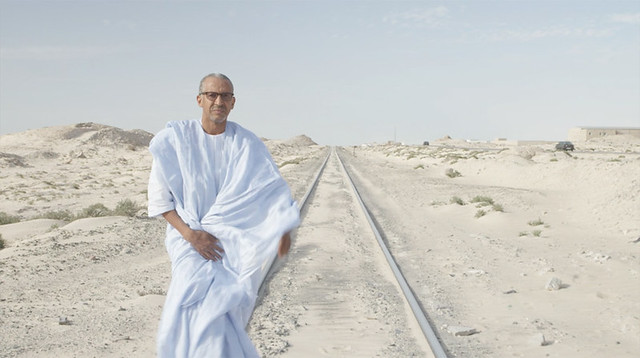
Valérie Osouf's documentary on one of Africa's most revered filmmakers, Abderrahmane Sissako, is not only an intimate portrayal but an essential viewing in understanding the man behind the camera. Widely regarded as a modern day master filmmaker with his simplicity, directness, colors and movement in films like The Life on Earth, Bamako and Timbuktu, highlighting the lives of fellow Malians in the age of global capitalism and ISIS, Sissako elevated modern African cinema to the world stage. Thankfully, with the help of Western admirers - Martin Scorsese and Danny Glover (both are interviewed for the film), he keeps on making gems reflecting the world with Africa at its center.

In an informal open house setting, Sissako invites and talk with everyone - a film enthusiast cop, a philosopher, scholars, actors, dancers while the life is happening all around them - roosters walk across the court yard, children play around, a woman gets water from the well. His background gets revealed - from his Moscow film school days - his mentor Marlen Khutsiev reminisces that he knew Sissako would be a great filmmaker because he noticed his thoughtful gaze when they first met. He gets his intellectual side from his father's family and warrior side from his mother's who are from very different parts of Mali, therefore his deeper understanding of different cultures.

The last segment of the film takes place in China, where he's researching for his new film, a love story about a Chinese man and an African woman, tentatively going to be taking place in China, Ethiopia and possibly Nigeria. He chats with his good friend Danny Glover over skype about his project. The film ends in an optimistic note. The influence of China is already felt globally. But Africa can't be recolonized. Connecting these elements, it's more like Silk Roads connecting different worlds with mutual respect than one side dominating the other.

As we witness the obvious decline of Western civilization every day, I can see Sissako's vision and it's pretty bright.

*My interview with Abderrahmane Sissako last year

Five Fingers for Marseilles - Michael Matthews
Five Fingers of Marseilles
Marseilles is a railroad town in South Africa which still bears the name of its colonial days. Michael Matthews' sumptuously shot Western Five Fingers for Marseilles starts with 5 young friends making an oath to protect their town as freedom fighters, even if it means from each other. Tau, nicknamed Lion of Marseilles, one of the five, flees town after killing corrupt and abusive white police officers, leaving his friends and lovely Lerato behind to fend for themselves.

Now a grown man and a small time outlaw, Tau (Vuyo Dabula) comes back to town. The 'New Marseilles' is a booming town with Pockets, one of the five friends, as a mayor who is keeping uneasy peace by making pact with Lepoko - a ruthless, one eyed super-villain who wants to bring chaos at any cost with his marauding gang known as Nightrunners. No one notices Tau, and start calling him 'Nobody' except for 'Pastor', a storyteller of the five. As the Lepoko's grip on the town becomes tighter, and everyone needs a savoir, Tau, the cowardly, disgraced freedom fighter rise to the occasion?

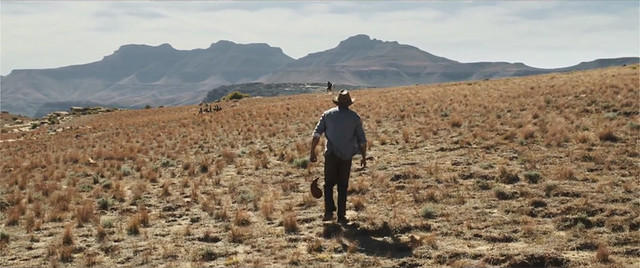
Just like a typical Western genre film, there will be bloodshed, sacrifices will be made, reckoning, redemption.... With the stunning backdrop of Lesotho Valley, Matthews morphs post-apartheid South Africa into a gripping Western.

Thursday, October 26, 2017

"Let It Happen." Alan Gomis Talks about His New Film, Félicité

Gomis
After winning Grand Jury Prize at Berlin early this year, Alain Gomis's Félicité played as part of the slim but always robust Main Slate at New York Film Festival. Featuring great Véro Tshanda Beya Mputu as the title role, a single mother and a singer struggling to survive in the bustling streets of Kinshasa while trying to find love, Félicité is a structurally daring, vibrant, sensual and hopeful African film that you don't get to experience often. For me it was one of the highlights of the festival.

Gomis, a Senegalese director, was in town for the festival and I was lucky enough to have a chat with him about doing a film in Congo for the first time, the state of African cinema, his relationship with his generous and talented collaborators and on his method/non method- letting things take its own course. Even though suffering from a cold, Gomis was very generous and open with his answers.

And I am very happy that the film was announced Senegal's official entry for the Oscars and is getting a theatrical run here in the States starting 10/26 at Quad Cinema in NY.

The music seems to be the heart of the film. I heard that you are a big fan of The Kasai All-stars and the whole project began with them in mind. So if you can tell me about that a bit?

I’ve heard their music a few years before, introduced by a girl I know. It was through their album called Congotronics- several music groups from Kinshasa, playing the music called ‘Tradi-moderne’ in French, a mix of traditional Congolese music and modern stuff. Most of it is traditional music but the fact it’s played in the city of Kinshasa, it’s mixed with electric guitars and… they made this music that is perfect embodiment of life in a big African city. It’s really connected to cosmogony and transcendental music, so it’s steeped in tradition but mixing with the urban way of life. So it was perfect for me to start the project with this music to portray the urban African life.

With your previous films, it was Dakar and now it's Kinshasa. These cities themselves become very important characters in your films.

It’s always interesting to see the effect of the city on its people, and conversely, how they change it. How we are played by the city and how we influence it. Africa has a very small cinema industry. And there is this need for the symbiotic relationship with cinema and the society itself to present the life on the street.

Most of the time the films are coming from the outside which is a big problem because you identify yourself with the culture that is not yours. Of course it’s cool to have relationship with the rest of the world but you also need to have access to yourself. So it’s also important to me to try to portray what it’s like there. It is part of my mission in a way.

I talked with Ousmane Cisse when he was here presenting Timbuktu. And he told me how hard it was for him to finance his films. Is it the same way with you? How did the funding for Félicité come about?

It is not easy, but it’s getting better. This film if very concretely funded by Senegalese Production Fund which was set up in 2013. We had a French production company and post-production is done in Belgium. We had some Lebanese co-production too, German, Gabonese…

Wow.


So yes, we try to get money from here and there and everywhere. But the good part of it is that I had total freedom. Because if you had one financial partner, they have much more influence on you and what you are doing. (laughs) Having little here and there, you have more freedom.

It was really interesting to see the film in distinctly two parts. The first part is like a social docu-drama in terms of pacing and everything. And the second half, the tempo slows down a lot and it’s a love story between Tabu and Félicité. I liked that a lot. Is the pacing of the film connected to the music?

Yes. First I wanted to have easy entrance to the movie. I wanted to have a simple drama structure for everybody to be able to get into it easily. And then coming in to the heart of the movie which is Félicité’s journey of falling flat on her face then coming back up. But that part of the film is not something to tell but something to live, something to experience.

So yes, its inspired by musical structure. I think that’s the relationship that I have with music and I assume everybody else too. You listen to music and you start to cry and you don’t know why. Just like a concert, like a space between the stage and the listeners, I wanted to build a relationship between the screen and the audience.

I really appreciate the handheld photography by the great Celine Bozon in the streets of Kinshasa. How was the working relationship with her?

It was a first time working with her for me. It was like love at first sight! It was an incredible relationship. She was so devoted to the film and the filmmaking. She has no fear. She is completely into creating sensations I was looking for.

It was also my first time having relationship through books. Just last week, she sent me this book and I was reading it on the plane on the way here. It’s a book about the art of archery. This relationship is like not to interfere with your sensation with your gesture in a way. We’d have incredible conversations – not about the frame or contrast, just trying to be more direct as possible. She suggested using the headphones, so she had a headphone set and I had a microphone. We had dialog during the takes, to find a good angle or sometime she would be just proposing something and I just try to say few words and she answers. sometimes it would be contrary…. The film was a true collaboration.

We have built a crew to shoot on the streets and interact with people. So we come several weeks before, talking to people. Some of them became part of the crew also while shooting. We had no boundaries. Someone was getting in the frame and it was possible. It wasn't like a traditional 'film set'.

Somewhere you mentioned that you were influenced by Yasujiro ozu. Can you elaborate on that?

I remember I was watching this film, it was a shock. I can't remember the English title of it.... It was... I Was Born But... Taking place in Tokyo about these two kids. The thing is, these kids were really me. They are trying to fit in their new surroundings, trying to fit in. I especially loved the relationship between them and their fathers. It was really shocking to me because it was an old film, black and white and a silent film at that. But it was me! That’s what cinema is for me. You can find that intimacy in a film that is made long ago on the otherside of the world. Cinema is creating that common space. The film really had a big influence on me.

I can see that in your films. Just watched Aujourd'hui. It’s very contemplative and very quiet, compared with other contemporary African cinema I’ve seen. You have a very distinctive style and approach. You possess this quiet sensitivity I admire.

Thank you.

How did you find the main actress, Véro Tshanda Beya Mputu?

She came in the audition. I’ve seen a lot of actors in theater and other auditions and so on. But this was an open casting- it was open to everybody. She came to it by chance because her friend told her to try it. She came in and I see her and I had the character in mind and she was quite different from Félicité I imagined. So OK, 'let’s try her in the part of the nurse', I thought. But she was so powerful in her performance and presence. So concrete, even when she remain silent, she had this energy that kept going through her. So I asked her to come back.

So we had these interactions for 6 months, I wanted her to come back and forth and we continued to build a character together during that time. At the end, I had to accept her as the character which meant I had to follow her. All these things- Vero, the language I didn’t speak, the fact that I didn’t know Kinshasa- what I had to do was to…just let the film happen. It was me just trying to hear, not dictate, not “this is the story I want to tell!” I had to accept the fact that it’s not about me.

It’s telling that the film has its own flow that I really like. It feels organic and natural to me.

Is it common to have kind of an open relationship between Tabu and Félicité in modern African city?

For sure. I mean, in this time of economic pressure, the traditional sense of family is blown. We have young girls with children and everything like that is absolutely new. The film was my interrogation on what it means to be a couple. It was about accepting the freedom of the other person and of yourself. 'What part of the freedom am I giving up to be a couple?' I wanted to show these kind of new situations in urban African life and ask the audiences what would they give up.

Saturday, April 5, 2014

You Don’t Have a Home Until You Leave It

Touki Bouki (1973) - Mambéty
 photo 11d1db22-39d8-4b4d-a8a4-1f7a97c5d5e9_zpsc74556cc.png
 photo c41d08b8-faed-4f3e-ad9f-67ae4d831792_zpscefe9e19.png
 photo ea4954d5-efcd-4783-81fa-800e3f20c9ba_zps0147740a.png
 photo f1b0df0f-a76d-4c51-a4aa-75fef4eaed6c_zps17f14f36.png
 photo 35e28f16-708b-4456-bcba-f963d48de61f_zpsc3803627.png
 photo d5f847e6-1d71-48f4-aeeb-5f7a4b5f4791_zps8834c220.png
 photo 3134256c-d80e-4772-b566-e037ac2cc34b_zpsd6be57ec.png
Mory (Magaye Niang) dreams of leaving Dakar and going to Paris with his college student girlfriend, Anta (Mareme Niang). Always on his trusty motorbike with a cow skull attached to the front, Mory is somewhat of a dreamer and doesn't really fit well in a society where young men only talk about revolution. The couple cheats and steals their way through getting tickets for a sea voyage, but Mory has second thoughts at the last minute. He realizes that wherever he goes, he will be like that of a bull in the slaughterhouse with a noose around his neck. That is the legacy of colonialism. It dawns on him that there is no escape, that he might as well stay.

Even though Mory and Anta are from a shantytown, Touki Bouki is not an overtly socio-political condemnation of colonialism or anything. It's definitely there though. There are elements that stress the view of white Europeans on Senegalese but that's beside the point. The film is, first and foremost, fun. It has a very loose structure and fluidity and playfulness throughout. It's very much French New Wave. You can totally see Breathless- Touki Bouki- Leos Carax connection here. The energy combined with colors and sound make quite an arresting experience.