Showing posts with label Rendez-vous with French Cinema 2019. Show all posts

Friday, March 8, 2019

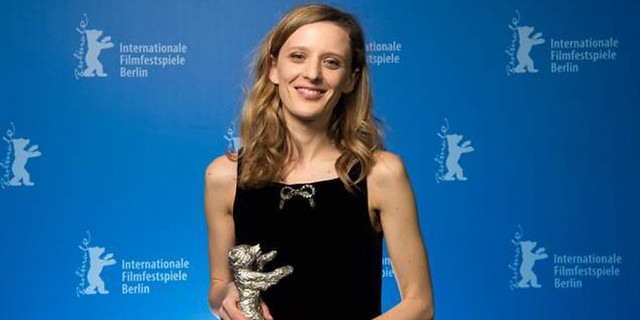
Interview: Mia Hansen-Løve on Her India Set, Daring New Film Maya

mia_hansen-love
Mia Hansen-Løve is one of my very favorite directors working today. Her infinitely wise films about time passing, beautiful characterization of people who inhabits her films and her willingness to always expand her cinematic universe at whatever the cost, leave me in awe. Her new film Maya isn't an exception to this rule. Structurally daring, logistically ambitious but always heartfelt, the filmmaker is reaching a new height. I got a chance to talk to her while she was in town for Rendez-Vous with French Cinema. Stuck in traffic and suffering from a cold, I was about ten minutes late for our appointment but she was so accomodating and kind to me. I thank her from the bottom of my heart.

So here is how our conversation went:

Throughout your filmography you try to do something different and something bigger, grander in scale each time. I like that about you.

Oh thanks for saying that. Not many people notices that.

Gabriel, one of the main characters in MAYA, played by Roman Kolinka, is a war journalist. Is he based on anybody?

Not really. I got some of… my inspiration from a former hostage but it stops when the trip to India starts. The only thing you could say is his story was inspired by true events and it has to do with captivity but film doesn’t deal so much with that. I mean it’s just the starting point of the film. But this trip to India to me is mostly an inner journey. And the film is really about invisible transformation... of not anyone in particular, maybe only pertains to me, in a more indirect way. But the character is not certainly inspired by someone in particular.

Speaking of something that is more personal and has more direct relationship with you, does India and especially Goa, have special connection to you?

It does. I’ve been traveling to India for the last ten years or so. I’ve been there almost every year. I’ve written one of my films there. But I’ve been attracted to india since I was in my 20s. Of course it had to do with me wanting to move on and do something different and so on. But I actually needed it, both as a person and as and artist. And at some point it made sense to me to try to confront my sensibility to India. It wasn’t like I wanted to make a film about or taking place in India then make up the story. This story for the film came to my mind first.

Right.

The story and characters came first and I thought it would make sense at this point, especially after Things to Come which was a such a ‘home movie’ in a way. (laughs) In another way, but you know what I mean. I wanted to go to a very different place and take that risk. I think risk somehow always excites me too. It was a way to get close to India and to go further in my relationship to India and not stay on the surface of it. Because you go there as a tourist, even if you go many times, it’s hard to go beyond the surface, unless you live there and….

But I thought to myself what’s the best way to know india better? Maybe to shoot a film there. That’s a great way to experience the place - to know places and people and experience things that I would never get to do otherwise. It’s challenging but also very exciting. I think it’s a very good way to go deeper into different culture and a country.

Did it feel like that when you were shooting part of EDEN, in New York?

I think all of my films somehow have been ways to get deeper into certain world. There are never documentary because I am really into fiction but somehow there was always this dimension in my films using fiction and making films as a way to further my experience and my knowledge. I think that’s what films should do anyway.

Right. Definitely. I have to tell you that EDEN is one of my favorite films of all time. It’s a masterpiece and I really really love that film.

Oh thank you. I will tell my brother (Sven, whose DJ career was the basis for Eden) will be happy to hear that.

How was shooting in India?

I think it was both amazing, extremely how do you say…joyful and also very tough. I mean it was actually amazing to be so far away to work with Indian people, to work with an Indian actress - just to lose myself and Immerse into such a different world. I got so much from it and I feel I am so much stronger since I made that film.

Gotcha.

For me there is before and after Maya. So the experience will stay forever with me. But on the other hand it was tough. When I started shooting I was already exhausted. both physically and mentally. I had tons of health issues at that time.

Oh sorry to hear that.


Nothing really bad but you know when you have that and when you are about to shoot a movie in India, it's not the best moment to have these kind of issues. Mentally also because the film was so difficult to finance. I felt huge responsibility toward my producers. I felt I had to not to do any overtime…, I'm always pushing for time. I felt I had great weight on my shoulders because all the risk they had taken to make that film. Maybe that was the most difficult thing on that shoot - this guilty feeling on some level. (laughs) But months after shooting, looking back what stays the strongest is a what unique experience it was.

It’s a unique movie too in a lot of aspects.

Oh thank you.

How did you find this beautiful actress, Aarshi Banerjee, who played Maya?

It took me some time to find Aarshi. We spent months looking for girls mostly in Mumbai but also around Mumbai, Maharashtra, but also in Goa and even in London, because we had some connections there, so we were looking though the Indian community- I was looking for a girl who speaks English. So it was casing but also in Facebook and social media. In many videos I got, I thought the girls were too much like actresses and too elegant. And I received this video of Aarshi where she filmed herself in a living room with a dog and she was so raw… I mean on the one hand she is extremely beautiful, in my head the character had to be, but on top of that she was so direct and so authentic. She moved me a lot with her maturity and depth and authority but at the same time she is also very much rooted…how do you say in…

Grounded.


Grounded, you know? she is really into her Indian reality. She’s not like ideal or romantic figure. she’s a real girl. And because my character Gabriel is a such a ghost when he arrives in India, I felt it was important that she shouldn’t be a ghost. She would have to be very real. I love the fact that she has a very timeless beauty but she also has a very contemporary quality to her. I think I used that a lot in her character.

That makes a lot of sense because I was wondering about the title because it could well have been Gabriel. Because the film starts with him and it’s his journey. But talking to you it makes sense that it’s called MAYA.

I think it is a poetic choice. The film doesn’t have to… the film is not a summery or… The title of the film is Maya and it says something. She brings something essential to the film and yes the main character is definitely Gabriel and you could say she just passes through the film, but she brings him back to life somehow. She bring him grace in his life. I thought it was beautiful to call the film Maya - the beauty and the fragility and youth that she symbolizes. She is the direction. She is the starting point. He might be the main character but she’s what the film looks at.

Is that also about that special person when we think back our lives there was this one person who changed the course of my existence somehow, that Gabriel can be that person for Maya by meeting her?

Totally. Maybe that was the starting point of the film. Also when I look back my own life I think of some persons I have met when I was a teenager and maybe they made me suffer at some point but they meant so much too and they helped me grow up and become aware of who I was and… So I am happy to hear that you understood that because that’s what the film is about. It’s a love story in a way but It’s more than a love story. The film is less conventional than that. Of course there’s love involved but even more than that, it’s about just what you said. Like how at some point two people who are very different who can’t really live together or make a couple… why they had to meet, why, there is something crucial that has a deep impact on your life coming out of this encounter, even though they go separate ways at the end.

That’s how I took it when I watched it. Why I admire you as an artist is that your film’s scale is getting bigger even though your theme - time passing and meeting someone important in your life. You always try something that is more difficult to achieve. You once told me that you were having hard time financing these films because they are grander in scale.

It’s the guilt I feel when I make these films because they are not financially viable. I obviously don’t want them to be expensive but the fact is I fight for shooting on 35mm film which is personally very important to me. And I struggle to keep a certain time, to have possibility of minimum of time because I have so many locations, I keep running from one place to another. I mean they are still cheap compared to 90 percent of films that are being made in the world but economically viable while still being free creatively like some other directors I know, I’m not smart on that side of things yet. I know I should be because it is vital to keep doing what I love doing.

No I think with all your films you show the audience that you really suffer for your art. I am grateful for it. I am grateful for watching these.

Thank you so much. Because it makes all worth it when people tell me this. It give me courage and confidence and we actually need it.

Keep doing it by all means. I don’t want to downplay the importance of this film but I’d love to see a sequel to this film. The way it ended, I want to see more of Maya since she is just starting her life.

I don’t know. it is hard to predict for myself what I’m going to do next but I enjoyed so much working with Aarshi and Roman that one thing for sure is I’d very much to work with them again at some point. I still feel frustrated about not getting enough from them.

Goa, the way you portray it, it’s going through a radical transformation with all the new constructions and all that. Is it actually happening? That the gentrification of Goa is real?

It’s maybe one thing that I’m the most proud of of the film. How faithful it is to today’s Goa. It’s a fiction and definitely not a documentary. But I’d like to frame it in such a way in fiction that I reflect the reality and capture the moment in time. I’ve seen Goa change a lot within the last 15 years and I’m not sure if I would go back there again anymore now because of these changes. Goa is certainly not a paradise but more like paradise lost. And that’s what I tried to show because there are still beauty and charms in many ways but you have so much mixed feelings when you are there because I think there are still a lot of poetry there in its heterogeneity in cultures and people all mixed up and magical because it’s still india but it’s ruined by tourism and corruption. It’s spoiling away literally both physically with pollution and mentally. I think in a way the film was my goodbye letter to Goa.

Thursday, March 7, 2019

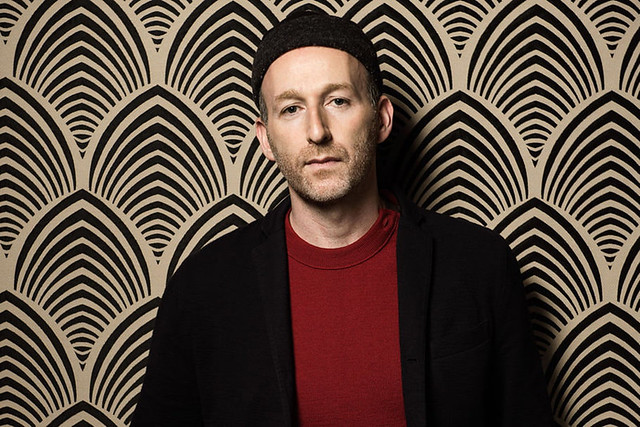
Interview: Mikhaël Hers on Grief, Music and Summer in Amanda

Mikhaël Hers
With his thoughtful presentation of loss, grief and human connection and youthful melancholy in medium length films (just around 1 hour mark) Montparnasse and Primrose Hill, I was hooked on Mikhaël Hers’ gentle artistry. With the two features that followed, Memory Lane and That Summer Feeling, he claimed his spot in a little corner in the hearts of many cinephiles as a young talent and best kept secret in contemporary French cinema. With his new film Amanda, another film dealing with the loss of a loved one in the era of ISIS and terror attacks, I had a chance to sit down with the filmmaker when he was in town for Rendez-Vous with French Cinema this year.

Your films always deal with loss and grief in some way. But it seems it is very much on the forefront in your last two films- That Summer Feeling and now Amanda. It’s interesting contrast, since your main characters are all 20 to 30 something people in their primes. I’ve always wanted to ask you where that death and grief in your work coming from.

Maybe I make films to answer that question. In any case, as soon as I start writing, that question is what drives me. It’s usually a specific locations and also the question of absence, as you described, that plays out both full, head on manner and also metaphorically. In Amanda it’s a bit more head on. It’s something I can’t really explain but, in a sense, the question has been always there in me.

We are obviously living in a pretty chaotic world- the refuge crises and the terrorist attacks and so on. It was interesting to see in Amanda that this terror attack is portrayed as an every day occurrence, something we just live with. I am wondering what you make of the state of the world we are living in.

It’s hard to answer that question. Here too, we are talking about absence. Perhaps we make films to find serenity, if serenity is possible in dealing with these things. And in cinema, in fiction, I’d rather make you to deal with those things more on a personal level, rather than making things that are completely saturated with political or social discourse. I think it is maybe possible to look at the state of the world through intimate tragedy, through daily life of these characters rather than dealing with it in an obsessed manner torn straight from the news headlines. I hope that answers your question.

Amanda was co-written by Maud Ameline not your usual collaborator Marietta Desert. How did you get to collaborate with her and what was the experience?

For this particular movie or in general?

In both cases?

I always start by writing the first draft alone. Even before that, there is rather a long maturing process which is full of wondering and false leads. But then I write fast. It’s not in me to drag writing process two or three years. When I’m done with this incubating process then I write the first draft very fast. After that I bring in a co-writer Marietta Désert or Maud Ameline. And of course they bring in much needed outside view and structure. Generally my first version is very dense and goes a lot of different directions and they help me kind of purify things and cut them down.

Vincent Lacoste is a rising star of the French cinema it seems. You have your usual actors to choose from (Thibault Vinçon comes to mind). How did you come to choose Lacoste in the role of David?

When I was writing the first draft, the age of the character was less clear whether David should be in his twenties or thirties. Once I realized the right age for the character was in the early 20s, it was quite obvious to me that it had to be Vincent Lacoste. He is the one who has the ability to create empathy. And there is something ordinary about him: one the one hand he is handsome and full of grace but he also has something rather awkward about him. It was an obvious choice for me. Once he accepted a role, our work came very naturally. It was as if the melodies we had in our heads immediately corresponded. We’d do one or two takes but very quickly we found a common note and tone.

The young girl, Isaure Multrier, who plays Amanda is also great. What was the casting process like and how did you get the performance out of her especially in those emotional scenes?

We did what we call in French ‘Casting Sauvage’, a ‘wild casting’, basically a street casting. Of course we saw some professional child actors, but there is always that uncomfortable feeling working with professional child actors. They are there to perform more of a parents’ dream than anything else. So I really counted on street casting. We went to schools. We went to sport classes and so on and when we saw this young girl we gave her this little piece of paper with the address of the production company and she came in did a screen test. I really liked the kind of mix that she is - that she is still a young child and can be very juvenile but also has a real maturity. she has an ability to express her thoughts in words. I liked those two dimensions about her.

In terms of emotional sequences, we worked as the way you’d work with adults. One tries to create an atmosphere and ambience of trust and welcoming around the actors. And I also tried to make her understand to draw from her own person and experience. That Amanda was a character and a shell and she only could play this through her own experience.

You worked with international cast before. Anders Danielsen Lie and Josh Safdie in That Summer Feeling. You have Stacey Martin and also Greta Scacchi in Amanda. How did you get to cast those roles and how did they come onboard?

I wanted some one to counter Vincent Lacoste and found it in Stacey Martin. Vincent Lacoste is a very intuitive, natural actor. Stacey is more of a cerebral actress and I like that kind of disjointed counterpoint to very intuitive Vincent. And maybe due to her dual nationality, she has a singular musicality in her speech. I don’t know if foreigners can hear but for us French, we hear in how she speaks.

As for Greta Scacchi, I was a fan of her growing up in the 80s and 90s. We needed someone who spoke English but also French to play the role of the mother. There was an opportunity to meet her. I had lunch with her few months before. But she was on the set for only one day. It’s funny she had become this person who was very important but the shoot and she came for one day and it was done. And she disappeared like that. It was like a dream.

Speaking of musicality, I love the soundtrack of your films. (Hers Laughs) How does the music factor in to your films? And how important is music for you?

Music is my first passion. It’s something that I listen to everyday unlike cinema which I can do without for weeks at a time. So it is very important. It generally comes in in the editing stage. Very quickly we find spots in the movie where the music is going to be placed. In Amanda, we called on a composer Anton Sanko who had done the music for a Nicole Kidman film called Rabbit Hole. I had really like the music in that film. The film is very interesting too but the music really spoke to me. And it stuck with me for a long time. We borrowed it for the edit then said to ourselves that we should contact him to write some original music for us. It is very interesting what he did because there’s kind of minimalist parts with an unusual string instrument and also more ample orchestrated parts. Also in my films that you seem to appreciate, a lot of indie pop songs that are from my teenage years which I enjoy paying tribute to by bring them in to my films.

Most of your films are taking place in the summer. is there a reason for that? I mean it’s really interesting contrast when you think about your subject matters you usually deal with.

For one thing it’s a very pragmatic choice. Summer is a the season that allows you to shoot in the lightest manner even though I tend to work with traditional crew. Summer allows you to work with less lighting equipment to make things faster. Also like you said, all my films has this starting point of absence. I find it more painful and powerful under a blue sky to experience that. It’s paradoxical on the one hand that Summer is about possibilities and renewal but there[’s something tears you apart a little more if you are dealing with absence. I like that ambivalence.

There is a scene, the day after the terror attack, the streets of Paris is completely empty. How did you manage that?

We shot that in the early morning. We have relatively small budget. It was not in our budget to empty a street in paris so we had to find compromises. We get PAs to maybe make a few people go different way. These are arrangement with reality.

So you’ve done films in Paris, Berlin, New York and London. Do you have any plans to shoot anywhere else?

I love Lisbon. It would be great to do a film in Lisbon and all other wonderful places but for the moment I have yet a new project. So I don’t know.

In your last film That Summer Feeling, I’ve never seen New York portrayed that romantic before. (Hers Laughs, embarrassed)

Yeah I know. That maybe because of my limitation of knowledge of the city. When you arrive in a new city you lack acuity in your gaze of someone who lives there. So there’s something a little exotic and a little romantic about how I filmed New York and in Williamsburg. Though to be perfectly honest, I didn’t know it at the time but I realize now that maybe I would film a little differently. I think I was a little bit naive. I do like the New York sequence of the film but perhaps I was a little naive.

It was fine. Job well done. I enjoyed it a lot.

Monday, February 25, 2019

Preview: Rendez-Vous with French Cinema 2019

The Film Society of Lincoln Center and Uni France again team up for the 24th edition of Rendez-Vous with French Cinema at Lincoln Center this year, 2/28 through 3/10.

This year, the series puts an empasis on showcasing new and up and coming voices across French cinema and includes Romain Laguna (Meteorites), Sébastien Marnier (School's Out), Virgil Vernier (Sophia Antipolis), Gaël Lépingle (Time of the Pirates) and Judith Davis (Whatever Happened to My Revolution). Also represented here are seasoned Rendez-Vous alums such as Bruno Dumont (Coin Coin and Extra Humans), Mia Hansen-Løve (Maya) and Gilles Lelouche (Sink or Swim).

The series also highlights number of French comedies this year, opening the series with the multiple César Award nominated The Trouble with You, starring comedian Pio Mamaï and two of the top leading actresses in French cinema - Adele Haenel and Audrey Tatou, directed by Pierre Salvadori.

It might be less star studded year without the presence of Deneuve, Huppert or Binoche for the first time in a long while, but there are plenty of little gems to be found as usual if you knew where to look.

So here's my guide to this year's Rendez-Vous with French Cinema. Enjoy:

TROUBLE WITH YOU - Pierre Salvadori *Opening Night Film
TheTroublewithYou_1200x600
After police Lieutenant Yvonne (Adele Haenel) finds out that Santi, her decorated dead cop husband was a bent cop, that everything she owns is from dirty money, she actively tries to make things right. She especially feels bad for Antoine (Pio Marmai), a young man who was wrongly accused and went to jail for 8 years because of Santi's fake bust at a jeweler, which was a insurance scam. After Antoine is released, she obsessively stalks him. Antoine, traumatized by the incarceration, can't stop acting out his bad impulses and commit violent crimes. Ever so guilt stricken, Yvonne helps him in his endeavors and tells him that she understands what he is going through while hiding the secret of who she is.

Thinking Yvonne is a salvation to all his anger and resentment, a person who finally frees him from being 'innocent', Antoine decides to leave his long suffering girlfriend (Audrey Tautou) and get freaky with Yvonne in a S&M den (a vacated crime scene where she took him after he burned down a restaurant) and keep committing crimes.

Trouble with You is a mad cap comedy. It has its moments but the jokes are stale and gags can be seen too easy and regressive- high heels = a prostitute, S&M body suit and sex toys oh-so-funny, etc. But affecting performances by Haenel, Mamaï, Tautou and Damien Bonnard make up for it.

MAYA - Mia Hansen-Løve
2018-maya
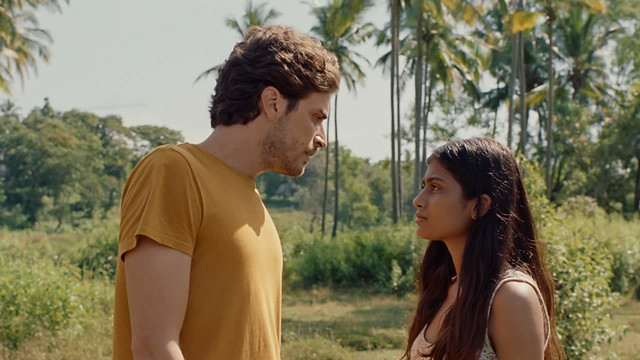
Mia Hansen-Løve's new film starts with a French war journalist, Gabriel (Roman Kolinka) being released from captivity with a fellow journalist Frederic (Alex Descas) by the ISIS in Syria. He gets a hero's welcome in Paris. The year is 2012. Even though he was beaten and tortured, he refuses to be treated by psychologists or take pills for his trauma. Only thing he feels is guilt because the third journalist is still not released. He decides to take off to Goa, India, just to get away from everything for a while. He knows that only thing he knows is being a war journalist and will need to go back. But for now, he will take some time off and travel India. Goa is where he spent his childhood with his mom (Johanna ter Steege) who now lives in Mumbai.

In Goa, Gabriel meets Maya (Aarshi Banerjee) a young woman who is a daughter of his Indian godfather, Monty (Pathy Aiyar), who runs a hotel business. But touristy Goa is in transformation and people are being forced out by land developers and Monty doesn't see the future for Maya to stay in Goa forever. Gabriel is an intense, brooding man and the news of the fellow captive's beheading doesn't help the matter.

At first, Gabriel refuses Maya's advances, waving off her as still too young. But they hook up and she is left heart broken. Gabriel can't reciprocate her love and he will go back to the war zone.

The film could easily be called Gabriel since it's mostly about him. We get his back story, his family and love life and Maya is just a young girl who falls in love with a hunky, intense French guy. She is just starting out her life. So this is why the film is an interesting narrative departure for Hansen-Løve, who's been making thoughtful observations on people in transitional period. Maya is not unlike Camile character in her Goodbye First Love, except she is not the main character. Or is she? Maya is a movie about that special person who had made a big impact on your life. He or she pretty much made what kind of a person you are now.

Again, beautifully scripted and ambitious in its scale, Hansen-Løve keeps expanding her territories while not losing sight on where her priorities are - portraying melancholy of growing up and acknowledging that there is a price to pay for following your passions. Kolinka's hunkiness almost derails the film. But what can you do? He's French.

METEORITES - Romain Laguna
meteorites_03
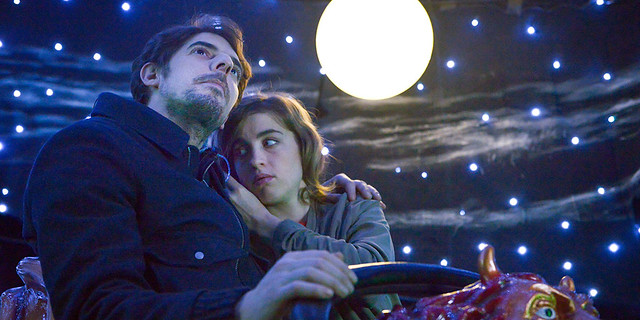
A young girl's search for her place in the universe is the theme of Meteorites, Romain Laguna's sensual debut feature. Nina (Zéa Duprez) is a High School dropout working at a dinosaur theme park in the south of France. One night, she witnesses a meteor charting across the sky and crashing over the rugged mountain. It seems only she saw the celestial event and no one else. She starts hanging around with Morad (Billal Agab), a good looking Algerian boy from a nearby project, who happens to be her co-worker Djamila's brother. Djamila warns her that she will get dumped. But their sexual attraction is palpable. She thinks the meteorite was the sign of their encounter.

It's a rocky relationship. Morad's aloofness and Nina's stubbornness clash in every turn. After Morad leaves for Algeria without notice and her old friend Alex declares joining the military and Nina finding out that she's not pregnant, she falls into a case of melancholy. Only searching and finding the meteorite that crashed will give her a peace of mind.

Shot in full frame with vibrant colors, lush sun drenched surroundings and with Duprez's sultry presence, Meteorites is an affecting, lyrical coming of age film.

SOPHIA ANTIPOLIS - Virgil Vernier
Screen Shot 2019-02-16 at 2.31.11 PM
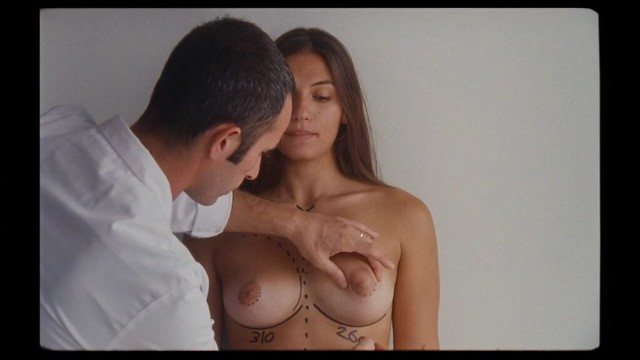
Sophia Antipolis is a name of a southwestern French industrial park in French Riviera, known for its tech industry complexes and low lying office buildings and chain stores. It's a back drop of Filmmaker Virgil Vernier's new film of the same name. It starts with a plastic surgeon talking to several young women about the their breast argumentation options. An impatient young woman tells the reluctant surgeon that she needs to have them done fast before her job interview. The surgeon drily tells her the ethical implication of him letting her walking around without proper healing time, even with her own consent. Then there's a young black navy man trying to get a job at a security firm in town. The combat training they go through is grueling, conducted by drill sergeant types who yell at you racist things in your face if you were people of color or threatening rape if you were a woman to get you riled up. The young man befriends with an older man who introduces a group of vigilante security force believing in doing the jobs police wouldn't do, like raiding and destroying illegal camps or makeshift shacks by slashing and burning their tents down. The older guard tells him a story of him and his old partner finding a charred body in one of the empty office space. During a bust of a suspected child molester, it becomes too much and the young navy man who runs away.

Police gets involved in the burned body case and determines it's the body of a young woman who had breast implants. That she might have been killed and set on fire by some shady characters whom she owed money to. The story then pivots to a girl who was a High School friend of the dead girl. She is found holding a candle lit vigil where the girl had died.

Just like his previous film Mercuriales, Vernier's elliptical, loosely connected stories, Sophia Antipolis examines the seedy underbelly of a shallow modern society, urban isolation and loneliness and human connection. Daring, cerebral and playful with some lyrical 16mm shot images, it's one of the most invigorating film experience I've had in a while.

AMANDA - Mikhaël Hers
amanda
Reading only the plotline of Mikhaël Hers new film Amanda might not entice you because it is extremely conventional, lifetime channel movie material. But knowing the film is his, you know you are in good hands.

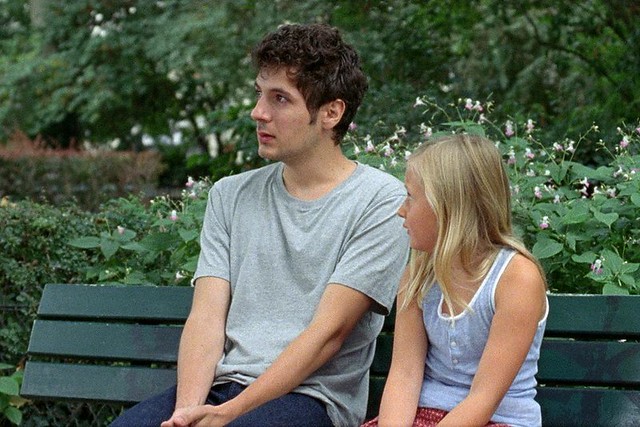
David (Vincent Lacoste) is a young Parisian scraping by doing menial jobs - as a middle man for the landlords, arranging pickup and introduction to places for travelers and as a seasonal park employee, trimming tree branches around the city. He has a loving older sister Sandrine (Ophélia Kolb) and an adorable 7 year old niece Amanda (Isaure Multrier) whom he picks up at the school when single mom Sandrine is busy. David meets Lena (Stacy Martin), a newly transplant from the countryside through his job and falls in love. Other than their father not in the picture and their estranged English mother (Greta Scacchi) reaching out to reconnect, they live in quiet, relatively uneventful life.

A sudden death of Sandrine and many others in a terrorist attack in the park shatters David's tranquil existence and affects Amanda greatly. Young and short on resources, David has to decide the fate of his young niece.

It might draw some flags for its non-political stance in the time of the extreme polarization, hate and fear for portraying the post-Islamic terrorism France, but Amanda is not about that. It's not about a young man's journey through adulthood either. Nor is it Doillon or Pialat-esque acting/directomg genius extravaganza. Just like Hers's other films, Amanda is all about human connections. And it's drawn beautifully. And also like his other films, loss and grief figure greatly in to it. But if they were on the periphery and overhanging cloud in films like Memory Lane and Montpanasse, they take the center stage in Amanda. Lacoste (seen in films of Mia Hansen-Løve and Christoph Honoré), a cross between Jean-Pierre Léaud and Andrew Garfield, has a great range and has a bright future ahead of him. He is also representing Freshman in this year's series.

TIME OF THE PIRATES - Gaël Lépingle
cf-seuls-les-pirates-photos-608257
It's Orleans suburbs where city officials are planning a new housing development. They hold town hall meetings and try to gather up the support. But this means Géro (Ludovic Douare), an aging, eccentric theater actor/director who lost his voice due to cancer and only whispers, will get evicted from his cluttered house and from his theater space too. So starts Gaël Lépingle's humanistic characters study Time of the Pirates. Géro gladly invites Leo, his fresh faced 18 year old nephew who wants to learn the theater craft and write, to live with him. Then there is a lonely city clerk who is fighting for the custody of her kid whom Géro has a hots for.

Leo turns out to be a young man who is politically aware and doesn't buy into Géro's romantic notion of "pirates are origins of revolutionary anarchists." The film takes a sly turn as one of Géro's 'associates' gets into trouble and flees to the country and Leo accompanies him. On the run and tall and handsome, for Leo, the fugitive is an ideal model for his writing. Then he finds out the man makes money off of smuggling refugees in. The boy is learning.

With finely tuned, naturalistic performances that don't resort to stereotypes and it's tone just pitched right - not too serious and not too silly, Time of the Pirates occupies a specific place in French cinema by portraying middle-class people and their lives with humor and warmth. I am definitely going to check out Lépingle's Julien next.