Showing posts with label experimental film. Show all posts

Wednesday, October 9, 2024

Space Music

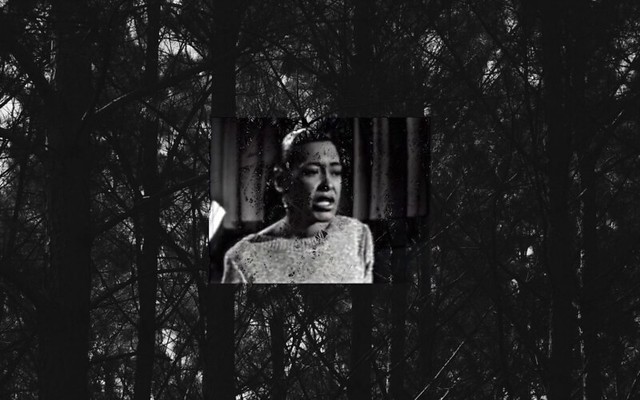
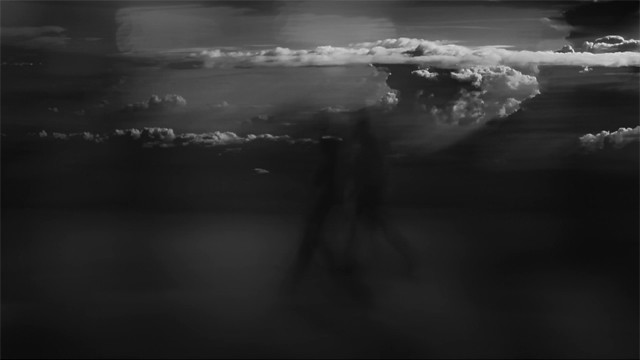
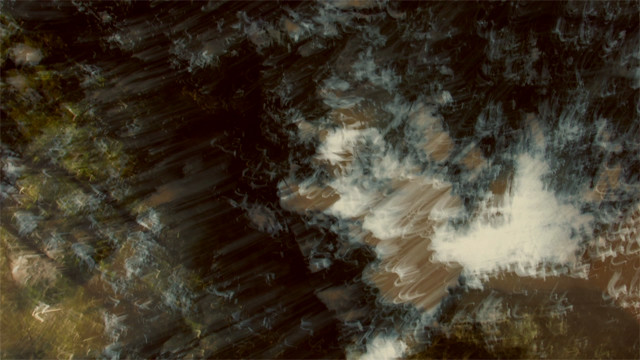
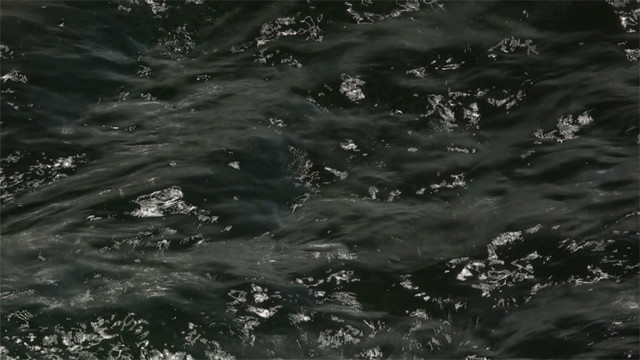
Little, Big and Far (2024) - Cohen Little Big and Far The launching of the James Webb space telescope in 2021 changed the way we look at space. High up in space, it is able to detect the wavelength of many distant planets, stars and galaxies that the Hubble space telescope couldn't. The clear and astonishing images of the planets in the solar system are flooding in for the first time.

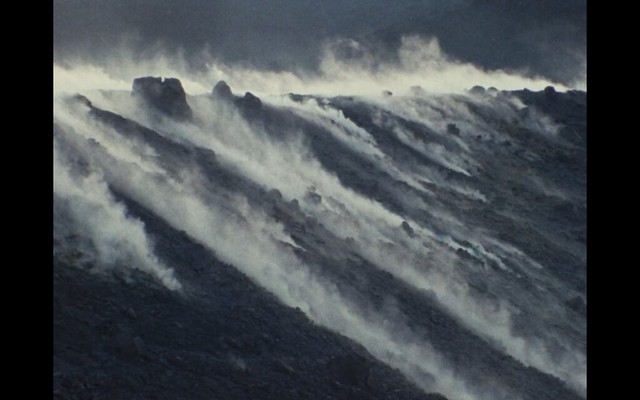
There was another awesome celestial development: the European Space Agency (ESA)'s Rosetta Mission put a lander probe on Comet 67P/Churyumov-Gerasimenko, named after its two scientists who first detected it. It recorded a 24 minute video footage from the surface of the comet, and was later compiled as a grainy black and white two seconds gif, which became the internet sensation. In it, we see the great jagged mountain cliffs with specks of space dust flying about like snow with the vastness of space in the background. These jaw dropping, fairly recent developments in space explorations and discoveries and the implications of finding the origins of our known universe were never properly contemplated in current culture, until now, with Jem Cohen's Little, Big and Far.

The film starts with an Austrian astronomer named Karl. He chronicles how he got into the field and discusses his love for jazz- the soundtrack for space. It is something to see the ESA probe Philae's footage of comet's surface gif on loop with Coltrane's Manifestation (from the album Cosmic Music) blasting in the background on the big screen. Karl has studied stars all his adult life, but at 70, he is at a crossroad: His consultant gig at the university is uncertain and his physicist wife is in Arizona, utterly devoted to her work and he feels they are growing apart.

For a while Little, Big and Far is a visual/aural correspondence between Karl and Sarah, a fellow astronomer, who reside in the US. Sarah's concern is with the ecological disasters in anthropocene era, that the environmental destructions caused by human activities are too vast and frequent - recently highlighted by the Eastern seaboard in the US being besieged by unnatural orange smoke blown from a large forest fire in Canada. Sarah tells a story about an abandoned New Jersey telescope steeped in local legend and folklore by way of her young, nonchalant and wise beyond his years PhD student. The title, Little, Big and Far refers to what Karl and his wife see as the core of their work and life. Our lives seem very small to the vastness of the known universe which is still expanding, in comparison.

Cohen, as with his Museum Hours (2012), makes a gentle inquiry to human connections while presenting it within the bigger picture- in this case, the universe. His unhurried docu-fiction hybrid, using real academics and scientists through interviews and anecdotes, is so seamlessly melded together, while accentuating his micro/macro world view.

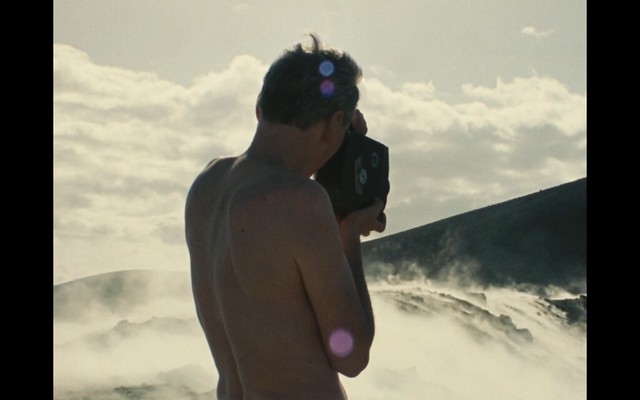
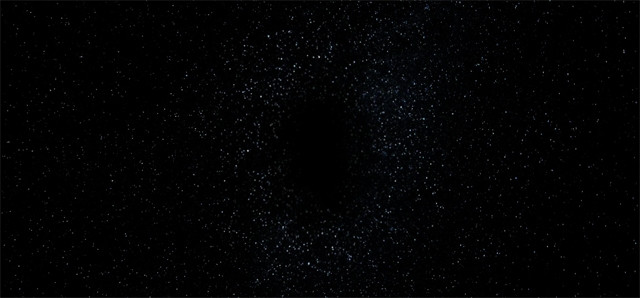
After attending a conference in Greece, Karl takes a journey to a remote small Greek island in search of the darkest skies. He talks with the eccentric locals who has his own theories about our solar system and ancient methods to measure time. The big finale to the story, which Cohen has been brewing throughout the whole film, features the awe inspiring skies studded with stars as Karl sits atop of the highest point of the hill in a remote Greek island. Our mind wanders - the stardust, the infinite vastness of space, our human connections to each other which gives meaning to our existence. With the long shutter, Cohen captures all the glories of the universe. And it's magical.

Wednesday, January 10, 2024

Posthistory

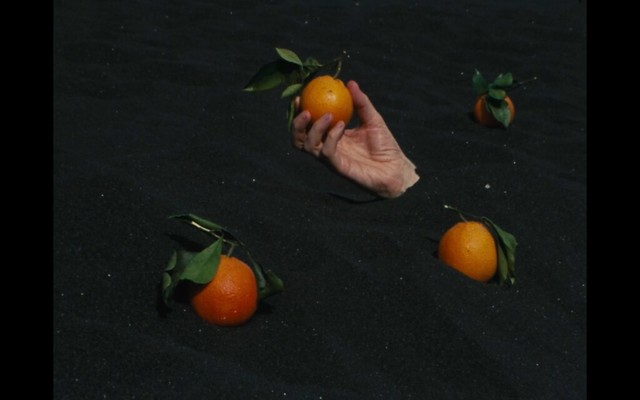
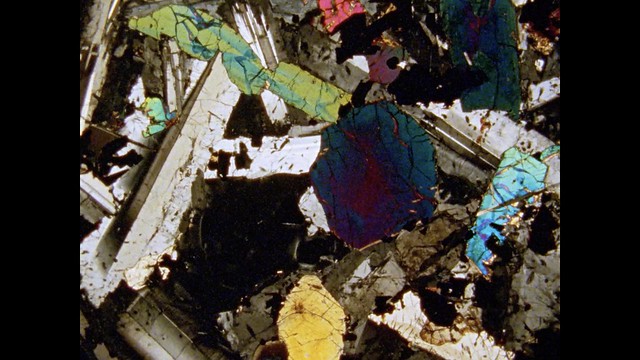
Last Things (2023) - Stratman Screen Shot 2024-01-10 at 8.21.21 AM Screen Shot 2024-01-10 at 8.21.33 AM Screen Shot 2024-01-10 at 8.26.19 AM Screen Shot 2024-01-10 at 8.28.22 AM Screen Shot 2024-01-10 at 8.32.57 AM Screen Shot 2024-01-10 at 8.46.31 AM Screen Shot 2024-01-10 at 8.54.46 AM Deborah Stratman's new film, Last Things, composed mostly of found footage, is a Sci-fi non-fiction about the future imagined from the point of view of a rock. 16mm timelapse images of crystals forming, the living cell structures, 3D satellite footages of a distant planet, the sight of Petra in southern Jordan, Darwin's evolutionary trees, staging of 'star people', accompanied by great sound design and music, the film is an multifaceted, engaging, fascinating contemplation of time in the face of our environmental catastrophe. It's Based on the text of J.-H. Rosny (narrated by Valérie Massadian in English and French). And with the help of structural geologist Dr. Marcia Bjørnerud, the filmmaker lays down the vision of the future where all living things have died out and cyclical nature of how all things start and end and start again.

Dr. Bjørnerud talks about polytemprality. Everywhere you go, you see the remnants of the deep time. Your backyard could have been under shallow sea 400 million years ago, or the river valley that was carved into clay by a giant lake during the late ice age. The way Stratman goes about presenting the smallness of human existence within the deep time with a completely unsentimental eye is, above all things, refreshing. Clocking in short 50 minutes, Last Things is, as usual, an aesthetically, politically, intellectually invigorating work by Stratman. Please go watch on film print at Anthology Film Archives starting 1/12. Stratman will be doing Q&A in person on this Friday and Saturday.

Wednesday, April 27, 2022

Lovely Contemplation on Nature, Filmmaking and Human Connection

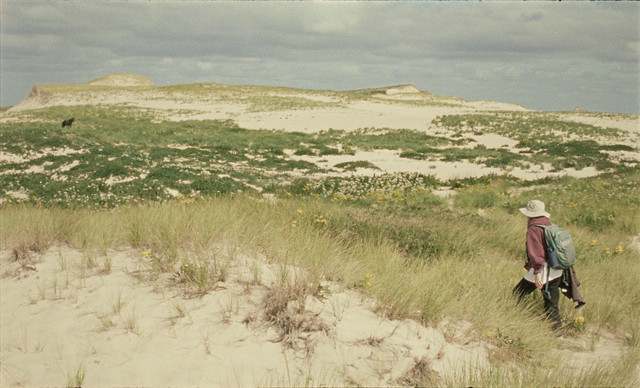
Geographies of Solitude (2022) - Mills Geographies_of_Solitude_Landscape We are presented with a night sky; thousands of stars are twinkling, a shooting star appears and crosses the screen. It's so picturesque it looks almost fake, very graceful but nonetheless a computer-generated animation, perhaps. Then the horses at the bottom of the screen begin to move. Then a moving lantern. It is dawn, and we realize the scenery that we are introduced is real. So, starts miraculously beautiful Geographies of Solitude.

Zoe Lucas is a naturalist/environmentalist. She first came to Sable Island, a patch of land 20 miles long and one mile wide, 100 miles off the coast of Nova Scotia in 1971 to study wild horses living there. She fell in love with the island and couldn't wait to get back on. She got a job as a cook in the seal population research team, then off and on, spent some 9,000 days there and made it her home. She has been meticulously logging data, not only on the horse population, but also sorting through mountains of plastic debris being washed up ashore, diligently cataloging them, leaving records of environmental impacts of the Anthropocene era.

Her shed is full of found treasures both alive and stationary - stacks of note books with daily written reports, photo slides, petri dishes, wind chimes made out of washed up materials and crystals, meticulously cataloged insects and other specimen in jars, patches made out of thousands blown balloons, plastic vats of yet to be cleaned and cataloged debris washed up ashore...

Filmmaker Jacquelyn Mills, in collaboration with Lucas, lovingly documents all that a windswept remote island can offer - sand dunes, horses, seals and insects, its intricate ecosystem. She also comments on the human footprints on environment through Lucas while capturing some of the most breathtakingly gorgeous images on 16mm film. It includes naturally exposed film stocks only by moonlight and hand printed footage using natural surroundings, like horse dung, sand, kelp and yarrow.

Soundscapes play big part in the film too. It’s filled with humming of the seals, insects, never ceasing winds, neighs of the horse, waves… Using small contact microphone, in Mills’ hand, tiny insects’ footsteps, the creaking of an abandoned wooden structure turn into music.

As Lucas says in the beginning of the film, her life on the island has been the process of discovery. I'm grateful that through Mills, we too could discover, albeit second hand, the grains of sand becoming the twinkle of the stars and dead horse becoming the source of new vegetation.

Later in the film, after a day of collecting samples in the field, Lucas says that because of being on the island was so rewarding, engaging and fulfilling, she lost track of everything else in her life. As they turn back to go back to the shed, Mills insists that she wants to stay in the field to collect some sound. “You don’t really need me to stay here for that do you?” Lucas quips, “No but this way we can spend some time together.” Mills shyly responds. Solitude takes a comforting tone in Geographies of Solitude. The film is one of the loveliest feature debuts in years.

Geographies of Solitude plays part of this year's edition of Hot Docs Festival on 4/30 and 5/4. Please visit Hot Docs Festival website for tickets and info.

Friday, April 1, 2022

Post-Realist

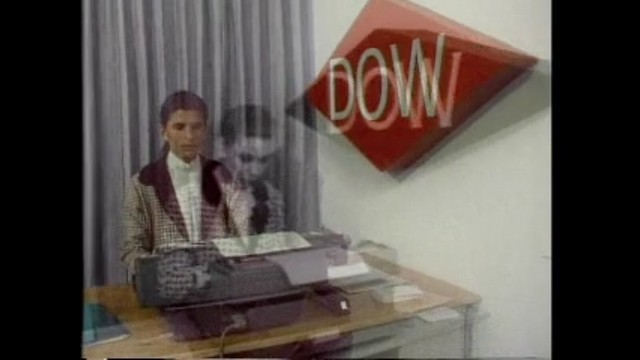
What Farocki Taught (1998) - Godmilow Screen Shot 2022-04-01 at 4.33.33 AM Harun Farocki, a German filmmaker, made a short film The Inextinguishable Fire in the late sixties. It was a fierce anti Vietnam War film that implicates not just the US Government and the Dow Chemical but it implicated the ordinary US citizens in its atrocity also, while explaining the napalm production in such a detached, scientific manner. To put it better way, instead being confrontational by showing the pictures such as the iconic 'napalm girl' or other atrocities and turned the viewers off, it explained how modern division of labor- 'the building blocks' of the Dow Chemical company, where each individual worker makes only one component of the bomb, surreptitiously hides its true intent on what those individuals are contributing in making. The film broke down scientifically how it's done and how the thought of individual responsibilities in those kind of endeavor dissolve. It was short. It was emotionless and it was to the point.

Jill Godmilow, an American experimental filmmaker, watched the film in the 90s for the first time and thought it was perfect. It was a documentary unlike any other, but far more effective than any documentaries that plead to the viewer's emotions with 'shocking' evidences. She was just disappointed that she didn't make it herself. So she decided to remake it, shot-by-shot, but this time in English and in color. She would make it in the US and closer in vicinity to where the Dow Headquarters were situated. With the colleagues and collaborators, Godmilow seeks exact copies in reenactment scenes. Farocki's minimalist and obviously fake staging of Dow Chemical offices are reenacted in the same manner. The burning of the lab rats, non-actors portraying scientists, delivering lines in monotones are exactly the same, except it's now in English and people in period costumes. Godmilow sometimes superimposes Farocki's film directly over her image, making sure that viewers see it is the exact replica. The message remains the same. The times have changed but the atrocities commited in our name have not.

Considering that, just like any other decade, 90s were riddled with wars as it is now and the modern military industrial complex is fully in place with the thought of individual responsibilities in the atrocities of war getting further and further away from our consciousness with more complex division of labor, What Farocki Taught reminds us that things haven't changed much. And it's quite remarkable the far reaching influence of Harun Farocki, as a writer, philosopher and filmmaker, to generations of filmmakers both in experimental and narrative field.

What Farocki Taught is also a good reminder of the state of what is considered as a documentary nowadays. Since the explosion of topical liberal documentaries in the 90s, the word is hijacked by the news media - every major newspaper now has its vlogs, CNN has its own documentary production division, streaming platforms are awash with its own documentary productions, all catered toward shocking revelations and appeal to your emotions with 'real footage' and 'truth seeking' manipulating viewers this way or that way. Is showing the shocking images and playing with your emotions with a narrativeized documentary a right way to go about discovering the truth? Or is the truth elsewhere, in a cellphone shot footage of war in Syria, Palestine, Yemen, Ukraine put on youtube? Our critical analysis of what we see is necessary. The context matters. How we approach to seek the truth is important. Farocki and Godmilow shows more effective way to communicate and it's valuable.

Saturday, June 19, 2021

Fluidity

The Seismic Form (2020) - Zwirchmayr

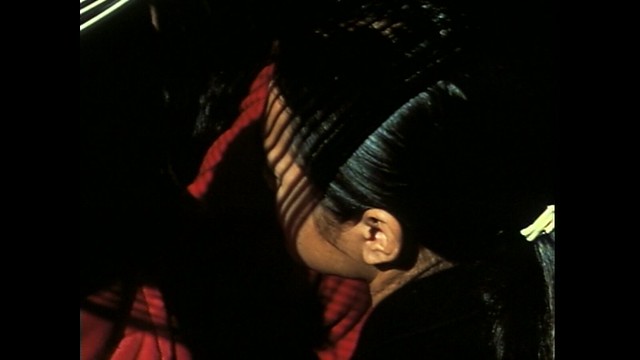
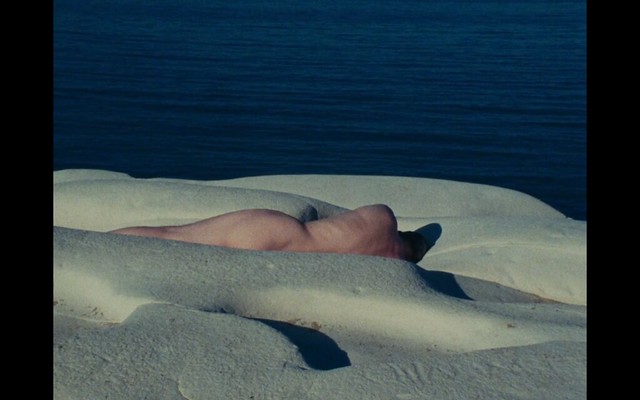
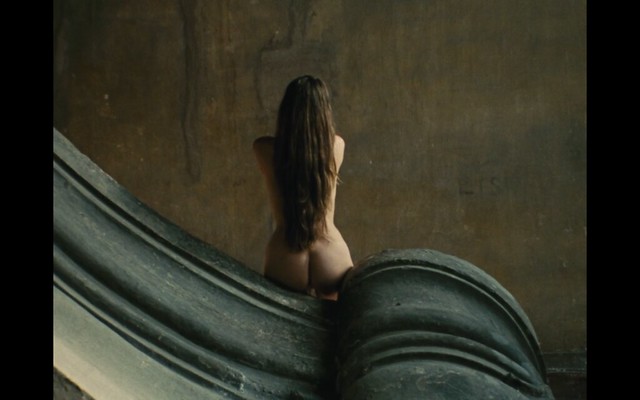
Text by Jean Baudrillard, Antoinette Zwirchmayr's short The Seismic Form visually examines the impermanance of life on earth in very elegant visuals, often juxtaposing human bodies with environments formed by seismic activity. It's beautiful. Some screen grabs: Screen Shot 2021-06-19 at 9.15.42 AM Screen Shot 2021-06-19 at 9.15.51 AM Screen Shot 2021-06-19 at 9.16.02 AM Screen Shot 2021-06-19 at 9.16.55 AM Screen Shot 2021-06-19 at 9.17.06 AM Screen Shot 2021-06-19 at 9.17.18 AM Screen Shot 2021-06-19 at 9.17.29 AM Screen Shot 2021-06-19 at 9.17.38 AM
Sunday, May 5, 2019

A Journey Not a Destination

Notes from a Journey (2019) - Fawcett, Pais
Screen Shot 2019-05-05 at 10.02.44 AM
Screen Shot 2019-05-05 at 10.28.21 AM
Screen Shot 2019-05-05 at 10.29.03 AM
Screen Shot 2019-05-05 at 9.58.33 AM
Screen Shot 2019-05-05 at 12.22.19 PM
Screen Shot 2019-05-05 at 10.05.39 AM
Screen Shot 2019-05-05 at 12.16.30 PM
Screen Shot 2019-05-05 at 10.32.20 AM
Screen Shot 2019-05-05 at 10.03.34 AM
Screen Shot 2019-05-05 at 10.32.02 AM
Daniel Fawcett and Clara Pais, a pair of experimental filmmakers who describe themselves as two halves of a one artist, present their latest work, Notes from a Journey: a travelogue of sorts filled with startling visual and aural landscapes. And it's a thing of beauty - an examination of internal psyche through nature and vice versa. It's a great companion piece to their Studio Diaries, a series of 100 visual essays documenting their creative processes for a period of time.
Notes from a Journey starts out like a typical travelogue. We see the horizon from the train window. It's various English pastoral of greens and yellows. It's comforting to follow the outlines of the gentle hills. The uninterrupted outline of the hills and lulls of the locomotive give the sense of calm and continuation. Then the thin red line appears, going across the frame. The background color slowly changes from sky blue to black then back to blue. The line's angle changes and it moves up and down. It tricks your vision as if the line is not straight. There are hues, there are textures, there are natural and artificial soundscapes.

There is a shift in the middle of the film. The double exposure of a thorny trees with scathing noise changes the perspective of the film from our passive pair observing to them on the forefront. We see them searching and listening with modern equipment in their tent at night. What are they looking for? Merely recording the sound of nature at night, a paranormal activity, a reenactment of what field zoologist do...? We are still at the infancy of the great visual & aural medium. Daniel & Clara makes a point that they are always searching.

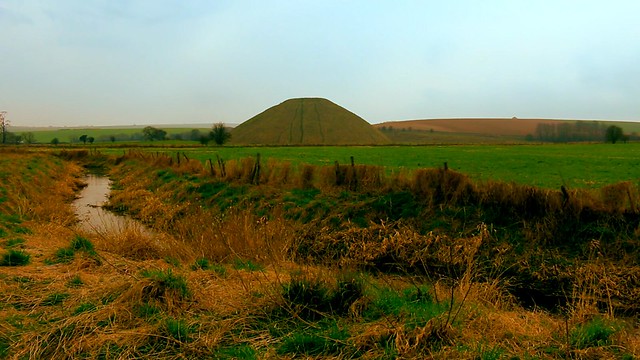
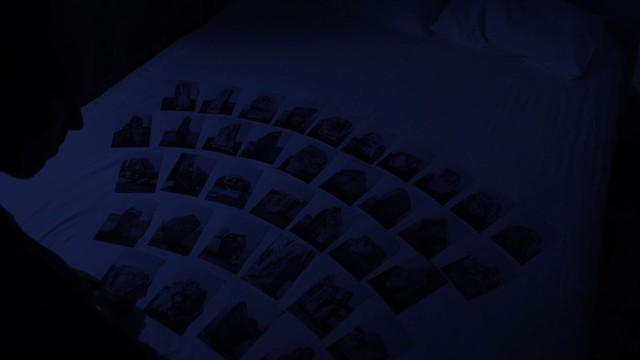
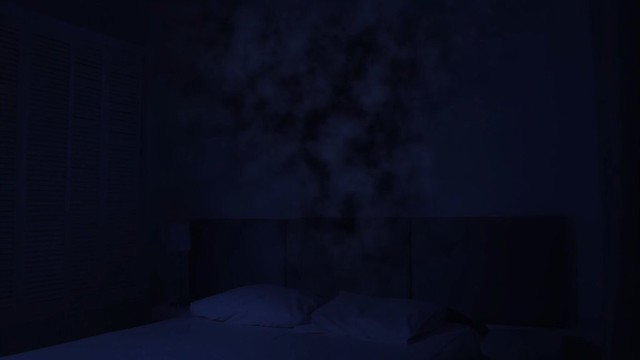
It's not the destination but it's the journey. Daniel & Clara flip through the pictures of countless standing rocks of Avebury, lay them down on the bed. It's as if they are searching for something solid, something permanent, something that will ground them. Silbury Hill in Avebury, a landmark prominently featured many times in the film, shot in different methods and formats is a man-made monument from ancient times. It's physicality and presence is tremendous, yet it is artificial. Whatever we see and feel solid and permanent, they are not. We see the silhouette of Daniel & Clara's sharp features in the dark room, then there is smoldering smoke hanging above the bed. Notes from a Journey reminds you that the illusive el dorado of cinema is not the destination but the journey itself.

Saturday, November 3, 2018

Bill Spann

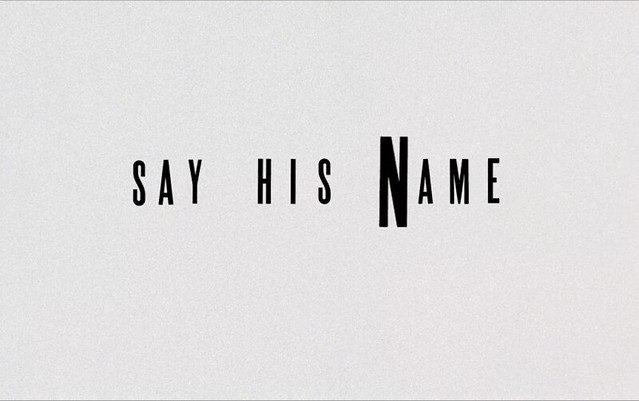
Did You Wonder Who Fired the Gun? (2017) - Wilkerson
Screen Shot 2018-11-03 at 10.58.22 AM
Screen Shot 2018-11-03 at 10.59.02 AM
Screen Shot 2018-11-03 at 11.01.20 AM
Screen Shot 2018-11-03 at 10.59.46 AM
Screen Shot 2018-11-03 at 11.00.30 AM
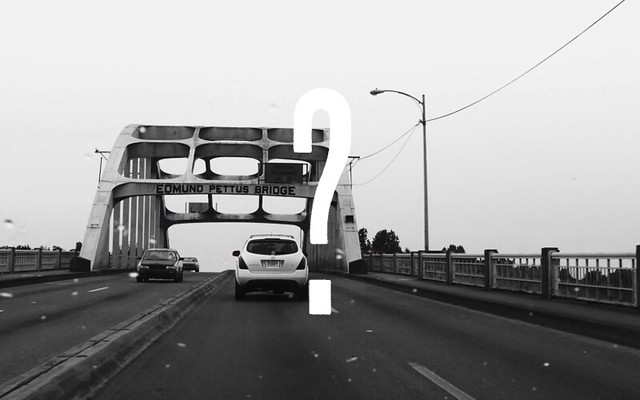
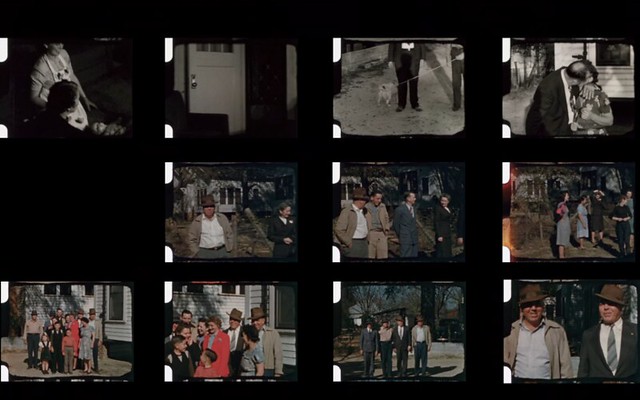
Travis Wilkerson is, for lack of a better term, an investigative experimental filmmaker. His films largely concern with the buried, sordid American past. His film, An Injury to One, about a murdered union activist in the turn of the 20th century had a deep connection with me at the time and therefore was a fascinating watch. With Did You Wonder Who Fired the Gun, he unflinchingly delves into his racist family history where his great granddad got away with killing a black man in 1940s Alabama. As usual, he goes on about it with his dry, raspy voiceover, words over images, split screen and old home movies as well as static/driving shots of places.

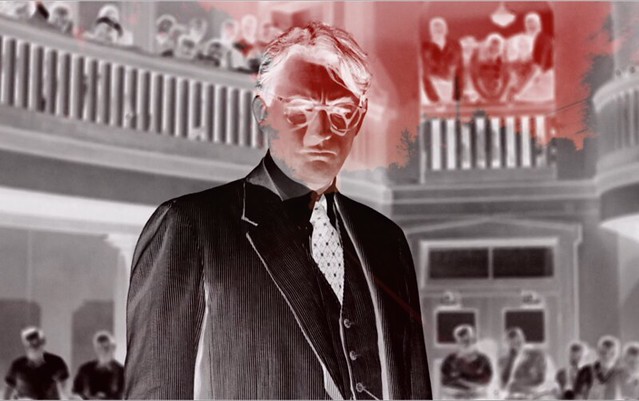
Wilkerson starts with clips from To Kill a Mockingbird, announcing that the film is not a white savior movie. Throughout the film, he self-consciously traverses Alabama, making a point that he is a white man with a movie camera digging up a forgotten murder story of a black man. As usual, even after 4 years of research into the subject, and even though it's his own family's history, there is no real resolution to the film. The truth in what happened to the powerless will be erased from history and completely forgotten. It's a timely film because with a racist buffoon being in charge, the racist rhetoric right now is truly alarming.

His name was Bill Spann. Wilkerson is nowhere near to find out what really happened, but finds Spann's final resting place in an unmarked grave in Louisville Alabama with the tip from a local woman who fears for her safety by just talking to him. Yes, the violence and racism is still rampant in the south and everywhere nowadays. Did You Wonder Who Fired the Gun? bears witness to those who were victims of racist violence and serves as a reminder that they all had names.

Thursday, June 8, 2017

Digging for Cinema Gold

Dawson City: Frozen Time (2016) - Morrison
973a99f2-9b26-458d-baca-20514564e08a_zpsxe1pk3wb
Bill Morrison, known for his beautiful, textural found footage films (Decasia, Miner's Hymns) accompanied by talented contemporary musicians' work (Philip Glass, Jóhann Jóhannsson, John Adams, Richard Einhorn, just to name a few), out-does himself with a mesmerizing, hugely entertaining new film Dawson City: Frozen Time.

It tells a truly fascinating bit of cinema history involving the Gold Rush at the turn of the 20th century in Dawson City, deep in the Yukon Territory. The two-hour film is filled to the brim with rich historical details which can be almost too much for a single viewing. Dawson City, with its clever, carefully constructed paralleling narratives of the prospecting and cinema, accompanied by wealth of archival and found footage, achieves something far greater than a historical documentary or an experimental art-house film ever can.

Dawson City starts with a prologue Morrison's appearance in some sport jock TV spot being asked about 1919 World Series footage. This is the year of the infamous "Black Sox" scandal where 8 of Chicago White Sox players took money from the East Coast gambling establishments to throw the game.

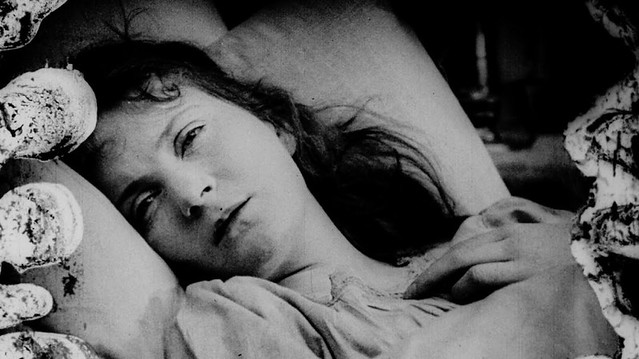
We move back to 1979, while digging for foundation behind Diamond Tooth Gerthie's Gambling Hole in Dawson City, townsfolk discovered hundreds of film reels buried under the permafrost. Local conservators and museum curators got a hold of these treasures which turn out to be rare silent films, 372 of them, thought to be lost forever.

Then it moves on to 'Film was born an explosive' segment, explaining the early silent films were shot on cotton based nitrate film stock which was highly combustible until the industry switched over in 1949 to a safer, acetate based stock.

And the credit starts to roll.

So how does these figure into the film? Beautifully. They all fit into the narrative of digging for gold leading to uncovering cinema gold.

California gold rush fever pushed prospectors further up the uncharted northern territories. After some found gold up in Yukon in 1895, many prospectors made a perilous journey to the land where the Klondike River meets the Yukon River. A lot of them perished or turned back along the way. The place was called Tr’ocheck and belongs to native Hän speaking people. Things changed quickly and the natives were forced down the river into a settlement. The newly arrived (re)named it Dawson City.

It grew and grew and by 1916, the peak of gold mining, the population of the city reached 30,000. The city built a large recreation center, called D.A.A.A., equipped with a swimming pool and doubled as a hockey link in winter, a library and a movie theater, hosting traveling moving picture show tropes.

As it was common in those early days where everything was built on woods, Dawson City burned down to the ground every year for first 9 years and had to be rebuilt. And nitrate films no doubt contributed to numerous fires.

As the gold mining lost its luster and the city grew smaller, so did the need for the reel entertainment. And because Dawson City was the last stop on the Hollywood film distribution route, for economical reasons, movie studios didn't want the film back by carrier. The duty of keeping them fell on a bank clerk who in turn kept them in the basement of a library first. But after they ignited and caused the fire, one of the bank managers decided to bury them in the now abandoned and drained D.A.A.A. swimming pool few blocks away.

Many more film reels were discarded indiscriminately, into the Yukon River and burned in a bonfire, according to the bank clerk's journal. But 372 survived, frozen under the permafrost all those years, preserving the nitrate negatives while all other known copies disintegrated over time.

Combining beautiful still pictures of prospectors from glass negatives by Eric Hegg which were also recovered in the 70s and those found silent films heavily damaged by elements over the years and archival footage and hypnotic music by Alex Somers, a musician known for producing Sigur Rós albums, Morrison concocts an engaging, entertaining art film that doubles as an intriguing slice of history of Americana.

For instance, we get to know that American old money came from the Gold Rush related businesses: Frederick Trump (Donald Trump's grandfather) made his family fortune by setting up brothels along the prospecting trails and the Guggenheim family bought the mining lands and created Yukon Consolidated Gold Company.

Many of the 'Dawson City Find' films and newsreels are featured throughout, often matching the historical events of the time - 1919 World Series, the rise of American Socialist Movement, Industrial Workers of the World, WW1, and so on.

Morrison also has fun with thematically and physically matching scenes from these damaged but remarkably preserved beautiful looking films. Some of the notable titles are: The Stolen Paradise, The Half Breed, The Social Buccaneers, The Salamander, The Unpardonable Sin and The Recoil.

Looking through all these buried treasures for the first time, Morrison must've been a happy camper. He does a fine job assembling these, weaving them into a hugely entertaining, concise historical narrative. Dawson City: Frozen Time is one of the best films of the year.

Tuesday, June 6, 2017

Fuji-san Mon Amour

Ascent (2016) - Tan
Ascent1
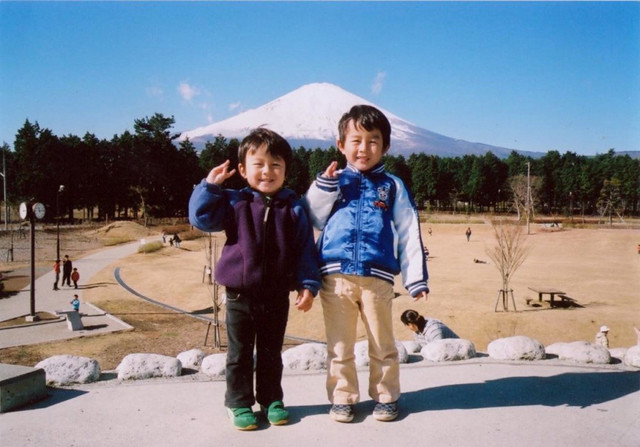
*Nope. That's not me and my brother.
Mount Fuji is perhaps the most photographed volcanic mountain in the world. Its iconic, perfectly shaped appearance (perfectly symmetrical 45 degree slopes on both side reaching to its slender necked caldera, often snow capped in winter) is instantly recognizable and fittingly figures into exquisitely coiffed Japanese culture landscape. You can see the prevalence of its presence in Japanese art- from Hokusai block prints, literature, manga to films. Visual artist Fiona Tan makes a poignant film completely comprised only of still pictures involving Mt. Fuji.

Ascent is a correspondence of two lovers in voice-overs. This fictional narrative starts with a woman (the director herself) informing us that she received a large package from her Japanese lover, Hiroshi, who has passed on. It's full of pictures of Mt. Fuji, both old and new, and she has a task of deciphering in what her dead lover was trying to convey in these pictures.

Hiroshi (Hasegawa Hiroki of Shin Godzilla and Why Don’t You Play in Hell? lends his voice here) narrates his part, as he climbs Mt. Fuji with hundreds other pilgrims (as many Japanese has been doing every season for centuries), relaying to her each step of the hike, accompanied by ordinary photos taken by hikers, often posing in front of the ever omnipresent mountain. With its elevation reaching 12,388 feet, even with hiking trails and rest stations, climbing Mt. Fuji is not an easy feat. He narrates a short poem:

Behold the sacred, magic mountain
The spiritual connection between heaven and earth
Symmetrical, solitary, snow-capped
And thus beyond reach of time

Through their narration, we find out the cultural and political significance of the mountain. As the Japanese folklore goes, Mt. Fuji is a home to Kono-Hana, the goddess of volcanoes. The presence of the mountain in popular culture was banned after the war, because westerners feared it would stir up the Japanese nationalism once again. Its perfect symmetry was broken when the volcano erupted in 1707, causing south slope of the mountain to collapse. But it's a reminder that Mt. Fuji is an active volcano. Tohoku earthquake in 2011 moved the Japanese main island of Honshu (where Tokyo and Mt. Fuji are situated) 2.4 meters eastward. Many seismologist predict the near future eruption is all but certain.

Tan explores several interesting ideas in Ascent. Using only still photographs in making the film, borrowing her dead lover's notion, she likens the photograph to ice, frozen in time, and film to fire, always moving and crackling. She co-relates grief and photographs as a means of stopping time. The active volcanic mountain, always present in Japanese psyche, is both permanent fixture and a symbol of impermanence and fragility of human life.

It's this duality that fascinates her. Mt. Fuji picture is often accompanied by cherry blossoms in the foreground. Kono-Hana is the goddess of both volcanoes and cherry blossoms. And the falling is the essence of flower. Hiroki demystifies the sacred mountain from beyond the grave that although it might look perfect from the distance, up-close, Mt. Fuji is nothing but shapeless volcanic rocks.

Contemplation of memories figure into Ascent greatly. And you can easily see the traces of Chris Marker and Alain Resnais in Tan's approach, both technically and thematically, considering both filmmakers had always grappled with the idea of memories and time- especially in La Jetée, Sans Soleil and Hiroshima Mon Amour. Ascent is a daring, visually arresting film that is also deeply poignant and beautiful.

ASCENT will have a one-week engagement, Wednesday, June 7 – 13, at Film Forum, NYC

*Film forum is showing the film with free admission, courtesy of support from the Ostrovsky Family Fund.

Saturday, May 6, 2017

Primordial

Womb (2017) - Barley
womb1
womb
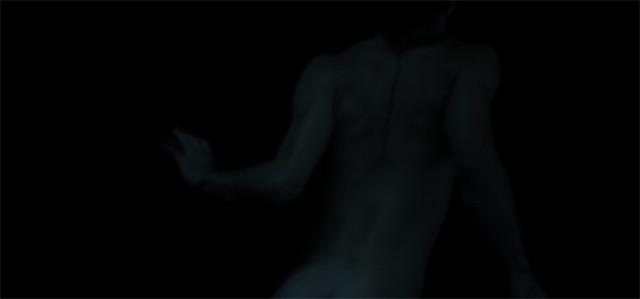
Scott Barley fixes his gaze from his native Welsh outdoors onto a human body in the darkness. Womb can be a little brother to Grandrieux's White Epilepsy, yet still unemcombered by narrative or genre conventions of traditional 'movie-making'.

There is a gaping hole in the universe in the shape of a womb. Barley's internalization of the universe is unwavering. With amazing sound design, Womb is another hypnotic concoction and nice addition to the prolific young artist's growing filmography. There is always something more primordial about Barley's work. His images are devoid of symbols or layered contexts but completely bare and visceral. And I like that about his films. Here he is furthering his cinematic adventure and exploring a new territory as an artist. I love it.

Thursday, March 23, 2017

Dancing Lights

White Ash (2013) - Pierce
White ash 2
977309a0-ce66-41d7-b20b-d14534ae5d6d_zpsxsboydem
f4cf8a60-6f0b-4404-8729-f96ed23e7006_zpsflyyq5wi
white ash 5
white ash 6
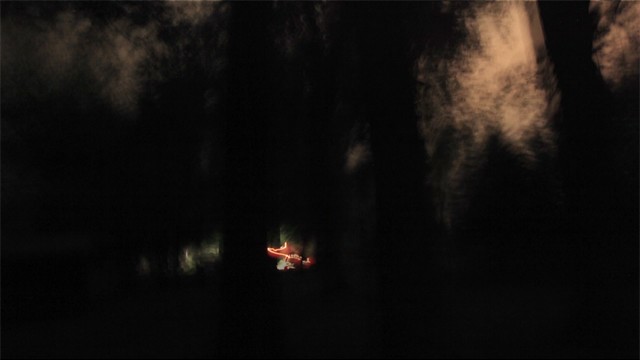
Leighton Pierce's long exposed vivid images go from familiar cityscapes (subway platform, lighting fixtures, neon streets at night) to nature - trees, clouds, night sky and water. Everything is heightened with the help of appropriate location sound - the moon and the stars dance around making squiggly lines across the sky. Distant car headlights leave multi-color trail-marks in the dark forest. The images become more and more dizzing and impressionistic. White Ash is a beautiful study in different lights and the effects of long exposure: soft lights, like indoor household lights and the daytime sky, flourescent lights in the subway make vivid squares, harder lights make trails. Besides scapes and nature, we have sketches of human bodies in water and cloud formations from the plane. Gorgeous stuff.