Showing posts with label Harun Farocki. Show all posts

Sunday, January 28, 2024

Oracle of Cinema

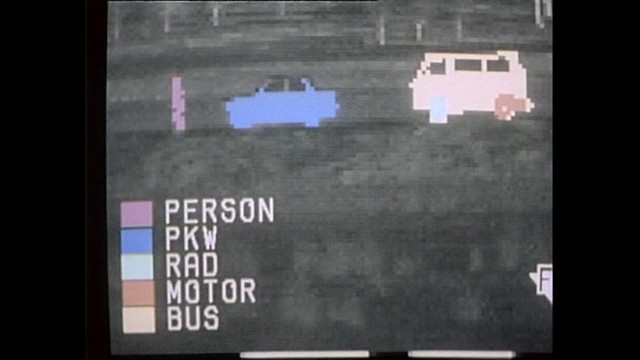
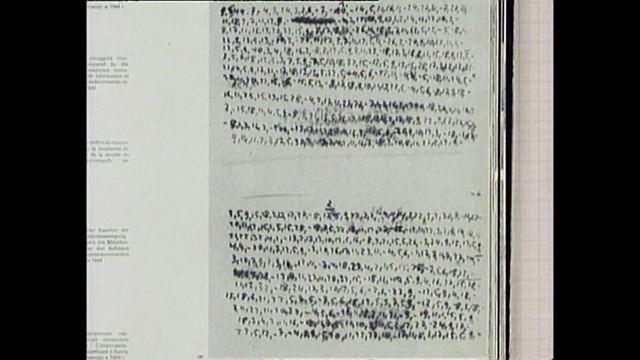
Images of the World and the Inscription of War (1989) - Farocki Screen Shot 2024-01-28 at 11.40.12 AM Screen Shot 2024-01-28 at 1.24.14 PM Screen Shot 2024-01-28 at 10.33.11 AM Screen Shot 2024-01-28 at 10.45.56 AM Screen Shot 2024-01-28 at 1.24.44 PM Screen Shot 2024-01-28 at 11.01.56 AM Screen Shot 2024-01-28 at 10.31.23 AM Screen Shot 2024-01-28 at 10.32.07 AM Screen Shot 2024-01-28 at 11.40.25 AM We first see the giant wave making machines at work in Hamburg. Scientists are trying to find the pattern in ocean waves however impossible of a task it is. Harun Farocki then connects that with the age of enlightenment and human technology. Enlightenment in German is Aufklärung which also means reconnaissance, in military terms, it's also flight reconnaissance. Photography was used for evaluators to evaluate the scale of the buildings without fear of falling to their death when measuring buildings. Photography is also used to verify the right targets in World War 2 during air raids.

Farocki rightly questions the acuities of 'seeing is believing' with the example of why Auswitz was never bombed by the Allied despite two escapees testimonials of atrocities there. It didn't look like a munitions factory and therefore not a priority. It was two Pentagon officials in 1977 who admitted that they were examining these aerial photos and clearly seeing crematorium and air vents and lines to the gas chambers.

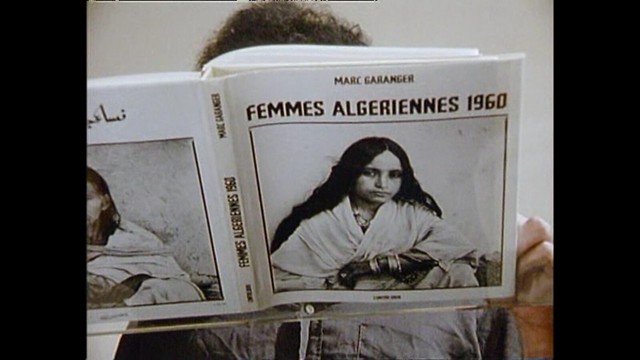
Images of the World and the Inscription of War predicts our current world - drone warfare, surveillance state, deepfake and misinformation wars in astonishing detail without ever mentioning internet or AI. A photographer from the occupying forces in Algeria took photos of Algerian women without their veils and published the photo book in 1960. At one point, a voice of a woman who has been narrating the film in absolute objectivity until then, asks, "How can a face of a human being be described with certainty, so that it can be recognized by everyone, by a machine?"

Both nazi's and concentration camp survivors took detailed records in numbers - one the evidence of genocide, the other, coded evidence for preservation and uprising.

Farocki, as a film essayist, shared many of the same traits as Godard and Alexander Kluge, but he was more direct and succinct than the other two. His ability in provoking the audience to think for themselves while guiding slightly with big ideas had no equal. With wars in Ukraine and Gaza in the internet age, the misinformation wars are raging like never before and I can't help noticing how prescient Farocki's film is.

Friday, December 1, 2023

Rehearsals for Living

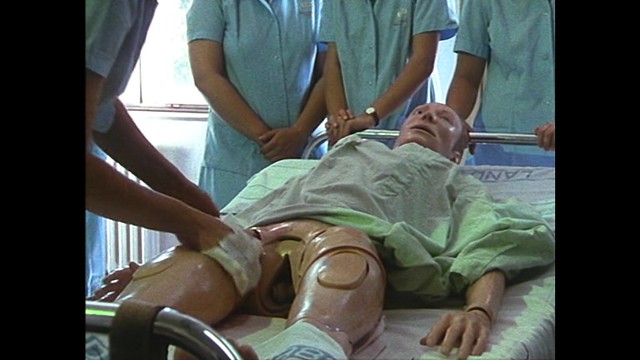
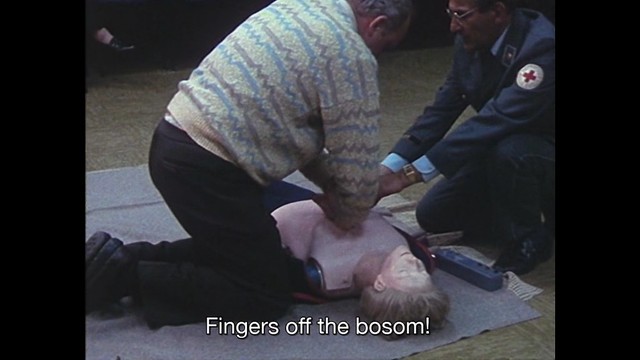
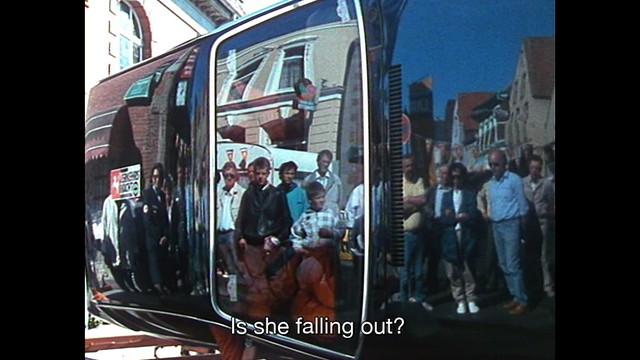
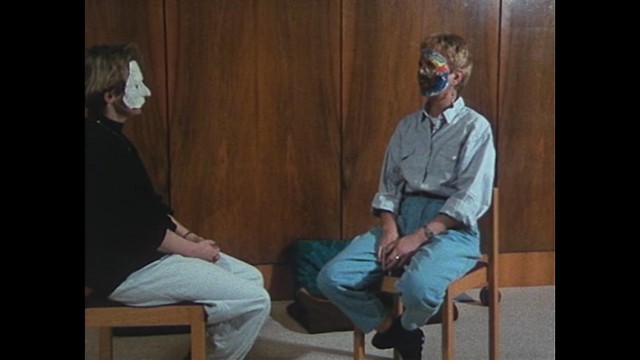
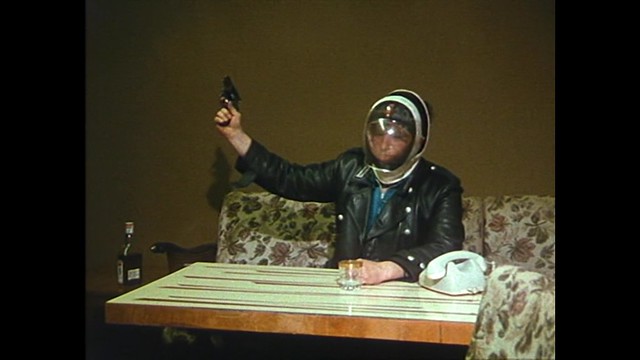
Leben - BRD/How to Live in FRG (1990) - Farocki Screen Shot 2023-11-30 at 9.05.50 AM Screen Shot 2023-11-30 at 9.49.37 AM Screen Shot 2023-11-30 at 9.01.30 AM Screen Shot 2023-11-30 at 8.42.44 AM Screen Shot 2023-11-30 at 8.38.08 AM Screen Shot 2023-11-30 at 8.34.30 AM Screen Shot 2023-11-30 at 8.26.46 AM Screen Shot 2023-11-30 at 8.11.20 AM Filmed just before the dissolution of the East Germany, but came out afterward, Harun Farocki's Leben - BRD or How to Live in FRG (Federal Republic of Germany/West Germany) stands in contrast to both, the egalitarian (East) or capitalist (West) utopias that never have materialized. He knew that the West hadn't really won the Cold War game- that there was something inherently unnatural and inhuman about the advanced capitalist system in the West. Farocki strings series of 'how to' instructional videos of all kinds from all over West Germany, where people were enacting scenarios - from birth to death, intercut them with various household products - toilet seats, washers, drawers, car doors, going through rigorous and repeat stress tests.

It's 'how to' instructions on anything in life from sex, birth, caring for child, crossing the road, interacting with clients, customers, climbing out of a wrecked car, letting others know when locked out of your house, de-escalating arguments, reprehending a gun wielding hooligan, attacking the enemies in combat, stripping even, ANYTHING. Everything is prepped early on in life. There's an instruction for everything. Unlike other 'documentaries', Farocki's non-narrated film creates its own rhythm as it equates these 'learned' human behaviors to the repeated slamming of inanimate objects. All these activities are heavy on the business transactions and also law and order. The film shows a series of rehearsals to live 'actual life' as if you are not ready to live it yet.

Leben - BRD makes you wonder about human existence before all the technologies we have now. How did human beings survive without knowing how to have a baby without hurting either mother or a baby? How do we deal with difficult people without resorting to violence? The capitalist world is so complicated that it needs an Ikea instruction mauals on everything we do? The whole endeavors seem so patronizing. But that's the point Farocki is making. In this so-called free world, you need to be told early on how to live. How is it any different than the communist totalitarian society?

Often funny yet pointy, especially intercutting between the residents of a group home discussing and organizing their grocery list for dinner and people practicing dining table manners with empty plates and learning the orders of cutlery use.

Leben-BRD will make a great double feature with Godard's Germany Year 90 Nine Zero about East-West dynamics.

Friday, April 1, 2022

Post-Realist

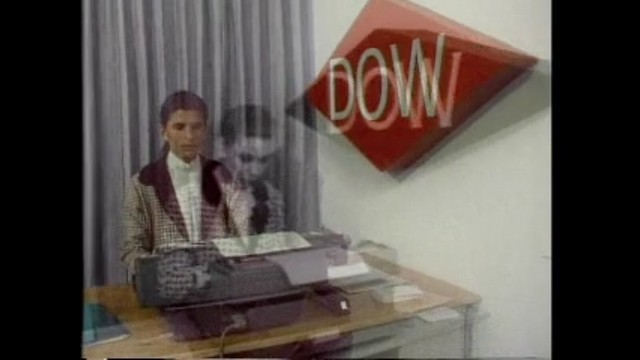
What Farocki Taught (1998) - Godmilow Screen Shot 2022-04-01 at 4.33.33 AM Harun Farocki, a German filmmaker, made a short film The Inextinguishable Fire in the late sixties. It was a fierce anti Vietnam War film that implicates not just the US Government and the Dow Chemical but it implicated the ordinary US citizens in its atrocity also, while explaining the napalm production in such a detached, scientific manner. To put it better way, instead being confrontational by showing the pictures such as the iconic 'napalm girl' or other atrocities and turned the viewers off, it explained how modern division of labor- 'the building blocks' of the Dow Chemical company, where each individual worker makes only one component of the bomb, surreptitiously hides its true intent on what those individuals are contributing in making. The film broke down scientifically how it's done and how the thought of individual responsibilities in those kind of endeavor dissolve. It was short. It was emotionless and it was to the point.

Jill Godmilow, an American experimental filmmaker, watched the film in the 90s for the first time and thought it was perfect. It was a documentary unlike any other, but far more effective than any documentaries that plead to the viewer's emotions with 'shocking' evidences. She was just disappointed that she didn't make it herself. So she decided to remake it, shot-by-shot, but this time in English and in color. She would make it in the US and closer in vicinity to where the Dow Headquarters were situated. With the colleagues and collaborators, Godmilow seeks exact copies in reenactment scenes. Farocki's minimalist and obviously fake staging of Dow Chemical offices are reenacted in the same manner. The burning of the lab rats, non-actors portraying scientists, delivering lines in monotones are exactly the same, except it's now in English and people in period costumes. Godmilow sometimes superimposes Farocki's film directly over her image, making sure that viewers see it is the exact replica. The message remains the same. The times have changed but the atrocities commited in our name have not.

Considering that, just like any other decade, 90s were riddled with wars as it is now and the modern military industrial complex is fully in place with the thought of individual responsibilities in the atrocities of war getting further and further away from our consciousness with more complex division of labor, What Farocki Taught reminds us that things haven't changed much. And it's quite remarkable the far reaching influence of Harun Farocki, as a writer, philosopher and filmmaker, to generations of filmmakers both in experimental and narrative field.

What Farocki Taught is also a good reminder of the state of what is considered as a documentary nowadays. Since the explosion of topical liberal documentaries in the 90s, the word is hijacked by the news media - every major newspaper now has its vlogs, CNN has its own documentary production division, streaming platforms are awash with its own documentary productions, all catered toward shocking revelations and appeal to your emotions with 'real footage' and 'truth seeking' manipulating viewers this way or that way. Is showing the shocking images and playing with your emotions with a narrativeized documentary a right way to go about discovering the truth? Or is the truth elsewhere, in a cellphone shot footage of war in Syria, Palestine, Yemen, Ukraine put on youtube? Our critical analysis of what we see is necessary. The context matters. How we approach to seek the truth is important. Farocki and Godmilow shows more effective way to communicate and it's valuable.