Showing posts with label England. Show all posts

Saturday, October 3, 2026

Great Equalizer

At Night (2026) - Gibson At Night_NYFF64_01_Copyright-Night Films Ltd Beatrice Gibson's At Night, shot on film and entirely at night, is a thing of beauty. It concerns a group of women as they converse about anything from family, motherhood, desire, economic inequality, to sex under dim fluorescent lights of late night cafes, restaurants and clubs, of the deserted back-alleys of Paris.

"I am a tone of voice." starts At Night, an experimental film by Gibson, making her feature debut here. Sparsely narrated by poet Alice Notley, whose book-length feminist epic poem, The Descent of Alette, is the basis of the film. We are introduced to B, a filmmaker (Gibson herself), doing location scouting for her new project, away from her partner and daughter, taking the night Metro into town. In her voiceover phone call to Didi (Diocouda Diaoune), a one time collaborator of her previous films, B lets her friend know that she is in town, is going to be near her neighborhood and wants to meet up. Their encounter comes in a little later in the film, with their story interweaving, in and out of focus, with the rest of the film.

Then there are others, six women - writer, philosopher, sex worker... all together in a restaurant, talking candidly about their life experiences, jumping from one topic to another. They talk about being naked in front of their partners, engaging in sexual activities. The lights on or off while having sex suddenly becomes an important topic. Why do we need to have 'big lights' on? "Night is for everyone, therefore more democratic," says one of the characters in JLG's Hellas pour moi. Their conversation reminded me of the quote. Indeed. Darkness hides our imperfections, our sins, our true self, therefore everyone is equal.

In their fluid conversation, nursing, parenthood, homosexuality, gender and economic disparities are all game. The night is young, the flow of their talk feels natural and limitless. It feels like watching six life-long friends just shooting shits, all captured on verité style 16mm film (shot by frequent Gibson collaborator and fellow filmmaker Ben Rivers). And it's sublime.

B runs into Didi in a 24 hour convenience store and they get an opportunity to catch up when the store loses power and they get trapped inside. Under the dim fluorescent light, the two women, sitting on the floor against the cooler, talk about life's struggles. Didi, a single mom living in a public housing, with her daughter, says that B's struggle in life is not the same as hers- different economical background, B's privilege as a white woman is checked when Didi says, "You think you win, and you think I lose…but I don’t see the point of playing a game where you’re always winning.”

Not since Chantal Akerman's Toute une nuit, night is portrayed with such warmth and melancholy like in At Night. Night is a great equalizer, but also an enabler where people can act and talk on impulses with impunity. You might regret what you are saying now. But we will worry about it tomorrow.

We run into artist/performer, Madam (Adam Christensen), in the back alley taking a cigarette break with his theater buddies, recounting a robbery, while being harassed by some young hooligans. Later we see him in full drag performing in a dimly lit club. Accompanied by his accordion, his voice is haunting. Everyone who appeared in the film shows up at Madam's show, enjoying their sisterhood, connected by music, love, guilt, and desire, all encased in velvety night. A welcome reprieve from the daytime world. At Night is a beautiful film.

Wednesday, July 24, 2024

Hare to the Throne

Starve Acre (2023) - Kokotajlo Starve Acre Parents' grief manifests into a supernatural horror in Daniel Kokotajlo's moody, slow burn Starve Acre, based on a book by Andrew Michael Hurley who also co-wrote the screenplay.

Richard (Matt Smith) has moved back to his father's estate with his family - his wife Juliette (Morfydd Clark of Saint Maude) and their young son Ewan. He is a lecturer of archeology in nearby university. With his long hair and an outsider status, Richard doesn't really get along with his colleagues and neither does Ewan, who demonstrates violent tendencies. Jules is worried about their child but Richard is not. Richard's distance from his family stems from the physical abuse he received from his father when he was a young boy. He chastises his neighbor Gordon for telling the boy about the local folktale of Jack Grey and an oak tree that can reanimate the dead. Country folks are backward and full of superstitions. But the family can't shake off the feeling that there is something spooky about the nature that surrounds their house.

Ewan suddenly dies from an asthma attack and it pulls Richard and Jules farther apart. Guilt stricken and grieving, Jules can hardly get out of bed and Richard spends much time alone digging through the mud in the yard. Harrie (Erin Richards), Juliette's sister, comes to stay to comfort the grieving mother. It's the séance performed by Mrs. Ford, a neighbor that puts the idea in Jules' head that Ewan's spirit is still around.

Richard experiences a supernatural phenomenon when the bones of a hare he dug up near the oak tree of the old folklore, slowly starts to reanimate Hellraiser style - tissues appearing around the bones, then organs and muscles, eyes and hair. Is he imagining things out of grief or does the folktale about the oak tree and Jack Grey contain some sort of truth? He first hides this ungodly occurrence. But soon enough, a fully reanimated large hare is hopping around in their house. They release the hare to the wild but it comes back, wrecking havoc in the grieving parents' minds. According to Starve Acre, a research book left by Richard's father, they need three sacrifices to finish the ritual.

Smith and Clark are superb as grieving parents who are desperate to hold on to the idea of their dead son coming back, even if it takes a physical form of an animal. Cinematographer Adam Scarth’s expansive landscape shots and tinkling score by Matthew Herbert help accentuate the film’s sodden and moody tone. Grief and the power of folklore make great combination for a creating great unsettling, atmospheric horror. Starve Acre is one of the very fine English folk horror films to come out in recent years.

Thursday, July 22, 2021

First Look 2020/21 at MoMI

After taking a Covid hiatus last year, MoMI (Museum of Moving Image)'s annual new film showcase First Look is back! Celebrating tenth year, First Look takes a peak at innovative new international cinema.

Opening Night is the NY premiere of Claire Simon’s The Grocer’s Son, the Mayor, the Village, and the World… and Closing Night is the NY premiere of Dash Shaw’s Cryptozoo.

First Look 20/21 presents 22 features and more than two dozen mid-length and short works from around the world, plus its signature “Working on It” sessions, which focus on the creative process. The festival runs from July 22nd through August 1st.

A special kick-off event for First Look 20/21 takes place at Green-Wood Cemetery in Brooklyn on July 19, with a screening of October Country featuring the world premiere of a live score by Michael Palmieri and Donal Mosher, co-presented with Rooftop Films.

The program comprises both documentary and narrative works, and live performances, with work hailing from countries including Belgium, Canada, Colombia, France, Georgia, Germany, India, Israel, Iran, Italy, Madagascar, Niger, Poland, Slovenia, South Africa, Sweden, Turkey, United Kingdom and the United States. More than half of the films are directed by women.

Please click on MoMI website for tickets and more info.

Below are what I was able to sample:

The Grocer's Son, the Mayor, the Village and the World... - Claire Simon *Opening Night Film grocers-son Filmmaker Jean-Marie Barbe has a vision for his hometown, Lussas, a rural farming community in Ardeché region of southern France. He wants to build a publicly funded independent film complex and a website dedicated exclusively to documentary filmmaking. It will be called Documentary Village of Lussas. It will be the source of attraction for jobs for the younger generation and local economy. Claire Simon of a direct cinema tradition, documents the trials and tribulations of people in Lussas - including Barbe, his team, the mayor, and local farmers taking a huge leap of faith.

Simon draws the parallels between farming - as a local farmer describes it as a huge gamble every year, where everything has to go right, that those produces people take for granted are nothing but a miracle, and Barbe's endeavor which might or might not bear any fruit. That everyone passionate in what they are doing is looking at things for the long term - for future generations. The Grocer's Son, the Mayor, the Village and the World... is an intimate and absorbing documentary with a lot of heart.


Ridge - John Skoog Ridge Taking place in Swedish farmland, Ridge examines loneliness and isolation of some immigrant farmhands and rural youth, not through dialog but controlled, wide screen visuals. The story goes that a couple of strayed cows became wild after spending some time in the ridge before they were found and brought back. The film's formalist approach - camera always slowly tracking and dollying in, gives you the ominous feeling that every move is watched, either from above or eye level and its subjects looking back suggests mutual consent.

Mingling our unprecedented technology era where everyone is isolated in his own sphere of smartphones, Ridge seems to suggest to take a trip to ever shrinking nature and enjoy the wilderness while we can.


Transnistra - Anna Eborn Transnistra Between Moldova and Ukraine, a long strip along the Dniester river, sits unrecognized breakaway state of Transnistria, where people seem to be carrying on the Soviet tradition and lifestyle. Anna Eborn, a Swedish born filmmaker follows a group of 16 year olds, consists of 5 horny boys and one girl, Tanya, from the hot days of summer to blistering winter in the rural setting as they swim in the lake, hang out in brick and mortar abandoned army barracks and tend to farm animals.

The 16mm shot documentary is intimate portrayal of friendship and love among the restless youth. Their fits of jealousy, envy, hate, euphoria as well as their hopes and dreams are all captured in sun-kissed imagery. It's a small pond story that is completely relatable and universal. Their fugu state of teen years where nothing is stable reflecting its status of their country is an apt one.


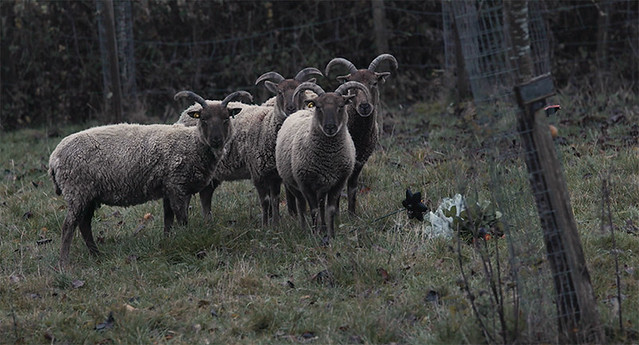
Some Kind of Intimacy - Toby Bull Intimacy As we grow older, it is inevitable to experience the death of our loved ones more and more. There might be differences in how we grieve, but the pain, and the heartache remain the same. And it is sometimes difficult to talk about how you feel. Toby Bull achieves some kind of intimacy or the fraternity of orphanhood in less than 6 minutes with his wonderful short film Some Kind of Intimacy. Through a simple phone conversation, while observing a flock of sheep trampling his parents grave in the rain, we get to contemplate our fleeting existence within the context of nature. Humor helps to dull the pain, so does shared collective melancholy.

Il mio corpo - Michele Pannetta Il Mio Corpo Sun drenched Sicily is both home for Oscar and Stanley - Oscar and his brother Roberto collects scrap metals on the side of the road under the watchful eye of their sometimes abusive father. Stanley, an African refugee, after getting a 2-year visa, stayed in Sicily and trying to eke out a living doing menial work for a local priest while helping his fellow refugee friend get his visa.
We see their daily routine simultaneously, slowly revealing what their lives are like. Il mio corpo is not unlike Gianfranco Rossi's Fire at Sea, another documentary that deals with the state of refugee crisis in the southern European country close to the African continent. But the film is much more subtle and poetic. We feel for these youngsters as they struggle in their own way, licking the bottom of the barrel in the late stages of global capitalism. Their brief, wordless encounters at the end gives hope that there's unspoken fraternity and cooperation in humanity in an ugly world.


Zinder - Aicha Macky Zinder Zinder is a city in Niger. It's known for violent youth gangs and delinquents. Director Aicha Macky is from there. And she gets an unprecedented access to the inhabitants of Kara Kara, the city's most dangerous slum. She interviews former members of palais, the youth gangs, and examine how poverty and unemployment perpetuate the unending macho culture. It starts with a jarring swastika adorned flag with 'Hitler' written on it: it's the flag of the bodybuilder's club calling themselves Hitler. They think Hitler is the name of an invincible warrior in America. Siniya Boy, the leader of the club, a former palais, is trying to build a security firm filled with fellow former gang members and friends who are currently in jail. Second chance in Kara Kara is hard to come by and the people of the slum are trying to help each other.

There is Bawo, a former gang member who is a pedicab driver. He confesses he had done some very bad things when he was young. NGO changed his outlook on things and now he is trying to help people in the city's red light district. Then there is Ramesses, a gas smuggler who overcame the stigma of being a hermaphrodite, trying to survive in Kara Kara just like everyone else.

Macky captures all these incredible stories in a seldom seen part of the world. It shows the survival and resilience of the human spirit. One of the most eye opening documentary I've seen in a while.

Sunday, May 5, 2019

A Journey Not a Destination

Notes from a Journey (2019) - Fawcett, Pais
Screen Shot 2019-05-05 at 10.02.44 AM
Screen Shot 2019-05-05 at 10.28.21 AM
Screen Shot 2019-05-05 at 10.29.03 AM
Screen Shot 2019-05-05 at 9.58.33 AM
Screen Shot 2019-05-05 at 12.22.19 PM
Screen Shot 2019-05-05 at 10.05.39 AM
Screen Shot 2019-05-05 at 12.16.30 PM
Screen Shot 2019-05-05 at 10.32.20 AM
Screen Shot 2019-05-05 at 10.03.34 AM
Screen Shot 2019-05-05 at 10.32.02 AM
Daniel Fawcett and Clara Pais, a pair of experimental filmmakers who describe themselves as two halves of a one artist, present their latest work, Notes from a Journey: a travelogue of sorts filled with startling visual and aural landscapes. And it's a thing of beauty - an examination of internal psyche through nature and vice versa. It's a great companion piece to their Studio Diaries, a series of 100 visual essays documenting their creative processes for a period of time.

Notes from a Journey starts out like a typical travelogue. We see the horizon from the train window. It's various English pastoral of greens and yellows. It's comforting to follow the outlines of the gentle hills. The uninterrupted outline of the hills and lulls of the locomotive give the sense of calm and continuation. Then the thin red line appears, going across the frame. The background color slowly changes from sky blue to black then back to blue. The line's angle changes and it moves up and down. It tricks your vision as if the line is not straight. There are hues, there are textures, there are natural and artificial soundscapes.

There is a shift in the middle of the film. The double exposure of a thorny trees with scathing noise changes the perspective of the film from our passive pair observing to them on the forefront. We see them searching and listening with modern equipment in their tent at night. What are they looking for? Merely recording the sound of nature at night, a paranormal activity, a reenactment of what field zoologist do...? We are still at the infancy of the great visual & aural medium. Daniel & Clara makes a point that they are always searching.

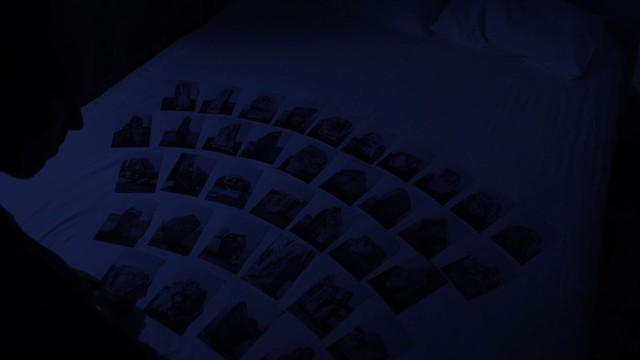
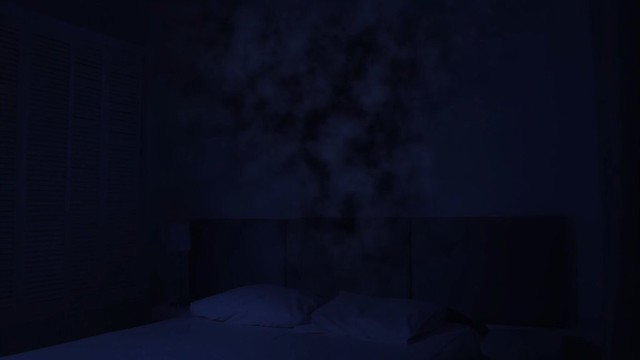
It's not the destination but it's the journey. Daniel & Clara flip through the pictures of countless standing rocks of Avebury, lay them down on the bed. It's as if they are searching for something solid, something permanent, something that will ground them. Silbury Hill in Avebury, a landmark prominently featured many times in the film, shot in different methods and formats is a man-made monument from ancient times. It's physicality and presence is tremendous, yet it is artificial. Whatever we see and feel solid and permanent, they are not. We see the silhouette of Daniel & Clara's sharp features in the dark room, then there is smoldering smoke hanging above the bed. Notes from a Journey reminds you that the illusive el dorado of cinema is not the destination but the journey itself.

Monday, March 14, 2016

Vampirism Feminism

Byzantium (2013) - Jordan
 photo fa06594d-a82c-492c-b2f8-9f7b729499bc_zpscfdljf85.jpg
I can't think anyone more qualified than Neil Jordan to direct a hardcore feministing vampire film. This sumptuous, bloody take on cold blooded, eternal beings is a total antidote to what the genre has become over the last dacade. Byzantium concerns Clara (Gemma Atherton) and Eleanor (Saoirse Ronan), a 200 year old vampire mother/sister/daughter team in England's depressed seaside towns, trying to eck out a living any way they know how. Clara works as a stripper and a prostitute to provide for her teenage daughter but seems determined to keep Eleanor out of her profession. Some vampiric men from the old order, under the guise of law enforcement, are after them because Clara defied their every rule, especially the one about creating a female kind. It's brotherhood of the vampires, sisters not allowed. The duo ends up in a small seaside town where Clara successfully seduces a local schlub who owns an old empty hotel called Byzantium. They move in and turn it into a whorehouse. Eleanor befriends a frail local boy Frank (Caleb Landry Jones) who is undergoing treatment for leukemia.

Through the series of flashbacks, the girls plight is revealed: their origins, foes and deplorable conditions they had to endure in the Victorian era.

While Ronan's classical, timeless beauty is perfect for the incorruptible eternal youth, it's Atherton who shows a great range as a tragic figure as a ferocious survivor and a protector that she is much more than a t&a. Too bad about the hunky knight of shining armor saving the day at the end. I would've liked it more if Clara kicked a little more ass. Byzantium could've easily been a not so subtle message film: the old era is no longer valid, the old way needs to be severed in order to move on, etc (it was based on a stage play by Moira Buffini). But Jordan does a terrific job, making it as an entertaining narrative with beautiful visuals. And it's touching as well.

Saturday, July 25, 2015

Guilty Conscience

An Artist of the Floating World - Ishiguro
 photo 29dc57b5-a638-43a0-9f05-3ba44edc75a7_zpsuhs3ckya.jpg
From Kazuo Ishiguro, the author of Remains of the Day and Never Let Me Go, comes a subtle condemnation of the Japan's War generation. The narrator is a once famous artist Masuji Ono who helped the war propaganda machine with his mastery skills. Now (1948-49) the war is over and his home country defeated and demoralized, Ono sees the new generation wants to erase the shameful past and move on. Triggered by his daughter's in-depth marriage negotiation, Ono slowly examines if leaving the floating world of pleasure and trivial matters of the art world in order to pursue something more important- the country's war effort with patriotic zeal, was indeed the right path to take as an artist.

I thought it was about time that I take a swipe at the Floating World for the namesake of my blog and gmail account. Nothing much really happens in The Floating World. Ishiguro is a great writer with immense talent. His writing is as subtle as ever - both Japan and England are seen as extremely polite society where hardly anyone says what's in his/her mind directly. Ono, with his deep seeded guilty conscience, everything he hears from his two daughters and their husbands, his colleagues and acquaintances has some sort of accusatory insinuations in his mind. Being an artist is a complex subject in time of war for Ishiguro: Ono is easily forgiven by society just because he is a mere artist, but not forgiven by himself who thought he was doing something right at the time which caused the nation irreparable damage. An Artist of the Floating World is a quiet but spikey examination of the aftermath of WWII Japan.