Showing posts with label Paris. Show all posts

Saturday, October 3, 2026

Great Equalizer

At Night (2026) - Gibson At Night_NYFF64_01_Copyright-Night Films Ltd Beatrice Gibson's At Night, shot on film and entirely at night, is a thing of beauty. It concerns a group of women as they converse about anything from family, motherhood, desire, economic inequality, to sex under dim fluorescent lights of late night cafes, restaurants and clubs, of the deserted back-alleys of Paris.

"I am a tone of voice." starts At Night, an experimental film by Gibson, making her feature debut here. Sparsely narrated by poet Alice Notley, whose book-length feminist epic poem, The Descent of Alette, is the basis of the film. We are introduced to B, a filmmaker (Gibson herself), doing location scouting for her new project, away from her partner and daughter, taking the night Metro into town. In her voiceover phone call to Didi (Diocouda Diaoune), a one time collaborator of her previous films, B lets her friend know that she is in town, is going to be near her neighborhood and wants to meet up. Their encounter comes in a little later in the film, with their story interweaving, in and out of focus, with the rest of the film.

Then there are others, six women - writer, philosopher, sex worker... all together in a restaurant, talking candidly about their life experiences, jumping from one topic to another. They talk about being naked in front of their partners, engaging in sexual activities. The lights on or off while having sex suddenly becomes an important topic. Why do we need to have 'big lights' on? "Night is for everyone, therefore more democratic," says one of the characters in JLG's Hellas pour moi. Their conversation reminded me of the quote. Indeed. Darkness hides our imperfections, our sins, our true self, therefore everyone is equal.

In their fluid conversation, nursing, parenthood, homosexuality, gender and economic disparities are all game. The night is young, the flow of their talk feels natural and limitless. It feels like watching six life-long friends just shooting shits, all captured on verité style 16mm film (shot by frequent Gibson collaborator and fellow filmmaker Ben Rivers). And it's sublime.

B runs into Didi in a 24 hour convenience store and they get an opportunity to catch up when the store loses power and they get trapped inside. Under the dim fluorescent light, the two women, sitting on the floor against the cooler, talk about life's struggles. Didi, a single mom living in a public housing, with her daughter, says that B's struggle in life is not the same as hers- different economical background, B's privilege as a white woman is checked when Didi says, "You think you win, and you think I lose…but I don’t see the point of playing a game where you’re always winning.”

Not since Chantal Akerman's Toute une nuit, night is portrayed with such warmth and melancholy like in At Night. Night is a great equalizer, but also an enabler where people can act and talk on impulses with impunity. You might regret what you are saying now. But we will worry about it tomorrow.

We run into artist/performer, Madam (Adam Christensen), in the back alley taking a cigarette break with his theater buddies, recounting a robbery, while being harassed by some young hooligans. Later we see him in full drag performing in a dimly lit club. Accompanied by his accordion, his voice is haunting. Everyone who appeared in the film shows up at Madam's show, enjoying their sisterhood, connected by music, love, guilt, and desire, all encased in velvety night. A welcome reprieve from the daytime world. At Night is a beautiful film.

Tuesday, June 27, 2023

The Eighties Paris

The Passengers of the Night/ Les passagers de la nuit (2022) - Hers Screen Shot 2023-05-26 at 8.22.52 AM Screen Shot 2023-05-26 at 10.15.12 AM Screen Shot 2023-05-26 at 10.39.21 AM Screen Shot 2023-05-26 at 11.31.08 AM If you are like me, who's very sensitive to noise and think modern films have become too loud, both in theaters and at home, then you might find Mikhaël Hers films to your liking. In one corner of Paris, he's been making finely tuned, melancholic urban tales of delicate human connections since the mid 2000s. And with Amanda in 2018 and now, The Passengers of the Night, he is turning his attention to the subject of family- some surrogate, some not, and away from his usual group of 20 or 30 something protagonists. It's not a question of this change is good or bad, just different. With The Passengers, his usual theme of death and grief are gone, yet the sadness and melancholy still remain. Also it takes place in Paris in the 80s, marking it his first period film.

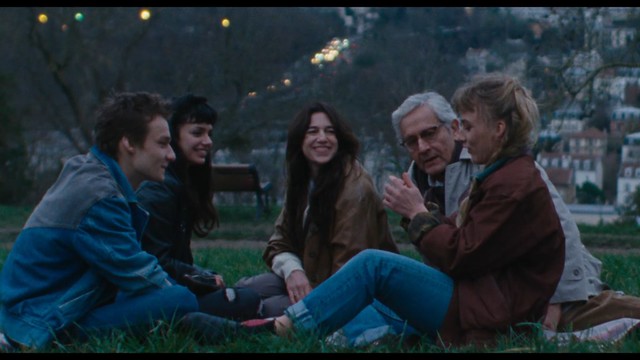
Hers's quiet, singular filmmaking seems to attract big stars also. It features Charlotte Gainsbourg in a great role as a divorced single mother, who is discovering herself for the first time. Emmanuelle Béart, the once French megastar of 80s and 90s, also makes a welcome appearance, giving a confident, nuanced performance as a late night disc jockey. There is also a relative newcomer, Noée Abita as a beautiful drifter. Hers's regular, Thibault Vinçon, is there as a love interest as well.

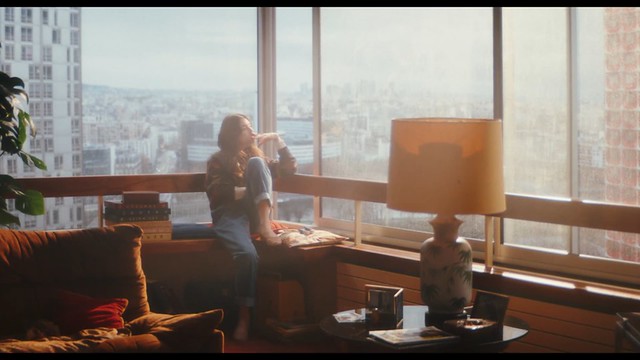
The film opens with the night of the 1981 presidential election where François Mitterrand and his Socialist party won big. There's an electricity in the air and everyone's celebrating in the streets. The title, The Passengers of the Night, is the name of a late night radio show where insomniacs and lonely souls tune in, to hear the host Vanda (Emmanuelle Béart) and talk to her on air. Her voice and wisdom are comfort to thousands of listeners. One such fan is a recent divorcée Elizabeth (Gainsbourg). She and her two growing high school age children Judith and Mathias live in a penthouse apartment with windows overlooking Paris. But since her husband left, she needs to find a job pronto. It's a scary time for Elizabeth, as she never held a job before. It is alluded that her husband left, because she had a brest cancer and went through a mastectomy. Lacking any employable skills and failing badly at menial office jobs, she writes a passionate letter to Vanda, and lands her a job at Vanda's radio station as a switch operator. Her job is to filter the listeners' calls, then connect them to Vanda on air. She and the team hit it off. Her daughter Judith is a firebrand and very into progressive politics, but her young son, Mathias is struggling in school and is rather directionless.

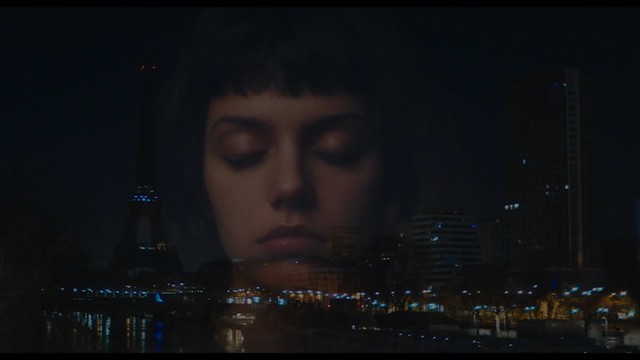
One night, a young drifter and a listener of the show named Talula (Noée Abita) shows up at the station. It turns out she doesn't have anywhere else to go. Elizabeth ends up bringing her to her flat and letting her stay in her spare room in the attic. Soon Mathias falls hard for the stunning drifter. They go to the movies, an activity that Talula says she does a lot because the movie theater is good place to go when the weather turns cold. There are hints of young people's passions and interests forming, foreshadowing their future path. But when Mathias gets too close, Talula leaves.

It's 1988, working at a library during the day, Elizabeth finds a new love in a younger man (Vinçon), Judith has moved out and Mathias now works at a local pool. One day, Elizabeth and Mathias find Talula passed out near their apartment. She has become a junkie. Same as before, they help her from the goodness of their hearts. Talula struggles with her addiction while Elizabeth and Mathias prepares to move out of the fancy apartment they've been calling home.

Hers has perhaps the gentlest touch of all French directors working today. Shot dreamily hazy with the mix of film and digital images, The Passengers combines the director's penchant for good music - the 80s in this case: Lloyd Cole & The Commotions, The Pale Fountains, Television, Low, and also pays tribute to 80's romantic cinema shot in the streets of Paris - Eric Rohmer's Full Moon in Paris, Jacques Rivette's Le pont du nord, and one of my early favorites during my formative years, Eric Rochant's The World without Pity.

No one dies or anything drastic happens in The Passengers of the Night, but as usual, Hers observes life's ups and downs and connections people make along the way. Gainsbourg is luminous as Elizabeth, giving a fine-tuned performance as a middle-aged woman finding herself in a changing world. Watching this film reminded me very much of Hou Hsiao Hsien's Tokyo set Ozu tribute, Cafe Lumiere in terms of its tone and place.