Israeli filmmaker Ra'anan Alexandrowicz's documentary Viewing Booth tells the harsh reality and ultimate failure of so-called activist filmmaking in the belief that images can change minds of those who matter the most. And it's sobering realization.
Alexandrowicz invited 7 American University students for his 'viewing booth' sessions: a studio room with monitors showing 40 published online video clips of the Occupied Territories in Palestine - a half of them from B'Tzelem - a Human Rights organization based in Israel and the other half from pro/conservative Isreali groups (such as videos put out by IDF). The subjects are asked to freely play any clips they choose to watch- they can pause at any moment and rewatch them and provide live commentaries while watching them. He films these sessions and the subjects' reactions and their comments. Enter Maia Levy, a pro-Israeli student from American Jewish household. The film turns out Alexandrowicz focusing on her because it's people like her that the filmmaker wants to reach with his films, not anti-occupation crowd or activist types (not preaching to the choir, so to speak). It's her predisposition of seeing the images - the real footages shot by Palestinian citizens in the Occupied Territories which can be seen by anyone online, that interests him.
Maia is an inquisitive young woman who thinks of herself as objective observer of the conflict, a Jew living in America. But watching those short clips of unedited footage of everyday horrors in the Occupied Territories - an announced nightly raid of masked, heavily armed Israeli soldiers going into Palestinian household, waking up sleeping children and photographing them and its aftermath - children breaking down in fear, or a settler harassing Palestine women and children in cages, calling them unspeakable names, or Israeli teens throwing rocks at a Palestinian woman videotaping them and soldiers just standing by in the background, not responding to the cries for help, etc, although she sympathizes with the oppressed, she is quick to find many faults in what she is presented with: without proper contexts, these clips are manipulative or worse yet, staged to make Israel look bad. Because of her upbringing or background of whatever, she is predisposed to question what she sees and distrust whatever is deemed by anti-Israel.
It is also telling that Maia says that she is influenced by TV shows like Netflix's Fauda and reality shows that everything is already fabricated and you can't always trust these 'real' footage's authenticity. Is she telling the truth or is it a justification for her predisposed condition? but in equal footing, she also doesn't like what IDF puts out - Palestinian kids coming up to Israeli soldiers and hugging them and the soldiers giving them food. She thinks that's corny and detrimental to portraying Israel as being good.
The filmmaker asks her again to come in after 6 months of their first session. Because obviously she is the emblem of the target audience and why he is in the profession in the first place - to change their belief system with his films. She is educated, smart, curious enough to seek out those clips by B'Tzelem even though many of them will be uncomfortable and depressing to watch. It's very much like some of my so-called liberal minded friends watching Fox News to see 'what the other side is like, so I will know how to defend myself'.
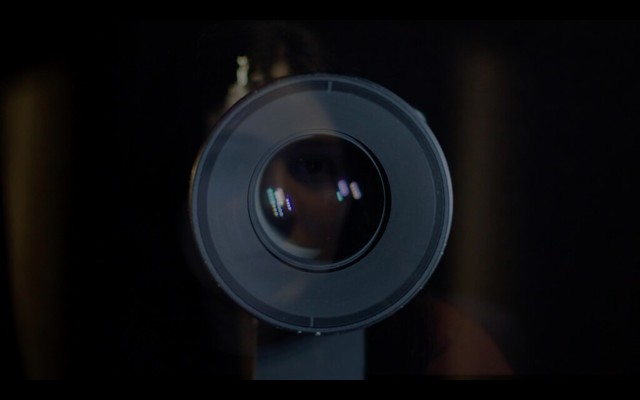
Alexandrowicz thinks these things aloud to understand clearly where the divide lies - particularly for me as an outside observer, seeing these clips immediately makes me think, "wow, this is their everyday reality," rather than "this looks staged." Obviously, those activists films, documentaries like 5 Broken Cameras by Guy Davidi & Emad Burnat isn't going to change my mind because I'm already with the anti-occupation crowd. But The Viewing Booth concludes with the sobering realization that there is a limit to what images, let alone films, can change someone's engrained belief system, even if it's not fictional film but filmed reality. The intermediary of the mere 'lens' between Maia and the reality already puts a divide that she will not cross. The Viewing Booth is a sobering film that bruises the ego of any self-congratulatory, circle jerky liberal documentarians who genuinely think they can change the world. Sorry, you can't reach the ones who matter the most.
Alexandrowicz invited 7 American University students for his 'viewing booth' sessions: a studio room with monitors showing 40 published online video clips of the Occupied Territories in Palestine - a half of them from B'Tzelem - a Human Rights organization based in Israel and the other half from pro/conservative Isreali groups (such as videos put out by IDF). The subjects are asked to freely play any clips they choose to watch- they can pause at any moment and rewatch them and provide live commentaries while watching them. He films these sessions and the subjects' reactions and their comments. Enter Maia Levy, a pro-Israeli student from American Jewish household. The film turns out Alexandrowicz focusing on her because it's people like her that the filmmaker wants to reach with his films, not anti-occupation crowd or activist types (not preaching to the choir, so to speak). It's her predisposition of seeing the images - the real footages shot by Palestinian citizens in the Occupied Territories which can be seen by anyone online, that interests him.
Maia is an inquisitive young woman who thinks of herself as objective observer of the conflict, a Jew living in America. But watching those short clips of unedited footage of everyday horrors in the Occupied Territories - an announced nightly raid of masked, heavily armed Israeli soldiers going into Palestinian household, waking up sleeping children and photographing them and its aftermath - children breaking down in fear, or a settler harassing Palestine women and children in cages, calling them unspeakable names, or Israeli teens throwing rocks at a Palestinian woman videotaping them and soldiers just standing by in the background, not responding to the cries for help, etc, although she sympathizes with the oppressed, she is quick to find many faults in what she is presented with: without proper contexts, these clips are manipulative or worse yet, staged to make Israel look bad. Because of her upbringing or background of whatever, she is predisposed to question what she sees and distrust whatever is deemed by anti-Israel.
It is also telling that Maia says that she is influenced by TV shows like Netflix's Fauda and reality shows that everything is already fabricated and you can't always trust these 'real' footage's authenticity. Is she telling the truth or is it a justification for her predisposed condition? but in equal footing, she also doesn't like what IDF puts out - Palestinian kids coming up to Israeli soldiers and hugging them and the soldiers giving them food. She thinks that's corny and detrimental to portraying Israel as being good.
The filmmaker asks her again to come in after 6 months of their first session. Because obviously she is the emblem of the target audience and why he is in the profession in the first place - to change their belief system with his films. She is educated, smart, curious enough to seek out those clips by B'Tzelem even though many of them will be uncomfortable and depressing to watch. It's very much like some of my so-called liberal minded friends watching Fox News to see 'what the other side is like, so I will know how to defend myself'.
Alexandrowicz thinks these things aloud to understand clearly where the divide lies - particularly for me as an outside observer, seeing these clips immediately makes me think, "wow, this is their everyday reality," rather than "this looks staged." Obviously, those activists films, documentaries like 5 Broken Cameras by Guy Davidi & Emad Burnat isn't going to change my mind because I'm already with the anti-occupation crowd. But The Viewing Booth concludes with the sobering realization that there is a limit to what images, let alone films, can change someone's engrained belief system, even if it's not fictional film but filmed reality. The intermediary of the mere 'lens' between Maia and the reality already puts a divide that she will not cross. The Viewing Booth is a sobering film that bruises the ego of any self-congratulatory, circle jerky liberal documentarians who genuinely think they can change the world. Sorry, you can't reach the ones who matter the most.