Wednesday, December 20, 2023

Top 20 Favorite Films of 2023

What a year. Feels like everything fell apart and went to hell this year. Everything was bad...except for cinema which was exceptionally good. So, L O N G L I V E C I N E M A ! ? !

Missed Fallen Leaves, About Dry Grasses, La Chimera and Poor Things. Maybe next year. Happy Holidays folks!

Pacifiction, Unrest, Trenque Lauquen, Dry Ground Burning, Showing Up ended up in my 2022 Favorite list.

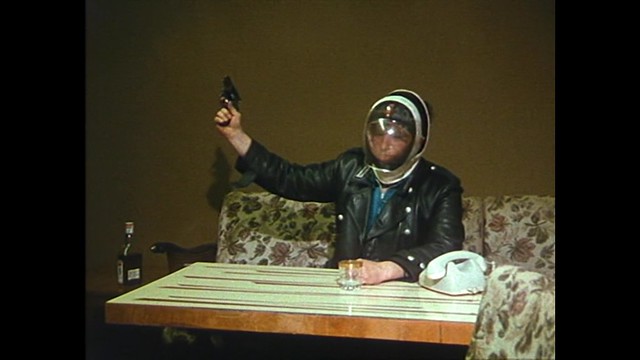
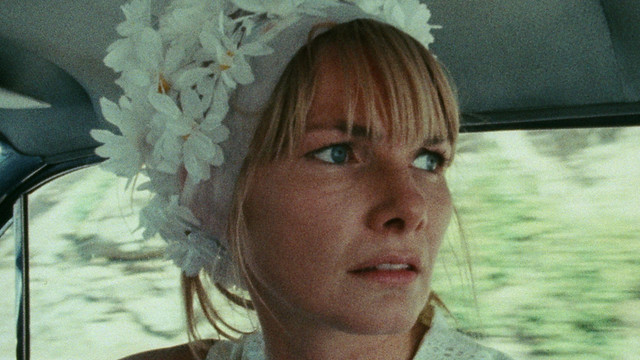
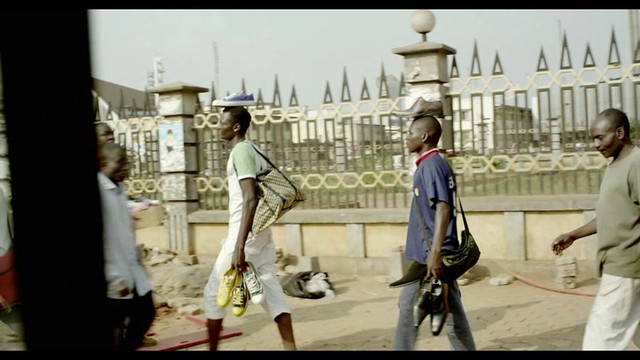
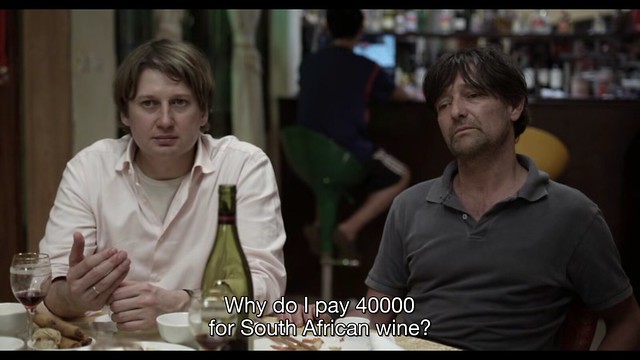
1. La bête/The Beast - Bonello The Beast With arresting visuals and seductive filmmaking, Bonello has been chronicling our troubled 21st century like no other, with a string of films that are pretty, but not too pretty: House of Tolerance (sex workers rights), Nocturama (aimless angst of youth), Zombie Child (haunted by colonialism). and most recently Coma (Covid-19 lockdown). This time, Bonello is freely adapting Henry James's turn-of-the-century novella, The Beast of the Jungle. It tells of two would-be lovers forever beset by a sense of doom always hovering over them. It is a good parallel he is drawing with the state of things here and now. The dawn of the 20th century was an exciting time, both socially and politically. And the possibilities with the advancement in science and medicine were endless, at least for the citizens of the first world. But there was also volatility in every corner of the street. Violence, disease, extreme wealth and poverty and uncertainties everywhere.
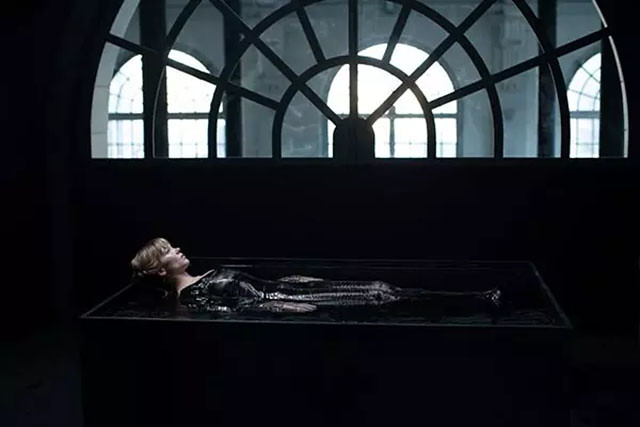
Bonello taps on that anxiety with The Beast, which is a beast of a film, with all these hefty ideas swirling around and stylized to perfection. It is also greatly helped by mesmerizing performances by Léa Seydoux and George MacKay. This timeline-jumbled, massive film is set in three distinctive time periods (1904, 2014 and 2044); Bonello effortlessly shifts from one point to another.

2. A Little Love Package - Solnicki A Little Love Package It's 2019. Vienna, the last bastion among the European cities where smoking in cafe has been allowed, bans smoking indoors. It's the end of an era. Two women, played by Angeliki Papoulia (Dogtooth) and Carmen Chaplin are looking for a house to buy. One is rich and very picky about her choices and the other, her interior designer is getting frustrated as her suggestions get rejected one after another. The rich woman's child wants private music lessons from a Korean pianist in Vienna, because she doesn't like the strictness of the music conservatory. After the rich woman finds an apartment, Carmen, the interior designer, travels back to her home in Malaga to visit her aging parents and argue with her sisters about the future of their home and parents.
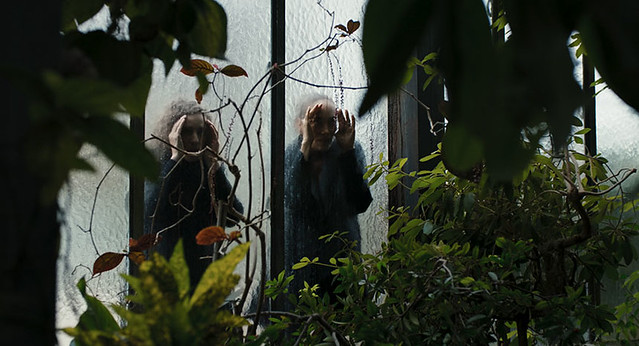
Shot beautifully by Rui Poças (Tabu, Zama, The Ornithologist), A Little Love Package is loosely associated ideas and images with free-flowing narrative. Argentine Gastón Solnicki's experiments with improvisation using, for the first time, professional actors and also their real family, bear interesting results that are oddly engaging and greatly liberating.

3. Musik - Schanelec Screen Shot 2023-06-09 at 1.45.29 PM Angela Schanelec's new, nearly silent film, simply titled Music, is supposedly 'freely' based on the Greek Myth of Oedipus. It might be the most enigmatic offering from the esteemed German director. But its depiction of melancholy and fragility of human life is nevertheless so beautiful and timeless, I can't help tearing up by the end.

4. Coma - Bonello Screen Shot 2023-05-12 at 3.39.38 PM From 9/11 to Iraq War to major economic crisis in 2008, to global warming then now to the pandemic, the Generation Z has been through a lot in their short semi-adult life. With its crazy kaleidoscopic images and sounds, the short film is an amalgam of what the short-attention-span generation has been going through psychologically and emotionally during the lockdown. But more than anything, Coma is a compassionate love letter from Bonello to his daughter Anna who just turned 18, and to her generation. We do not know what the future will bring. He ends with spectacularly frightening images of natural diasters- giant ice shelf melting off, abalanches and volcanic eruptions- some anthropocene and some not, either cases we have no control over anyway. Coma is more like Bonello saying, "Sorry kids, but at least I understand what you are going through, but the sun rises again tomorrow."

5. Roter Himmel/Afire - Petzold Afire The film tells a lot about the self-absorbed world in the face of climate change and global catastrophe unfolding. You might ask, 'Leon can't be that thick headed. How is he a friend with good natured, younger, optimistic Felix?' 'There's no chemistry between Leon and Nadja, how can he declare his love for her?' and so on. Afire is also about creative process and self-reflection. And it's beautifully, deliciously constructed by the master storyteller. It's as if Petzold saying get out of your head once in a while and look around you because if you don't, it might be already too late.

6. Retour à Séoul/Return to Seoul - Chou Screen Shot 2023-04-27 at 9.50.02 PM First time actress Park Ji-min's performance is a revelation. She makes Freddie a strong willed, fascinating young woman in search of herself. Her magnetic presence makes her always watchable. Seeing from the perspective of an adoptee and a modern woman in a still very patriarchal society, Return to Seoul is a visceral journey toward self-discovery. The quiet ending reminds me a lot of Drive My Car. Return to Seoul has that novelistic quality about it that I like.

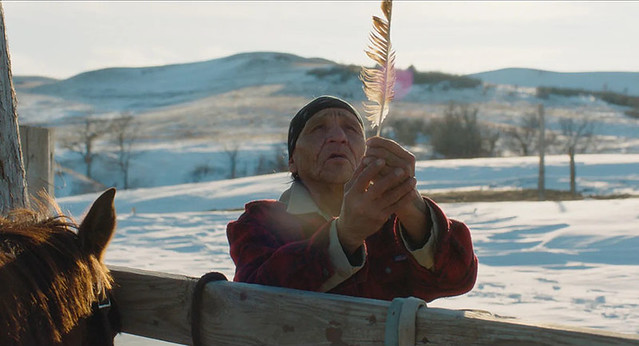
7. Eureka - Alonso Eureka Argentine filmmaker, Lisandro Alonso, breaks 9-year silence with Eureka, after Viggo Mortensen starring meta-western Jauja. In an episodic structure, the film freely contemplates the state of indigenous people of the vast American continents, the past and present, as well as their uneasy relationship with cinema. It's perhaps his most expansive and ambitious film to date. He digs deep into the distorted representation and history, the effect of colonialism and the influence of Western culture that displaces the natives who are left out of place and out of time. Using his minimalist, elemental way of filmmaking, combined with Deleuzean look at time-image non-linear approach and Native American spirituality, Eureka is a deeply contemplative, perplexing film.
8. Nu aștepta prea mult de la sfârșitul lumii/Do Not Expect Too Much of the End of the World - Jude Screen Shot 2023-12-15 at 10.46.01 AM Biting and thought provoking, Don't Expect Too Much is a perfect survey of the state of our lives right now. Jude, along with Assayas and Bonello, is a master chronicler of ever changing, ever so complicated world we can't make sense of anymore. It's fun, it's tragic. All we can do is go along with the flow, like Taoists saying.

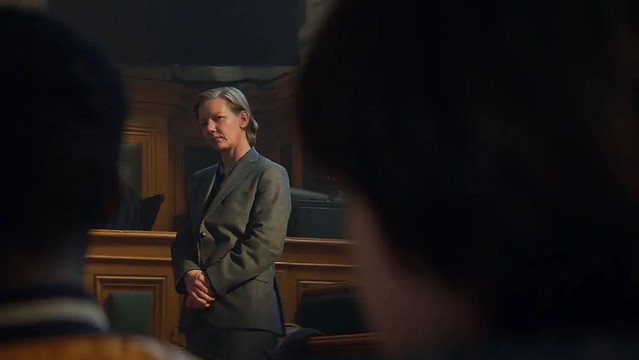
9. Anatomie d'une chute/Anatomy of a Fall - Triet Anatomy of a fall Well tuned and balanced, Anatomie d'une chute is a revealing film about this day and age where patriarchy and everyday sexism is slowly losing its grip on our society (or lets hope). Sandra Hüller again, is fast becoming the heroine we need in this social climate. Also, Triet, as with Sybil, examines the nature of art and literature- the art immitating life, plagiarism and even autofiction in a very captivating way.
10. Perfect Days - Wenders Screen Shot 2023-12-10 at 8.40.51 AM There's a very zen-like quality in Perfect Days. Is that Wenders converting the Buddhism late in life? There's a scene where two grown men, one dying of cancer, playing shadow tag, like little children. Perfect Days is a guiless movie that makes you think about enjoying simple things in life. Forget about the complicated life you are leading in a complicated world for a second. Play childish games once in a while and enjoy the moment.

11. Retratos fantasmas/Pictures of Ghosts - Mendonça Filho Pictures of Ghosts Pictures of Ghosts is a loving, intimate documentary on ephemeral nature of our lives. Our loved ones grow old and die, buildings get torn down, video footages disintegrate, but there is evidence of those lives lived and experienced all over, if you know where to look. Combining his own experience and his love of cinema, Mendonça Filho serves as our expert guide to his beloved city of Recife. The movie ends with whimsical taxi ride, throwing shades on Hollywood's superhero movies. The 80s Michael Mann vibe with night lights reflecting on the car, as it rides the bridge at night with smooth jazz - reminds the audience that the Brazilian director undoubtedly grew up loving the 80s Hollywood cinema.

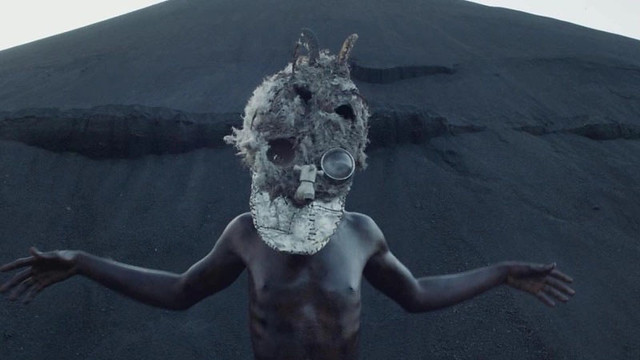
12. Augure/Omen - Baloji Omen With multiple storylines and characters, Omen introduces a different kind of storytelling that the Western filmmaking is not used to. Much like Anisia Uzeyman and Saul Williams’s Neptune Frost couple years back, the film is not bound to a straightforward narrative. Presenting a multicultural society in flux, where things clash with each other for dominance, the film’s colors and texture vie for your attention. It takes everything from everywhere – from the Democratic Republic of Congo, South Africa, and multiple other African nations, even from the Creole culture of Louisiana. The film is mainly told through sensations and visual poetry. It’s in Mujila’s breastfeeding the river in the beginning of the film with purple milk as purple milk slowly spills out. It’s in a decrepit school bus full of pink dress wearing street urchins violently being towed. It’s in a group of women mourners crying until the floor of the house is ankle deep with their tears. It’s in witch doctor trying to exorcise a couple with sexually transmitted disease by painting their bodies and pelting them with a tree branch soaked in palm oil. Omen is a truly unique experience to be had. Using the magical realism and symbolism steeped in tradition old and new, the film is a kaleidoscopic picture of bustling Africa that is here and now.
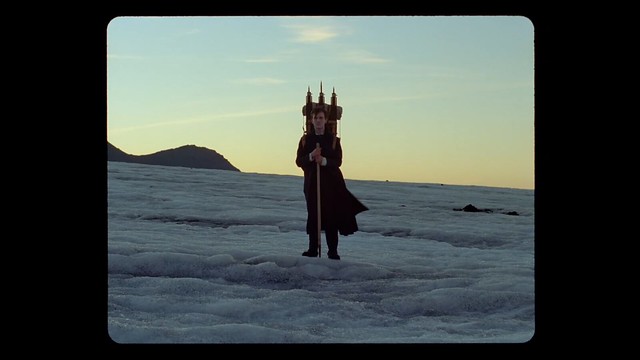
13. Godland - Pálmason screen shot 2023-01-24 at 9.36.43 pm With its circle of life ending, Godland is a contemplation of us humans’ fleeting existence on earth. In a true Herzogian sense, with large brushstrokes, Pálmason draws a grand allegory that we are after all, elemental. And it's magnificent.
14. Human Flowers of Flesh - Wittmann Screen Shot 2023-04-07 at 9.22.56 AM We see forever undulating sea on the deck and through the round windows from inside the ship, the horizontal sea level bobbing up and down as the ship sails through the waves. Just like her first feature Drift, Helena Wittmann presents long stretches of these scenes that has its own hypnotic rhythm. The ship crew converse in many different languages - English, German, Arabic, Portuguese, Greek and so on, yet nothing is explained about their background. Instead, Wittmann concentrates on the film's visually blissful moments - the shimmering sunlight reflected on the waves just below the deck, a piece of reef Ida brought from Antigua being passed around the crew, a dance party on the deck at night with colorful flags and lights gleaming and the blue sea as Ida (Angeliki Papoulia) swims back and forth. There are some show stoppers like the camera plunging into the blue depth to find a wreckage of a downed WWII plane at the bottom of the ocean floor. The film's full of sensual images that recalls Claire Denis films. But I think Wittmann's aim here is different. In her hands, the gleaming water and the sun are the subjects. They are vital to human life and we see that in Ida and her crew's uneroticised browned skin.

15. How to Blow Up a Pipeline - Goldhaberhow-to-blow-up-a-pipeline-film The matter of fact presentation of bomb making and careful planning are the meat of the film. How to Blow Up a Pipeline plays out like a great little thriller. Their meticulous plan hit a snag when the rope holding the heavy barrel containing the bomb breaks, but despite the setback, they carry out the attack. The twist at the end is well earned as well. How to Blow Up the Pipeline is a compelling film. It is a justifiably angry film for the generation out of time and out of options.

16. Rewind & Play - Gomis File_000 At the end of his European tour in 1969, Thelonious Monk appeared in Jazz Portrait, a French TV program. Director Alain Gomis (Félicité) gets a hold of the rushes of that taping & plays around with some very candid moments that reveal how Monk was viewed vs. how he carried himself in real life. The best part is obviously him playing ‘round Midnight, sweating profusely, as if nothing else existed around him but the grand piano.

17. Passages - Sachs Ira-Sachs-PASSAGES-Still-3-Franz-Rogowski-–-Courtesy-MUBI Past experiences shape who we are. It's the reflection of the things past that makes one grow as a person. Therefore, Ira Sachs's new film Passages, is a snapshot of a person going through that process of growth, for better or worse. It's a mature film in more ways than one and a realistic look at modern relationships. Passages highlights the true acting talent of great German actor Franz Rogowski (Transit, Undine, Great Freedom) because he is phenomenal in this sexually charged character study.
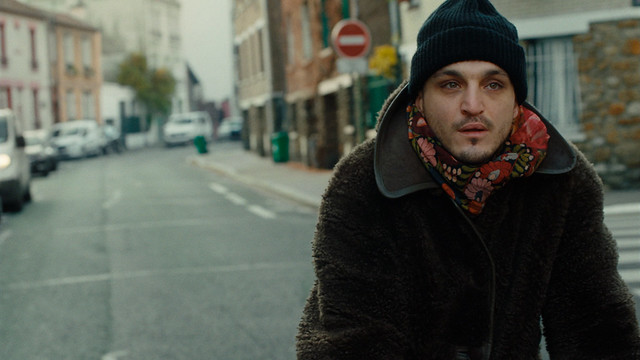
18. Le otto montagne/The Eight Mountains - Groenigen, Vandersmeersch Screen Shot 2023-04-21 at 3.35.16 PM The strength of The Eight Mountains is its complex depiction of a male friendship. It speaks volumes in their knowing glances and silences as they spend time together up in the mountains. Our circumstances change but the mountains don't. It illustrates men's ultimate desire and to retreat from the human world and finding it futile. As they grow older, Pietro and Bruno understand this connundrum, and take refuge in each other's company. This all sounds corny as hell in words, but van Gronigen and Vandermeersch's earnest approach works beautifully, with awe-inspiring views of nature and superb, stoic acting by the two leads. Swedish singer Daniel Norgren's soulful, melancholic soundtrack does here what Leonard Cohen did for McCabe & Mrs. Miller.
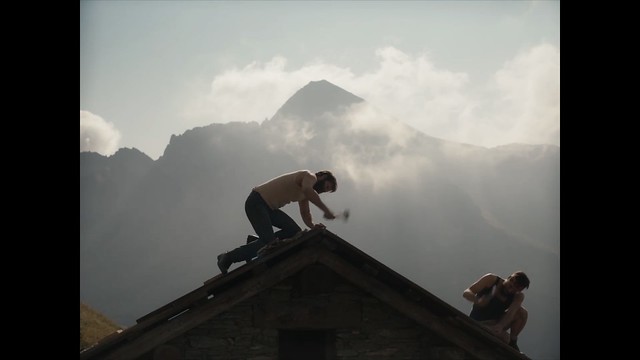
19. Remembering Every Night - Kiyohara Remembering-03_s_N0A3551_GuamaUchida and Ai Mikami copy Remembering Every Night captures the unseen-world of delicate web that connects us all together. The film's very much in the same vein as Hamaguchi Ryusuke's 2021 crowd pleaser, Wheel of Fortune and Fantasy but from a different, quieter, less punctuated angle. The film's nostalgic tone, imbued with contemplation of time, memories, loss of memories and longing, lingers long after its credits roll.

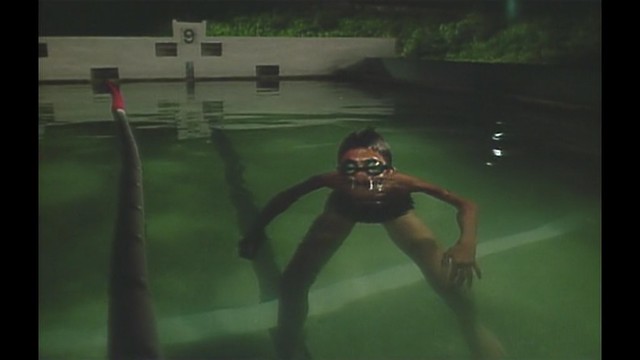
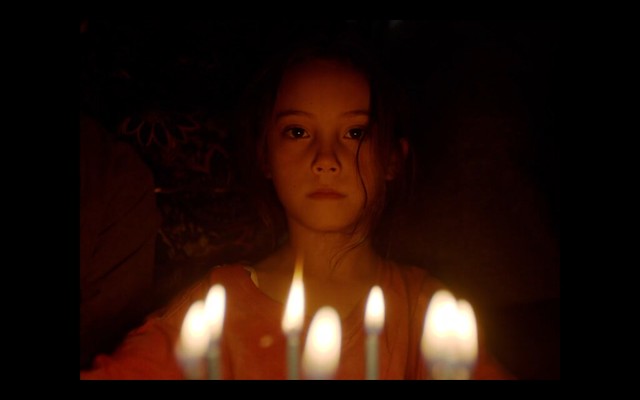
20. Tótem - Avilés Screen Shot 2023-09-01 at 11.01.23 AM We often try our best to shield children from the ugly world of grownups: responsibilites, money, parenthood, guilt.... Young Naíma Sentís, like Anna Torres before her in Victor Erice's Spirit of the Beehive, shines as a young, innocent child full of life, but who is old enough to realize that there's something awry about adulthood. Death is something we experience more and more as we grow older. It changes you and perhaps makes you grow up faster. The ending shot of young Sol looking straigth through the birthday cake candles, conveys that understanding without saying any words. Delicate and infinitely patient in her storytelling, Avilés let the film play out reach where it ends as it is supposed to. A beautiful film.
Friday, December 15, 2023

Go with the Flow

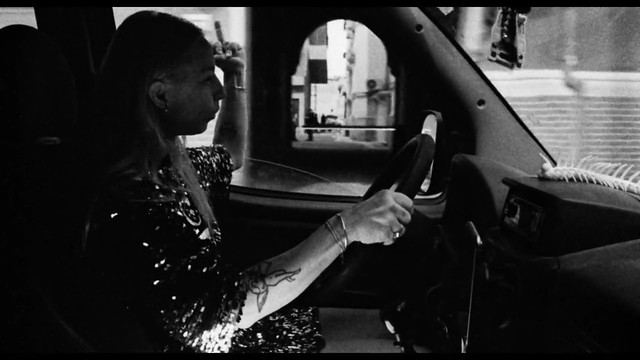
Do Not Expect Too Much from the End of the World (2023) - Jude Screen Shot 2023-12-14 at 8.54.14 AM Screen Shot 2023-12-15 at 10.56.40 AM Screen Shot 2023-12-15 at 10.46.01 AM Screen Shot 2023-12-14 at 8.35.58 AM Screen Shot 2023-12-14 at 8.44.45 AM Screen Shot 2023-12-14 at 8.44.58 AM Screen Shot 2023-12-15 at 8.49.07 AM Screen Shot 2023-12-15 at 11.27.55 AM As with his previous film, Bad luck Banging, Radu Jude's new film Do Not Expect Too Much from the End of the World is unsparing, uproarious satire that implicates everyone in this needlessly complex society we live in. And it's loads of fun. It's a frenetic, 'moving' picture as we take the passenger seat in a van driven by Angela, a hard-working production assistant of a PR firm, Forbidden Planet, hired by Austrian furniture company. Angela's Tik Tok filtered alter-ego is known as Bobita, a bold headed, thick unibrow and bearded dudebro who spews the vilest, sexist, racist rant with six thousand followers. She spends most of her time in her car driving because her job requires driving and interviewing potential workplace accident victims, one after another, who could be featured in the company's safety promotional video. And every chance she gets, she becomes Bobita anywhere.

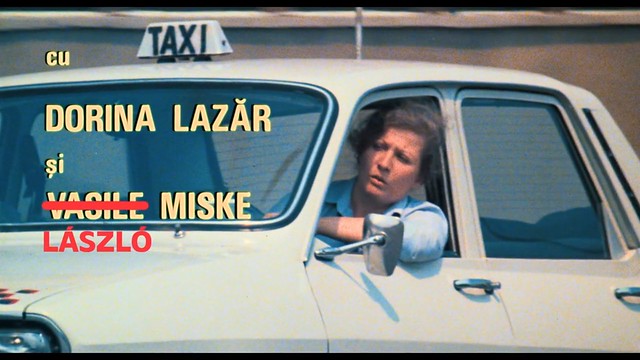
Angela's hectic daily routine is intercut with an early 80s Romanian melodrama called Angela Moves On, about a wholesome female taxi driver and her life, as she drives from place to place in Bucharest. The film juxtaposes the changes in the streets and neighborhoods from Ceaușescu era. Many anecdotes, and musings of all the characters concern the reality today's Romania and of the world.

Jude's playfulness is infectious. The actress who plays Angela the cab driver makes an appearance as the character in the film. She plays a mother of a man on a wheelchair who was chosen to be in the promotional video. The man plays himself who was a victim of the workplace accident that is obviously the fault of the company for its negligence.

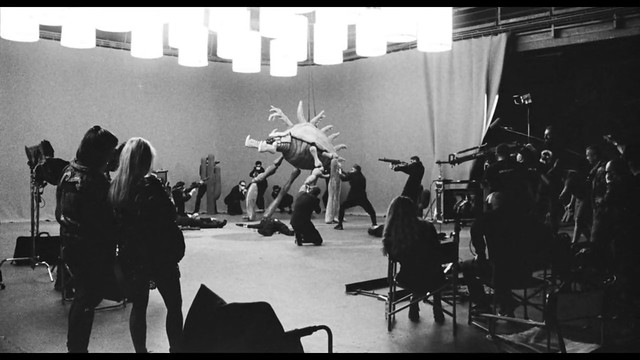
German Actress Nina Hoss plays the Austrian boss Doris Goethe (yes that Goethe), whose furniture company is leveling Romanian forests, Uwe Boll, the German b-movie director also makes an appearance as himself, directing a monster CGI movie in the green screen backdrop.

However hilarious, the film is not all laughs. In the middle of its 2 hrs. 30 min. running time, he devotes a good 4 minutes to feature a silent segment composed of hundreds of crosses that are strewn about along the highway which Angela describes as the 250-kilometer highway with 600 crosses, while giving Doris Goethe a ride to the hotel. Puzzled Doris asks what it means. It's a one-way road that has a very narrow emergency lane, but no one follows that. They use it as if it's two-way roads. "That's very stupid." Doris responds. "We are!" Angela responds. Nothing works the way it's supposed to. Corruption is everywhere. In the EU, Romania is the poorest country, she says. Maybe except for Albania. They are primitives, Angela utters.

Biting and thought provoking, Do Not Expect Too Much is a perfect survey of the state of our lives right now. Jude, along with Assayas and Bonello, is a master chronicler of ever changing, ever so complicated world we can't make sense of anymore. It's fun, it's tragic. All we can do is go along with the flow, like Taoists saying.

Wednesday, December 13, 2023

Top 10 Discoveries 2023

Crazy depressing year 2023 has been. The news feed is too scary to look at. Covid is still around. Makes you wonder what disasters the new year's going to bring.... But there's cinema and we take consolations from it. And I've discovered many good films this year. Being in school helps too. So, in alphabetical order:

Daïnah la métisse/Dinah the Black Girl (1932) - Grémillon Screen Shot 2023-08-09 at 12.08.44 PM A murder and racial/class politics in an ocean liner headed to New Caledonia in the South Pacific. Starring stunning Laurence Clavius as a temptress at sea who yearns to be free. Restored from a nitrate negative by Gaumont Pathé Archives in 2018.

Une femme mariée/A Married Woman (1964) - Godard screen shot 2023-01-14 at 11.49.42 am Godard's take on women being objectified in the consumerist 60s is on full display here. Also the talk of holocaust hangs like a cloud. Charlotte doesn't know what Auschwitz is as the men talk about it on the way back from the nazi trials in Hamburg. Biting and provocative.

The Housemaid (1960) - Kim Screen Shot 2023-08-25 at 12.48.19 PM s it the puffy tail that makes all the difference between a rat and a squirrel? You might have achieved the goal of becoming petit-bourgeoisie by having a pet squirrel, but you will always have rat poison hidden away in the cupboard. The Housemaid pokes at these conundrums of living in a rapidly developing capitalist society.

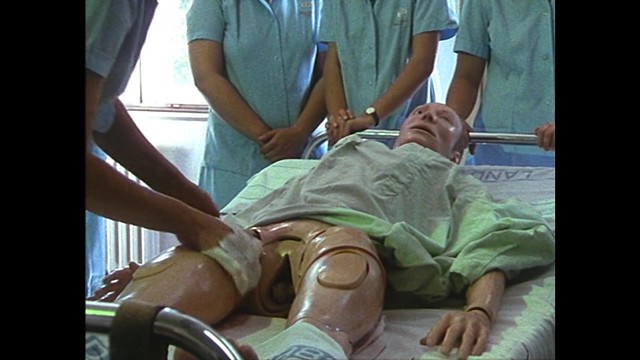
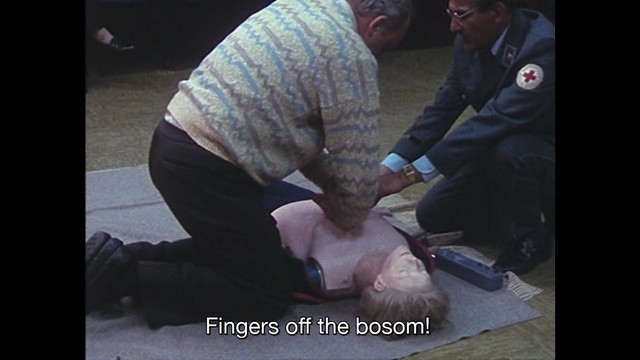
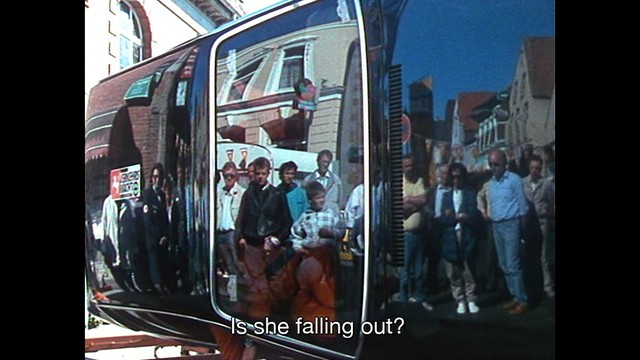
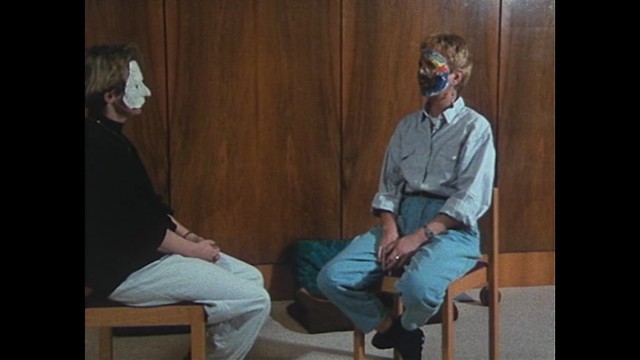
Leben - BRD/How to Live in FRG (1990) - Farocki Screen Shot 2023-11-30 at 9.05.50 AM Filmed just before the dissolution of the East Germany, but came out afterward, Harun Farocki's Leben - BRD or How to Live in FRG (Federal Republic of Germany/West Germany) stands in contrast to both, the egalitarian (East) or capitalist (West) utopias that never have materialized. He knew that the West hadn't really won the Cold War game- that there was something inherently unnatural and inhuman about the advanced capitalist system in the West. Farocki strings series of 'how to' instructional videos of all kinds from all over West Germany, where people were enacting scenarios - from birth to death, intercut them with various household products - toilet seats, washers, drawers, car doors, going through rigorous and repeat stress tests.

Schlafkrankheit/Sleeping Sickness (2011) - Köhler Screen Shot 2023-11-02 at 9.27.17 AM Sleeping Sickness is a complex film that says a lot about colonialism and its ugly symbiotic relationship in capitalist society. As a German directed film with a German main character, the subtext of losing one's identity in a global capitalist system and yearning for some sort of metamorphosis is quite striking.

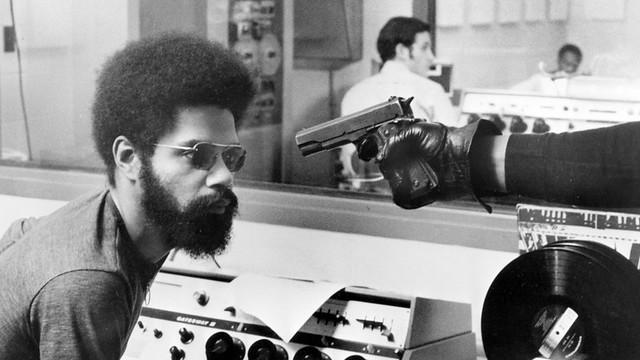
The Spook Who Sat by the Door (1973) - Dixon 5cf0379e2343f Taking advantage during the integration era, a black man named Don Freeman, patiently works up the ranks as a token black CIA agent, learning everything he could while being a model employee and in turn use all the knowledge he acquired into an urban armed guerrilla warfare in his native Chicago against authorities. By the end, the film advocates armed uprising by the disenfranchised blacks in every major city in America. A radical film by African American director Ivan Dixon and writer Sam Greenlee.

Les Trois Désastres/Three Disasters (2013) - Godard (2013) - Godard Screen Shot 2023-08-11 at 11.57.05 AM Before Goodbye to Language (2014), where Godard embraced 3D as another art form, he participated in 3X3D, omnibus project commissioned by EU. I won’t even mention the other two shorts by other directors because they were terrible. But The Three Disasters, is a continuation of Godard’s contemplation on art and cinema. His wordplays are strong here: des =dice, astres=stars… as if predicting Hollywood’s short romance with the medium (again) as a gamble. “Writing was necessary. Printing was gratification. Digital will be dictatorship.” He drawls in his gravelly voice. He also observes the invention of perspectives in Western art ruined having any depth in content, correlating it to 2D and 3D in cinema. It’s Invigorating 20 minutes as any of his other films.

Typhoon Club (1985) - Sômai Screen Shot 2023-06-07 at 8.37.57 AM Breakfast Club it ain't. There's no highlighting their individual quirks. They instinctly understand each other and forgive one another. Mikami screams on the phone to his unhelpful drunken teacher, "I will never be like you!" In the meantime, Rie's Homerian journey home during the typhoon continues. She gets picked up by a college students while shopping in Harajuku. He invites her to his apartment. It's not as exciting as she thought. After changing back to her school uniform, she decides to come back home.

Typhoon Club predates all the 90s and 2000s Japanese teen angst films. Somai really had a great eye for small details and intricacies of human relations. It's one of the best Japanese films ever made.

Wanda (1970) - Loden 965_image_01 Wanda seems to be always late to the party: the divorce court, the sewing factory, at the bank robbery. It's as if she is consciously late (slow quitting). With her options in life being very limited, she seems to be holding on to her time as if it is her only resistance against the world that's expectant of her blonde female self. It's not an easy movie to like. After fighting off a rapist, she ends up in a pub where other females show her some solidarity and kindness, she still seems very lost and frightened in an unforgiving world at the end. Wanda is certainly an interesting one.

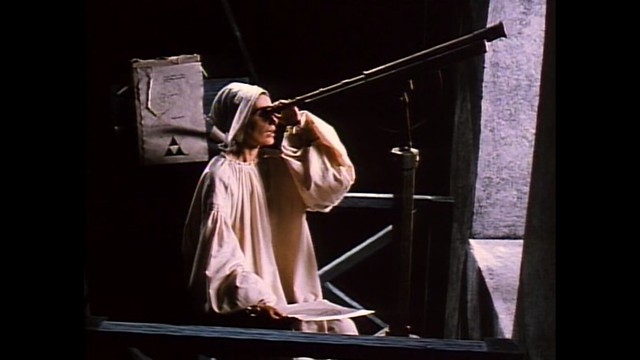
Yo, la peor de todas/I, The Worst of All (1990) - Bemberg Screen Shot 2023-01-02 at 9.33.18 AM Based on a historical figure, Juana Inés de la Cruz, I, The Worst of All, tells trials and tribulations of a catholic nun who lived in the 17th Century Mexico. Sister Juana who was a poet, playwright, theologian and a philosopher. And because it was unorthodox for woman to be an inquisitive and brilliant intellectual in the age of inquisition, she was persecuted by the patriarchal church and forced to denounce her 'sins'. Maria Luisa Bemberg directs the unflinching version of Sister Juana's story. Assumpta Serna plays Sister Juana, whose brilliance was the subject of both envy and jealousy in the convent. She is afforded with a large library and fine material things, like a telescope and harpsicord within the convent walls. She makes a big impression on the viceroy sent from Spain to the new world, and strikes up the friendship with the Vicereine (played by Dominique Sanda) who feels a certain kinship with the Sister (convent/marriage = jail). The Viceroy and his wife become an ardent supporter and protector of Juana against the vicious archbishop who thinks Juana is a nothing but a harlot and heretic.

I, the Worst of All, is a searing indictment of hypocracy of the religious institution and clear eyed examination of the true devotion and worldly desires of intellect. What happened to Sister Juana is a real tragedy.

Friday, December 1, 2023

Rehearsals for Living

Leben - BRD/How to Live in FRG (1990) - Farocki Screen Shot 2023-11-30 at 9.05.50 AM Screen Shot 2023-11-30 at 9.49.37 AM Screen Shot 2023-11-30 at 9.01.30 AM Screen Shot 2023-11-30 at 8.42.44 AM Screen Shot 2023-11-30 at 8.38.08 AM Screen Shot 2023-11-30 at 8.34.30 AM Screen Shot 2023-11-30 at 8.26.46 AM Screen Shot 2023-11-30 at 8.11.20 AM Filmed just before the dissolution of the East Germany, but came out afterward, Harun Farocki's Leben - BRD or How to Live in FRG (Federal Republic of Germany/West Germany) stands in contrast to both, the egalitarian (East) or capitalist (West) utopias that never have materialized. He knew that the West hadn't really won the Cold War game- that there was something inherently unnatural and inhuman about the advanced capitalist system in the West. Farocki strings series of 'how to' instructional videos of all kinds from all over West Germany, where people were enacting scenarios - from birth to death, intercut them with various household products - toilet seats, washers, drawers, car doors, going through rigorous and repeat stress tests.

It's 'how to' instructions on anything in life from sex, birth, caring for child, crossing the road, interacting with clients, customers, climbing out of a wrecked car, letting others know when locked out of your house, de-escalating arguments, reprehending a gun wielding hooligan, attacking the enemies in combat, stripping even, ANYTHING. Everything is prepped early on in life. There's an instruction for everything. Unlike other 'documentaries', Farocki's non-narrated film creates its own rhythm as it equates these 'learned' human behaviors to the repeated slamming of inanimate objects. All these activities are heavy on the business transactions and also law and order. The film shows a series of rehearsals to live 'actual life' as if you are not ready to live it yet.

Leben - BRD makes you wonder about human existence before all the technologies we have now. How did human beings survive without knowing how to have a baby without hurting either mother or a baby? How do we deal with difficult people without resorting to violence? The capitalist world is so complicated that it needs an Ikea instruction mauals on everything we do? The whole endeavors seem so patronizing. But that's the point Farocki is making. In this so-called free world, you need to be told early on how to live. How is it any different than the communist totalitarian society?

Often funny yet pointy, especially intercutting between the residents of a group home discussing and organizing their grocery list for dinner and people practicing dining table manners with empty plates and learning the orders of cutlery use.

Leben-BRD will make a great double feature with Godard's Germany Year 90 Nine Zero about East-West dynamics.

Wednesday, November 29, 2023

Hit the Road

Eileen (2023) - Oldroyd Eileen Based on award winning novel of the same name by Ottessa Moshfegh (who also wrote the screenplay with her husband Luke Goebel) and directed by British director William Oldroyd (The Lady Macbeth), Eileen tells an oddly satisfying tale of a young woman's emancipation from her dreadful surroundings.

Thomasin McKenzie (Jojo Rabbit, Last Night in Soho) plays the title role, a young woman working in a juvenile detention center in a depressed New England town in the 60s. It's winter. The film doesn't waste any time to establish that Eileen is a loner and sexually frustrated, as she is seen masturbating in her dad's beat up old car on the lover’s lane, while peeping at others making out in another car, parked close to hers. At work, he also fantasizes about a detention center guard wildly groping her against the glass window. At home and work, she is considered an odd duck, who doesn't have any prospect in love and life in general. Her Alcoholic father, a retired cop (Shea Whigham), tells her that she is "one of them in the movies in the background, of no consequences," that she will amount to nothing.

Things change when a Harvard educated, new psychiatrist, Rebecca (Anne Hathaway) shows up at the prison. With no friends among colleagues, Eileen is smitten by this beautiful older woman who seem to command her life and those around her so effortlessly. They share the same interests in the case of Lee Polk, the boy who stabbed his father to death. Why would anyone want to kill their father? Rebecca asks Eileen. Wouldn't anyone? She answers, somewhat surprising the psychiatrist. When Rebecca asks her for a night out at a local dive, excited Eileen dolls herself up in her mom's clothes. The night of drinking and dancing and the kiss on the lips, seals the deal for the spell and obsession to set in.

Eileen finds herself the next morning in her own vomit and still dressed in mom's clothes in the car which crashed into a tree in front of her house. After a shouting match with dad, he finally concedes that he finds her more interesting than before.

Things take a darker turn when Rebecca calls to spend Christmas Eve with her. When all dolled up Eileen gets to the house, and after a warmup with some wine with stale cheese and pickles, Rebecca tells her that the place is the Polk house and she tied up Mrs. Polk in the basement. Apparently, the Polk boy killed his father after years of sexual abuse and the mother was complicit. Rebecca can't afford to go to jail for assault, so Eileen needs to help her to get a confession out of the mother as a witness. At first, Eileen is disappointed and repulsed by the whole scene, but still decides to help Rebecca, her object of desire.

With eerie score by Richard Reed Parry of Arcade Fire and decidedly old-fashioned title sequence, framed 1:66 ratio, Eileen sets the unsentimental, natural, grainy tone of the film very early on. There are some fantastical spurts of violence, like Eileen shooting herself with her father's gun, is reminiscent of the humor from Lindsay Anderson and British Kitchen Sink Realism days, rather than more contemporary tongue-in-cheek way for cheap laughs.

Oldroyd again, delves into a strong female character with Eileen as he did so in his feature debut The Lady Macbeth which made Florence Pugh a star. This time the character arc is reversed. Instead of the main character being trapped in her own scheme, Eileen in an odd and unique way, makes herself free. Thomasin McKenzie finds herself playing a role in a psychosexual thriller again. Looking like young Jodie Foster, she kills (literally and figuratively) as a woman stumbling her way through finding herself in the world, all by herself. Hathaway is a smart blonde femme fatale, doing her best Cate Blanchett impression with ease.

Eileen is much more than what I described in the plot above. Oldroyd, with the help of Moshfegh and Goebel and a talented cinematographer Ari Wegner (The Lady Macbeth, The Power of the Dog), explores surviving physical and emotional abuse that women had to endure in the 60s and finding out who they are by themselves, very subtly and skillfully.

Eileen opens in theaters this Friday, via Neon, 12/1

Friday, November 17, 2023

Empty Lust

Saltburn (2023) - Fennell Saltburn Oliver (Barry Keoghan) is a nebbish freshman at Oxford; the year is 2007. The soundtrack is all MGMT and Bloc Party, The Killers, etc. All around him are wealth and privilege. Only friend he can find is a weird math nerd with no social skills. Then there is Felix Catton (Jacob Elordi), a very tall, handsome kid from an aristocratic family, whom everyone is swooning over. Felix's life is a never-ending party and drinking and girls. "Did I love him," Oliver asks over the series of close-up shots of present and near future Felix engaging in sexy activities. Oliver's lustful stares from a distance betrays his emotionless narration, or does it? "No I wasn't in love with him," he declares. But his luck would have it, Felix takes a liking to Oliver's poor scholarship kid with an addict/alcoholic parents sob story and off they go on the summer break to a sprawling Catton mansion, Saltburn.

The Cattons, unimaginably wealthy family of Felix, consists of frazzled dad- Sir James (Richard E. Grant), ice queen mom- Elsbeth (Rosamund Pike), nympho sister- Venetia (Alison Oliver) and snooty, gossipy cousin and fellow Oxford mate, Farleigh (Archie Madekwe), leading gilded life pampered by a group of servants. Golf, swimming, tanning, champaigns, lounging around naked in the garden, the works. The Saltburn manor is even equipped with The Overlook Hotel-style hedge maze. The film rapidly develops into a cross between Teorema and Talented Mr. Ripley, where everyone's giving Oliver sultry looks and he in turn, taking advantage of their curiosities, one by one.

Saltburn is unapologetically horny film. It's all about sweat, saliva and other bodily fluids. There are copious amounts of flesh shots of shirtless Felix as he is Oliver's de facto object of desire. Elordi as spoiled rich brat with a heart of gold (as his Elvis in Sofia Coppola's Priscilla) is perfect for the role. So is Keoghan, doing his creepy turn again (Killing of a Sacred Deer, Banshees of Inisherin), as an obsessive kid with dark desires. Fennell's script, bristling with sardonic wit and irony tickles your funnybones and gnarly, yet beautifully photographed transgressions (captured by Linus Sandgren, La La Land, Babylon) tickles your senses. But what does all of this amount to? Where do all these plot twists and turns and revelations ultimately lead us to?
Oliver's methodical plan to get closer to Felix come crashing down when the trip to his home reveals that he's not whom he pretends to be. With Oliver's planned birthday celebrations that would mark an end to their friendship, things take a dark turn. And this is where Fennell's steam runs out. Saltburn loses its rudder and ends with a massive hangover and disappointment.

There's no subtext to its period setting, there's no lessons to be learned about class disparities, not that there has to be. But with her last film Promising Young Woman, Fennell seems to be an ambulance chaser when it comes to topical issues of the day, but only on the surface level. Oliver, with his fuzzy motivations, is not consistent enough to make the film a character study even. Grant, Pike and Mulligan and others become toys to be played around and tossed (off screen even). Why do they deserve such cruel fate? Fennell never addresses. All we are left with is images of Keoghan slurping bath water, humping a fresh grave naked, and dance around full frontal in the empty manor. Keoghan is a major talent and a risk-taker obviously. I understand the film's concentrating on very narrow Gen Z and young LGBTQA+ audience. The promotion for the press screening made it very clear. But Saltburn ends up a titillation of flesh and nothing more.

Friday, November 10, 2023

Wrestling Picture

Neirud (2023) - Faya Neirud Brazilian filmmaker Fernanda Faya's Neirud is an intimate and affecting documentary that tells a larger-than-life story of a woman whom Faya thought she knew. Using wealth of family home videos, photos and historical news reels, Faya sets out to solve her family mystery like a good detective and constructs a beautiful portrait of her family friend, aunt Neirud, who happened to be a trailblazer in a country where things were still very much steeped in traditional ways.

With the Roma heritage on her father's side of the family, the filmmaker’s family has a long history being in the circus business. And her ancestral history is a fascinating one - they fled the persecution during the war in Europe to Brazil, moving place to place to avoid prejudice and racism. Faya's grandmother, Nely, a trailblazer in her own right, became the first in the family to be educated, and became a well-known actress in a traveling theater group. After a stint in Europe, Nely came back to her roots and start managing the circus theater group as an artistic director. That's where she met Neirud.

Aunt Neirud is seen in many home movies shot by Edgard, the filmmaker's father, gleefully holding the baby Faya on many occasions with Grandma Nely in the background. They are joyful family occasions. Donning full afro, Neirud, a towering black woman was a gentle giant. Her life story, told by herself in an inquisitive interview conducted by Faya, which was filmed when Neirud was nearing the end of her life, is as dramatic as any great fiction - after being abandoned by her biological mother in the small village to be cared for in a better to do household (as it was a common practice back in the day), young Neirud, being black, was put to work while attending school, not like other white children. At 8, she was already very tall and strong.She ran away to the city and asked to be hired as a nanny. At 12 when the circus was in town, enamored by the spectacle, she runs away again to join the circus. Strong as she was, she quickly established herself as a pivotal member of the troupe, then a main attraction. The legend has it, Neirud was the only one who can wield two hammers, one on each hand to put the spike in place to pitch the circus tent. The female wrestling, forbidden by law in still a conservative society, was allowed as the circus act. Developed by Nely, the female performers took on their own special characters -a pretty one, a vampire etc. In the ring, Neirud was the kimono wearing, 200 pounds of pure muscle, invincible Gorilla Woman.

Faya, finding wealth of pictures and footage of Grandma Nely, as she was the matriarch of the family and the face of the family business, but none of aunt Neirud from the wrestling days, sets out an investigation into her family history. She tracks down the only living remaining wrestler, Rita, from back in the day. In series of phone interview, Rita reveals that most of the photos were lost in the flood. She sends her a poster featuring "the Gorilla Woman" from that period. It's a towering picture of Neirud staring down. Neirud never wrestled again after Nely's passing, retired from the business, and lived in the house by the beach that she shared with Nely. Rita also informs the clue to Nely and Neirud's relationship. From all the materials she gathered, to her surprise, Faya finds a fantastic love story between the two women whom she dearly loved. It is also revealed that how they fled together on a road trip all over South America and ultimately formed their own circus troupe.

Neirud is not only a great love story, but an acute survey of Brazilian history and progress made in women's place in society. Aunt Neirud, along with Grandma Nely turn out to be a trailblazer in more ways than one. Switching gracefully between intimate home movie and a historical documentary, the film is also a wistful love letter to a person who meant a lot to the filmmaker. Gently bookending with the reenactments of her childhood memories of aunt Neirud driving with big colorful inflatable balls strapped on the roof of her station wagon on the beach, Faya possesses a kin eye for visual lyricism that conveys yearning and sweet sorrow.

Along with this year's Kleber Mendonça Filho's Pictures of Ghosts, Neirud chronicles changing Brazilian society through the bounds of first-person home movie narrative. Neirud works as a playful cinematic investigation with great warmth and heart.

Neirud plays part of DOC NYC. It has a theatrical premiere on 11/11 at Village East by Angelika, NYC.

Thursday, November 2, 2023

A Ghost Anywhere

Schlafkrankheit/Sleeping Sickness (2011) - Köhler Screen Shot 2023-11-02 at 9.26.06 AM Screen Shot 2023-11-02 at 11.32.14 AM Screen Shot 2023-11-02 at 11.35.24 AM Screen Shot 2023-11-02 at 11.26.56 AM Screen Shot 2023-11-02 at 11.27.29 AM Screen Shot 2023-11-02 at 11.28.03 AM Screen Shot 2023-11-02 at 9.27.17 AM Screen Shot 2023-11-02 at 11.28.33 AM Ulrich Köhler's Sleeping Sickness examines a complicated relationship between Europe and Africa. It also shows how losing one's identity (in this case, being a German) is indirectly, but yet deeply connected to Germany's colonial, post-war revival past.

Epidemiologist Dr. Ebbo Velten (Pierre Bokma) and his wife Vera have been stationed in Cameroon for a long time. Velten is there to eradicate Sleeping Sickness, the insect borne disease that causes neurological problems if untreated. He has been successful and therefore, he has no reason to stay there any longer. It's time for him and his wife to go back to Germany. But something is nagging at him. Their sullen teenage daughter's visit only exacerbates his ambivalent feeling about going back home to his mundane life as a pharmacist, according to his expat doctor/industrialist pal Gaspard (Hippolyte Girardot), "prescribing pills for a living in the suburbs."

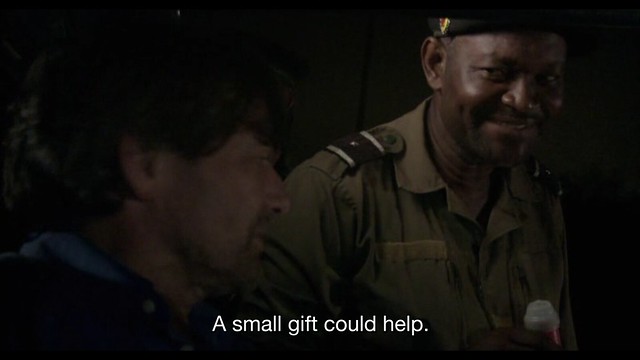
We see the whites' arrogance and the locals peddling for their money everywhere - at checkpoints, in restaurants, in Velten's home with guards, peddlers in city streets, in medical board meetings. The colonialism and free market enabled this ugly relationship to perpetuate and made any meaningful relationship between them impossible. The wife and daughter go home. Three years pass by.

A well-meaning, young doctor Alex Nzila (Jean-Christophe Folly) who works for the World Health Organization is first seen at a medical conference where a black representative is advocating cutting off relief funds to Africa and letting the free market take care of everything. He scoffs at the speaker. After Alex deflects his colleague's racist joke with 'I am born here,' speech, he is sent to Cameroon to evaluate Velten's project on sleeping sickness. The problem is, when he gets there to his compound/clinic, in the remote jungle, the German doctor is never around to meet with him. After failing to perform a Cesarean birth by throwing up and passing out on Velten's pregnant Cameroonian wife, Alex finally meets Velten. But it seems the illness is almost eradicated in the region. Then why does Velten ask for an evaluation on his progress?

It becomes slightly clear that it's Velten's cry for help, who is in the country he doesn't belong to and perhaps doesn't belong anywhere. He is pulling Colonel Kurtz. He is completely lost and wants someone else to decide his destiny.

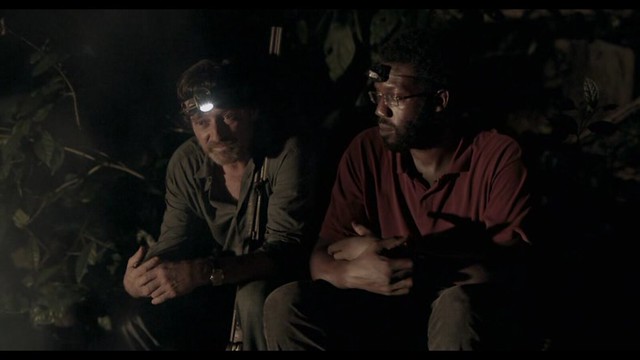
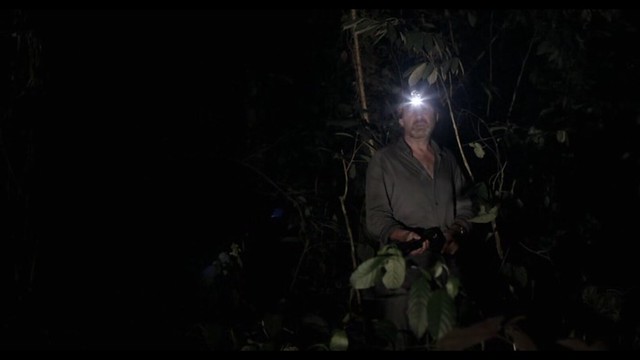
The film ends with Velten and Gaspard taking Alex to a night time hunting in the jungle. Alex has no idea what they are hunting for. Again, for Alex, it's a wild goose chase.

Sleeping Sickness is a complex film that says a lot about colonialism and its ugly symbiotic relationship in capitalist society. As a German directed film with a German main character, the subtext of losing one's identity in a global capitalist system and yearning for some sort of metamorphosis is quite striking.