Showing posts with label Charlotte Gainsbourg. Show all posts

Tuesday, June 27, 2023

The Eighties Paris

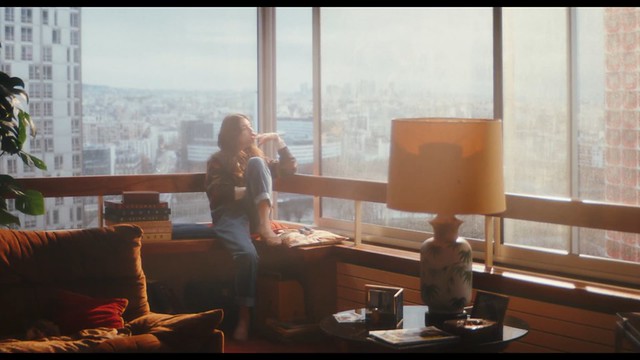
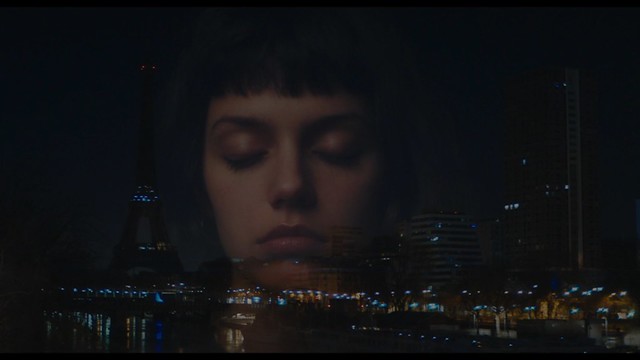
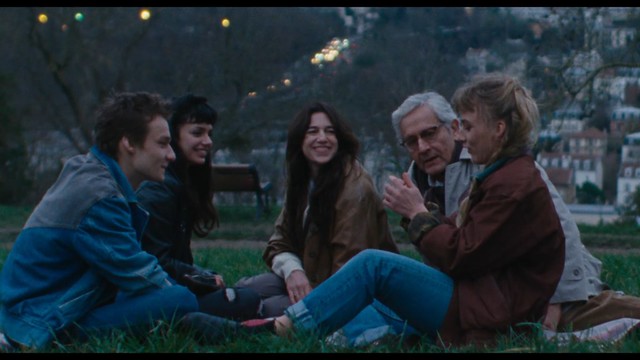
The Passengers of the Night/ Les passagers de la nuit (2022) - Hers Screen Shot 2023-05-26 at 8.22.52 AM Screen Shot 2023-05-26 at 10.15.12 AM Screen Shot 2023-05-26 at 10.39.21 AM Screen Shot 2023-05-26 at 11.31.08 AM If you are like me, who's very sensitive to noise and think modern films have become too loud, both in theaters and at home, then you might find Mikhaël Hers films to your liking. In one corner of Paris, he's been making finely tuned, melancholic urban tales of delicate human connections since the mid 2000s. And with Amanda in 2018 and now, The Passengers of the Night, he is turning his attention to the subject of family- some surrogate, some not, and away from his usual group of 20 or 30 something protagonists. It's not a question of this change is good or bad, just different. With The Passengers, his usual theme of death and grief are gone, yet the sadness and melancholy still remain. Also it takes place in Paris in the 80s, marking it his first period film.

Hers's quiet, singular filmmaking seems to attract big stars also. It features Charlotte Gainsbourg in a great role as a divorced single mother, who is discovering herself for the first time. Emmanuelle Béart, the once French megastar of 80s and 90s, also makes a welcome appearance, giving a confident, nuanced performance as a late night disc jockey. There is also a relative newcomer, Noée Abita as a beautiful drifter. Hers's regular, Thibault Vinçon, is there as a love interest as well.

The film opens with the night of the 1981 presidential election where François Mitterrand and his Socialist party won big. There's an electricity in the air and everyone's celebrating in the streets. The title, The Passengers of the Night, is the name of a late night radio show where insomniacs and lonely souls tune in, to hear the host Vanda (Emmanuelle Béart) and talk to her on air. Her voice and wisdom are comfort to thousands of listeners. One such fan is a recent divorcée Elizabeth (Gainsbourg). She and her two growing high school age children Judith and Mathias live in a penthouse apartment with windows overlooking Paris. But since her husband left, she needs to find a job pronto. It's a scary time for Elizabeth, as she never held a job before. It is alluded that her husband left, because she had a brest cancer and went through a mastectomy. Lacking any employable skills and failing badly at menial office jobs, she writes a passionate letter to Vanda, and lands her a job at Vanda's radio station as a switch operator. Her job is to filter the listeners' calls, then connect them to Vanda on air. She and the team hit it off. Her daughter Judith is a firebrand and very into progressive politics, but her young son, Mathias is struggling in school and is rather directionless.

One night, a young drifter and a listener of the show named Talula (Noée Abita) shows up at the station. It turns out she doesn't have anywhere else to go. Elizabeth ends up bringing her to her flat and letting her stay in her spare room in the attic. Soon Mathias falls hard for the stunning drifter. They go to the movies, an activity that Talula says she does a lot because the movie theater is good place to go when the weather turns cold. There are hints of young people's passions and interests forming, foreshadowing their future path. But when Mathias gets too close, Talula leaves.

It's 1988, working at a library during the day, Elizabeth finds a new love in a younger man (Vinçon), Judith has moved out and Mathias now works at a local pool. One day, Elizabeth and Mathias find Talula passed out near their apartment. She has become a junkie. Same as before, they help her from the goodness of their hearts. Talula struggles with her addiction while Elizabeth and Mathias prepares to move out of the fancy apartment they've been calling home.

Hers has perhaps the gentlest touch of all French directors working today. Shot dreamily hazy with the mix of film and digital images, The Passengers combines the director's penchant for good music - the 80s in this case: Lloyd Cole & The Commotions, The Pale Fountains, Television, Low, and also pays tribute to 80's romantic cinema shot in the streets of Paris - Eric Rohmer's Full Moon in Paris, Jacques Rivette's Le pont du nord, and one of my early favorites during my formative years, Eric Rochant's The World without Pity.

No one dies or anything drastic happens in The Passengers of the Night, but as usual, Hers observes life's ups and downs and connections people make along the way. Gainsbourg is luminous as Elizabeth, giving a fine-tuned performance as a middle-aged woman finding herself in a changing world. Watching this film reminded me very much of Hou Hsiao Hsien's Tokyo set Ozu tribute, Cafe Lumiere in terms of its tone and place.

Thursday, March 22, 2018

Creative Process Can Use Some Help from Ghosts of the Past

Ismael's Ghosts (2017) - Desplechin
Screen Shot 2018-03-11 at 11.08.01 AM
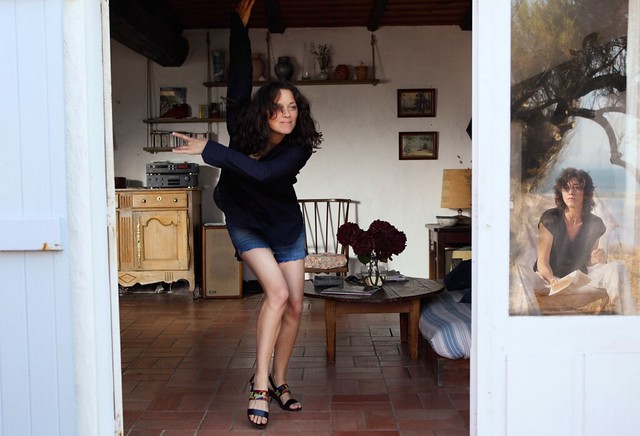
Could Ismael's Ghosts be seen as Desplechin's 8 1/2? is the question that kept coming up in my head while watching the film. At 58, Arnaud Desplechin lends a deeply personal, metaphysical insight to inner struggles of a creative mind, even more so than in My Golden Days. In his usual sprawling ways, Desplechin goes on explaining the difficulties of filmmaking process and throws in the Jewish guilt/survivor's remorse: What do you do when your loved one, long presumed dead but never forgotten, comes back to your life? This quandary is one of the ghosts that our protagonist has to reckon with.

With multiple flashbacks and movie within a movie, Ismael's Ghosts tells a story of Ismael (Mathieu Amalric), a boorish movie director. While struggling with his The Man Who Knew Too Much style, Hitchcockian cold war spy movie project based on his suave (but estranged) diplomat brother Ivan (Louis Garrel), starring Garrel, Ismael falls for timid but supportive, loving Astrophysicist Sylvia (Charlotte Gainsbourg). He has been maintaining a good relationship with Henri Bloom (Laszlo Szabo) the father of his missing wife Carlotta (Marion Cortillard) as they share the same grief and loss.

The movie is narrated by Sylvia. Intimidated by this charismatic movie director at first, but charmed by his broken 'widower' side of him, she falls in love. But the reappearance of Carlotta (Marion Cortillard), a long declared absent wife of a Ismael, tests their relationship. Walked out of her marriage at 20, Carlotta manifests herself some twenty years later at the Ismael's childhood beach house where he comes to write. No explanation is good enough for Ismael, furious with Carlotta for sabotaging his life, first by disappearing and now coming back, he resents her greatly. Unable to compete with magnetic Carlotta, Sylvia calls it quits and goes back to her telescope at an observatory up in the mountains.

After sleeping with Carlotta, Ismael flees to his home town of Robaix. All broken up and melancholy, with mixed up memories and emotions brought on by Carlotta, he becomes a hermit. With the production of his spy movie's future uncertain, the company sends in his friend/line producer (Hippolyte Giradot) to convince Ismael to finish the movie. In that chaos, the director finds his inspiration flowing once again, helped by the ghosts of his pasts so to speak.

In the meantime, Carlotta visits Henri and her presence freaks him out and sends him to a hospital. For everyone who loved her, the impact of her disappearing was too great and deep, her presence is not welcome but painful reminder of their loss. As similarly themed recent movie A Memoir of War based on Marguerite Duras' book tells us, the pain of losing someone and no sense of closure is too great that even the eventual return can't remedy its wounds.

Desplechin deals with a lot of complicated thoughts and emotions on screen, acted out by three very good actors on the top of their game. And as usual, his writing is excellent. His preoccupation with an international spy in the name of Dedalus is still there, this time Ivan, not his alter ego, Paul. Deliciously self-reflexive and touching, Ismael's Ghosts is another great testament of Desplechin's unique talent as a film enthusiast and a great writer.

Ismael's Ghosts opens theatrically at The Quad and Film Society of Lincoln Center on March 23rd in New York

Wednesday, March 11, 2015

Tender Side of Charlotte Gainsbourg

3 Hearts (2014) - Jacquot
 photo f281f23c-762b-47aa-969a-8f66dce4ed0a_zps9tw6ktpc.jpg
Marc (Benoit Poelvoorde), a shlumpy tax investigator, just missed the train back to Paris. He now has to spend the night in a provincial town whether he likes it or not. By chance, he meets and chats up lovely Sylvie (Charlotte Gainsbourg). The mutual attraction is there. Marc is glad that even though she seems a little anxiety stricken, she's willing to talk to him and show around the town in this sleepless night. Sharing smokes, they end up walking all night talking.

This wasn't like one night passionate tryst of strangers. The tender encounter was some kind of sign from above, as if they were meant to be together (but of course they don't say this out loud, for they are not love stricken teenagers). In the morning, without exchanging their numbers, they promise each other to meet in Paris in one week on Friday, at Eiffel Tower, no that's too corny, at the famous fountain in the park.

The encounter was so special, It becomes a deciding factor for Sylvie not to move to the US with her current boyfriend as she's been hesitant on the matter. But the Friday comes and goes: Marc misses the rendez-vous because he gets delayed by clients and has a mini stroke from stress. Without knowing all these, heartbroken Sylvie leaves for the US with her boyfriend. 


Marc is in town again, looking for Sylvie. He ends up helping out distraught Sophie (Chiara Mastroianni), Sylvie's sister, with her business tax problems without knowing that they are sisters. Sophie is a nervous wreck but very warm and attractive. The romance blooms. She introduces him to her mother (Catherine Deneuve) who cautiously observes him. For some reason, mom's a little hesitant about embracing him fully into the family yet.

Eventually Marc finds out that Sylvie and Sophie are very close siblings but whatever the reason, he decides to avoid contacting Sylvie and telling everyone the truth. Marc and Sophie marry. Marc awkwardly avoids Sylvie at the wedding. And she finds out for the first time, that it's him her beloved sister is marrying.

3 years pass by. 

Marc and Sophie now have an adorable son. For celebrating the 60th birthday of the mother, Sylvie comes home. She and her boyfriend are not doing well and Marc and Sylvie's passion rekindles in secret. Would their secret be discovered?

Benoit Jacquot is revered as 'women's director' for his rapport with many of the France's leading actresses (worked with Anna Karina, Catherine Deneuve, Isabelle Huppert, Isabelle Adjani, Sandrine Kiberlain, Sandrine Bonnaire, and catapulted the carreers of Virginie Ledoyen, Isild Le Besco, Judith Godreche, and Lea Seydoux). He comes back to a small scale, light-hearted, character driven adult romance after success of big period costume drama, Farewell My Queen.

3 Hearts, like all Jacquot films, is a showcase for female roles. But in this film, the star is undoubtedly Gainsbourg. Unlike the roles of her late (think her collaborations with Lars von Trier, where she plays against type), with her frail figure and worrisome face, Sylvie is well within her domain. She gives a nuanced, subtle performance as a woman shaken forever by a chance encounter and who's torn between loyalty and desire.

Not quite a 'what if" story but 3 Hearts is full of regret and melancholy. It's a fluff in the vein of old Hollywood romance but with the help of today's gadgets - skype and cell phones, the film works as a tension filled romantic thriller. You don't really believe two of the most alluring actresses of our time would fall for Poelvoorde's Marc, but hey, it's a man's fantasy and it works for me.

Jacquot has been busy. His new film Diary of a Chambermaid, a remake (of Renoir's classic in 1946, then again 1964 by Buñuel), starring Lea Seydoux just debuted at this year's Berlinale.

3 Hearts opens in New York on 3/13. National roll out will follow. Visit Cohen Media website for more info

Thursday, April 3, 2014

Honesty is Such a Lonely Word

Nymphomaniac: Vol.2 (2013) - von Trier
 photo 00bbf9dc-7ec6-427a-95dc-c1b45c7ac602_zps851a5074.jpg
It is definitely the worst work by von Trier. All his carrier he has maintained himself as a manic depressive person who is deeply pessimistic about humanity. That's fine, I don't have any problem with that. It only becomes a problem when he repeats himself and has nothing new to say. But he still has a penchant for upsetting people any way he can so he has to go on. Nymphomaniac is as if he made a check list of every offensive and controversial things and checked off one by one: erected penis/close up of vagina- check, fellatio/cunilingus - check, mentioning N* word- check, pedophilia- check, homosexuality - check. The film feels like an obligatory soapbox performance- the cinematic zeal is gone, graphic sex feels flat and not titillating at all. Charlotte Gainsbourg as his mouth piece, he declares the world is full of hypocrites. He is the only honest person in the world. von Trier has become the cinema equivalent of Billy Joel. The ending of this movie is perhaps the worst movie ending I've experienced in my life. It's a total fuck you to the audience. But sadly, it will make money with all the ad campaign and splitting the movie in two parts for no reason, charging separate admissions and whatnot. You lost me von Trier. Perhaps forever.

Thursday, March 20, 2014

Bait

Nymphomaniac: Vol. 1 (2013) - von Trier
 photo Nymph-Volume-1-424x630_zps0b9eb3fd.jpg
It's a teaser and an unimpressive one at that.
I understand that it's hard to take 4 hr movie in one sitting these days, but it's exactly half of the movie. So I can't make judgment on it let alone be satisfied in any way.
It tells a sex life of Joe (Charlotte Gainsbourg), an self admitted nympho, who is found beaten and laid out in an alleyway. It's Seligman (Stellan Skasgård), a good samaritan who finds her and brings her home. He is curious as to what happened to Joe. So he gently pushes her to tell her story.

Nymphomaniac is done way too tongue-in-cheek, I had a hard time taking it seriously. What I mean is that I can't really buy that von Trier is that corny to use Kaiser Sose/Kobayashi style free association, split screen and an old nickelodeon style moving image of walking naked man for Joe to tell her stories. Blasting Rammstein music bookending the film adds to my uneasiness whether he is knowingly fucking with you or not. I was deeply disturbed when the credits rolled with the preview of Vol. 2 appeared in partial screen, but not because of what's being played but because of its icky TV style preview. Only thing that was missing was a smokey voiced narrator saying, "Now from the next episode of Nymphomaniac, brought to you by Hyundai."

Graphic sex scenes don't make a ripple these days. If von Trier 's banking on young flesh (Stacey Martin, who looks like young Eva Green, rather than Gainsbourg), he is grossly mistaken in this day and age. Not that I'm not going to watch the next installment, but I really don't think Vol. 2 is going to make it a lot better. It might have some more emotional resonance and some meaning to it all, but there is no indication of it would be mindblowingly better than what I've just witnessed. But here's hoping. Sigh.

Sunday, September 11, 2011

No Medicine for Melancholy

Melancholia (2011) - von Trier
Photobucket
A lot of people I know want to kick Lars von Trier in the balls if they were ever given a chance to do so. They think he is the biggest a**hole on the planet. That he is an arrogant, nihilistic artist constantly laughing at our expenses. His recent Hitler love at the Cannes didn't win him any favors either. Everything about him feels like a put-on, including his enfant terrible persona.


Personally I find his films to be quite simple, that there are no real depth or originality in them. Case in point, my favorites of his remain, to this day, to be Elements of Crime and Europa, both technical marvels from the cinematic filmmaking point of view. Over the years, he became one of the few filmmakers whose outside the movie set antics and their films are so entwined, I have a hard time separating them when reviewing. After watching two of his most recent, most 'personal' films to date and hearing about his crippling depression, I began to realize that he is indeed a hateful person and he's not faking any of it.


Accompanied by Wagner's Tristan und Isolde, Melancholia begins with an overture, which tells the audience what to expect. Shot in the same glossy way on the super speed camera as the beginning of Antichrist, visually it's both fantastic and frightening- as the planet Melancholia is fast approaching the earth, birds are dropping like rain, a horse falls to the ground under the darkening sky, all the earth dwelling insects take to the air and Kirsten Dunst in her white wedding dress, floats in the stream. von Trier continues with his exploration of his fears in Melancholia, another deeply personal film. This time, the anxiety comes from facing the end of the world.


The film is in two parts: simply titled Justine and Claire - the two sisters who have very different outlook on life. The film starts with the wedding reception of Justine (Dunst) in a gigantic castle by the lake. The bride and groom are late for their own wedding reception. At first, they appear to be a sweet young couple but soon afterward, we realize that Justine is feigning her smiles and happiness. Claire (Charlotte Gainsbourg) and her super rich husband John(Kiefer Sutherland), who arranged the wedding are getting visibly impatient with the non-cooperating bride. By the end of a long grueling reception, the unsuspecting, lovelorn-puppy groom (Alexander Skarsgård) isn't the only casualty of a heartbreak. And there is a planet small enough not to be threatening (yet), but visible to the naked eye in the sky.


The second part of the movie starts with the aftermath of the wedding. Justine, having failed at the attempt of getting out of her melancholic state by a marriage, is back to square one. She is an unresponsive, catatonic mess. It's Claire who takes an active mom role, taking care of her little sister. In the mean time, planet Melancholia from Scorpius Constellation is approaching closer to the earth by day. John, who knows about these matters tells concerned Claire that everything would be okay. That according to the calculations by all the leading scientists point to Melancholia squeaking by us and it would be a spectacular celestial show. Claire is not convinced. They have a young son and she wants him to have a future. Ironically, as the fateful day approaches, it's Justine who's calmer and more together than 'normal' Claire.


von Trier takes the visual cues mainly from the paintings of Caspar David Friedrich, a German Romanticism painter who's known for his 'gaze' paintings where you as a viewer complete the painting by observing a figure gazing into the landscape in front of him. The old Flemish painting of winter landscape and John Everett Millais's famous Ophelia are also recurring images. There is a scene in the castle library, where Justine frantically replaces all the open art books containing abstract paintings with the images of the aforementioned paintings and other classics, a futile attempt to place an order in her chaotic mind landscape.


I can see why so many great actors always flock to von Trier projects despite all the bad things he says about actors. These are hammy parts where you can exercise your craft. Dunst basically channels the melancholic director's outlook. Justine has hit the rock bottom. Her last attempt at happiness and normal life miserably failed. She's got nothing to lose. Therefore, impending doom of all humanity doesn't scare her. Gainsbourg is also great as maternal Claire, who loses her grip as the end approaches. Justine calmly informs Claire, "Don't you think I'm afraid of that stupid planet." Superb supporting cast includes Sutherland, Skarsgård, John Hurt as the jolly father of the sisters, Charlotte Rampling as the cynical mom whose world wary presence explains Justine's origin and Stellan Skarsgård as smarmy boss of the advertising firm Justine works for.


I'm not saying von Trier's dickishness is any way excusable on account of his deep depression. But I think I understand him better after seeing his latest movie. It's stark, nightmarish and without hope. As Justine says with conviction, "We are all alone in the universe. I know this." Therefore, there is no need for the empty human rituals like niceties and being polite. When it's all said and done, I have to admit, Melancholia is still an amazingly gripping movie going experience. Whether I like his films or not, I still find myself being a salivating lapdog every time he comes out with a new film. It might be the a**hole/sad clown side of me connecting with him.


*According to the interview came with the press kit, his new project is called Nymphomaniac and there's going to be a lot of self mutilating involved.

Sunday, November 8, 2009

Fear of Women

Antichrist (2009) - von Trier
article_1064x Didn't hate it. But didn't love it either. Definitely worth seeing. Gorgeously photographed with the Red One camera and as expertly executed as any other von Trier film. From Breaking the Waves on, his films always felt one note for me and never came across as sincere. But with Antichrist(his depression might have attributed to this), I felt more of a weight than his others- good intentions gone bad, controlling and fear of nature/women, christian guilt and shame, role reversal, self-fulfilling deathwish... there are a lot to chew on. I guess one can go on and on about the details and pseudo-symbolism of the film and what they represent forever. But I won't go into that. Too much of it is already said about the movie. This film needs to be experienced, not read.

Herzogian view on nature made me laugh. Funny. Usually when I watch a movie, I don't really care who made the film. I have no interest in a director's personal life or his/her beliefs. Herzog and von Trier are only two that I am actually interested in what they have to say outside their films.

Excess. That is what I didn't like about the movie. von Trier could've gotten the messages across without squirm inducing, graphic self mutilation scenes, really. He could've done without the redundant hokey ending too.

Me and my friends had a long nice talk after the movie over heaps of mofongo. For some reason seeing that movie made us very ravenous. It was good to talk among men- total sausage-fest I know, but I don't think any sane woman would wanna see this film and talk rationally about it afterward.